Adding and subtracting fractions: slides for grades 5–6 (ages 11–12)
Adding and subtracting fractions with the same and different denominators, with pictures and on the number line. Slides, explanations and exercises for grades 5–6.
We add and subtract fractions when parts are put together or taken away: a flower bed is planted a bit at a time, a bit of a running route is run. With fractions with the same denominator, we add the numerators and the denominator stays the same. Fractions with different denominators are first expanded to a common denominator.
The article is made for grades 5–6, and every step is ready to show to the class as a slide. Expanding and simplifying are assumed to be familiar.
Key concepts
- fractions with the same denominator
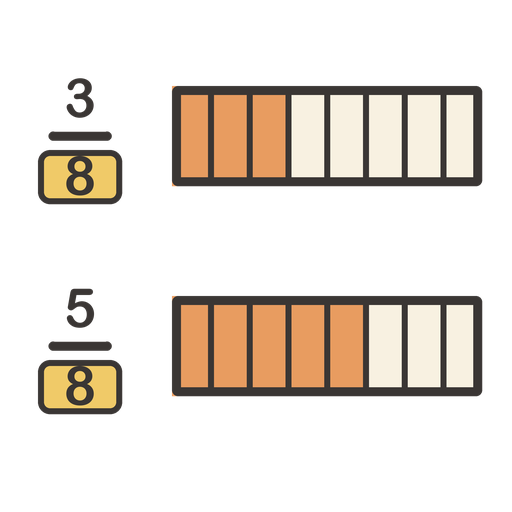 Fractions that have the same denominator, such as 3/8 and 5/8. The one with the bigger numerator is the bigger fraction.
- common denominator
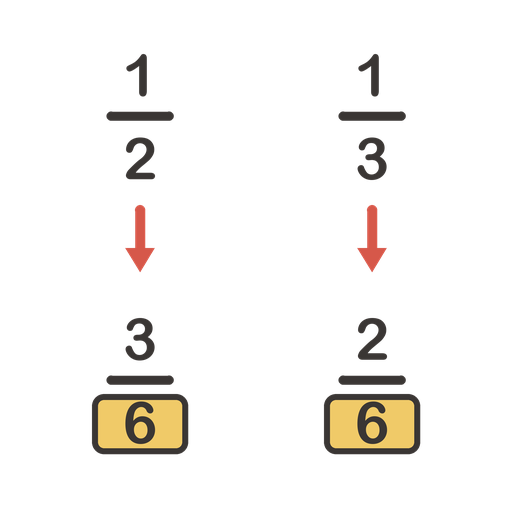 A denominator that two or more fractions share. Fractions are changed to a common denominator so that they can be compared or added.
- expanding fractions
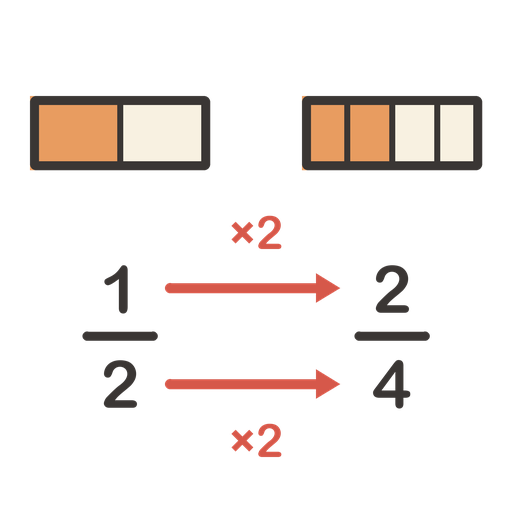 Multiplying the numerator and the denominator of a fraction by the same number. The value of the fraction stays the same, for example 1/2 = 2/4.
- simplifying fractions
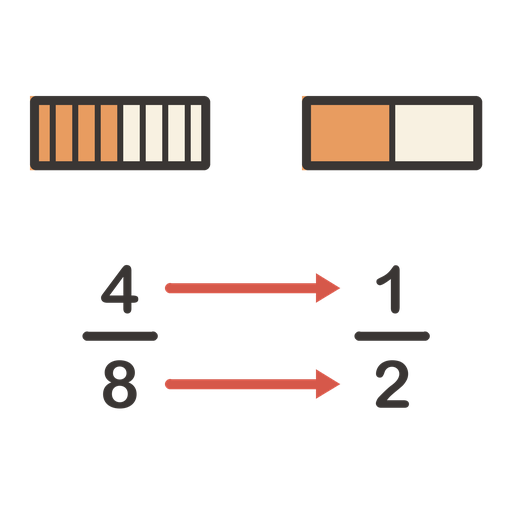 Dividing the numerator and the denominator of a fraction by the same number. The value of the fraction stays the same, for example 4/8 = 1/2.
- numerator
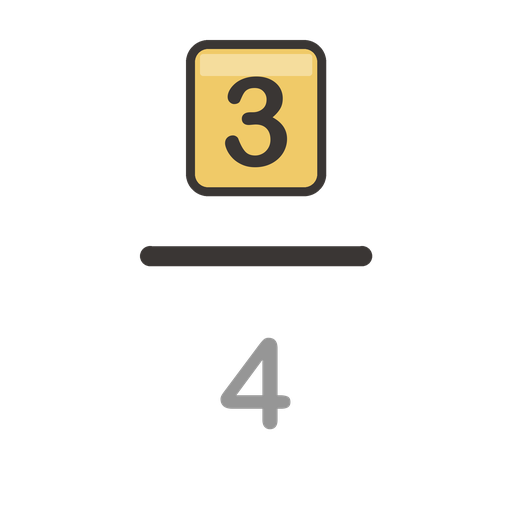 The top number of a fraction. It tells how many parts are taken.
- denominator
 The bottom number of a fraction. It tells how many equal parts the whole is split into.
- addition
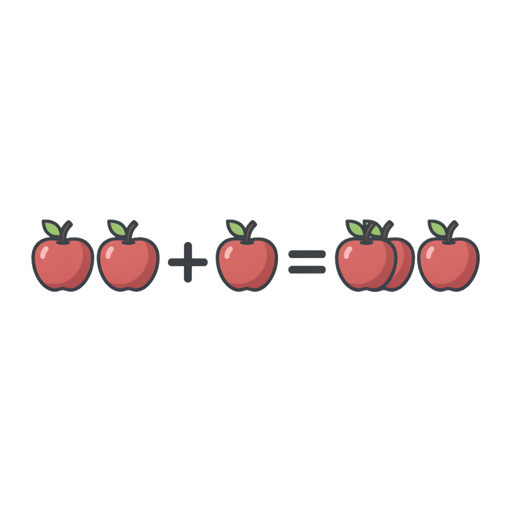 Adding numbers together, for example 3 + 2 = 5.
- subtraction
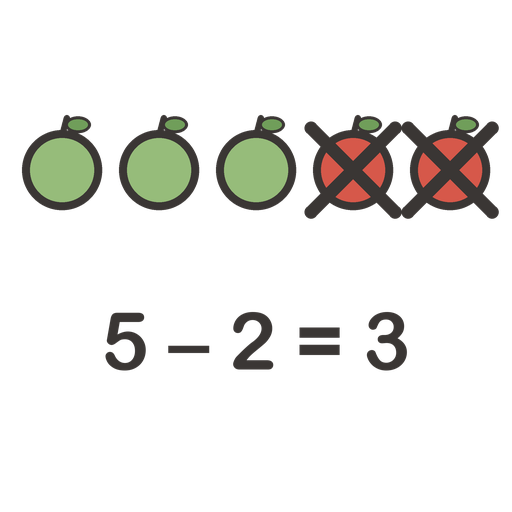 Taking one number away from another, for example 5 − 2 = 3.
Related exercises
There is no exercise for this topic yet
Teacher or creator: make the first exercise with Puro Editor and choose Adding and Subtracting Fractions as its topic. It will appear here as soon as it is published.
1. How much of the flower bed was planted?
A round flower bed is divided into 8 equal parts. On Monday the class planted flowers in 2/8 of the bed and on Tuesday in 3/8.
The number of parts planted was 2 + 3 = 5, so 2/8 + 3/8 = 5/8.
2. Adding fractions with the same denominator
Fractions with the same denominator have the same denominator, so the parts are equal in size.
In addition, we add the numerators. The denominator stays the same, because it tells us the size of the part.
3. Subtraction on the number line
The parts are sixths, so the denominator stays the same.
Subtract the numerators: 5 − 2 = 3.
5/6 − 2/6 = 3/6
Simplify by dividing by three: 3/6 = 1/24. Different denominators: the parts are different sizes
At football practice the players play for 1/2 hour and warm up for 1/4 hour. The fractions 1/2 and 1/4 cannot be added directly, because the parts are different sizes.
Expand 1/2 into quarters: 1/2 = 2/4. Now 2/4 + 1/4 = 3/4 of an hour.
1/2 + 1/4 2/4 + 1/4 = 3/4 5. Expand to a common denominator
You pick 1/2 litre of berries in the forest, your friend picks 1/3 litre: 1/2 + 1/3
The common denominator is 6, because 2 · 3 = 6.
Expand: 1/2 = 3/6 and 1/3 = 2/6.
3/6 + 2/6 = 5/6 litre6. Common mistake: adding the denominators
A swimmer swims 1/3 of the distance and then another 1/3. A pupil works out 1/3 + 1/3 and gets 2/6, because the pupil also adds the denominators.
The number line reveals the mistake: 2/6 is at the same place as 1/3. The correct answer is 1/3 + 1/3 = 2/3.
7. Work it out and explain why
1. At a bird feeder, 3/10 of the birds are great tits and 4/10 are blue tits. Work out 3/10 + 4/10. Draw a bar.
2. You ran 3/4 of a lap around the pitch, your friend 1/2 of a lap. Work out 3/4 − 1/2. What is the common denominator?
3. Work out 1 1/5 + 3/5. What happens to the wholes?1 1/5 and 3/5
Summary
With fractions with the same denominator, we add or subtract the numerators, and the denominator stays the same. Fractions with different denominators are first expanded to a common denominator. The answer is simplified if it can be simplified. Denominators are never added.
Frequently asked questions
How do you add fractions with the same denominator?
Add the numerators and keep the denominator the same: 2/8 + 3/8 = 5/8, because 2 + 3 = 5.
How do you subtract fractions with different denominators?
First expand the fractions to a common denominator. For example, 3/4 − 1/2 = 3/4 − 2/4 = 1/4.
How do you add mixed numbers?
Add the wholes and the fractional parts separately. For example, 1 1/5 + 2 3/5: the wholes make 1 + 2 = 3 and the fractional parts together make 4/5, so the answer is 3 4/5. If the fractional parts make a whole or more, that gives one more whole.