Addition over a hundred: teaching, slides and exercises for grades 3–4 (ages 9–10)
Column addition one place at a time: ones, tens, hundreds and thousands, regrouping and estimating. Slides and exercises for grades 3–4.
In addition, numbers are added together, and the result is the sum. When the numbers are over a hundred, they are added in columns, one place at a time: first the ones, then the tens, hundreds and thousands. If a place gives 10 or more, we regroup and write a carried digit.
The article is made for grades 3–4, and every step is ready to show to the class as a slide. By the end, pupils can add in columns, use the carried digit, and estimate and check their answer.
Key concepts
- addition
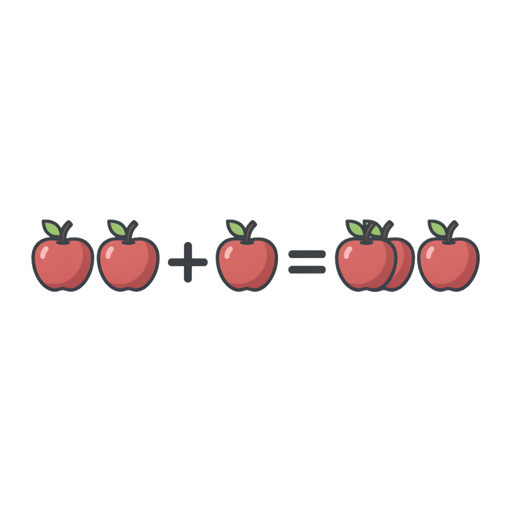 Adding numbers together, for example 3 + 2 = 5.
- sum
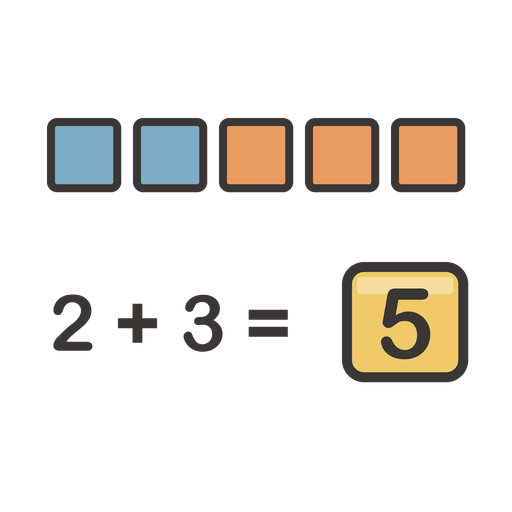 The answer to an addition. The sum of 3 and 2 is 5.
- place value
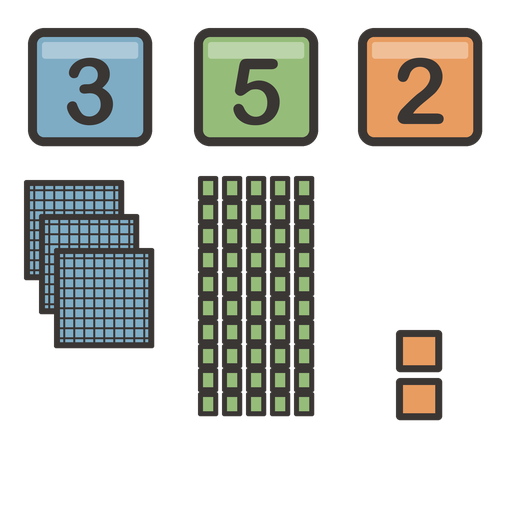 A digit's value depends on its place. In 352 the 3 means three hundred.
- hundred
 Ten tens, or 100.
- thousand
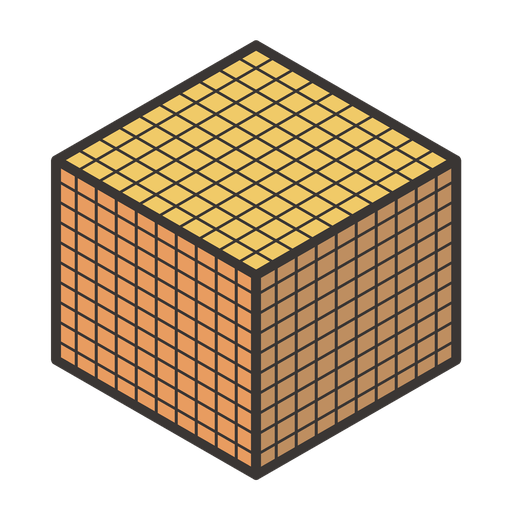 Ten hundreds, or 1,000.
- estimate
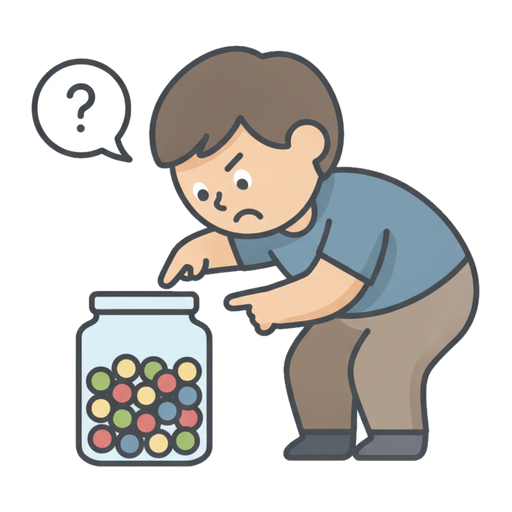 A sensible guess at roughly the right answer before working it out exactly.
- rounding
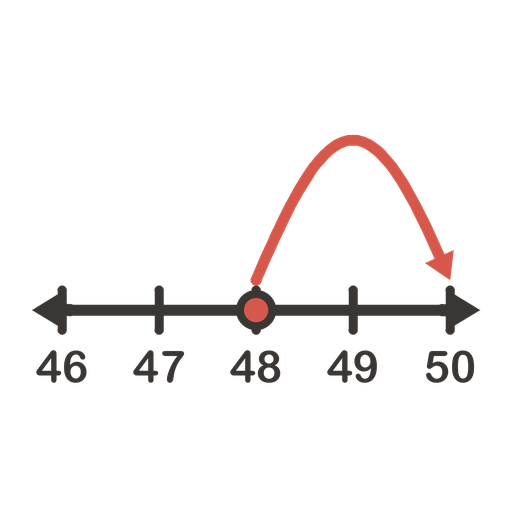 Changing a number to the nearest round number. For example 48 is about 50.
1. How many spectators in total?
A football match was watched by 247 spectators on Saturday and 385 spectators on Sunday.
How many spectators were there in total?
Estimate first: 247 is about 200 and 385 is about 400.
So the sum is about 600.2. Addition and the place value system
In addition, numbers are added together. The result is the sum.
In the place value system, the place of a digit tells its value. The number 247 has 2 hundreds, 4 tens and 7 ones: 247 = 200 + 40 + 7. The number 1475 also has 1 thousand.
3. Add one place at a time
In spring, 324 birches were planted in the forest, and in autumn 152 birches. Let us work out 324 + 152. Write the numbers one under the other.
Ones: 4 + 2 = 6.
Tens: 2 + 5 = 7.
Hundreds: 3 + 1 = 4.
So 324 + 152 = 476.4. Ten of one make one of the next
When the ones come to 10 or more, 10 ones are exchanged for 1 ten. When the tens come to 10 or more, 10 tens are exchanged for 1 hundred.
This is called regrouping.
10 ones = 1 ten 10 tens = 1 hundred 5. Regrouping in column addition
Let us add the spectators: 247 + 385.
Ones: 7 + 5 = 12. Write 2 and carry 1.
Tens: 1 + 4 + 8 = 13. Write 3 and carry 1.
Hundreds: 1 + 2 + 3 = 6.
So 247 + 385 = 632.6. Estimate and check
An estimate is an approximate answer. Round the numbers to hundreds: 247 is about 200 and 385 is about 400. 200 + 400 = 600, so the sum must be close to 600.
If the carried digit is forgotten, the sum comes out as 522. That is far from the estimate, so work it out again.
7. Discuss in class
1. On a lake, 1475 birds were counted in the morning and 368 in the evening. Work out 1475 + 368. Estimate first.
2. Why is the carried digit written above the next place?
3. Think of two numbers from sports or nature whose sum is over 1000.
Summary
The answer to an addition is the sum. Big numbers are added in columns, one place at a time: ones, tens, hundreds and thousands. When a place gives 10 or more, we regroup and the carried digit moves to the next place. An estimate by rounding shows whether the answer makes sense.
Frequently asked questions
What is a carried digit?
In regrouping, the carried digit moves to the next place. In 7 + 5 = 12, 2 is written in the ones place, and the carried 1 moves to the tens place.
Why are the numbers written one under the other?
When the numbers are written one under the other, the same places line up: ones under ones and tens under tens. A common mistake is to write the shorter number at the left edge. Always start with the ones on the right.
How can an addition be checked?
Estimate by rounding or work out a subtraction. For example, 247 + 385 = 632 and the check is 632 − 385 = 247.