
The Age of Discovery: teaching, slides and questions
Why did Europeans sail to India and America? Dias, da Gama, Columbus and Magellan, and the consequences of the voyages, with pictures, for grades 4–6.
In the 1400s and 1500s Europeans sailed round Africa to India and across the Atlantic to America. The article suits history lessons in grades 4–6, and every step can be shown to the class as a slide.
At the end, the pupil can tell why the voyages of discovery were made, who sailed, and what the voyages meant for different people. They know the words voyage of discovery, caravel, compass, astrolabe, spice and colony.
Key concepts
- voyage of discovery
 Voyages of discovery were European sea journeys of the 1400s and 1500s in search of new trade routes and lands. Columbus reached the Americas in 1492 and Vasco da Gama reached India in 1498. These lands were new only to Europeans, because people already lived there.
- caravel
 A light, fast sailing ship that the Portuguese and Spanish used for voyages of discovery. Thanks to its triangular sails, a caravel could sail into the wind as well. Two of Columbus's three ships were caravels.
- compass
 An instrument whose magnetic needle always points north. The compass was invented in China, and in Europe it came into use at sea in the 1200s. With it, sailors dared to sail far out into the open sea.
- astrolabe
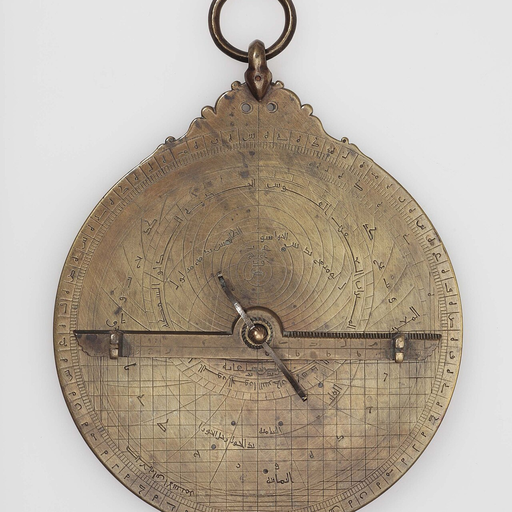 A metal instrument that used the stars and the sun to work out the time and place. It was already known in ancient Greece, and Arab scholars made it precise. It was also used to find prayer times and the direction of Mecca.
- spices
 Dried plant parts such as pepper, cinnamon and cloves. They came from Asia along trade routes and were very expensive in Europe. Later, Europeans set out to find a sea route to India because of the spices.
- Aztec
- The Aztecs were a people who ruled a large empire in what is now central Mexico in the 1400s and early 1500s. Their capital, Tenochtitlan, was built on a lake where Mexico City stands today. The Spanish and their local allies captured the city in 1521.
- potato
 A potato is a tuber that grows underground and is an important food. It was brought to Europe from South America.
- colony
- A colony is a territory governed and exploited by a foreign state for its own benefit. Most colonies became independent after the Second World War. India, for example, was a British colony until 1947.
Related exercises
There is no exercise for this topic yet
Teacher or creator: make the first exercise with Puro Editor and choose Age of Exploration as its topic. It will appear here as soon as it is published.
1. What do you know about the voyages of discovery?
Why did Europeans sail far away to unknown seas?
With what ships and instruments did they find their way?
Who lived in America even before Columbus?
What good and bad came from the voyages of discovery?2. Why set out to sea?
Europeans wanted spices, such as pepper, and other goods from Asia. Trade went along long routes through the eastern Mediterranean, where the Ottoman Empire was strong. Many merchants wanted a sea route of their own. The caravel, the compass, the astrolabe and more exact maps helped.
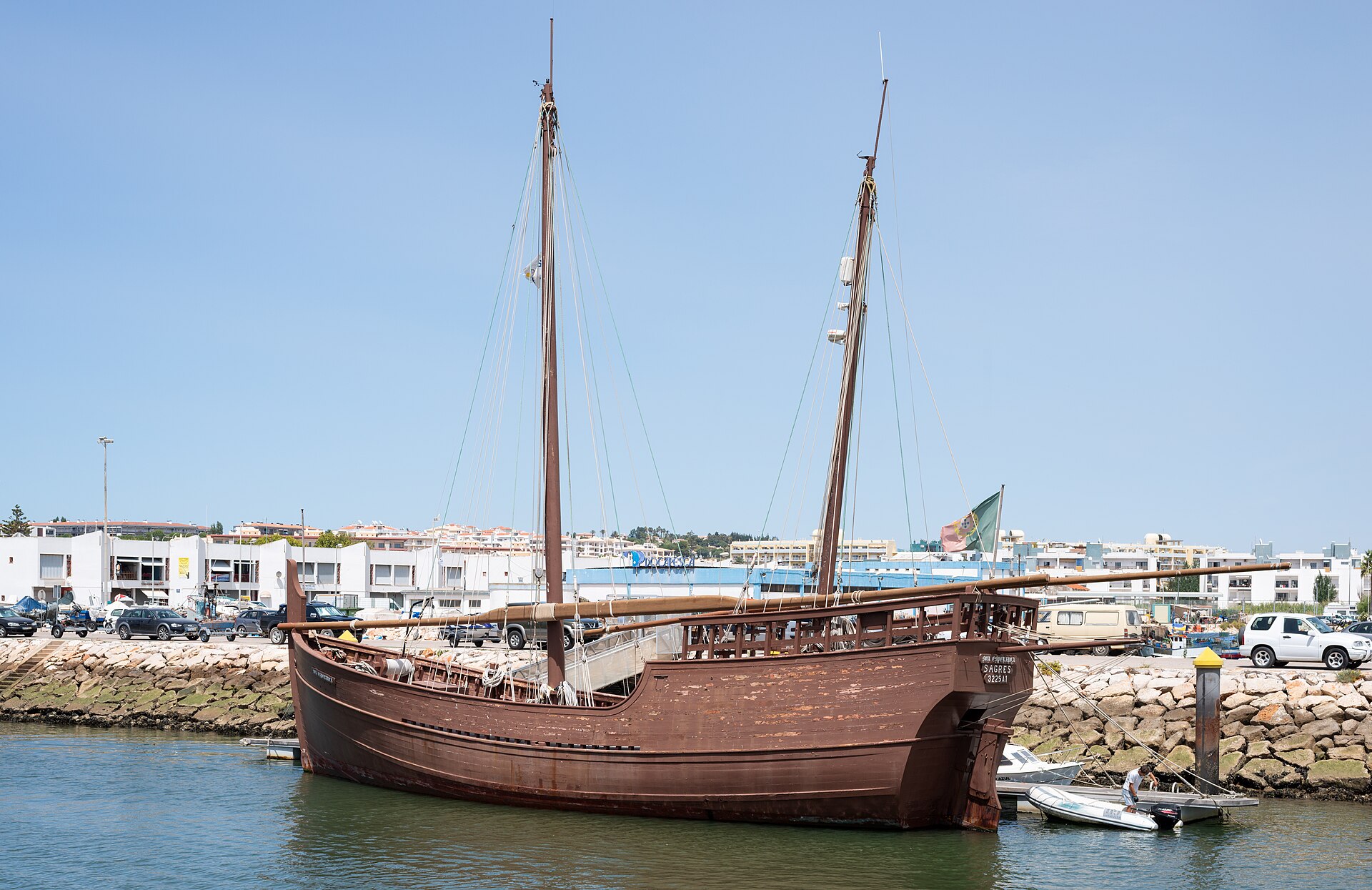
A replica of a caravel in the harbour of Lagos in Portugal. A caravel was a small, nimble sailing ship.. Photo: Boa Esperança caravel replica moored in Lagos - Portugal - 2015-08-06, Norbert Nagel, CC BY-SA 4.0, modified: reduced in size 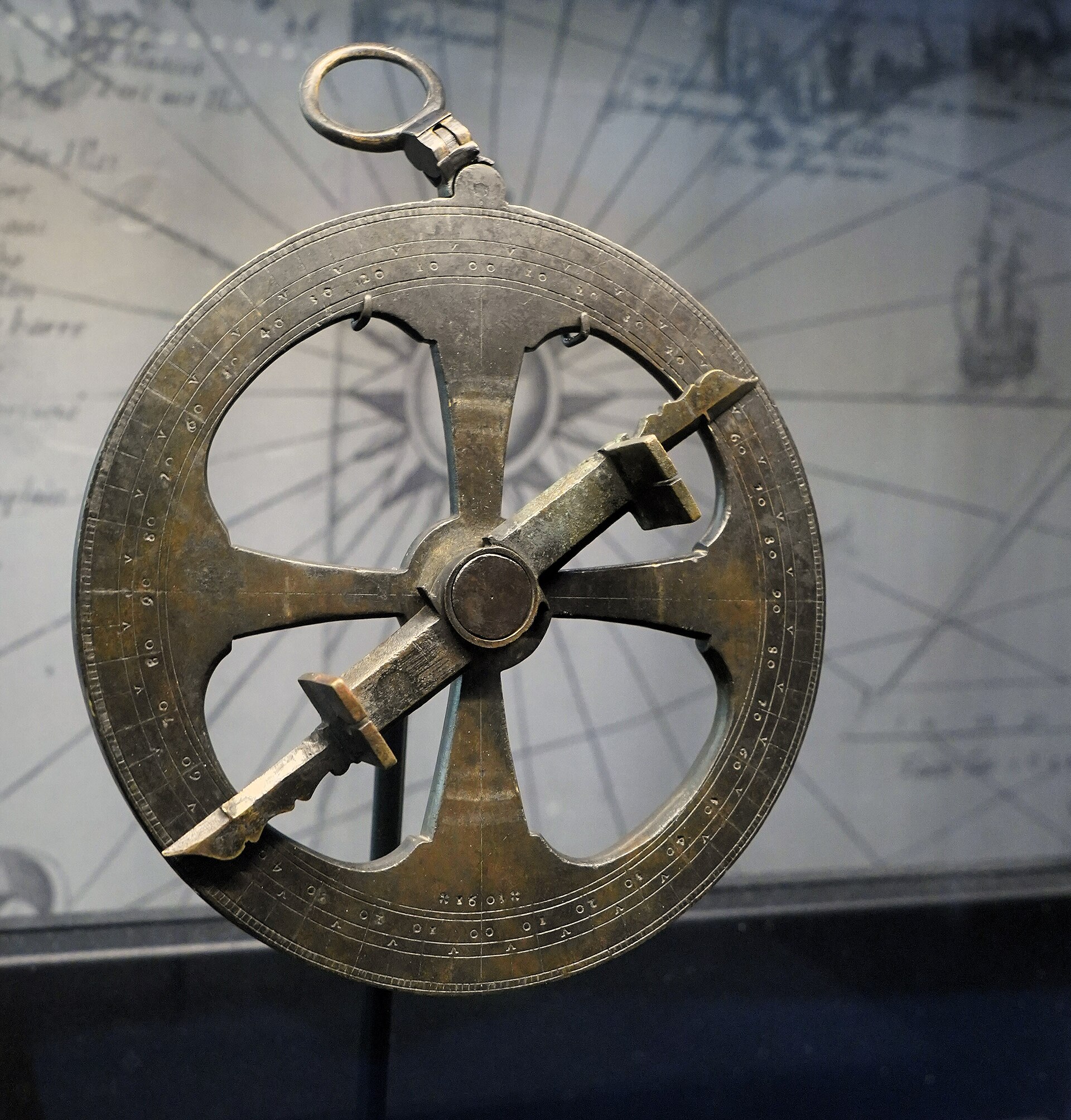
A mariner's astrolabe from 1603. It was used to measure the height of the Sun and work out how far north or south the ship was.. Photo: Astrolabe de marin, France, 1603, Pierre5018, CC BY-SA 4.0, modified: reduced in size 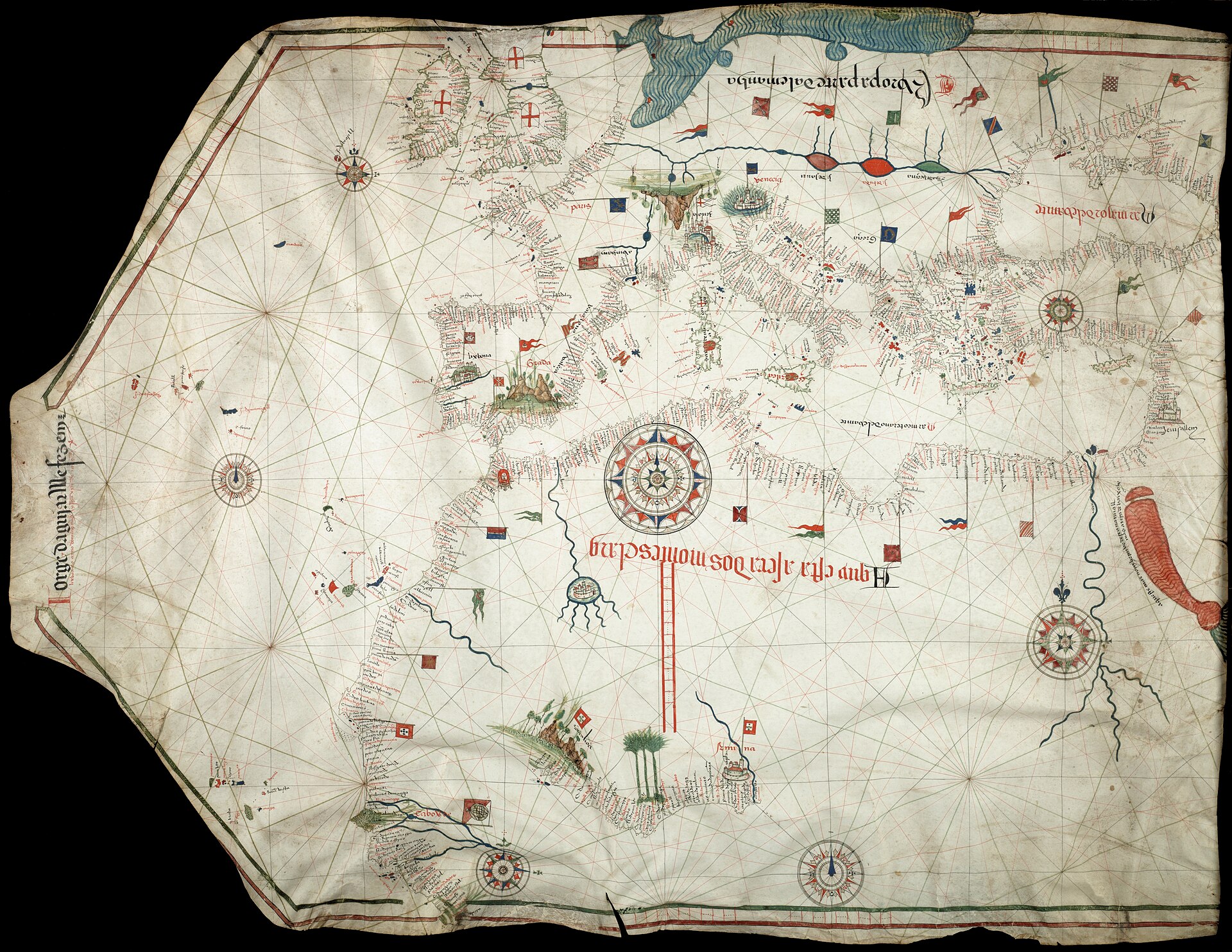
A sea chart by the Portuguese Jorge de Aguiar from 1492. The network of lines helped to choose a direction with the compass.. Photo: Jorge Aguiar 1492 MR, Jorge de Aguiar, Public domain, modified: reduced in size 
Peppercorns on the plant. Pepper was a valuable spice that did not grow in Europe.. Photo: Black Pepper (Piper nigrum) fruits, K Hari Krishnan, CC BY-SA 3.0, modified: reduced in size 3. Portugal and Spain sail far
Explorers sailed on voyages paid for by kings. The kings wanted wealth and power. Every voyage brought knowledge of the world and new coasts on the maps. The years are known dates, except the first one.
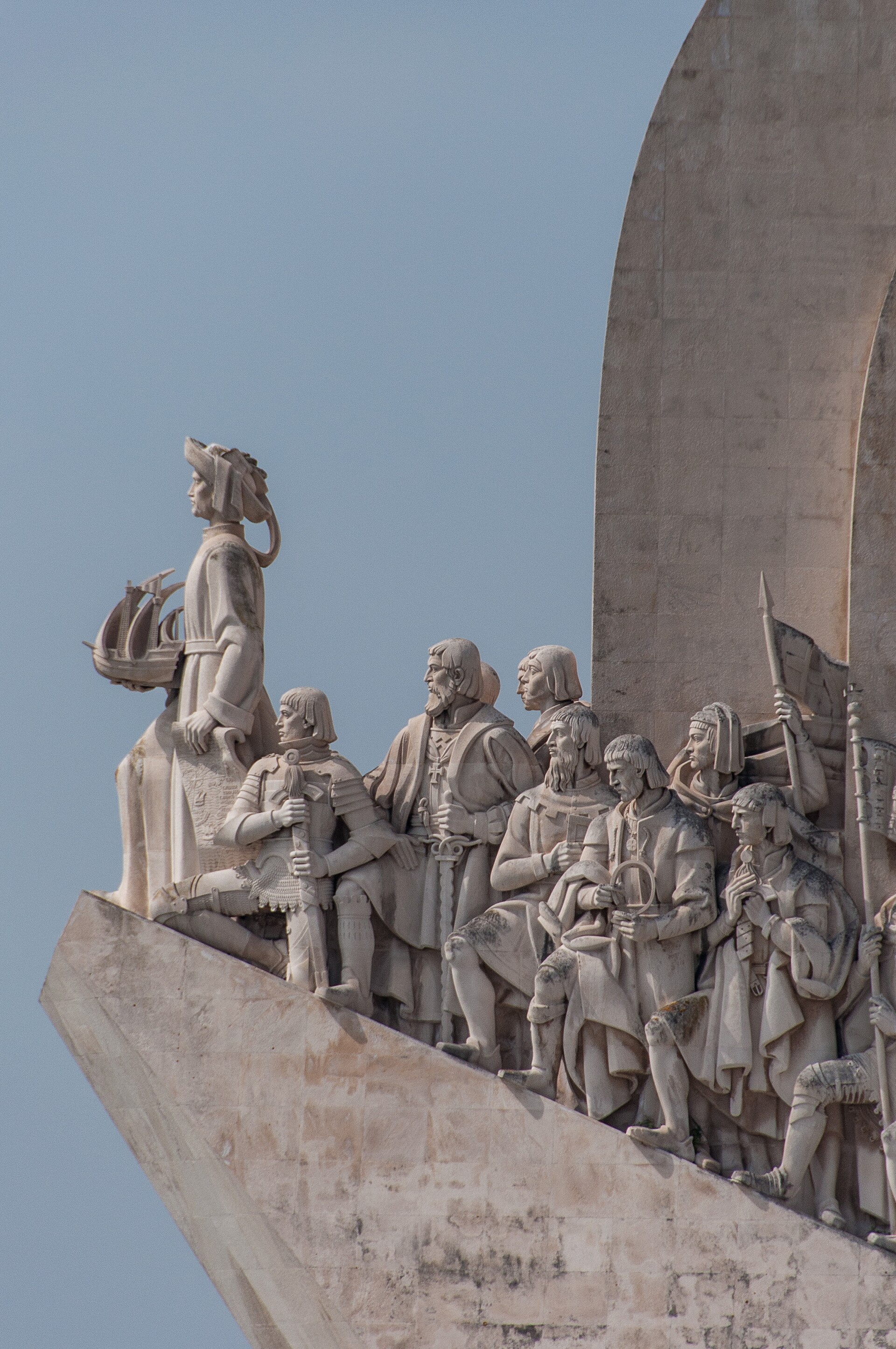
The Monument to the Discoveries in Lisbon. Henry the Navigator stands at the prow.. Photo: Moument of Discoveries (14752547010), Mark Fischer, CC BY-SA 2.0, modified: reduced in size 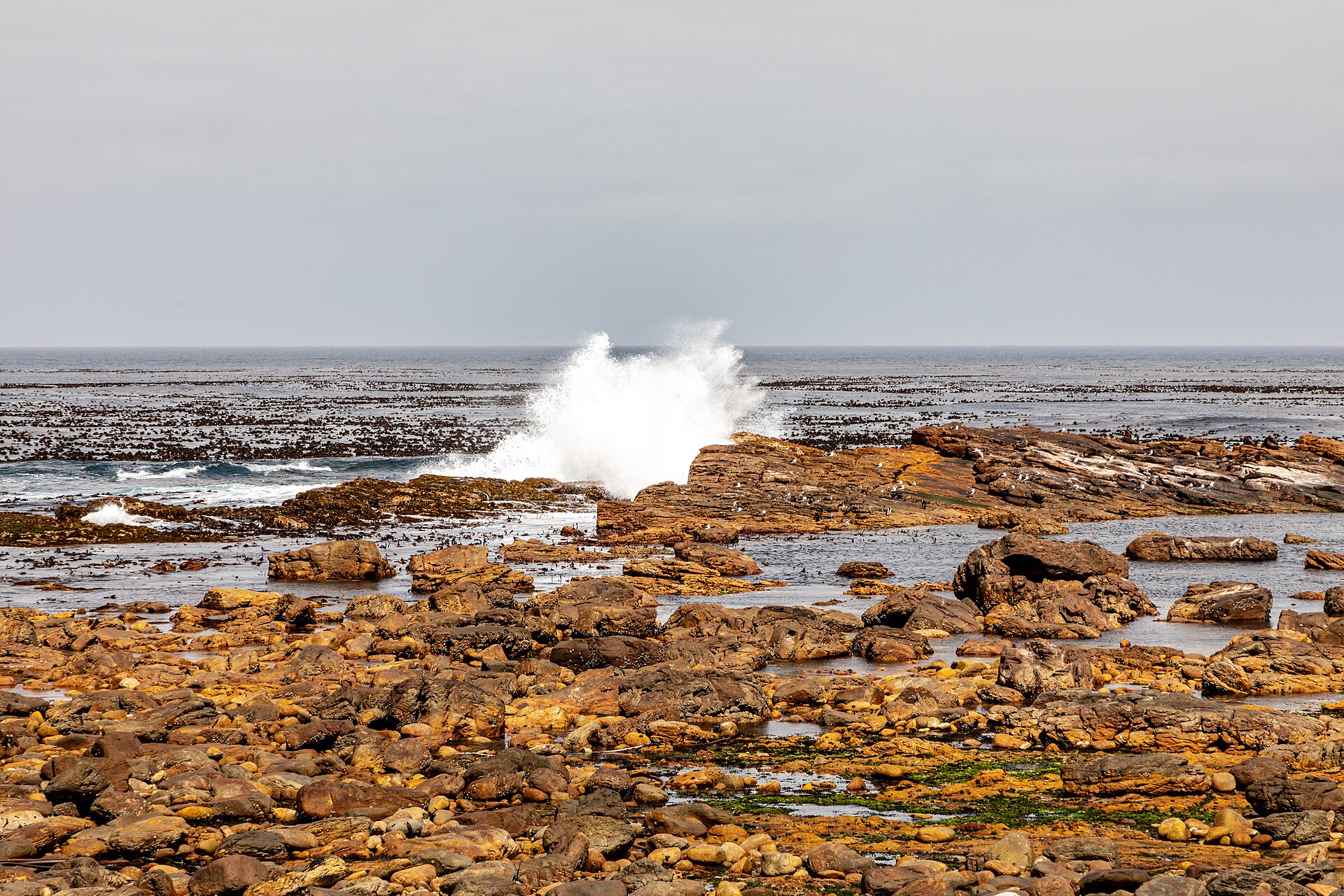
The Cape of Good Hope in South Africa. Dias sailed round it in 1488.. Photo: Cape Town (ZA), Cape Peninsula National Park, Cape of Good Hope -- 2024 -- 3326, Dietmar Rabich, CC BY-SA 4.0, modified: reduced in size - early 1400s Portugal explores the west coast of Africa. The voyages are supported by Prince Henry the Navigator.
- 1488 Bartolomeu Dias sails round the southern tip of Africa
- 1492 Columbus sails west in the service of Spain and reaches the islands of the Caribbean
- 1494 The Treaty of Tordesillas: Spain and Portugal divide the lands outside Europe
- 1498 Vasco da Gama sails round Africa to India, to Calicut
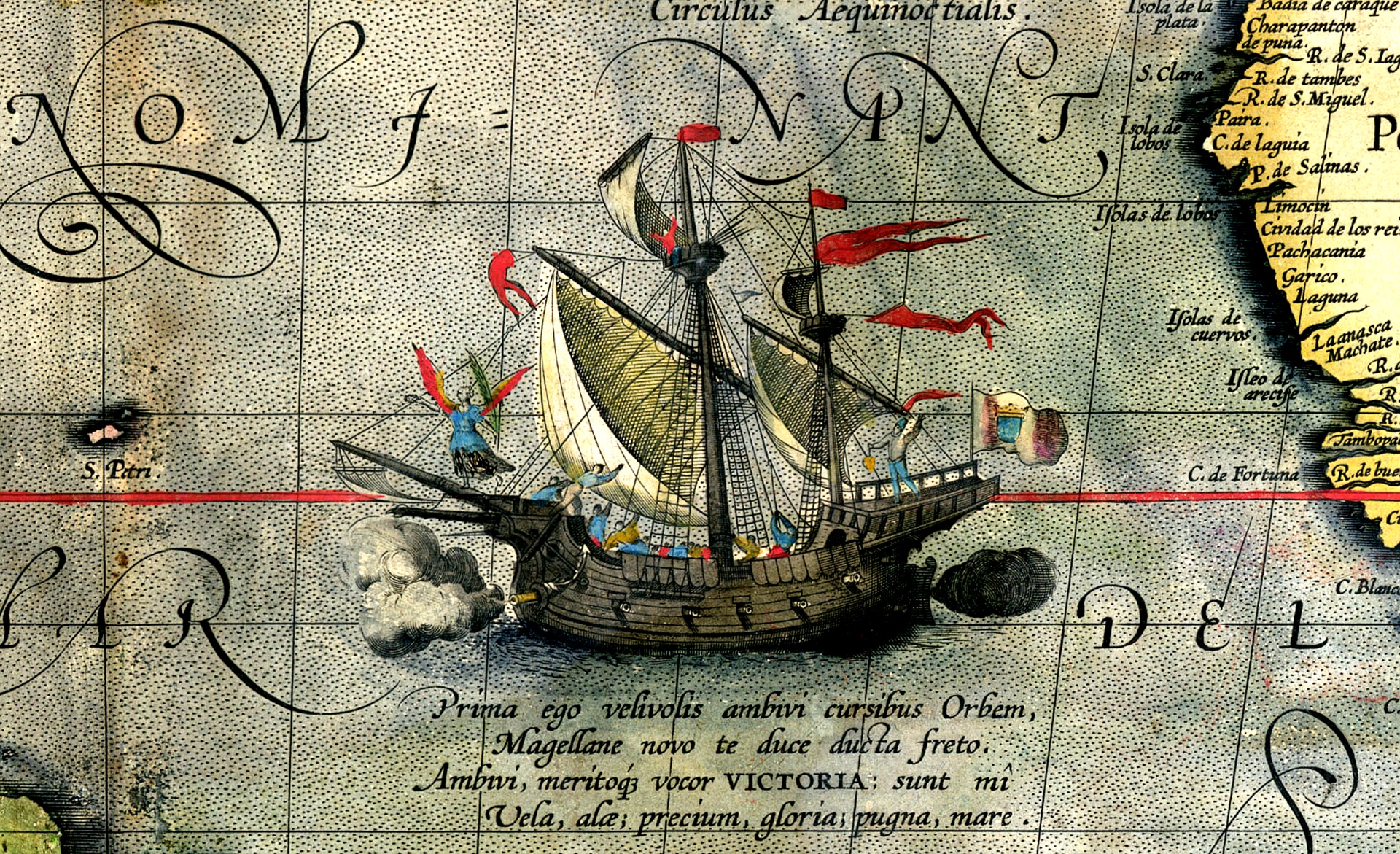
- 1519–1522 Magellan's expedition sails round the world. The voyage is completed by Juan Sebastián Elcano.
4. The routes on the map
Dias and da Gama sailed round Africa. Columbus crossed the Atlantic and reached the Caribbean. Magellan's expedition sailed round the southern tip of South America, crossed the Pacific Ocean and returned to Spain by the east.
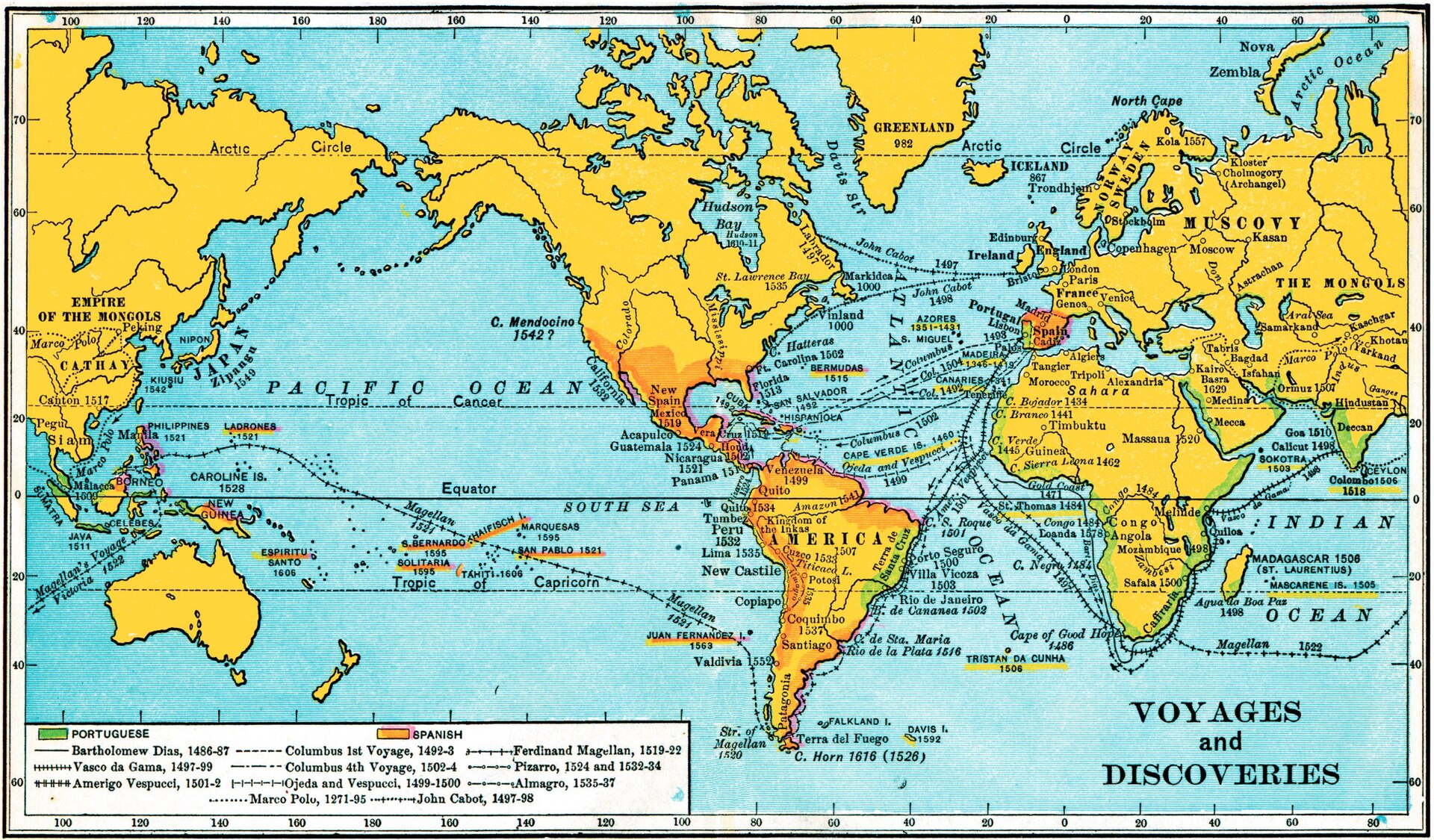
The routes of the voyages of discovery on an old school map. The names on the map are in English, and some years differ from what we know today.. Photo: Voyages and discoveries, Victor Duruy, Public domain, modified: reduced in size 5. Columbus and America
In 1492 Columbus sailed west and reached the islands of the Caribbean. He thought he had arrived in Asia. Millions of people already lived in America, for example the Taíno, the Aztecs and the Inca. Soon Europeans understood that a new continent had been found.
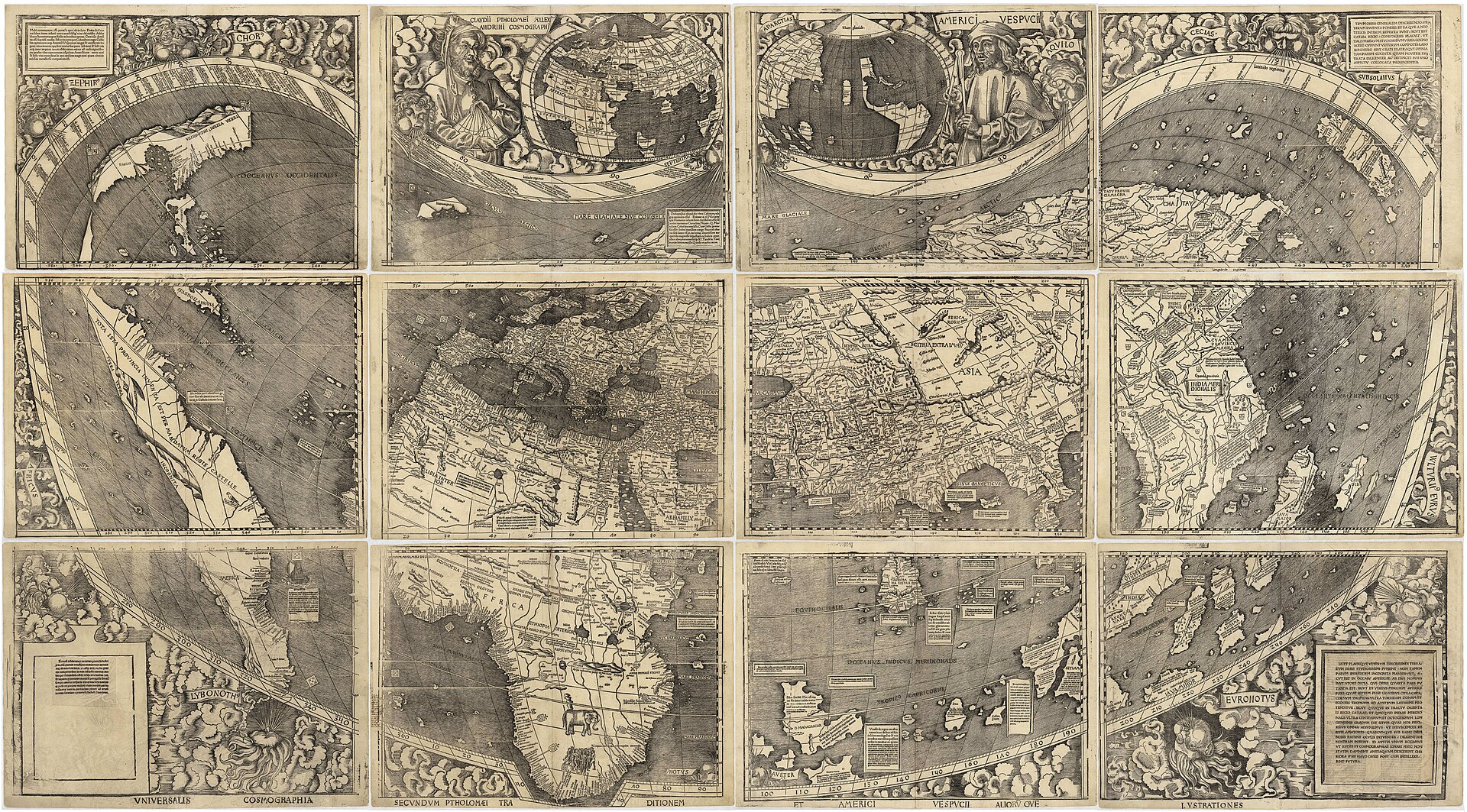
The world map of Martin Waldseemüller from 1507. On it the new continent is named America.. Photo: Waldseemuller map 2, Martin Waldseemüller, Public domain, modified: reduced in size 6. Consequences: new things and destruction
The parts of the world became joined. New foods, such as the potato and maize, came to Europe. Diseases travelled too, and a large share of the Indigenous peoples fell ill and died. Europeans conquered territories, founded colonies and later took millions of Africans to America as slaves.
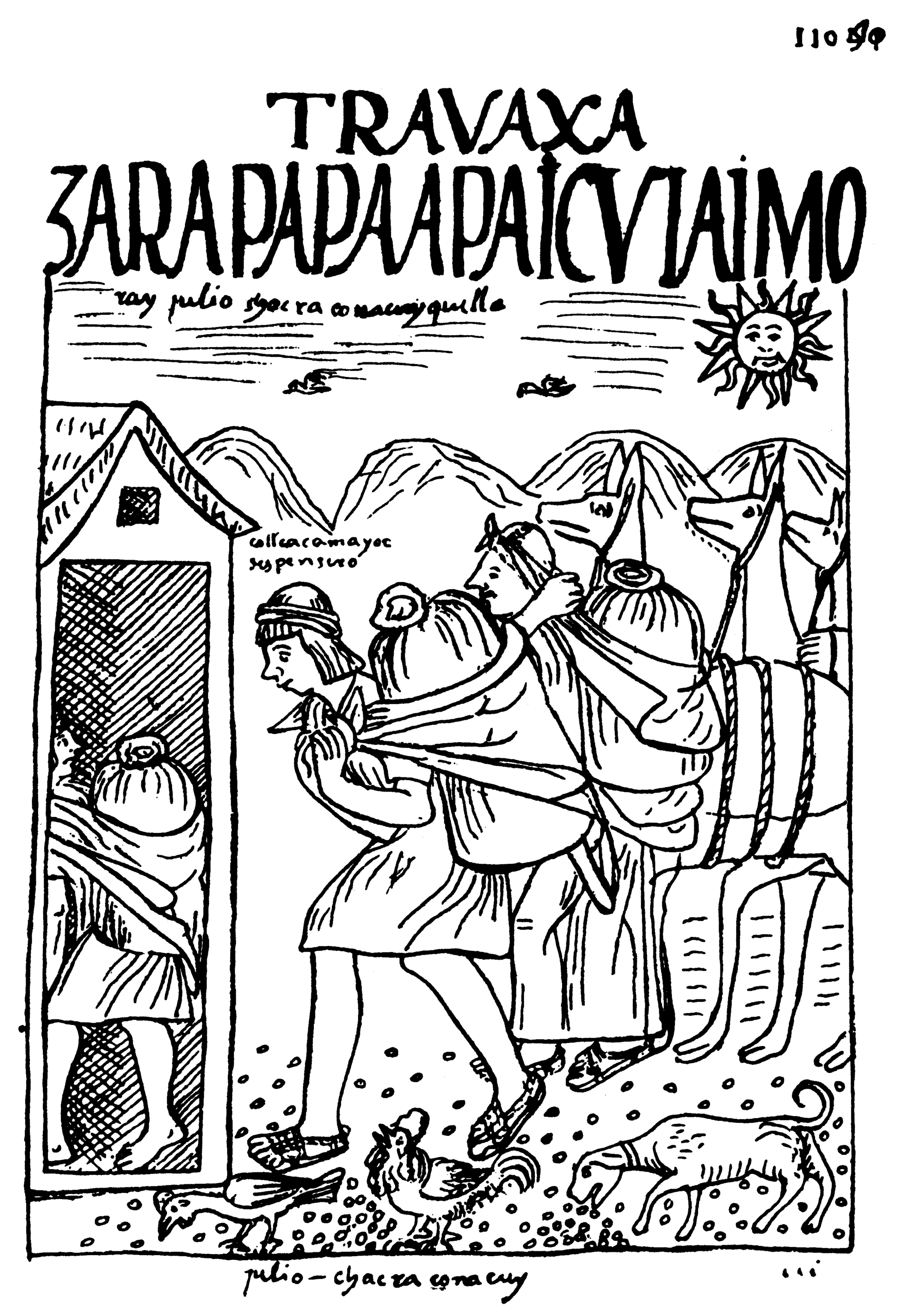
Transporting a harvest of maize and potatoes in the Andes. The artist was the Andean Guamán Poma, about 1615.. Photo: Guamán Poma 1615 1150 julio, Felipe Guamán Poma de Ayala, Public domain, modified: reduced in size 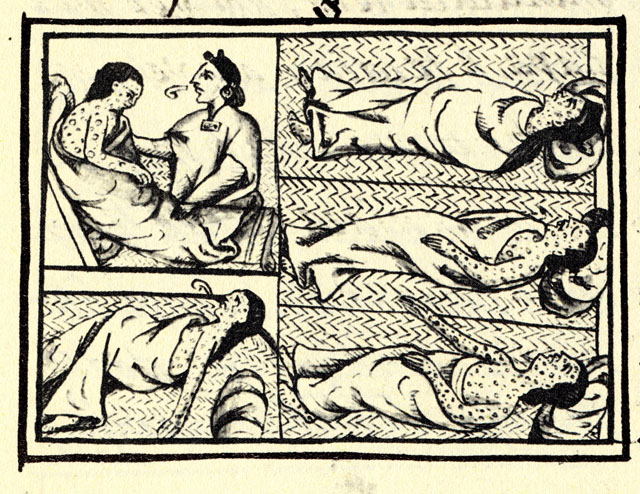
People ill with smallpox in a picture of the Florentine Codex. The disease spread in Mexico in the 1500s.. Photo: FlorentineCodex BK12 F54 smallpox, Firenzen koodeksin tekijät (Bernardino de Sahagún, kokoaja); kuvan piirtäjä tuntematon, Public domain, modified: reduced in size 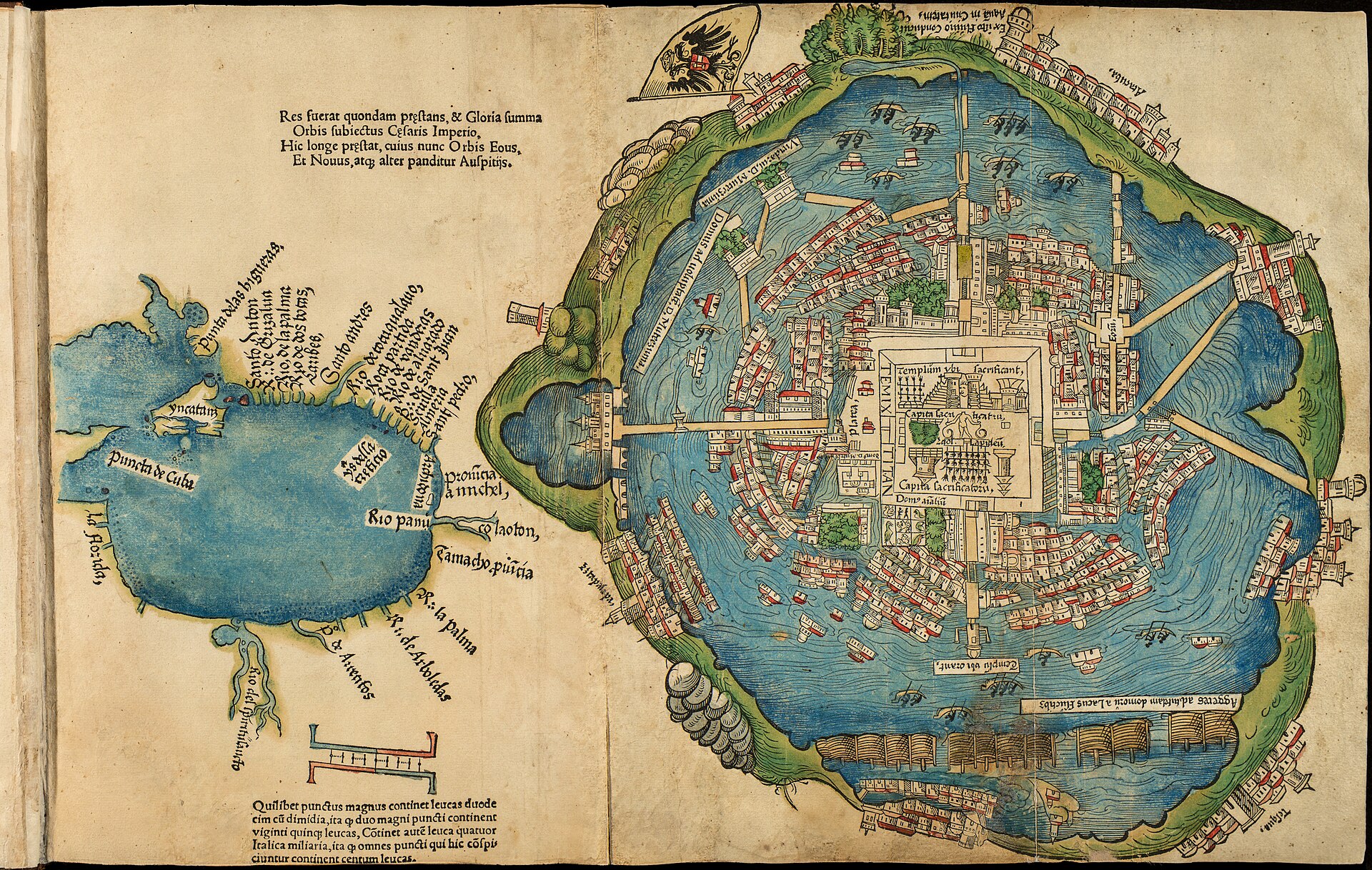
Tenochtitlan, the capital of the Aztecs, in a map from 1524. The city was in the middle of a lake, and according to estimates over 100 000 people lived there.. Photo: Mexico City and the Gulf of Mexico (1524), Hernán Cortés (painettu 1524), Public domain, modified: reduced in size 7. Think in pairs
What good and bad did the voyages of discovery bring to different people?
Why do we say that Columbus discovered America, even though people already lived there?
How did the caravel, the compass and the astrolabe help at sea?
Whose accounts do we need as sources to get a fair picture of the past?


Summary
In the 1400s and 1500s Europeans set out on voyages of discovery because they wanted spices and a sea route of their own to Asia. The caravel, the compass, the astrolabe and maps helped at sea. Dias sailed round the southern tip of Africa in 1488, Columbus reached America in 1492 and da Gama reached India in 1498. Magellan's expedition sailed round the world in 1519–1522. Millions of people already lived in America. The voyages brought new foods, but also diseases, conquests, colonies and slavery.
Frequently asked questions
Did Columbus discover America?
He reached America in 1492, but he was not the first. Millions of people already lived on the continent. The Vikings had visited North America in about the year 1000. Columbus thought he had reached Asia.
Why were the people of America called “Indians”?
Columbus thought he had reached India, and so he called the inhabitants Indians. Today the word Indigenous people or the people's own name, such as Taíno, Aztec or Inca, is often used.
Who was the first to sail round the world?
Magellan's expedition set out in 1519. Magellan died in the Philippines in 1521. Juan Sebastián Elcano led the ship Victoria back to Spain in 1522, and of the five ships only this one returned.