
Ancient Rome: teaching, slides and questions
The legend of Romulus, the republic and the emperors, legions, roads and city life, and the legacy of Latin, with pictures, for grades 4–6.
Rome grew from a single city into an empire that stretched from Britain to Egypt. The article suits history lessons in grades 4–6, and every step can be shown to the class as a slide.
At the end, the pupil can tell what is legend and what is history in the founding of Rome, how the republic turned into an empire, and how the army, the roads and city life worked. They also know what Latin and the Romans have left to us.
Key concepts
- republic
- A republic is a form of state in which the head of state is not a hereditary monarch but is usually chosen for a fixed term. Finland has been a republic since 1919. The word comes from the Latin res publica, meaning public matter.
- emperor
 The highest ruler of the Roman Empire. The first emperor was Augustus, who came to power in 27 BC. The emperor's face and name were stamped on coins, and many emperors were worshipped as gods after they died.
- legionary
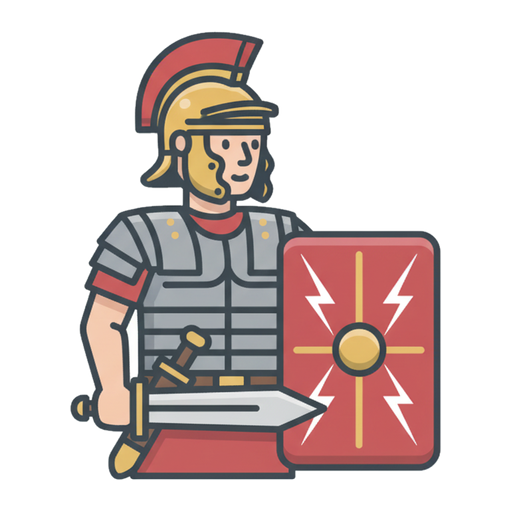 A professional Roman soldier with a helmet, a rectangular shield and a short sword. A legionary served for as long as 25 years and, between campaigns, built roads, bridges and camps. One legion had about 5,000 soldiers.
- Roman road
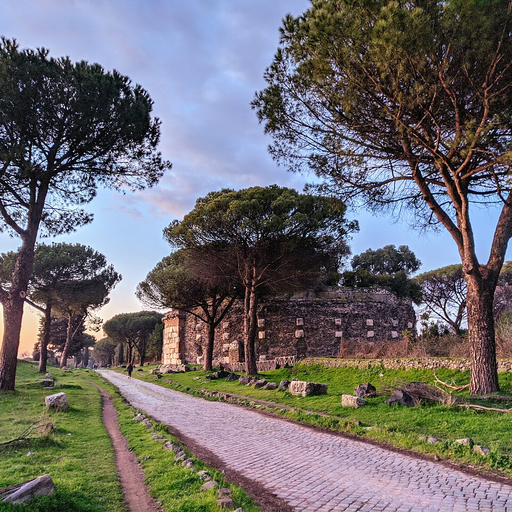 A straight road paved with stones. The Romans built more than 80,000 kilometres of paved roads across their empire so that soldiers and traders could travel fast. The oldest and most famous is the Via Appia, begun in 312 BC.
- aqueduct
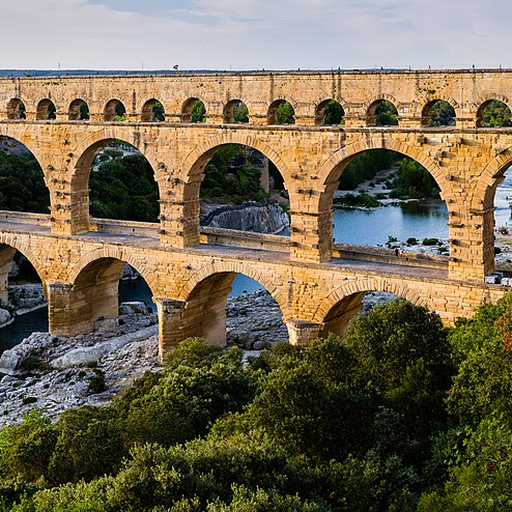 A channel that carried water to a city from far away in the hills. Across valleys the water ran along tall arched bridges, like the Pont du Gard in France. Aqueducts brought water to Rome for fountains, baths and homes.
- gladiator
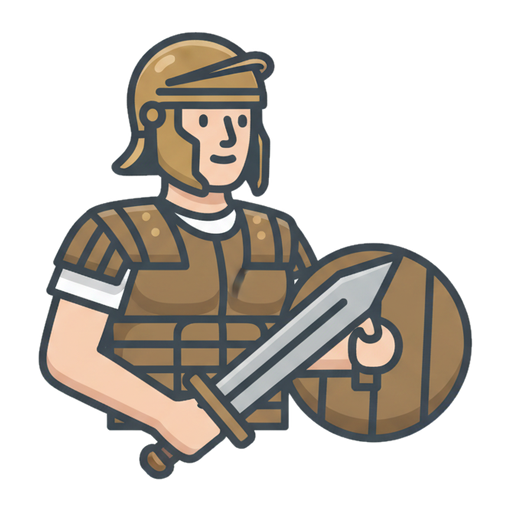 A fighter who fought in front of crowds in an amphitheatre. Gladiators were often slaves or prisoners of war, and they trained in gladiator schools. A very successful gladiator could win his freedom.
- Roman numerals
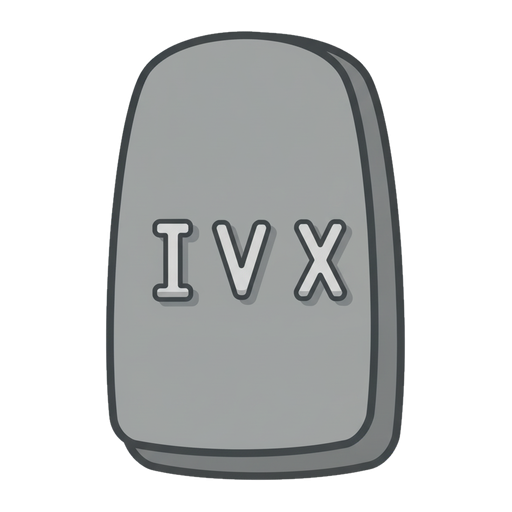 The Roman way of writing numbers with letters: I = 1, V = 5, X = 10, L = 50, C = 100, D = 500 and M = 1000. For example, the year 2026 is written MMXXVI. Roman numerals can still be seen on clocks and on dates on buildings.
- archaeologist
 A scientist who digs up old objects and remains to find out about the past. An archaeologist digs carefully with a trowel and a brush and records exactly where each find was. We know almost everything about the Stone Age thanks to archaeologists, because there was no writing yet.
Related exercises
There is no exercise for this topic yet
Teacher or creator: make the first exercise with Puro Editor and choose Ancient Rome as its topic. It will appear here as soon as it is published.
1. What do you know about Rome?
Who founded Rome?
How did one city become a huge empire?
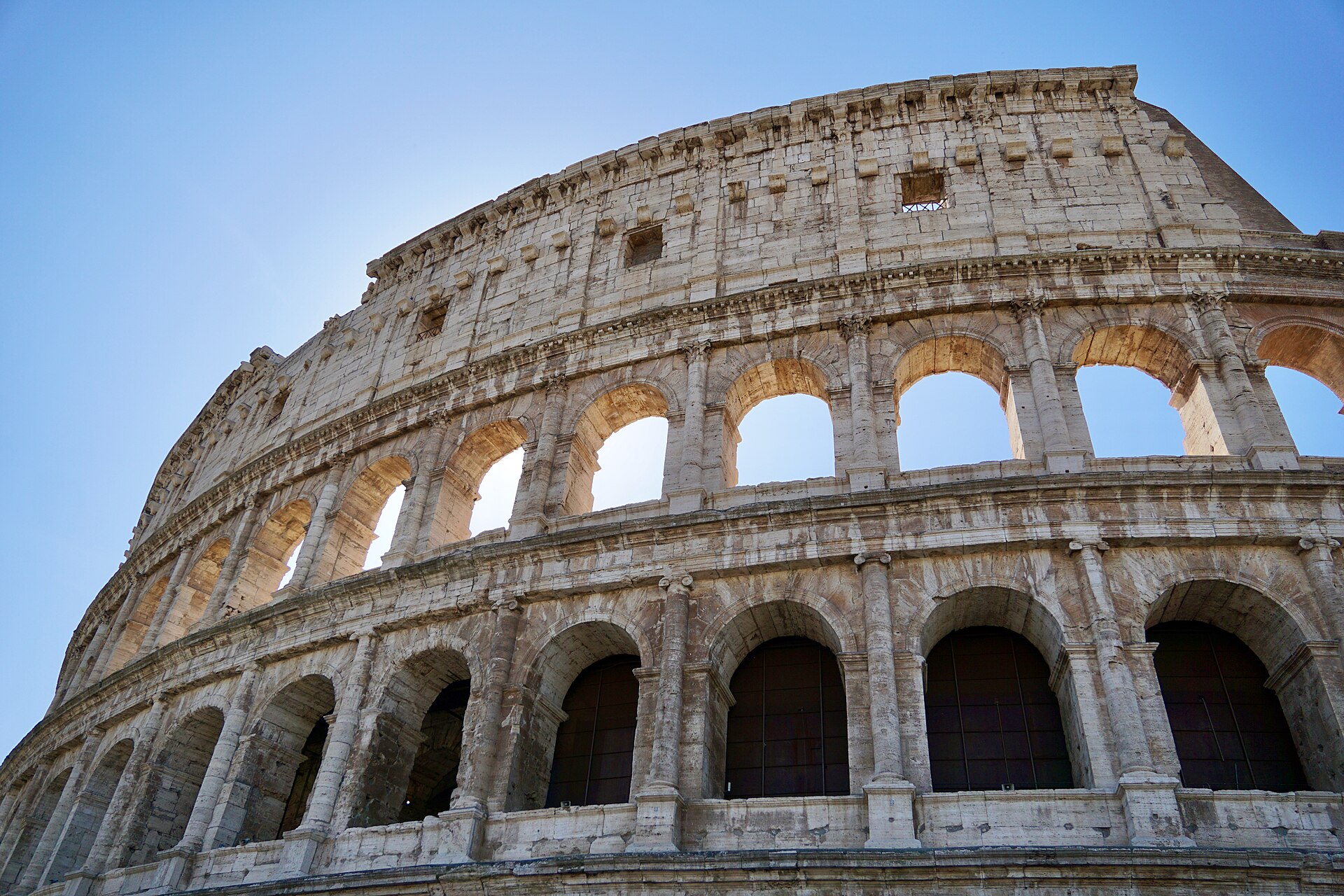
What happened in the Colosseum?
Where do you see Roman numerals or Latin words?2. The story of Rome, about 753 BCE–476 CE
According to tradition, Romulus founded Rome in 753 BCE. That is a legend. Archaeologists have found old dwellings on the hills, but no twins. Rome was first a republic led by the senate, a council of powerful men. Augustus became the first emperor.
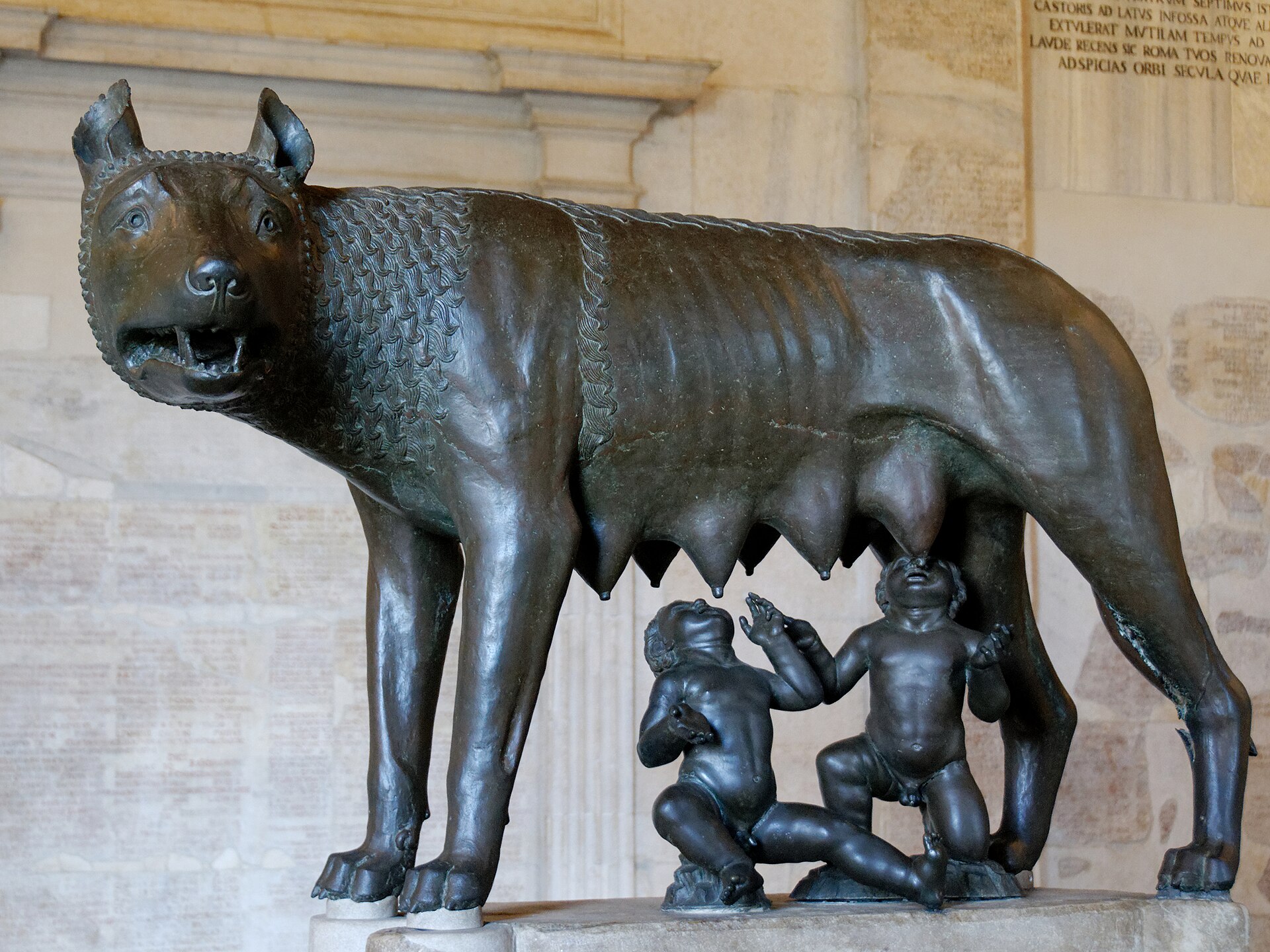
The Capitoline Wolf, a bronze statue in Rome. The twins were added to the statue in the 1400s.. Photo: Capitoline she-wolf Musei Capitolini MC1181, Unknown author, Public domain, modified: reduced in size 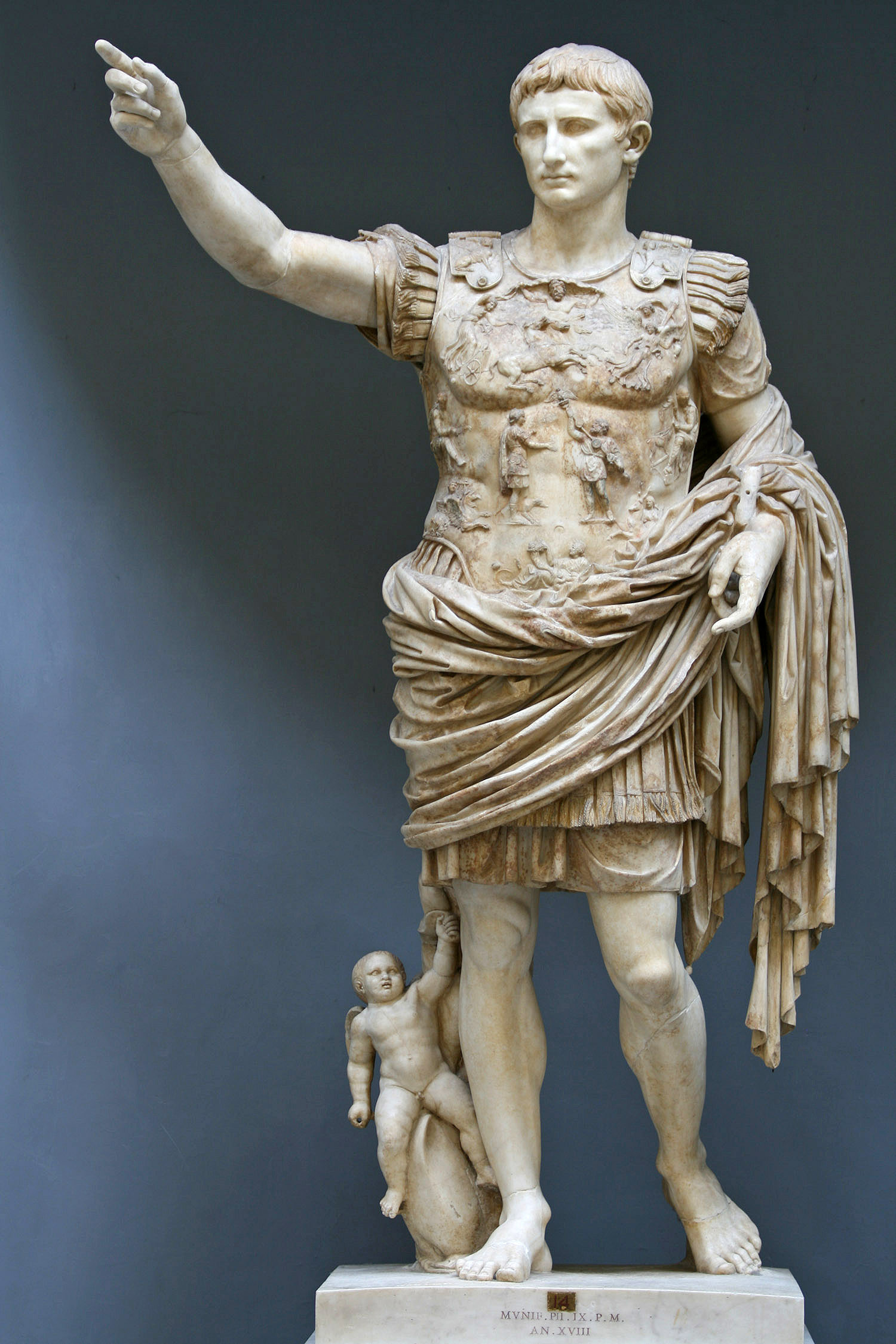
The emperor Augustus. The statue was found at Prima Porta near Rome.. Photo: Statue-Augustus, Till Niermann, Public domain, modified: reduced in size - 753 BCE According to tradition, Romulus founds Rome. This is a legend.
- 509 BCE According to tradition, Rome is no longer ruled by kings but is a republic
- 27 BCE Augustus takes power and is Rome's first emperor
- about 117 The empire is at its largest
- 476 The last emperor of the western empire is deposed. Western Rome ends.
3. The empire at its largest, about the year 117
In about the year 117 the Roman Empire was at its largest. It stretched from Britain to Egypt and from Spain to Mesopotamia. The Mediterranean Sea was in the middle, and the Romans called it “our sea”. The names on the map are in Latin.
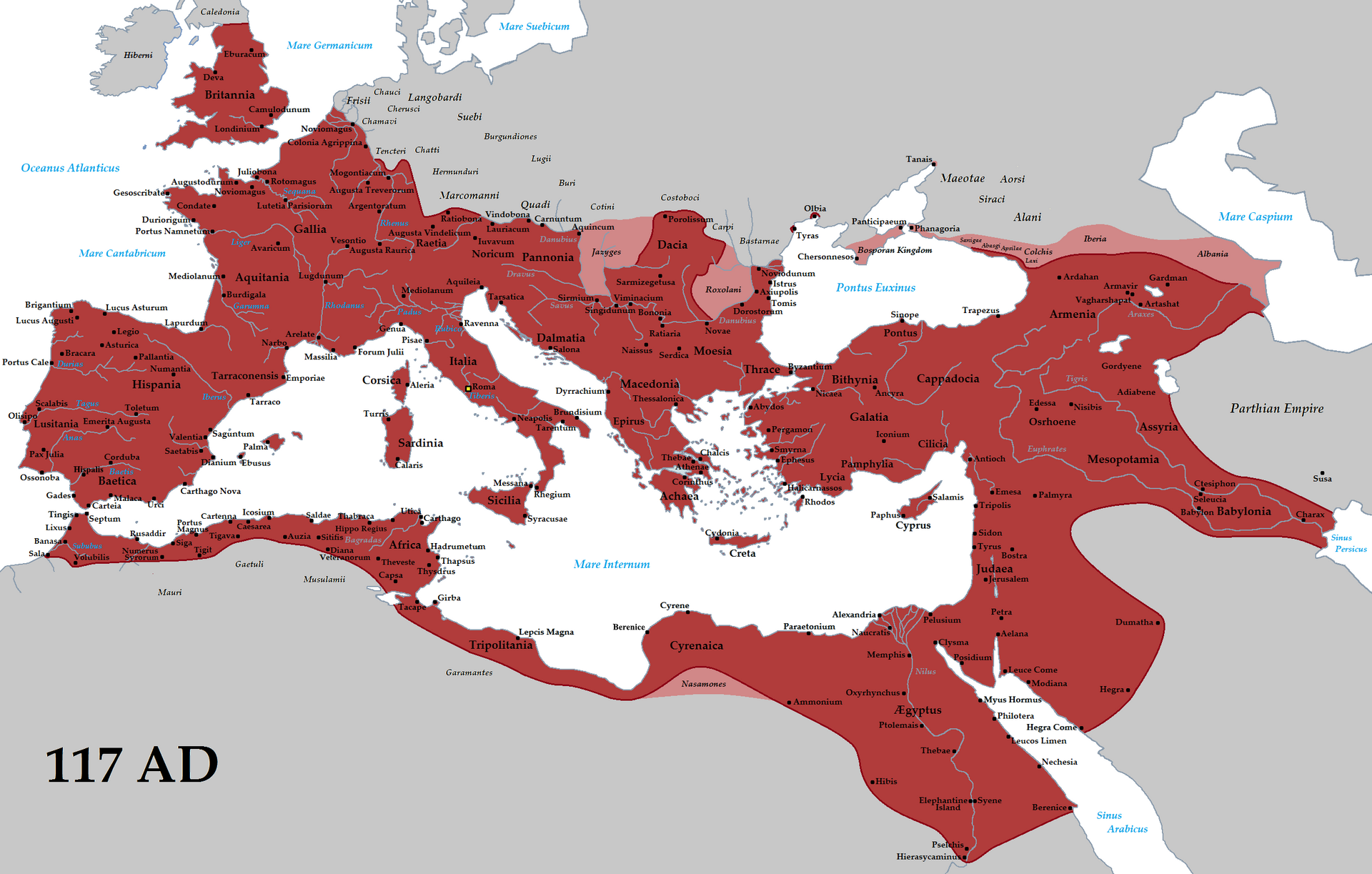
The Roman Empire in the year 117. Lighter red: areas that were under Roman rule only briefly or partly.. Photo: Roman Empire Trajan 117AD, Tataryn, CC BY-SA 3.0, modified: reduced in size 4. The army and the roads
A professional army held the empire together. Legionaries served for many years and built roads, bridges and camps on campaigns. Paved Roman roads linked the parts of the empire. Hadrian's Wall in Britain was a border line.
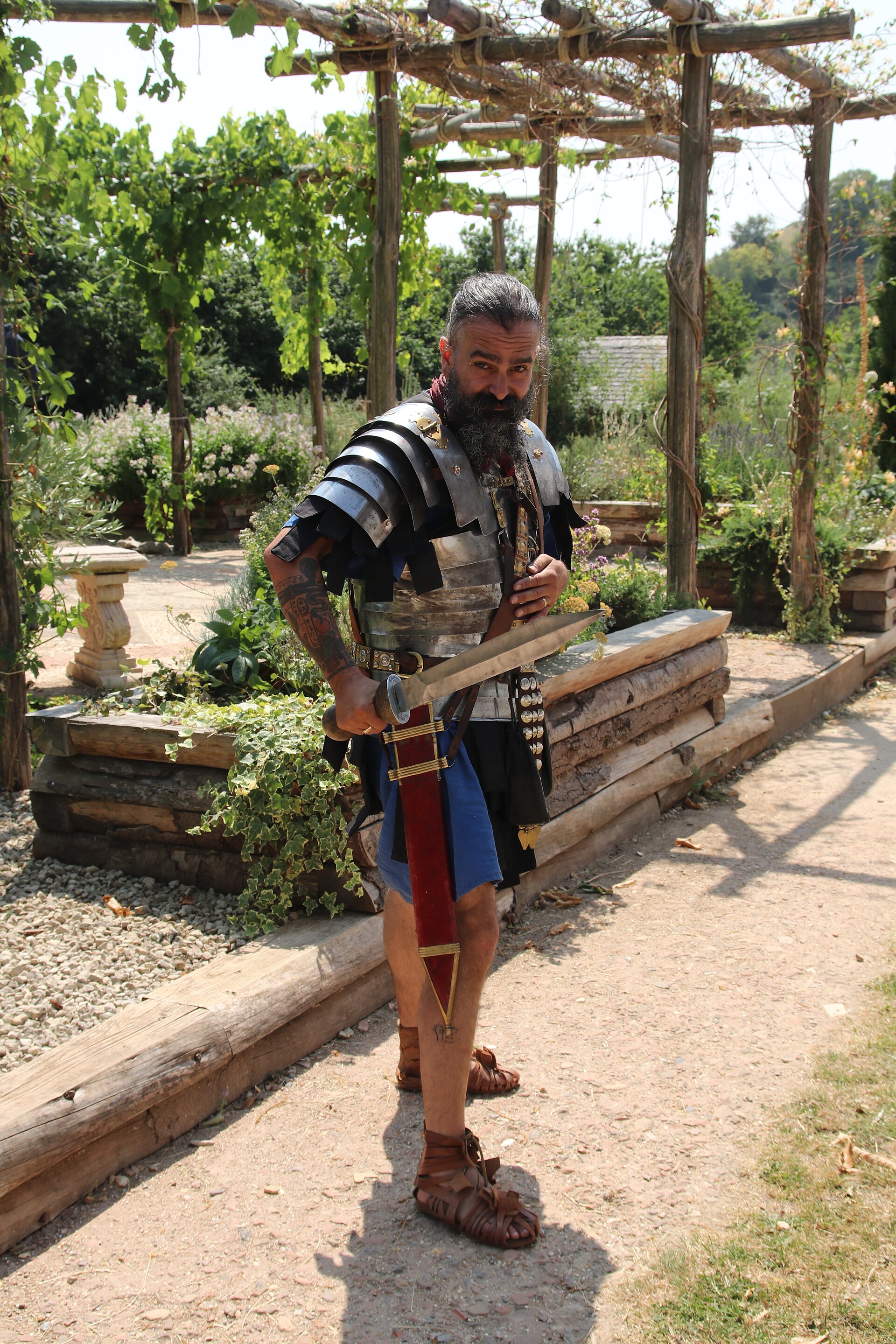
A modern-day enthusiast in a legionary's kit. Photo: Roman Legionary Reenactor, Butser Roman Villa, Tim Sheerman-Chase, CC BY 4.0, modified: reduced in size 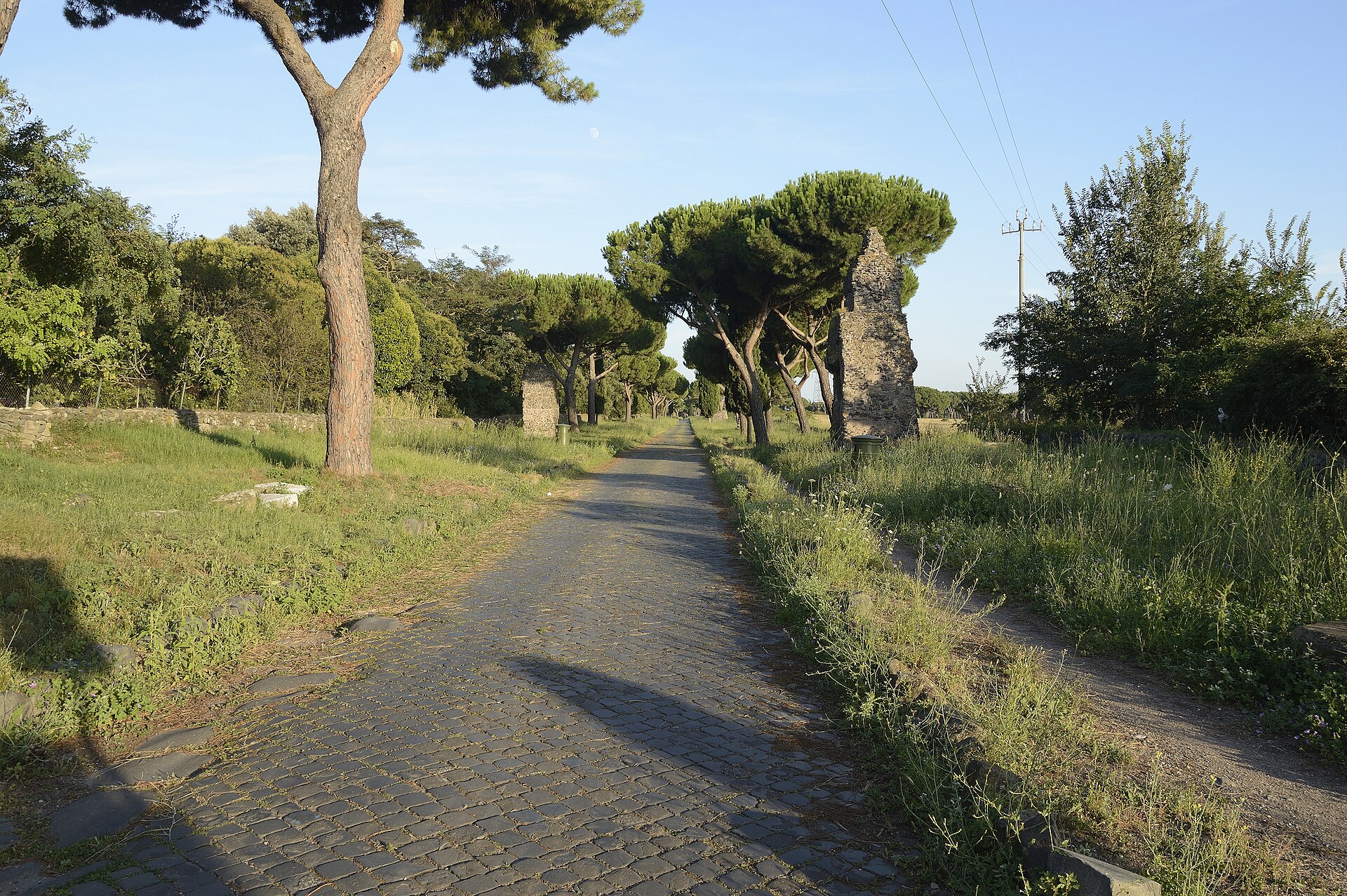
The Via Appia near Rome. Its building began in 312 BCE.. Photo: Appian Way, Livioandronico2013, CC BY-SA 4.0, modified: reduced in size 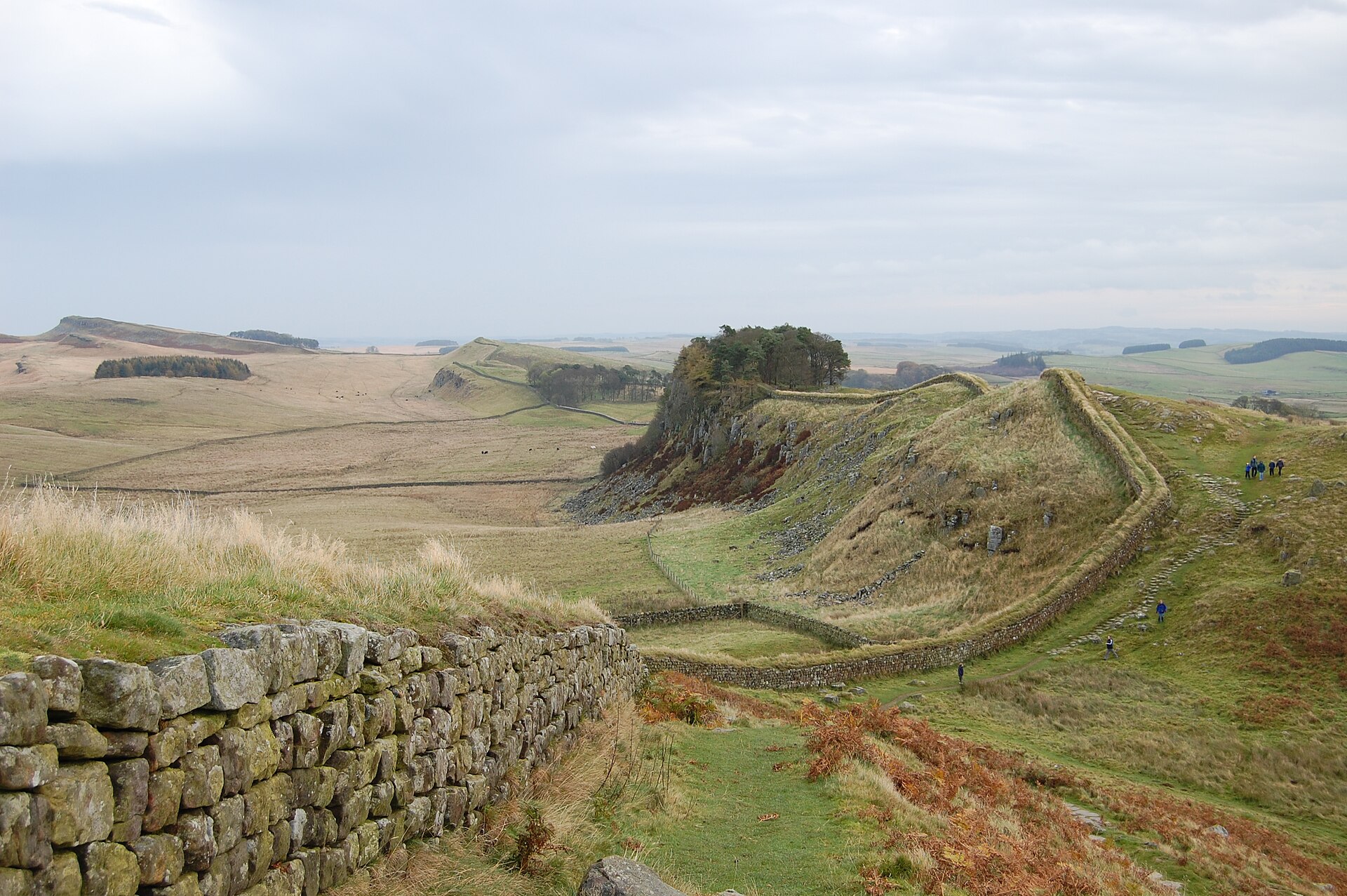
Hadrian's Wall in northern England. Building began in about the year 122.. Photo: Hadrian's Wall west of Housesteads 3, Steven Fruitsmaak, Public domain, modified: reduced in size 5. The Forum and the people of the city
The Forum was the centre of Rome: there people traded, gave speeches and settled disputes. Only free male citizens were allowed to vote. Women did not vote, and slaves had no rights. Slaves worked in homes, in fields and in workshops.
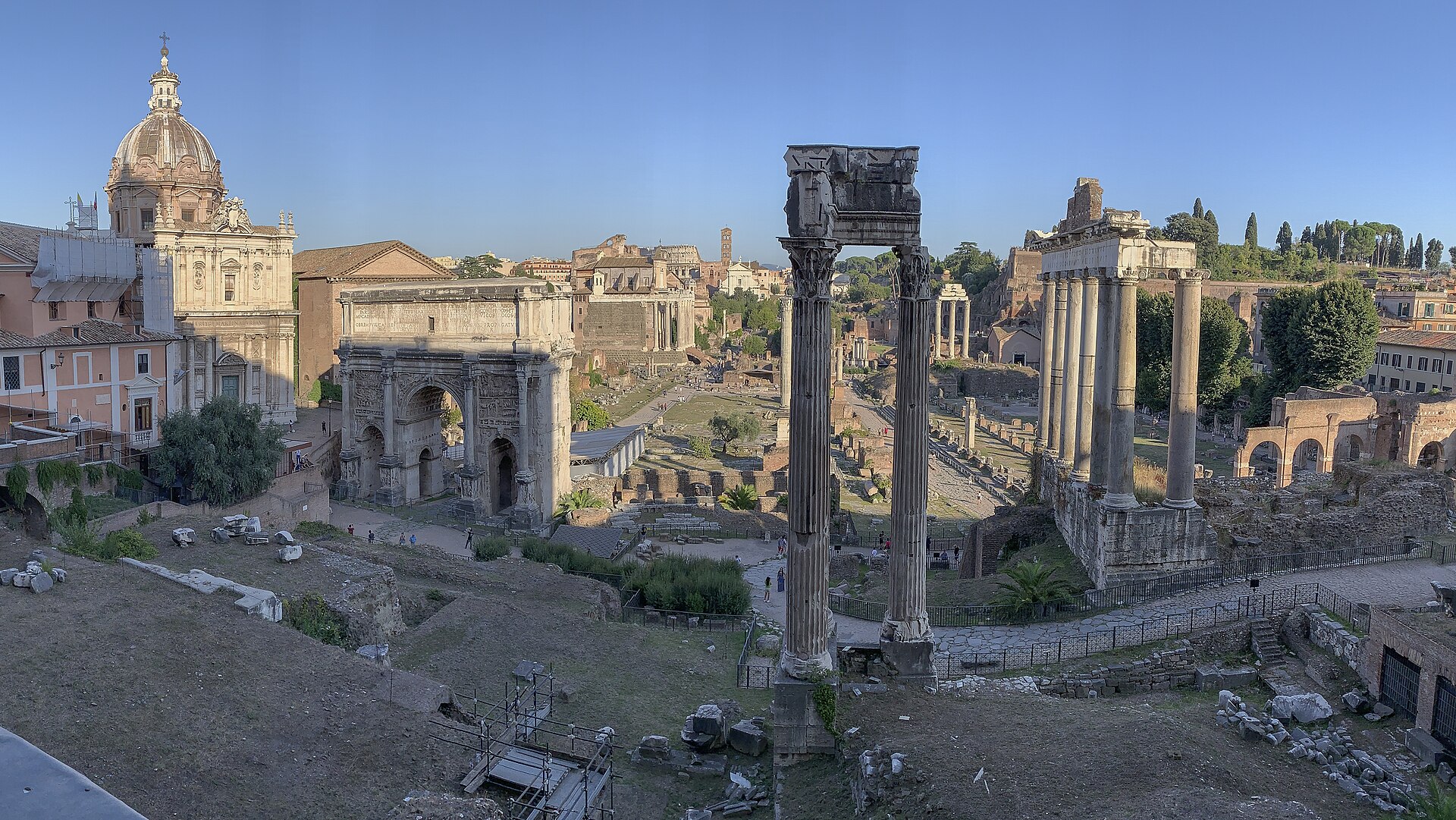
The Forum Romanum in Rome, seen from the Capitoline Hill. Photo: Roman Forum looking East panorama, Nicholas Hartmann, CC BY-SA 4.0, modified: reduced in size 6. Buildings and the legacy of Latin
The Romans built aqueducts, which brought water to cities. In the Colosseum, gladiators, often slaves or prisoners of war, fought in front of a crowd. Italian, French and Spanish developed from Latin. Latin words are still used in law, and Roman numerals appear on clocks.
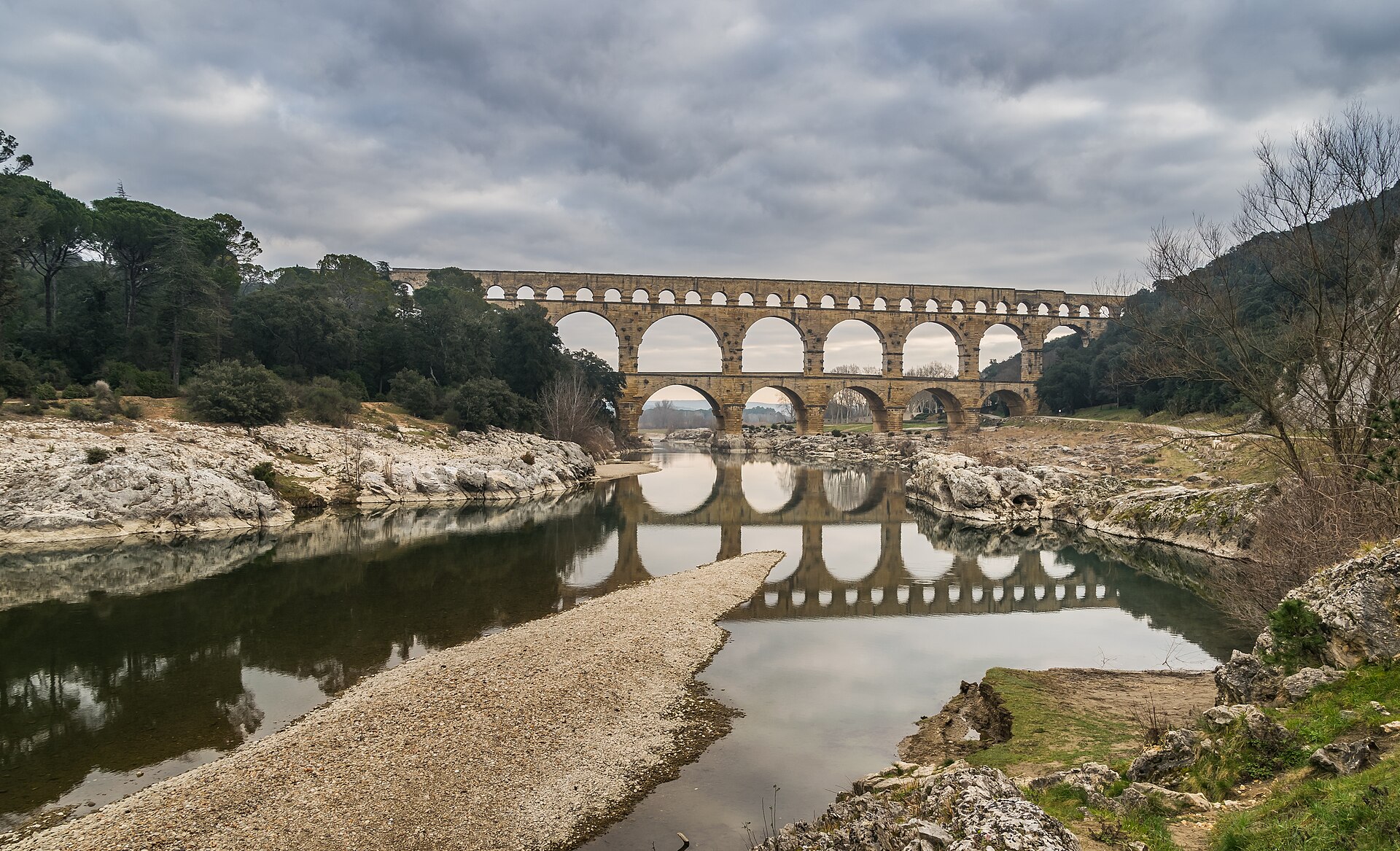
The Pont du Gard in southern France. The aqueduct carried water to the city of Nîmes.. Photo: Pont du Gard (30), Krzysztof Golik, CC BY-SA 4.0, modified: reduced in size 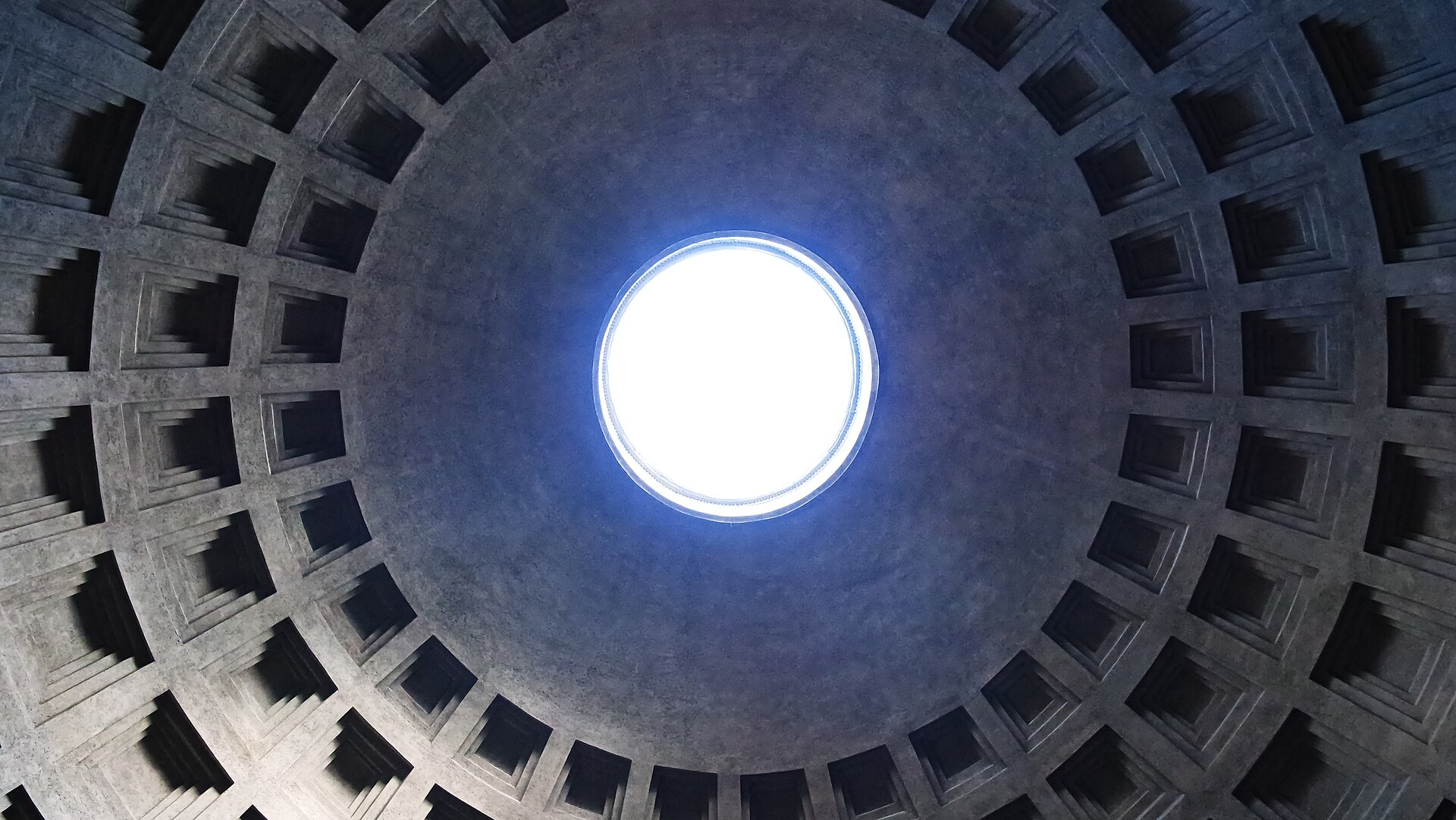
The dome of the Pantheon in Rome. It is made of concrete, and there is a round opening in the middle.. Photo: Interior oculus of the Rome Pantheon, T. Le Berre, CC BY-SA 4.0, modified: reduced in size 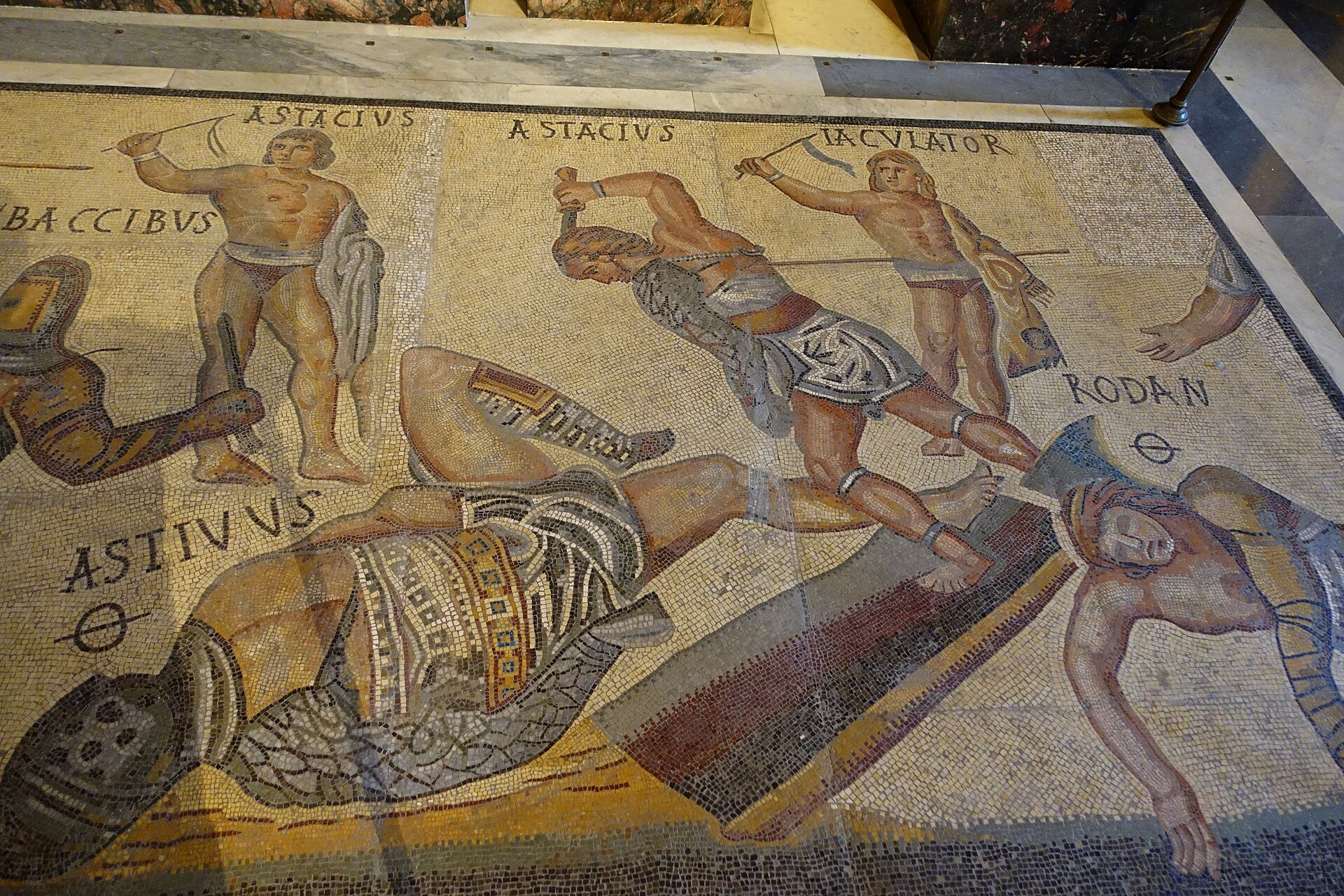
A mosaic of gladiators from the 300s–400s CE. The names are written in Latin.. Photo: Gladiators, fragment, Roman, 300-400 AD, marble and limestone mosaic - Galleria Borghese - Rome, Italy - DSC04941, Daderot (valokuva); mosaiikin tekijä tuntematon, Public domain, modified: reduced in size 
Roman numerals on a clock face: XII is twelve and IX is nine. Photo: Roman numerals on alarm clock (Unsplash), Ales Krivec, CC0, modified: reduced in size 7. Think in pairs
Why is the story of the she-wolf and the twins considered a legend?
Why did roads help the empire to hold together?
What was the difference between the life of a citizen and a slave in Rome?
What Roman things can you find in your own language or everyday life?


Summary
Rome grew from a city into an empire. According to tradition, Romulus founded it in 753 BCE, but that is a legend. Rome was first a republic and then an empire, whose first emperor was Augustus from 27 BCE. The empire was at its largest in about the year 117. It was held together by the army and the roads. The cities had forums, aqueducts and amphitheatres, and society had citizens and slaves. The western empire ended in 476. Latin and Roman numerals live on.
Frequently asked questions
Did Romulus and Remus found Rome?
That is a legend. According to tradition, Romulus founded Rome in 753 BCE, but the story was told much later. Archaeologists know that people already lived on the hills of Rome in the 700s BCE.
When did the Roman Empire end?
The western empire ended in 476, when the last emperor was deposed. The eastern half continued from Constantinople until 1453.
Is Latin a dead language?
Nobody speaks it as a mother tongue, but it lives on in other languages. Italian, French and Spanish developed from Latin, and many words in science and law are Latin.