
Day and night: Earth's rotation and the Sun
Day and night for grades 3–4: Earth's rotation, sunrise and sunset, shadows and an experiment with a torch. Slides, questions and pictures.
Day and night happen because the Earth is a ball that turns around its own axis. The Sun always lights only one half of the Earth. Because the Earth turns, the same place is sometimes in light and sometimes in shadow. In this article we look at real pictures from space, a sunrise, shadows and the arcs of the stars. Every stage is ready to show the class as a slide.
By the end, pupils can explain why there is day and night and tell where the Sun rises and sets. The class also does an experiment with a torch and a globe.
Key concepts
- sun
 A bright star in the sky that gives us light and warmth.
- star
- A star shines in the sky at night.
- Earth
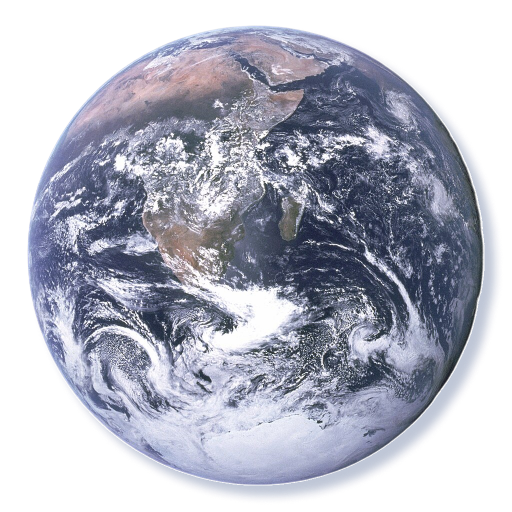 The planet we live on, which has water and air.
- day
 A day and a night together, 24 hours. In that time the Earth turns once.
- shadow
 A dark area made when an object blocks the light.
- noon
 Twelve o'clock in the daytime, when the sun is at its highest.
- night
 The dark time when most people are asleep.
- cardinal directions
 North, east, south and west. They are used to tell direction.
1. Where is the Sun at night?
Where is the Sun at night?
Why does it get light in the morning?
Why is a shadow sometimes long and sometimes short?2. The Sun lights only half of the Earth
The Sun is a star. It gives light and heat. The Earth is a ball, so the Sun always lights only one side of it. On the lit side it is day. On the shadow side it is night.
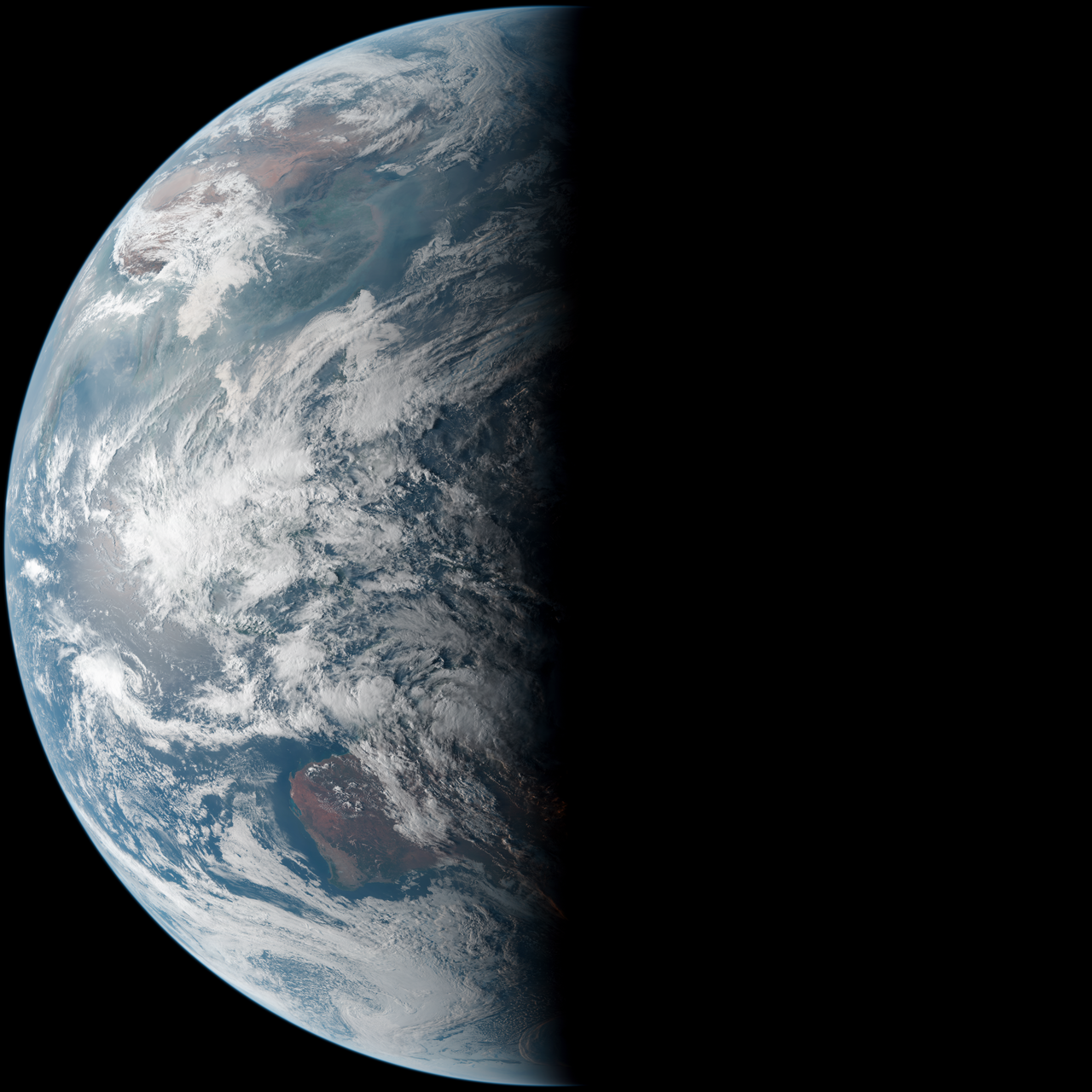
The Earth from space: only the side facing the Sun is lit. The picture comes from the Japanese weather satellite Himawari 9.. Photo: Himawari 9 half Earth illuminated left, NOAA/JMA, CC BY 4.0, modified: reduced in size 3. The Earth turns around its axis
The Earth turns around its axis. One turn takes about 24 hours, a full day and night. When our place turns towards the Sun, it is day. When it turns away, it is night. Night is not caused by the Moon or by clouds. The Sun does not go around the Earth either.
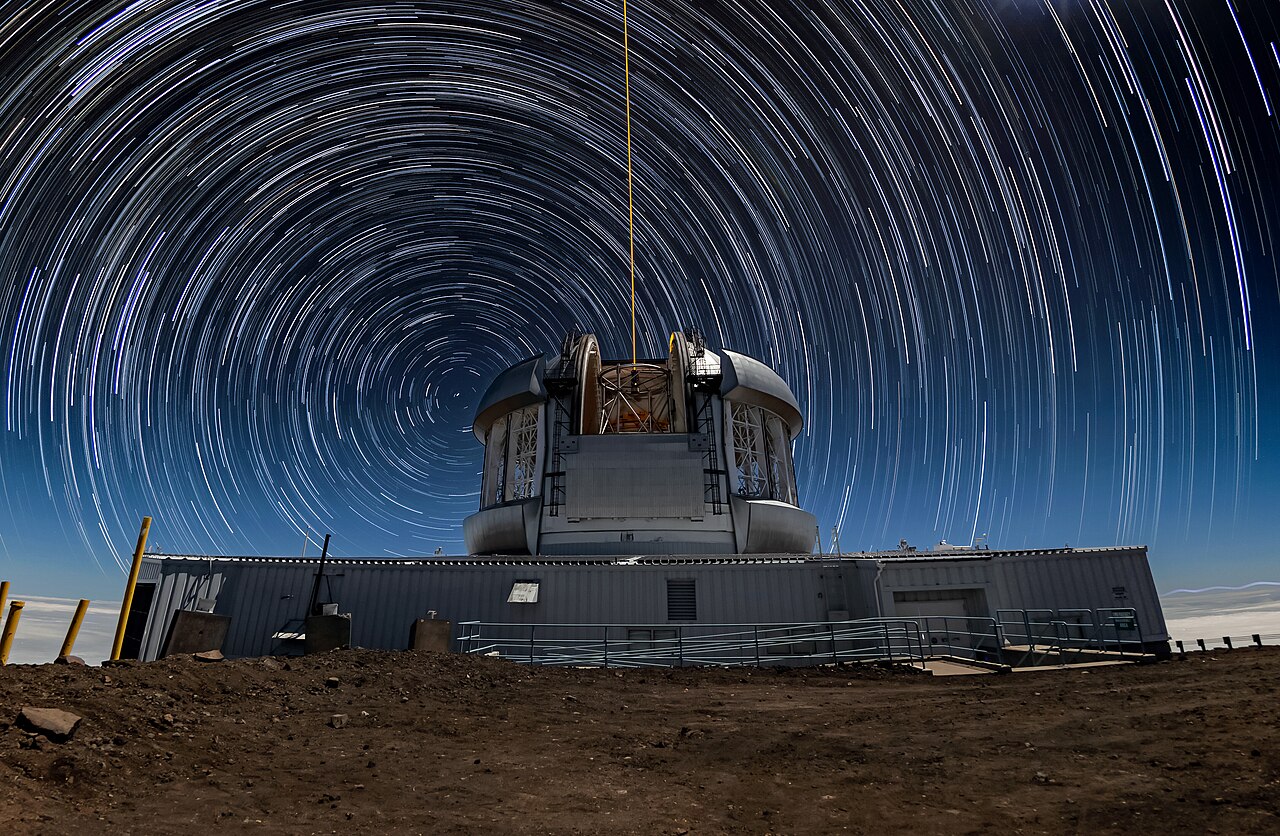
In a long-exposure photo, stars draw arcs because the Earth turns. At the centre of the arcs is the Pole Star. The photo was taken on Mauna Kea in Hawaii.. Photo: Star Trails Above Gemini North (iotw2506a), International Gemini Observatory/NOIRLab/NSF/AURA/T. Matsopoulos, CC BY 4.0, modified: reduced in size 4. The Sun rises in the east and sets in the west
The Earth turns from west to east. That is why the Sun seems to rise in the east and set in the west. East and west are cardinal directions.
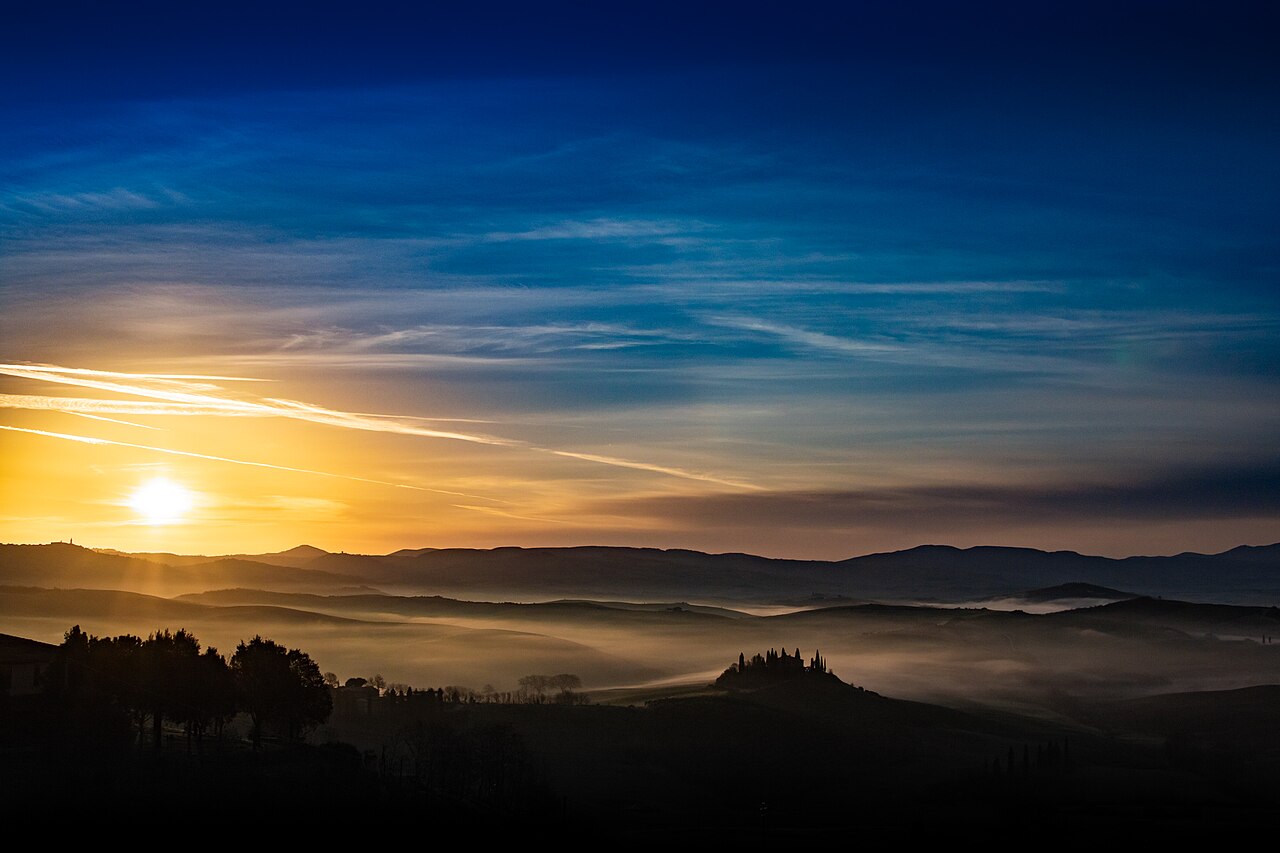
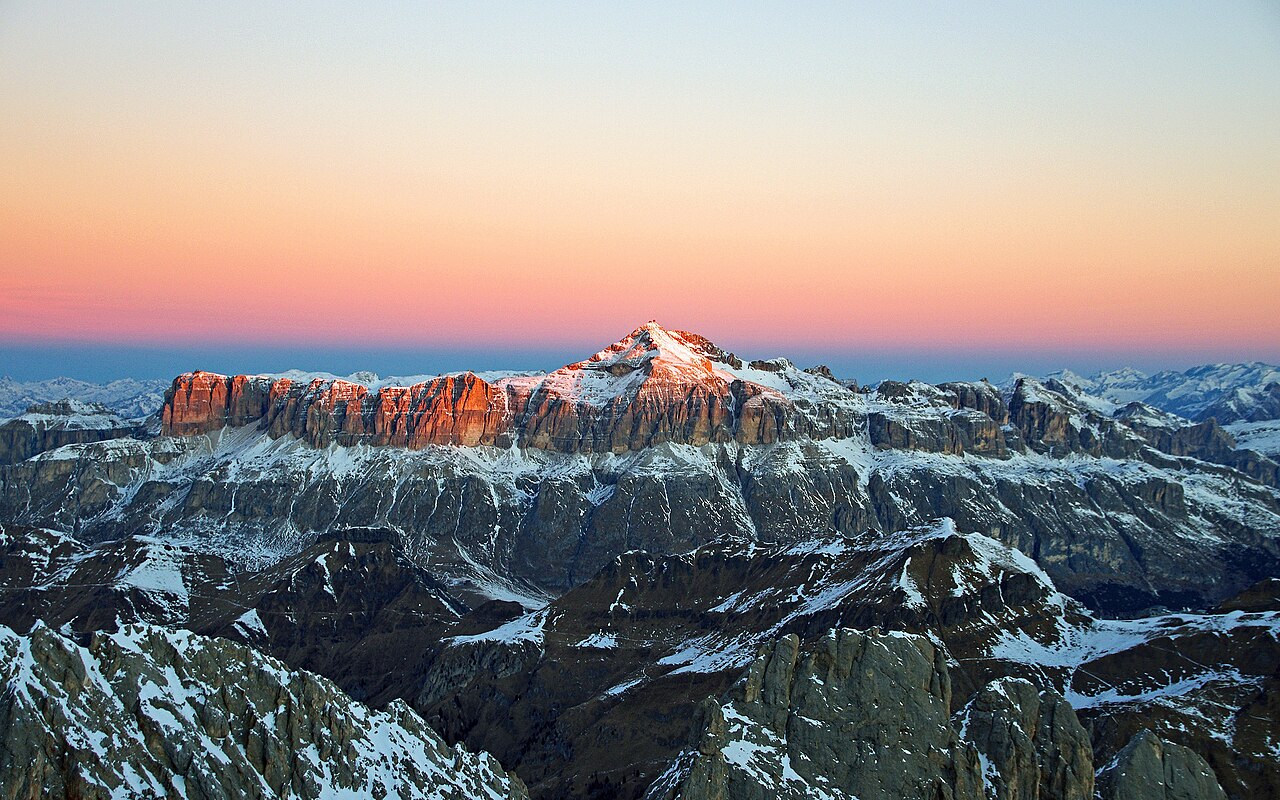
Morning: the Sun rises and mist lies in the valleys. The photo is from the Val d'Orcia in Tuscany, Italy, in April.. Photo: Tuscan sunrise, Salvatore Gerace, CC0, modified: reduced in size 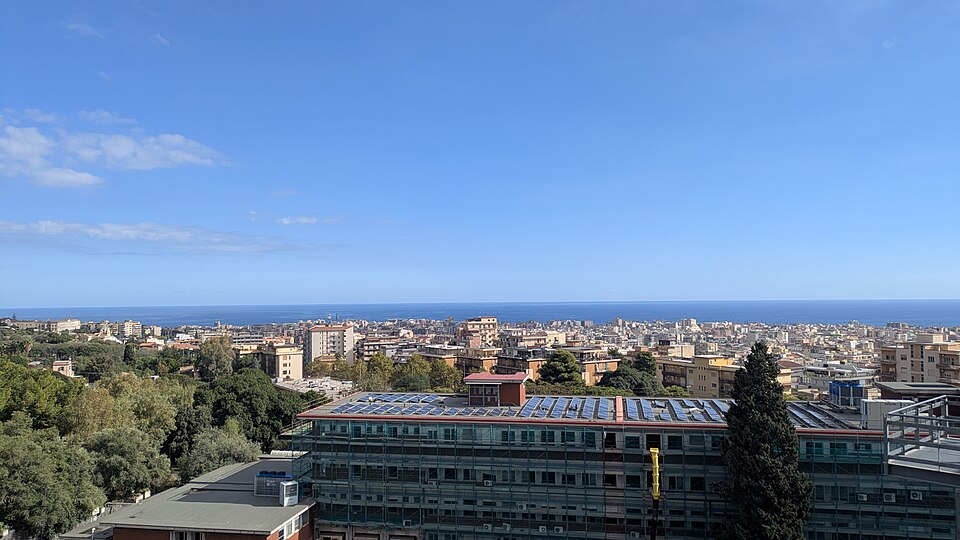
Noon: a clear day in Catania, Italy. At noon the Sun is at its highest.. Photo: Catania 05-11-2025, Antonino Faro, CC BY-SA 4.0, modified: reduced in size 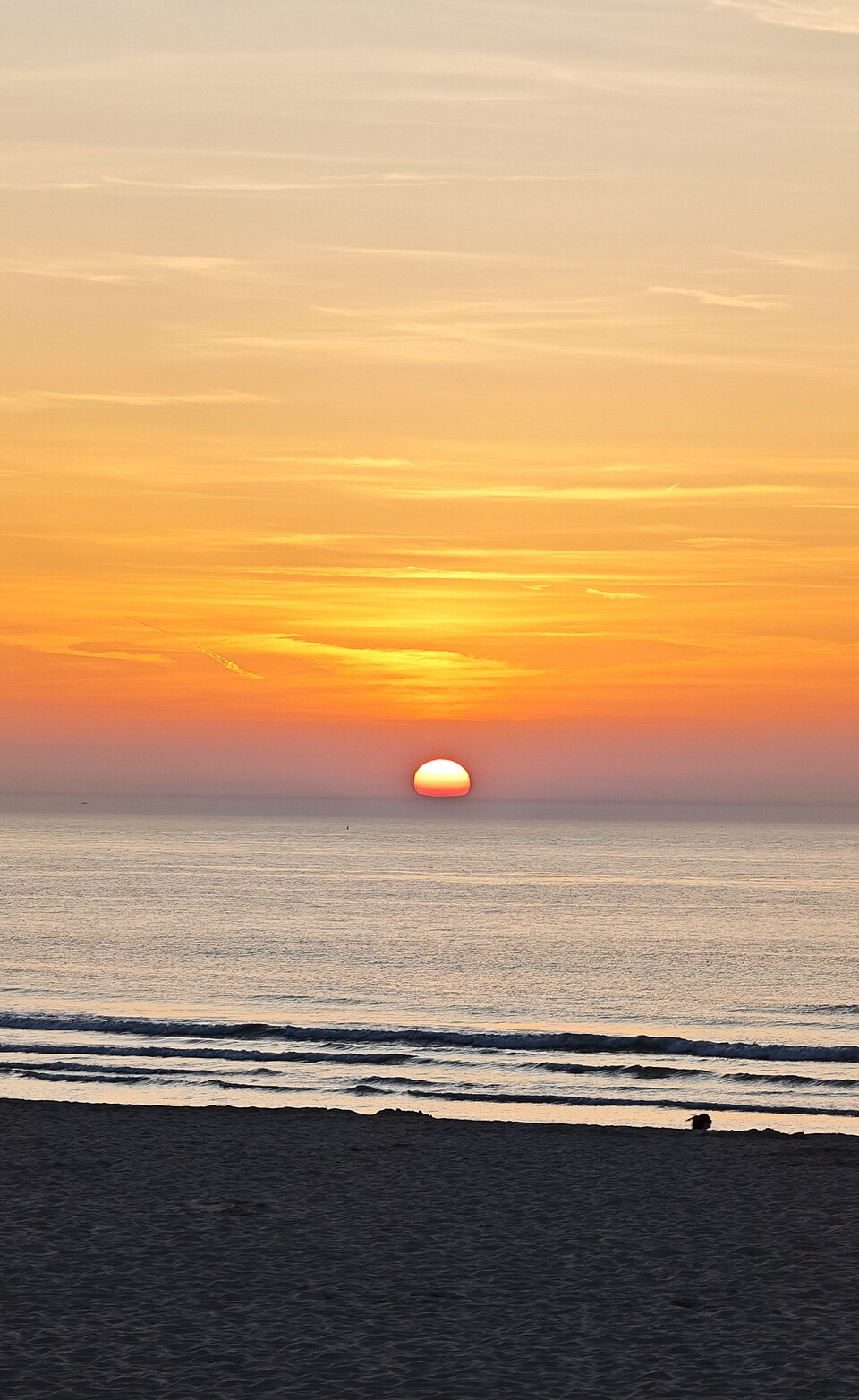
Evening: the Sun sets behind the sea. The photo is from Ostend in Belgium, on the North Sea.. Photo: Sunset over the North Sea in Ostend, Reda Kerbush, CC BY-SA 4.0, modified: reduced in size - Morning The Sun rises in the east
- Noon The Sun is at its highest
- Evening The Sun sets in the west
5. Shadows show where the Sun is
A shadow forms when something blocks the light. The shadow is always on the opposite side from the Sun. In the morning and evening the Sun is low, and shadows are long. At noon the Sun is at its highest, and shadows are shortest.
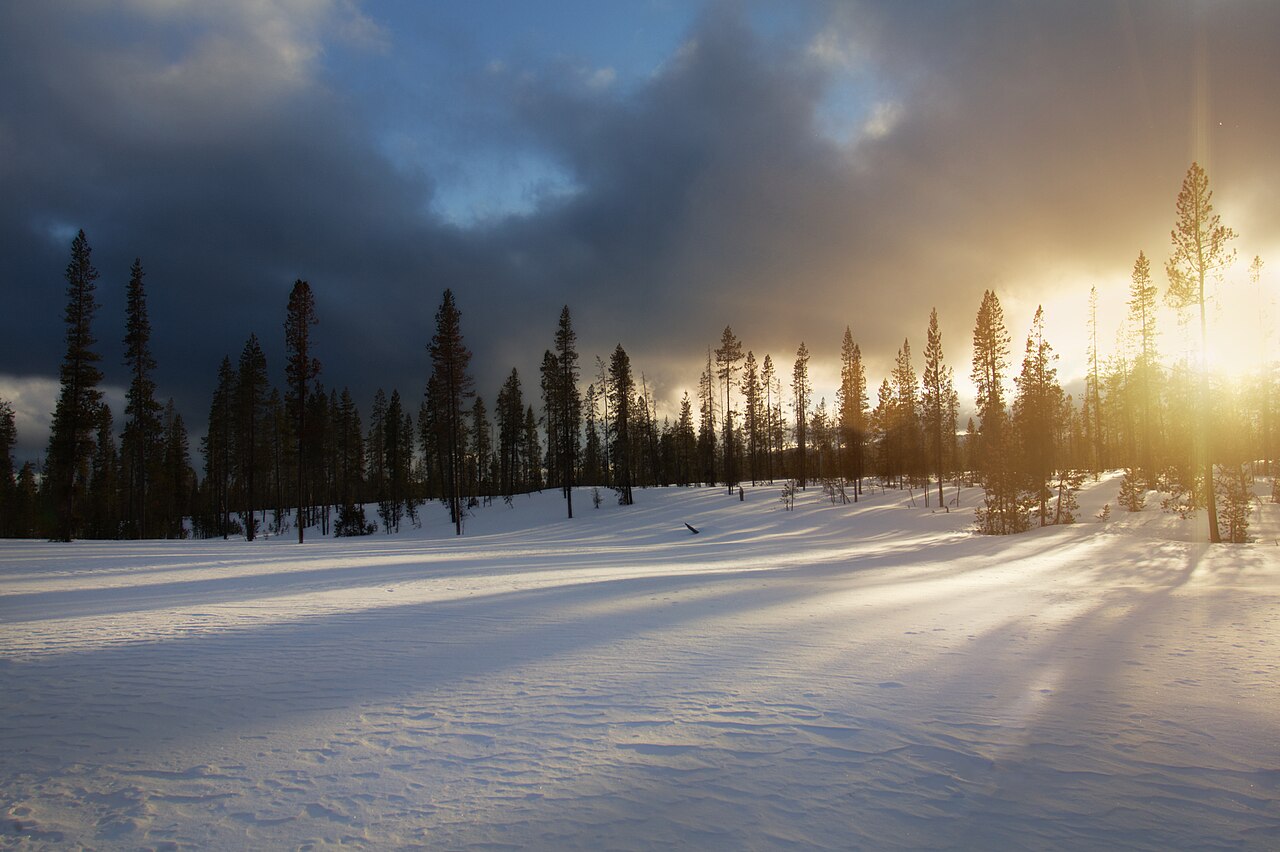
The low Sun makes long tree shadows on the snow. The photo is from Oregon in the United States.. Photo: Long shadows on the snow near Mt. Bachelor, Oregon, Bonnie Moreland from Oregon, United States, Public domain, modified: reduced in size 6. Day and night at the same time
On the Earth it is always day and night at the same time. When it is morning in Japan, it is night in Germany. At the line between day and night there is twilight. The light fades gradually, not all at once.
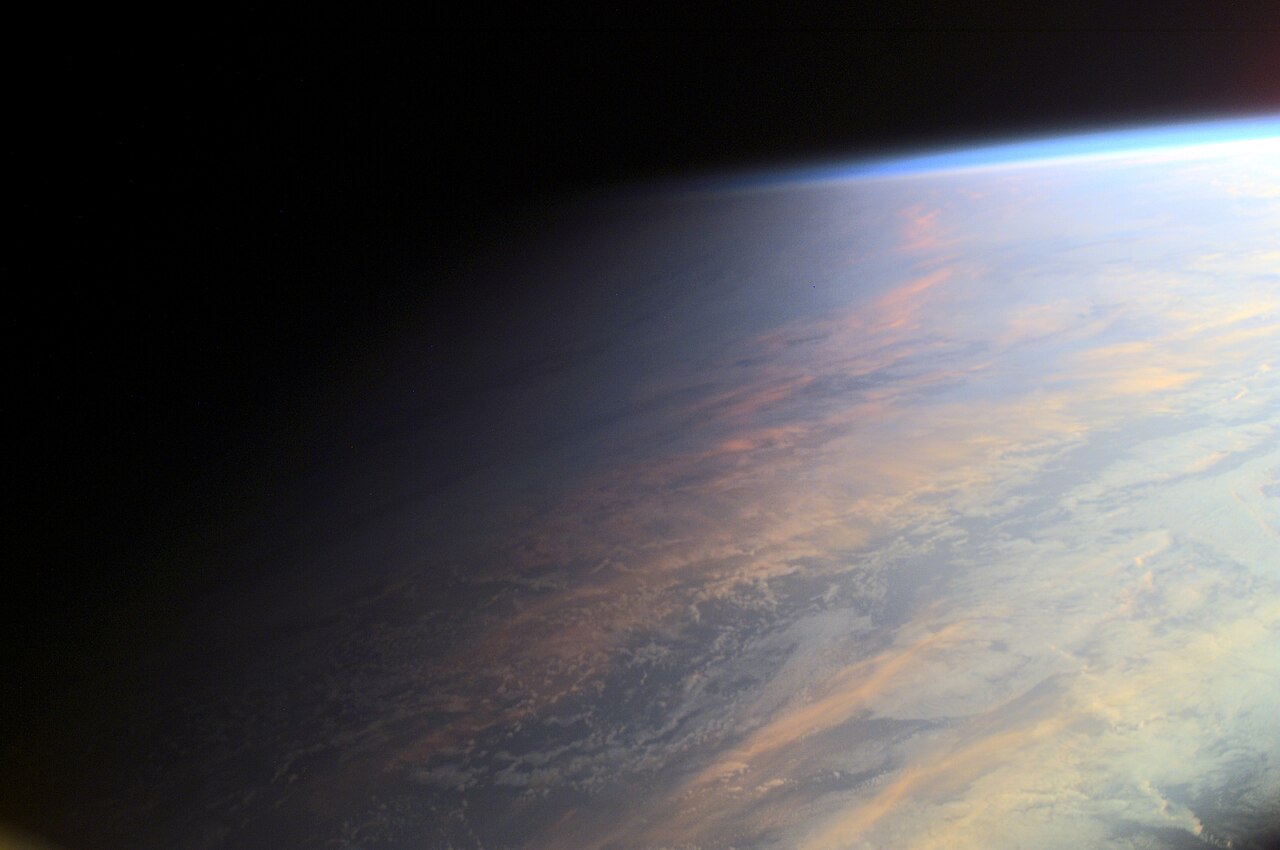
Day turns into night without a sharp line. The photo was taken from the International Space Station in June 2001.. Photo: Earthterminator iss002 full, ISS Crew, Earth Sciences and Image Analysis Lab, JSC, NASA, Public domain, modified: reduced in size 7. Try it yourself: lamp and globe
Darken the classroom. Shine a torch on a globe. Where is it day and where is it night?
Stick a sticker on the globe as your place. Turn the globe slowly. When is the sticker in the light?
Outside: push a stick into the ground and mark the tip of its shadow three times during the day. When is the shadow shortest?


Summary
The Earth is a ball, and the Sun always lights only half of it. The Earth turns around its axis in about 24 hours. On the lit side it is day, and on the shadow side it is night. Because the Earth turns, the Sun seems to rise in the east and set in the west. Shadows get shorter from morning to noon and longer again towards evening.
Frequently asked questions
Does the Sun go around the Earth?
No. The Earth turns around its axis, and that is why the Sun seems to move across the sky. It is like on a merry-go-round: when it spins, the surroundings seem to go round.
Why don't we feel the Earth turning?
The Earth turns smoothly, and the air and everything else turn with it. At the equator the ground moves at more than 1,600 kilometres per hour. The movement is still so smooth that we cannot feel it.
Is the day always the same length?
No. The length of the day changes through the year. Very near the poles, a day or a night can last for months. The reason is the tilt of the Earth's axis. It also explains the seasons.
Related content
Try exercises
Have you taught this topic? Create an exercise on it for your class.