Division: teaching, slides and exercises for grades 3–4 (ages 9–10)
Division with the help of the times table, the remainder and dividing big numbers in pieces. Slides, explanations and exercises for grades 3–4.
Division shares an amount equally into parts. When the division does not come out even, something is left over: the remainder. In this article, pupils divide with the help of the times table, explore the remainder and divide big numbers in pieces, as tens and ones.
The article is made for grades 3–4, and every step is ready to show to the class as a slide. By the end, pupils can divide with the help of the times table, find the remainder and check a division with multiplication.
Key concepts
- division
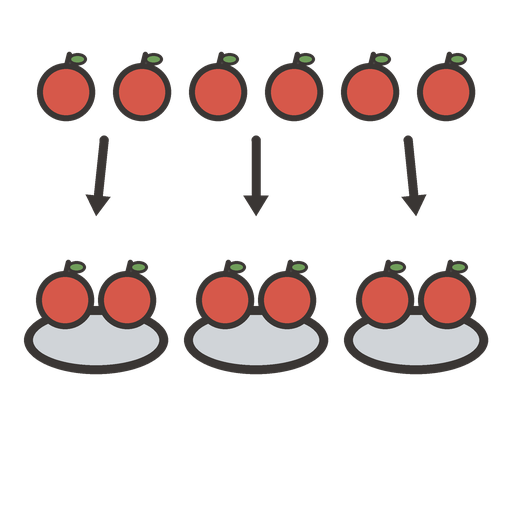 Sharing into equal parts, for example 12 ÷ 3 = 4.
- quotient
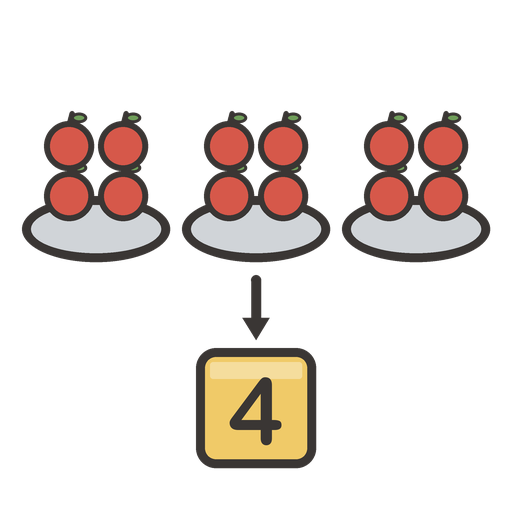 The answer to a division. When 12 is divided by 3, the quotient is 4.
- remainder
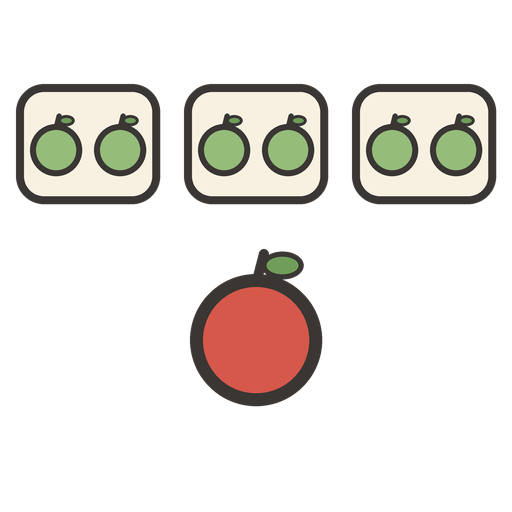 What is left over when a division does not come out even. 7 ÷ 2 = 3 with a remainder of 1.
- multiplication
 Adding the same number many times, for example 3 × 4 = 12.
- times table
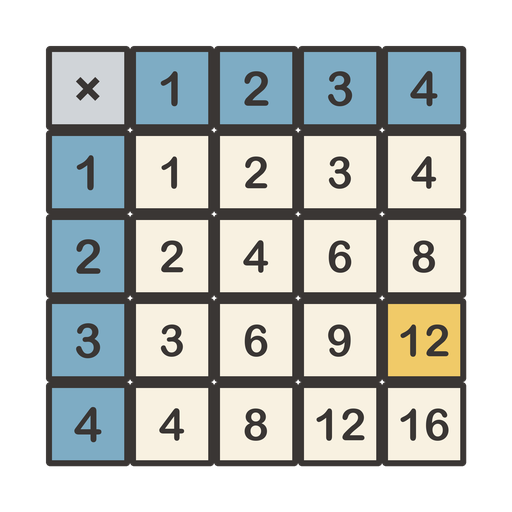 A list of multiplications, for example the five times table: 5, 10, 15, 20.
1. Dividing into teams
A coach splits 24 players into teams of eight. How many teams are there?
Take eight at a time: 24, 16, 8, 0. There are three teams: 24 : 8 = 3.
2. The remainder
When the division does not come out even, something is left over. This is called the remainder.
The remainder is always smaller than the number you divide by. The answer to a division is the quotient.
3. When it does not come out even
17 squirrels are shared between five trees, the same number in each.
Take five at a time: 17, 12, 7, 2.
Five fits three times, and two squirrels are left over.
So 17 : 5 → 3, remainder 2.4. Big numbers in pieces
It is a good idea to split a big number into easy parts. Divide the tens separately and the ones separately.
First divide the tens, then the ones and add the quotients together.
5. 84 divided by four
Four swimmers swim 84 laps in total. Each swims the same number.
84 is 80 and 4.
80 : 4 = 20 and 4 : 4 = 1.
So 20 + 1 = 21, that is 84 : 4 = 21.6. A common mistake: the zero disappears
Let us work out 408 : 4. A hasty pupil writes 12.
400 : 4 = 100 and 8 : 4 = 2. So 100 + 2 = 102. If there are no tens, write a zero.
Check: 102 · 4 = 408.
7. Discuss in class
1. Share 23 fish equally between four nests. What is the remainder?
2. How do you check the calculation 72 : 3 = 24 with multiplication?
3. Why can the remainder not be equal to the divisor?
Summary
Division shares an amount equally. The times table helps: 24 : 8 = 3, because 3 · 8 = 24. If the division does not come out even, the remainder is smaller than the divisor. Big numbers are divided in pieces: the tens and the ones separately. A division can be checked with multiplication, remainder included.
Frequently asked questions
What is a remainder?
The remainder is what is left over when the division does not come out even. For example, 17 squirrels between five trees: three squirrels in each tree and two left over.
How do you check a division?
By multiplying. The quotient multiplied by the divisor, plus the remainder, gives the number that was divided: 3 · 5 + 2 = 17.
Can you divide by zero?
No. You never divide by zero. It is not part of the calculations for grades 3–4.