
Drawing: famous drawings and techniques
How did famous artists draw? Teaching, slides and questions: pencil, chalk and ink in drawings by Dürer, Leonardo and Rembrandt. For all primary grades.
A drawing is made of lines and of dark and light areas. All you need is paper and a pencil, a piece of chalk or ink. This article looks at real drawings by six artists and shows how different tools leave different marks. The article suits the whole primary school: things are explained simply first, and the Explore more notes give older pupils extra information. Every step can be shown to the class as a slide.
At the end, pupils know what a drawing is, recognise three basic tools (pencil, chalk and ink) and try them out themselves.
Key concepts
- artist
 A person whose job is to make paintings, sculptures or other art.
- pencil
 A wooden tool for writing and drawing on paper.
- charcoal
 Drawing charcoal is a soft black stick that makes lines you can smudge with your finger.
- quick sketch
 A quick sketch is a drawing made fast that captures the main shape of something in a few minutes. You do not need to draw small details.
- square
 A shape with four equal sides and four square corners.
- circle
 A perfectly round shape whose edge is equally far from the middle all around.
- violin
 A small string instrument held under the chin and played with a bow.
- paper
 A thin material for writing and drawing on, also used to make books.
1. Look at a drawing
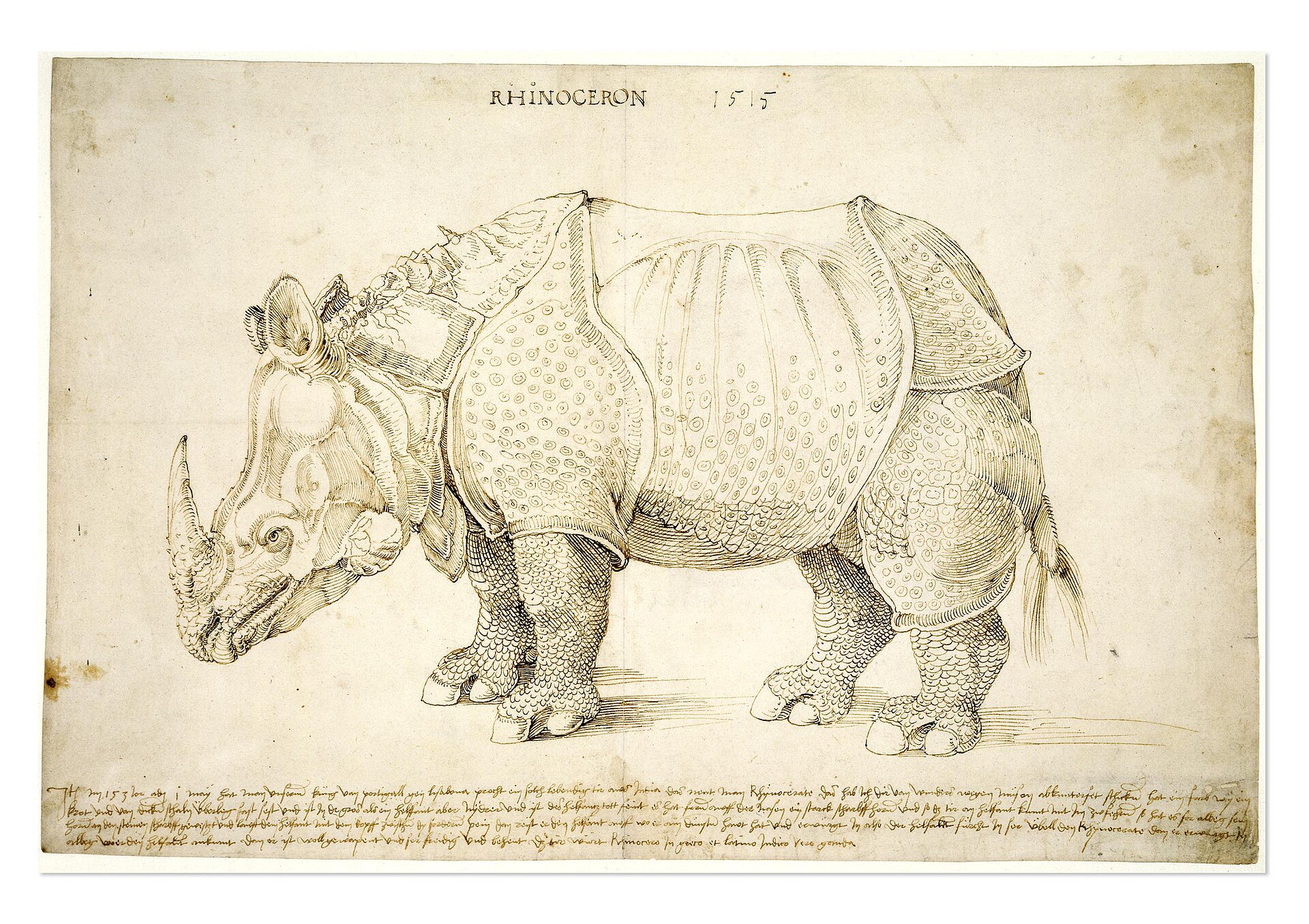
Look at the picture. Which animal does it show?
How can you tell that it was drawn and not painted?
Where are the lines close together, and where are they far apart?
Which parts of the animal are drawn most carefully?2. A drawing starts with a line
A drawing is usually made in one colour. A line marks the shape and shows where things are. Dürer drew an apostle's hands separately before he painted the altarpiece. So a drawing can be practice.
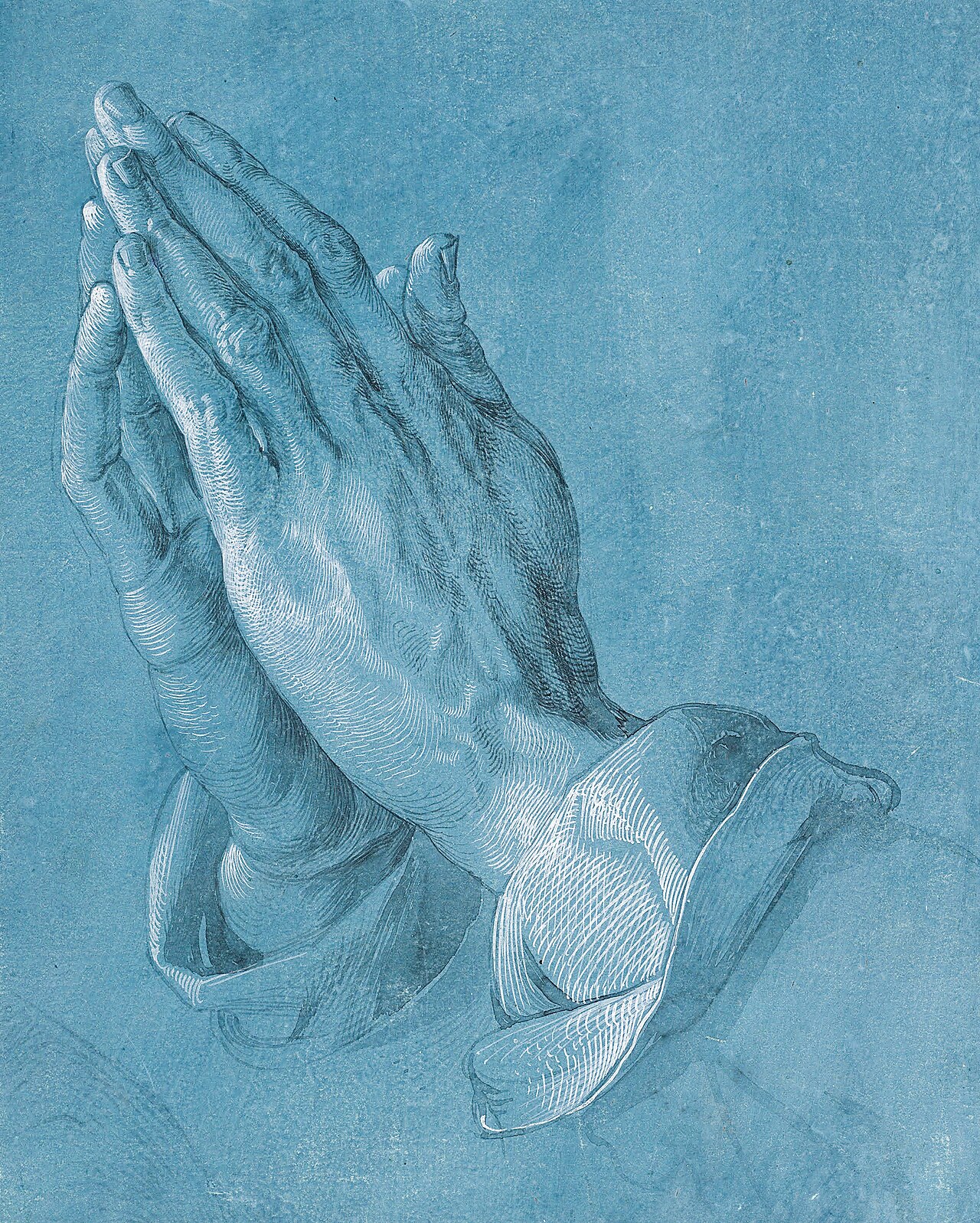
Albrecht Dürer: Praying Hands (1508). Brush and ink on bluish paper, highlights in white. A study for the hands of an apostle in an altarpiece.. Photo: Praying Hands, 1508 (cropped 4x5), Albrecht Dürer, Public domain, modified: reduced in size 3. A pencil leaves a grey mark
Pencil marks are made of graphite, not lead. Graphite was found in England in the late Renaissance, and people began to use it in pencils. Light pressure makes a pale line, hard pressure a dark one. Ingres drew this violinist with a pencil.
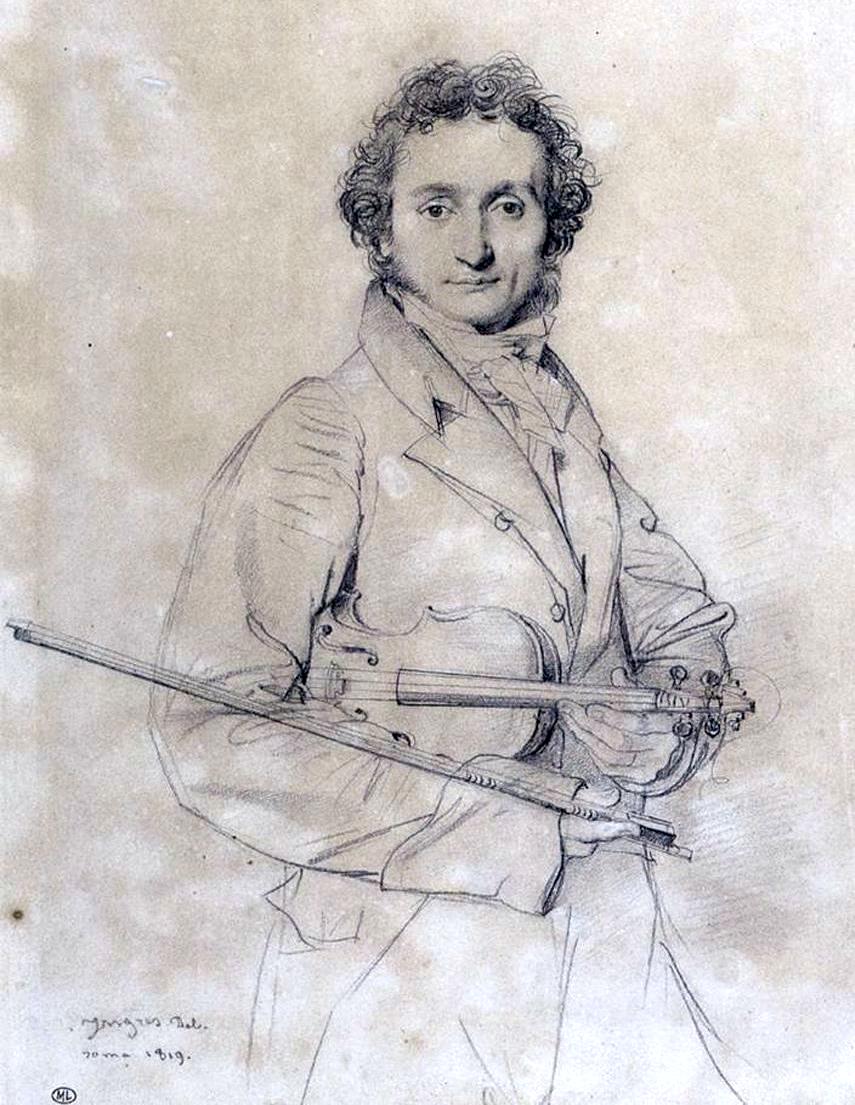
Jean-Auguste-Dominique Ingres: the violinist Niccolò Paganini (Rome, 1819). Drawing in pencil (graphite) on paper.. Photo: The Violinist Niccolò Paganini, Jean-Auguste-Dominique Ingres, Public domain 4. Chalk and charcoal make a soft mark
Chalk leaves a wide, soft mark that you can smudge with a finger. Red chalk and black chalk are old drawing tools. In these four drawings the chalk makes soft areas and tones.
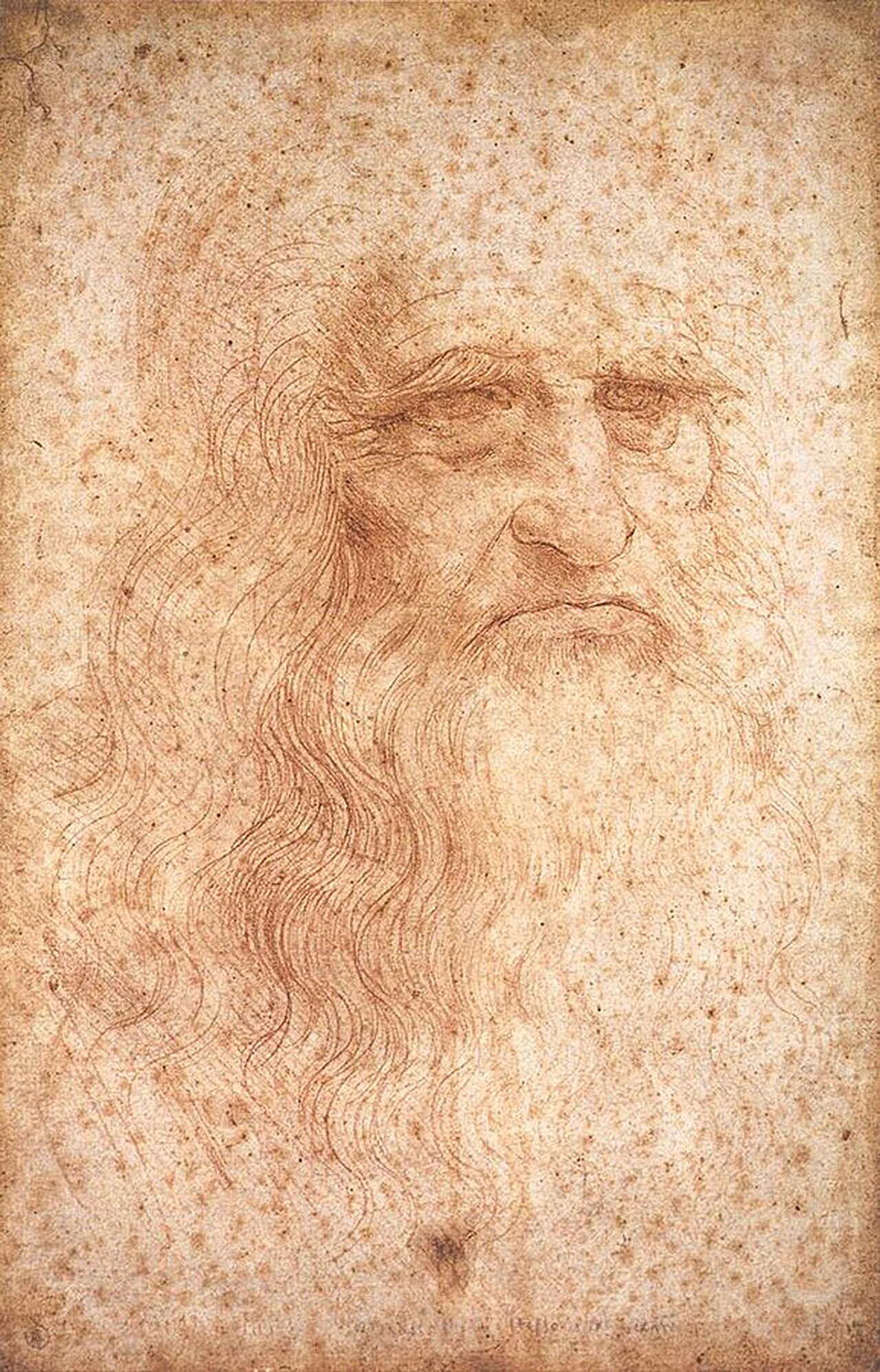
Leonardo da Vinci: presumed self-portrait (around 1512). Red chalk on paper.. Photo: Presumed self-portrait, Leonardo da Vinci, Public domain, modified: reduced in size 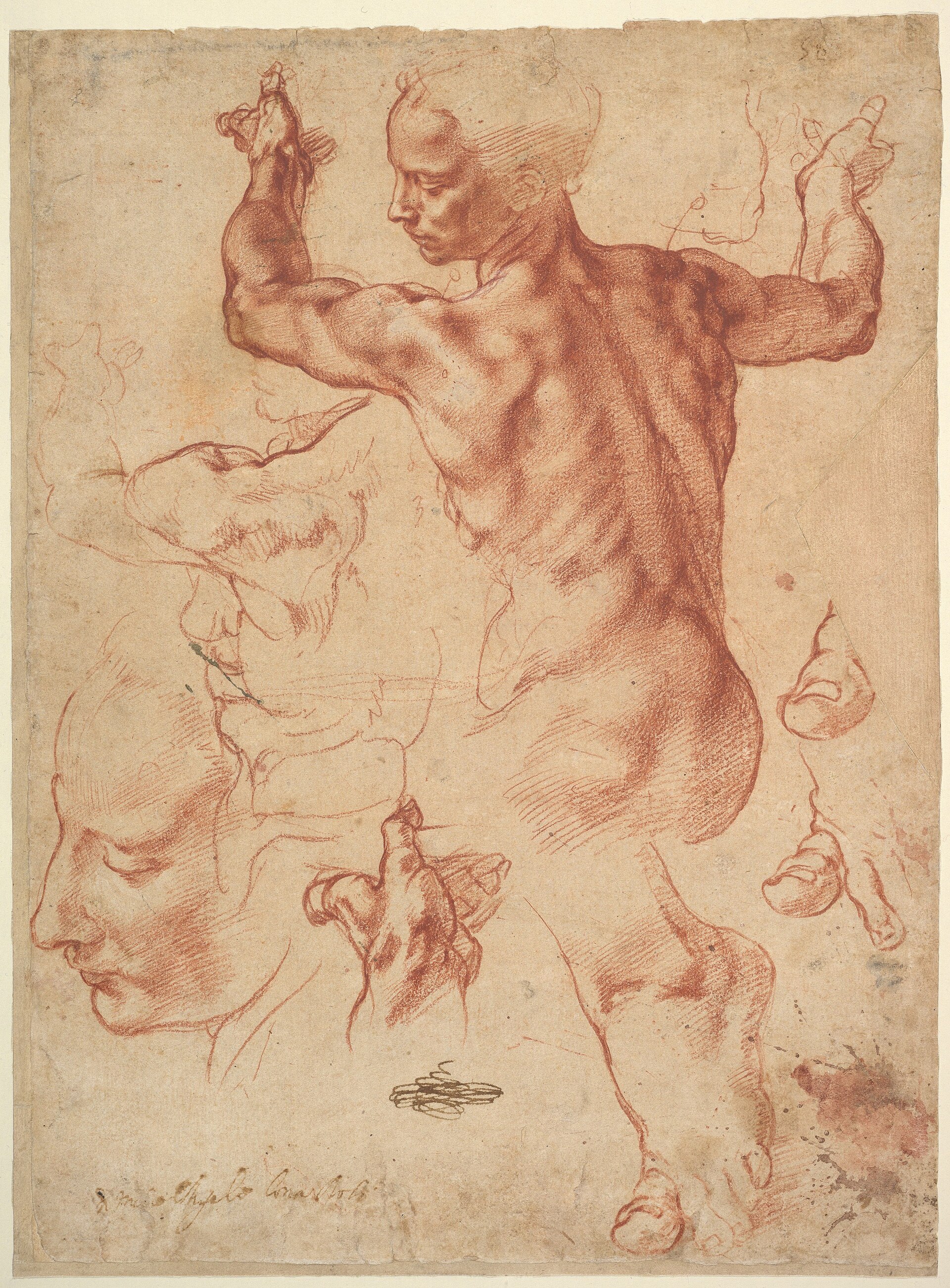
Michelangelo: studies for the Libyan Sibyl (around 1510–11). Red chalk on paper. The drawing prepared the ceiling painting in the Sistine Chapel.. Photo: Studies for the Libyan Sibyl (recto), Michelangelo, CC0, modified: reduced in size 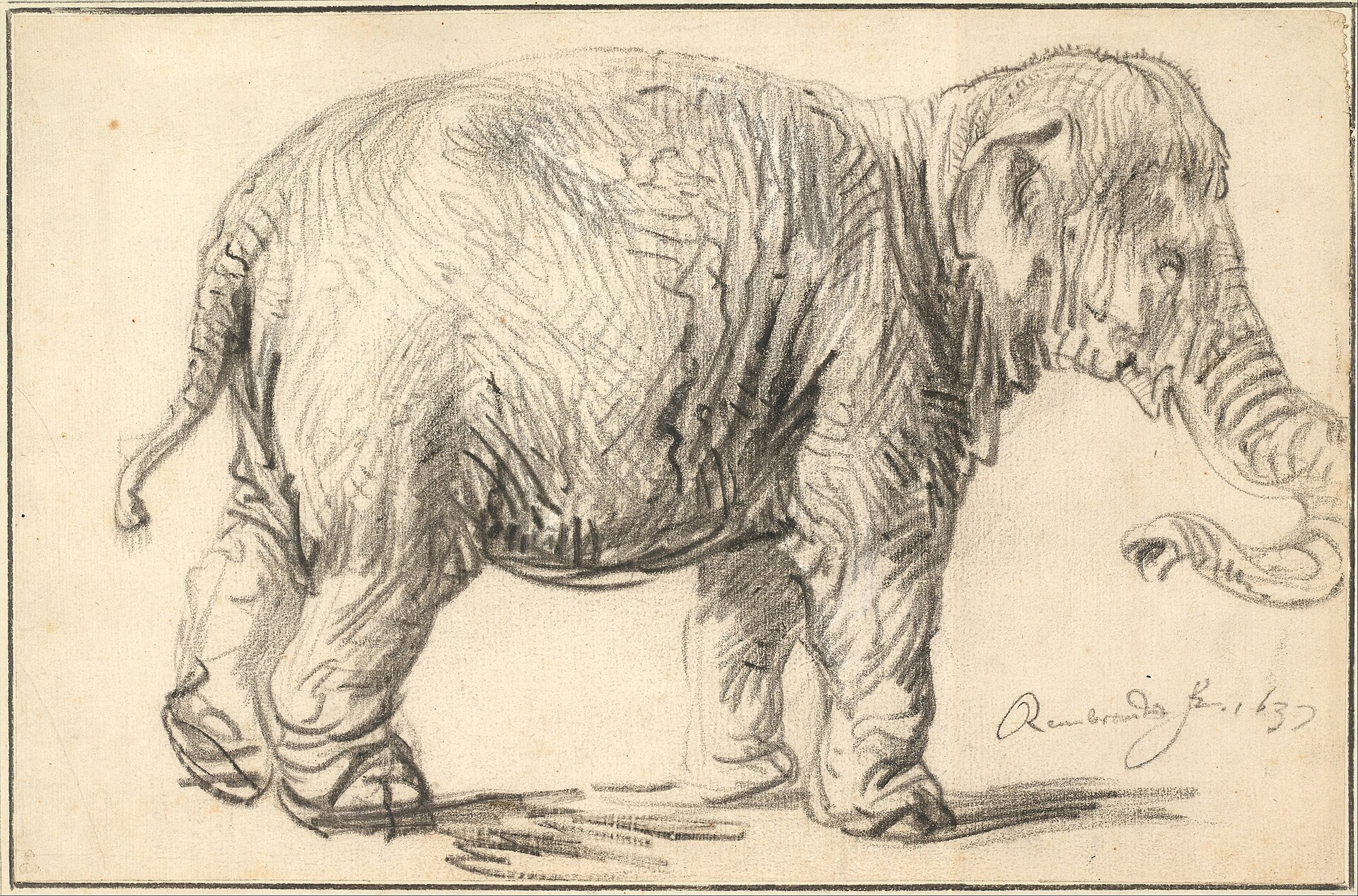
Rembrandt: an elephant (1637). Black chalk on paper.. Photo: An Elephant, 1637, Rembrandt, Public domain, modified: reduced in size 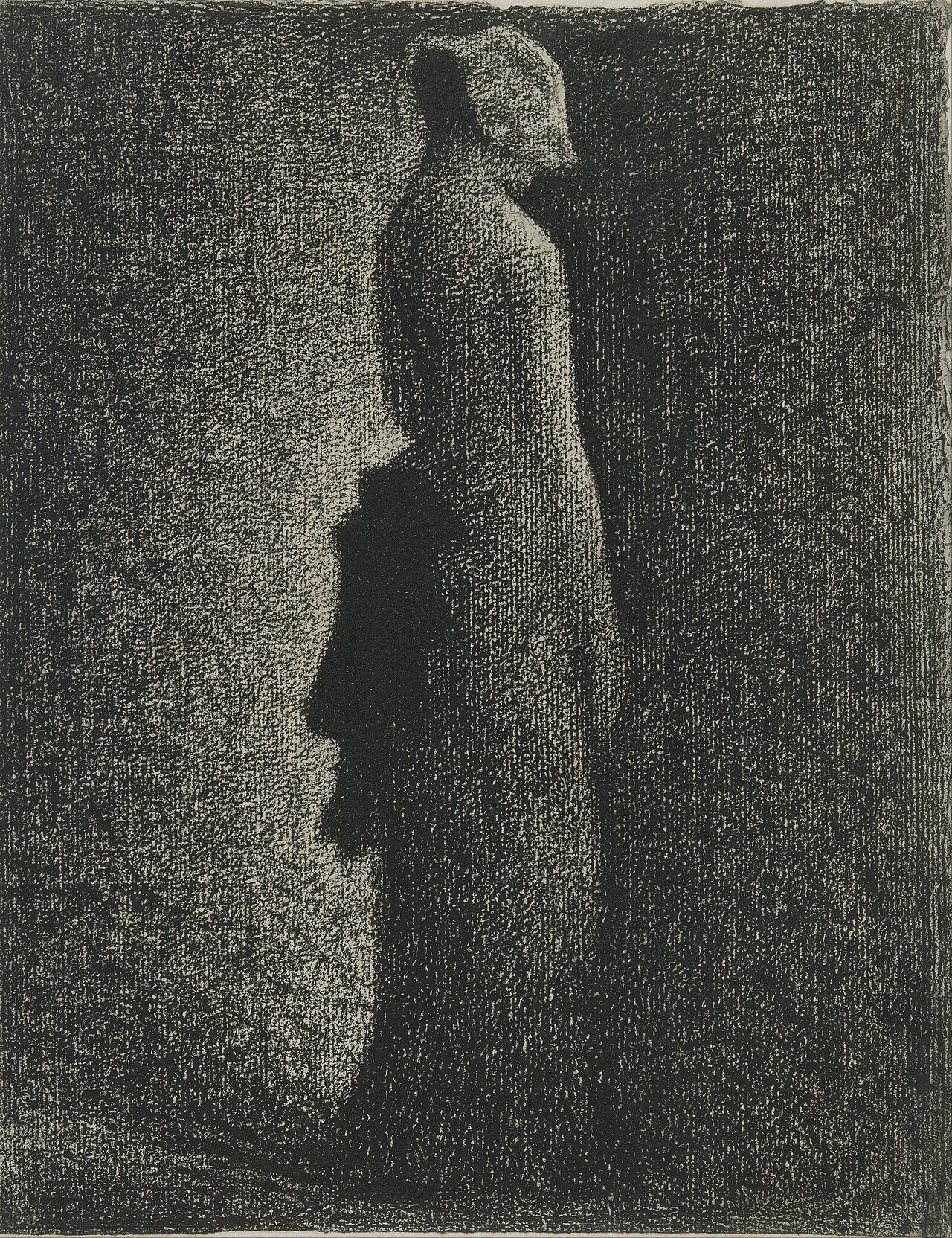
Georges Seurat: The Black Bow (early 1880s). Conté crayon on paper. The figure is made only of light and shadow.. Photo: Le Noeud noir (The Black Bow), Georges Seurat, Public domain, modified: reduced in size 5. Ink and hatching
An ink drawing is made with a pen or a brush, and a line cannot easily be rubbed out. Dürer drew this rhinoceros from a description, because he never saw the animal himself. Hatching means parallel lines: the closer together they are, the darker the area.
Albrecht Dürer: Rhinoceros (1515). Drawing in pen and ink. The text in the picture is Dürer's own note in German.. Photo: Rhinoceros (preparatory study), Albrecht Dürer, Public domain, modified: reduced in size 6. The proportions of the human body
Around 1490 Leonardo da Vinci drew a man who fits both a square and a circle. His outstretched arms are as wide as he is tall. Proportions help you draw a person who looks right.
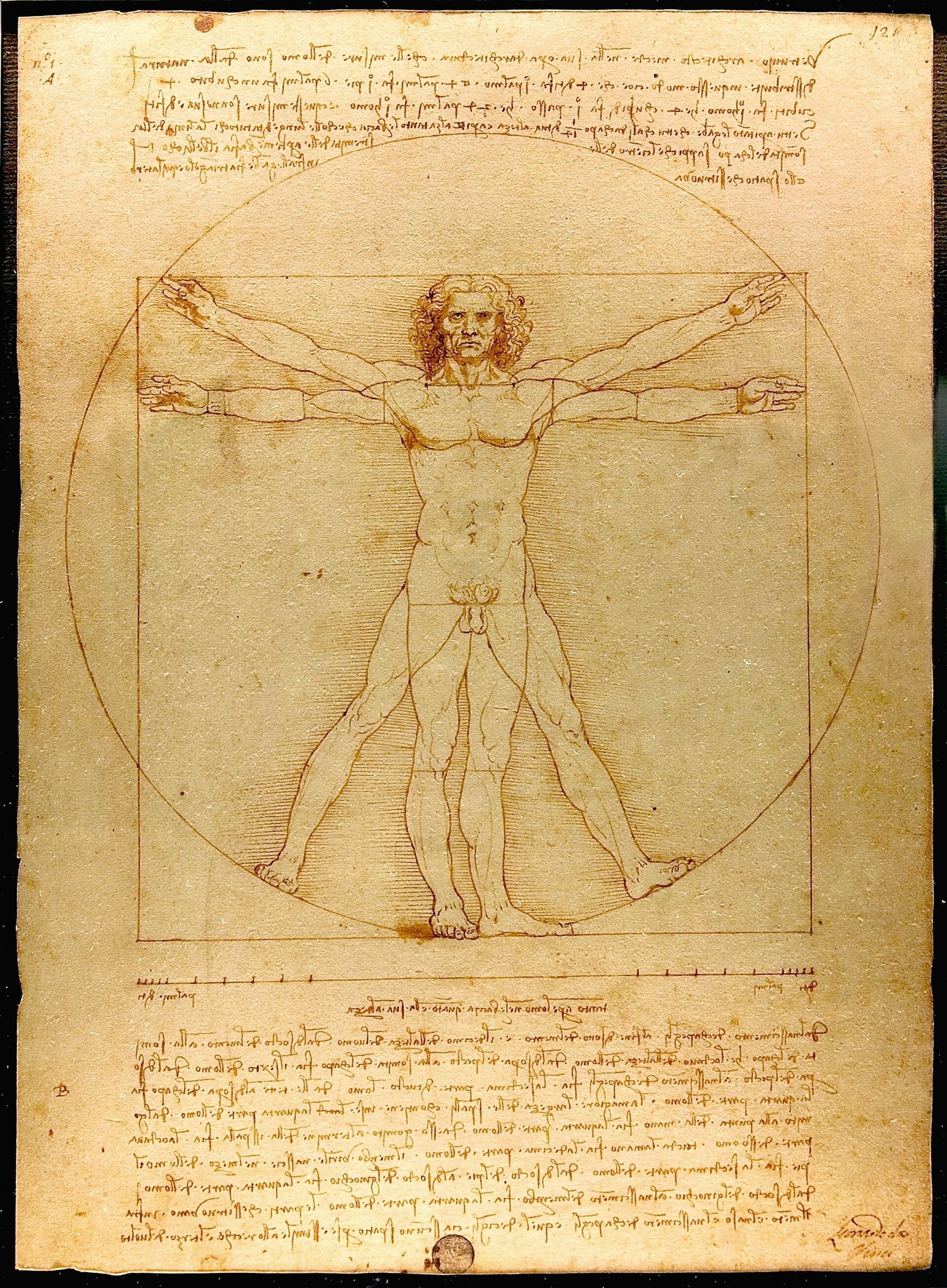
Leonardo da Vinci: Vitruvian Man (around 1490). Drawing in pen and ink on paper.. Photo: Vitruvian Man, Leonardo da Vinci, Public domain, modified: reduced in size 7. Try it yourself and think
Choose one object, for example a shoe or an apple. Draw it in three ways.
First an outline: one even line.
Then hatching: make the shadows with close lines.
Finally a soft pencil or charcoal: smudge the shadows with a finger.
In which drawing does the object look roundest?
How did Dürer draw an animal he had never seen?
Which tool is best for a quick sketch?


Summary
A drawing is made of lines and of dark and light areas. A pencil leaves a grey graphite mark, chalk and charcoal a soft mark, and ink a lasting line. Hatching and cross-hatching make shadows dark. Dürer, Leonardo, Michelangelo, Rembrandt, Ingres and Seurat used different tools, but each began with a line. Proportions help you draw a person who looks right.
Frequently asked questions
Is there lead in a pencil?
No. The black material in a pencil is graphite mixed with clay. The name comes from a time when people thought graphite was a lead ore. The more clay, the harder and paler the pencil.
Is Dürer's Young Hare a drawing or a painting?
Young Hare (1502) is made with watercolour and gouache, so it is called a painting. Dürer made the fur with a brush so finely that the picture looks like a drawing.
What is the difference between a drawing and a painting?
In a drawing, the picture is made of lines and tones; in a painting, of areas of colour. The border is not sharp: Dürer's Praying Hands was made with a brush, but it is called a drawing.
Try exercises
Have you taught this topic? Create an exercise on it for your class.