
Emigration to America in the 1800s: why millions left
Why did millions of Europeans move to America? The voyage, Ellis Island and a new life in pictures. Slides and questions for grades 4–6.
Roughly between 1820 and 1920, tens of millions of Europeans crossed the sea to America. We call them emigrants. This article explains why they left, what the journey was like and how their new life began. It fits history lessons in grades 4–6, and every step can be shown to the class as a slide.
By the end, pupils can explain what emigration means and why people left. They can describe the sea voyage and the arrival at Ellis Island. They know that emigration changed both America and Europe.
Key concepts
- immigrant
 An immigrant is a person who has moved from another country to live in a new one. Reasons can include work, study, family or fleeing war and persecution. Migration has been part of human history throughout the ages.
- population
- Population means the people living in a certain area, such as a municipality or a country. It is studied by age, gender and place of residence, for example, so that services can be planned correctly.
- potato
 A potato is a tuber that grows underground and is an important food. It was brought to Europe from South America.
- ship
- A ship is a big boat that travels on the water.
- ocean
 A very large sea. The largest ocean is the Pacific.
- city
 A big place with lots of buildings, streets and people.
- factory
 A building where machines make goods in large numbers. During the Industrial Revolution people moved from the countryside to towns to work in factories.
- farm
- A farm is a place where crops are grown or animals are looked after.
1. What do you know about emigration?
What does the word emigrant mean?
Why would someone leave their home country and cross the sea?
What would you take with you if only a little fits in your suitcase?
What was a sea voyage like before there were planes?2. Why did people leave home?
An emigrant moves to another country for good. In the new country they are called an immigrant. Europe's population grew fast, and there was not enough land for everyone. In Ireland, potato blight ruined the harvest from 1845 to 1852, and many people went hungry. Letters came from America about work and cheap land. Relatives sent money for the ticket. Some people also wanted to live more freely.
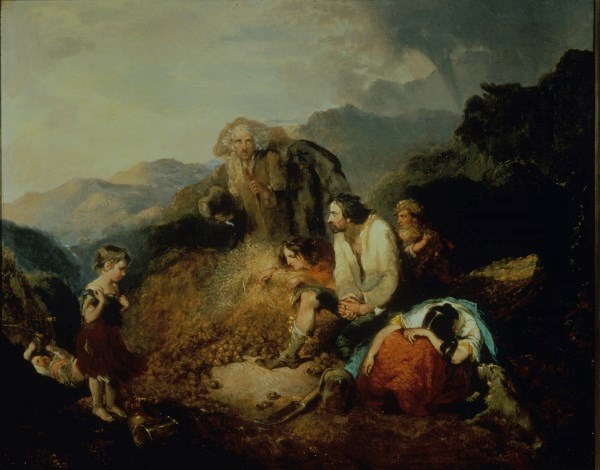
An Irish family discovers that the potatoes they stored for the winter have rotted. Daniel MacDonald painted the picture around 1847.. Photo: An Irish Peasant Family Discovering the Blight of their Store, Daniel MacDonald, Public domain 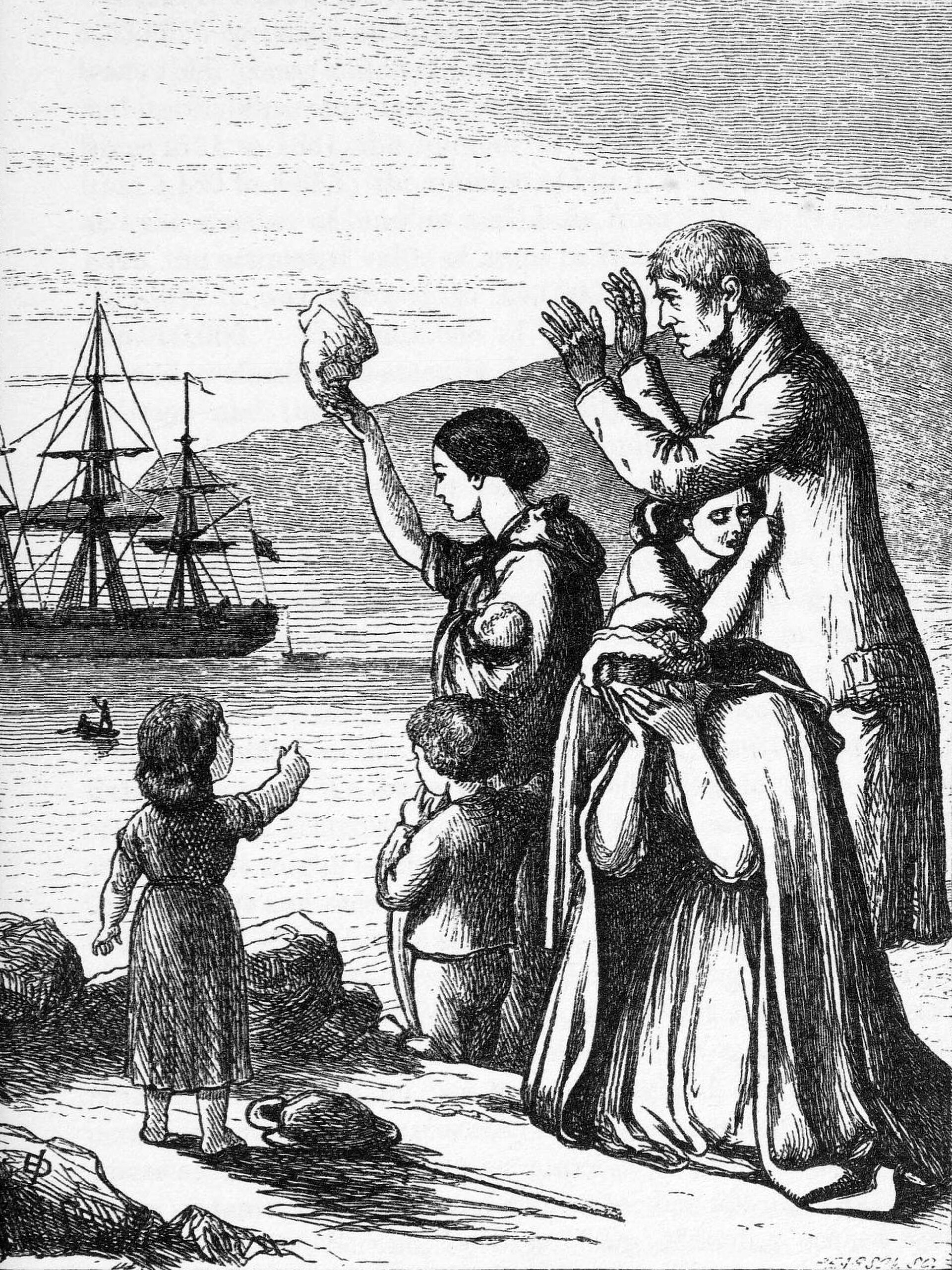
A family says goodbye to a sailing ship on the coast of Ireland. The engraving comes from a book on the history of Ireland from 1868. Henry Doyle drew it.. Photo: Emigrants Leave Ireland, Henry Edward Doyle, Public domain, modified: reduced in size 3. From the harbour across the ocean
First, emigrants travelled by train or boat to a big port, such as Liverpool, Hamburg, Bremen, Rotterdam, Gothenburg or Naples. Ahead of them lay the Atlantic Ocean. By sailing ship the voyage took about six weeks. From around 1870, the steamship crossed the ocean in 1–2 weeks. Most ships arrived in New York.
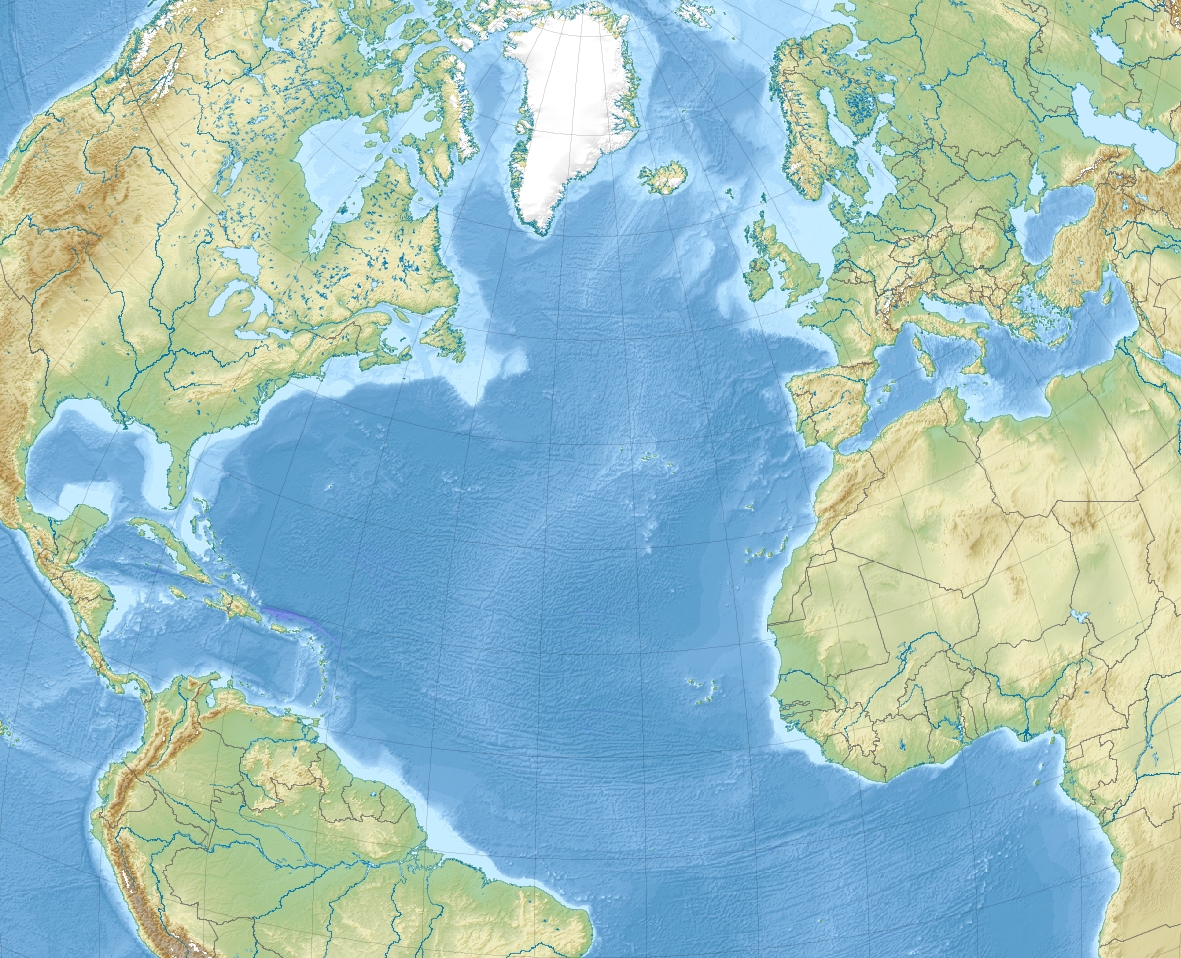
The North Atlantic on the map. North America is on the left, Europe on the right. The map has no names; the numbers show the ports.. Photo: North Atlantic Ocean laea relief location map, Uwe Dedering, CC BY-SA 3.0, modified: markers added 4. The voyage in steerage
Most emigrants travelled on the cheapest ticket, in steerage. It was on the lower decks of the ship, where people slept crowded together in bunk beds. The air was stuffy, and many were seasick. In good weather the passengers could go up on deck for fresh air.
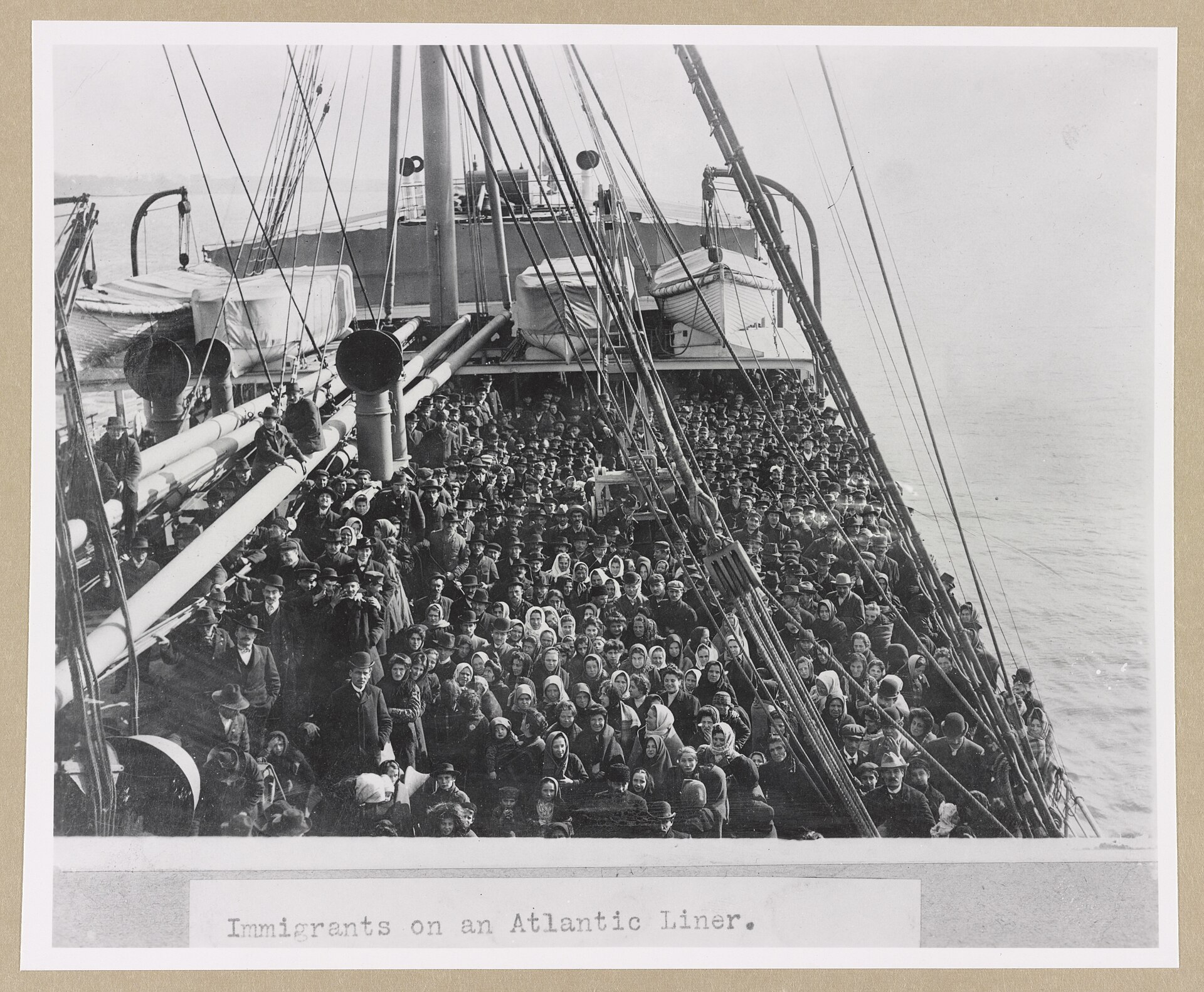
Emigrants on the deck of a steamship in the early 1900s. Edwin Levick took the photo. The English caption at the bottom reads: Immigrants on an Atlantic Liner.. Photo: Immigrants on an Atlantic Liner, Edwin Levick, Public domain, modified: reduced in size 5. Arrival: the Statue of Liberty and Ellis Island
In New York the emigrants first saw the Statue of Liberty. Then they were taken to Ellis Island for a health check. About 12 million people passed through it.
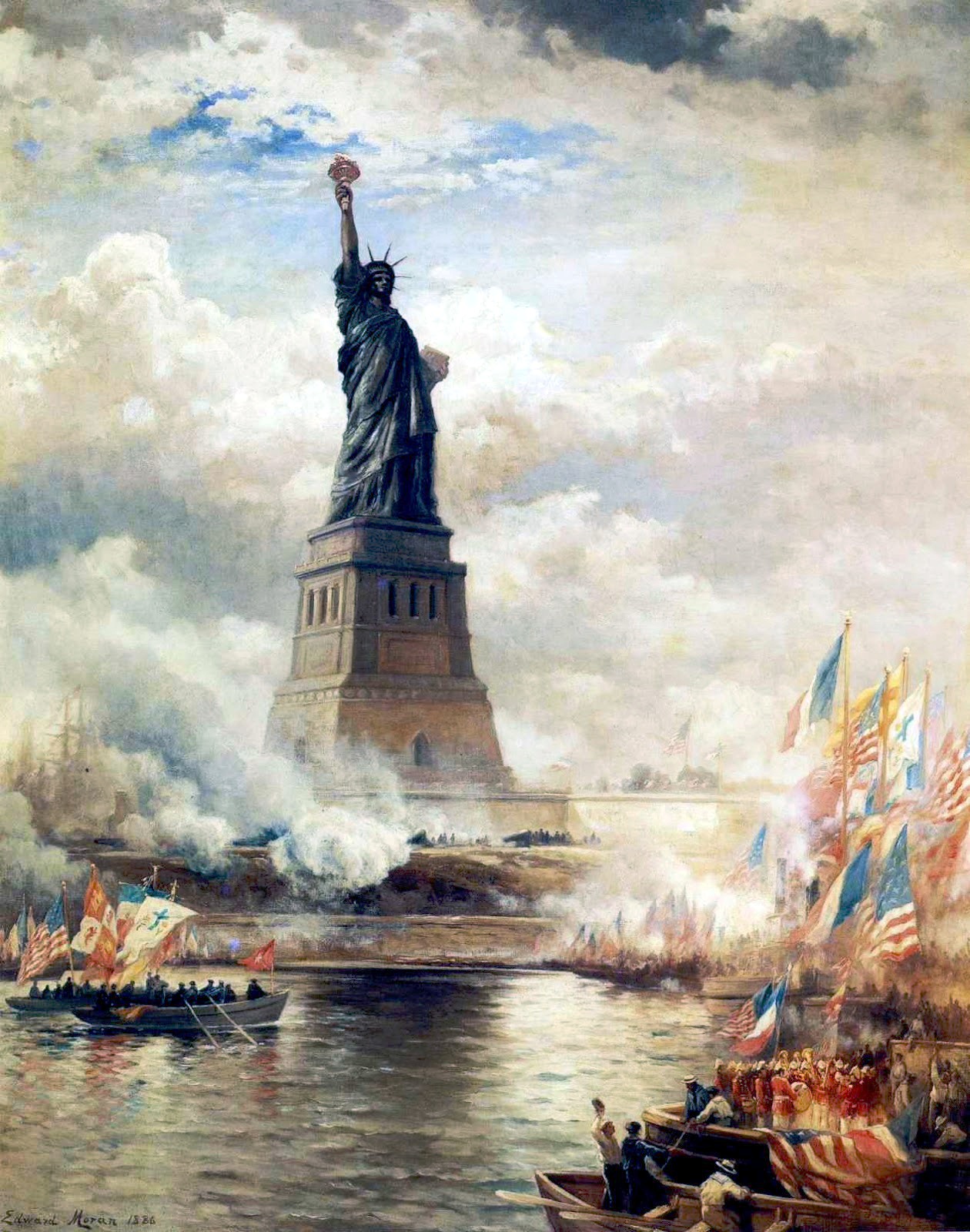
The unveiling of the Statue of Liberty in New York in 1886. Edward Moran painted the picture the same year.. Photo: Unveiling The Statue of Liberty Enlightening the World, Edward Moran, Public domain, modified: reduced in size 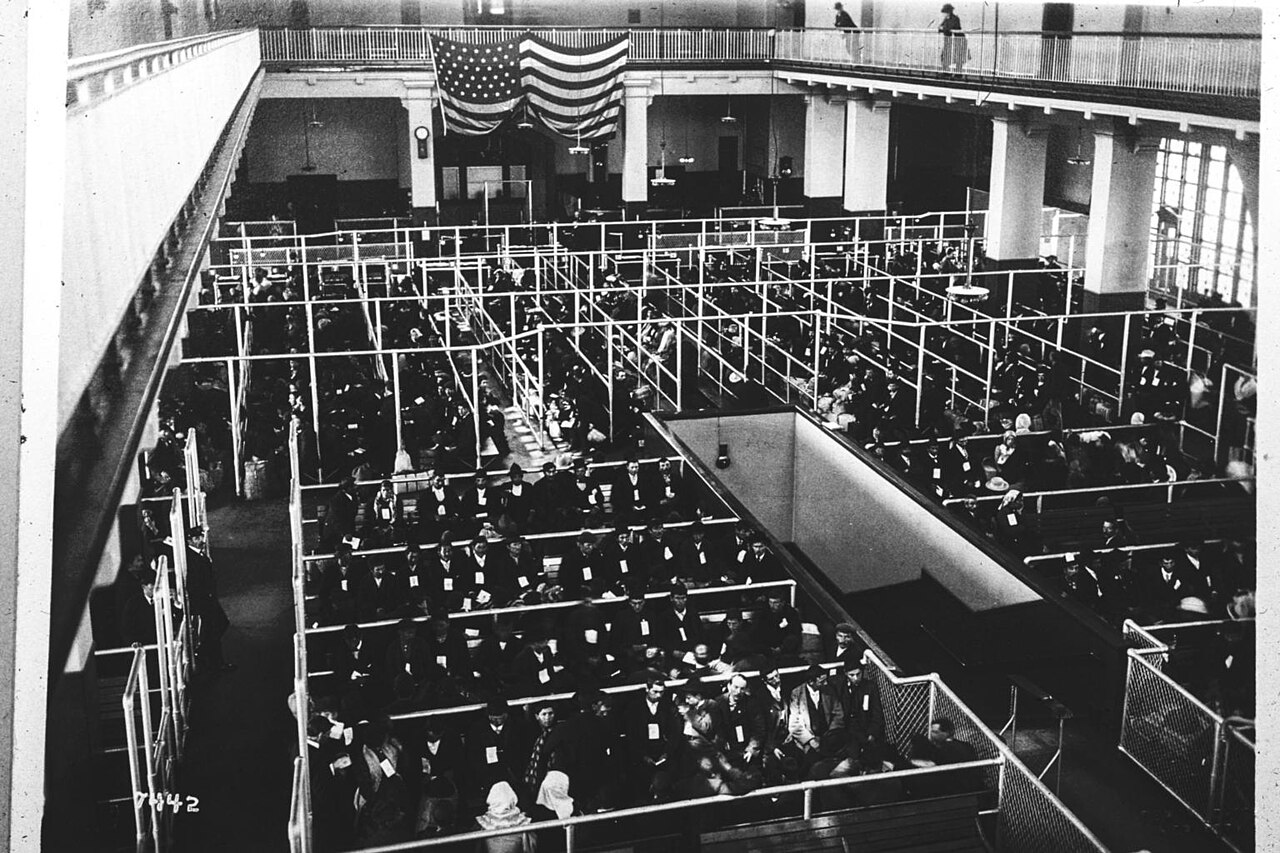
The great hall at Ellis Island in the early 1900s. New arrivals waited between the railings for their turn to be checked. Edwin Levick took the photo.. Photo: The pens at Ellis Island, Registry Room, Edwin Levick, Public domain, modified: reduced in size - 1886 Statue of Liberty unveiled
- 1892 Ellis Island inspection station opens
- 1907 Record year: over a million arrivals
- 1924 USA limits immigration
- 1954 Ellis Island closes
6. A new life in a new country
Many emigrants stayed in a city and worked in a factory. In New York the Italian neighbourhood was called Little Italy. Many Germans and Scandinavians started a farm in the middle of the United States. Europeans also moved to Canada, Argentina and Brazil. Children learned the new language quickly, but many children also had to work.
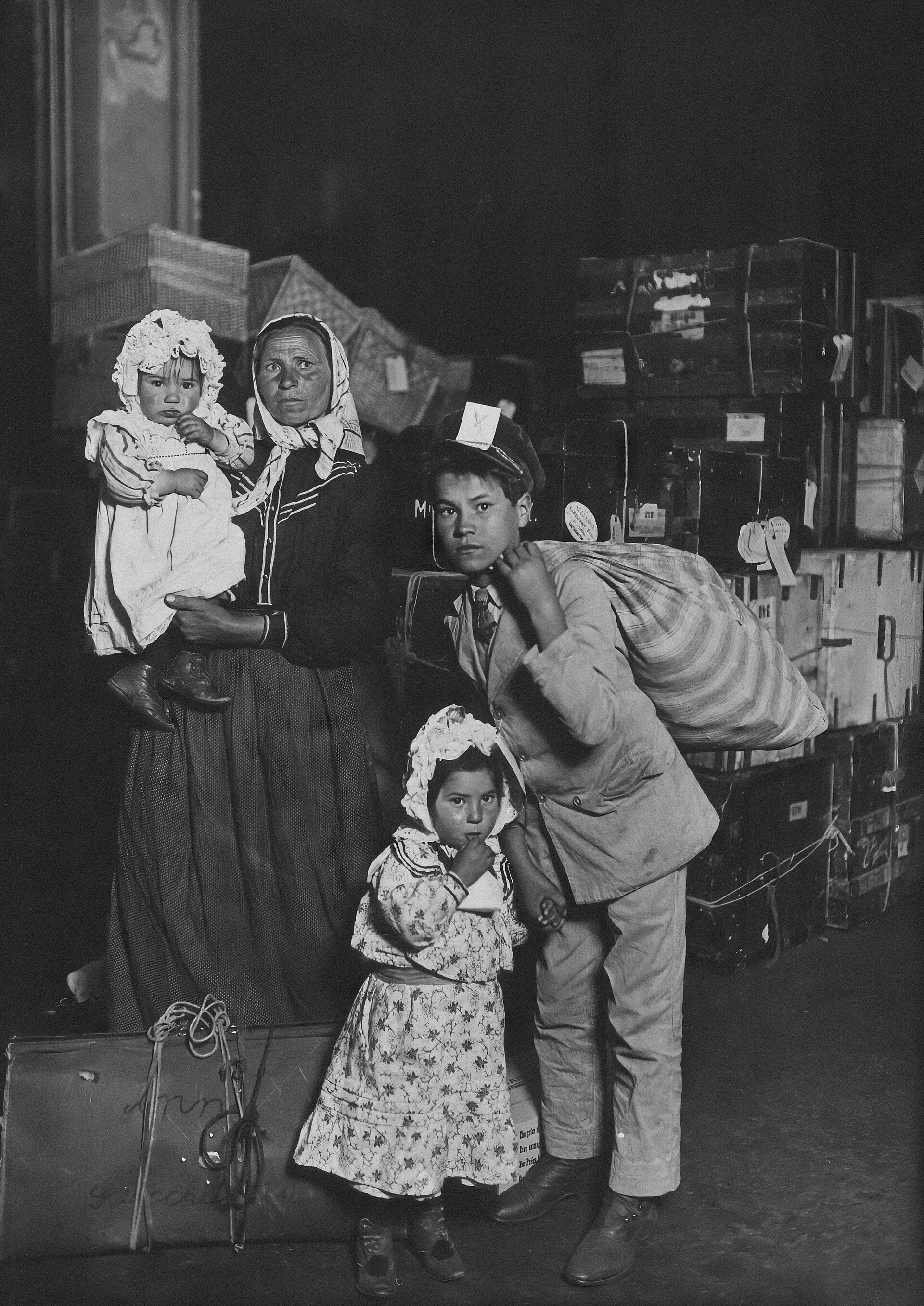
An Italian family looks for their luggage at Ellis Island in 1905. Lewis Hine photographed many immigrants and working children.. Photo: Italian family in the baggage room, Ellis Island, 1905, Lewis Hine, Public domain, modified: reduced in size 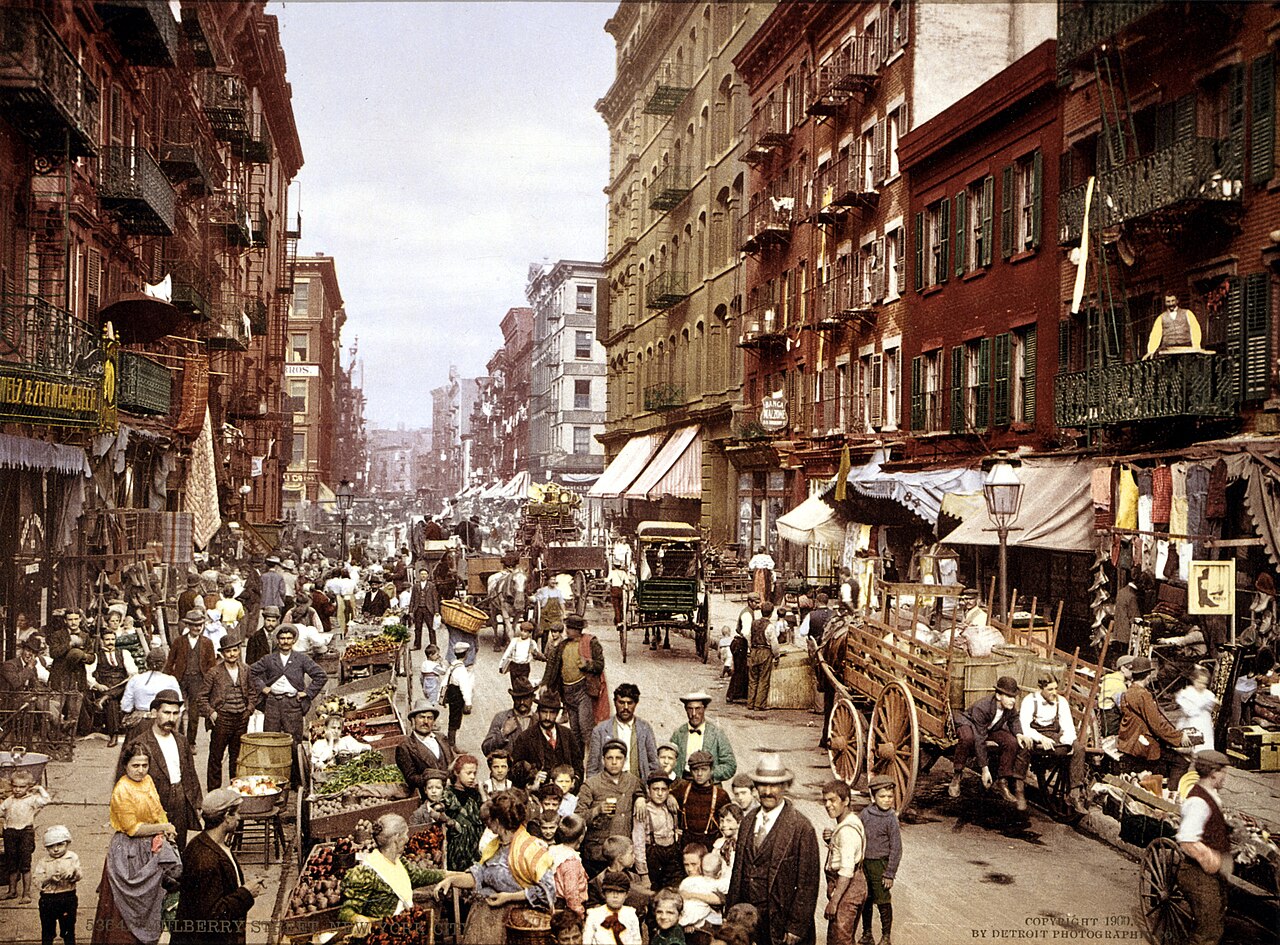
Mulberry Street in New York around 1900. Many Italian immigrants lived here. The photo was originally black and white and has been coloured.. Photo: Mulberry Street, New York City, Detroit Publishing Co., Public domain, modified: reduced in size 7. Discuss in pairs
What reasons made people leave Europe?
How did the steamship change the sea voyage?
What happened to new arrivals at Ellis Island?
How would it feel to start school in a country where you do not speak the language?


Summary
Roughly between 1820 and 1920, tens of millions of Europeans moved to America. They left because of poverty, lack of land and hunger, and letters from relatives drew them over. Some were also looking for freedom. The journey began at a big port, such as Liverpool, Hamburg or Naples. By steamship the ocean crossing took about 1–2 weeks. In New York, new arrivals were checked at Ellis Island from 1892 to 1954. In the new country many worked in a city or started a farm.
Frequently asked questions
What did emigration mean for Europe?
Some countries lost a very large part of their population. In 1901 Ireland had only about half as many people as in 1841. Many people also left Norway and Sweden. Emigrants sent letters and money home, and some later came back.
What was the health check at Ellis Island like?
A doctor watched the new arrivals as they climbed the stairs to the hall. If someone looked ill, a letter was drawn on their coat in chalk, and they were examined more closely. Most people were allowed into the country within a few hours. Only about two in every hundred were sent back.
Do people still move from one country to another?
Yes. People still move for work, for family or for safety. Today millions of Americans have ancestors from Europe, for example from Germany, Ireland and Italy.
Try exercises
Have you taught this topic? Create an exercise on it for your class.