Expanding and simplifying fractions: slides and exercises for grades 5–6 (ages 11–12)
Expanding and simplifying fractions with bars, simplifying as far as possible, and comparing. Slides and exercises for grades 5–6.
The same amount can be written as many different fractions. Half of a football pitch is as much as two quarters or four eighths of the pitch. Expanding and simplifying are ways to change the form of a fraction without changing its value.
The article is made for grades 5–6, and every step is ready to show to the class as a slide. Fraction bars show why the value stays the same. By the end, pupils can simplify as far as possible and compare fractions with different denominators by expanding.
Key concepts
- expanding fractions
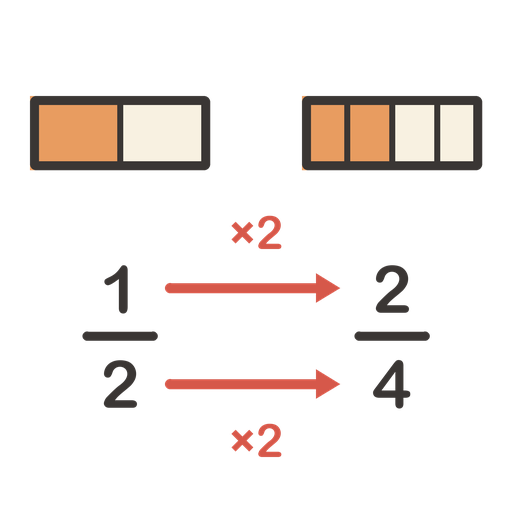 Multiplying the numerator and the denominator of a fraction by the same number. The value of the fraction stays the same, for example 1/2 = 2/4.
- simplifying fractions
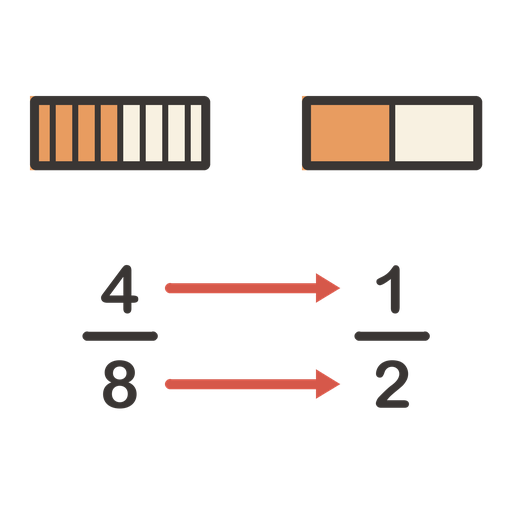 Dividing the numerator and the denominator of a fraction by the same number. The value of the fraction stays the same, for example 4/8 = 1/2.
- equivalent fractions
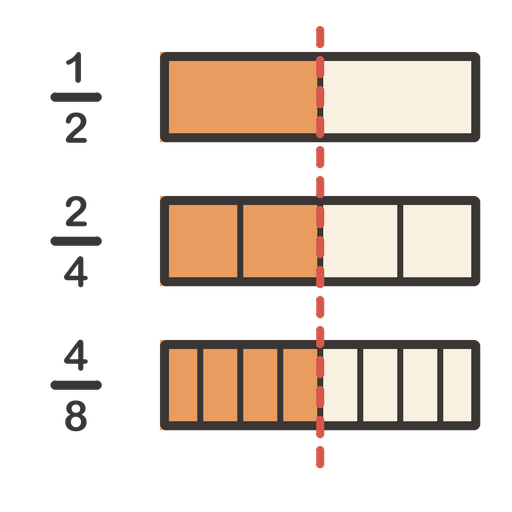 Fractions that are the same size even though they are written with different numbers, such as 1/2 and 2/4.
- numerator
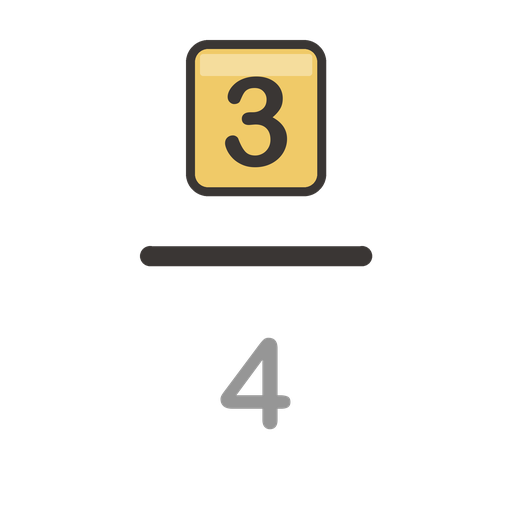 The top number of a fraction. It tells how many parts are taken.
- denominator
 The bottom number of a fraction. It tells how many equal parts the whole is split into.
- common denominator
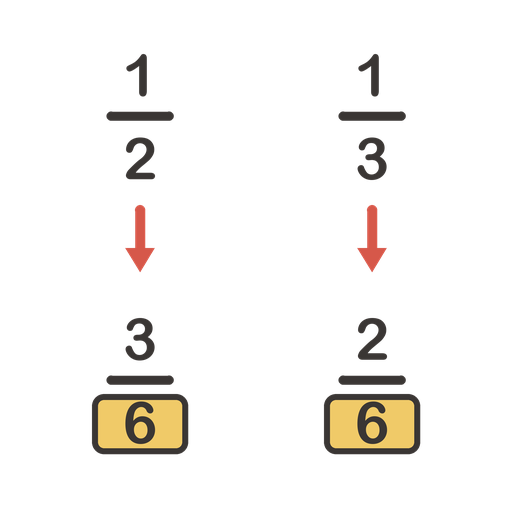 A denominator that two or more fractions share. Fractions are changed to a common denominator so that they can be compared or added.
- fraction
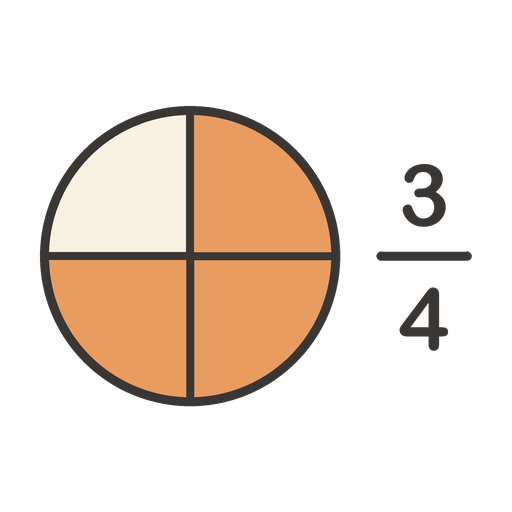 A number that shows part of a whole, like 3/4.
Related exercises
1. The same amount, a different fraction
Three bars of equal length are like three identical pitches. The shaded part is 1/2, 2/4 and 4/8.
The shaded part is the same size in every bar. The fractions look different, but they are equivalent.
2. Expanding and simplifying
Expanding: the numerator and denominator are multiplied by the same number.
Simplifying: the numerator and denominator are divided by the same number.The value of the fraction does not change. The result is an equivalent fraction.
3. Expand 3/4 by 3
Multiply the numerator and the denominator by 3: 3 · 3 = 9 and 4 · 3 = 12. This gives 9/12.
Every quarter is divided into three parts. There are three times as many parts, but they are smaller.
4. Simplify as far as possible
Let's simplify 12/18: of the 18 birds in a bird count, 12 were great tits.
Dividing by 2 gives 12 : 2 = 6 and 18 : 2 = 9 → 6/9
Dividing by 3 gives 6 : 3 = 2 and 9 : 3 = 3 → 2/3
The numbers 2 and 3 cannot be divided by the same number.5. Expanding makes comparing possible
Who hit the target better: the reds with 2/3 or the blues with 3/4 of their shots? Expand to the common denominator 12.
2 · 4 = 8 and 3 · 4 = 12. 3 · 3 = 9 and 4 · 3 = 12. 9/12 is greater than 8/12.
2/3 expanded by 4 3/4 expanded by 3 6. Common mistake: adding the same number
A fraction is not expanded by adding. For 1/2, adding 1 to the numerator and the denominator gives 2/3. That is greater than 1/2.
Always multiply or divide both the numerator and the denominator by the same number.
7. Talk about it as a class
1. 2/5 of a tree's leaves have fallen. Expand 2/5 so that the denominator is 20.
2. A team played 24 games and won 18. Simplify 18/24 as far as possible.
3. Are 3/5 and 9/15 equivalent? Explain in two ways.
4. Which is greater, 5/6 or 7/9? Expand first.
Summary
Equivalent fractions are equal in size even though they are written with different numbers. In expanding, the numerator and denominator are multiplied by the same number. In simplifying, they are divided by the same number. The value of the fraction does not change in either. Simplify as far as possible, until the numerator and denominator cannot be divided by the same number. Fractions with different denominators can be compared when they are expanded to a common denominator.
Frequently asked questions
What is the difference between expanding and simplifying?
In expanding, the numerator and denominator are multiplied by the same number; in simplifying, they are divided. Either way you get an equivalent fraction.
When is a fraction simplified as far as possible?
When the numerator and denominator can no longer be divided by the same number, except 1. For example, 2/3 cannot be simplified any further.
Why do we need expanding?
Fractions with different denominators cannot be compared or added directly. When they are expanded to a common denominator, the numerators can be compared.