
The French Revolution: the storming of the Bastille, 1789
Why did the French rise against the king in 1789? The Bastille, the Declaration of the Rights of Man and the tricolour in pictures. Slides and questions for grades 4–6.
In 1789 a revolution began in France: the people demanded power from the king. The king no longer decided everything alone. The article explains why this happened and suits history in grades 4–6. Every step can be shown to the class as a slide.
At the end, the pupil can explain why the French rose up against the king and what the storming of the Bastille meant. The pupil knows what the Declaration of the Rights of Man and of the Citizen said and who was left outside it. The pupil can name three things that have survived from the Revolution into our own time: the tricolour, the Marseillaise and the metre.
Key concepts
- French Revolution
 The French Revolution began in 1789, when people rose up against royal power and the privileges of the estates. Its watchwords were liberty, equality and fraternity, and the monarchy was abolished in 1792. The revolution affected all of Europe and ended with Napoleon's rise to power in 1799.
- king
 A king is a man who rules a kingdom.
- estate
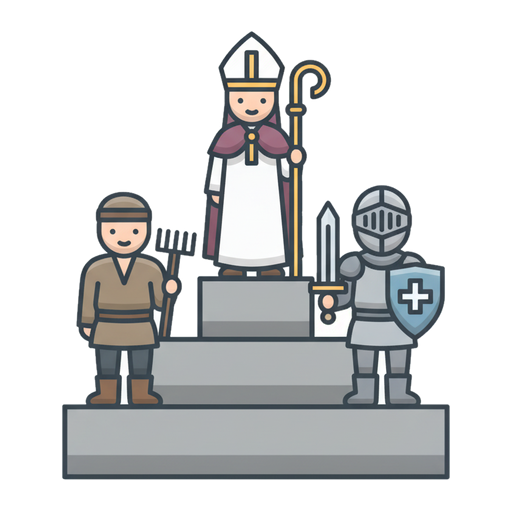 An estate was a social class that a person was usually born into, with its own rights and duties. In Europe the estates included, for example, nobles, clergy, burghers and peasants.
- noble
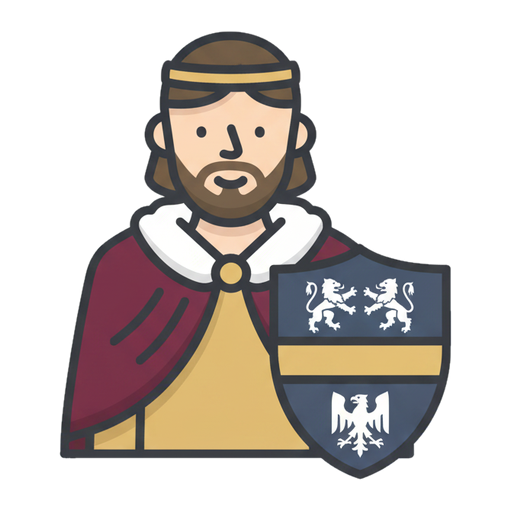 A noble was a person in the highest estate, whose status was usually inherited in the family. Nobles were often freed from taxes because they were expected to serve the ruler in war. They also held high offices.
- tax
 A tax is a compulsory payment that people and businesses make to the state, municipalities or other public bodies. Taxes pay for things like schools, health care and roads. Taxes include income tax and value added tax, for example.
- human rights
 Human rights are rights that belong to every person regardless of origin, gender or religion. They include the right to life and to freedom, for example. The UN adopted the Universal Declaration of Human Rights in 1948, after the atrocities of the Second World War.
- republic
- A republic is a form of state in which the head of state is not a hereditary monarch but is usually chosen for a fixed term. The word comes from the Latin res publica, meaning public matter.
- metre
 The basic unit of length. A metre has a hundred centimetres.
1. What do you know about the French Revolution?
Why did the French rise up against the king?
What happened at the Bastille on 14 July 1789?
Who was left outside the Declaration of the Rights of Man and of the Citizen?
What did the Revolution leave us?2. The king, three estates and expensive bread
In 1789 France was ruled by King Louis XVI. People were divided into three estates: the clergy, the nobility and the Third Estate. The Third Estate included almost everyone, for example peasants and craftsmen. They had to pay taxes, but the clergy and the nobility were exempt from many taxes. Bread was the main food of the poor, and after a bad harvest it became more expensive.
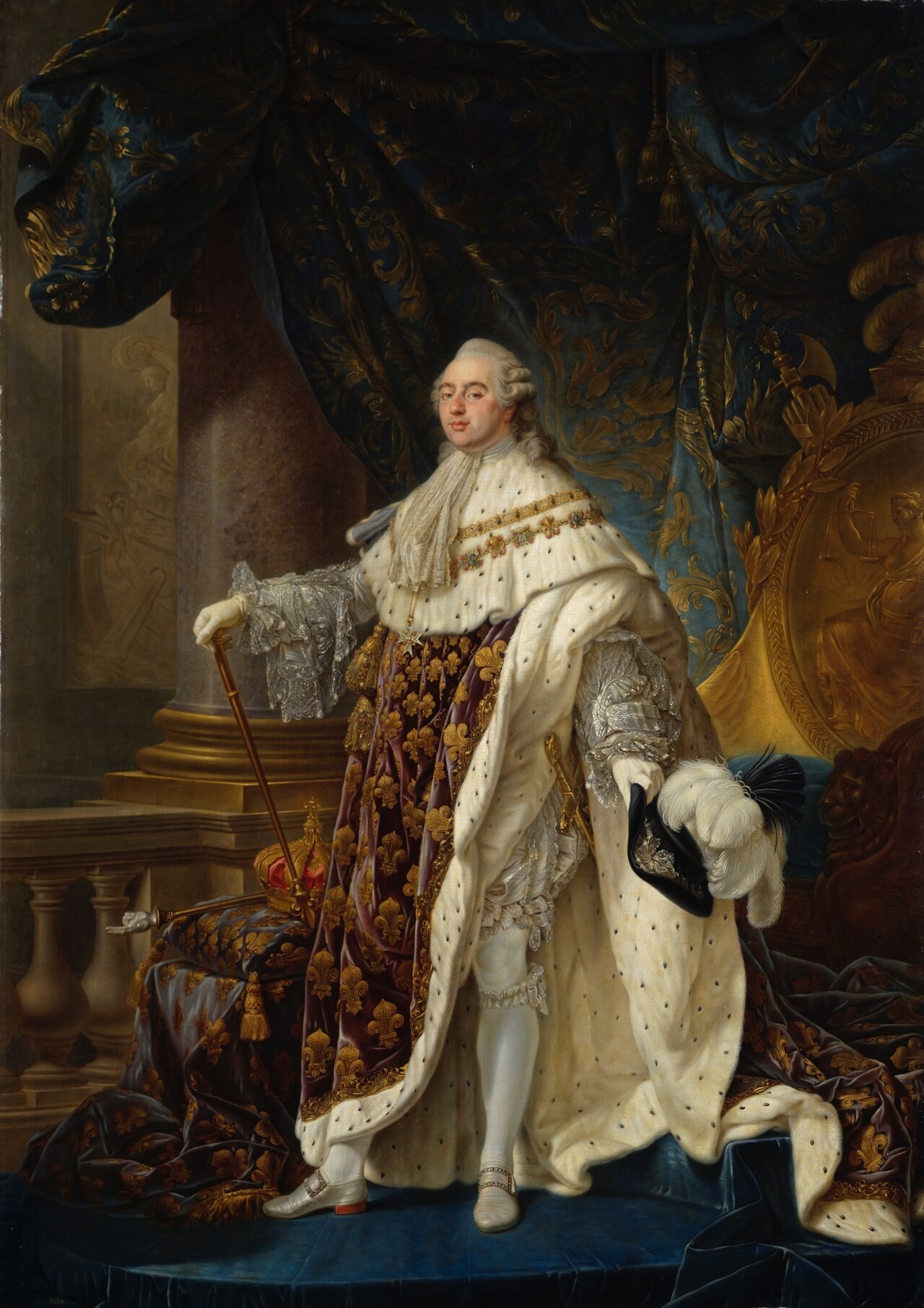
King Louis XVI in his coronation robes. Antoine-François Callet painted the portrait in 1779. Louis XVI was king from 1774.. Photo: Portrait of Louis XVI of France, Antoine-François Callet, Public domain, modified: reduced in size 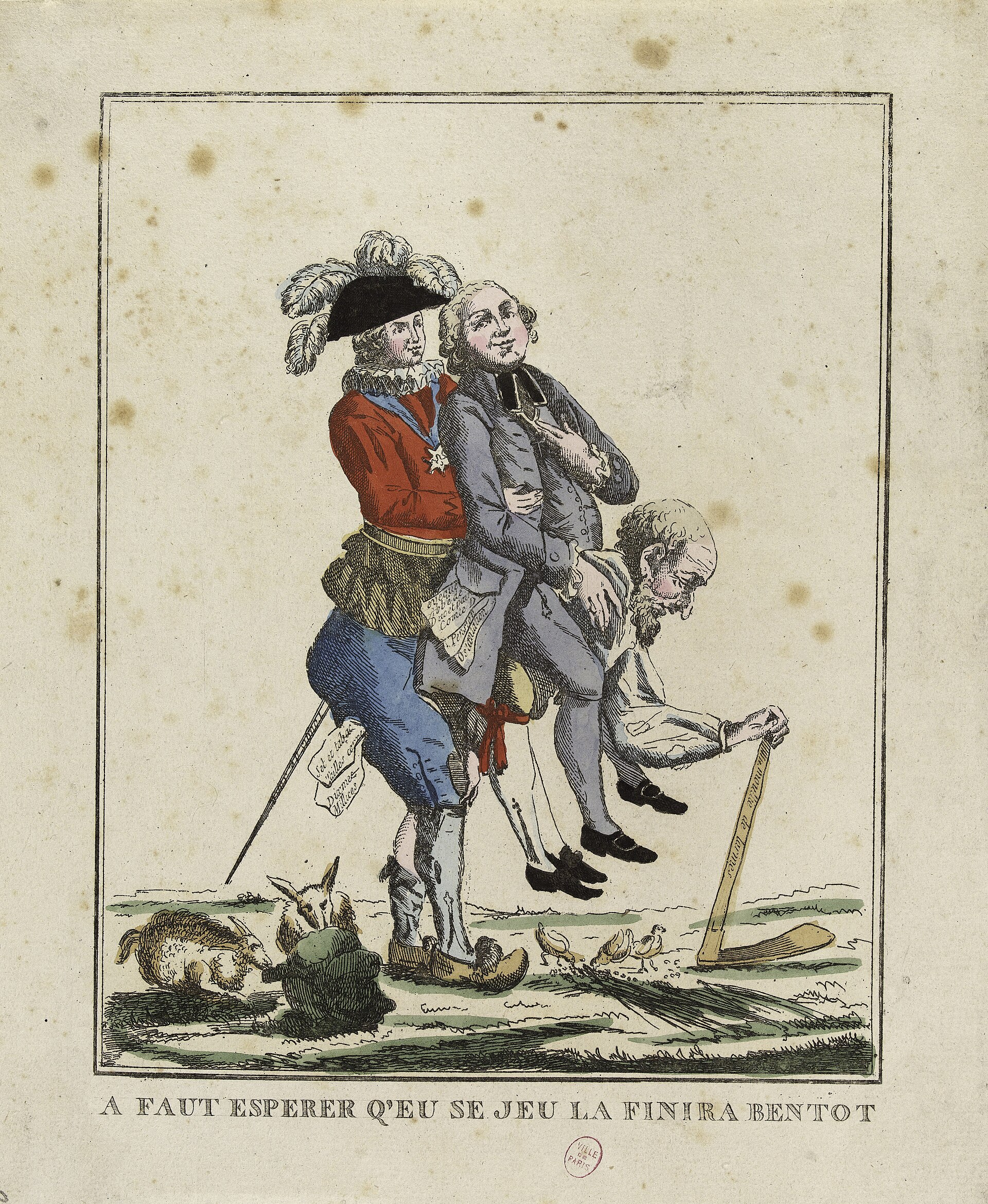
A cartoon from 1789 or thereabouts. A peasant carries a nobleman and a priest on his back. The French title means roughly: I hope this game will soon be over.. Photo: A faut esperer q'eu se jeu la Finira bentot sic, G.23829, Tuntematon kaivertaja (Anonyme, graveur), CC0, modified: reduced in size 3. The storming of the Bastille on 14 July 1789
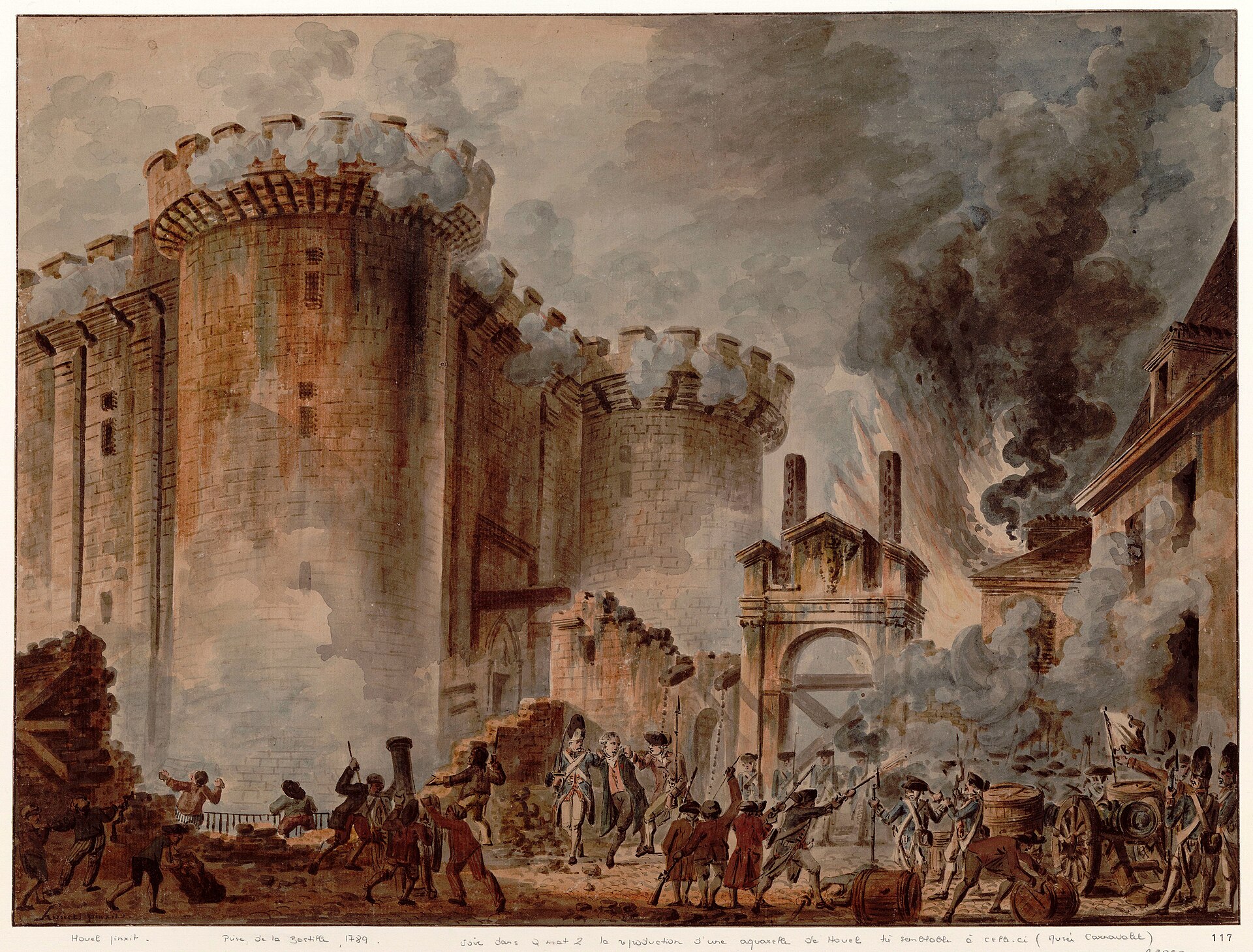
The Bastille was a fortress and prison in Paris. It was a symbol of the king's power. On 14 July 1789 the people of Paris armed themselves and captured it. They were looking for weapons and gunpowder. The king lost control of Paris.
The storming of the Bastille on 14 July 1789. Jean-Pierre Houël painted the picture in 1789. At the bottom there is a museum note in French.. Photo: Prise de la Bastille, Jean-Pierre Houël, Public domain, modified: reduced in size 4. The Declaration of the Rights of Man and of the Citizen: who did it cover?
In August 1789 the French National Assembly adopted the Declaration of the Rights of Man and of the Citizen. According to its first article, people are born free and equal in rights. In practice the Declaration did not apply to everyone. Women did not have the same rights as men, and enslaved people were not freed straight away.
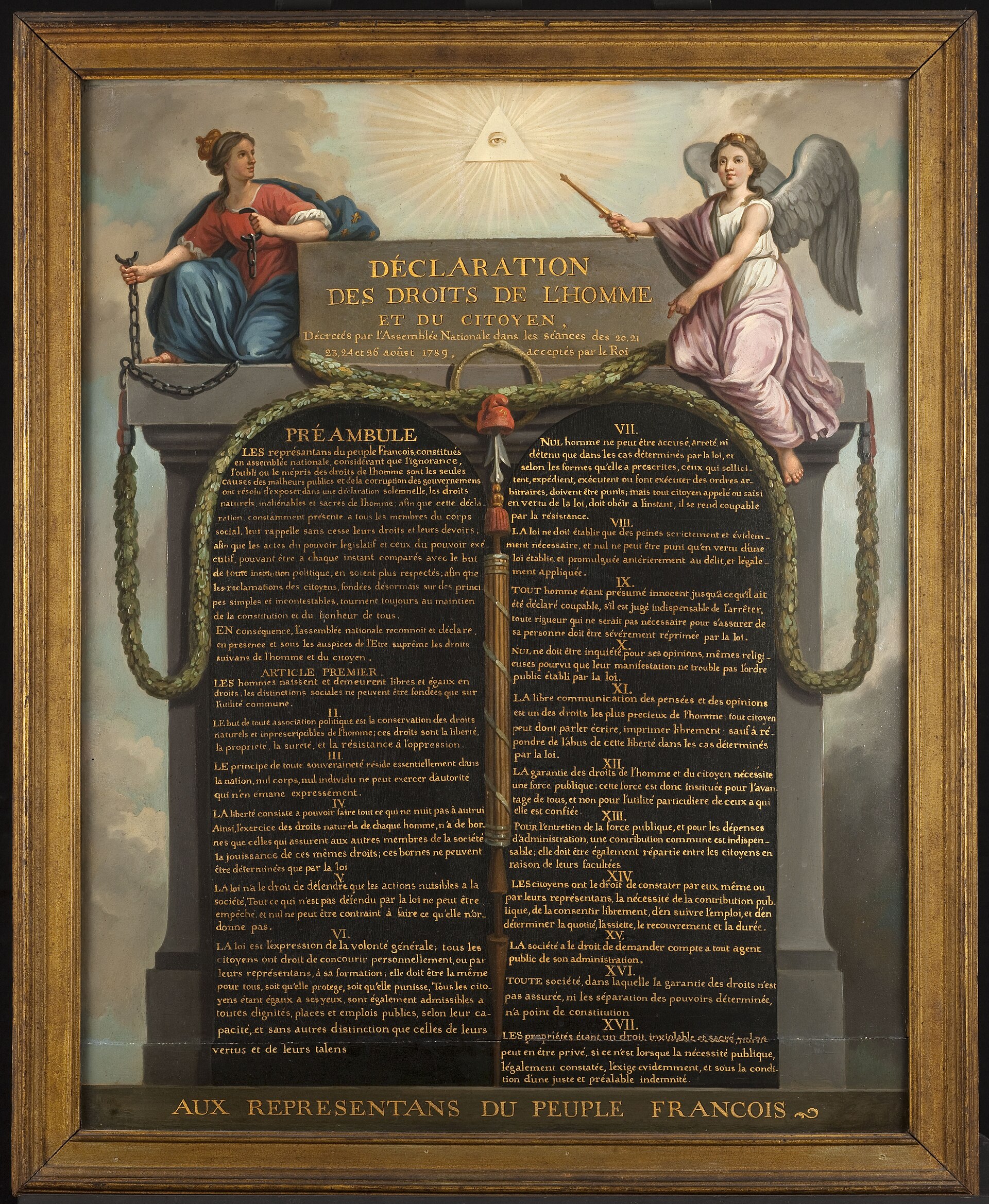
The Declaration of the Rights of Man and of the Citizen as a painting. Jean-Jacques-François Le Barbier painted it in 1789. The text of the Declaration is in French and has 17 articles.. Photo: Déclaration des droits de l'homme et du citoyen, Jean-Jacques-François Le Barbier, Public domain, modified: reduced in size 5. The king loses his power
The Revolution lasted ten years. During that time the king lost his power, and France became a republic.
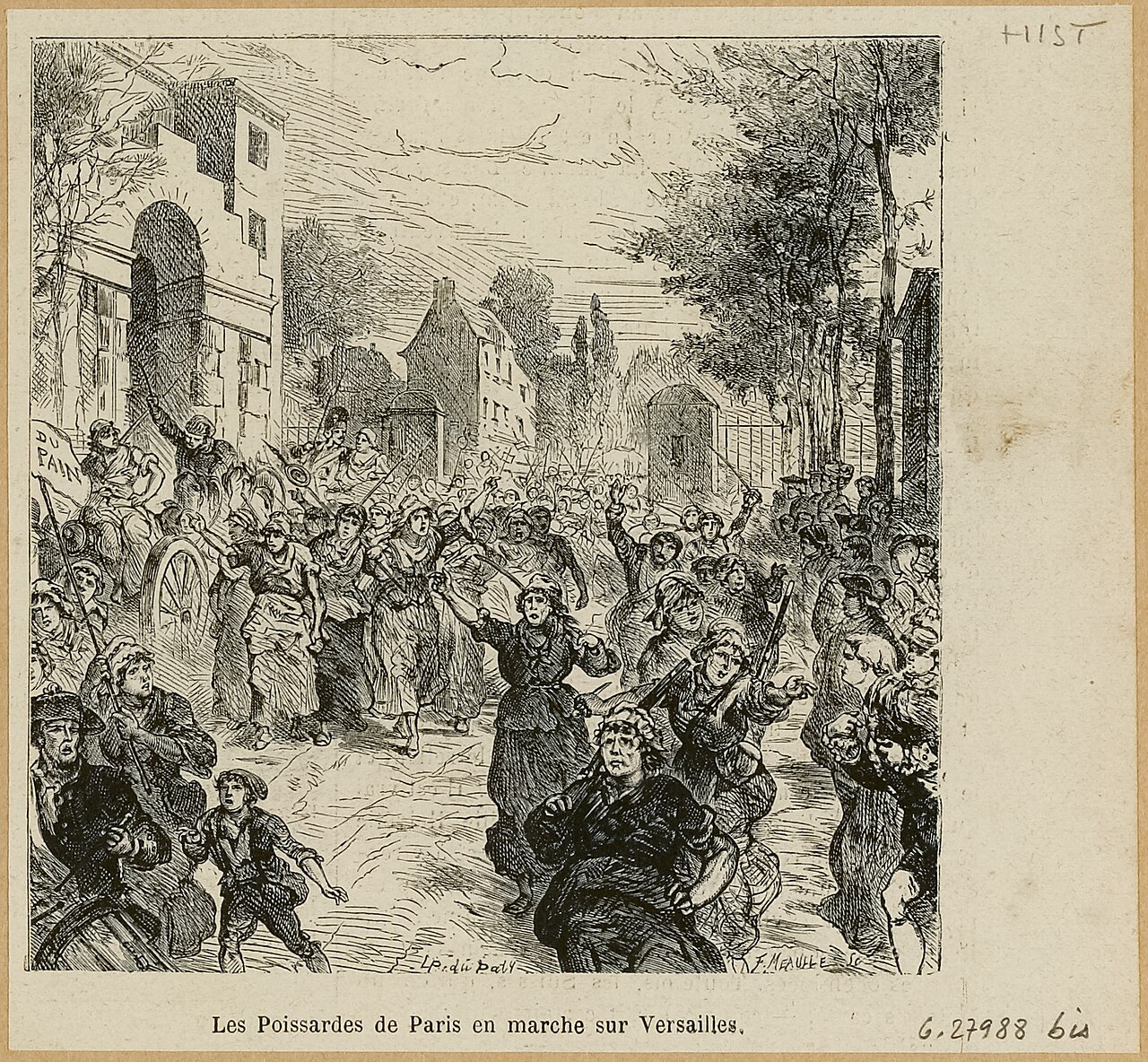
The women of Paris march to Versailles on 5 October 1789. The picture is an engraving from the 1800s, not from the time of the event. The banner says du pain in French, meaning bread.. Photo: Les Poissardes de Paris en marche sur Versailles, Léon du Paty (piirros) ja F. Meaulle (kaiverrus), CC0, modified: reduced in size 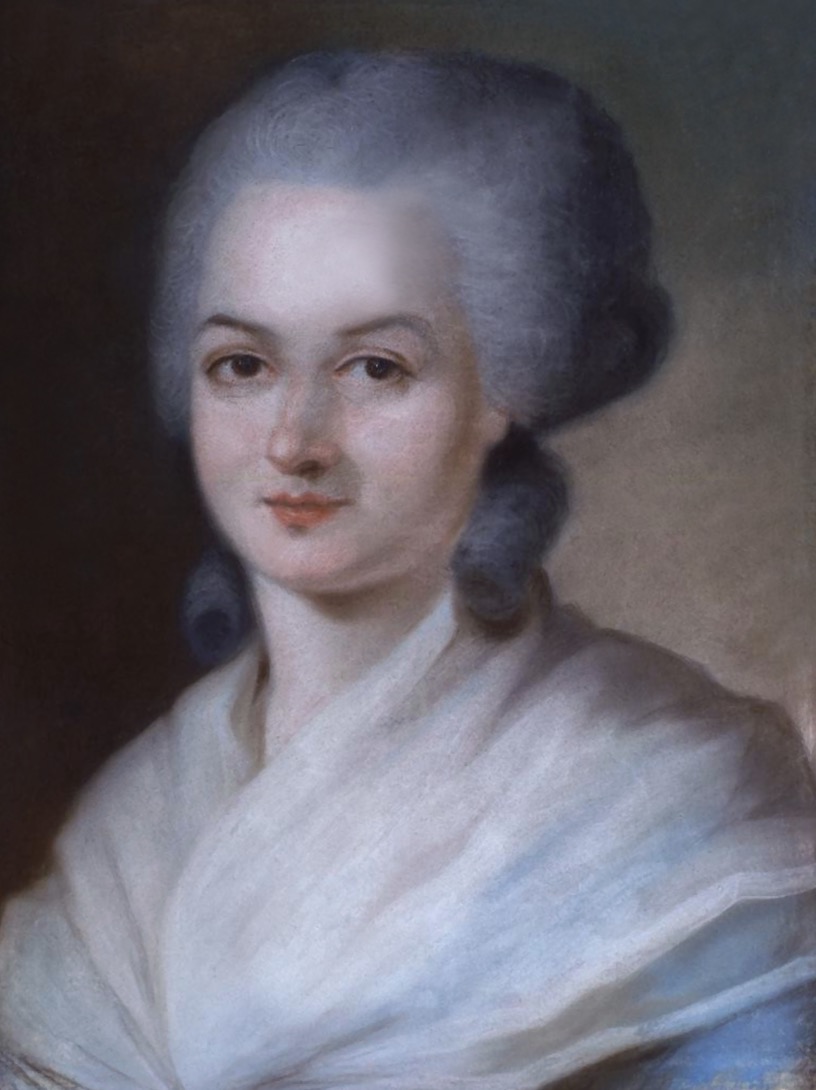
Olympe de Gouges. Alexander Kucharsky painted the portrait in the 1780s.. Photo: Olympe de Gouges, Alexander Kucharsky, Public domain, modified: reduced in size - 14.7.1789 The people of Paris storm the Bastille
- 5.–6.10.1789 The women march to Versailles for bread
- 1791 Olympe de Gouges demands rights for women
- 1792 France is declared a republic
- 1793 King Louis XVI is beheaded
- 1799 Napoleon takes power
6. What did the Revolution leave behind?
The tricolour is still the flag of France, and the Marseillaise is its national anthem. The Marseillaise was written in 1792. During the Revolution people also began to develop the metric system, so that the same measure could be used everywhere.
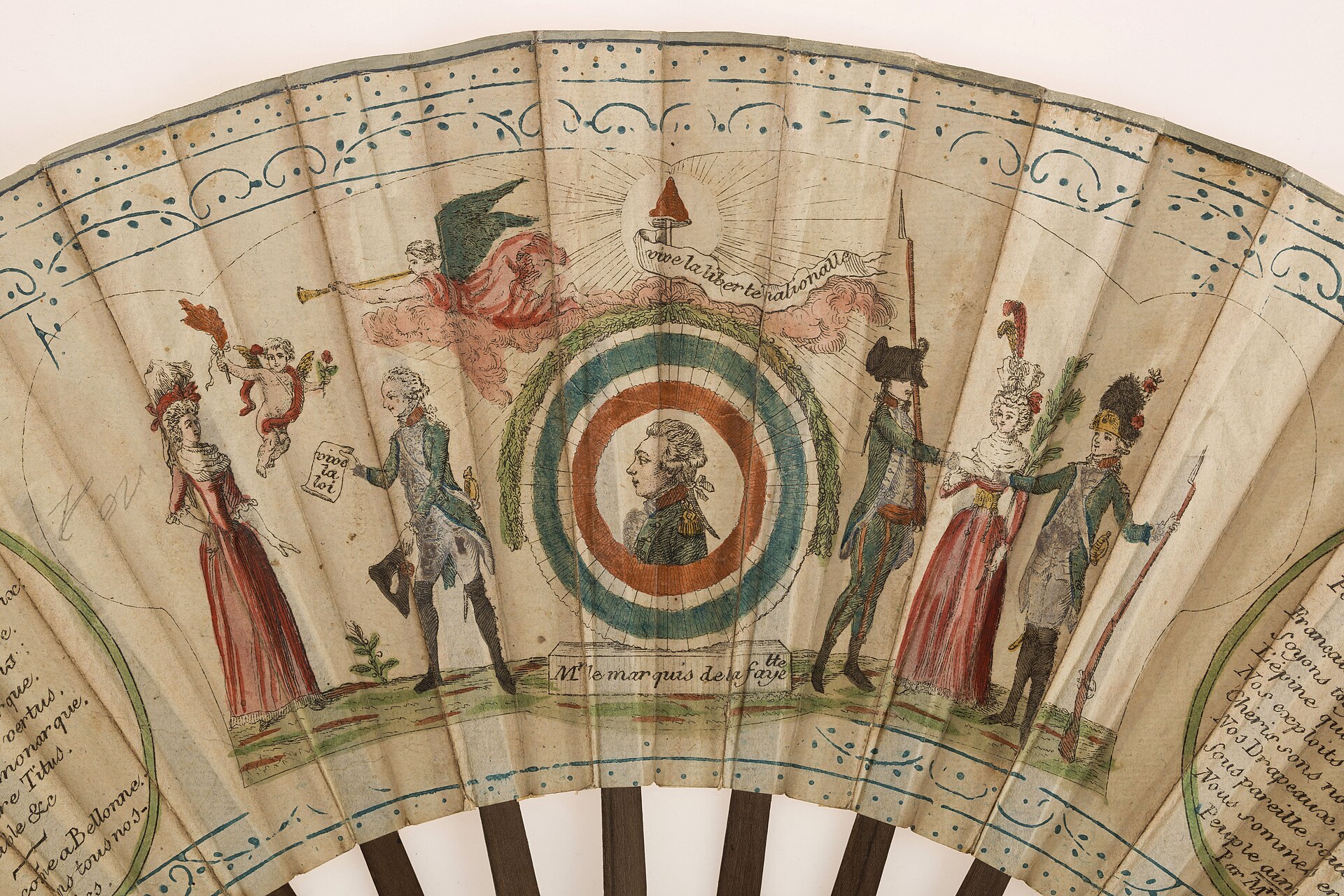
A fan from the late 1700s. In the middle is Lafayette inside a three-coloured ring. The text vive la liberté nationale means: long live national freedom.. Photo: La Fayette et la cocarde tricolore, EV0157, Unknown author, CC0, modified: reduced in size 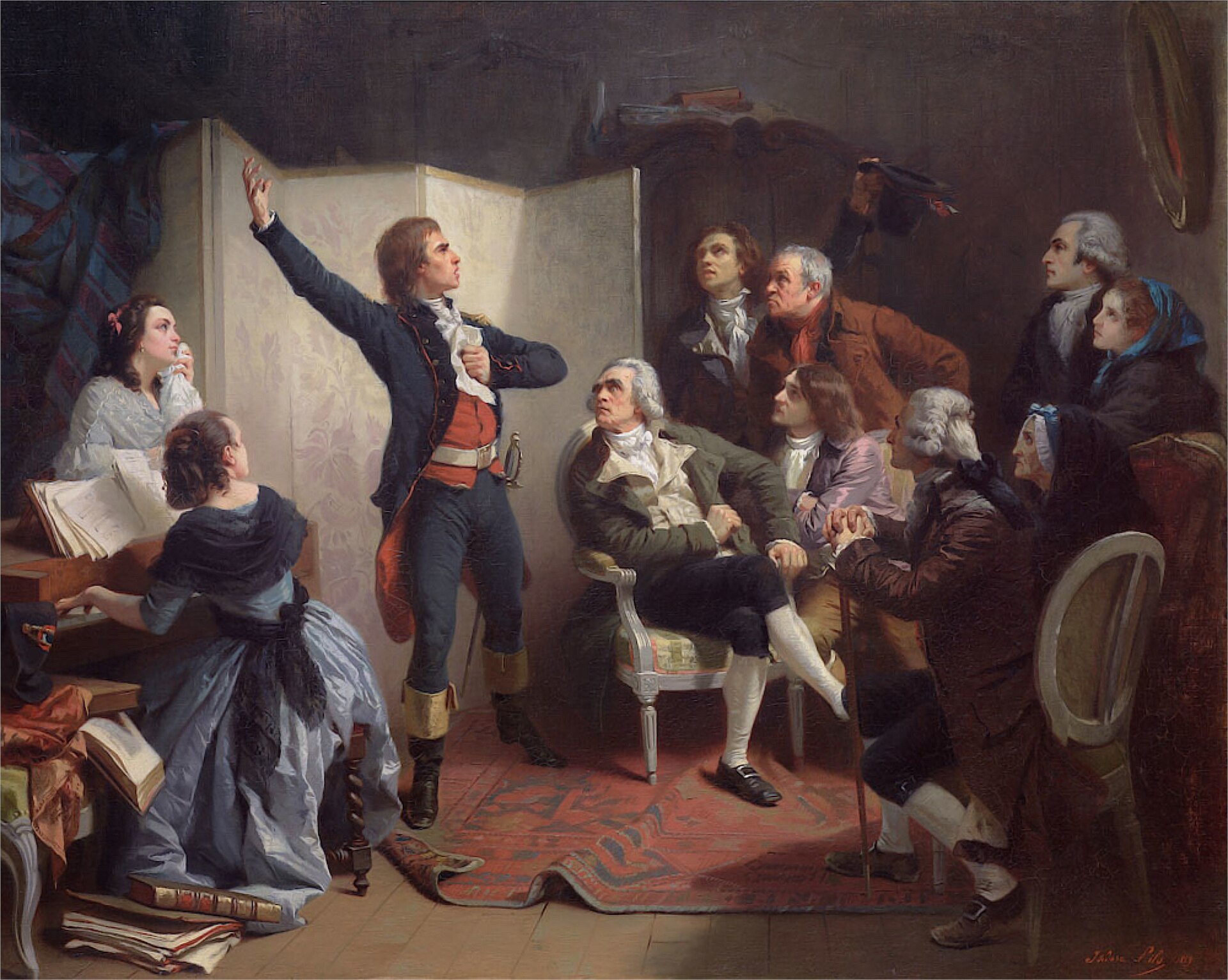
Rouget de Lisle sings the Marseillaise for the first time in 1792. Isidore Pils painted the picture only in 1849, so it is a later imagining of the event.. Photo: Rouget de l'Isle chantant pour la première fois la Marseillaise chez Dietrich, maire de Strasbourg, Isidore Pils, Public domain, modified: reduced in size 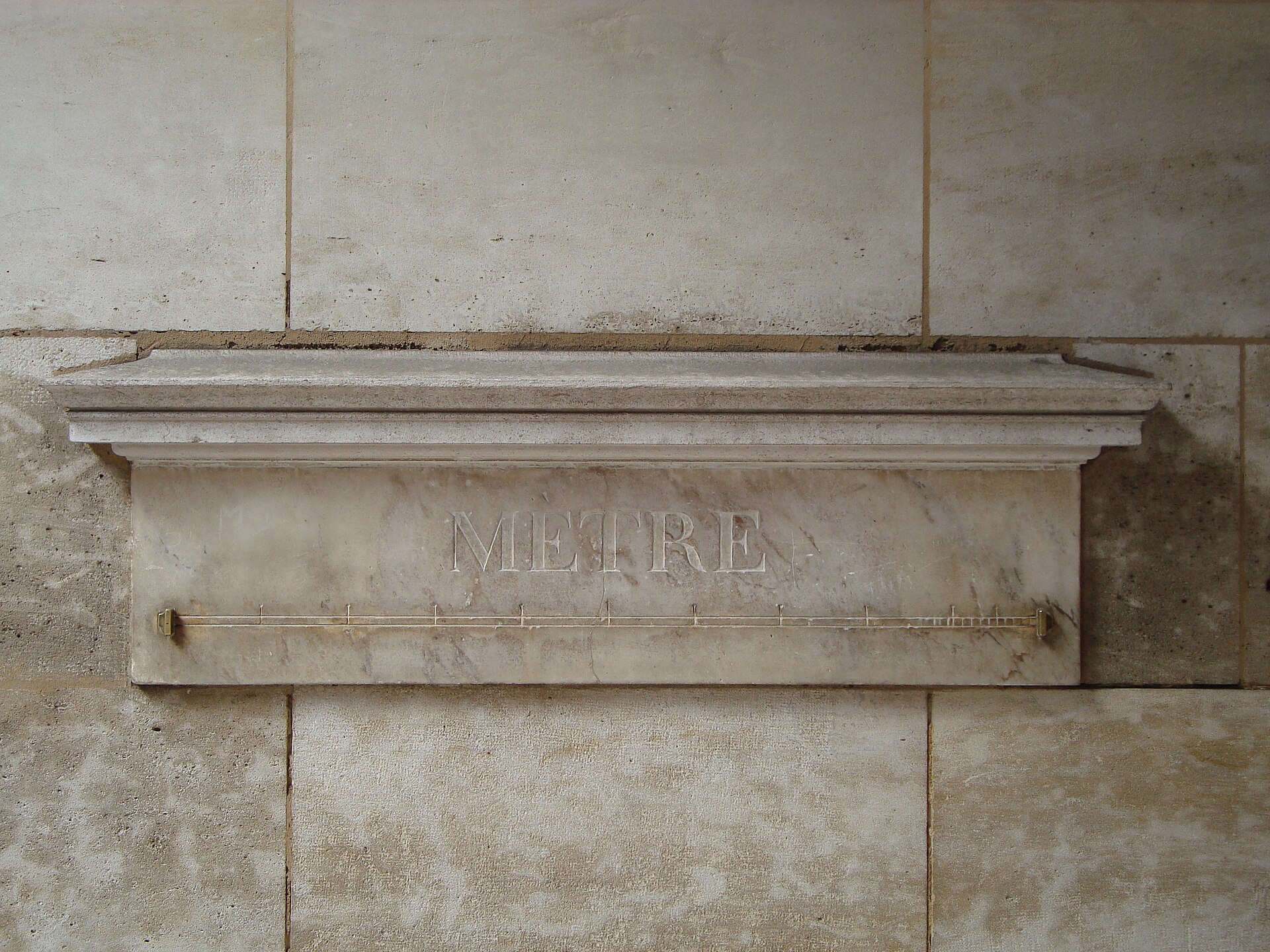
A marble standard metre in Paris, at 36 rue de Vaugirard. It dates from the late 1700s. The carved word METRE is French.. Photo: Mètre-étalon Paris, LPLT, CC BY-SA 3.0, modified: reduced in size 7. Discuss in pairs
Why were peasants and townspeople dissatisfied in 1789?
Who was left outside the Declaration of the Rights of Man and of the Citizen?
Why did Olympe de Gouges demand rights for women?
What from the Revolution is still in use today?


Summary
The French Revolution began in 1789. King Louis XVI ruled, and the Third Estate paid taxes, but the clergy and the nobility were exempt from many taxes. The people of Paris captured the Bastille on 14 July 1789. In August the National Assembly adopted the Declaration of the Rights of Man and of the Citizen, but it did not yet apply to women or enslaved people. In 1792 France became a republic, and the king was beheaded in 1793. The tricolour, the Marseillaise and the metric system survived from the Revolution.
Frequently asked questions
Why is 14 July celebrated in France?
It is France's national day. The day commemorates the storming of the Bastille in 1789. It was made an official holiday in 1880.
What do the colours of the tricolour mean?
Blue and red were the colours of the city of Paris. White was the colour of the king. In 1789 the colours were combined to make the emblem of the National Guard, and it became the flag of France.
Did everything get better straight away?
No. The Revolution brought new rights, but also wars and violence. Women in France won the vote only in 1944. Slavery was banned in the French colonies in 1794, but Napoleon restored it in 1802, and it was finally banned in 1848.
Related content
Try exercises
Have you taught this topic? Create an exercise on it for your class.