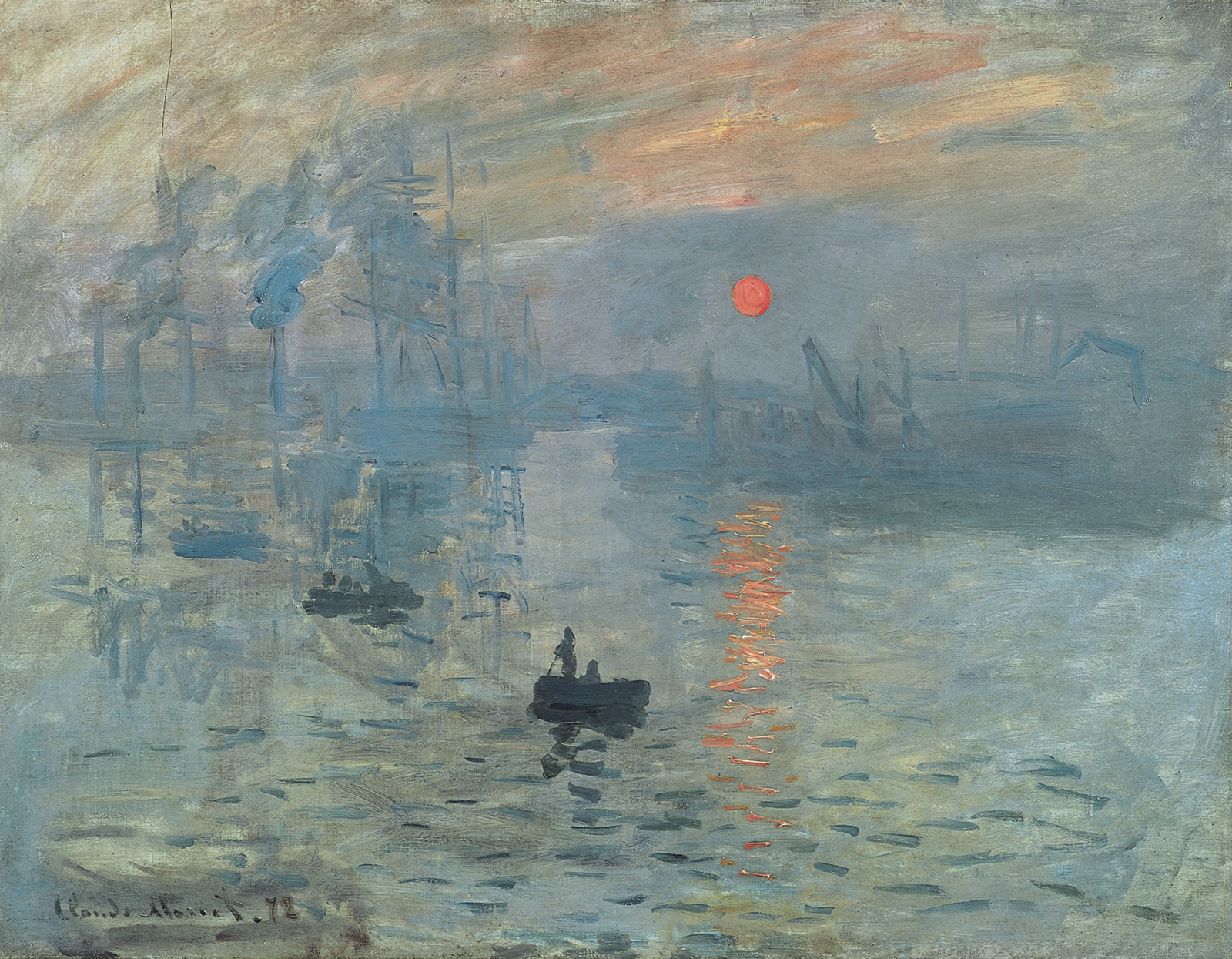

Impressionism: Monet, Renoir and the painting of light
What is Impressionism? In paintings by Monet, Renoir and Morisot you can see light, quick brushstrokes and colour. Teaching, slides and tasks for the whole primary school.
Impressionism is a style of painting that began in Paris in the 1870s, in which the artist uses quick brushstrokes to paint how light and colour look right now. The article suits the whole primary school: things are explained simply first, and the "Explore more" notes give older pupils something extra. Every step can be shown to the class as a slide.
At the end, pupils know the words Impressionism, brushstroke and complementary colour, know why Monet painted the same place many times and can try painting with dots of colour.
Key concepts
- artist
 A person whose job is to make paintings, sculptures or other art.
- camera
 A device for taking photos and filming videos.
- paintbrush
 A handle with soft bristles at the end for painting.
- light
 Energy that lets us see. The sun is the most important source of light.
- shadow
 A dark area made when an object blocks the light.
- morning
 The start of the day, when you wake up and eat your first meal.
- red
 A colour like a strawberry or a fire engine.
- green
 A colour like grass and the leaves of trees in summer.
Related exercises
There is no exercise for this topic yet
Teacher or creator: make the first exercise with Puro Editor and choose Artists and Art History as its topic. It will appear here as soon as it is published.
1. Finished or not?
Look at the painting. What do you see?
Can you see the brushstrokes?
Do you think the painting is finished?
What did the artist want to show?2. Why did Impressionism begin in Paris?
In the 1860s the official Paris Salon decided what counted as good art: exact, smooth pictures. Then came the camera and the paint tube, and many wanted to paint colour and light.
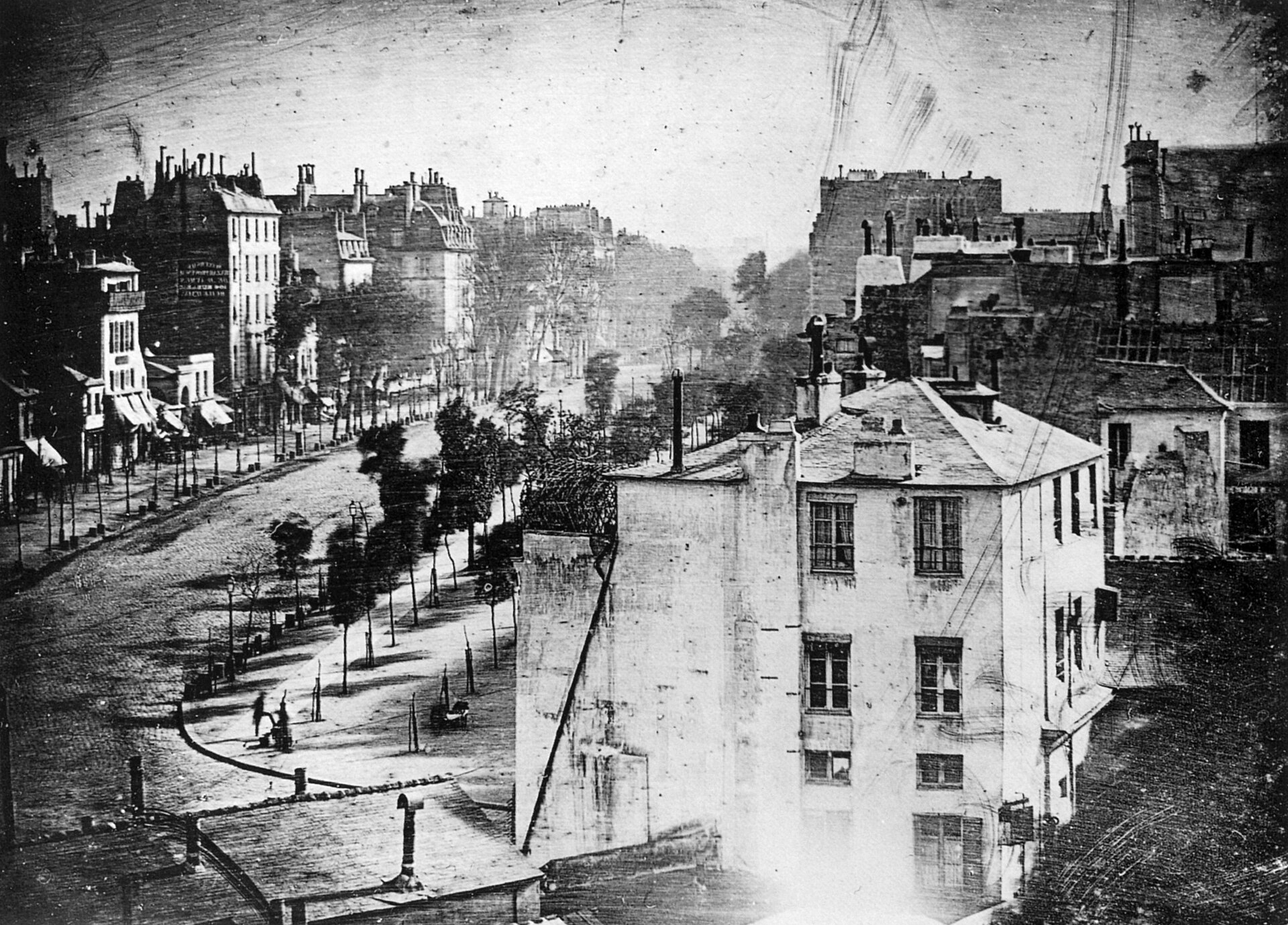
Louis Daguerre: Boulevard du Temple in Paris (1838). During the long exposure, the moving people and carriages did not appear in the picture.. Photo: Boulevard du Temple (1838), Louis Daguerre, Public domain, modified: reduced in size 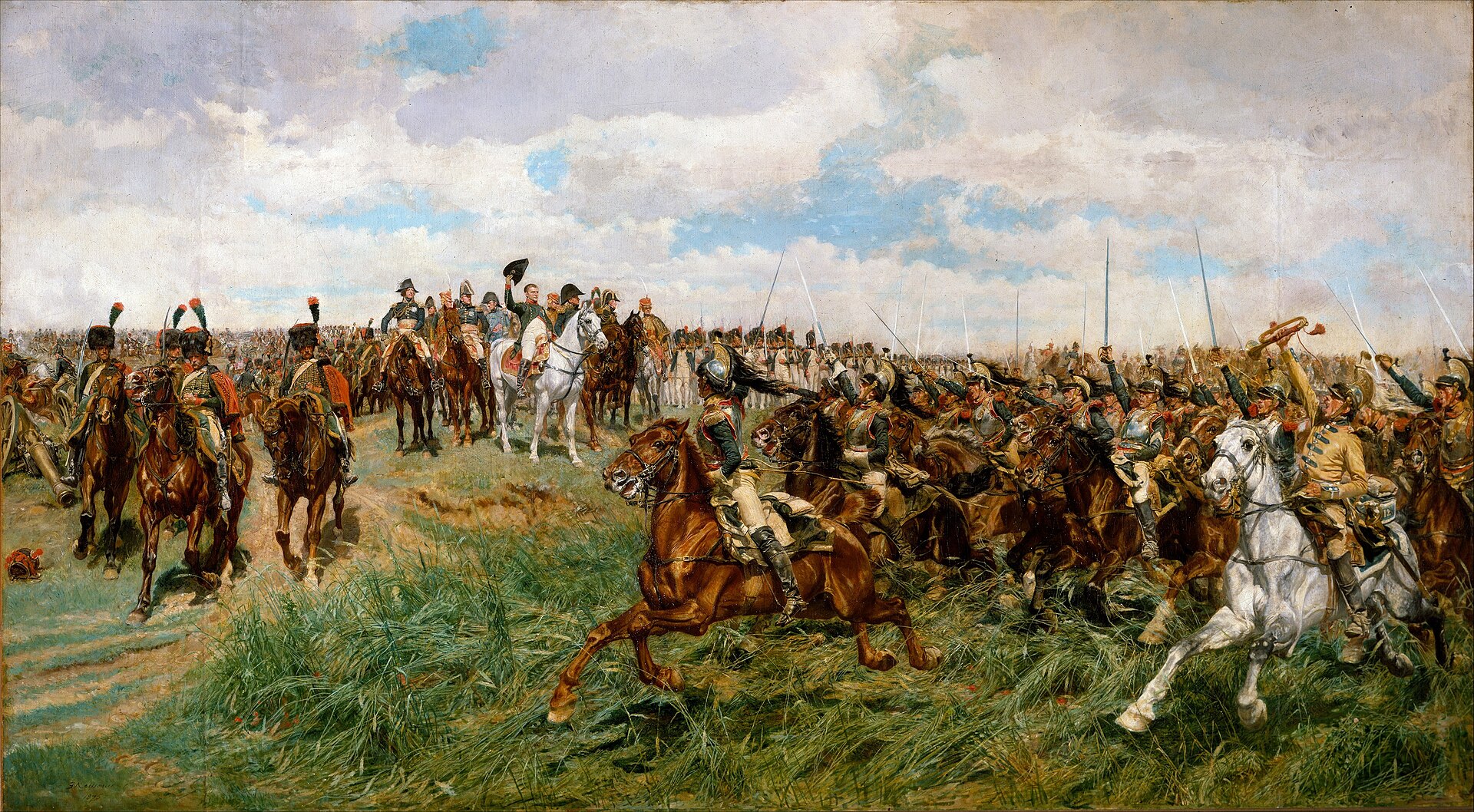
Ernest Meissonier: Friedland, 1807 (finished 1875). A precise, smoothly finished picture like this suited the taste of the official Salon.. Photo: 1807, Friedland, Jean-Louis-Ernest Meissonier, CC0, modified: reduced in size 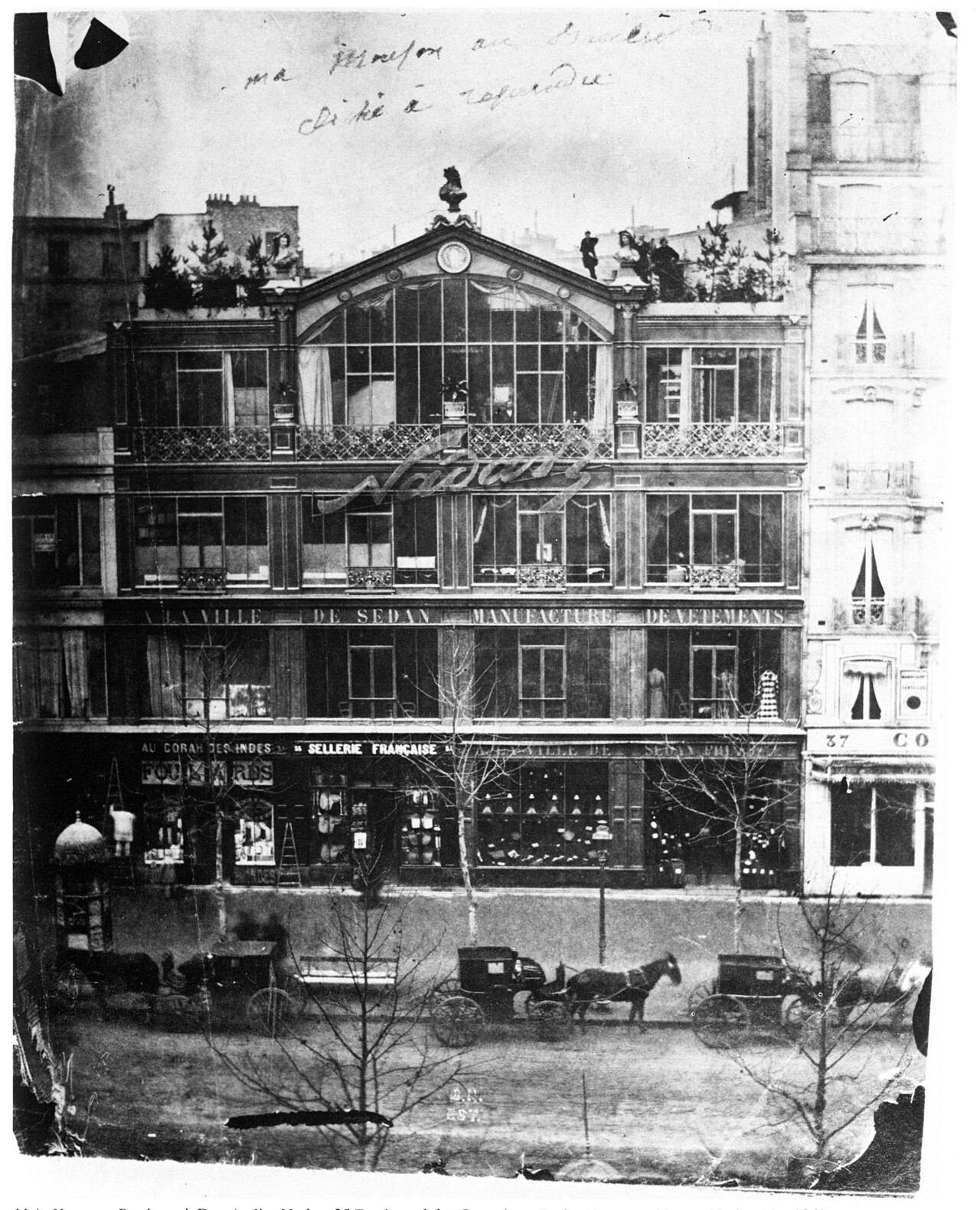
The studio of the photographer Nadar at 35 boulevard des Capucines (1860). The artists' first exhibition of their own was held in 1874 in these rooms, after Nadar had moved out.. Photo: Atelier Nadar, 35 boulevard des Capucines (1860), Nadar, Public domain, modified: reduced in size - 1839 Photography is invented
- 1841 The paint tube is invented
- 1860s The Salon rewards smooth painting
- 1874 First exhibition; the name appears
- 1886 The eighth and last joint exhibition
3. Quick brushstrokes and colours instead of lines
The Impressionists painted with quick brushstrokes. They did not draw exact lines. The poppy, the hat and the cloud are small patches of colour. Close up the picture falls apart into brushstrokes, but from further away it is a field on a summer day.
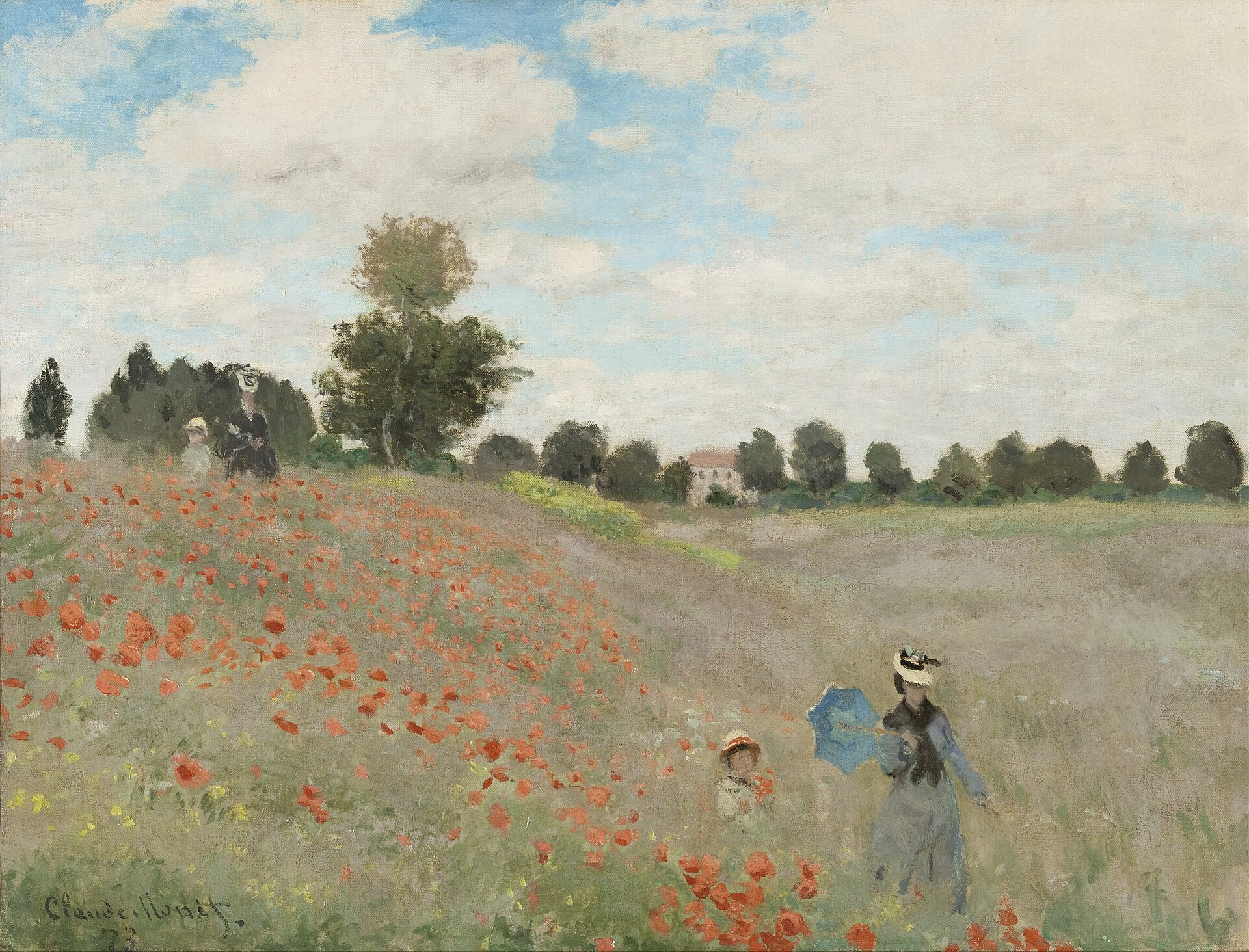
Claude Monet: Poppy Field near Argenteuil (1873). Each poppy is one short red brushstroke.. Photo: Wild Poppies near Argenteuil (1873), Claude Monet, Public domain, modified: reduced in size 4. The same place, different light
Light changes from morning to evening and from one kind of weather to another, and the colours change with it. Monet painted the haystacks in the field and Rouen Cathedral many times. Each picture is one moment in different light.
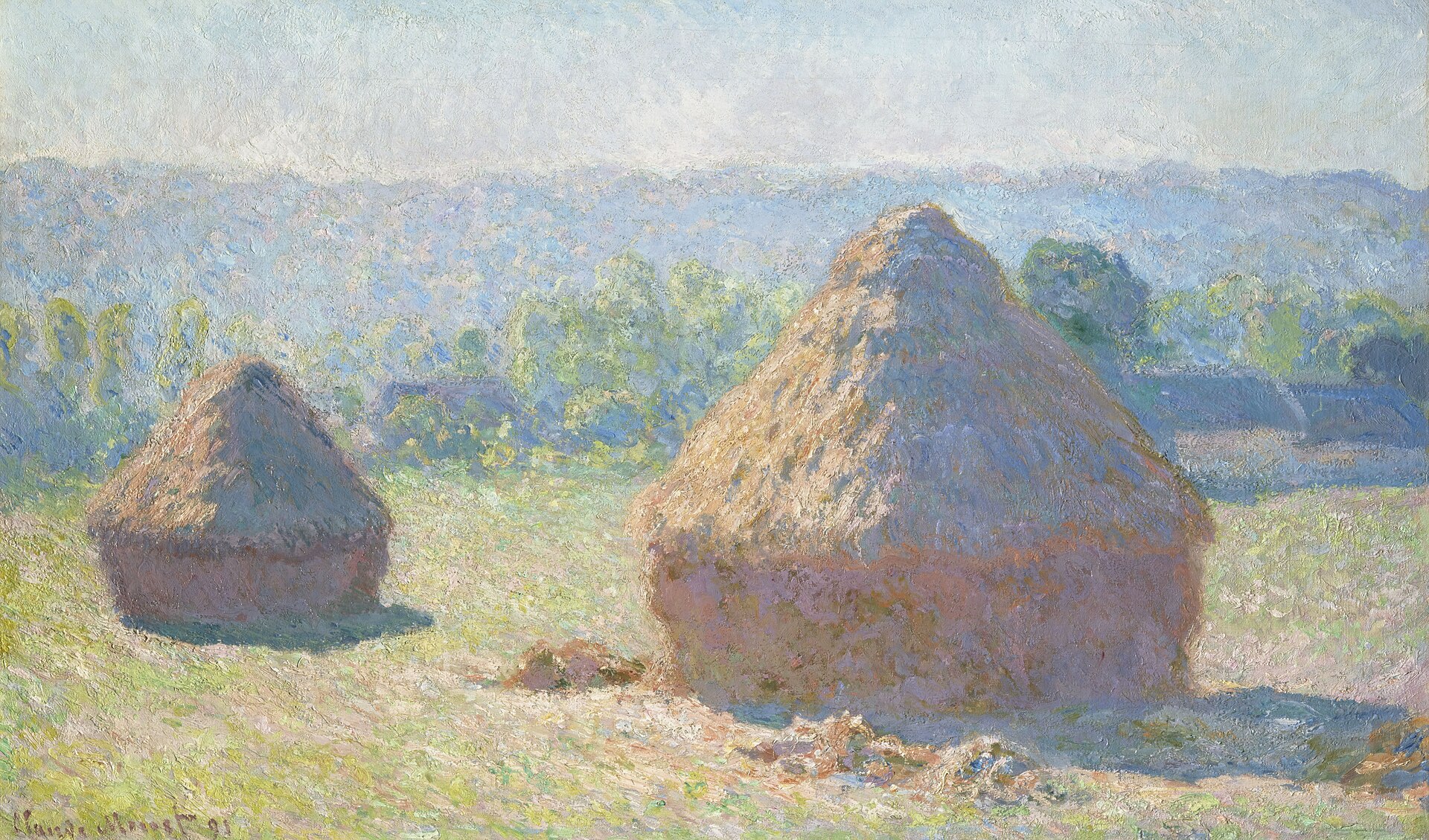
Claude Monet: Haystacks, End of Summer (1890–1891). Warm summer light, pale colours and violet shadows.. Photo: Haystacks, end of Summer (1890–1891), Claude Monet, Public domain, modified: reduced in size 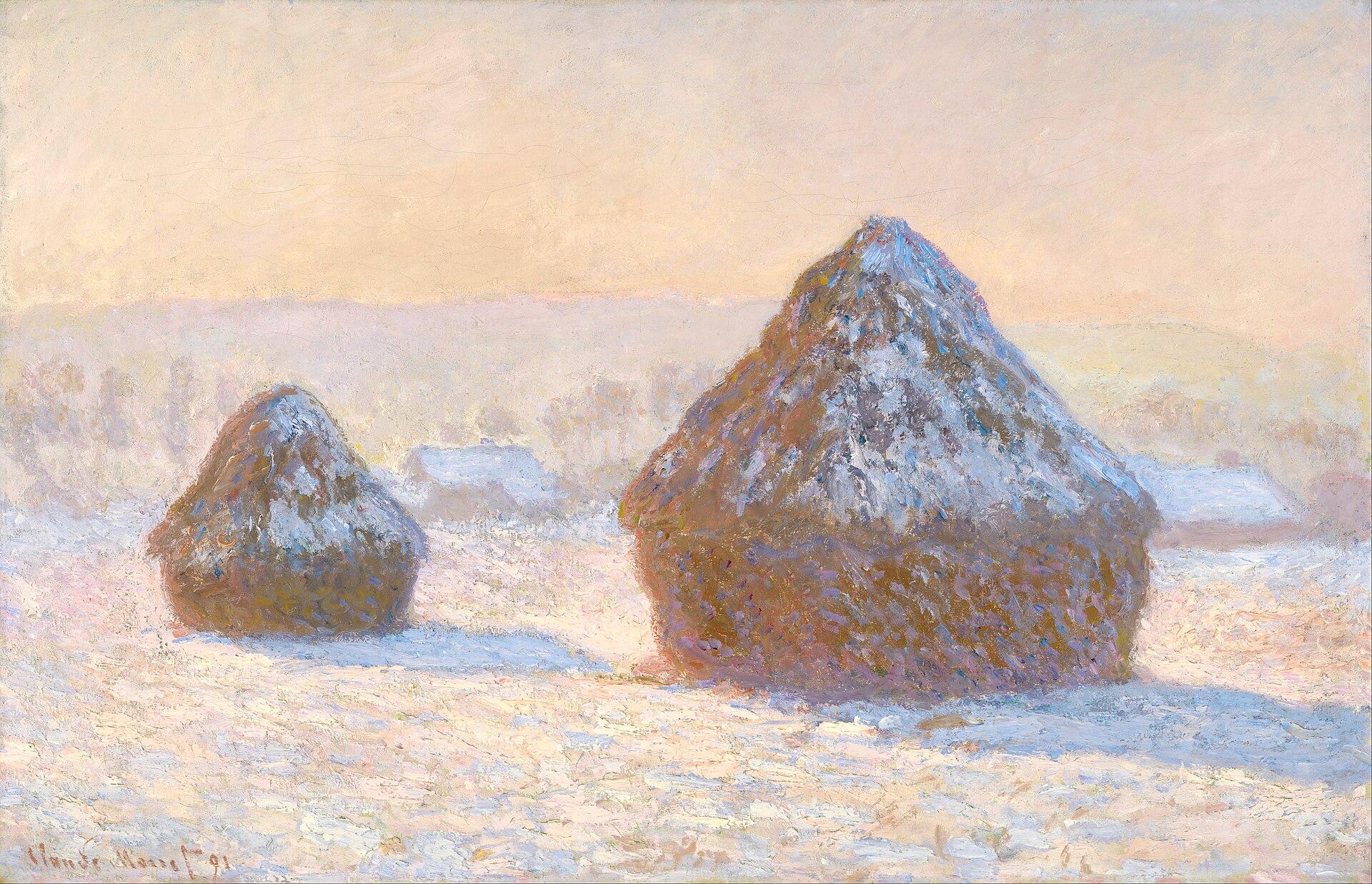
Claude Monet: Haystacks, Snow, Morning (1891). The same subject in winter: the morning light colours the snow pink and the shadows blue.. Photo: Wheatstacks, Snow Effect, Morning (1891), Claude Monet, Public domain, modified: reduced in size 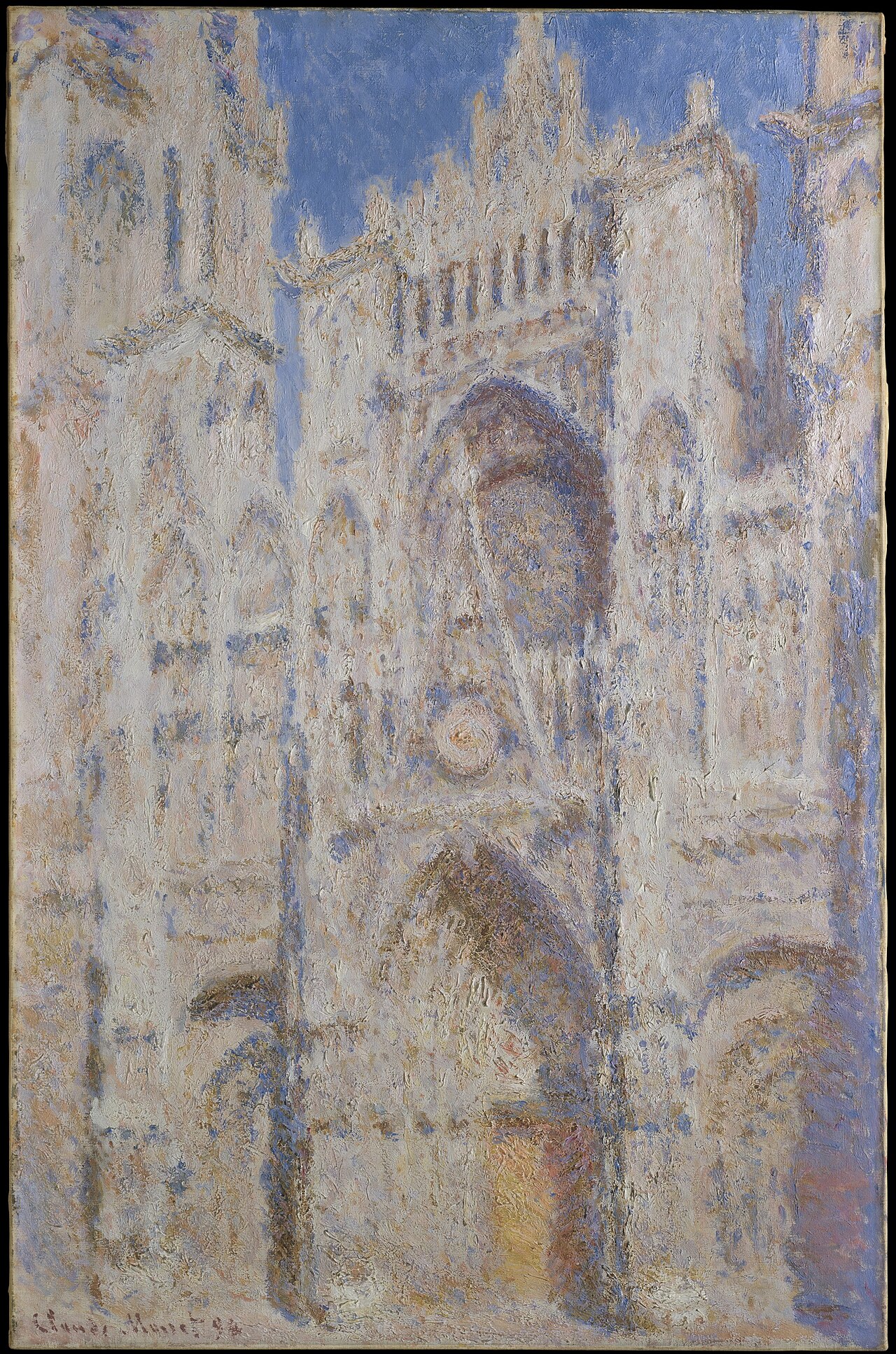
Claude Monet: Rouen Cathedral, the Main Portal, Sunlight (1894). The stone looks pale and bluish.. Photo: Rouen Cathedral: The Portal (Sunlight) (1894), Claude Monet, CC0, modified: reduced in size 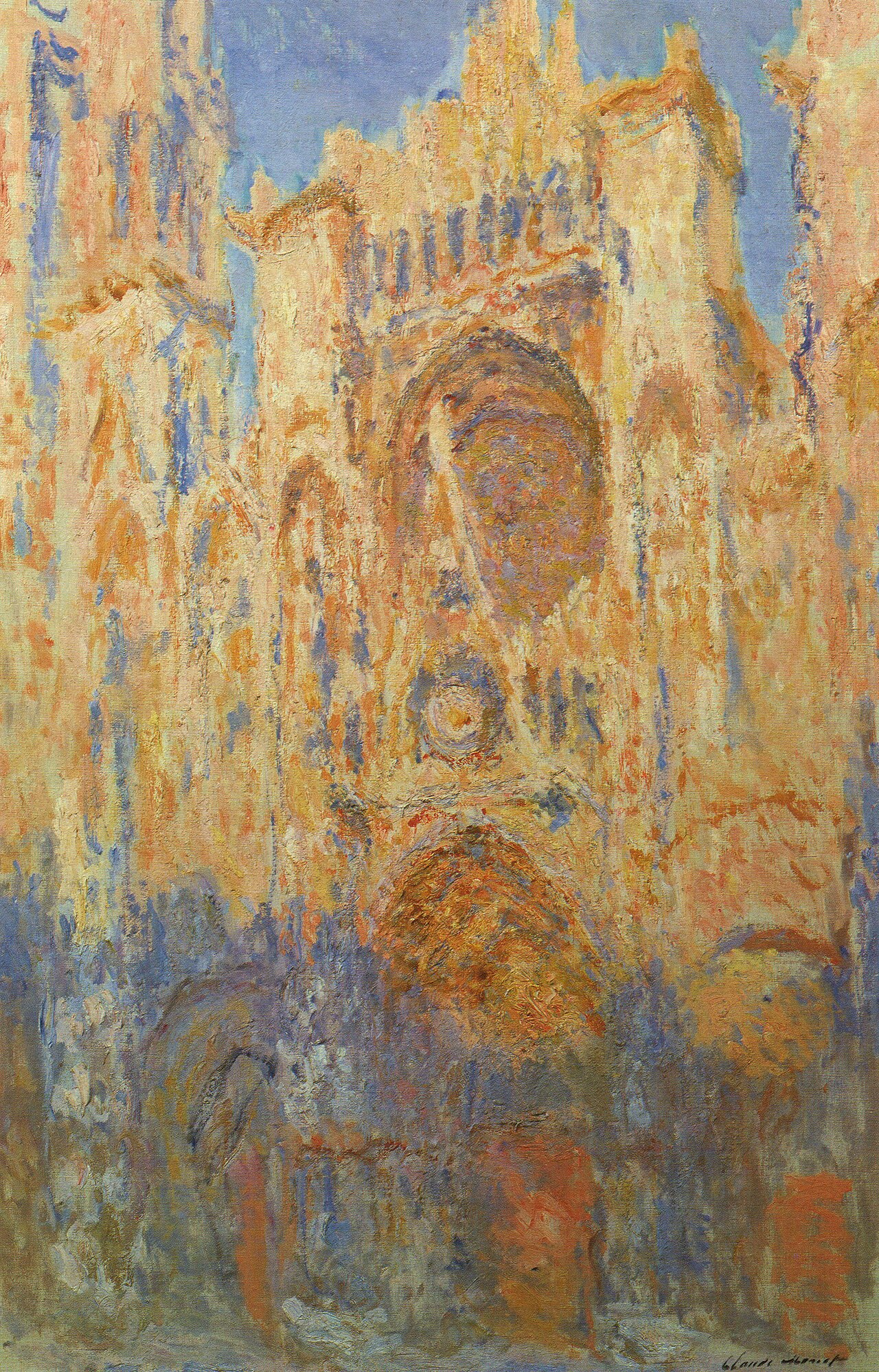
Claude Monet: Rouen Cathedral, the Façade, Evening Sun (1892–1894). The same church now glows orange.. Photo: Rouen Cathedral, Facade (Sunset) (1892–1894), Claude Monet, Public domain, modified: reduced in size 5. Patches of light and blue shadows
Renoir painted people dancing in a garden. The sun shining through the leaves makes pale patches in the picture. The shadows are not black but blue. Colours side by side mix in the eye: from further away they look like a single shade.
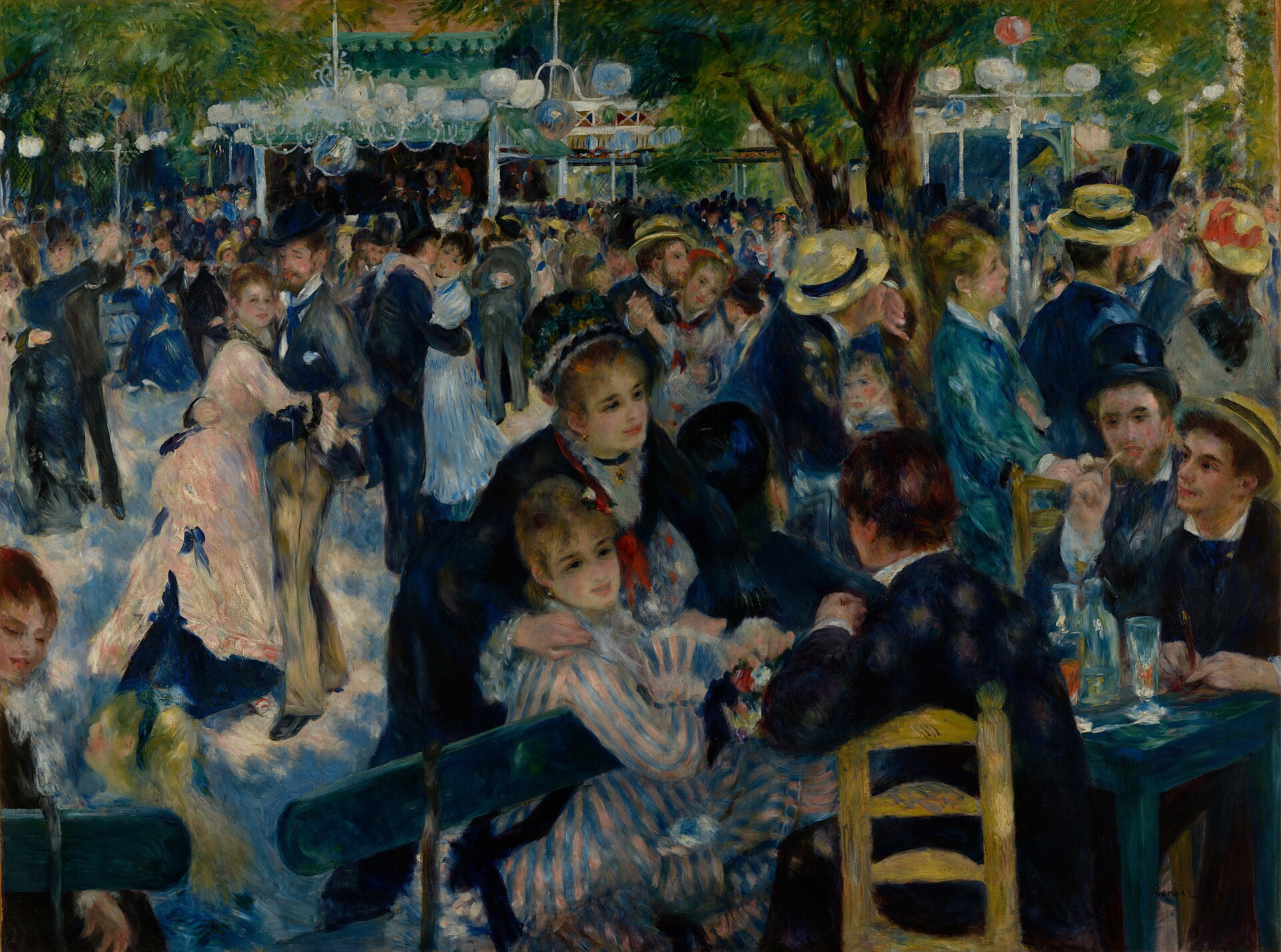
Pierre-Auguste Renoir: Dance at Le Moulin de la Galette (1876). Parisians dance outdoors on the hill of Montmartre.. Photo: Bal du moulin de la Galette (1876), Pierre-Auguste Renoir, Public domain, modified: reduced in size 6. Everyday life, not heroes
In the past, people often painted gods, kings and wars. The Impressionists painted everyday life: a baby's cradle, a dance lesson, a city street at night. Berthe Morisot took part in the first exhibition in 1874.
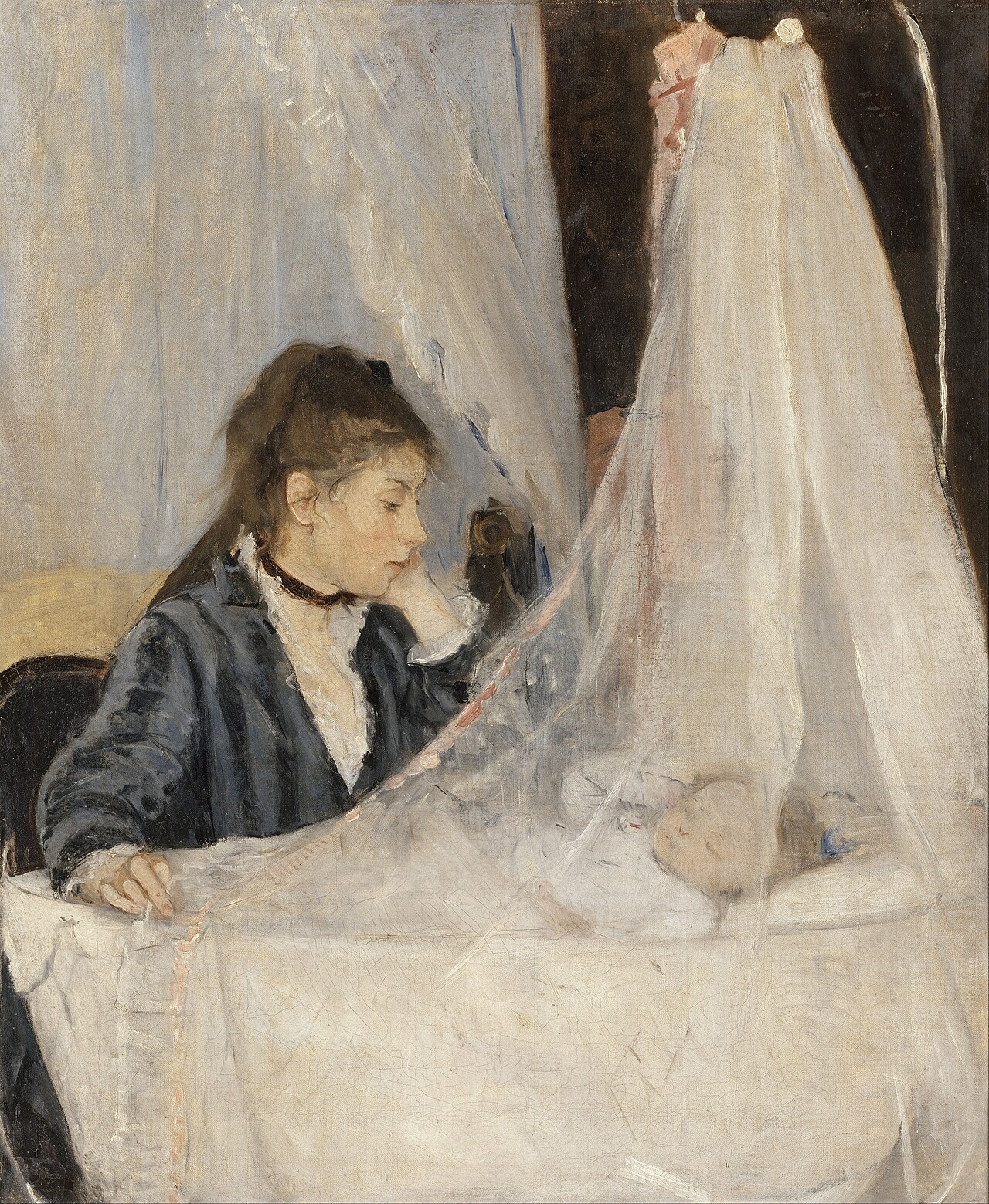
Berthe Morisot: The Cradle (1872). The mother looks at the sleeping baby. The white veil is painted with pale brushstrokes.. Photo: Le berceau (The Cradle) (1872), Berthe Morisot, Public domain, modified: reduced in size 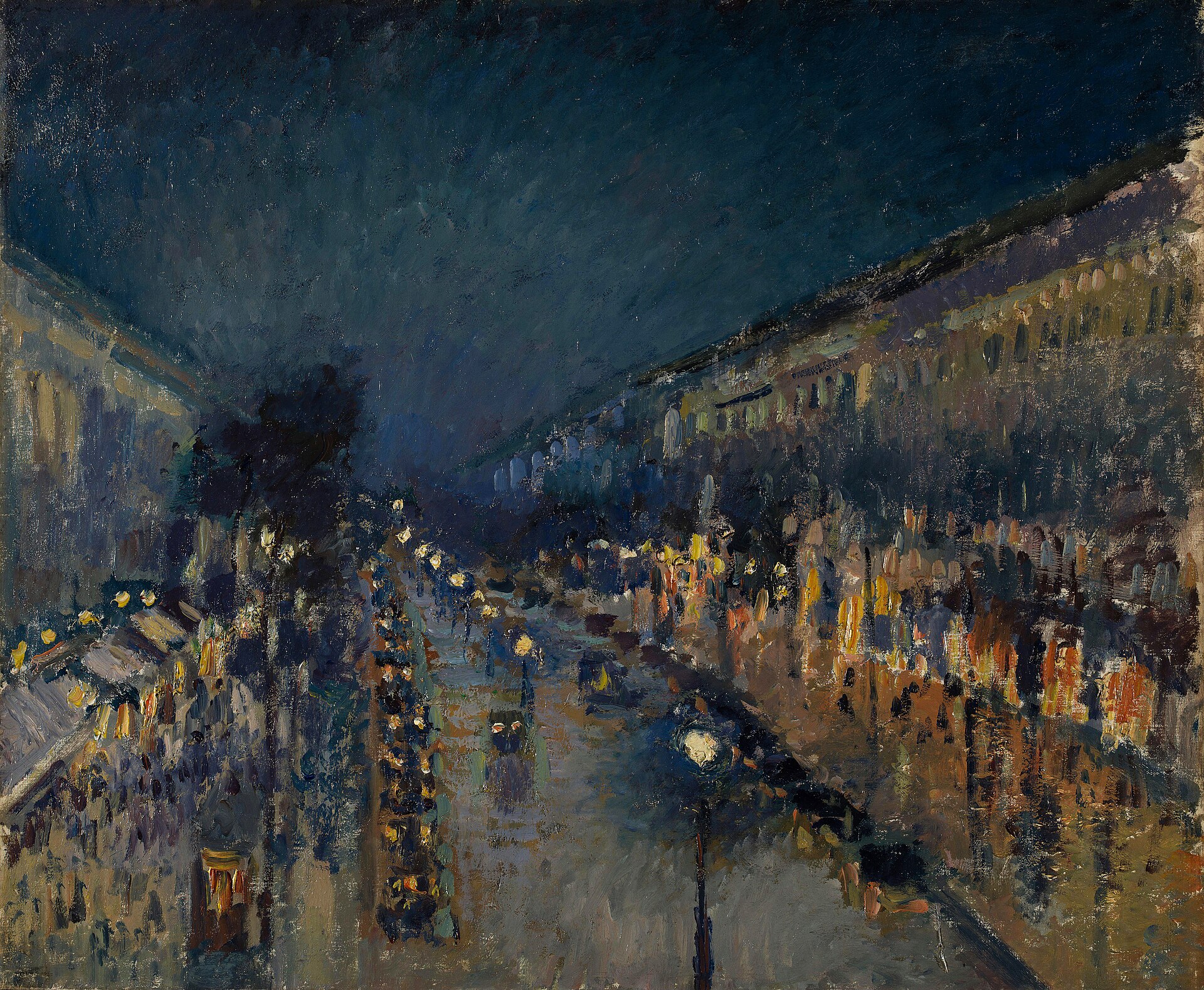
Camille Pissarro: Boulevard Montmartre at Night (1897). The lights of the city are yellow and orange brushstrokes in the blue.. Photo: The Boulevard Montmartre at Night (1897), Camille Pissarro, Public domain, modified: reduced in size 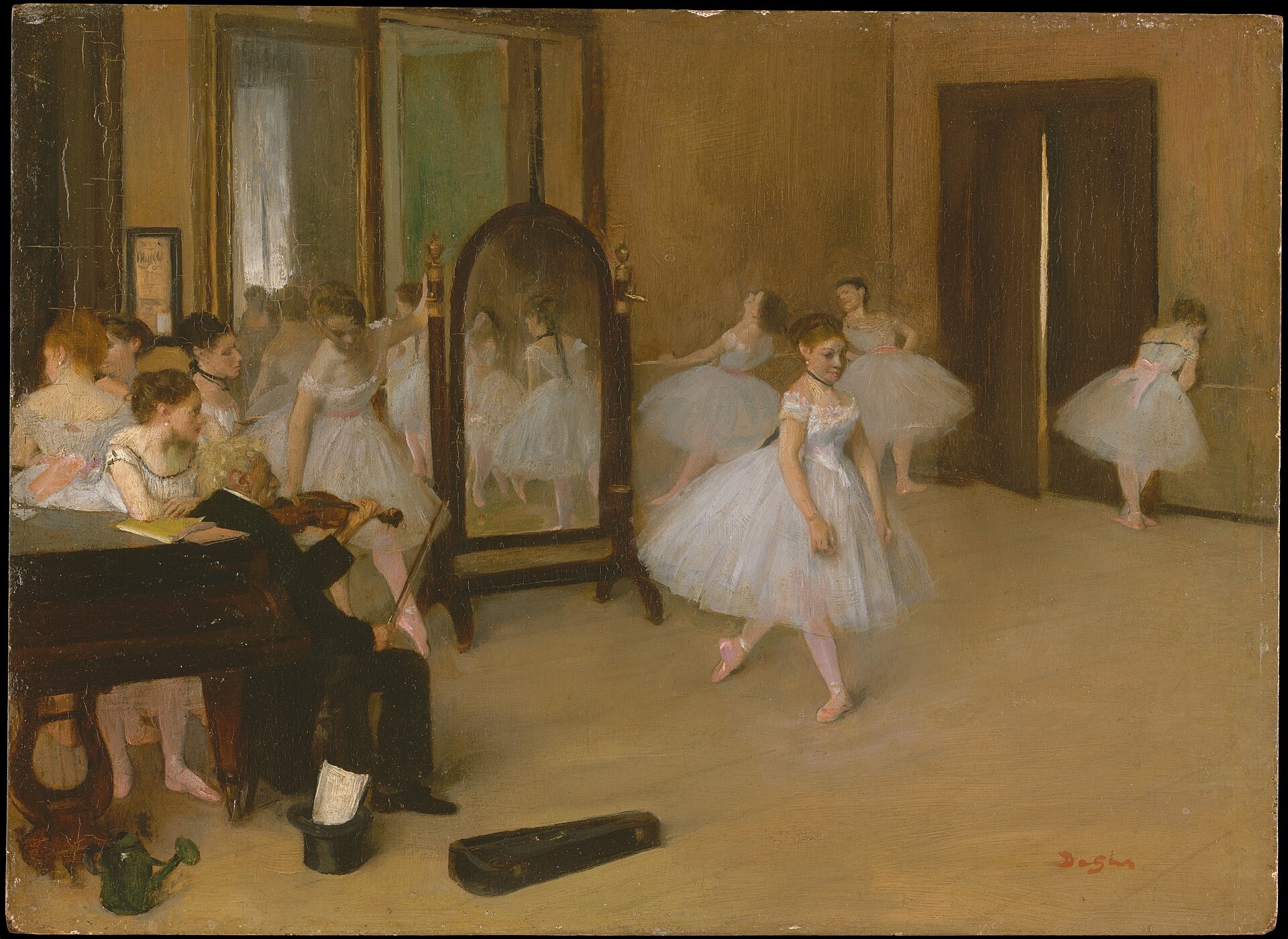
Edgar Degas: The Dance Class (c. 1870). The dancers are practising. Degas often painted indoors.. Photo: The Dancing Class (c. 1870), Edgar Degas, CC0, modified: reduced in size 7. Try it yourself and think about it
Choose an object by the window. Paint it in the morning and in the afternoon: how do the colours change?
Make a picture with small dots of colour and brushstrokes. Do not draw outlines.
Move further away and look at the picture: what does the eye mix?
Why did the artists go outdoors to paint?
Why is Monet's "Impression" not unfinished, even though the critic said so?


Summary
Impressionism began in Paris in the 1870s. The artists painted with quick brushstrokes and pure colours how the light looked at that very moment. The camera and the paint tube changed the artist's work, and many painted outdoors. Monet painted the same place in different light. Renoir, Morisot, Pissarro and Degas painted everyday life. Shadows were often coloured, and colours side by side mix in the eye.
Frequently asked questions
What does the word Impressionism mean?
The word comes from the French word impression, which means the feeling or idea you get of something. A critic used the word as a mockery in 1874, when he wrote about Monet's painting "Impression, Sunrise". The artists began to use the name themselves.
Who were the best-known Impressionists?
Claude Monet, Pierre-Auguste Renoir, Camille Pissarro, Berthe Morisot and Alfred Sisley. Edgar Degas took part in the same exhibitions, although he painted in a different way and usually indoors.
How can you try Impressionist painting in the classroom?
You need paper, watercolours or poster paints and a wide paintbrush. Paint with small brushstrokes and do not draw outlines. Put complementary colours side by side and look at the picture from further away. Try the same object in two kinds of light, for example in the morning and in the afternoon.