
Mesopotamia: teaching, slides and questions
The cities between the Euphrates and the Tigris, ziggurats, cuneiform and the Code of Hammurabi, with pictures, for grades 4–6.
Mesopotamia means the land between the rivers. There, along the Euphrates and the Tigris, the first early cities and one of the world's oldest writing systems appeared. The article suits history lessons in grades 4–6, and every step can be shown to the class as a slide.
At the end, the pupil can tell where Mesopotamia was and why cities appeared there. They know what a ziggurat, cuneiform and the Code of Hammurabi are, and how archaeologists study clay tablets.
Key concepts
- Mesopotamia
 Mesopotamia is the region between and around the Euphrates and Tigris rivers, mostly in present-day Iraq. The name means the land between the rivers. Some of the world's earliest cities and one of the oldest writing systems appeared there.
- Sumerians
 The Sumerians lived in southern Mesopotamia, where they built early cities such as Ur and Uruk. More than 5,000 years ago they developed cuneiform, which was pressed into clay tablets. It is one of the oldest writing systems in the world.
- river valley civilization
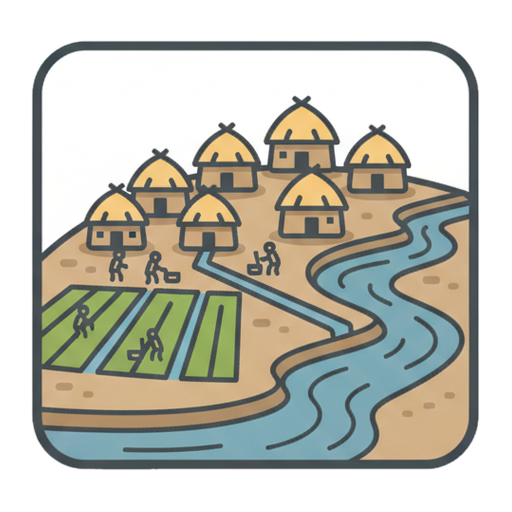 A river valley civilization is an early civilization that grew up along a large river. Such civilizations arose by the Nile, the Euphrates and Tigris, the Indus and the Yellow River. Fertile land and irrigation produced plenty of food, so populations grew and cities could form.
- irrigation system
- An irrigation system brings water to fields or gardens through pipes, ditches or sprinklers. It lets plants grow even in dry areas.
- clay brick
- A clay brick is a building block that is made of clay and fired until it is hard. Walls, for example, are built from it.
- wheel
 A round object that turns around an axle. The wheel was invented about 5,500 years ago, and the first wheels were solid wooden discs. Thanks to the wheel, heavy loads could be moved on carts.
- Code of Hammurabi
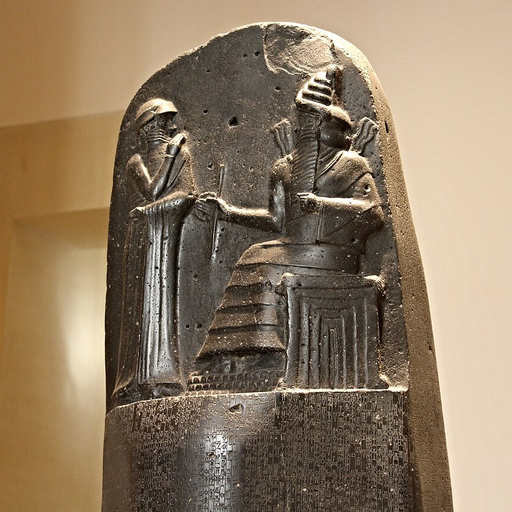 The Code of Hammurabi is a collection of laws put together by King Hammurabi of Babylon around 1750 BCE. The laws were carved on a stone pillar, and the best known is the principle of an eye for an eye. The punishment often depended on a person's social class.
- archaeologist
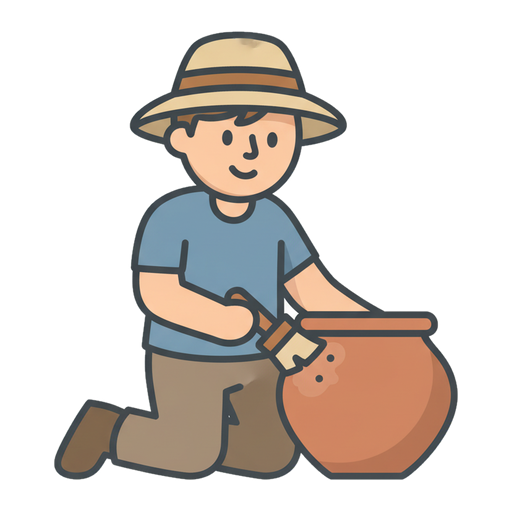 A scientist who digs up old objects and remains to find out about the past. An archaeologist digs carefully with a trowel and a brush and records exactly where each find was. We know almost everything about the Stone Age thanks to archaeologists, because there was no writing yet.
Related exercises
There is no exercise for this topic yet
Teacher or creator: make the first exercise with Puro Editor and choose Mesopotamia as its topic. It will appear here as soon as it is published.
1. What do you know about Mesopotamia?
Where was Mesopotamia and what does the name mean?
Why did the first cities appear along a river?
How did writing begin on clay tablets?
How do we know what people did over 4,000 years ago?2. The land between the rivers
Mesopotamia means the land between the Euphrates and Tigris rivers, in the area of present-day Iraq. Farming worked even in dry land when water was led to the fields along canals. This irrigation system produced plenty of grain, and the first cities appeared along the rivers. Such a culture is called a river valley civilization.
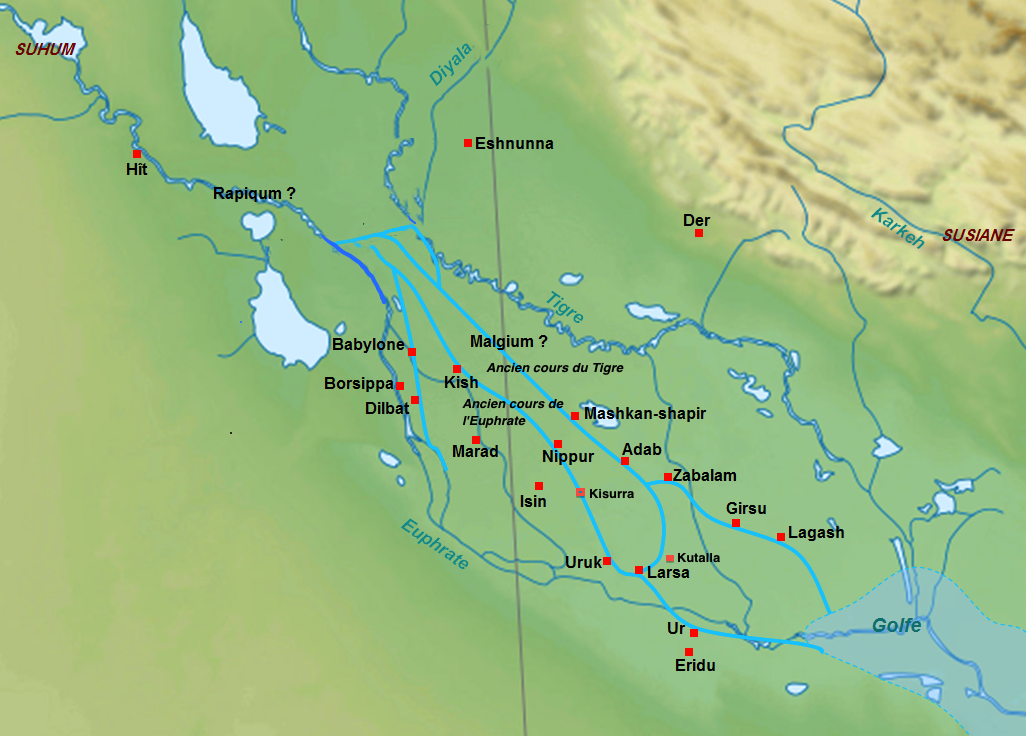
Cities of southern Mesopotamia on a map. The names on the map are in French, and it shows old river beds.. Photo: Map of Southern Mesopotamia, Sémhur, CC BY-SA 3.0, modified: reduced in size 3. City-states and ziggurats
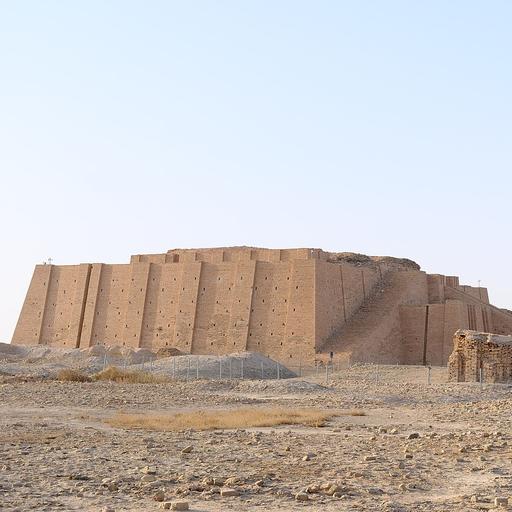
In southern Mesopotamia the Sumerians built cities such as Uruk and Ur. Each city was its own city-state with its own rulers. In the middle of the city rose a ziggurat, a temple rising in steps, which was built of clay bricks. Most of the inhabitants were farmers and craftspeople.
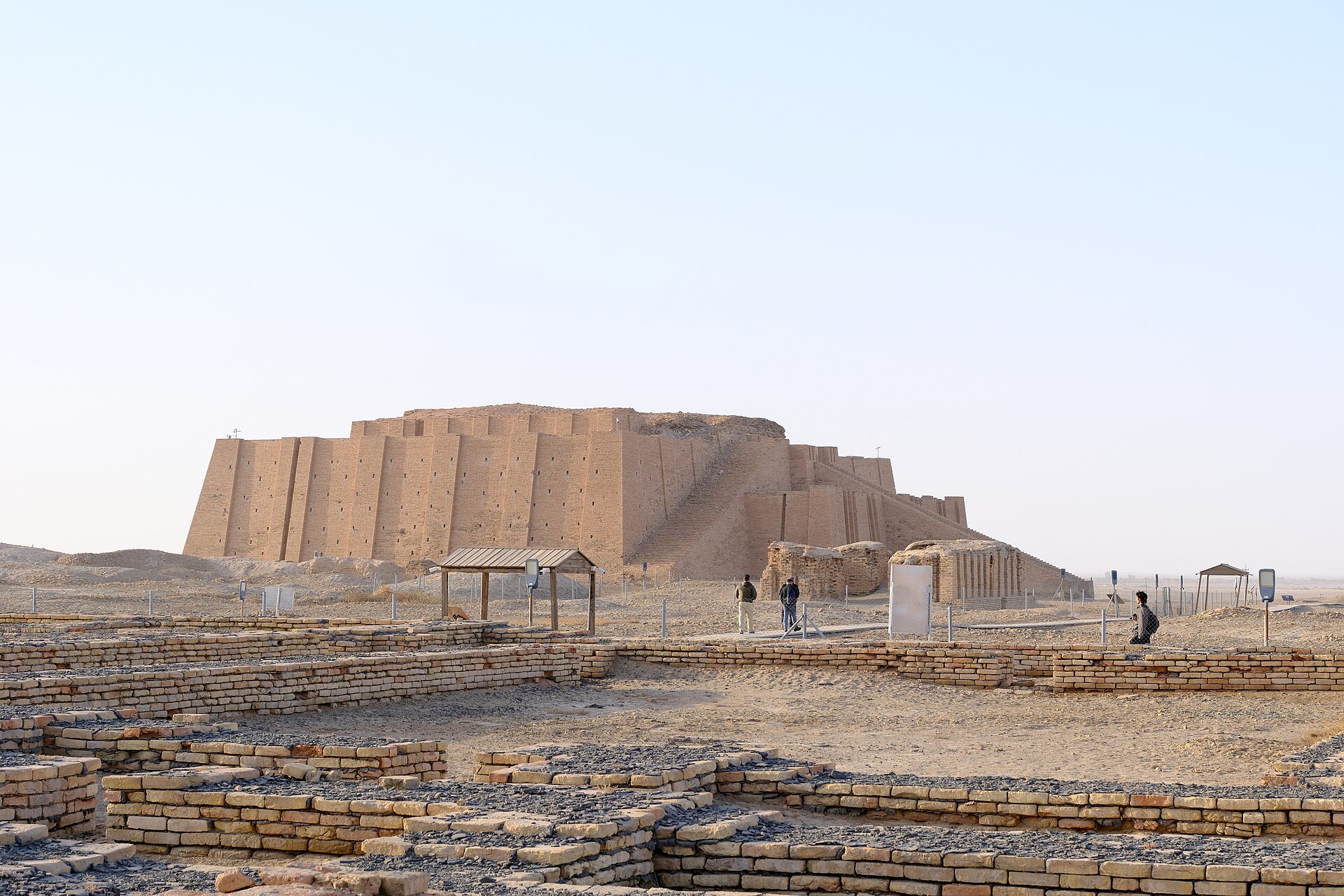
The ziggurat of Ur in Iraq. The building is over 4,000 years old, and it has been restored later.. Photo: Ziggurat of Ur Site in Nasiriyah 03, Alli Khalil, CC BY-SA 4.0, modified: reduced in size 4. Writing and inventions
The Sumerians developed cuneiform: wedge-shaped signs were pressed into wet clay with a reed stylus. Amounts of grain, letters and school exercises were written on dried clay tablets. The Mesopotamians counted in a sexagesimal system (counting in sixties), which is where the 60-minute hour comes from. On the Standard of Ur the chariots already have wheels.
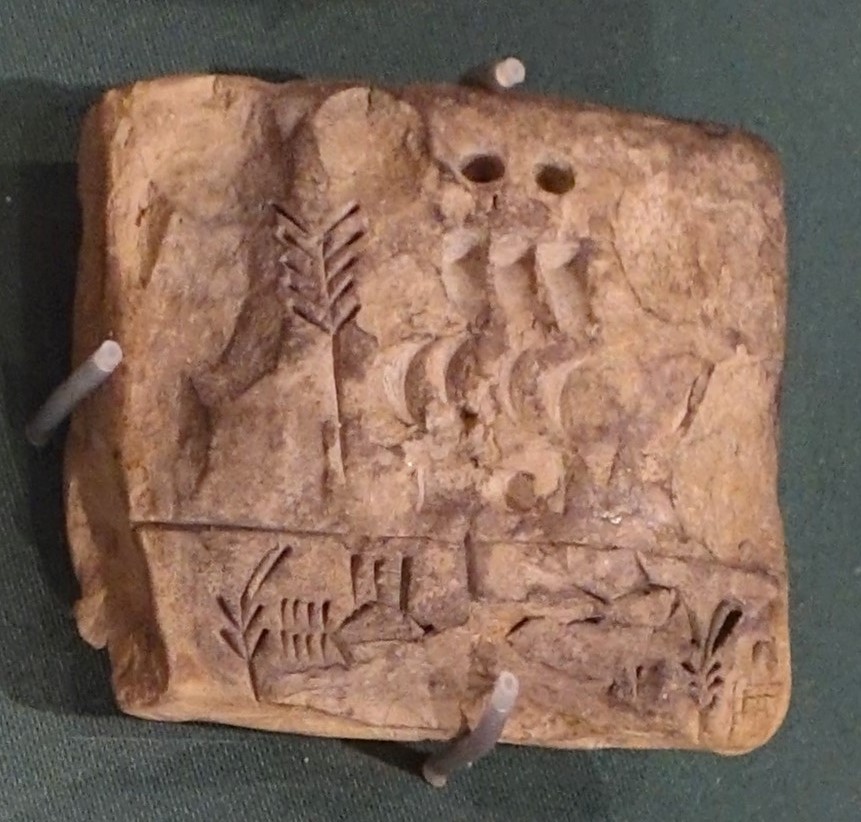
A very early clay tablet from Jemdet Nasr, about 3200–3000 BCE. The signs still look like pictures.. Photo: Proto cuneiform tablet OIM A02516, Daderot, muokannut Zunkir, CC BY-SA 4.0, modified: reduced in size 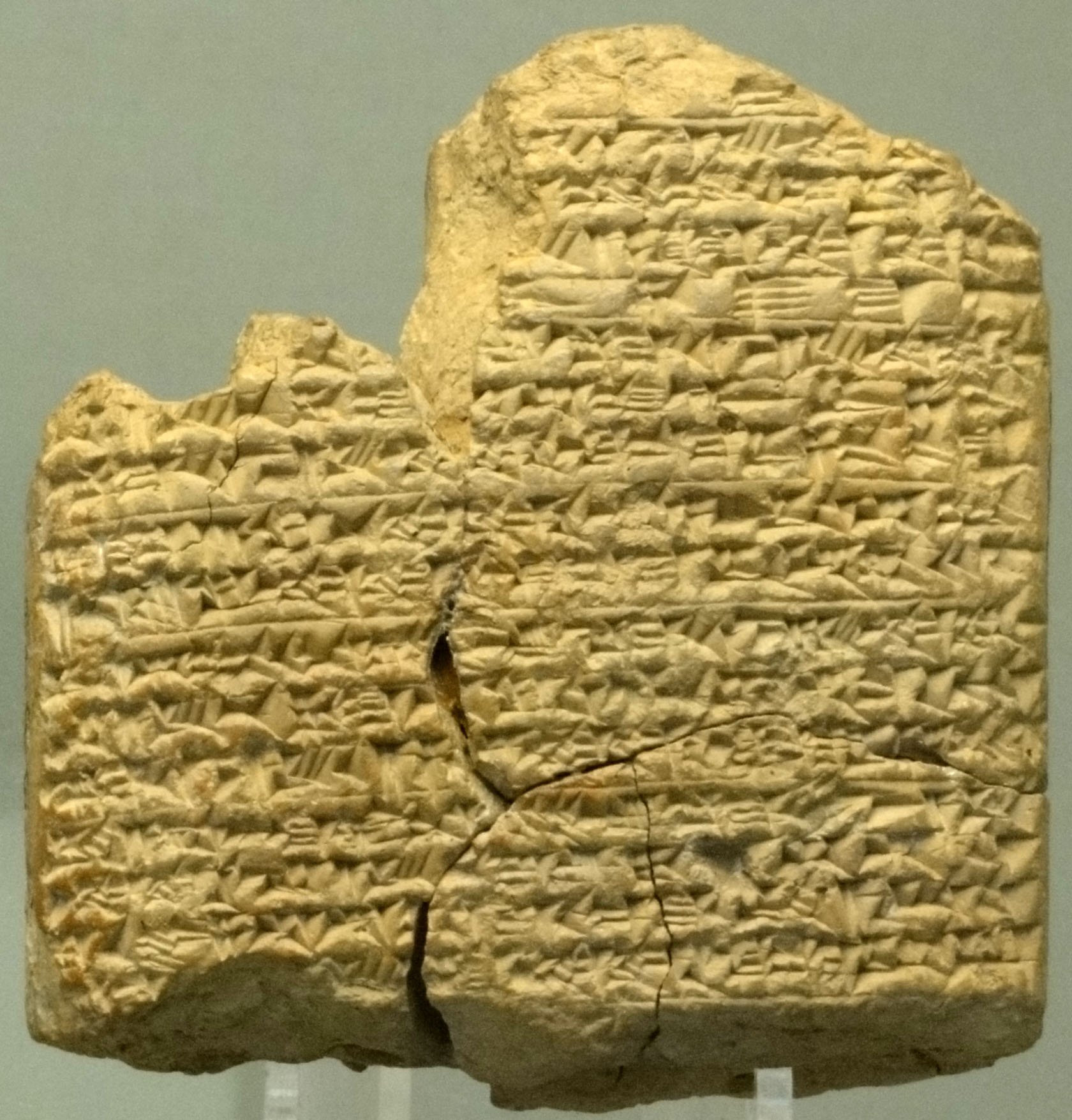
A clay tablet from Sippar, about 600–500 BCE. It has instructions for dyeing wool.. Photo: Cuneiform tablet BM62788, Fæ, CC BY-SA 3.0, modified: reduced in size 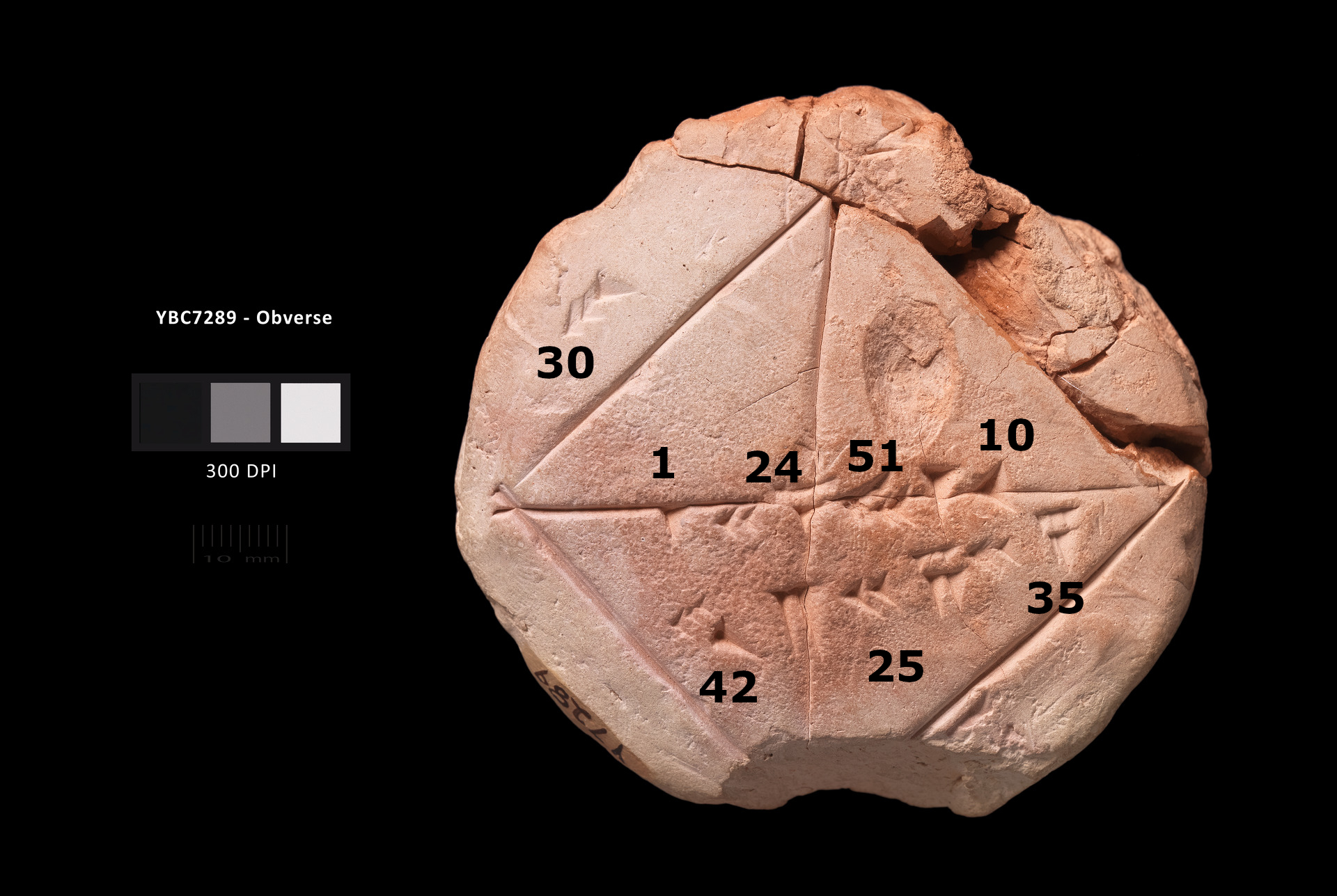
The clay tablet YBC 7289: a square, its diagonals and numbers in the sexagesimal system. Photo: YBC-7289-OBV-labeled, A. Urcia, Yale Peabody Museum of Natural History, CC0, modified: reduced in size 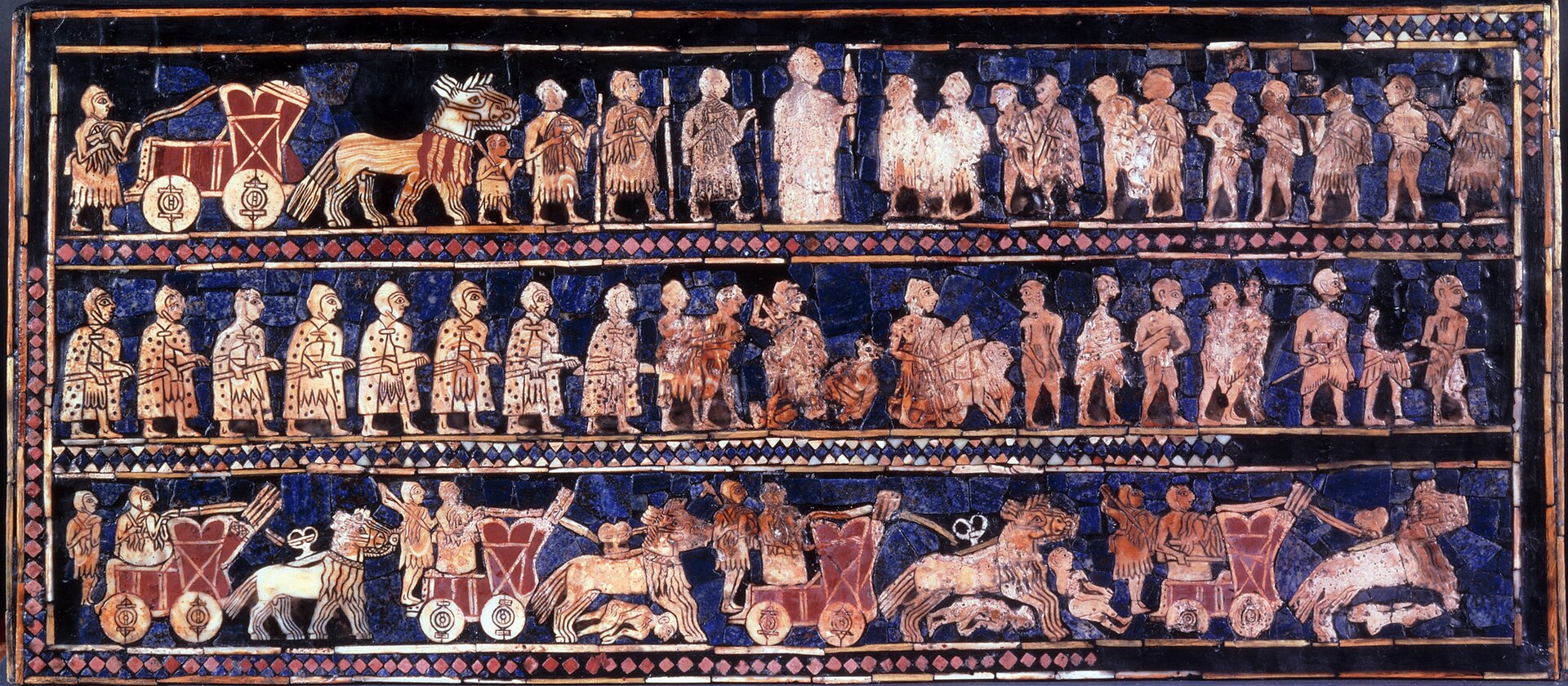
The war side of the Standard of Ur: on the bottom row are chariots running on wheels. The object is over 4,000 years old.. Photo: Standard of Ur - War, Tuntematon, Public domain, modified: reduced in size 5. From city-states to Babylon
At first the Sumerian city-states competed with each other. Then King Sargon united them into the Akkadian Empire. Later Babylon grew into the most important city of the region. The dates are approximate.
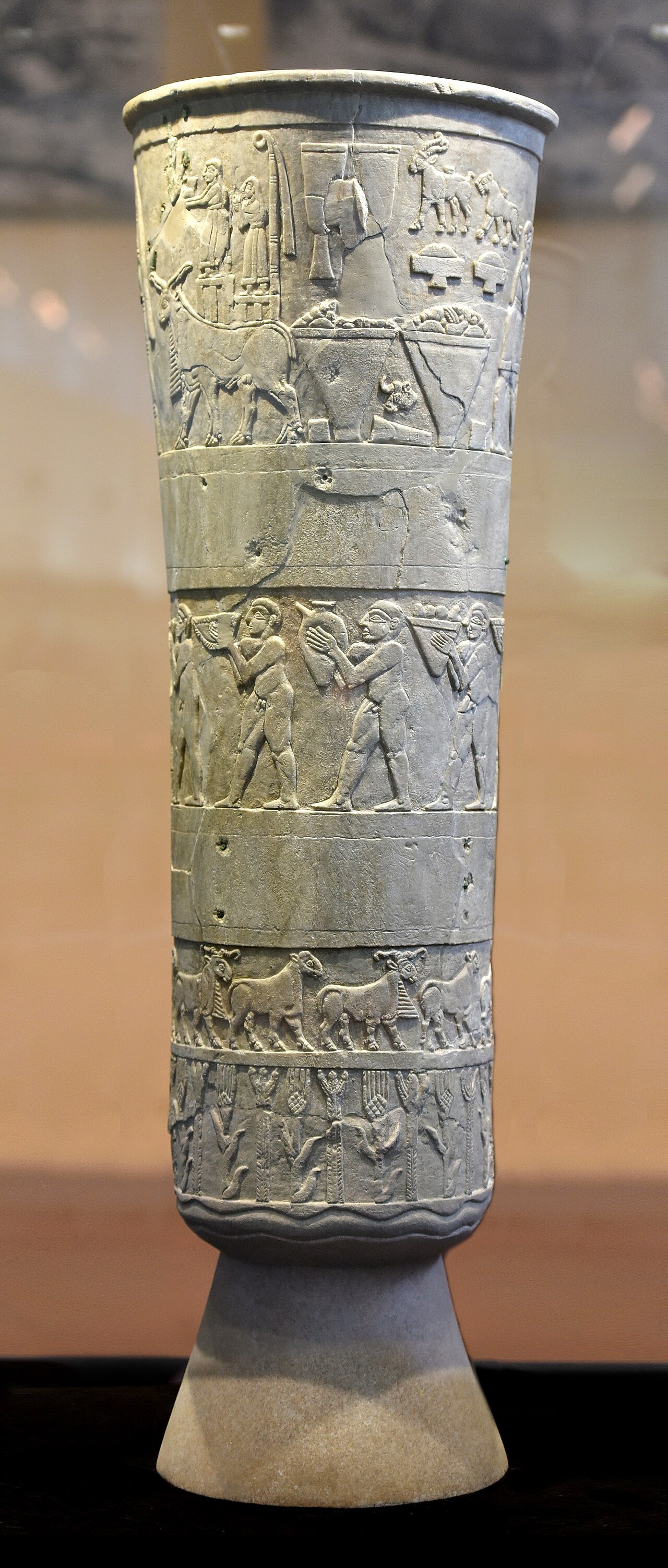
The Uruk vase from about 3000 BCE. Grain grows on the bottom row.. Photo: Warka vase (background retouched), Osama Shukir Muhammed Amin, CC BY-SA 4.0, modified: reduced in size 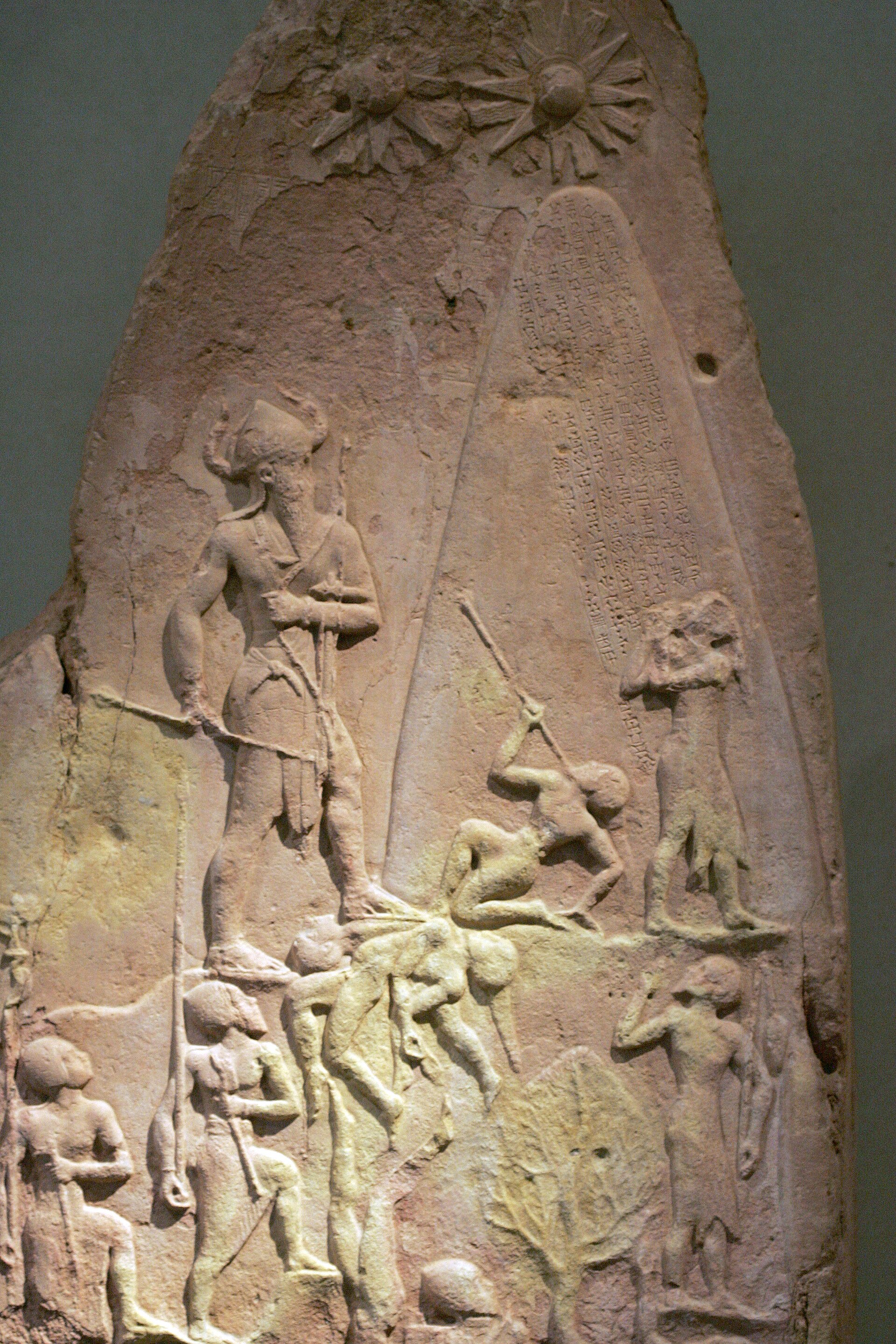
The victory stele of Naram-Sin, king of Akkad, about 2200 BCE. He was Sargon's grandson.. Photo: Victory stele of Naram Sin 9064, Rama, CC BY-SA 3.0 fr, modified: reduced in size - about 3300–3000 BCE The first big cities, such as Uruk, and the earliest writing
- about 2300 BCE King Sargon unites city-states into the Akkadian Empire
- about 2100 BCE King Ur-Nammu has the ziggurat of Ur built
- 1700s BCE Hammurabi, king of Babylon, collects his laws
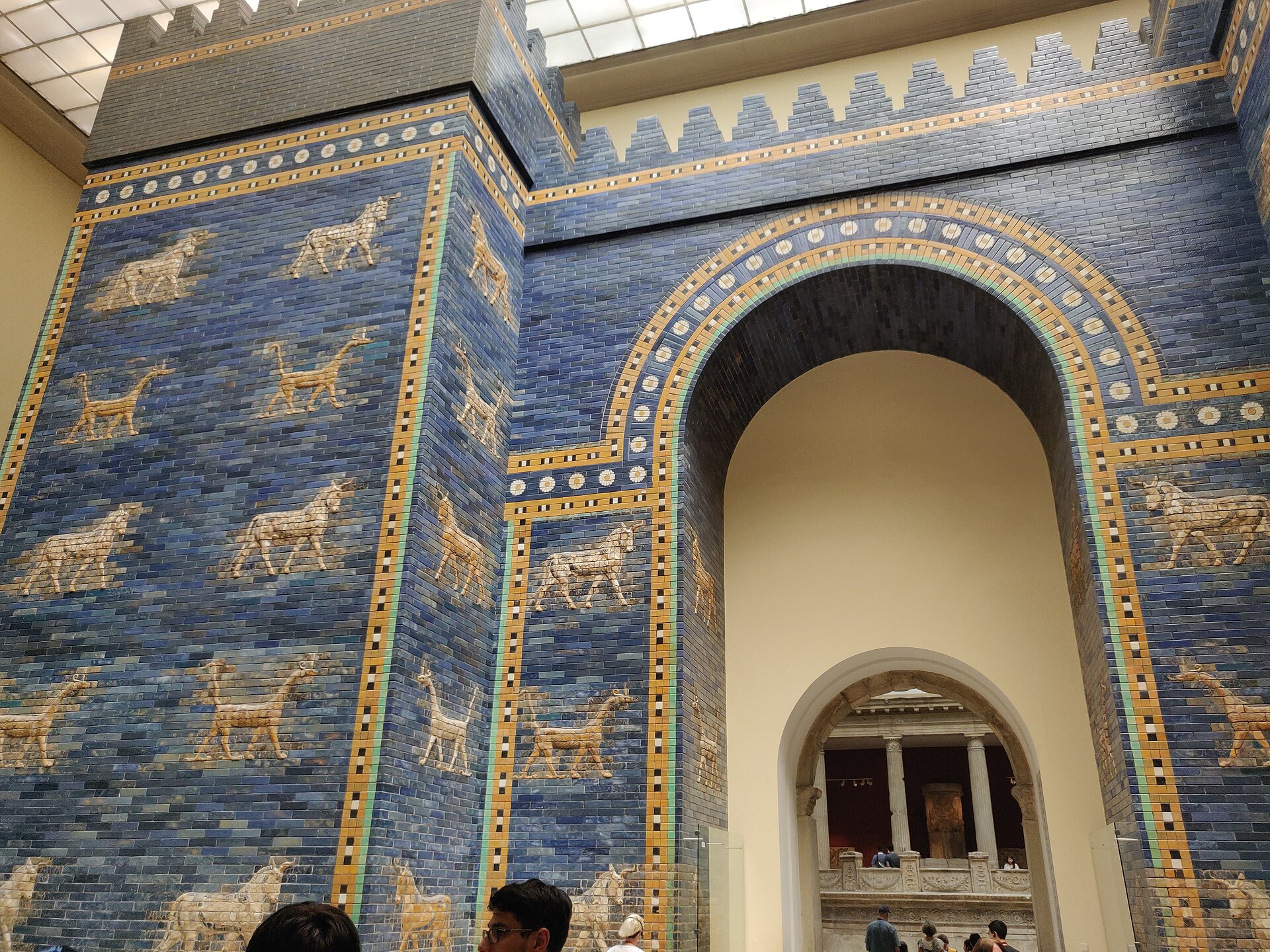
- about 575 BCE Nebuchadnezzar II has the Ishtar Gate of Babylon built
- 539 BCE Cyrus, king of Persia, conquers Babylon
6. The Code of Hammurabi
Hammurabi, king of Babylon, had his laws written on a stone stele in the 1700s BCE. The punishment often depended on which social class a person belonged to. The best-known principle of the code of laws is “an eye for an eye”. The stele is now in the Louvre museum.
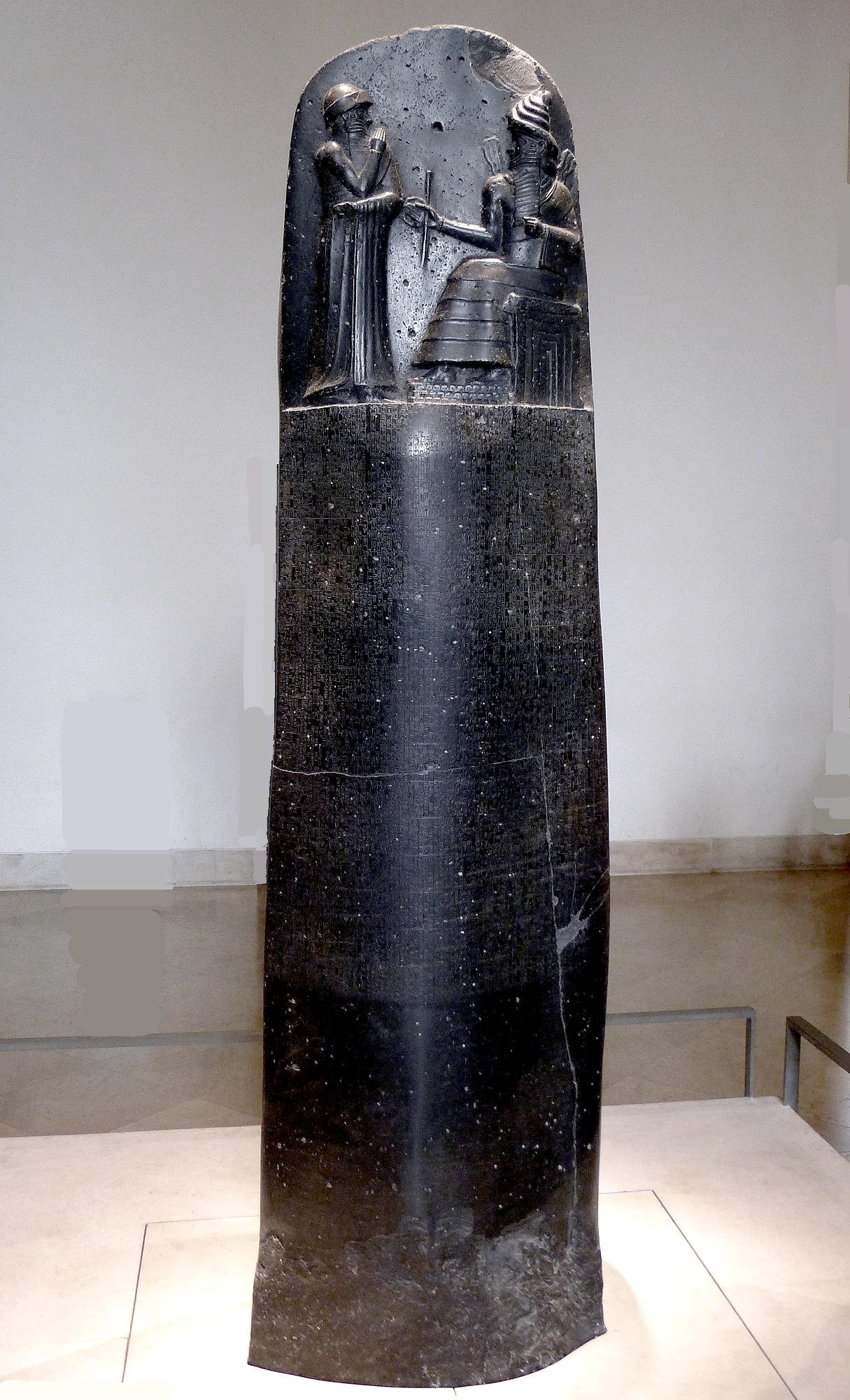
The law stele of Hammurabi in the Louvre museum in Paris. Photo: P1050763 Louvre code Hammurabi face rwk, Mbzt, CC BY 3.0, modified: reduced in size 7. Think in pairs
Why did the first cities appear along rivers?
Why was writing useful for a city?
Why did the king want to write the laws on a stone stele?
How do archaeologists know how people lived when the only sources are clay tablets and the remains of buildings?


Summary
Mesopotamia means the land between the rivers, along the Euphrates and the Tigris. Irrigation and farming brought a rich harvest, and the Sumerians built city-states with a ziggurat in the middle. Cuneiform was pressed into clay tablets. Later Sargon, king of Akkad, and Hammurabi, king of Babylon, ruled large areas, and the Code of Hammurabi was written on a stone stele. We know about Mesopotamia thanks to the finds of archaeologists and to clay tablets.
Frequently asked questions
What is cuneiform?
Cuneiform is a writing system in which wedge-shaped signs were pressed into wet clay. The Sumerians developed it, and it is one of the world's oldest writing systems. The clay tablets were dried, and thousands of them have survived.
Was Mesopotamia one country?
No. At first there were many city-states. Later parts of the region were ruled by large empires, such as Akkad and Babylon. The time limits are approximate.
What does the Code of Hammurabi tell us?
It is a collection of laws put together by the king of Babylon. In it the punishment often depended on which social class a person belonged to. The best-known principle of the laws is “an eye for an eye”.