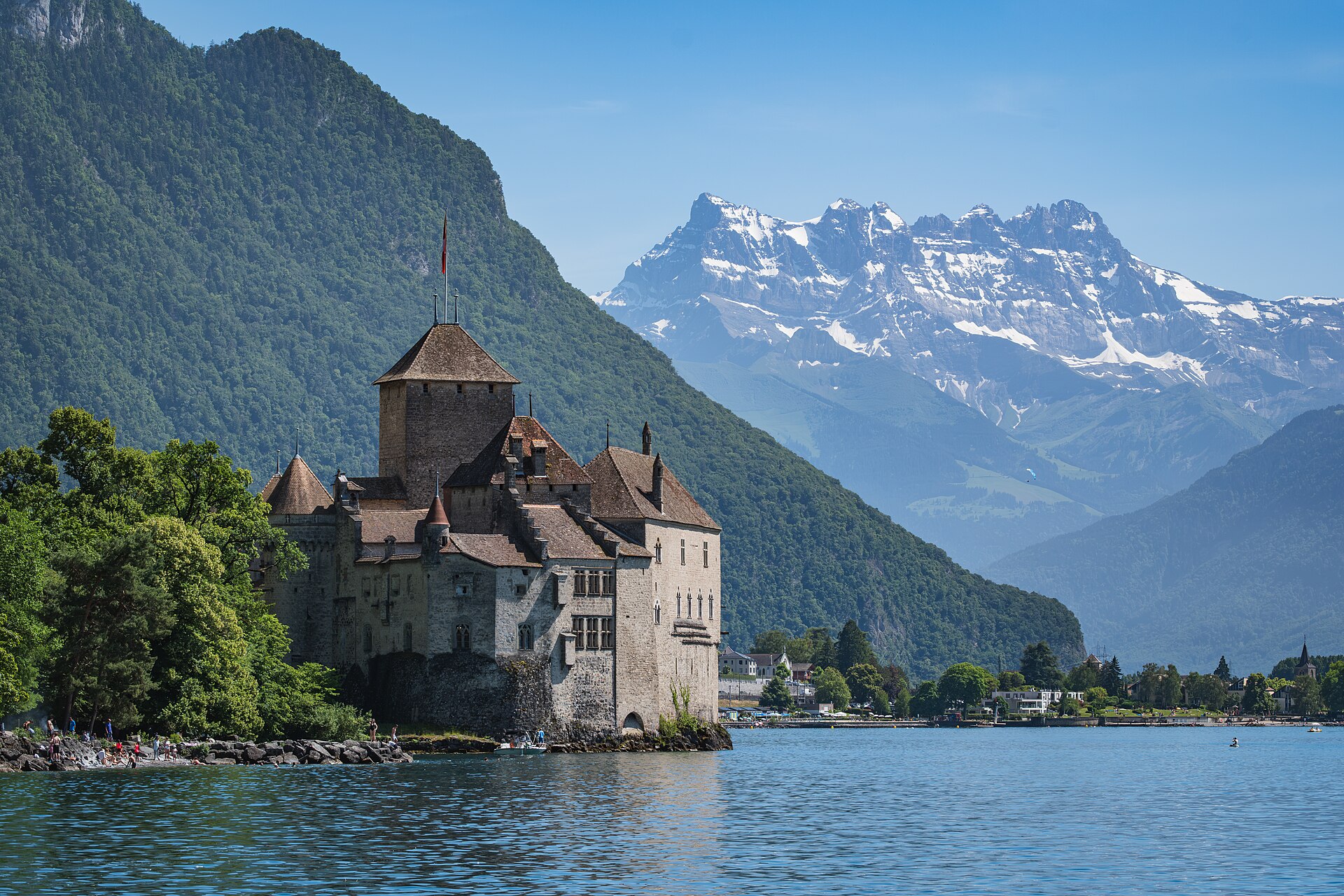

The Middle Ages: teaching, slides and questions
What were the Middle Ages? Feudalism, castles, knights, monasteries, guilds and the Black Death, with pictures, for grades 4–6.
The Middle Ages lasted about a thousand years in Europe. The article suits history lessons in grades 4–6, and every step can be shown to the class as a slide.
At the end, the pupil can tell when the Middle Ages were and how society worked. They know who the knights, monks, merchants and peasants were, and what the Black Death was.
Key concepts
- Middle Ages
 The Middle Ages is the period of European history between antiquity and the early modern period, from about 500 to 1500. The Church had great power then, and most people lived from farming. In Finland the Middle Ages are considered to have begun only in the 1100s or 1200s.
- feudalism
- Feudalism was a common system in medieval Europe in which a king or great lord gave land to a vassal. In return the vassal promised loyalty and military service, and peasants farmed the land. The system varied by region, and it remained weak in Sweden and Finland.
- knight
 A soldier in armour who fought on horseback for a king or a lord. A man who was knighted was often given land in return for his service. A knight was expected to follow the code of chivalry, such as courage and loyalty.
- castle
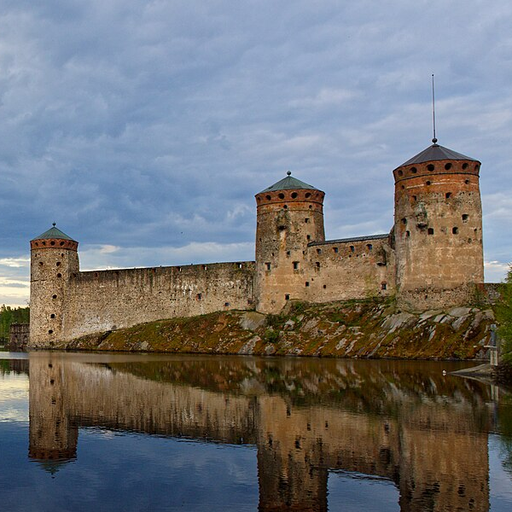 A big stone building with thick walls and towers. A castle protected the nobles and the people around it from enemies, and it was also a centre of government. Medieval castles in Finland include Turku Castle, Häme Castle and Olavinlinna.
- monastery
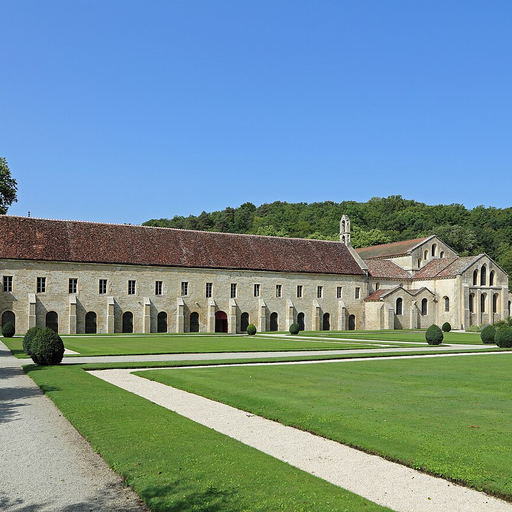 A place where monks or nuns lived, prayed and worked together. Monasteries copied books, cared for the sick and grew gardens. In the Middle Ages there were a few monasteries in Finland, such as the Bridgettine abbey in Naantali.
- crusade
 The Crusades were medieval military expeditions backed by the pope, the best known of which went to the Holy Land between 1096 and 1291. Christians captured Jerusalem in 1099, but Muslims took the region back. Crusades were also made to the Baltic Sea region.
- guild
 A group of craftsmen of the same trade in a town. The guild decided things like prices, the quality of work and who could become a master. It also helped its members when they fell ill.
- Black Death
 A plague that reached Europe in 1347 and within a few years killed perhaps a third of the people. It was spread by fleas on rats. People did not know what caused it, and many feared the end of the world.
Related exercises
There is no exercise for this topic yet
Teacher or creator: make the first exercise with Puro Editor and choose Middle Ages as its topic. It will appear here as soon as it is published.
1. What do you know about the Middle Ages?
When were the Middle Ages?
Why were castles built?
Who was a knight and what did a peasant do?
What do you know about the Black Death?2. The Middle Ages, about 500–1500
The Middle Ages are the time between antiquity and the modern age. In Europe they lasted from about the year 500 to 1500. The years are only a guide, because the border between periods is not exact.
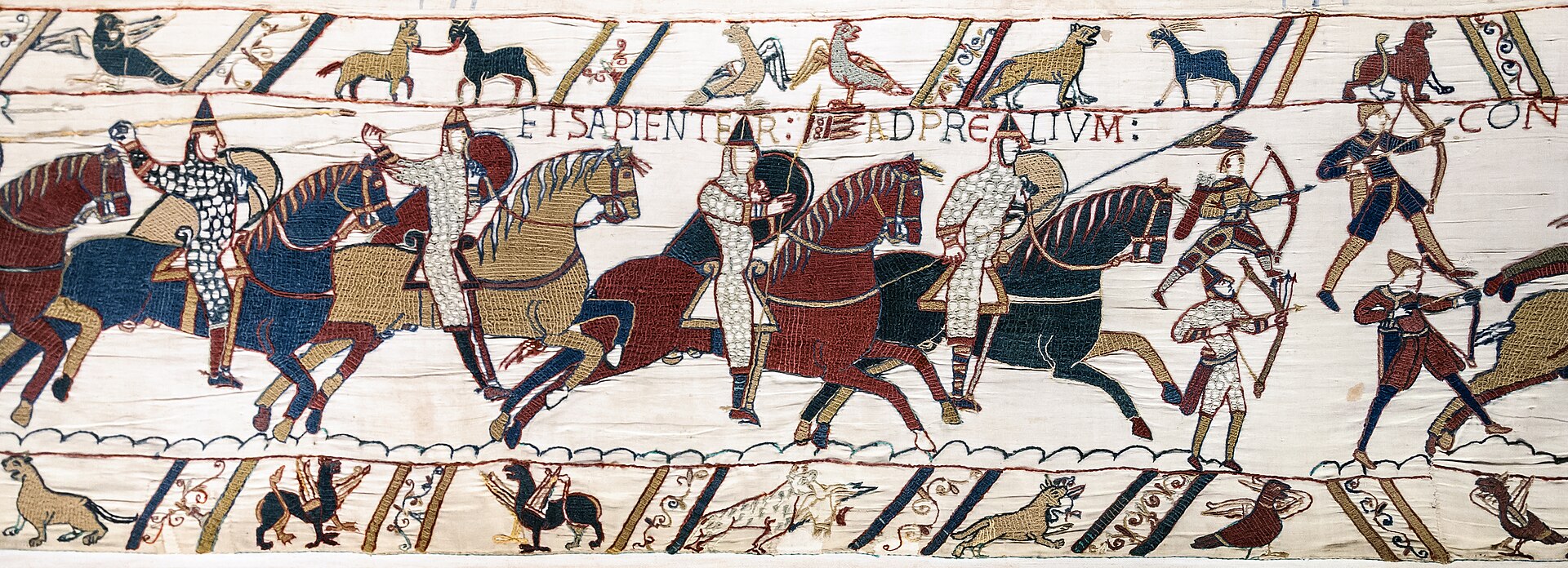
Norman knights and archers at the Battle of Hastings, in the Bayeux Tapestry. Photo: Bayeux Tapestry scene51 Battle of Hastings Norman knights and archers, Bayeux-kuvakudos (unknown author); valokuva Myrabella, Public domain, modified: reduced in size 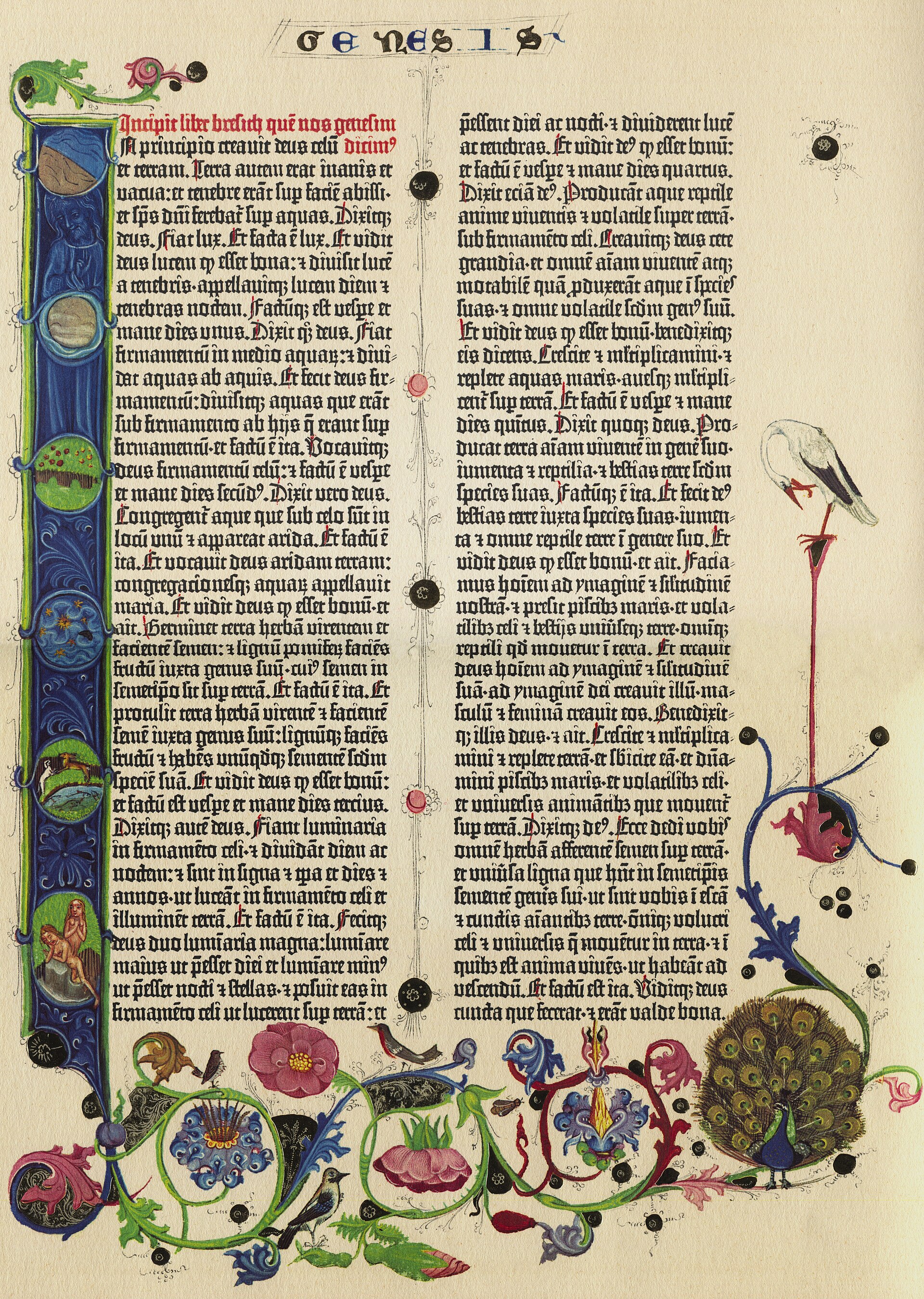
The Bible printed by Gutenberg, the beginning of the Book of Genesis. Photo: Gutenberg Bible B42 Genesis, Johannes Gutenberg (painaja); skannaus Jossi, Public domain, modified: reduced in size - about 500 The western part of the Roman Empire has broken up, and new kingdoms appear in Europe
- 800 Charlemagne, king of the Franks, is crowned emperor in Rome
- 1066 The Normans win the Battle of Hastings and gain the English crown
- 1096 The First Crusade begins: Christians set out on a military campaign to the Middle East
- 1347–1351 The Black Death spreads to almost all of Europe
- about 1450 Gutenberg develops the printing press. The Ottomans conquer Constantinople in 1453, and many consider this the end of the Middle Ages.
3. King, knights and peasants
In feudalism the king gave land to the nobles, and the nobles gave it to knights. In return the knights fought for them, and the peasants farmed the land and paid taxes. The nobles and knights lived in castles, which were both homes and fortresses. Knights trained in tournaments.
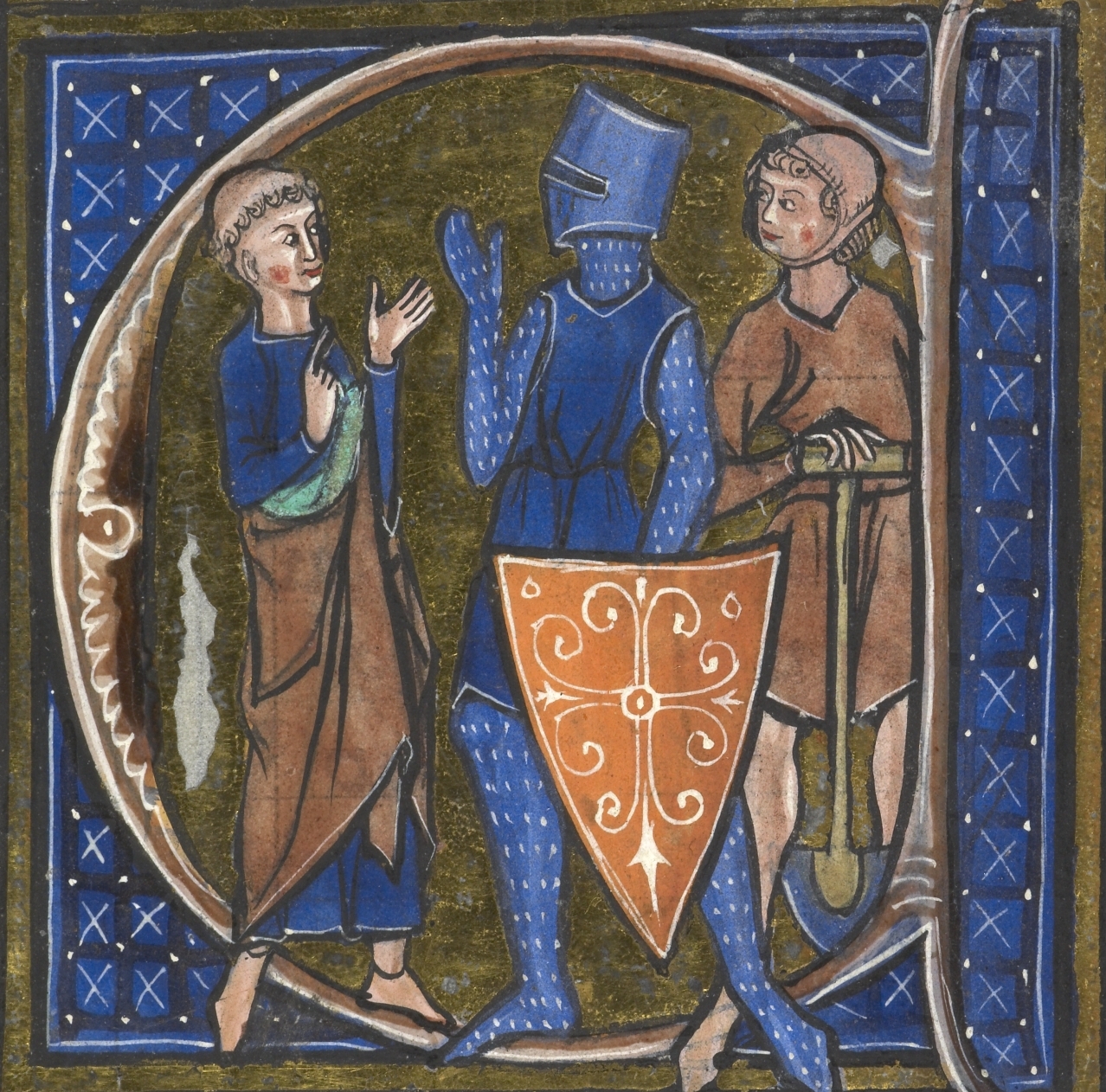
A priest, a knight and a peasant in a French manuscript from the 1200s. Photo: Cleric, Knight, and Workman representing the Three Classes, Unknown author (ranskalainen käsikirjoitus, 1200-luku), Public domain, modified: reduced in size 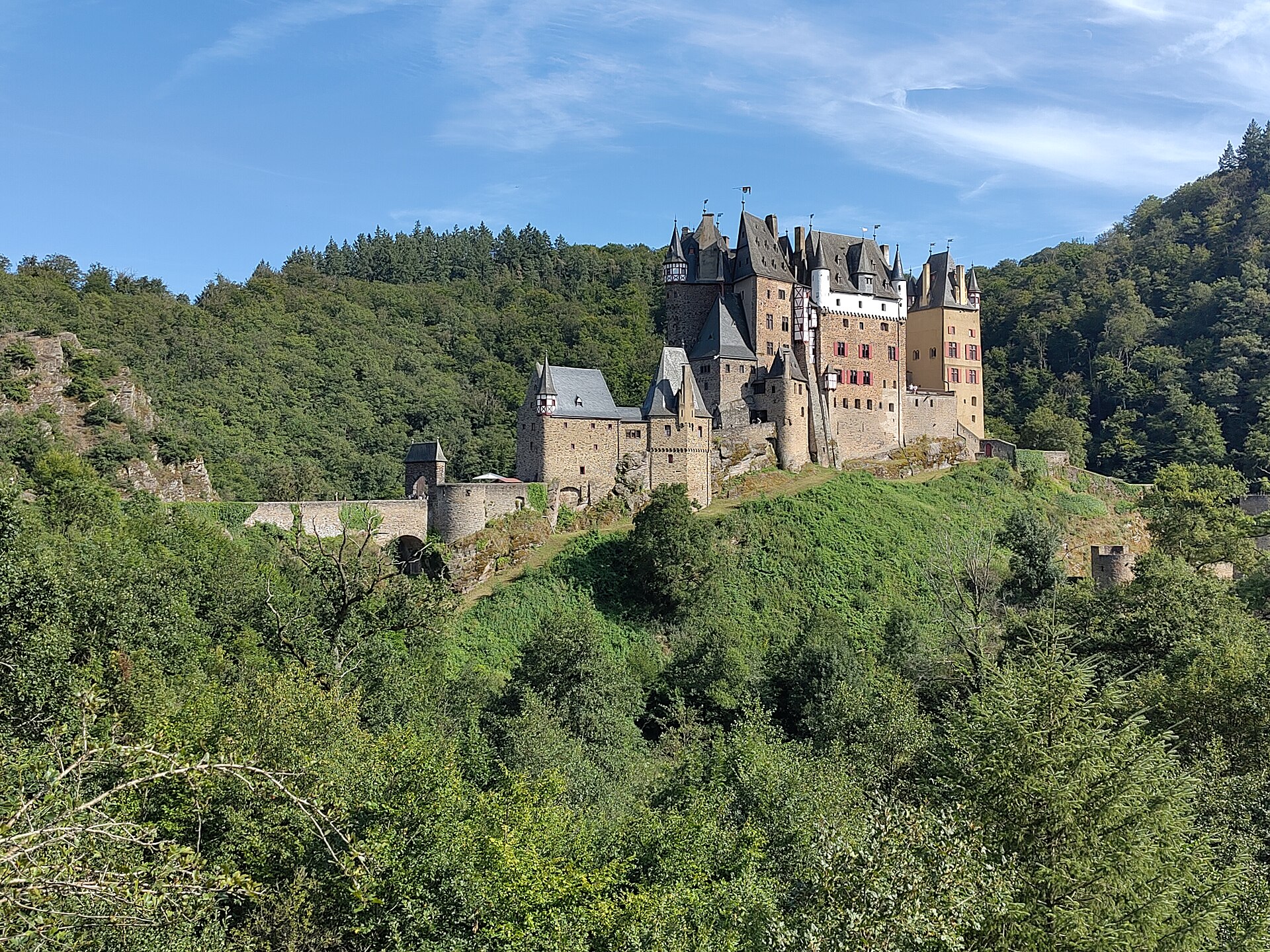
Eltz Castle in Germany. Its building began in the Middle Ages.. Photo: Burg Eltz 5, Ahrtaler2, CC0, modified: reduced in size 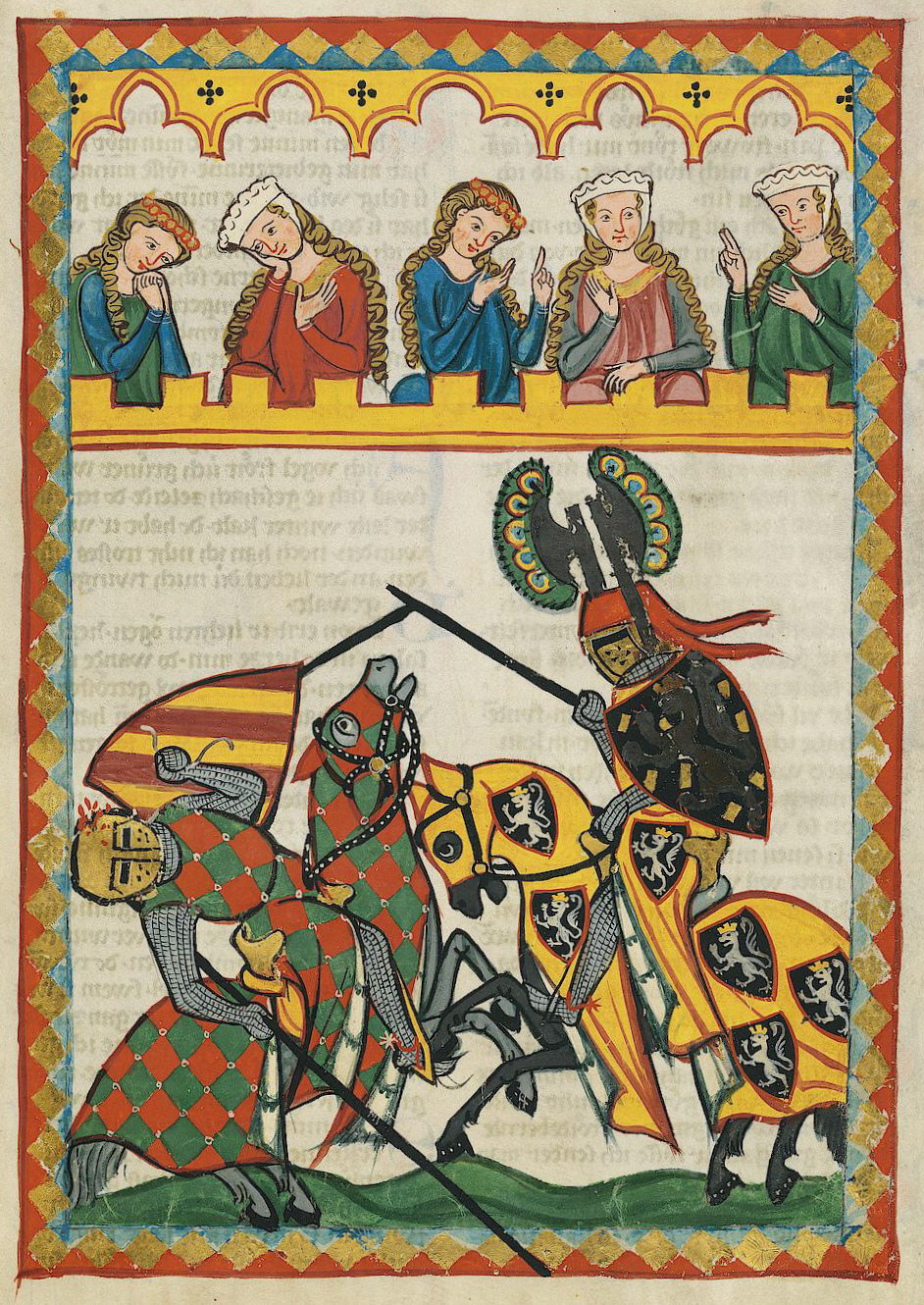
Knights at a tournament and women watching. The picture is from the Manesse Codex, a songbook from the 1300s.. Photo: Codex Manesse 052r Walther von Klingen (detail), Codex Manessen mestari, Public domain, modified: reduced in size 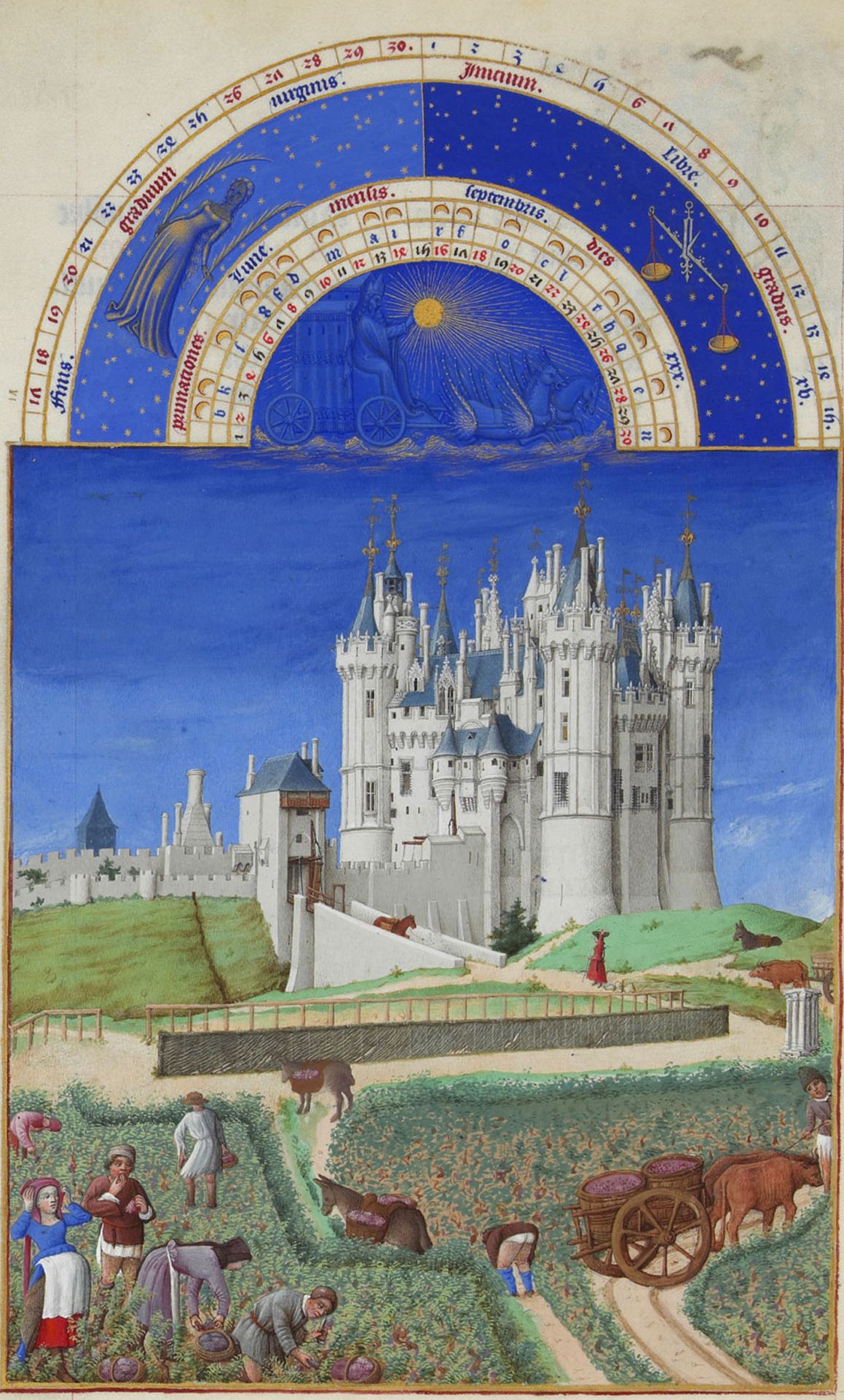
Saumur Castle and peasants harvesting grapes, from a prayer book of the 1400s. Photo: Les Très Riches Heures du duc de Berry septembre, Limbourgin veljekset, Barthélemy d'Eyck ja Jean Colombe, Public domain, modified: reduced in size 4. Church and monastery
In the Middle Ages the Church influenced people's everyday life all over Europe. Monks and nuns lived in monasteries, prayed and worked. In monasteries books were also copied by hand, because there was no printing press yet. The Crusades were Christian military campaigns to the Middle East in about the years 1096–1291.
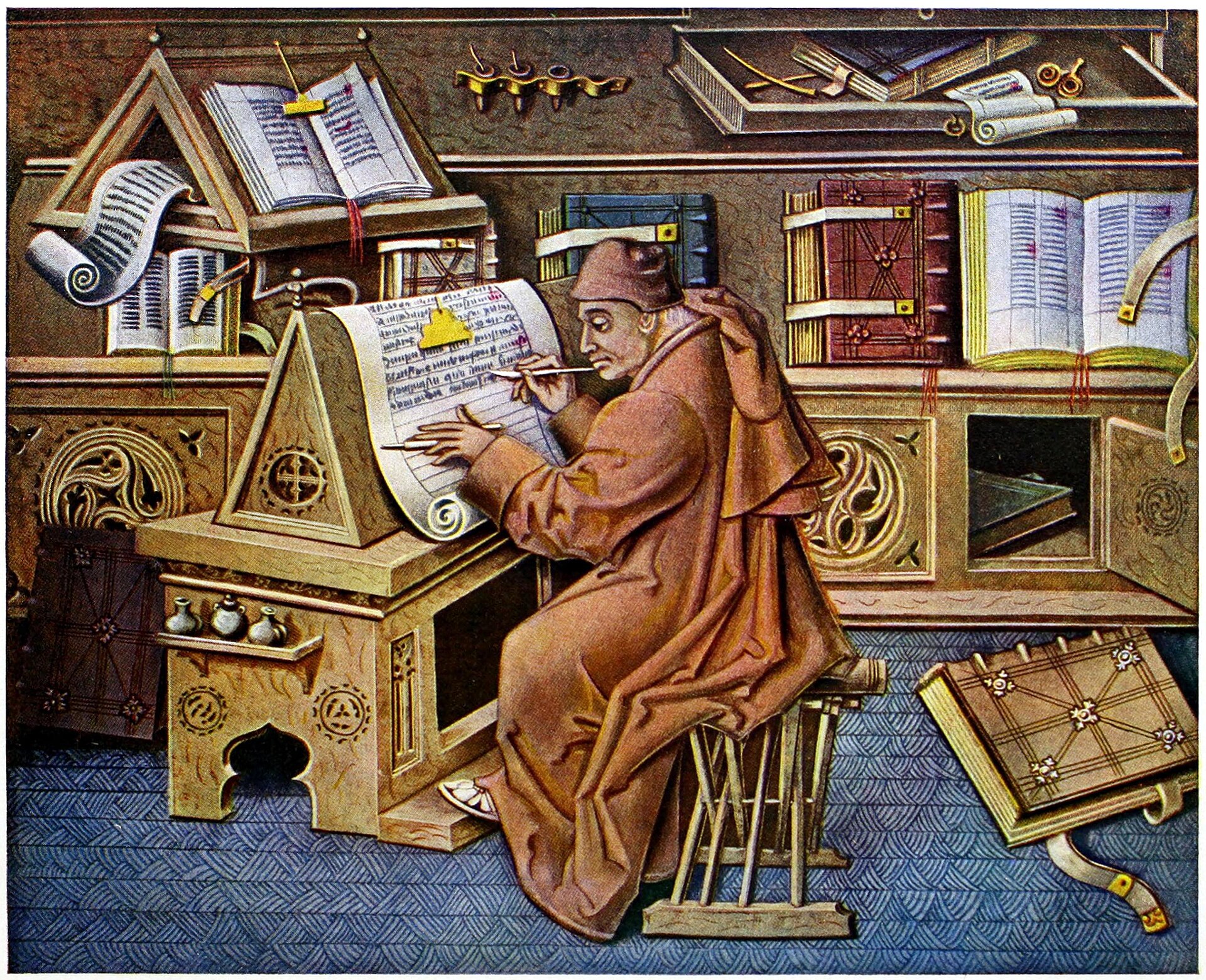
The scribe Jean Miélot writes a book by hand. The picture is from the 1400s.. Photo: Portrait of Jean Miélot, Jean Le Tavernier, Public domain, modified: reduced in size 5. Towns and guilds
Towns grew from the 1100s onwards, when trade became busier. Craftsmen and merchants founded guilds, which watched over the quality of the trade and the prices. A guild trained apprentices. The German town of Lübeck was the leading town of the Hanseatic League, and a wall protected it.
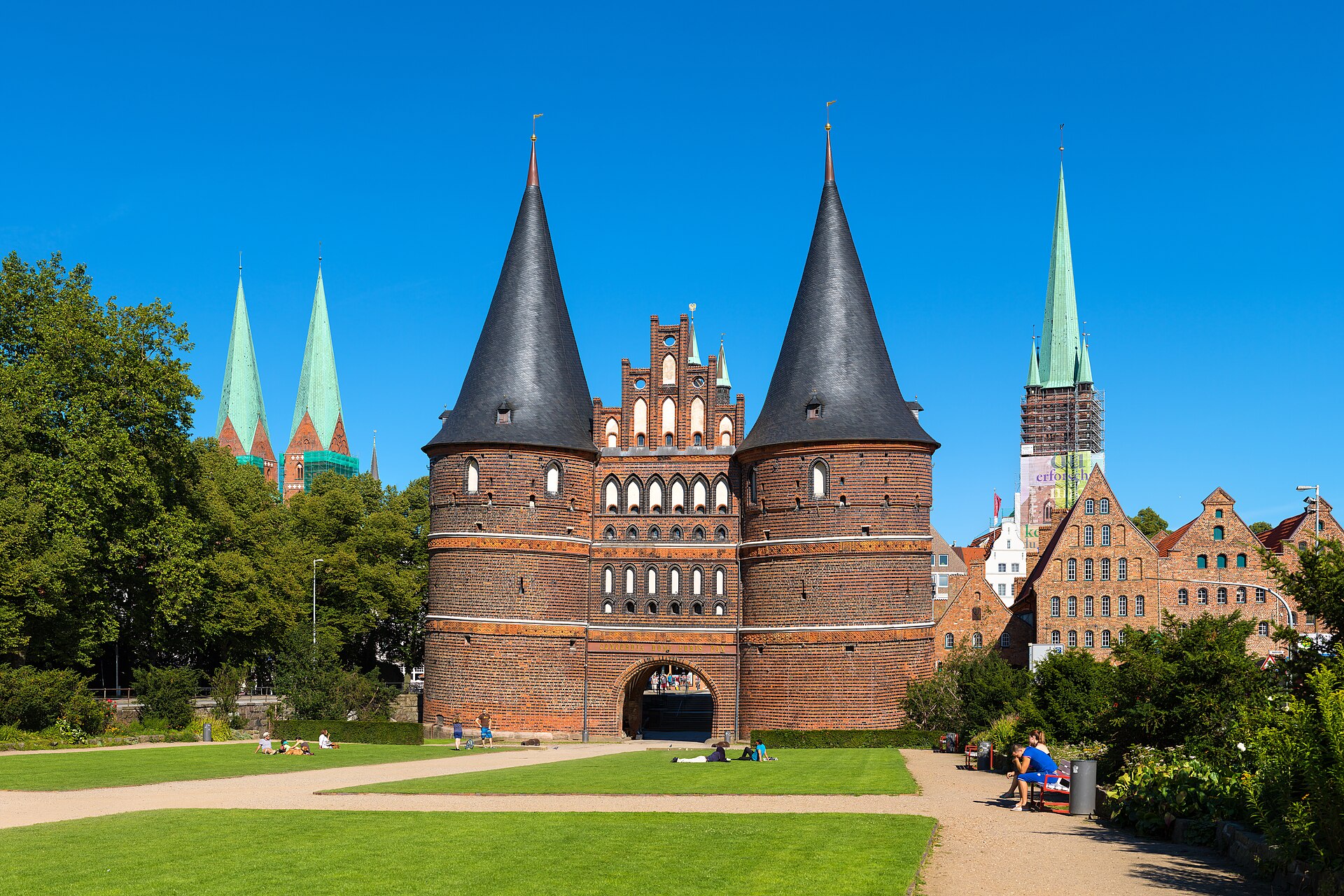
The Holstentor, the town gate of Lübeck, from 1478. Photo: Holstentor in Lübeck 2015, Christian Wolf (www.c-w-design.de), CC BY-SA 3.0 de, modified: reduced in size 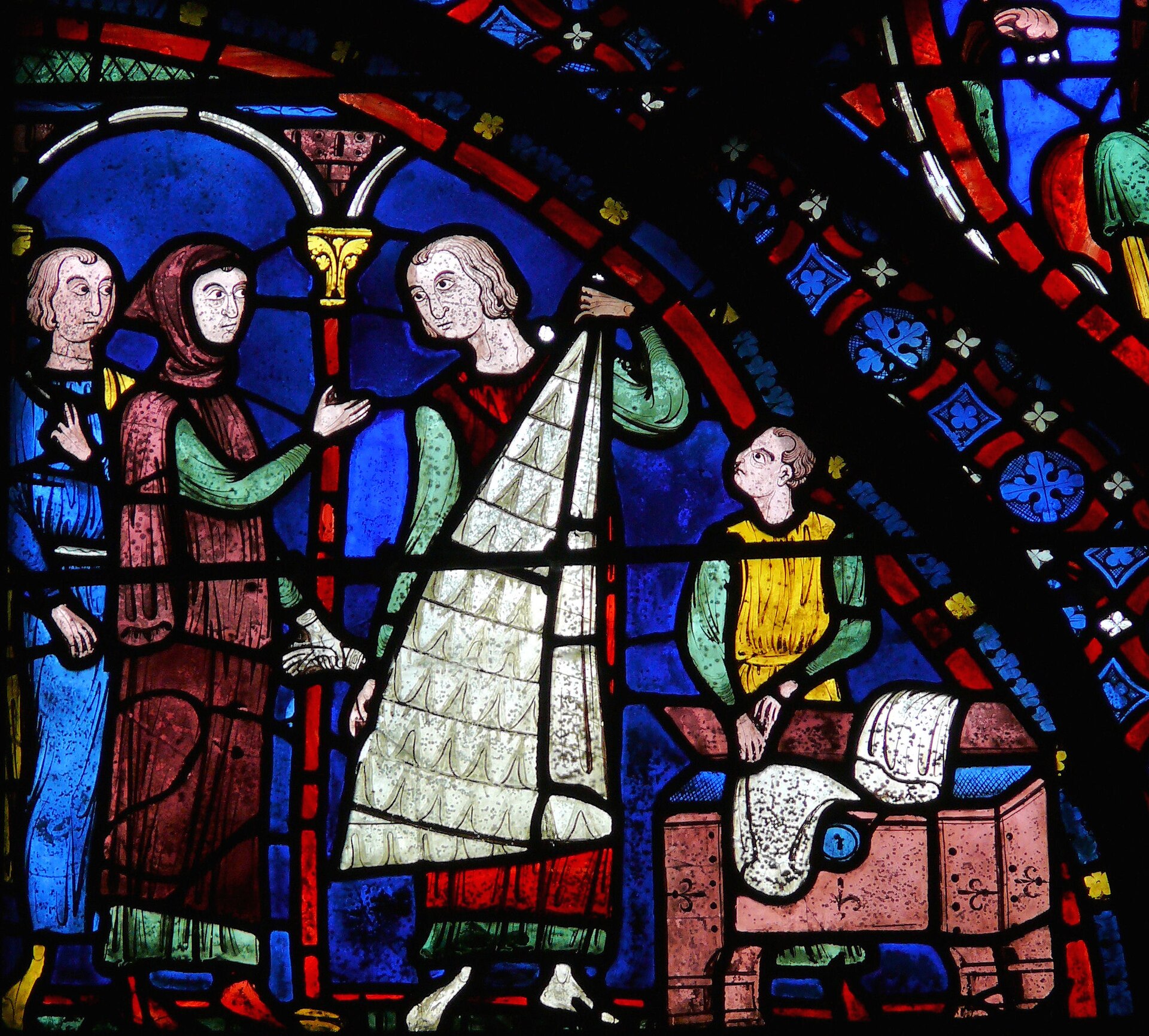
A furrier selling fur cloaks. The picture is in a stained-glass window of Chartres Cathedral from the 1200s.. Photo: Chartres - Vitrail de l'Histoire de saint Jacques le Majeur - Fourreurs, MOSSOT, CC BY-SA 3.0, modified: reduced in size 6. The Black Death 1347–1351
The Black Death was a plague epidemic. It arrived in Europe from Asia on ships in 1347 and in a few years spread almost everywhere. According to estimates it killed at least a third of Europeans. Villages and towns were emptied.
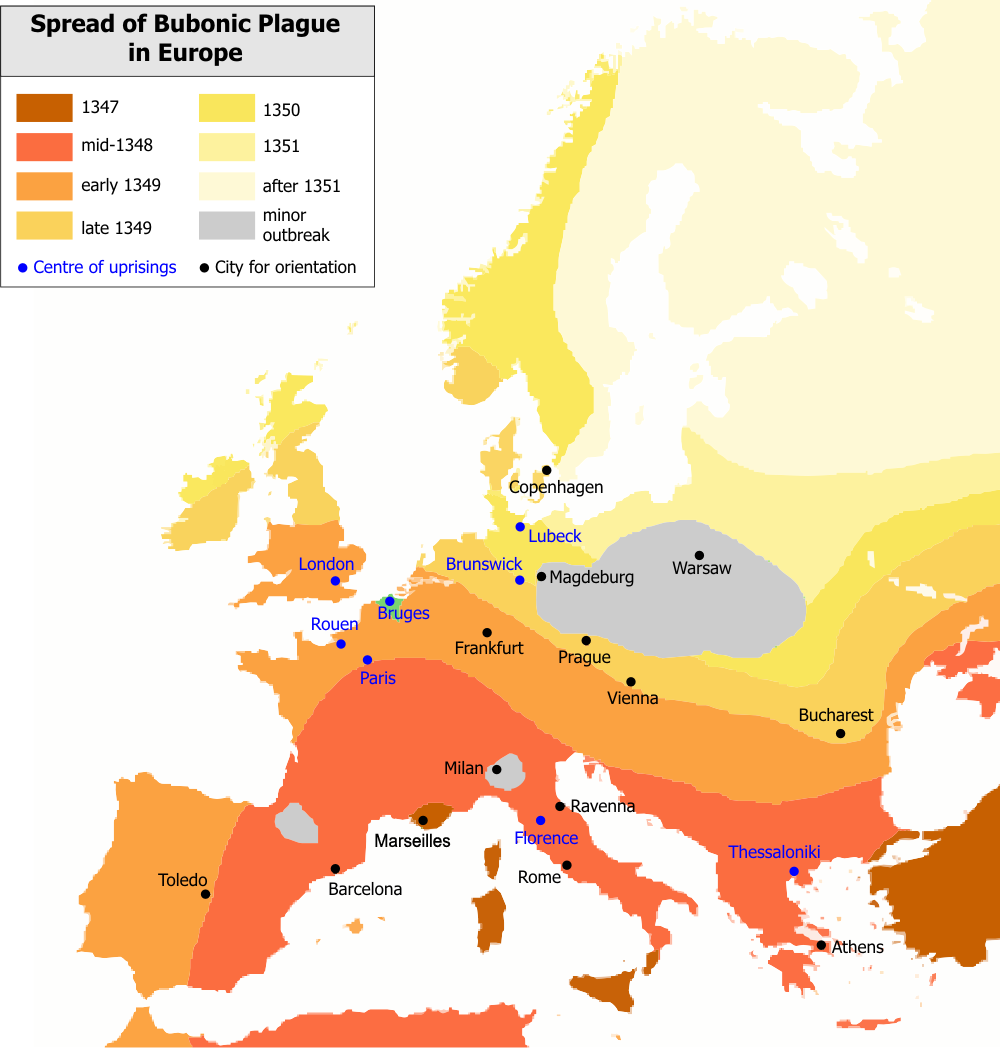
The spread of the plague in Europe 1347–1351 (map legend in English). Photo: Bubonic plague map 2, Bunchofgrapes (englanninkielinen Wikipedia), CC BY-SA 3.0, modified: reduced in size 7. Think in pairs
Why did a knight need peasants and a peasant need a knight?
Why were there few books in the Middle Ages?
Why did the plague spread quickly in towns?
What did the printing press change?


Summary
The Middle Ages lasted in Europe from about the year 500 to 1500. In feudalism the king gave land to the nobles and they gave it to knights, and peasants farmed it. Nobles and knights lived in castles. The Church and monasteries influenced everyday life and copied books. Towns grew, and craftsmen founded guilds. The Black Death killed a large part of Europeans in 1347–1351. The Middle Ages ended gradually, and the printing press was one sign of their end.
Frequently asked questions
When were the Middle Ages?
In Europe from about the year 500 to 1500. The limits are only a guide: some take 1453 as the end and some 1492.
Were the Middle Ages a dark age?
No. In the Middle Ages universities were founded, great churches were built and towns grew. The name Dark Ages came later.
Did everyone live in castles?
No. Castles were home to nobles, knights and their servants. Most people were peasants who lived in small villages.