Mixed numbers: slides and exercises for grades 5–6 (ages 11–12)
Mixed numbers in pictures and on the number line: the parts of a mixed number, reading and comparing. Slides, explanations and exercises for grades 5–6.
A mixed number is a number made of a whole number and a fraction, for example 2 3/4. It is needed when an amount has whole units and a little extra: two whole laps of a running track and three quarters of a third lap.
The article is made for grades 5–6, and every step is ready to show to the class as a slide. By the end, pupils can read a mixed number, mark it on a number line and compare mixed numbers.
Key concepts
- mixed number
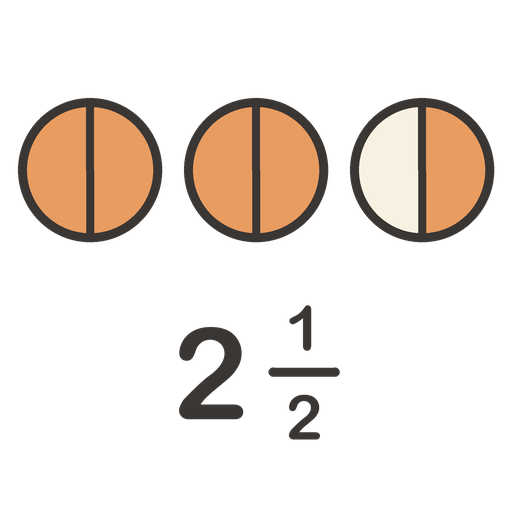 A number with wholes and a fraction, like one and a half, 1 1/2.
- whole
 Something complete and not divided, like one whole pizza.
- fractional part
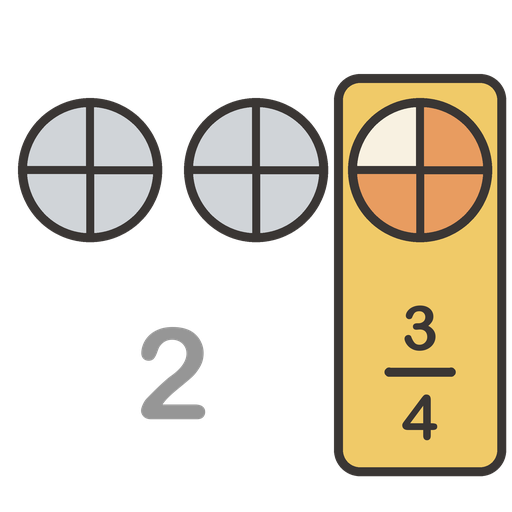 The part of a mixed number that is a fraction smaller than one whole. In 2 3/4 the fractional part is 3/4.
- fraction
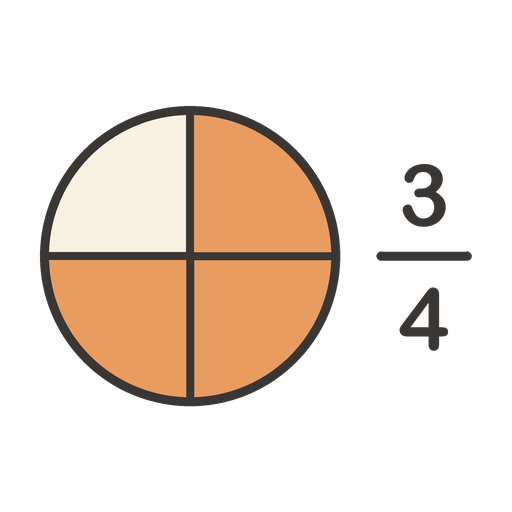 A number that shows part of a whole, like 3/4.
- numerator
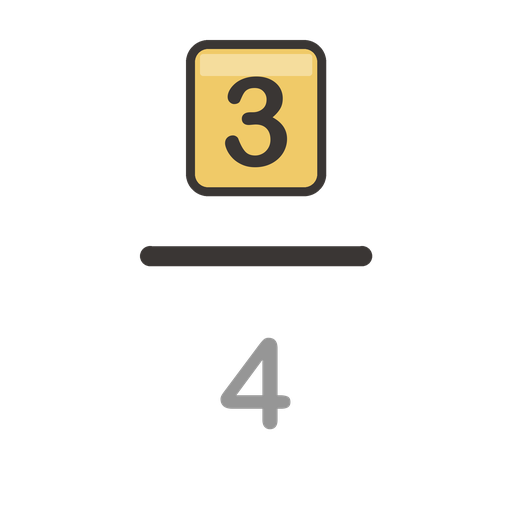 The top number of a fraction. It tells how many parts are taken.
- denominator
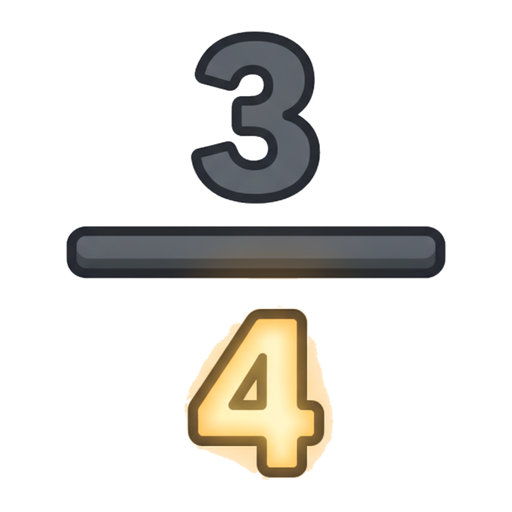 The bottom number of a fraction. It tells how many equal parts the whole is split into.
- number line
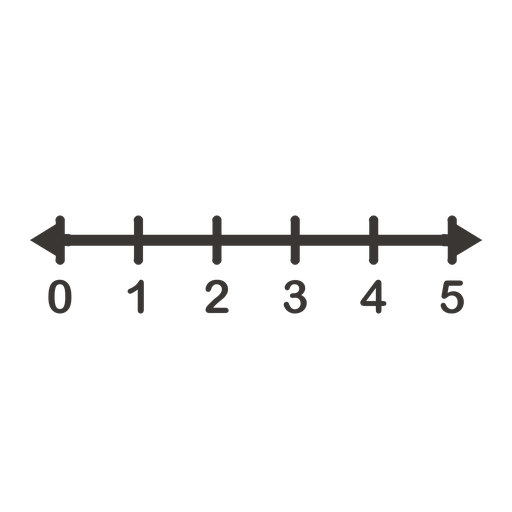 A straight line with numbers marked in order at equal spaces.
- greater than
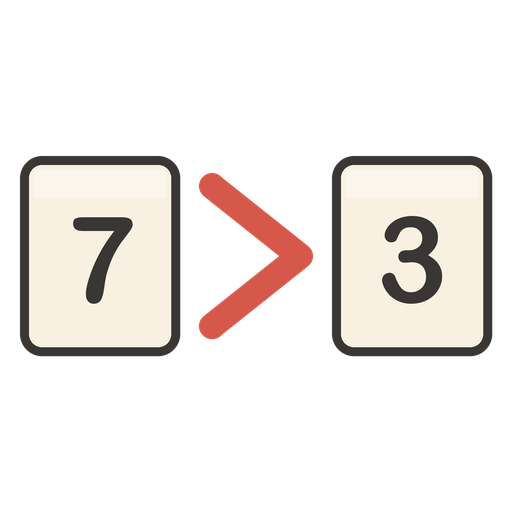 The sign > that shows the number on the left is bigger, like 7 > 3.
Related exercises
There is no exercise for this topic yet
Teacher or creator: make the first exercise with Puro Editor and choose Mixed Numbers as its topic. It will appear here as soon as it is published.
1. Wholes and a little extra
A child runs two whole laps of a track and then three quarters of a third lap. How many laps does the child run in all?
The answer is the mixed number 2 3/4: two and three quarters.
2. The parts of a mixed number
A mixed number is a number made of a whole number and a fraction.
In 2 3/4, the whole number is 2. The fractional part 3/4 is a fraction that is smaller than one whole. Its numerator is 3 and its denominator is 4.
3. A mixed number on the number line
A skier has skied 2 3/4 kilometres in the forest. The mixed number 2 3/4 lies between 2 and 3.
Divide the gap from two to three into four equal parts. Count three parts to the right from two: there you find 2 3/4.
4. Which is bigger, 2 3/4 or 3 1/4?
First compare the wholes. 3 1/4 has three wholes, and 2 3/4 has only two.
So 3 1/4 > 2 3/4, even though the fractional part 1/4 is smaller than 3/4.
2 3/4 3 1/4 5. Same wholes: compare the fractional parts
Which cyclist has gone farther along the forest path, 2 1/4 km or 2 3/4 km?
The wholes are the same: both have 2 wholes.
Let's compare the fractional parts: 3/4 is greater than 1/4.
So 2 3/4 > 2 1/4.6. Common mistake: comparing only the fractional parts
A pupil may think that 1 3/4 is bigger than 2 1/4, because 3/4 is greater than 1/4.
The number line shows otherwise: 2 1/4 is farther to the right. So always compare the wholes first.
7. Talk about it as a class
1. How many fifths are there in 1 2/5? Use a picture to help.
2. Which is bigger, 3 1/5 or 2 4/5? Why?
3. In which everyday situations do we need mixed numbers, for example in sports or on a nature walk?Five fifths make one whole
Summary
A mixed number is a number made of a whole number and a fraction, for example 2 3/4. On the number line, 2 3/4 lies between 2 and 3. To compare mixed numbers, look at the wholes first. If the wholes are the same, compare the fractional parts.
Frequently asked questions
What is a mixed number?
A mixed number is a number made of a whole number and a fraction, for example 2 3/4 (two and three quarters).
How do you compare mixed numbers?
Compare the wholes first. A bigger whole number makes a bigger mixed number, so 3 1/4 > 2 3/4. If the wholes are the same, compare the fractional parts: 2 3/4 > 2 1/4.
How do you mark a mixed number on a number line?
Find the place of the whole number, for example 2. Divide the gap to the next whole number into as many equal parts as the denominator says, and count as many parts to the right as the numerator says. This is how 2 3/4 is found between 2 and 3.