
The Moon landing 1969: Apollo 11 and the space race
How did people reach the Moon in 1969? The space race, the Saturn V rocket, the Apollo 11 crew and the moonwalk in pictures. Slides and questions for grades 4–6.
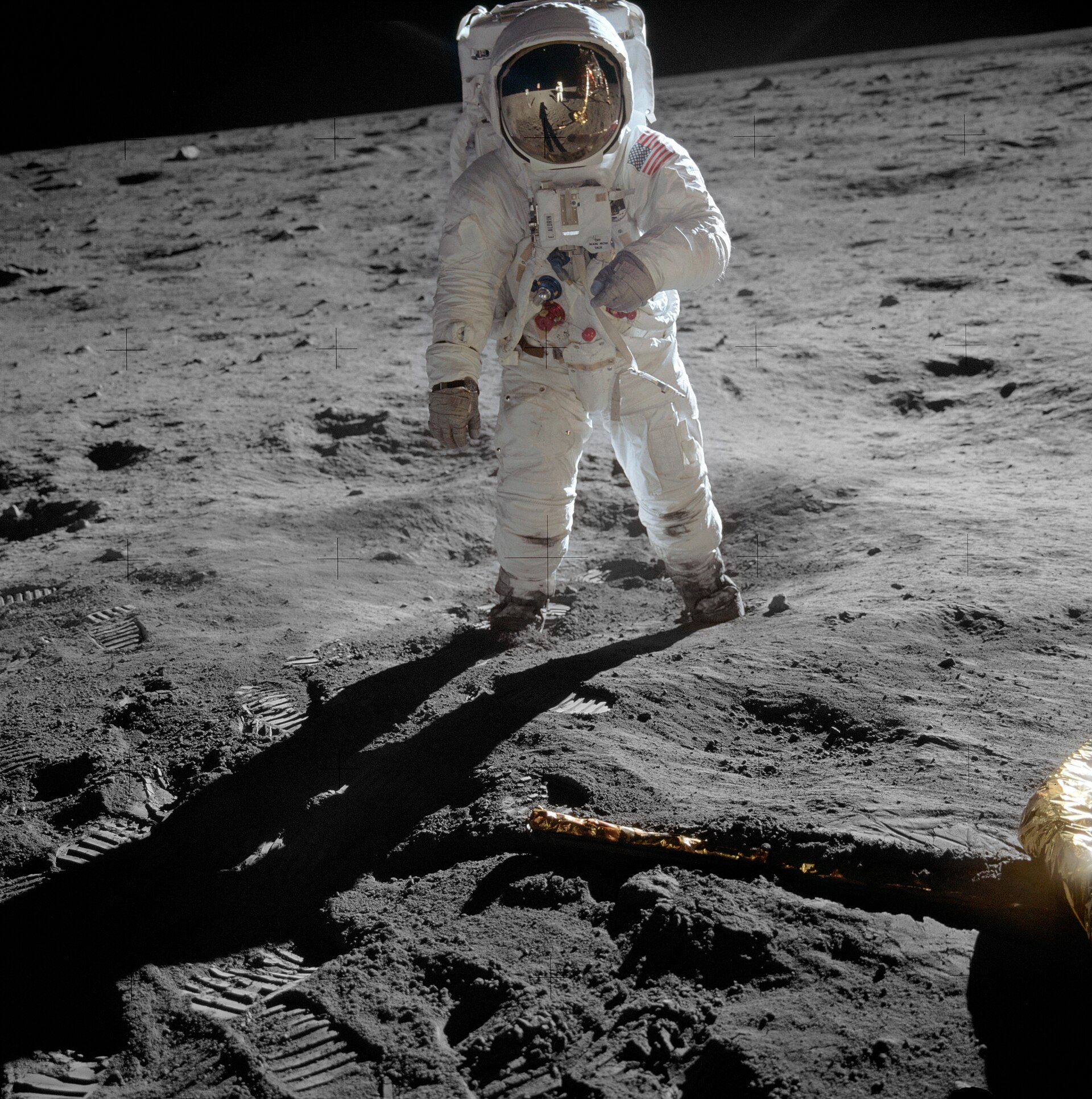
In July 1969 people walked on the Moon for the first time. Before that, the United States and the Soviet Union had been competing in space for more than ten years. This period is called the Cold War: the two countries competed with each other and feared each other, but they did not fight each other directly. This article tells the story of the Moon landing and fits history lessons in grades 4–6. Every step can be shown to the class as a slide.
By the end, pupils can explain what the space race was and how Apollo 11 got to the Moon and back. They know the crew and what was done on the Moon. They can also explain why the Moon landing still matters today.
Key concepts
- moon
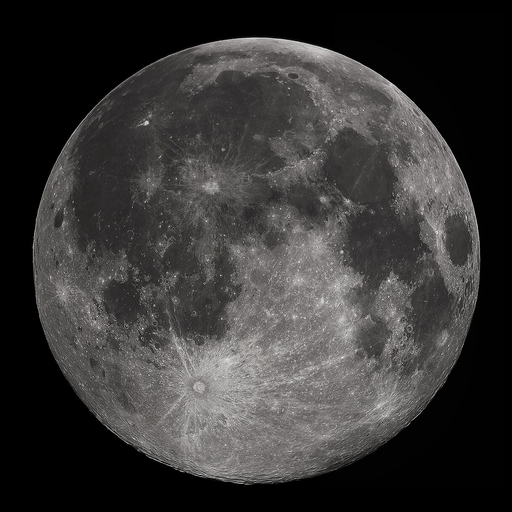 The Moon orbits the Earth and is its only natural satellite. It does not shine by itself but reflects sunlight.
- space
 Space is the huge area beyond the Earth's atmosphere. It has stars and planets, but no air to breathe.
- astronaut
 A person who travels into space. The first person in space was Yuri Gagarin, in 1961. Neil Armstrong was the first to walk on the Moon, in 1969.
- television
 A device with a screen for watching shows and films.
- ocean
 A very large sea. The largest ocean is the Pacific.
- gravity
 The force that pulls everything toward the ground. That is why an apple falls from a tree.
1. What do you know about the Moon landing?
Who was the first person in space?
Which rocket took the astronauts to the Moon?
What did Neil Armstrong say on the Moon?
Why does the Moon landing still matter today?2. The space race: who gets there first?
During the Cold War, the United States and the Soviet Union competed in many things. Who would reach space and the Moon first? This competition is called the space race.
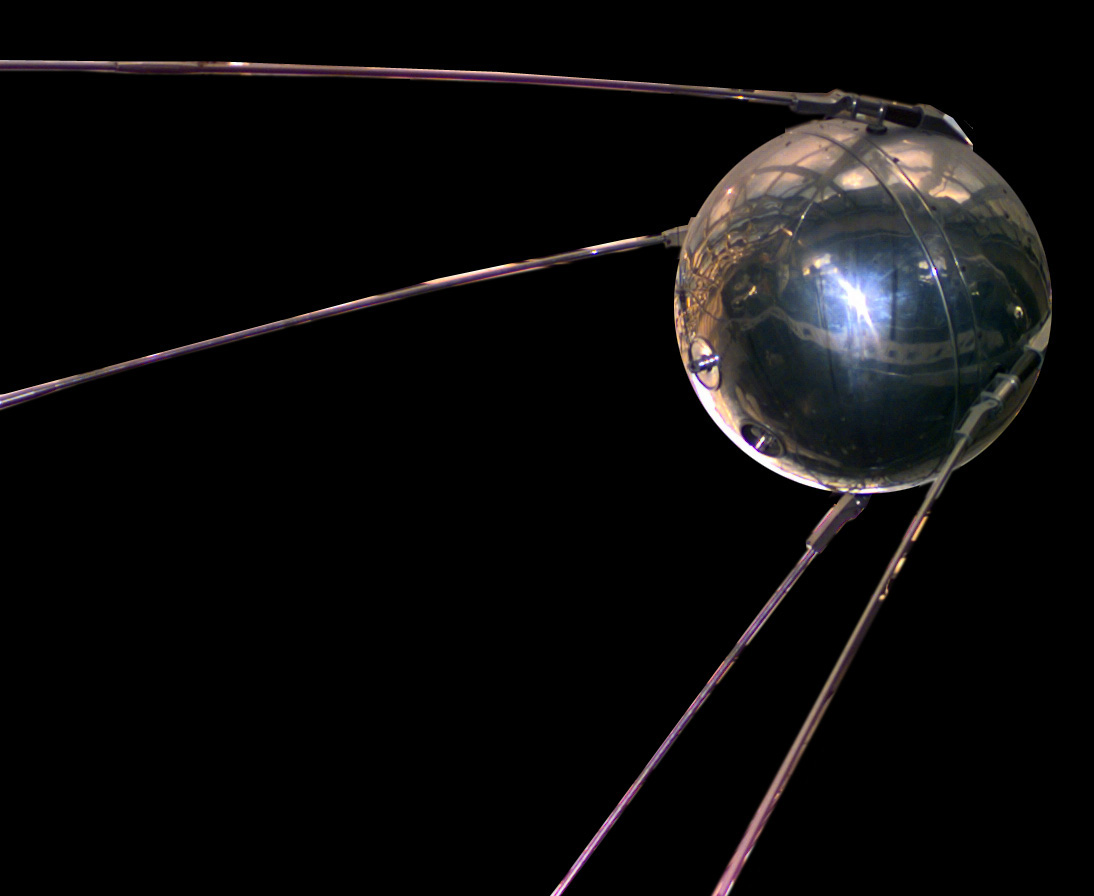
A replica of the Sputnik 1 satellite. The real Sputnik was a metal ball about 58 centimetres wide with four long antennas.. Photo: Sputnik asm, NSSDC, NASA, Public domain, modified: reduced in size 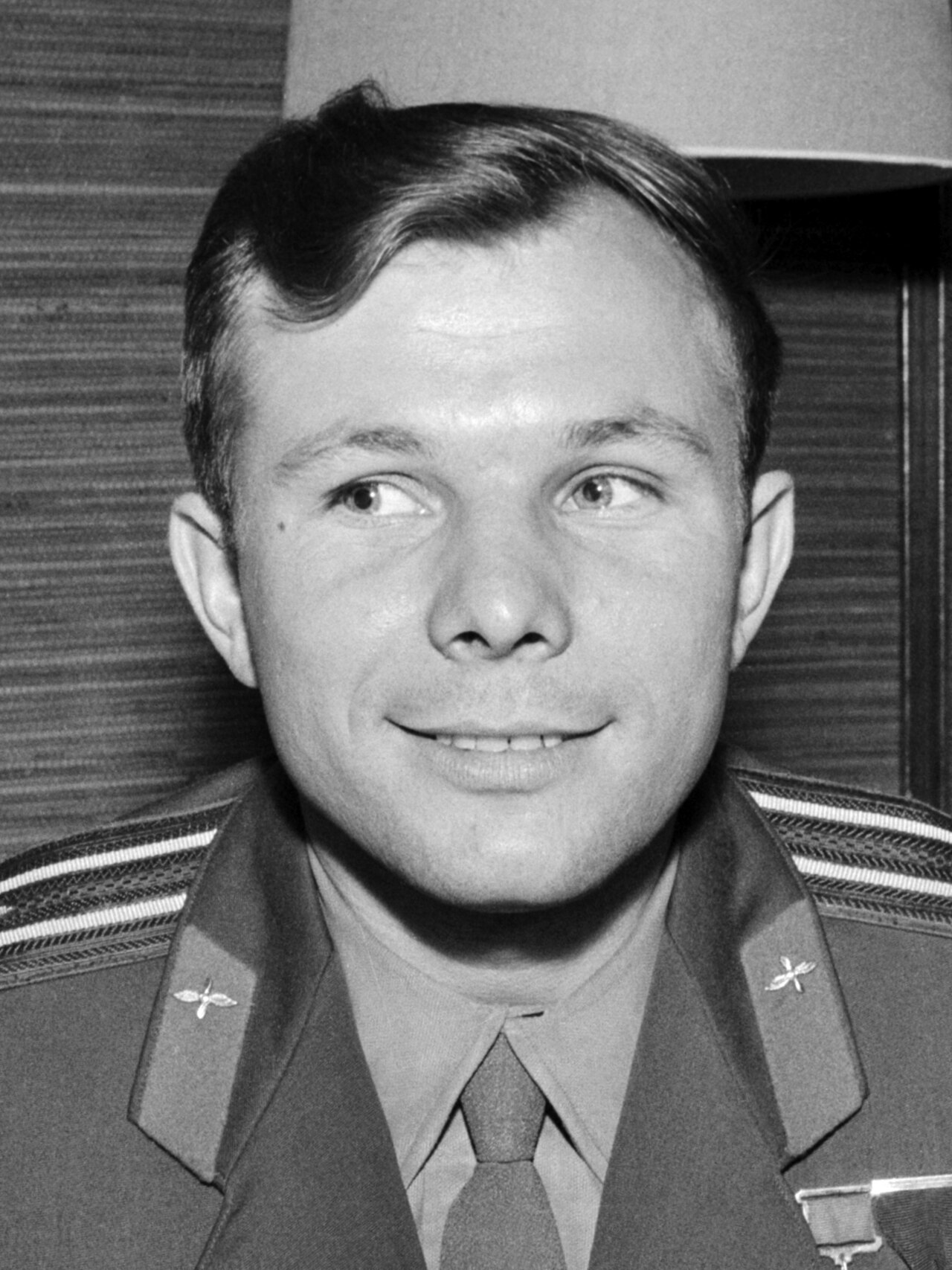
Yuri Gagarin in 1961. He orbited the Earth once in a spacecraft on 12 April 1961. The photo was taken the same year during his visit to Helsinki.. Photo: Yuri Gagarin (1961) - Restoration (cropped), Arto Jousi (restauroinut Adam Cuerden), Public domain, modified: reduced in size 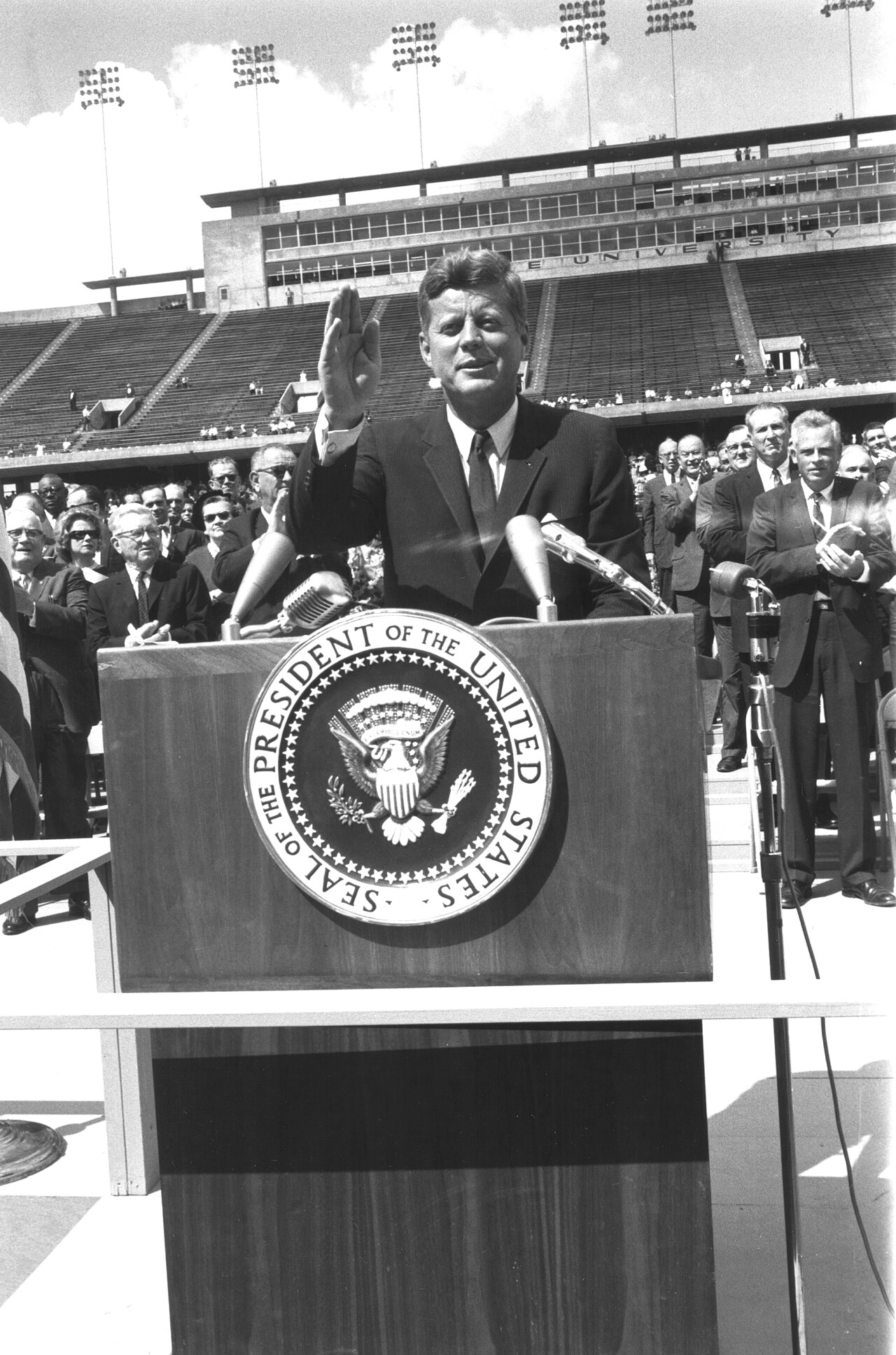
President John F. Kennedy speaks in Houston in 1962. He had already announced the goal of landing a man on the Moon before the end of the 1960s in 1961. The lectern shows the seal of the President in English.. Photo: Kennedy at Rice University - GPN-2000-001618, NASA, Public domain, modified: reduced in size - 1957 Sputnik, the first satellite, orbits Earth
- 1957 Laika the dog flies into space
- 1961 Yuri Gagarin, the first person in space
- 1961 The USA decides to reach the Moon
- 1968 Apollo 8 orbits the Moon
- 1969 Apollo 11 lands on the Moon
3. Saturn V launches Apollo 11
Apollo 11 left Florida on 16 July 1969. On board were Neil Armstrong, Buzz Aldrin and Michael Collins. They were carried by the Saturn V rocket, which was about 110 metres tall. The Apollo spacecraft sat at the top of the rocket. The journey to the Moon took three days.
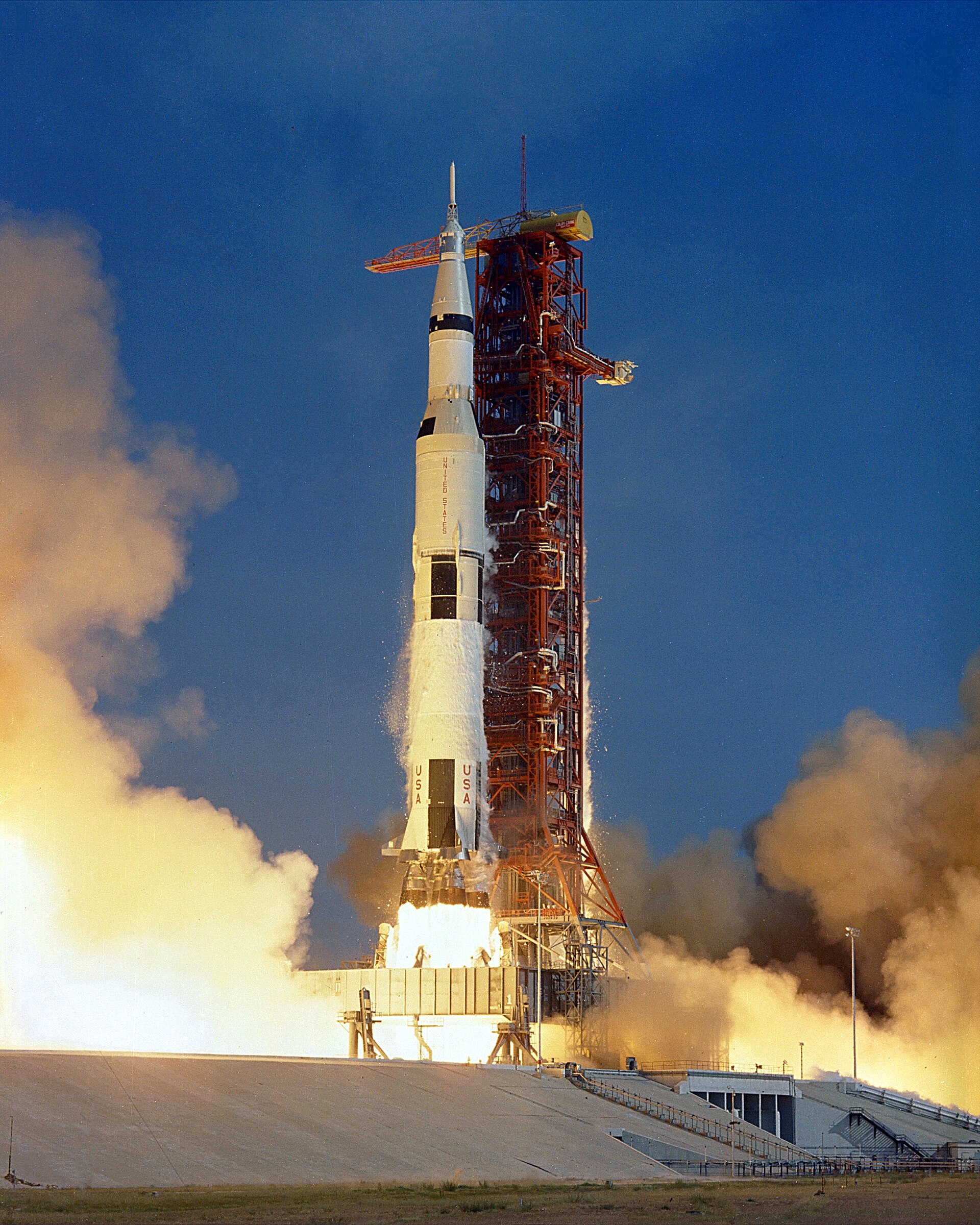
Saturn V lifts off from the launch pad in Florida on 16 July 1969. On the right is the red launch tower. The words United States and USA are painted on the side of the rocket.. Photo: Apollo 11 Launch - GPN-2000-000630, NASA, Public domain, modified: reduced in size 4. Eagle lands on the Moon
On 20 July 1969 the lunar module Eagle landed on the Moon. Collins stayed in Columbia, orbiting the Moon. A few hours later Armstrong became the first person to step onto the Moon. Hundreds of millions of people are thought to have watched it on television. Armstrong said: “That’s one small step for man, one giant leap for mankind.” He meant that one person’s small step was a great achievement for everyone.
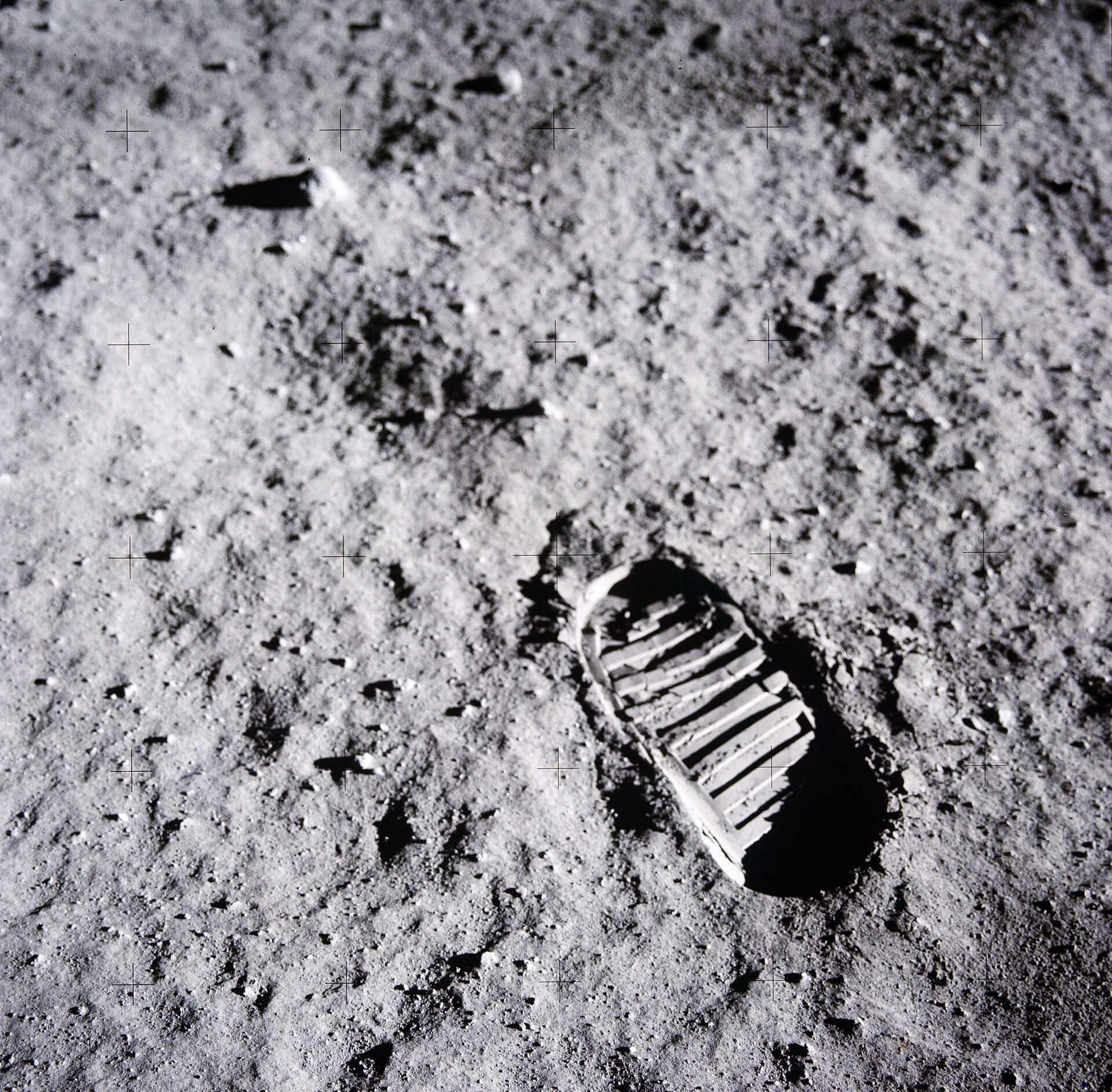
Buzz Aldrin’s boot print in the dust of the Moon. Aldrin took the photo himself so that scientists could see what the surface of the Moon is like.. Photo: Buzz Aldrin's bootprint on the Moon, AS11-40-5878, Buzz Aldrin (NASA), Public domain, modified: reduced in size 5. What did the astronauts do on the Moon?
Armstrong and Aldrin spent about two and a half hours on the surface of the Moon. They put up the flag of the United States, set up measuring instruments and collected 21.5 kilograms of rock and dust. Then Eagle flew back up to Columbia. On 24 July Columbia came down on parachutes into the Pacific Ocean.
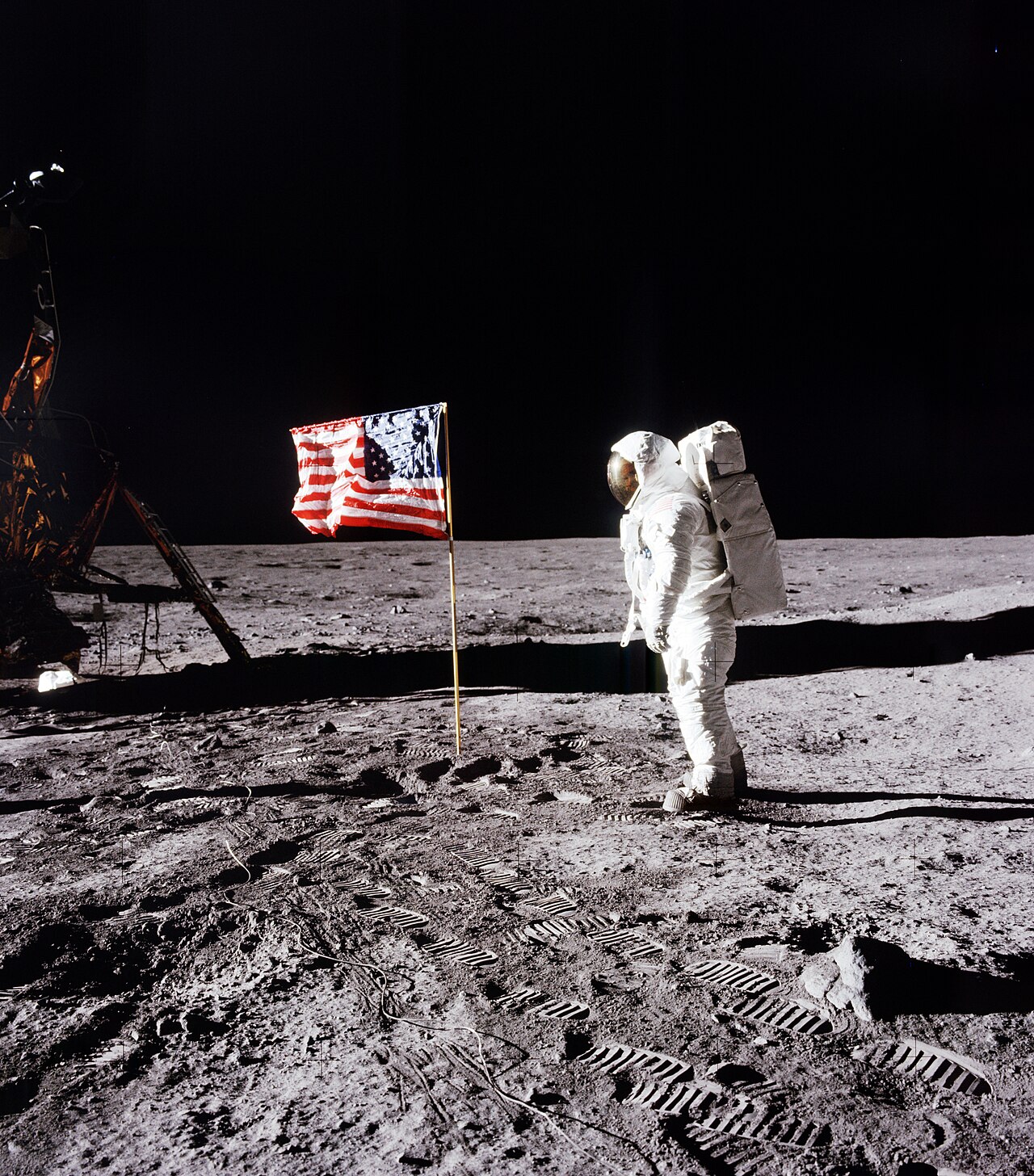
Buzz Aldrin and the flag of the United States. There is a horizontal rod along the top of the flag because there is no wind on the Moon to hold it out.. Photo: Buzz Aldrin and the US flag on the Moon, AS11-40-5875, Neil Armstrong (NASA), Public domain, modified: reduced in size 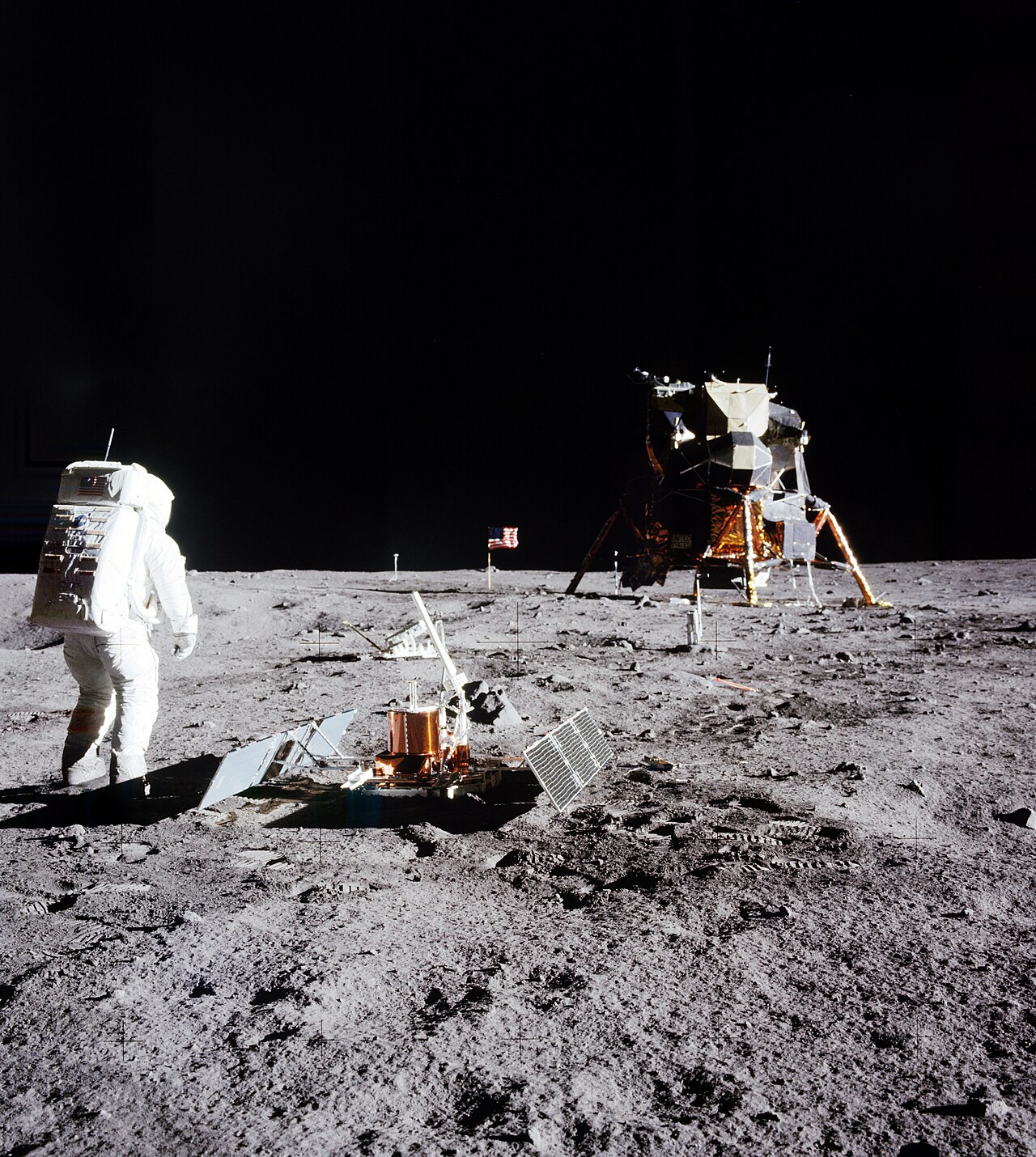
Aldrin walks towards Eagle. In front is an instrument that measured moonquakes. Its wings are solar panels. Further back is a mirror that a laser beam from Earth can be aimed at.. Photo: Astronaut Edwin Aldrin deploys the PSEP, AS11-40-5948, Neil Armstrong (NASA), Public domain, modified: reduced in size 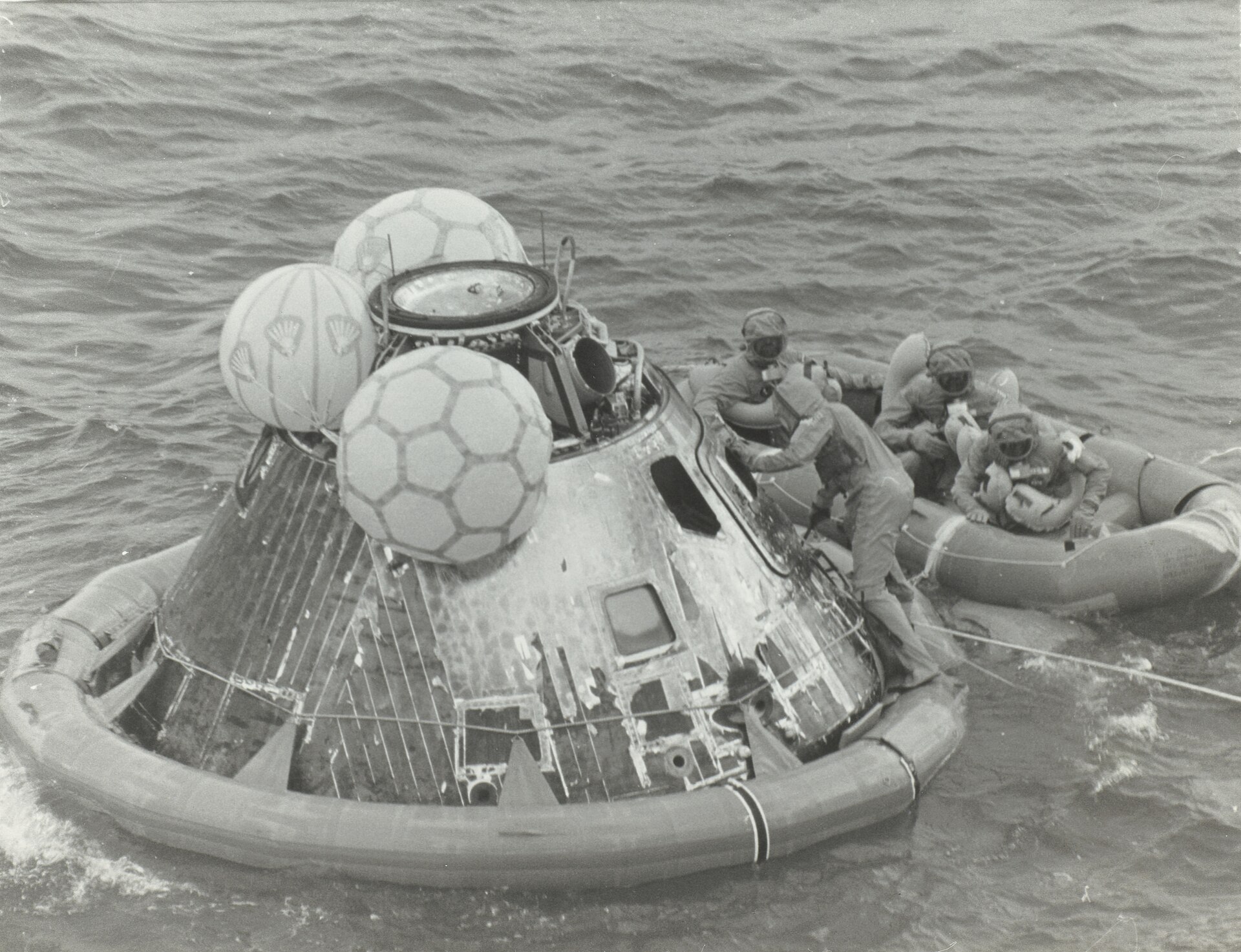
Columbia floats on the Pacific Ocean on 24 July 1969. The astronauts sit in a rubber boat in grey protective suits, because people feared they might bring unknown germs back from the Moon.. Photo: Astronauts in Lifeboat After Apollo 11 Splashdown, NASA, CC0, modified: reduced in size 6. Why does the Moon landing still matter?
Between 1969 and 1972, 12 people walked on the Moon. Pictures from space showed how small and beautiful the Earth is. During the space race the first weather and communication satellites were also built. Later the competition turned into cooperation: astronauts from many countries have lived on the International Space Station since 2000.
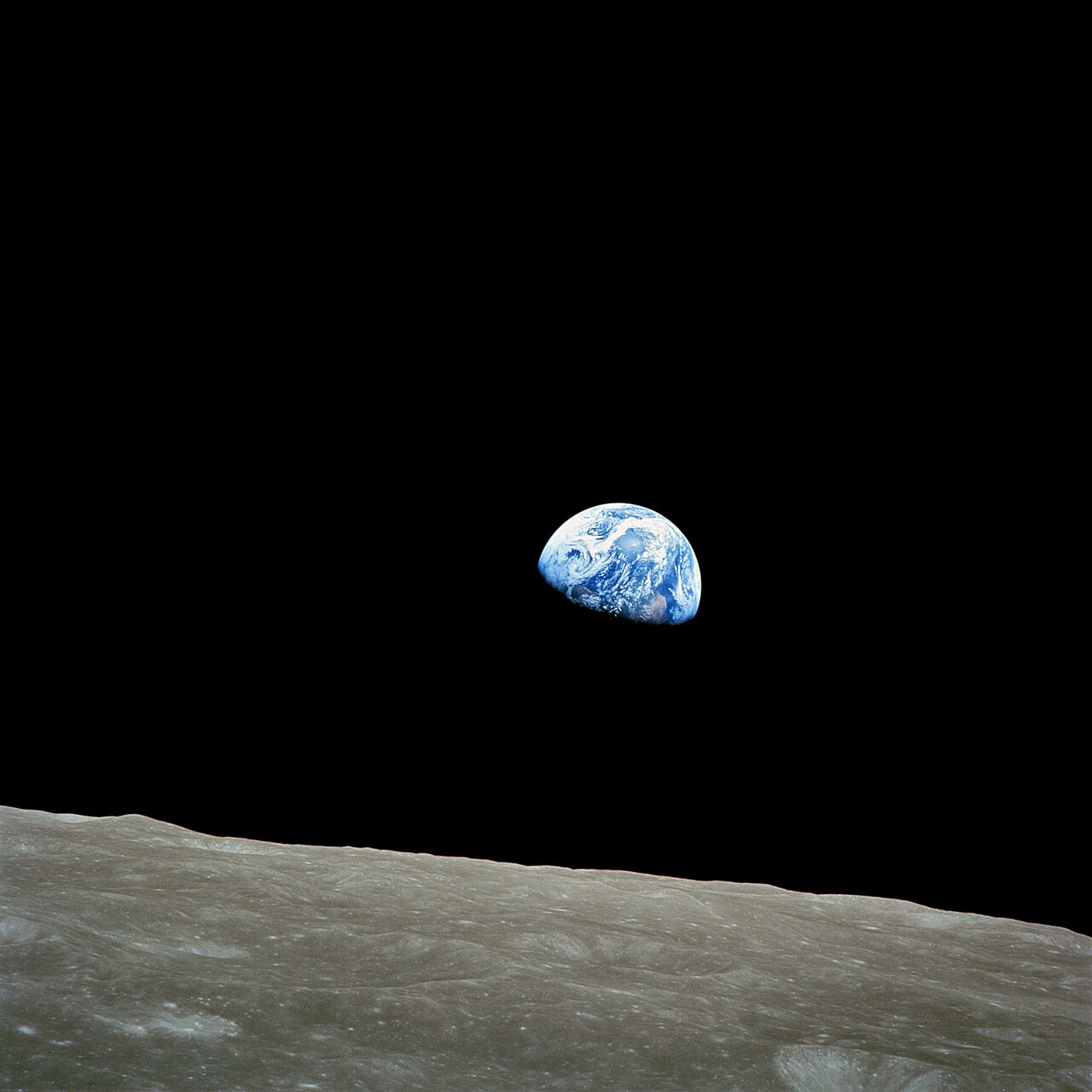
Earthrise: the Earth above the surface of the Moon. Astronaut William Anders took the photo during the Apollo 8 flight on Christmas Eve 1968.. Photo: Earthrise, Bill Anders (NASA), Public domain, modified: reduced in size 7. Discuss in pairs
Why did the United States and the Soviet Union compete in space?
Why did Michael Collins not walk on the Moon?
What did Armstrong mean by a small step and a giant leap?
How does space research help us today?


Summary
During the Cold War, the United States and the Soviet Union competed in space. The Soviet Union sent the first satellite, Sputnik, into space in 1957 and the first person, Yuri Gagarin, in 1961. Apollo 11 set off on a Saturn V rocket on 16 July 1969. On 20 July the lunar module Eagle landed in the Sea of Tranquility, which is a plain on the Moon, not a real sea. Neil Armstrong was the first to step onto the Moon; in Europe it was already the early hours of 21 July. Armstrong’s words meant that one person’s small step was a great achievement for all of humankind. Meanwhile Michael Collins orbited the Moon in Columbia. The crew returned to Earth on 24 July. Between 1969 and 1972, 12 people walked on the Moon.
Frequently asked questions
Why did the astronauts hop on the Moon?
The Moon’s gravity is about one sixth of the Earth’s, so everything feels much lighter there. But the spacesuit was big and stiff. The astronauts found that hopping worked better than walking.
Did the Soviet Union go to the Moon?
The Soviet Union did not send any people to the Moon. But it did send space probes with no people on board. Luna 9 landed on the Moon in one piece in 1966, and the Lunokhod 1 rover drove across the surface of the Moon in 1970.
Are the footprints still on the Moon?
Most probably. The Moon has no air, wind or rain, so footprints can last a very long time. A probe orbiting the Moon has photographed the Apollo landing sites, and the pictures show the equipment and the paths the astronauts walked.
Related content
Try exercises
Have you taught this topic? Create an exercise on it for your class.