Multiplying and dividing fractions with bars, grades 5–6
Multiplying and dividing fractions by whole numbers and fractions, with bars and on the number line. Slides and exercises for grades 5–6.
You multiply a fraction when you want to take part of something: 3/4 of the shots or half of the trees in a forest. In multiplication you multiply the numerators together and the denominators together, and then simplify the answer. In division, a fraction is shared equally, or you ask how many times the divisor goes into the dividend.
The article is made for grades 5–6, and every step is ready to show to the class as a slide. Simplifying and mixed numbers are assumed to be familiar.
Key concepts
- fraction
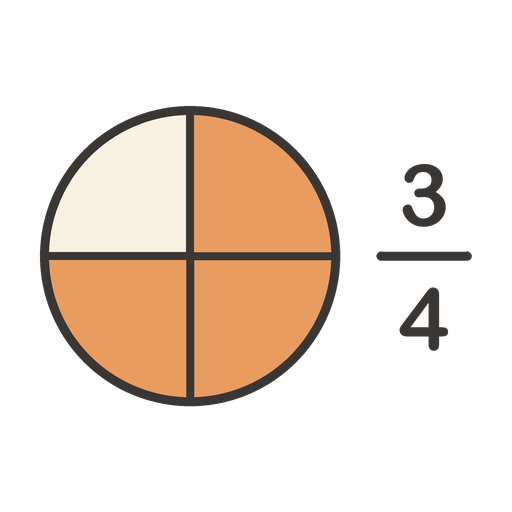 A number that shows part of a whole, like 3/4.
- numerator
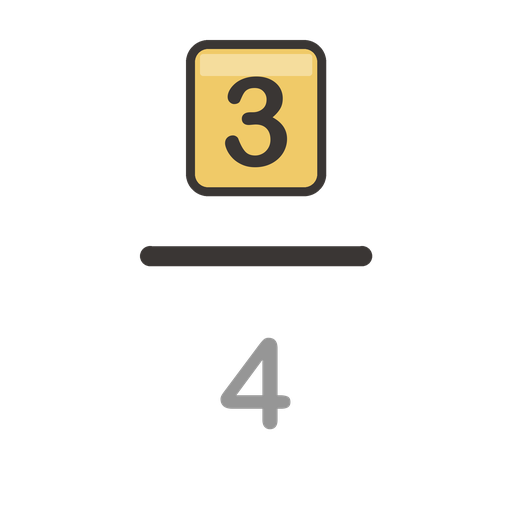 The top number of a fraction. It tells how many parts are taken.
- denominator
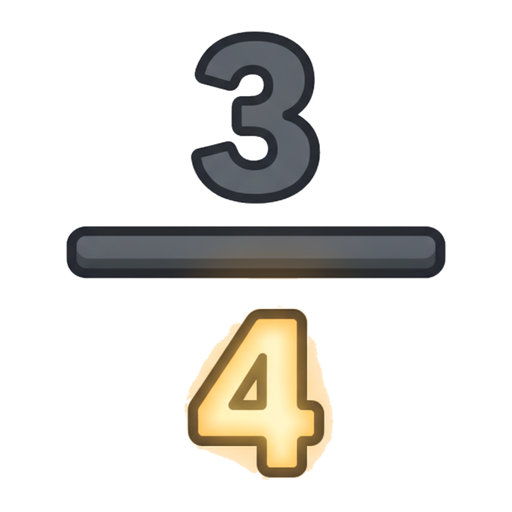 The bottom number of a fraction. It tells how many equal parts the whole is split into.
- mixed number
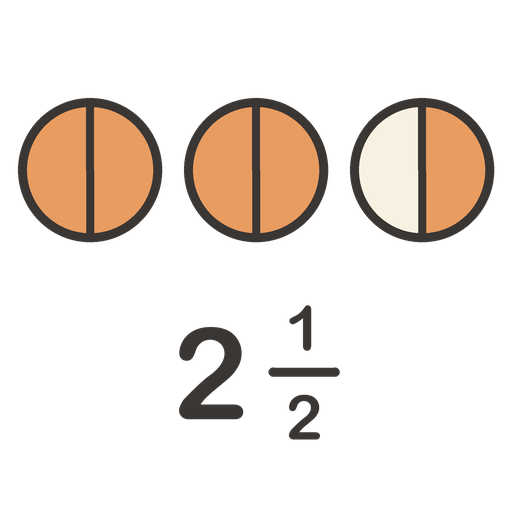 A number with wholes and a fraction, like one and a half, 1 1/2.
- simplifying fractions
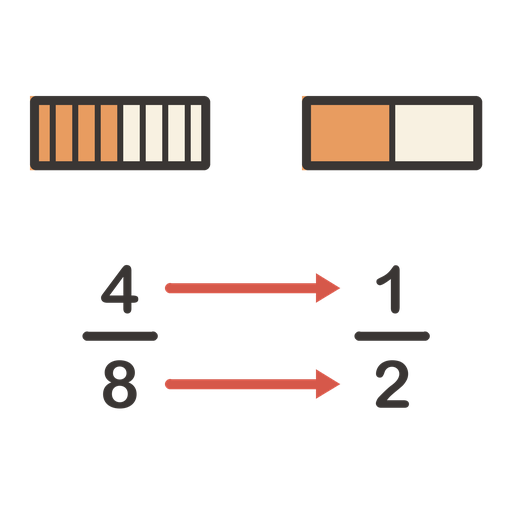 Dividing the numerator and the denominator of a fraction by the same number. The value of the fraction stays the same, for example 4/8 = 1/2.
- multiplication
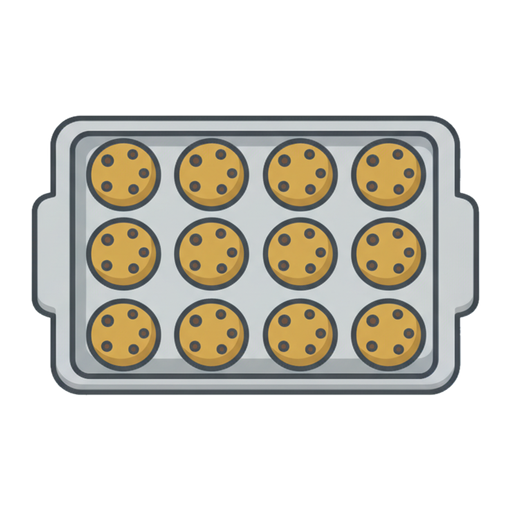 Adding the same number many times, for example 3 × 4 = 12.
- division
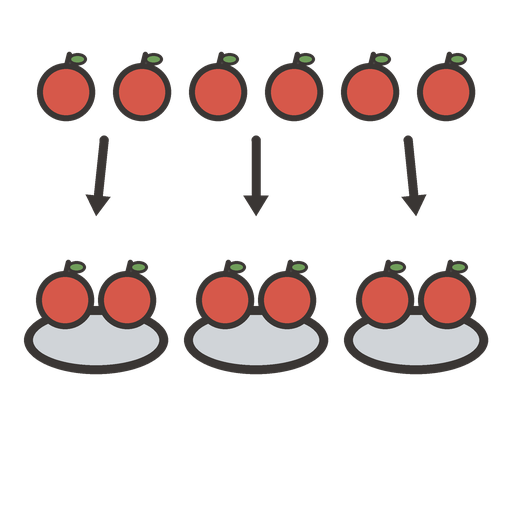 Sharing into equal parts, for example 12 ÷ 3 = 4.
- product
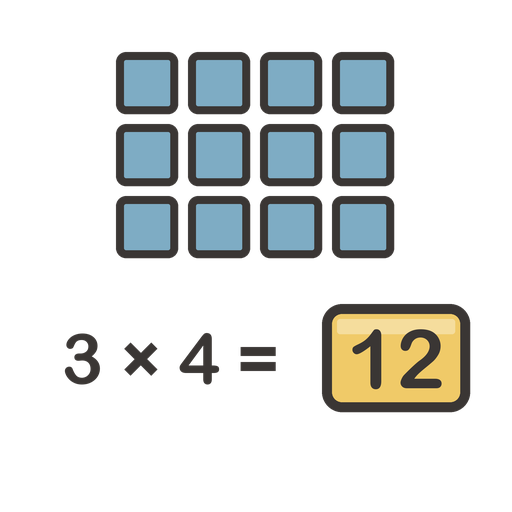 The answer to a multiplication. The product of 3 and 4 is 12.
1. What fraction of the shots went in?
In basketball practice, 12 free throws were taken, and 3/4 of them went in. How many shots is that?
Divide 12 into four equal parts: 12 : 4 = 3. Three parts are 3 · 3 = 9 shots.
2. Multiplying a fraction by a whole number
When you multiply a fraction by a whole number, the numerator is multiplied and the denominator stays the same. The size of each part does not change; there are just more parts.
One lap of the running track is 2/5 km. Three laps are 3 · 2/5 = 6/5 km. That is more than one whole: 6/5 = 1 1/5 km.
6/5 = 1 1/5 3. A fraction times a fraction
Of the trees in a forest, 3/4 are conifers. Of the conifers, 1/2 are spruces. What fraction of all the trees are spruces?
Numerators: 1 · 3 = 3
Denominators: 2 · 4 = 8
1/2 · 3/4 = 3/84. Simplify before multiplying
The training session lasted 3/4 of an hour, and 2/3 of that was spent playing. What fraction of the hour was spent playing?
Multiply and simplify at the end, or simplify first: the numerator 3 and the denominator 3 can be divided by three, and the numerator 2 and the denominator 4 by two.
Multiply: 2/3 · 3/4 = 6/12 = 1/2 Simplify first: the product is 1/2 straight away 5. Dividing a fraction by a whole number
On a hike there is 3/4 of a litre of water, and it is shared equally among three people. Each person gets 3/4 : 3 = 1/4 of a litre.
The numerator 3 splits into three equal parts, and the denominator stays the same.
6. How many 1/2 litre cups can you fill?
You pour 2 litres of juice into 1/2 litre cups: how many cups get filled?
One litre makes 2 cups.
2 litres make 2 · 2 = 4 cups.
2 : 1/2 = 47. Calculate and explain
1. A basketball player takes 20 free throws, and 3/5 go in. How many shots went in?
2. Work out 2/3 · 3/5. Simplify first.
3. On a hike there is 2/3 of a litre of tea for two people. How much does each person get?
4. How many 1/4 litre cups can you fill from 2 litres?
5. A pupil worked out 1/3 · 1/2 = 1/3. Where is the mistake?
Summary
To multiply a fraction by a whole number, multiply the numerator; the denominator stays the same. To multiply a fraction by a fraction, multiply numerator by numerator and denominator by denominator, then simplify the answer. You can also simplify before multiplying. To divide a fraction by a whole number, divide the numerator or multiply the denominator. The division 2 : 1/2 asks how many halves fit into 2.
Frequently asked questions
Why are the denominators multiplied too in multiplication?
When you take half of three quarters, each quarter is cut in two and the parts become eighths. That is why 1/2 · 3/4 = 3/8 and the denominator is 2 · 4 = 8.
Why can the product be smaller than the number being multiplied?
When you multiply a number by a fraction smaller than 1, you take only part of it. For example, 1/2 · 3/4 = 3/8 is smaller than 3/4.
How do you work out the division 3/4 : 1/4?
Ask how many quarters fit into 3/4. Three, so 3/4 : 1/4 = 3. If the denominators are different, make equivalent fractions first: 1/2 : 1/4 = 2/4 : 1/4 = 2.
Related content
Try exercises
Have you taught this topic? Create an exercise on it for your class.