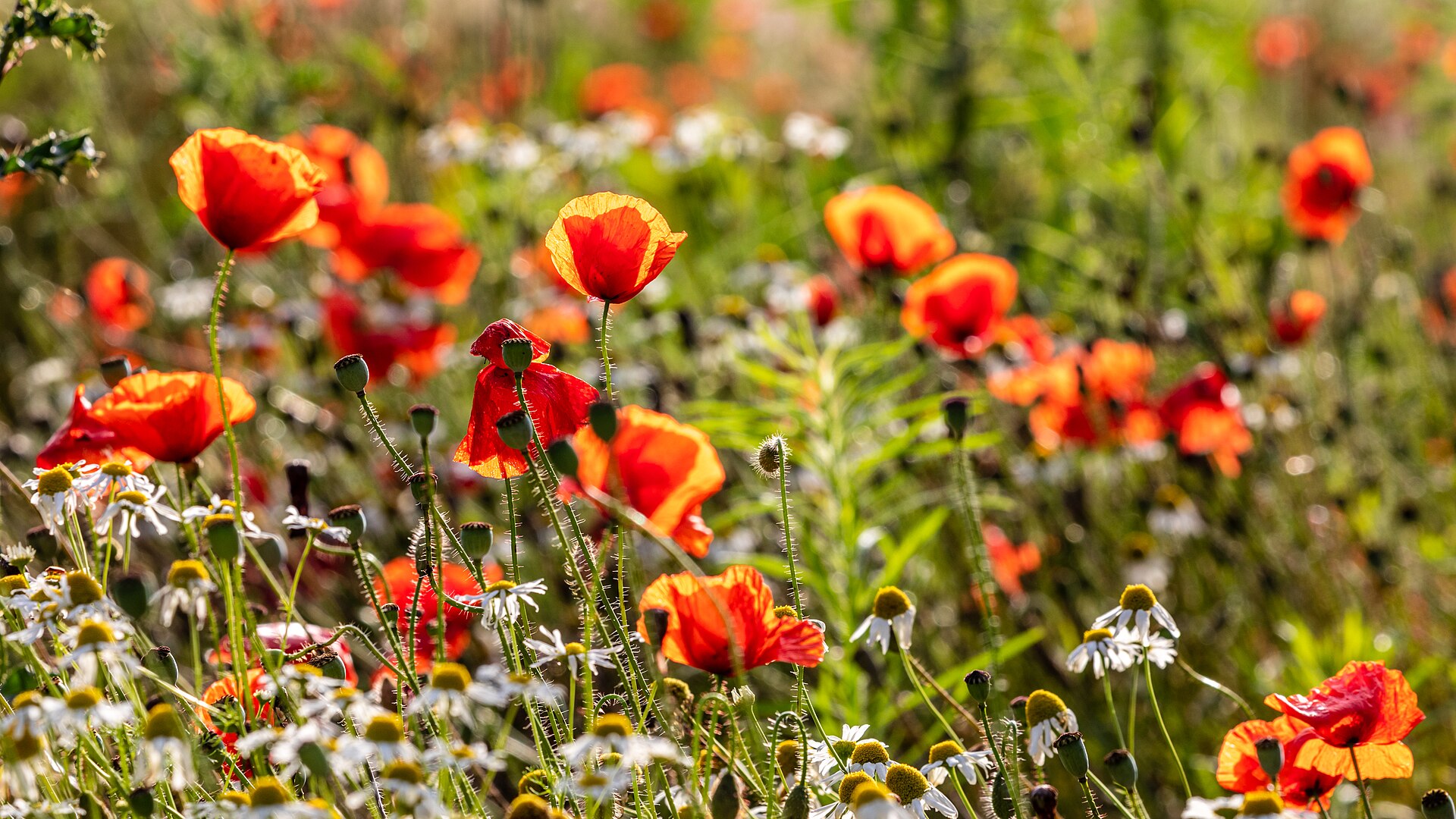

Parts of a plant: root, stem, leaf and flower
The parts of a plant for grades 3–4: root, stem, leaf and flower. Slides, pictures, questions and a bean experiment in a jar.
A plant makes its own food. For this it needs light, water and air. The parts of a plant work together: the roots take in water, the stem carries it up, the leaf makes food and the flower makes seeds. Every step is ready to show to the class as a slide.
At the end, pupils can name the parts of a plant and say what each one does. The class also follows how a bean sprouts in a jar.
Key concepts
- plant
 A living thing that grows in the ground and needs water and light.
- roots
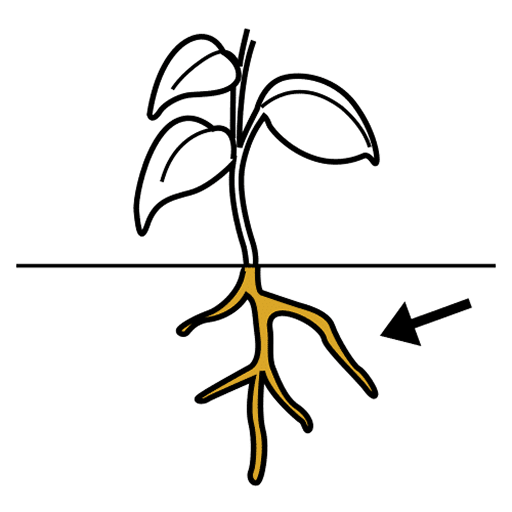 The parts of a plant underground that take in water and hold it in place.
- stem
 The long part of a plant that holds up its leaves and flowers.
- leaf
 The green, flat part of a plant that grows on a branch or stem.
- flower
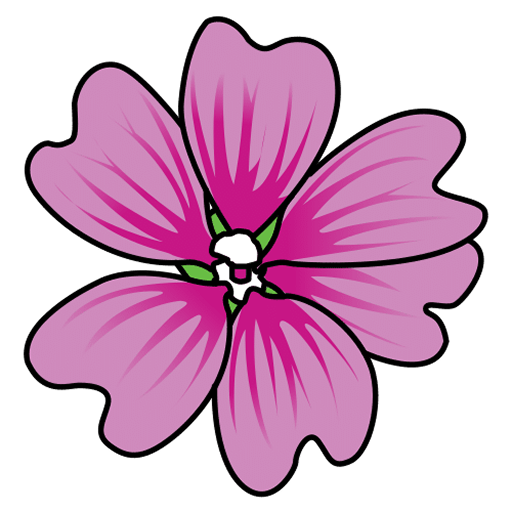 The colourful part of a plant that smells nice and attracts bees.
- photosynthesis
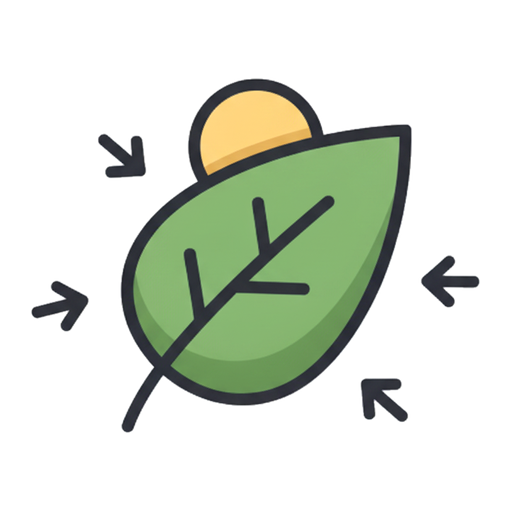 A plant uses sunlight, water and carbon dioxide to make sugar, and gives off oxygen.
- seed
 A small part of a plant from which a new plant grows.
- pollination
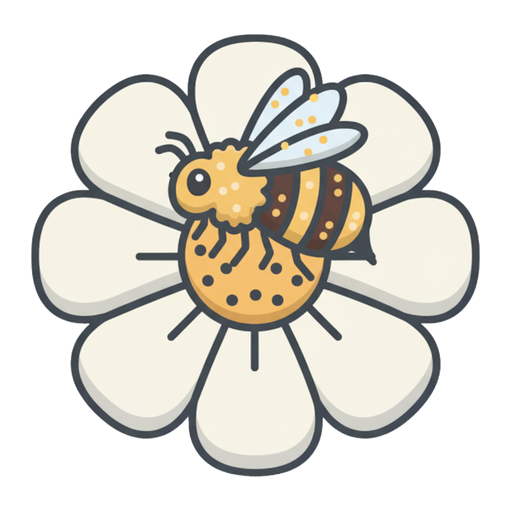 In pollination, pollen moves from the stamens to the pistil so that the plant can make seeds. Bees and the wind, for example, carry pollen.
Related exercises
1. What is a plant?
Which plants can you see from the classroom window?
What does a plant need to grow?
Where does a plant get its food?2. The four parts of a plant
A plant has roots, a stem, leaves and a flower. Each part has its own job. Look at the picture: what does each part do?
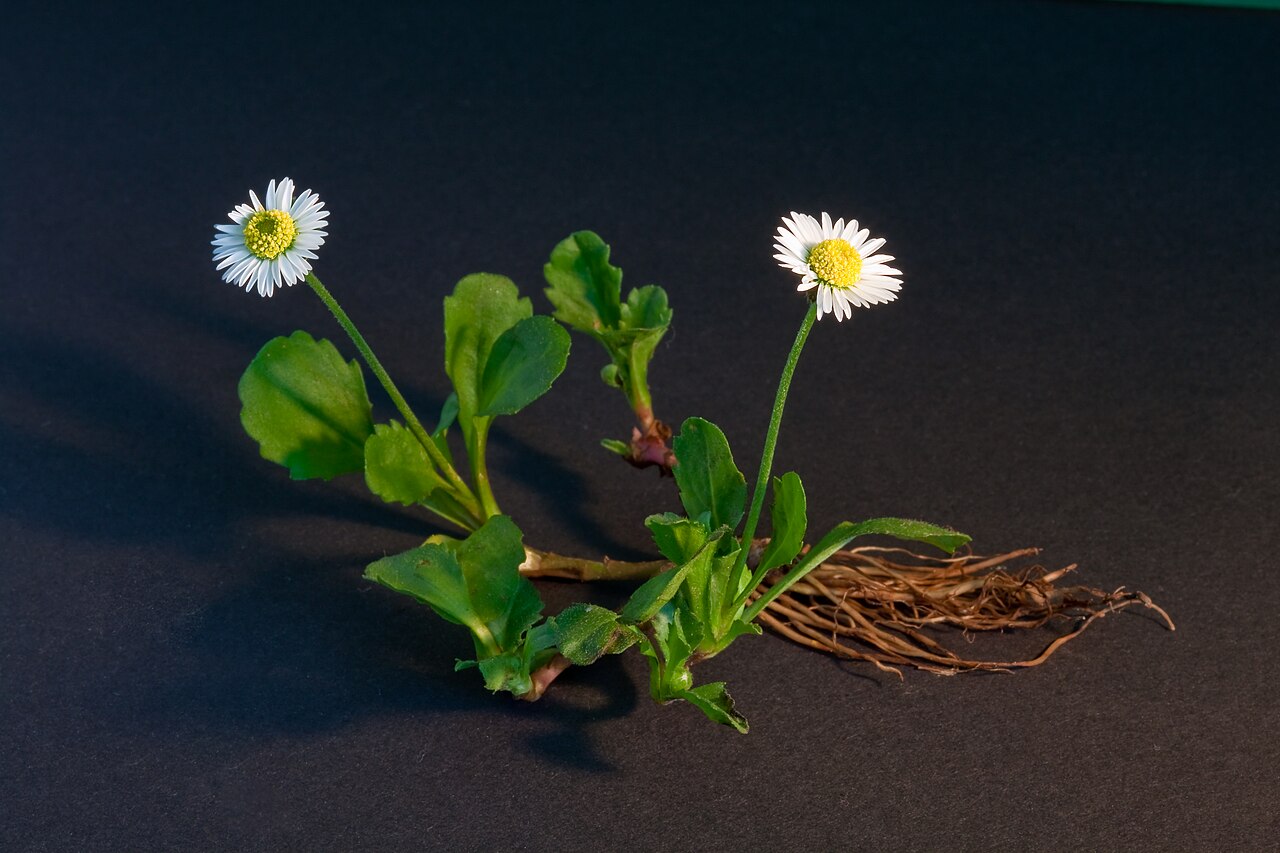
A daisy (Bellis perennis) shown whole, so that the roots can be seen too.. Photo: Bellis perennis full plant, Grand-Duc, CC BY-SA 3.0 de, modified: reduced in size 3. The leaf makes food
The leaf catches sunlight. The roots bring water, and carbon dioxide comes from the air. From these the leaf makes sugar, which the plant uses as food. This is called photosynthesis. At the same time the leaf releases oxygen into the air.
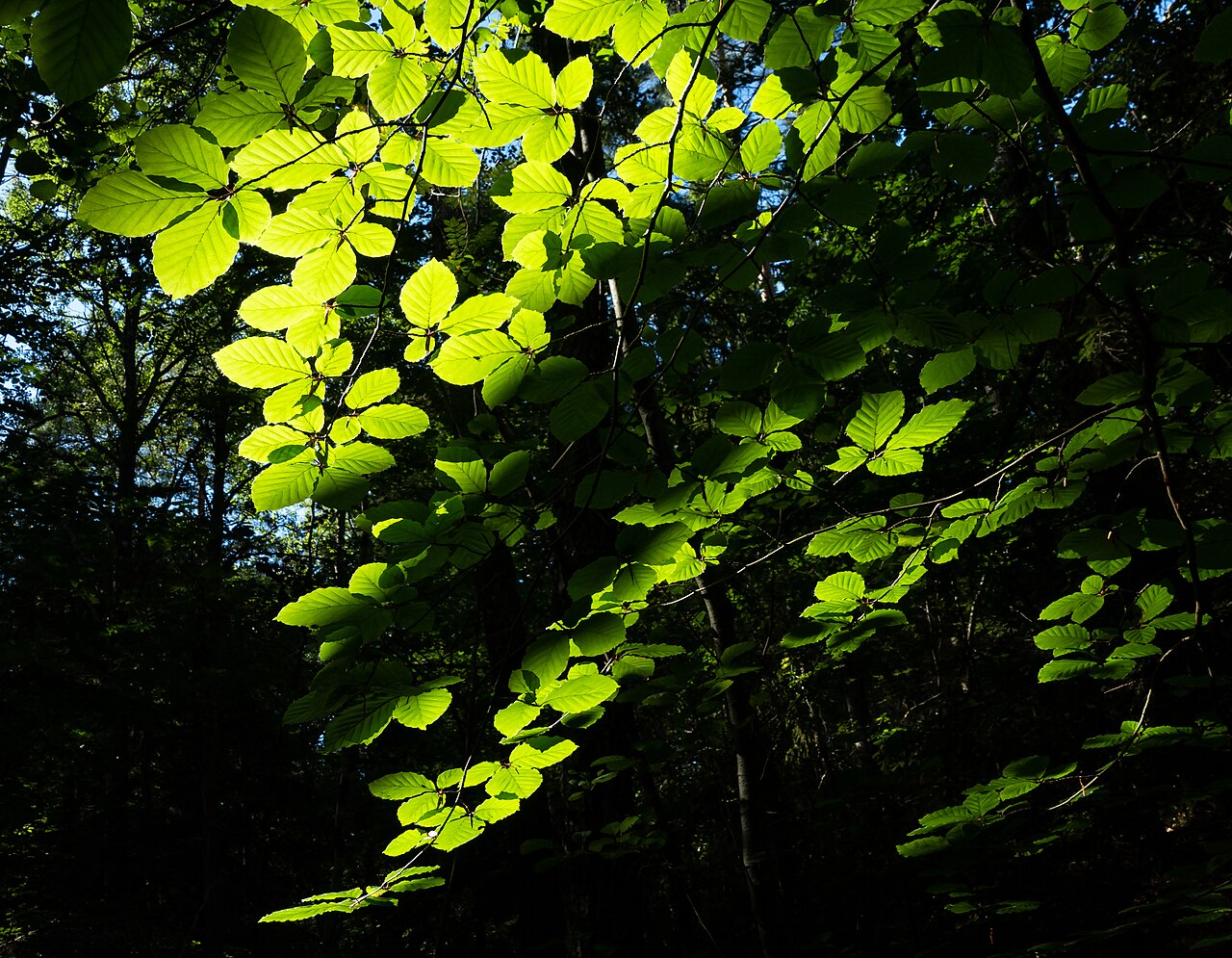
Beech leaves lit by the sun. The leaves catch the light.. Photo: Sunlight on beech leaves in Gullmarsskogen ravine 1, W.carter, CC0, modified: reduced in size 4. What does a plant need?
A plant needs light, water, air, soil and warmth. The soil gives the roots support and nutrients. Without water the plant wilts. Without light it grows pale and weak.
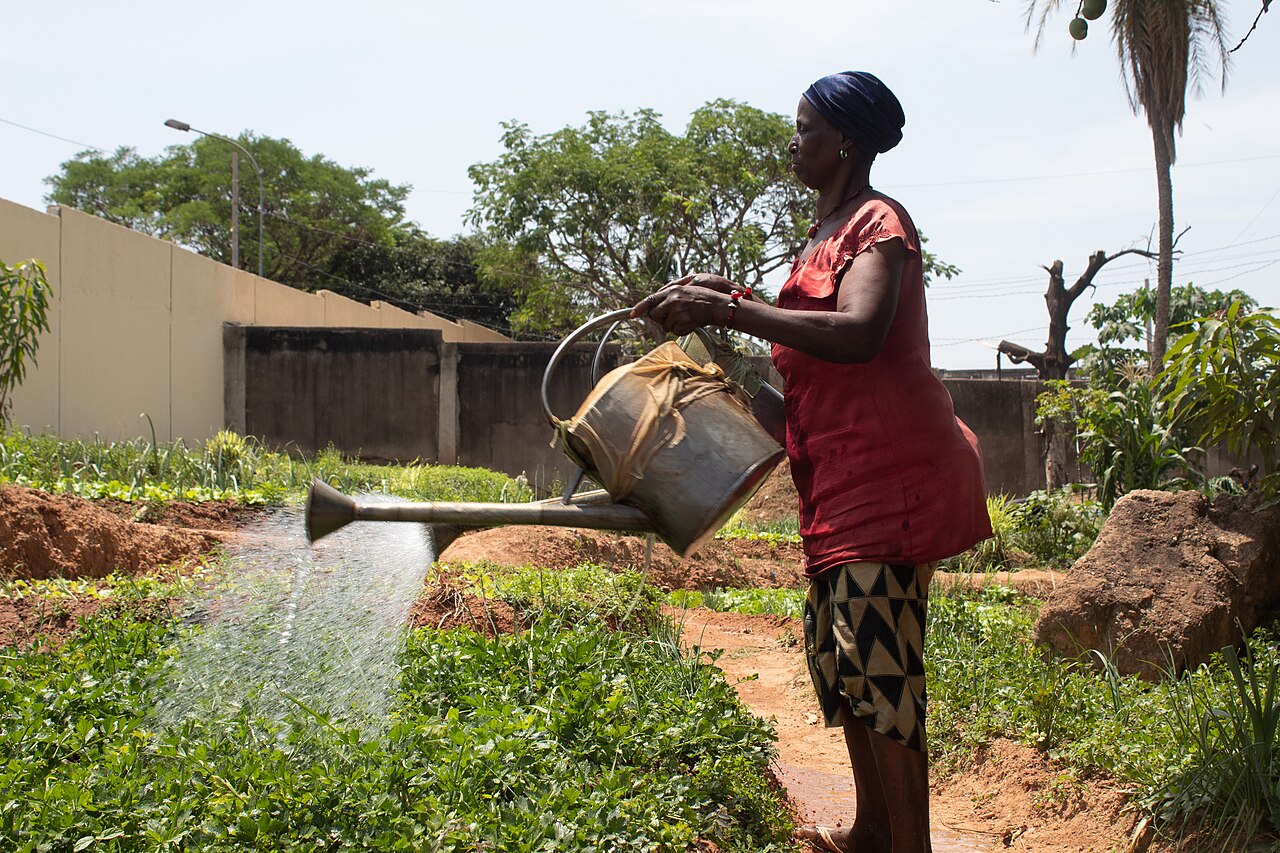
Water: a vegetable garden being watered with a can. Plants take in the water with their roots.. Photo: Arrosage manuel d'un jardin potager, Palmolley, CC BY-SA 4.0, modified: reduced in size 5. From seed to plant
A plant starts as a seed. In damp warmth the seed sprouts. First the root grows, then the stem and the first leaves. The plant grows, flowers and makes new seeds.
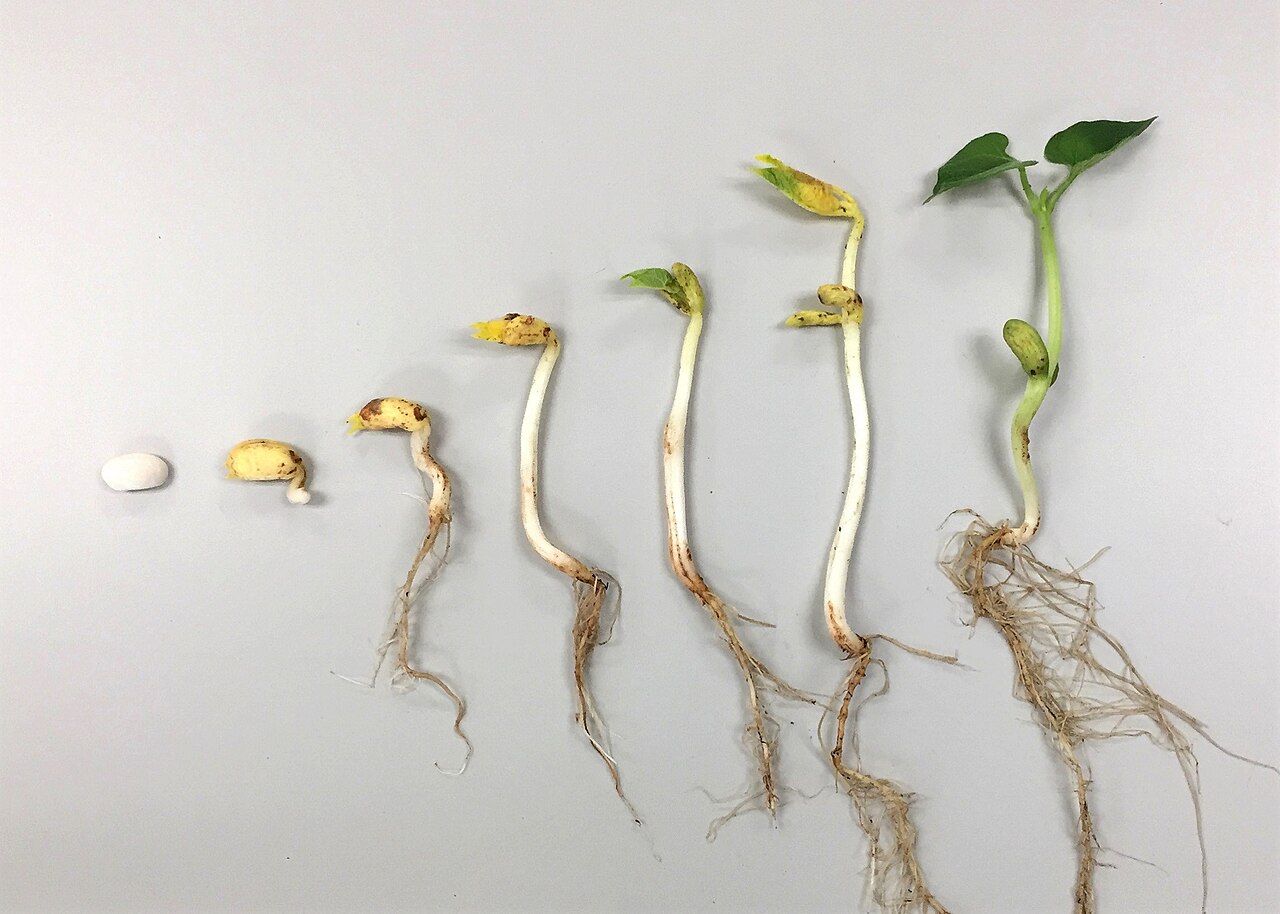
The bean sprouts: first a root grows out of the seed, then the stem and the first leaves.. Photo: Navy Bean Seed to Seedling Germination, B. Domangue, CC BY-SA 4.0, modified: reduced in size 6. Pollination and the journey of seeds
An insect carries pollen from flower to flower. This is called pollination. After that the flower develops into a fruit with seeds inside. Seeds are spread by the wind, by animals or by water.
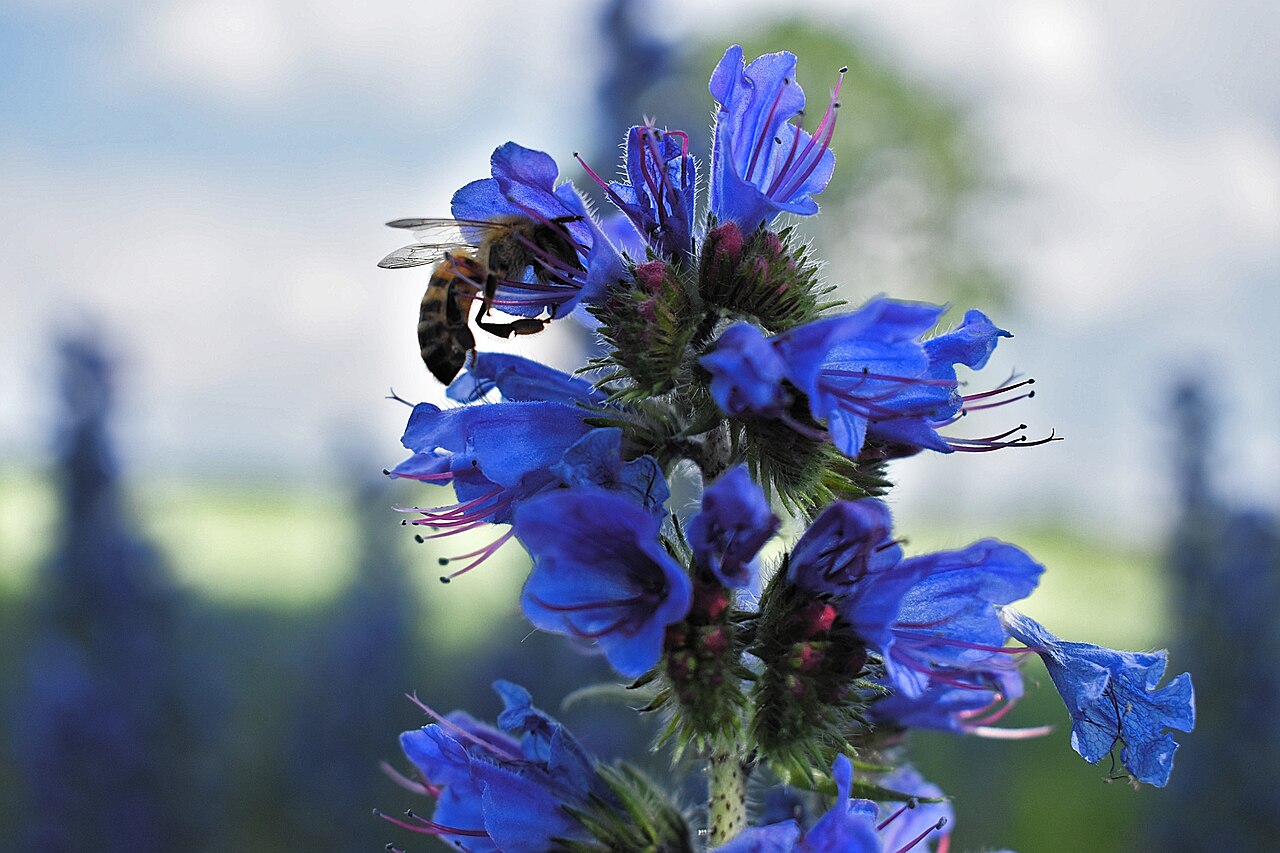
Pollination: the bee collects pollen and nectar from the flower. Pollen sticks to its hairs and is carried to the next flower.. Photo: Apis mellifera on an Echium vulgare, Emilia Jukowska, CC BY 4.0, modified: reduced in size 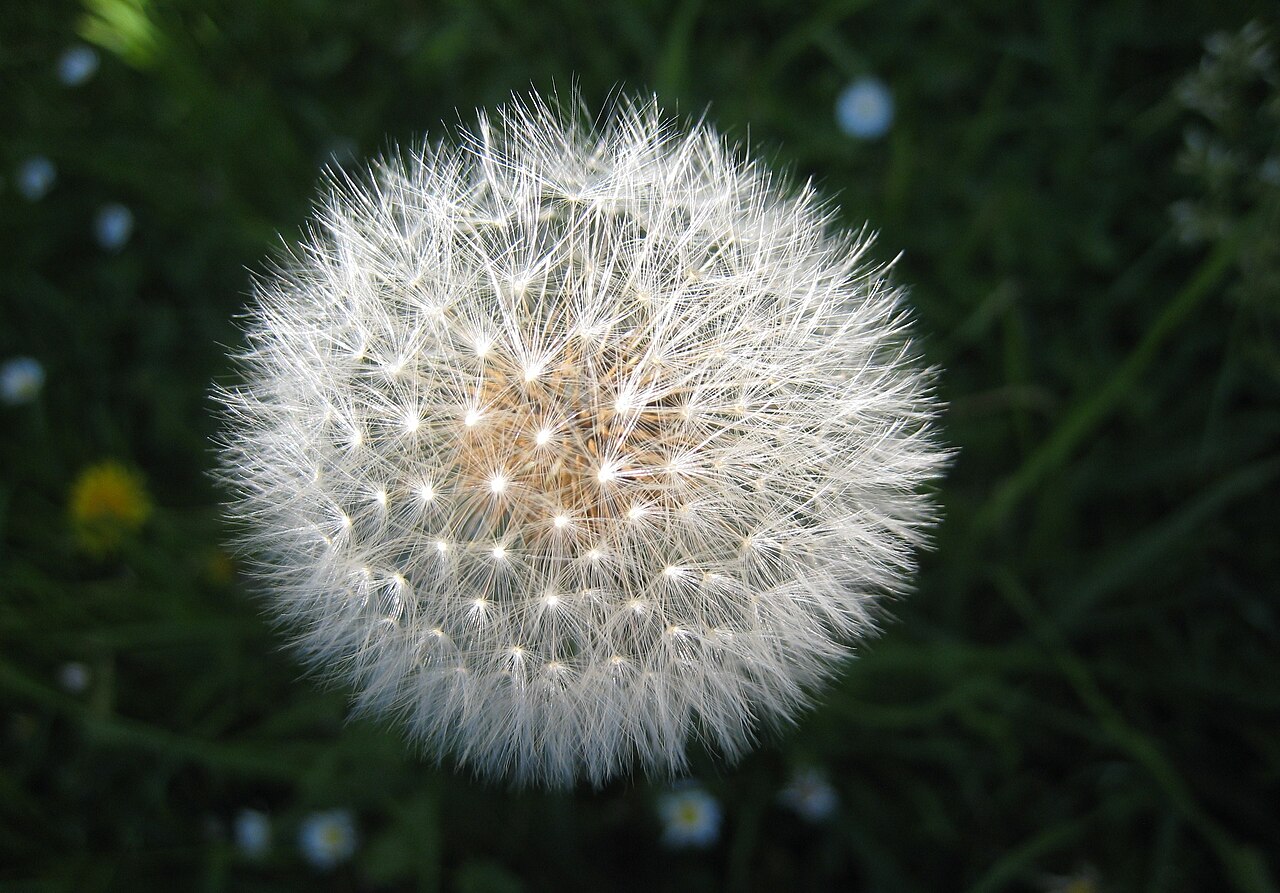
Wind: each dandelion seed has a white tuft that works like a parachute. The wind carries the seeds far away.. Photo: Dandelion seed head (Taraxacum officinale), Avenue, CC BY-SA 4.0, modified: reduced in size 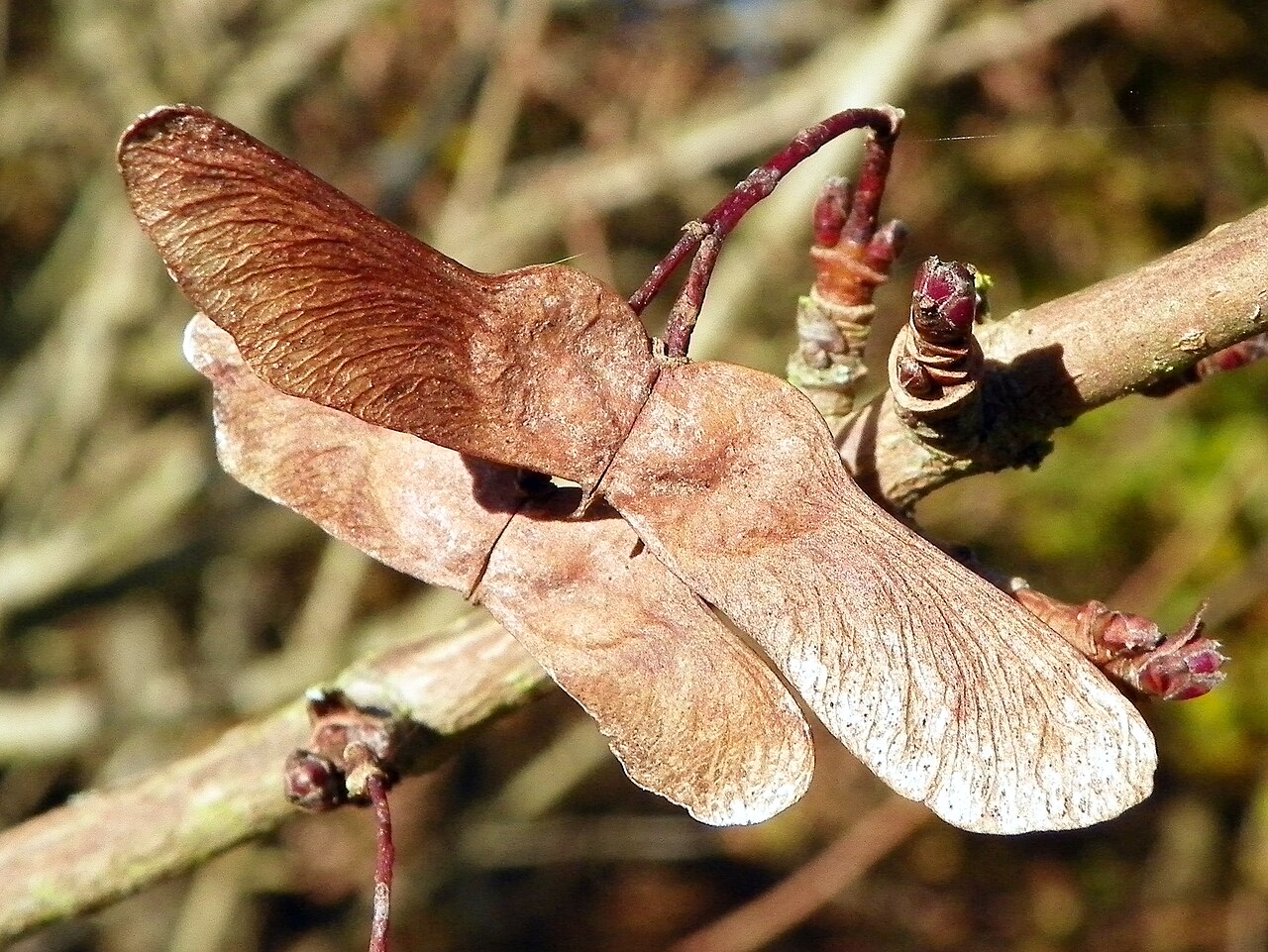
Wind: maple fruits have wings. As they fall they spin and glide further away from the tree.. Photo: Field Maple (Acer campestre) fruit (8252600646), AnemoneProjectors, CC BY-SA 2.0, modified: reduced in size 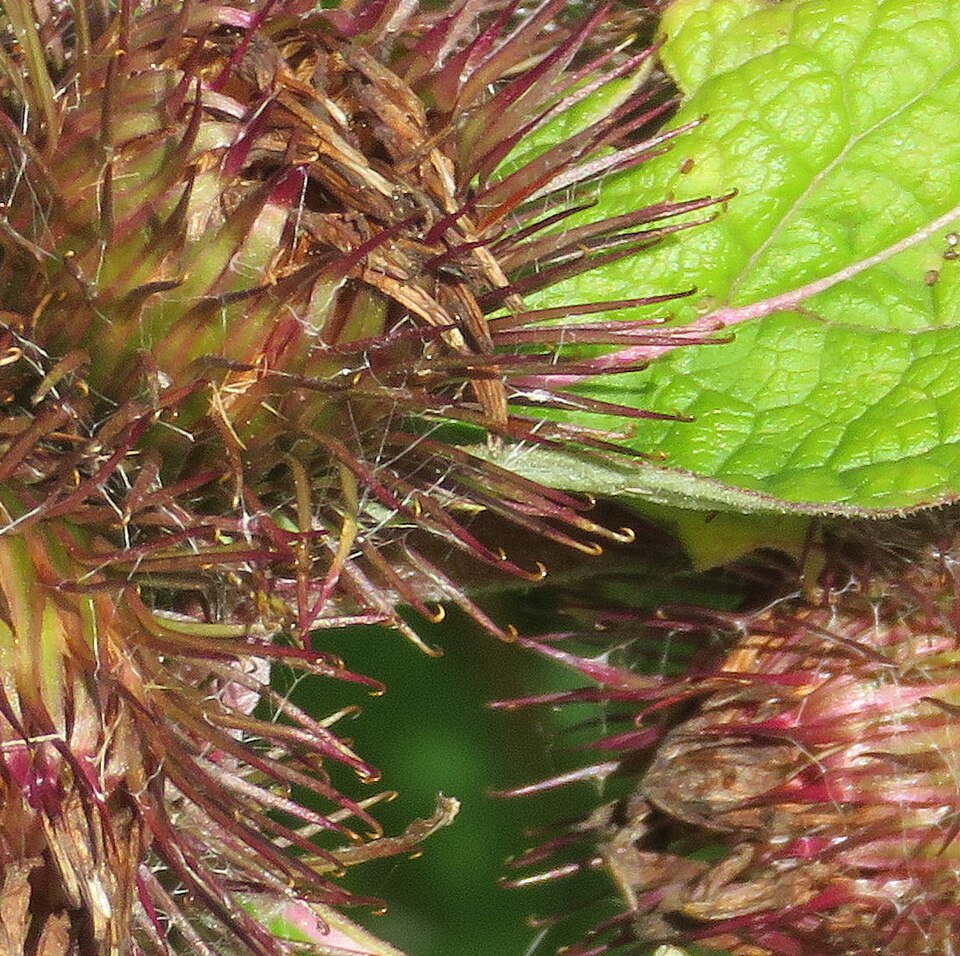
Animals: the spines of burdock have tiny hooks. They stick to fur or clothes, and the seeds travel along.. Photo: Burdock burrs - detail of hooks - geograph.org.uk - 6577174, M J Richardson, CC BY-SA 2.0, modified: reduced in size 7. Try it yourself: the bean sprouts
Put damp cotton wool and a bean against the glass in a jar.
Keep the jar light and warm. Wet the cotton wool when it dries.
Make an observation table: day, root, stem and leaves.
Discuss: What would happen if one jar stood in the dark?
Discuss: Why do people and animals need plants?


Summary
A plant has four main parts. The roots hold the plant in place and take in water and nutrients. The stem carries the leaves and flowers up and carries water. The leaf makes food from light, water and carbon dioxide. Seeds develop from the flower, and new plants grow from them.
Frequently asked questions
Does a plant eat soil?
No. The plant makes its own food in its leaves with the help of light. The roots take in water and nutrients from the soil, which help the plant grow.
Why are leaves green?
Leaves contain chlorophyll. It catches the light when the leaf makes food. In autumn the chlorophyll breaks down, and the leaves turn yellow or red.
Why do we need plants?
Plants make oxygen, which people and animals breathe in. They are food for many animals and people. Many animals also live in plants or in their shelter.
Related content
Try exercises
Have you taught this topic? Create an exercise on it for your class.