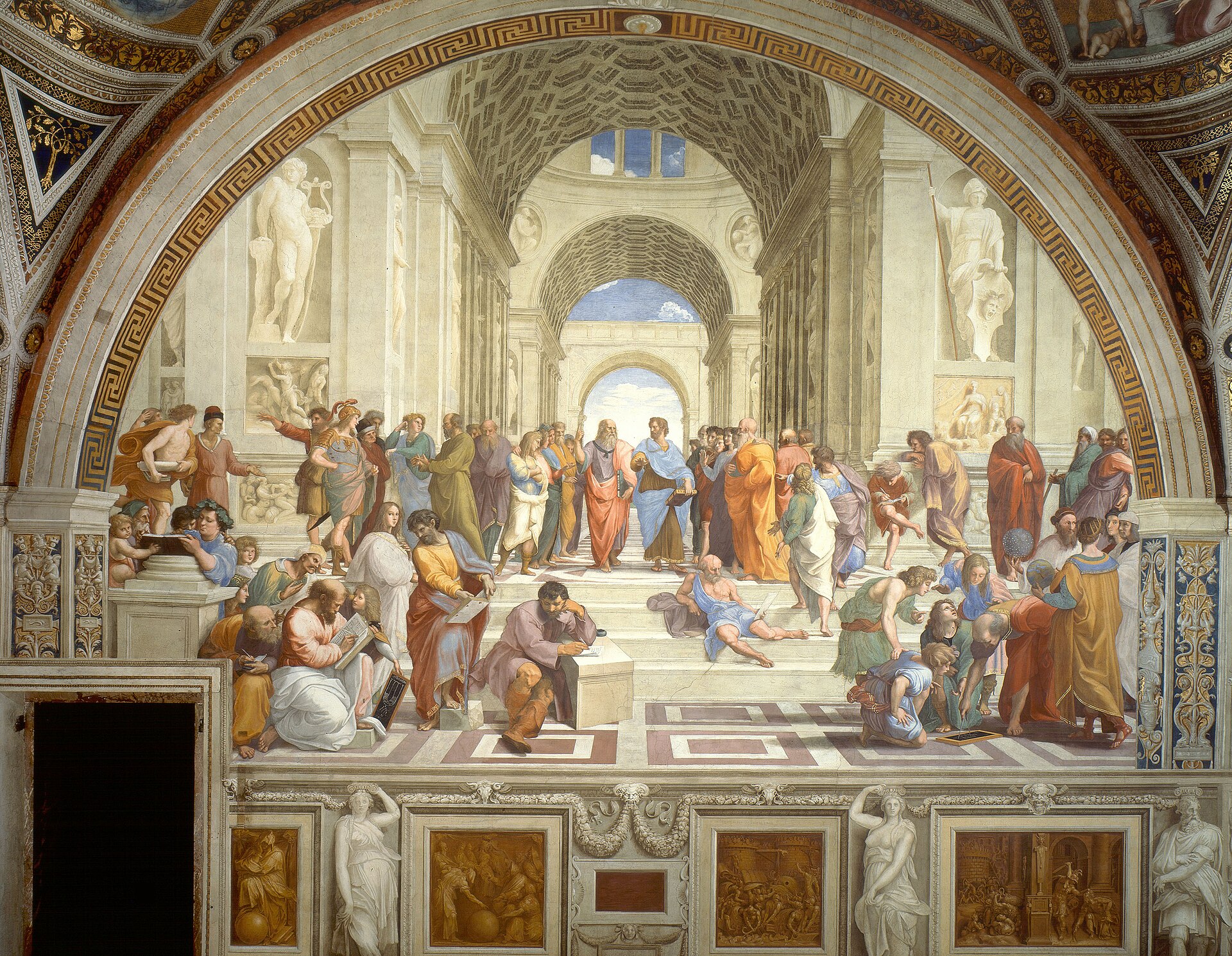

Perspective in art: teaching, slides and questions
How artists have shown depth from classical antiquity to today: vanishing point, horizon and aerial perspective, explained through real artworks.
Perspective is the artist's way of making a flat picture look deep. This article first explains how it works and then goes through how space has been shown from classical antiquity to today. The Renaissance is one chapter: that is when linear perspective was invented. Each step can be shown to the class as a slide.
At the end, students know the words horizon, vanishing point and aerial perspective, can draw a road using one vanishing point, and can notice in artworks how the artist has shown depth.
Key concepts
- perspective
 A way of drawing in which faraway things look smaller and lines meet at one point. Brunelleschi worked out the rules of linear perspective in the early 1400s. It gave paintings a sense of depth.
- linear perspective
 Linear perspective is a way of drawing the impression of depth on a flat sheet of paper. Things that are far away are drawn smaller and seem to move towards a single point.
- horizon
 The horizon is the distant line where land or sea seems to meet the sky. You can never reach it, because it moves further away as you go towards it.
- painter
 An artist who paints pictures. Renaissance painters learned to show people, light and depth more realistically than before. Famous Renaissance painters were Leonardo da Vinci, Michelangelo and Raphael.
- Renaissance
 The Renaissance was a cultural period that began in Italy in the 1300s and spread to the rest of Europe in the 1400s and 1500s. The word means rebirth, because people began to study the science and art of antiquity again. Its best-known artists include Leonardo da Vinci and Michelangelo.
- Middle Ages
 The Middle Ages is the period of European history between antiquity and the early modern period, from about 500 to 1500. The Church had great power then, and most people lived from farming. In Finland the Middle Ages are considered to have begun only in the 1100s or 1200s.
- classical antiquity
- Classical antiquity is the era of ancient Greece and Rome around the Mediterranean, from about 800 BCE to 500 CE. Democracy, philosophy and Roman law, among other things, developed then. Its legacy still shapes European culture.
- mountain
 A high, steep rise of land. The world's highest mountain is Mount Everest.
Related exercises
1. How does a flat picture get depth?
Look at the title picture: is the hall flat or deep?
What makes it look deep?
Are the faraway people bigger or smaller than the ones close by?
Did all painters show space in the same way even a thousand years ago?2. Perspective: how depth is drawn
Perspective means showing depth on a flat picture. Things far away look smaller, and things close by cover part of what is farther away. Parallel lines, such as rails, seem to meet at a vanishing point on the horizon.
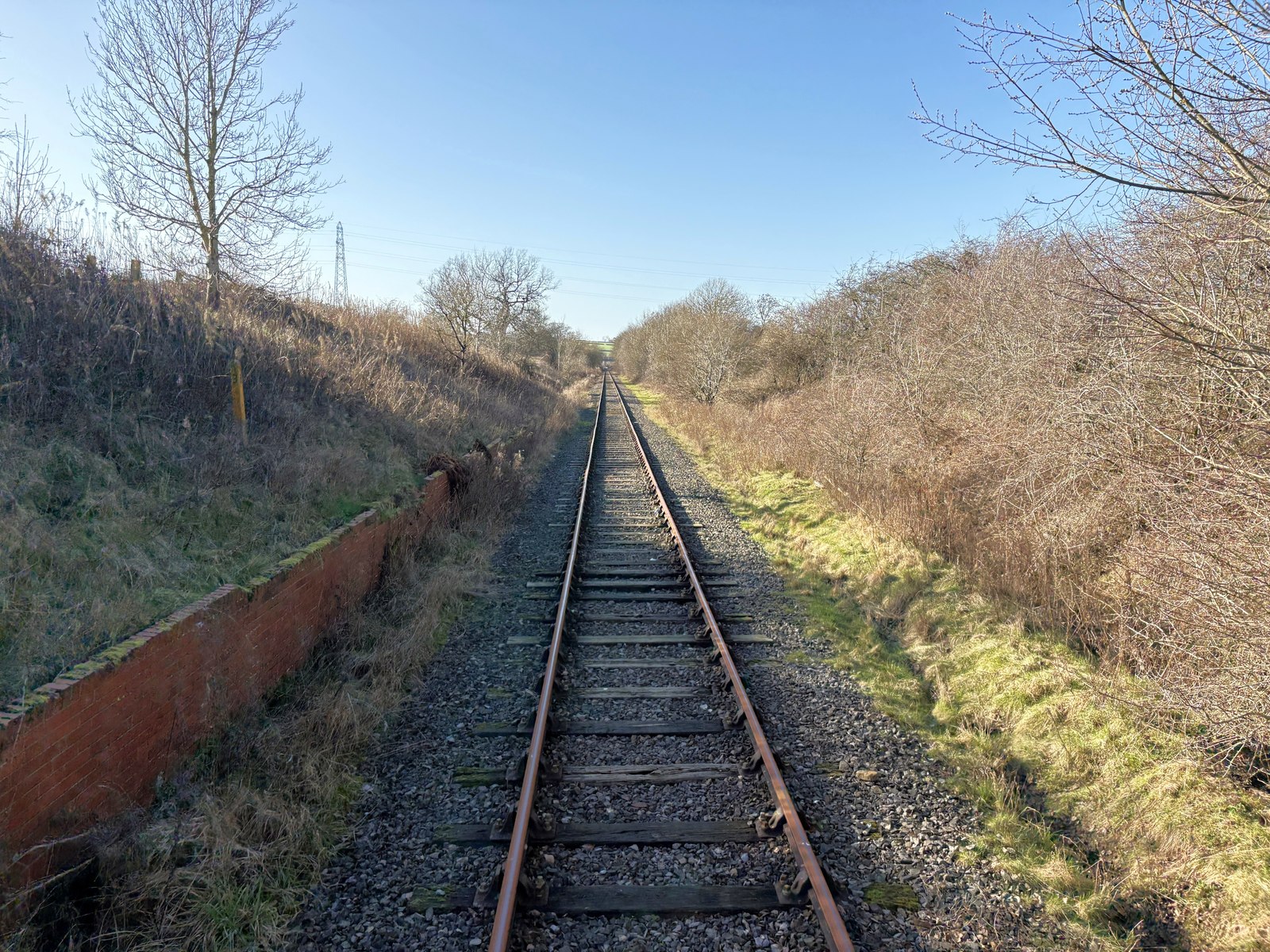
A straight railway near Escomb, England. The rails are parallel but seem to meet in the distance.. Photo: Weardale Railway - straight track near Escomb, Nigel Thompson, CC BY-SA 2.0, modified: reduced in size 3. Before perspective: antiquity and the Middle Ages
The Romans of classical antiquity painted buildings on walls that look deep, but there was no single shared rule. In the Middle Ages a picture did not have to look like real space: the most important figure was painted biggest and the background was often gold.
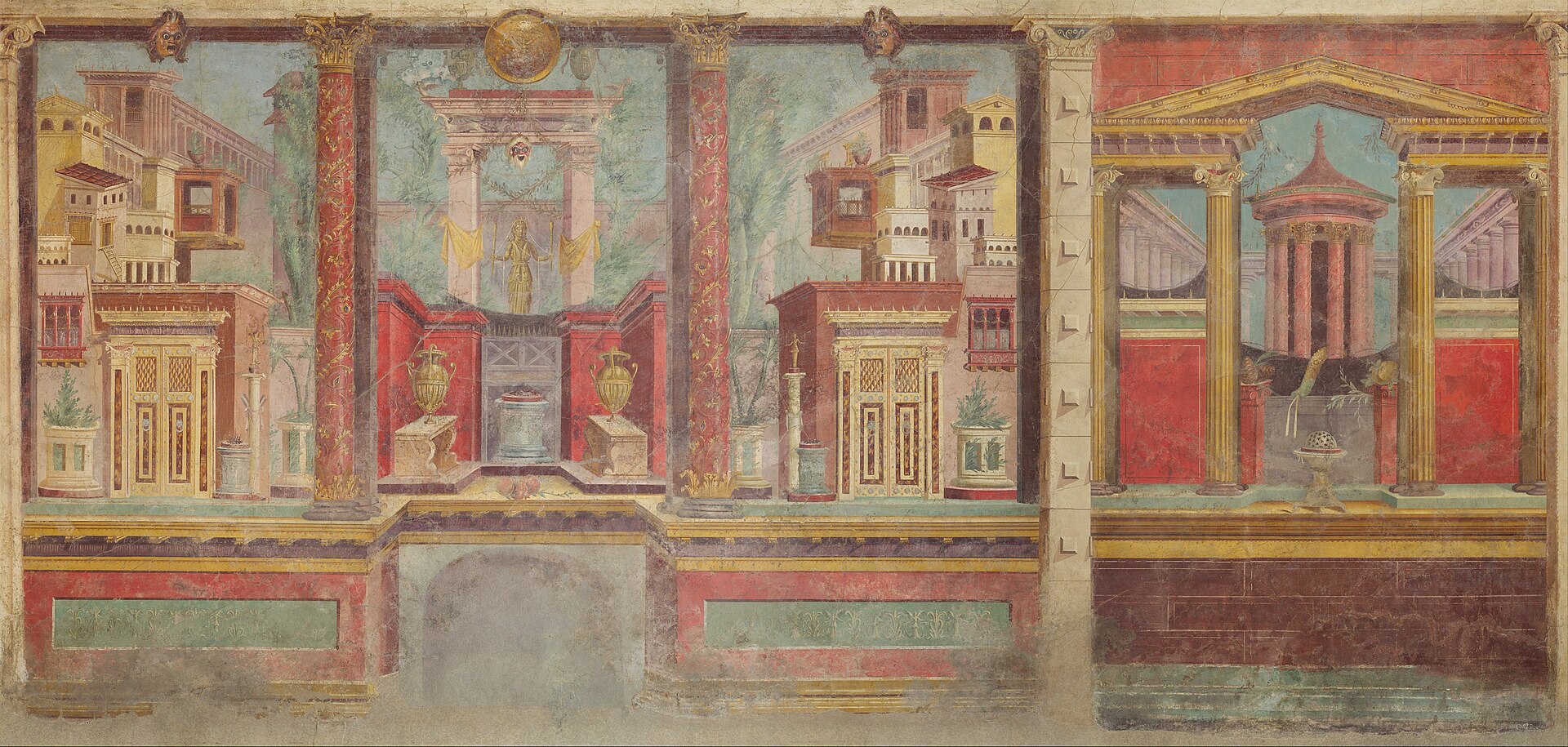
Roman wall painting from Boscoreale (c. 50–40 BCE). The buildings look deep, but the whole wall has no single shared vanishing point.. Photo: Cubiculum (bedroom) from the Villa of P. Fannius Synistor at Boscoreale, Tuntematon roomalainen maalari (Metropolitan Museum of Art), CC0, modified: reduced in size 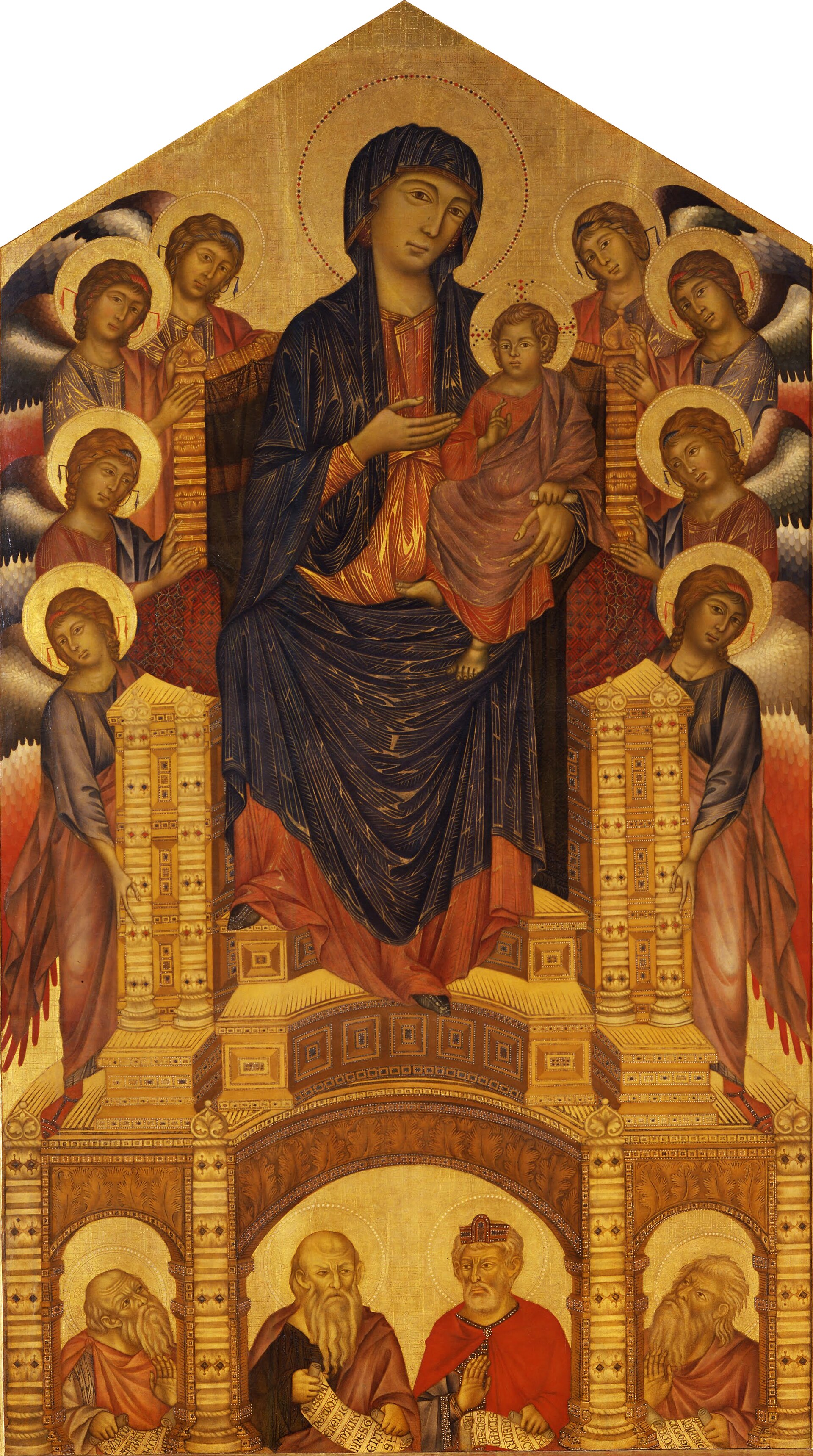
Cimabue: Madonna and Child Enthroned (c. 1290). Mary is the biggest, the angels are smaller and the background is gold.. Photo: Maestà di Santa Trinita (n. 1290), Cimabue, Public domain, modified: reduced in size 4. The Renaissance invents linear perspective
In Florence, painters and architects began to study how lines meet in the early 1400s. Linear perspective is a way of drawing depth with rules, and with it all the lines lead to one vanishing point.
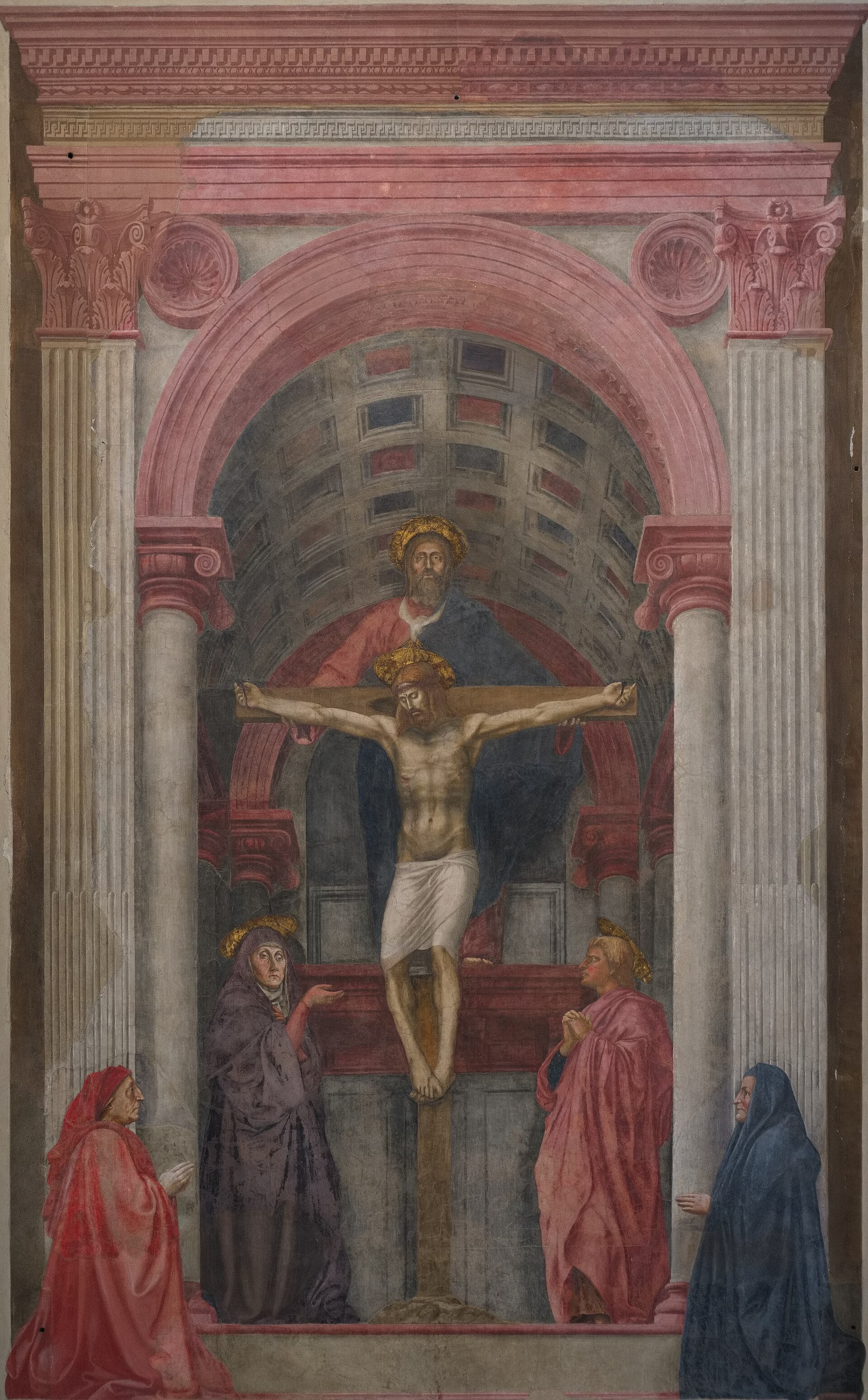
Masaccio: Holy Trinity (c. 1425–1428), Florence. The coffers of the vault get smaller, and the vault seems to continue into the wall.. Photo: Holy Trinity (n. 1425–1428), Masaccio, Public domain, modified: reduced in size - c. 1415–1420 Brunelleschi experiments: The architect studies in Florence how a building looks when it is drawn.
- c. 1425–1428 Masaccio paints: The vault seems to continue into the wall.
- 1435 Alberti writes the rules: The book De pictura explains how a picture is drawn.
5. A vanishing point in a real painting
Perugino painted the squares of the floor so that the lines lead to the door of the temple. That is the vanishing point. The horizon runs at the same height. The people in the foreground are big and the faraway ones small.
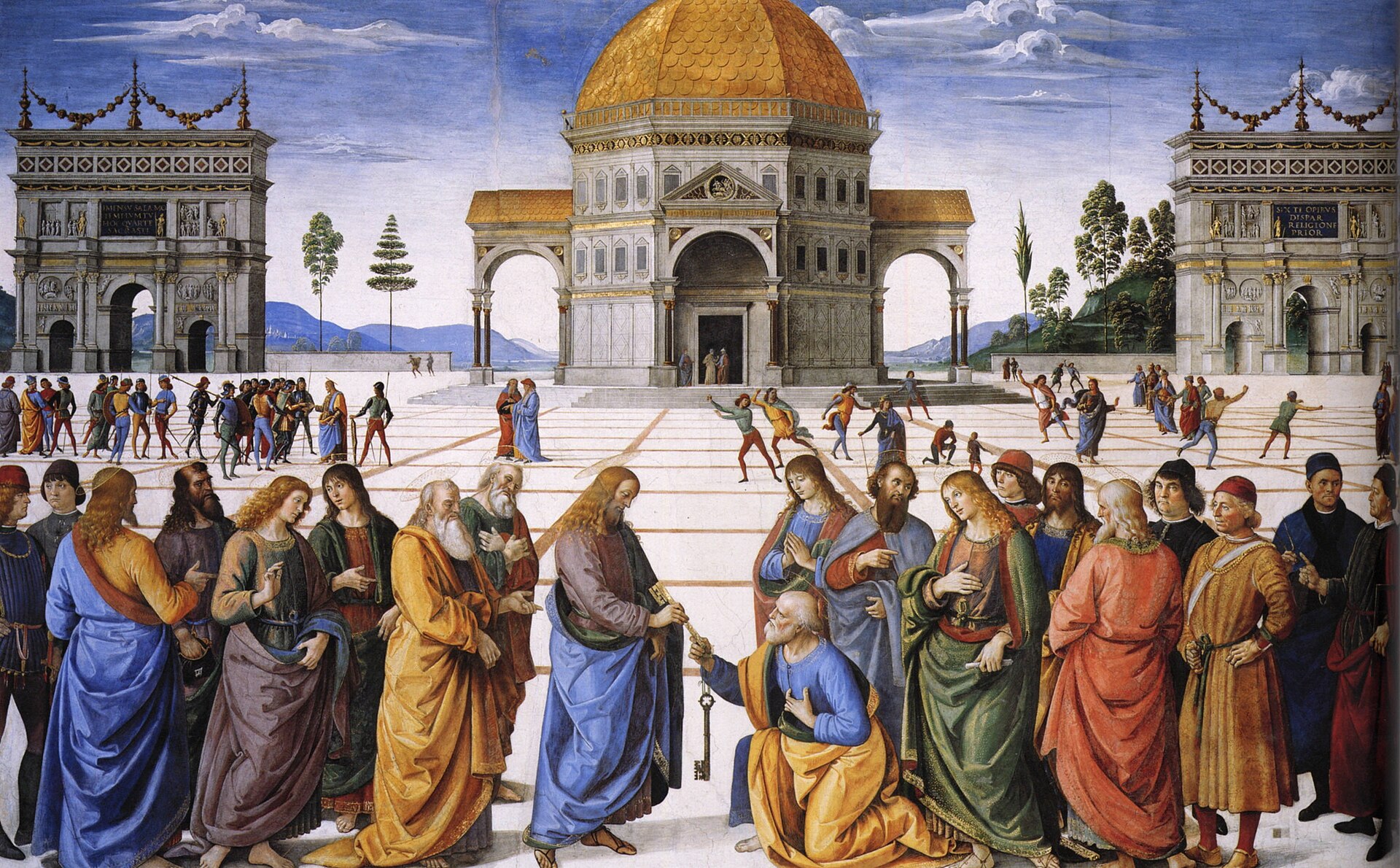
Pietro Perugino: Delivery of the Keys (1481–1482), Sistine Chapel, Rome. The lines of the floor meet at the door of the temple.. Photo: Christ Handing the Keys to St. Peter (1481–1482), Pietro Perugino, Public domain, modified: reduced in size 6. Other ways to show depth
Leonardo made faraway mountains paler and bluer: that is aerial perspective. In Chinese painting, the farther away something is, the higher it often is placed. Cézanne did not care about a single vanishing point: the edges of his table do not continue in straight lines.
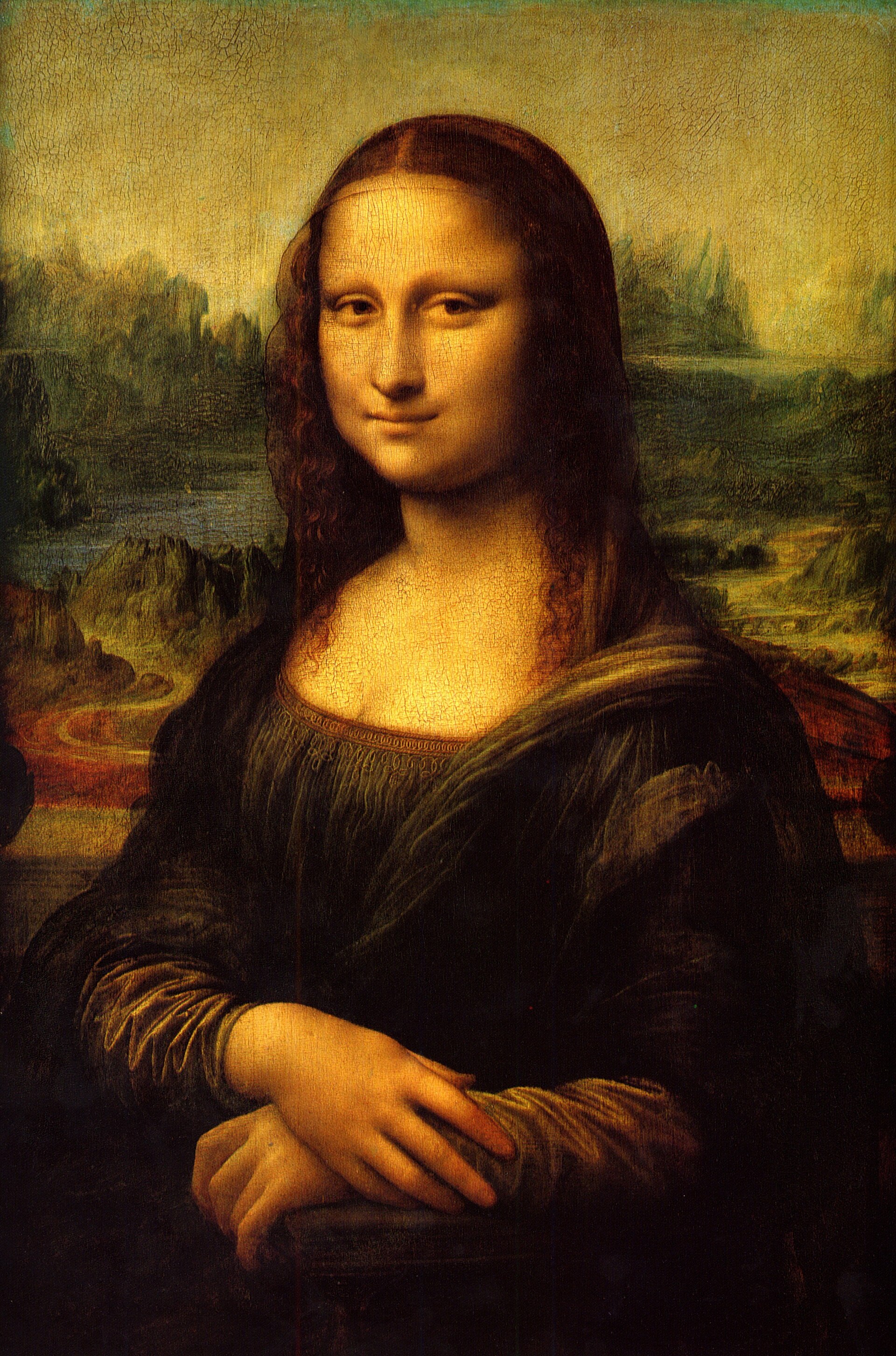
Leonardo da Vinci: Mona Lisa (begun c. 1503). The faraway landscape is paler and bluer than the figure. Old varnish has turned the colours yellow.. Photo: Mona Lisa, Leonardo da Vinci, Public domain, modified: reduced in size 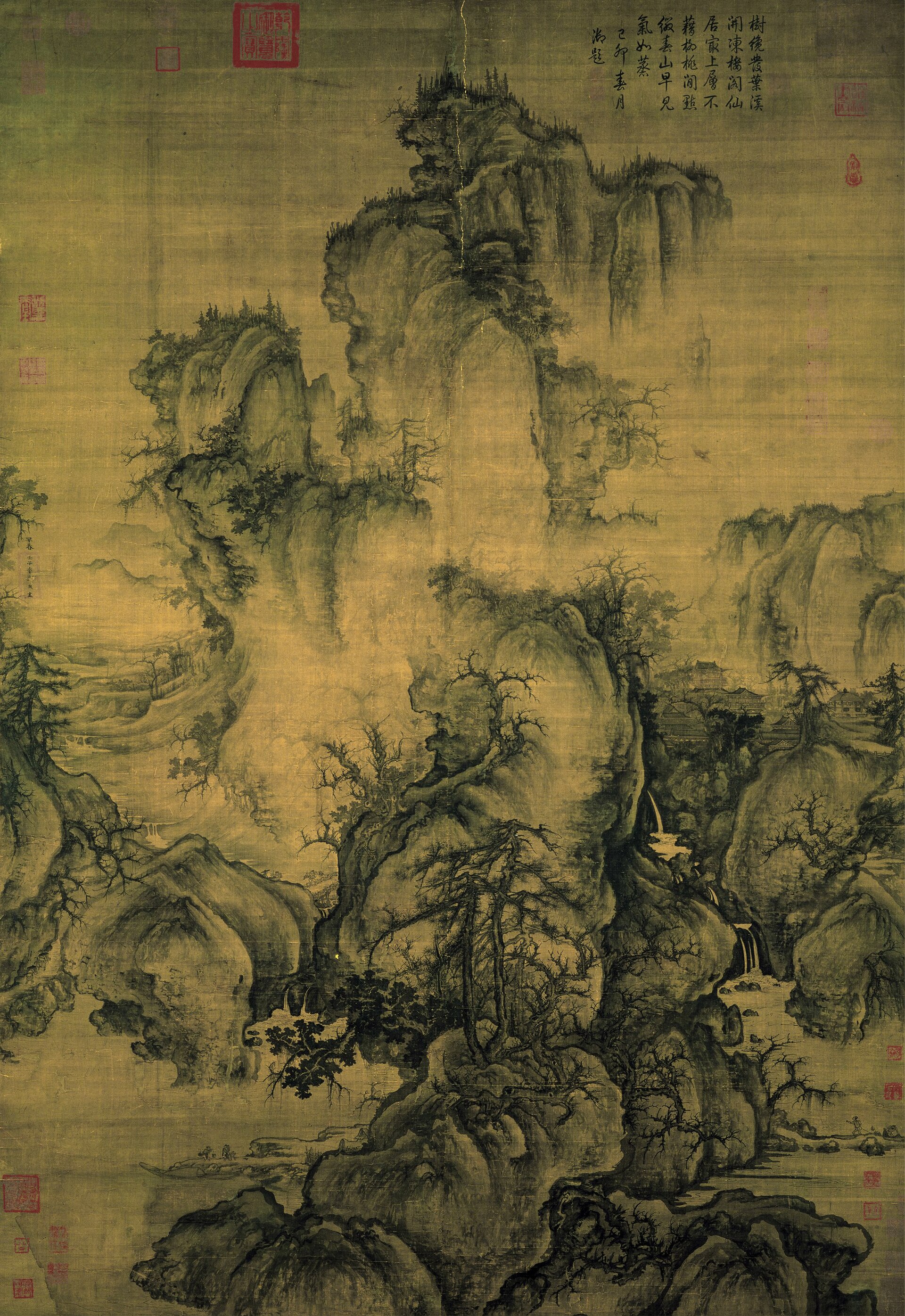
Guo Xi: Early Spring (1072), China. The farther mountains are higher up and fade into mist. The picture has Chinese text and seals.. Photo: Early Spring (1072), Guo Xi, Public domain, modified: reduced in size 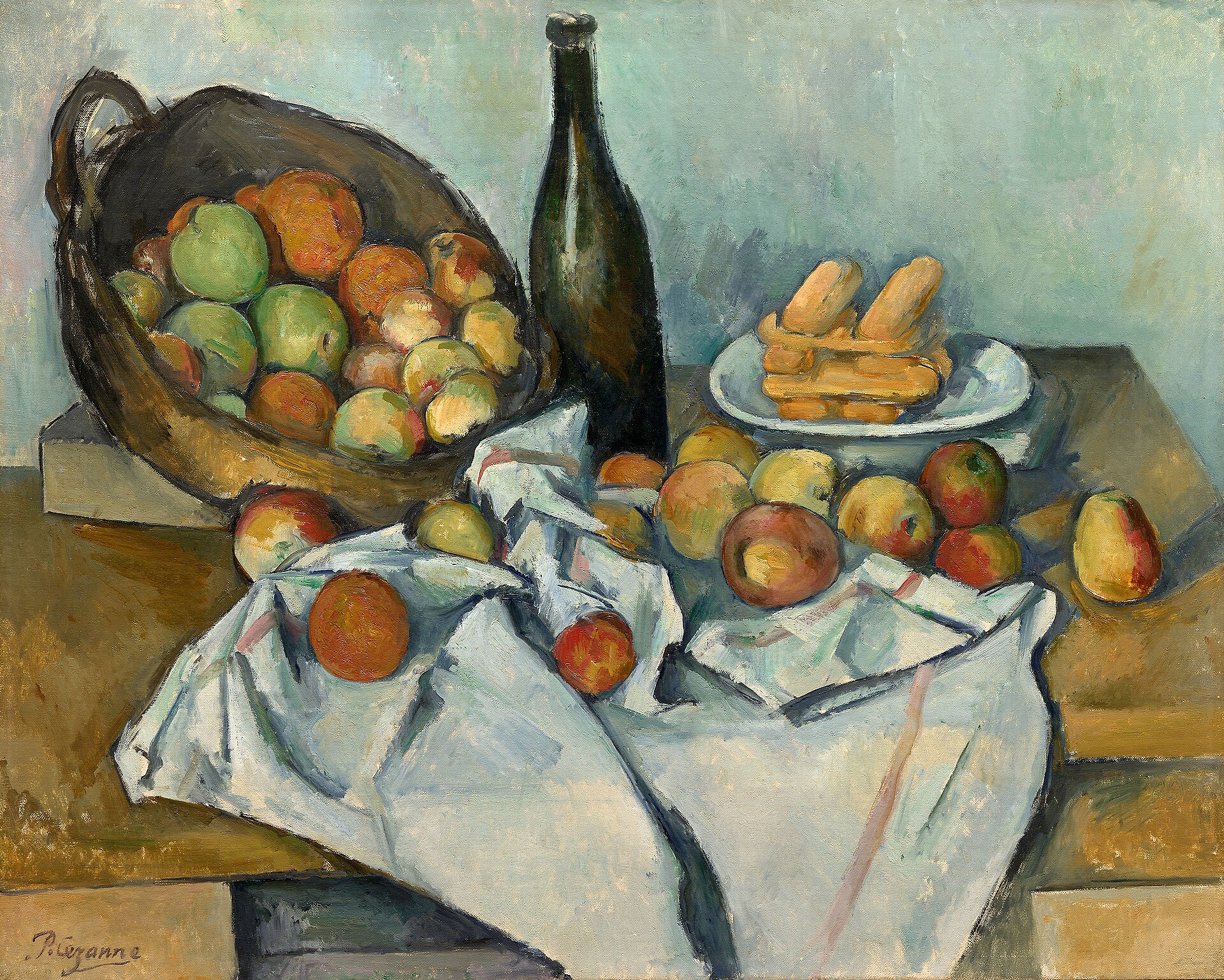
Paul Cézanne: The Basket of Apples (c. 1893). The edge of the table does not continue on the same line on both sides of the cloth.. Photo: The Basket of Apples (n. 1893), Paul Cézanne, Public domain, modified: reduced in size 7. Try it yourself and discuss
Draw a horizontal line in the middle of the paper: it is the horizon.
Mark a vanishing point on the line.
Draw two lines from the bottom edge to the point: a road.
Draw trees beside the road: big ones close by, small ones far away.
What looks far away in Perugino's picture, and why?


Summary
Perspective makes a flat picture look deep. Things far away are smaller, paler and partly covered by things close by. Pictures from antiquity and the Middle Ages had no single shared rule. In the Renaissance, linear perspective was invented in Florence, where parallel lines lead to a vanishing point on the horizon. Elsewhere and later, artists also used other methods.
Frequently asked questions
Why do parallel lines seem to meet?
The farther away something is, the smaller it looks. The gap between the rails also gets narrower. Far away, the gap is so small that the lines seem to join. In reality they never meet.
What is the horizon?
The horizon is the line where the land or sea seems to meet the sky. It is at the same height as the viewer's eyes. The vanishing point is always on the horizon.
Did all artists use linear perspective?
No. In antiquity, in the Middle Ages and in many other cultures, depth was shown in other ways. Even after the Renaissance, an artist could leave the rule out, as Cézanne did.