
The printing press: Gutenberg and the history of books
How were books made before the printing press? Gutenberg, the press and the Gutenberg Bible. Slides and questions for grades 4–6.
Before the printing press, books were written by hand, and there were few of them. Around 1450, Johannes Gutenberg began printing books in Mainz with movable metal type. This article explains how printing worked and how it changed Europe, and it fits history lessons in grades 4–6. Every step can be shown to the class as a slide.
At the end, pupils can tell how books were made before the printing press and what Gutenberg's invention was. They can explain how a letter was cast and how a page was printed. They know that printing spread across Europe within a few decades and that books became cheaper.
Key concepts
- printing press
 The machine Johannes Gutenberg developed in Mainz in the 1450s to print many books quickly. It used movable type, which was put together one page at a time. Printing spread knowledge and helped the Reformation spread.
- inventor
 A person who comes up with new machines. Leonardo da Vinci was a painter and an inventor who drew designs for flying machines, diving gear and war machines, among other things. Most of them were never built in his lifetime.
- Bible
 The Bible is the holy book of Christianity, made up of the Old and New Testaments. The Old Testament is largely shared with Judaism.
- monastery
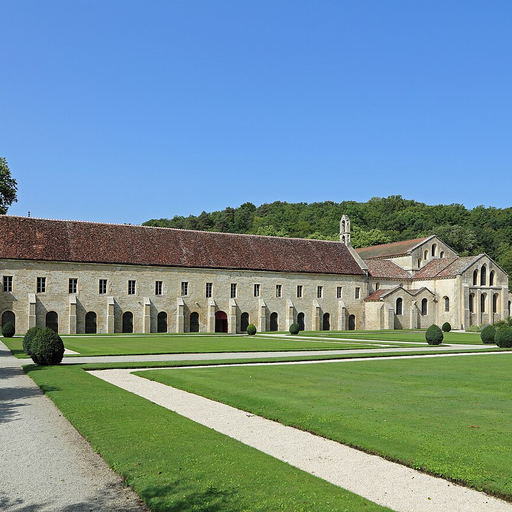 A place where monks or nuns lived, prayed and worked together. Monasteries copied books, cared for the sick and grew gardens. In the Middle Ages there were thousands of monasteries across Europe.
- monk
 A monk is a man who lives in a monastery, praying and working.
- parchment
 Parchment is a writing material made from animal skin. In medieval Europe books and documents were often written on parchment until paper became common. It was expensive but very durable, so many medieval documents have survived.
- newspaper
 A paper that comes out regularly with the news. Before radio and television, newspapers were the most important source of news.
- metal
 A hard, shiny material, such as iron, copper or aluminium.
1. What do you know about books and printing?
How were books made before the printing press?
What did Johannes Gutenberg invent?
How was a letter cast and a page printed?
What did printing change in Europe?2. Before printing, books were written by hand
Before the printing press, every book was written by hand. Monks copied the text in monasteries, word by word, onto parchment, which is animal skin. Making one book took months. So there were few books, and they were expensive. Most people did not own a single book.
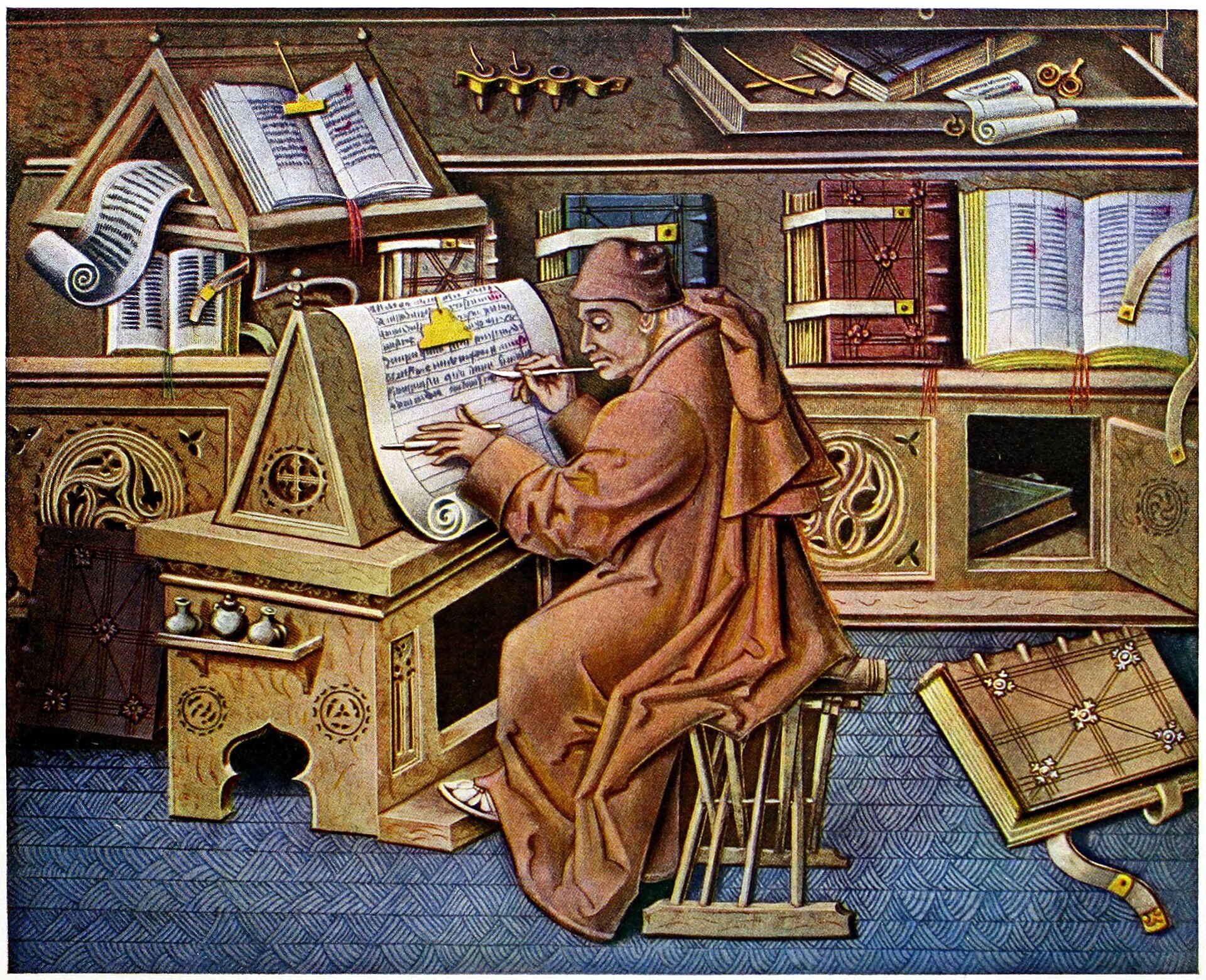
The scribe Jean Miélot writing a book by hand. The picture is a miniature from the 1400s.. Photo: Portrait of Jean Miélot, Jean Le Tavernier, Public domain, modified: reduced in size 3. Gutenberg and the Gutenberg Bible
The German Johannes Gutenberg lived in Mainz. He was a goldsmith and knew how to work metal. Around 1450 he began printing books with movable type made of metal. His best-known work is the Gutenberg Bible from about 1455. An estimated 180 copies were printed, and about 50 survive.
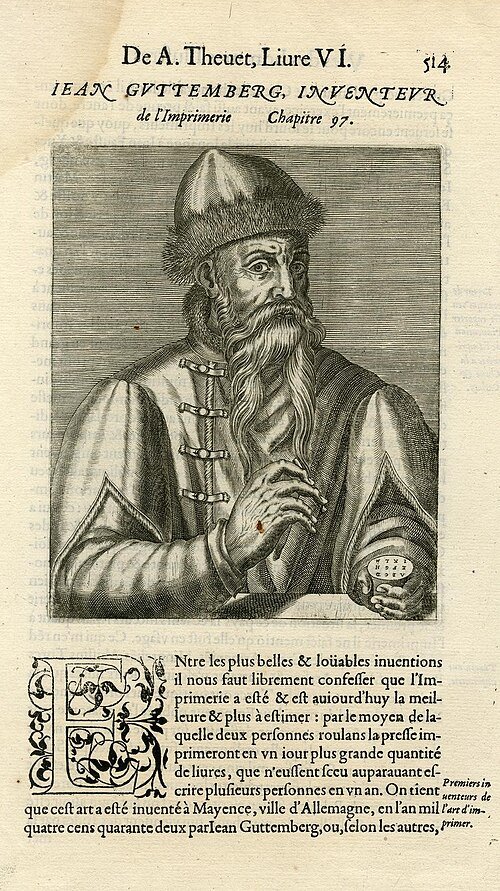
An engraving of Gutenberg in a French book from the 1500s. No portrait of Gutenberg from his own lifetime is known, so the picture is the artist's imagination.. Photo: Iean Guttenberg, Inventeur de l'Imprimerie, Unknown author, Public domain, modified: reduced in size 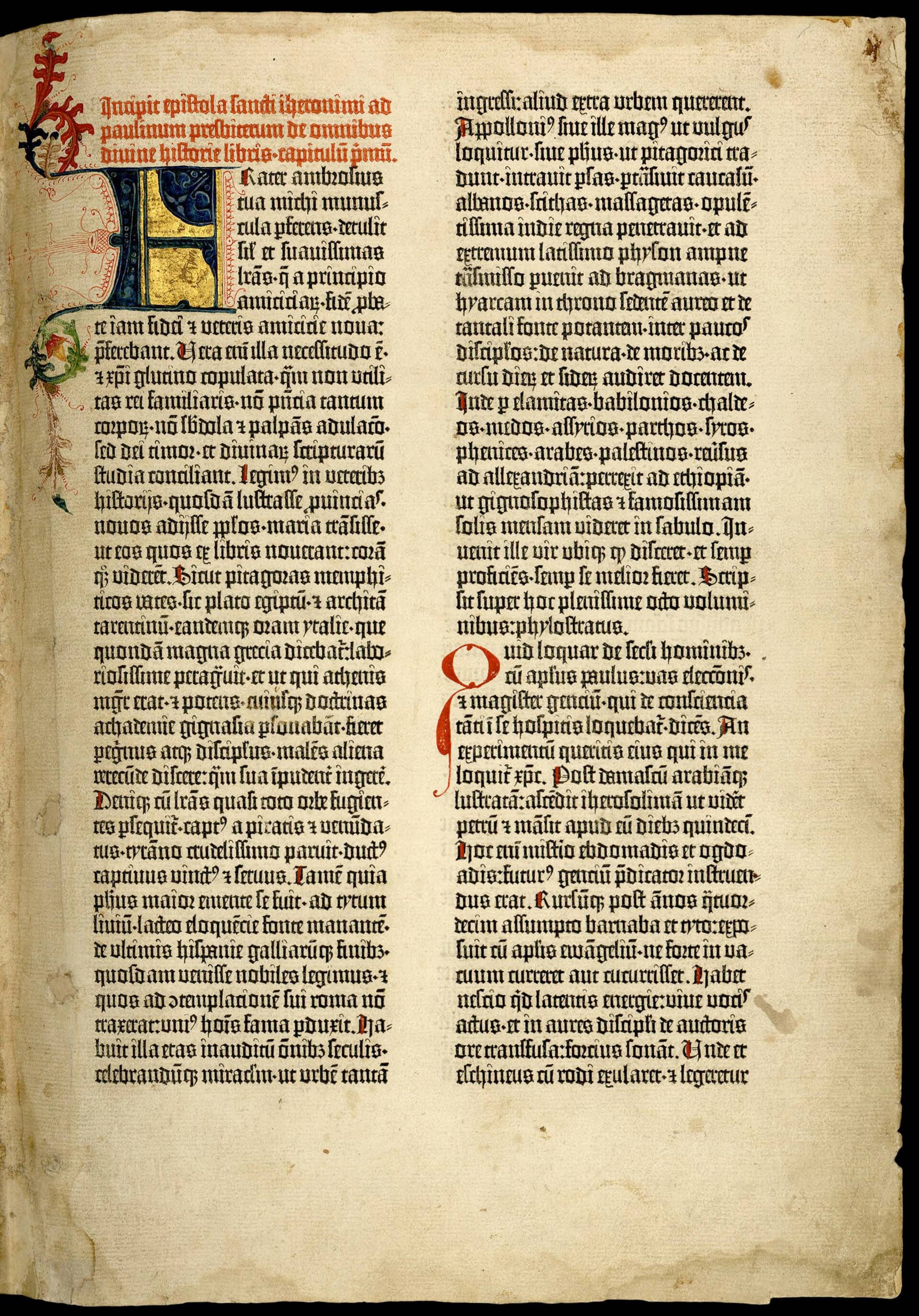
A page from the beginning of the Gutenberg Bible. The text is in Latin. The decorated initial and the red marks were added by hand after printing.. Photo: Gutenberg bible Old Testament Epistle of St Jerome, Johannes Gutenberg, Public domain, modified: reduced in size 4. How a page was printed
Molten metal was poured into a small mould, and out came one letter. The letters were put together into the text of a page, in mirror image. Printing ink was spread on them, and the printing press pressed the paper against the letters. The same letters could print many identical pages.
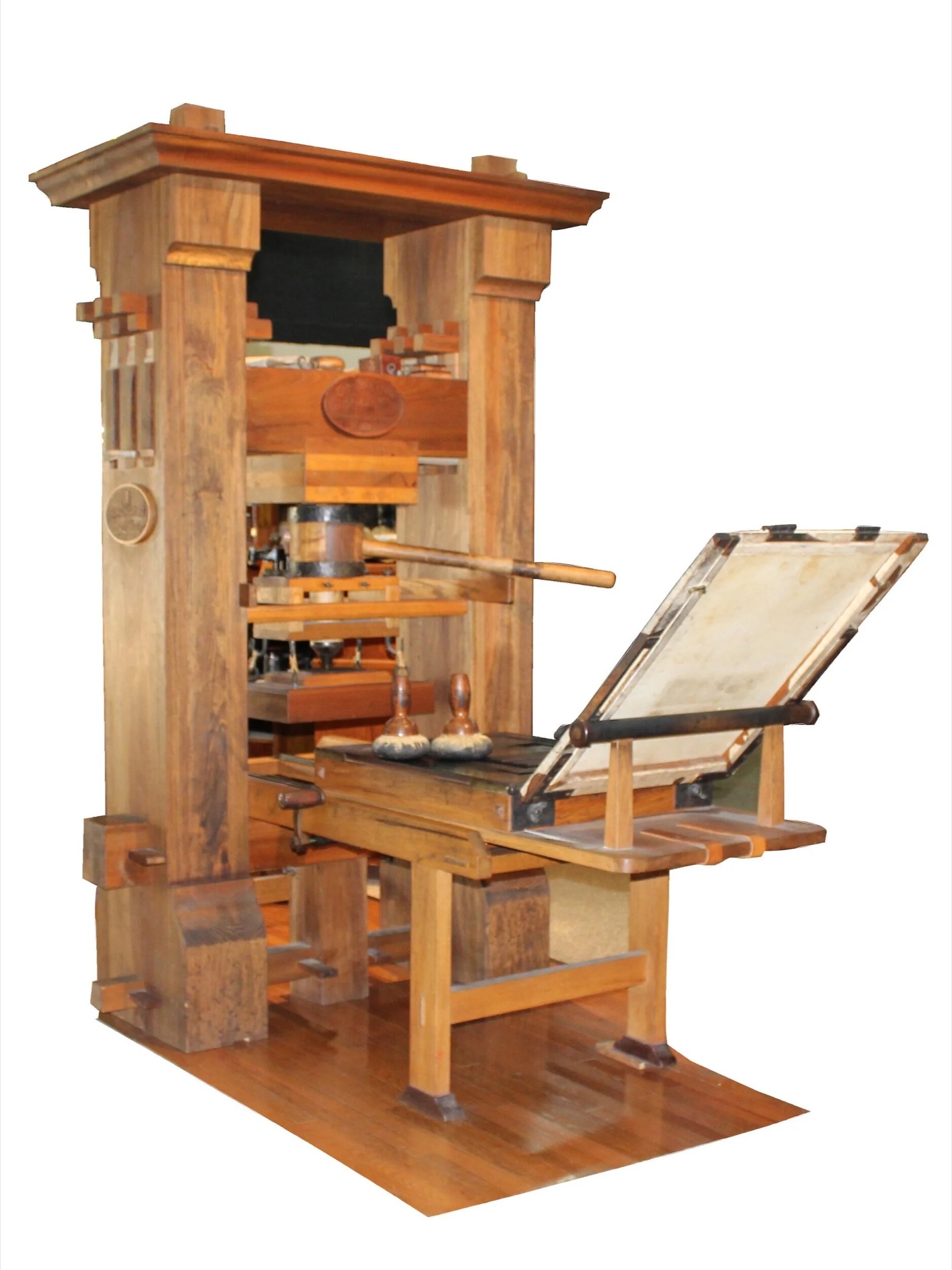
A replica of Gutenberg's printing press at the International Printing Museum. None of Gutenberg's own presses has survived.. Photo: Gutenberg press, International Printing Museum, CC0, modified: reduced in size and converted to JPEG 5. Printing spreads across Europe
Printing spread quickly. From Mainz it reached Italy in 1465, and Venice became an important printing city. In Paris printing began in 1470 and in England in 1476. By 1500 there were printing shops in more than 200 cities.
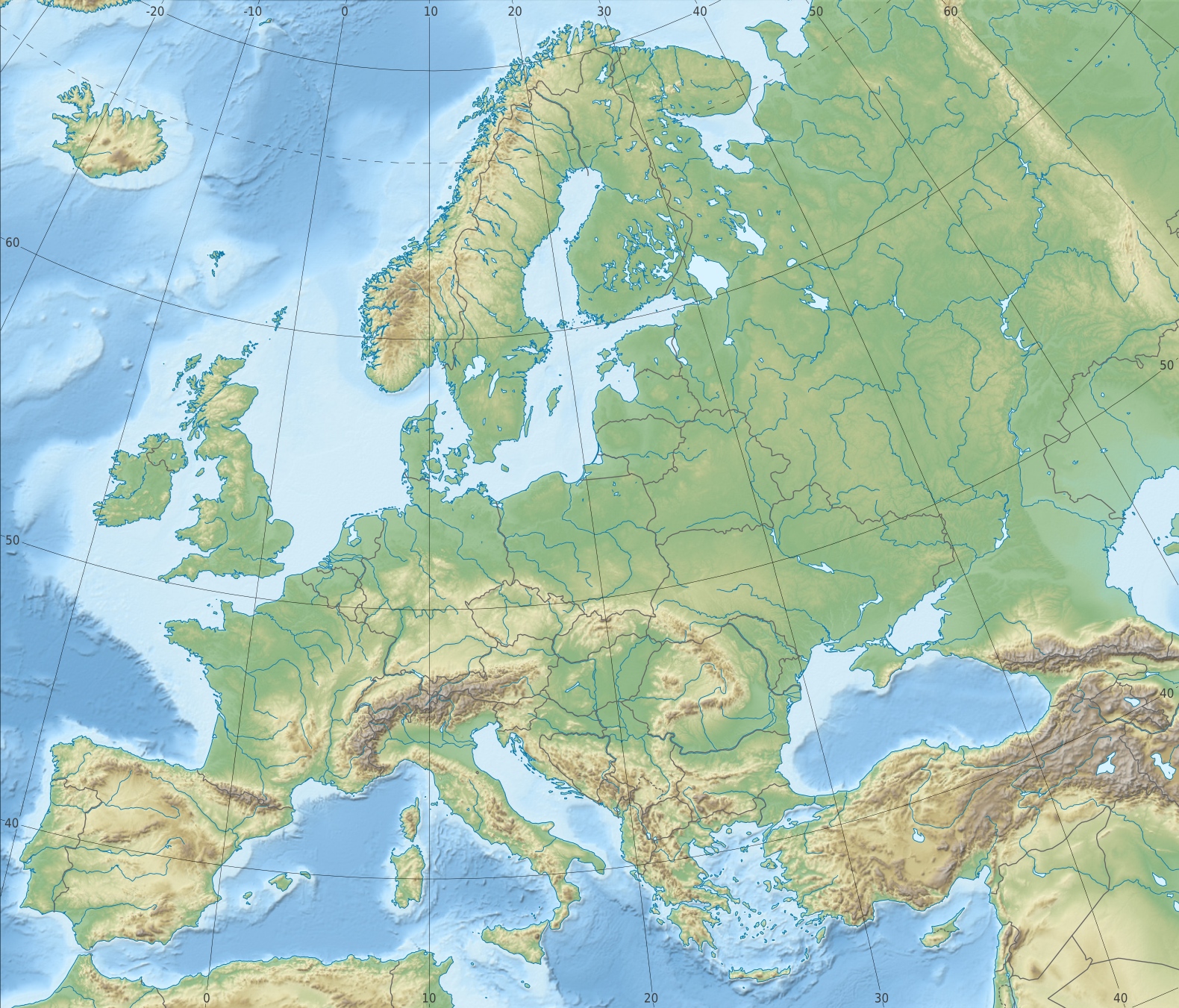
A map of Europe. The dots show where and when printing shops began.. Photo: Europe relief laea location map, Alexrk2, CC BY-SA 3.0, modified: reduced in size 6. What did printing change?
More books were made, and they became cheaper. More people learned to read, little by little. Printed texts carried new ideas, for example during the Renaissance and the Reformation. Books were also printed in people's own languages. At the start of the 1600s the first newspapers appeared.
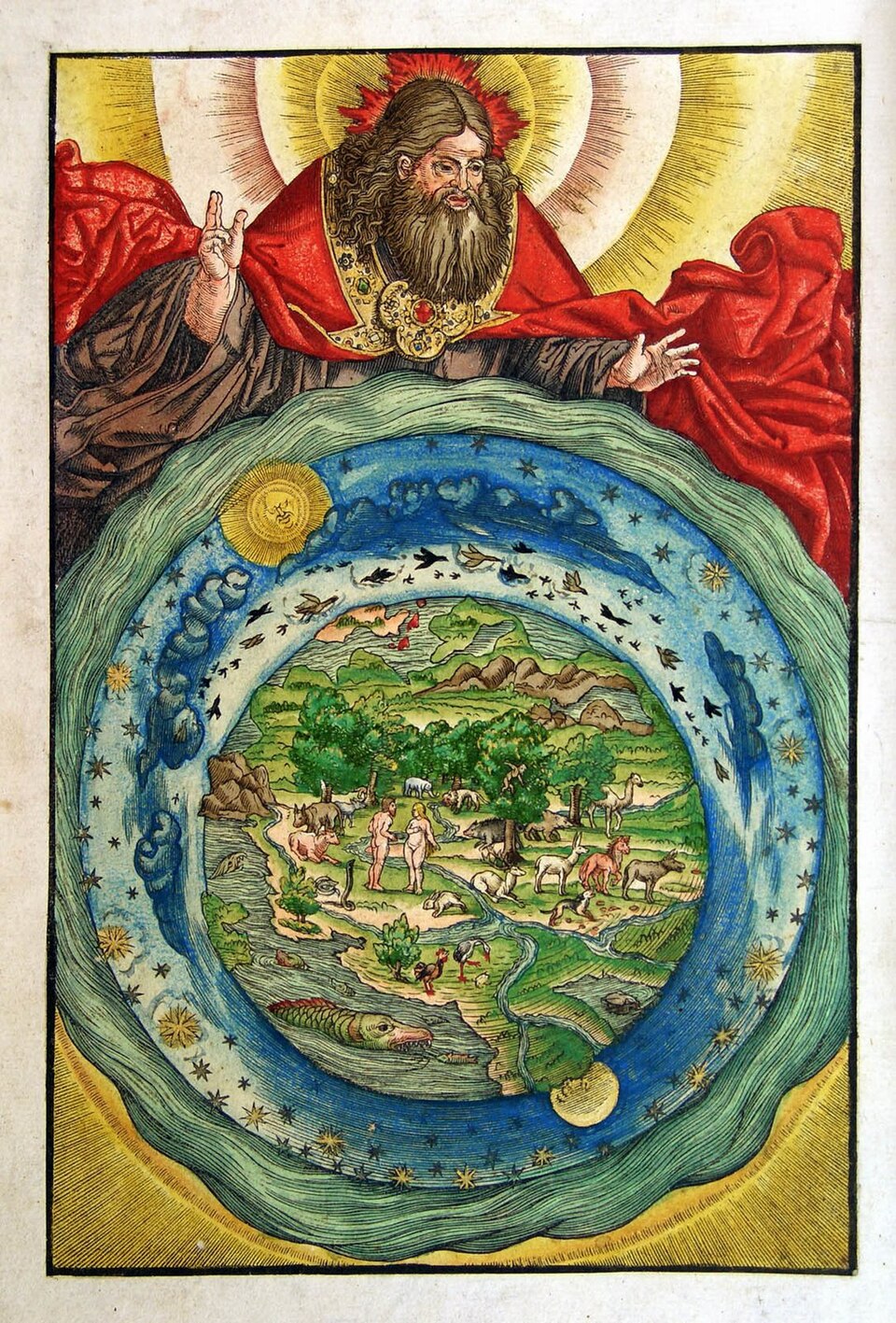
The Creation in Luther's German Bible of 1534. The woodcut comes from Lucas Cranach's workshop, and here it is in colour.. Photo: Creation, Luther Bible 1534, Workshop of Lucas Cranach, Public domain, modified: reduced in size 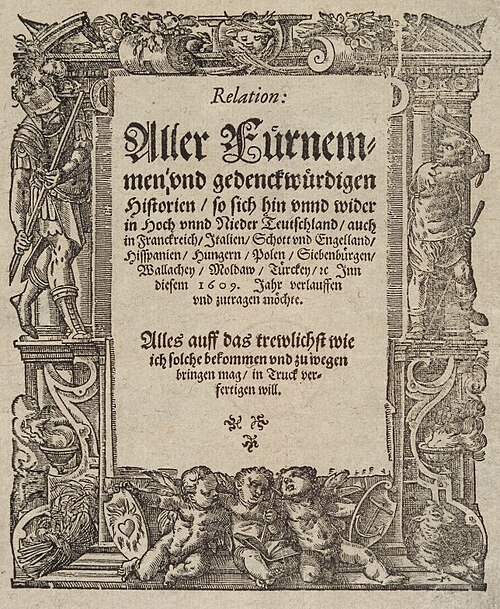
The title page of the newspaper Relation from 1609. It was printed in Strasbourg and is regarded as the world's first newspaper. The text is in German.. Photo: Relation aller Fürnemmen und gedenckwürdigen Historien (1609) (cropped), Johann Carolus; Universitätsbibliothek Heidelberg, Public domain, modified: reduced in size 7. Discuss in pairs
Why were there so few books before the printing press?
How did movable type make books cheaper?
Why did printing spread so fast across Europe?
What did printing change in people's lives?


Summary
Before the printing press, books were copied by hand, and there were few of them. Around 1450, Johannes Gutenberg began printing books in Mainz with movable metal type. The letters were cast in a mould, ink was spread on them, and the printing press pressed the paper against them. The Gutenberg Bible was finished around 1455. Printing shops spread to Italy, France and England, and by 1500 there were some in more than 200 cities. Books became cheaper, and more people read them. The first newspapers appeared at the start of the 1600s.
Frequently asked questions
Was Gutenberg the first to print with movable type?
In Europe he is regarded as the inventor of movable type. In China and Korea, however, movable type was used long before Gutenberg. Gutenberg's way of printing spread quickly across Europe.
Why were printed books cheaper than handwritten ones?
The letters for a page were put together once, and many copies could be printed with them. When copying by hand, every book had to be written out from start to finish. The movable type could also be used again for the next pages.
Were only Bibles printed in Gutenberg's time?
No. Besides the Bible, Gutenberg's workshop is known for Latin grammars and calendars. Later, all kinds of books were printed, for example textbooks.
Related content
Try exercises
Have you taught this topic? Create an exercise on it for your class.