
Roman building: teaching, slides and questions
Roads, bricks and concrete, the arch, the Colosseum, the dome of the Pantheon, the sewer and houses, with Pompeii as an example, with pictures, for grades 4–6.
The Romans built roads, bridges, aqueducts and large arenas. Many buildings still stand. Roman architecture suits history lessons in grades 4–6, and every step can be shown to the class as a slide.
At the end, the pupil can tell why the arch was an important way of building and how the Colosseum and the Pantheon were built. They also know what kind of cities and houses the Romans lived in and what we have inherited from them.
Key concepts
- architecture
 Architecture is the art of designing buildings and other structures. An architect decides what a building looks like and how it will be used.
- Roman road
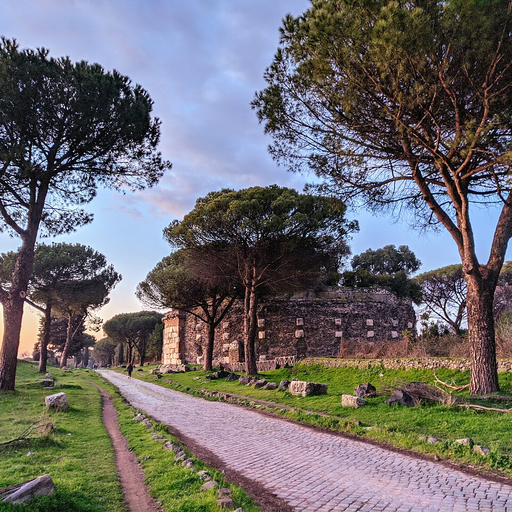 A straight road paved with stones. The Romans built more than 80,000 kilometres of paved roads across their empire so that soldiers and traders could travel fast. The oldest and most famous is the Via Appia, begun in 312 BC.
- aqueduct
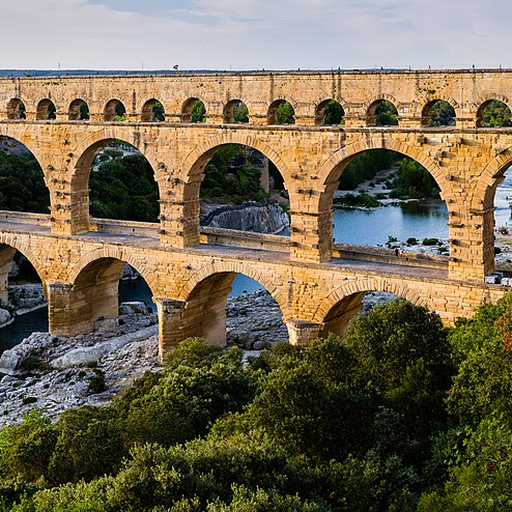 A channel that carried water to a city from far away in the hills. Across valleys the water ran along tall arched bridges, like the Pont du Gard in France. Aqueducts brought water to Rome for fountains, baths and homes.
- amphitheatre
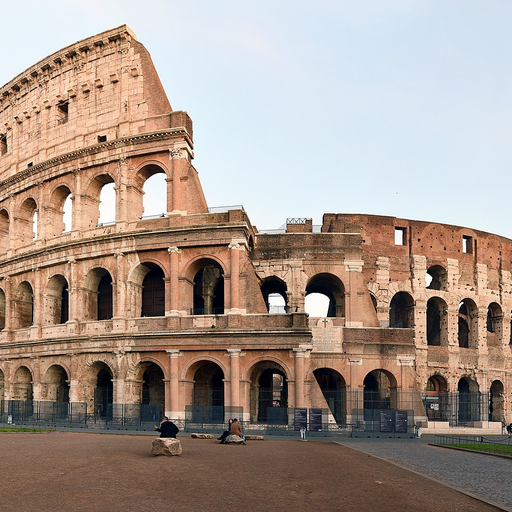 An oval open-air arena for gladiator fights and animal shows. The biggest is the Colosseum in Rome, finished in AD 80, which held about 50,000 spectators. Amphitheatres were built all over the empire.
- dome
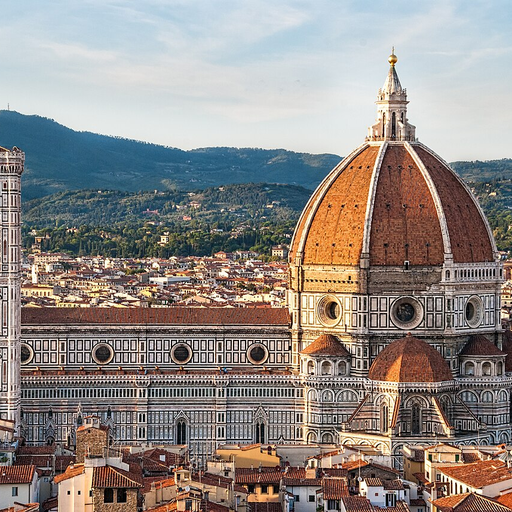 A roof shaped like half a ball. Filippo Brunelleschi built a huge dome for Florence Cathedral from 1420 to 1436 without wooden supports, which people thought was a marvel. It is still the largest brick dome in the world.
- forum
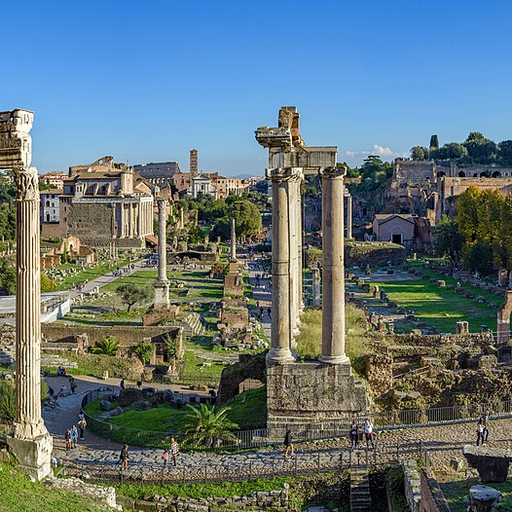 The central square of a Roman town, surrounded by temples, shops and government buildings. Speeches, trials and festivals took place there. The Forum Romanum in Rome was the heart of the whole empire.
- domus
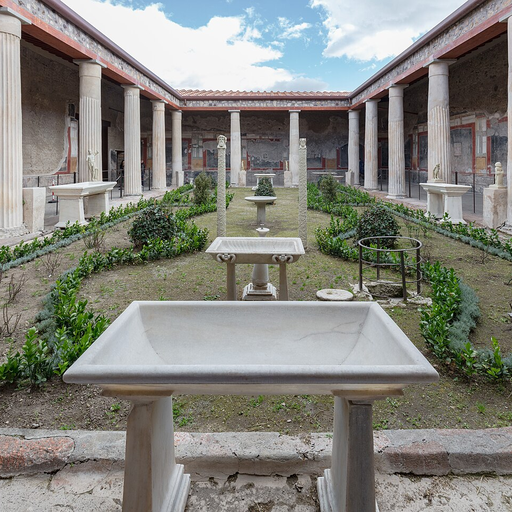 The house of a rich Roman family. In the middle was the atrium, where rainwater fell through an opening in the roof into a pool, and often a garden surrounded by columns. The walls were painted and the floors covered with mosaics.
- insula
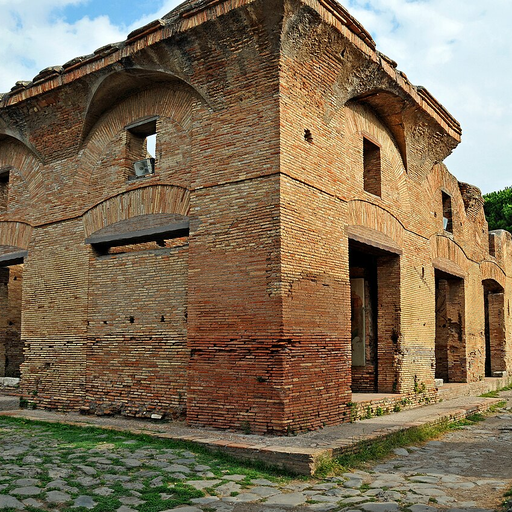 A Roman block of flats where ordinary people lived crowded together in rented rooms. There were shops on the ground floor, and the higher up you lived, the poorer you usually were. The buildings were often in danger of fire and collapse.
Related exercises
There is no exercise for this topic yet
Teacher or creator: make the first exercise with Puro Editor and choose Ancient Rome as its topic. It will appear here as soon as it is published.
1. What did the Romans build?
What Roman buildings or bridges have you seen?
Why do some of them still stand although they are thousands of years old?
What do you need when you build a bridge over a river?
Where does the water in your home come from?2. Roads, bricks and concrete
The Romans built paved Roman roads and stone bridges throughout the empire. They made walls of concrete and often faced them with stone or bricks. Concrete was made of lime, volcanic ash and crushed stone. It hardened as hard as stone.
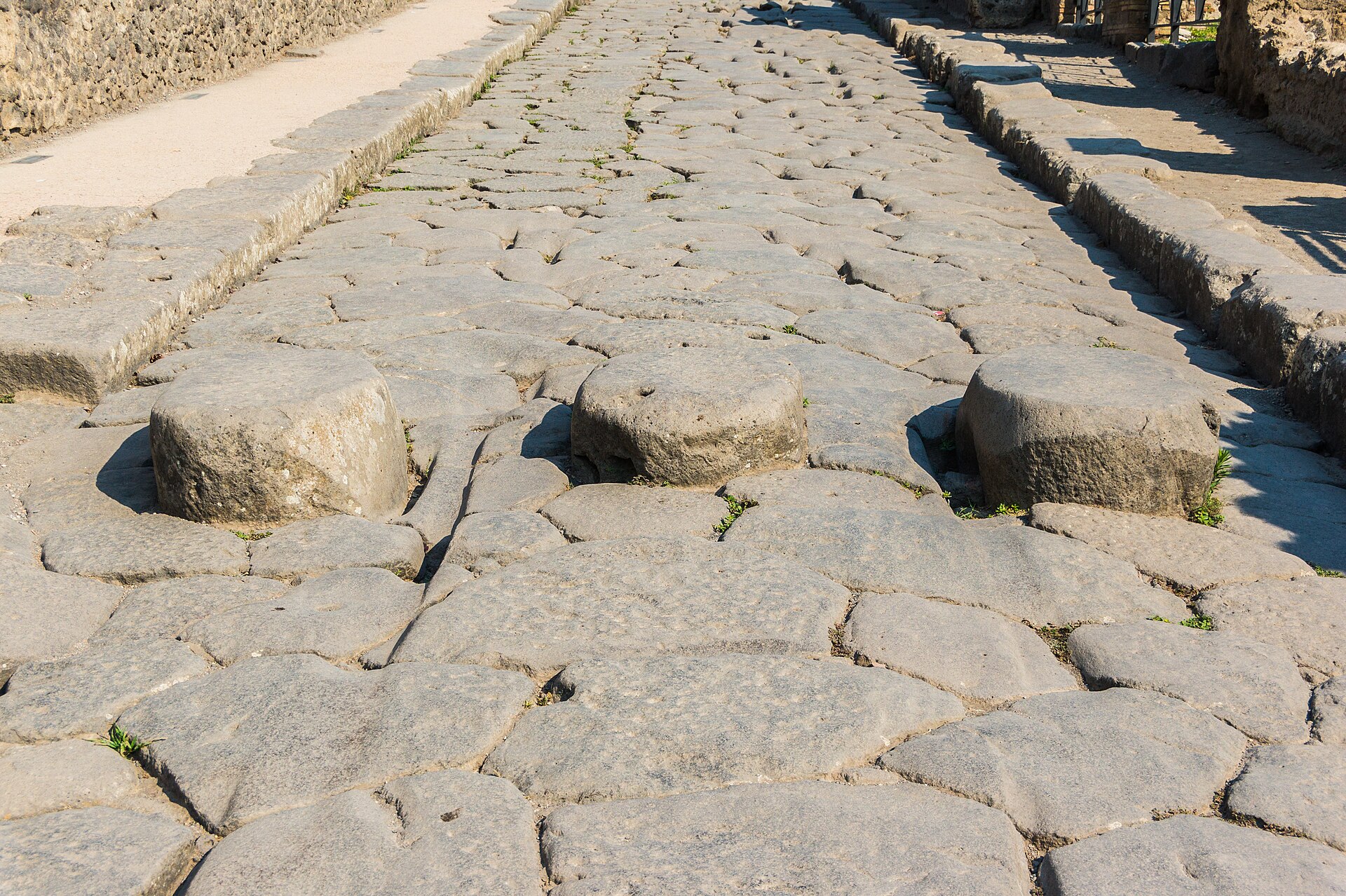
A paved street in Pompeii. There are tall stepping stones across the street.. Photo: Street chaussée Pompeii, Jebulon, CC0, modified: reduced in size 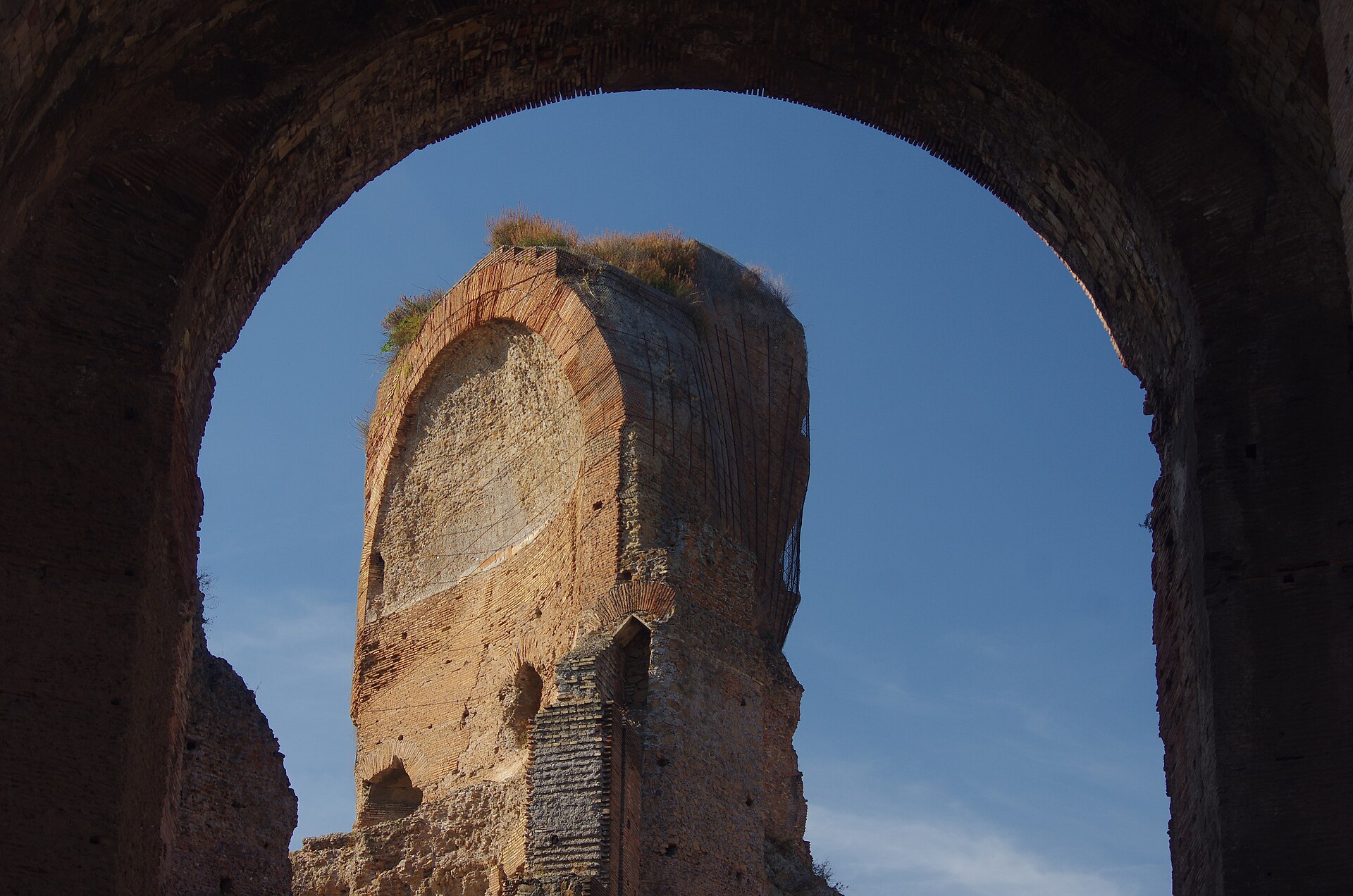
The ruins of the Baths of Caracalla in Rome. The surface of the wall is brick, and inside there is concrete.. Photo: 10 2023 - Terme (Baths of) Caracalla, Arte Romana, Viale Guido Baccelli, Rome, Roma, Lazio, 00154, Italy - Photo Paolo Villa - FO232105 - Architettura e mattoni - arco-volta, Paolo Villa, CC BY-SA 4.0, modified: reduced in size 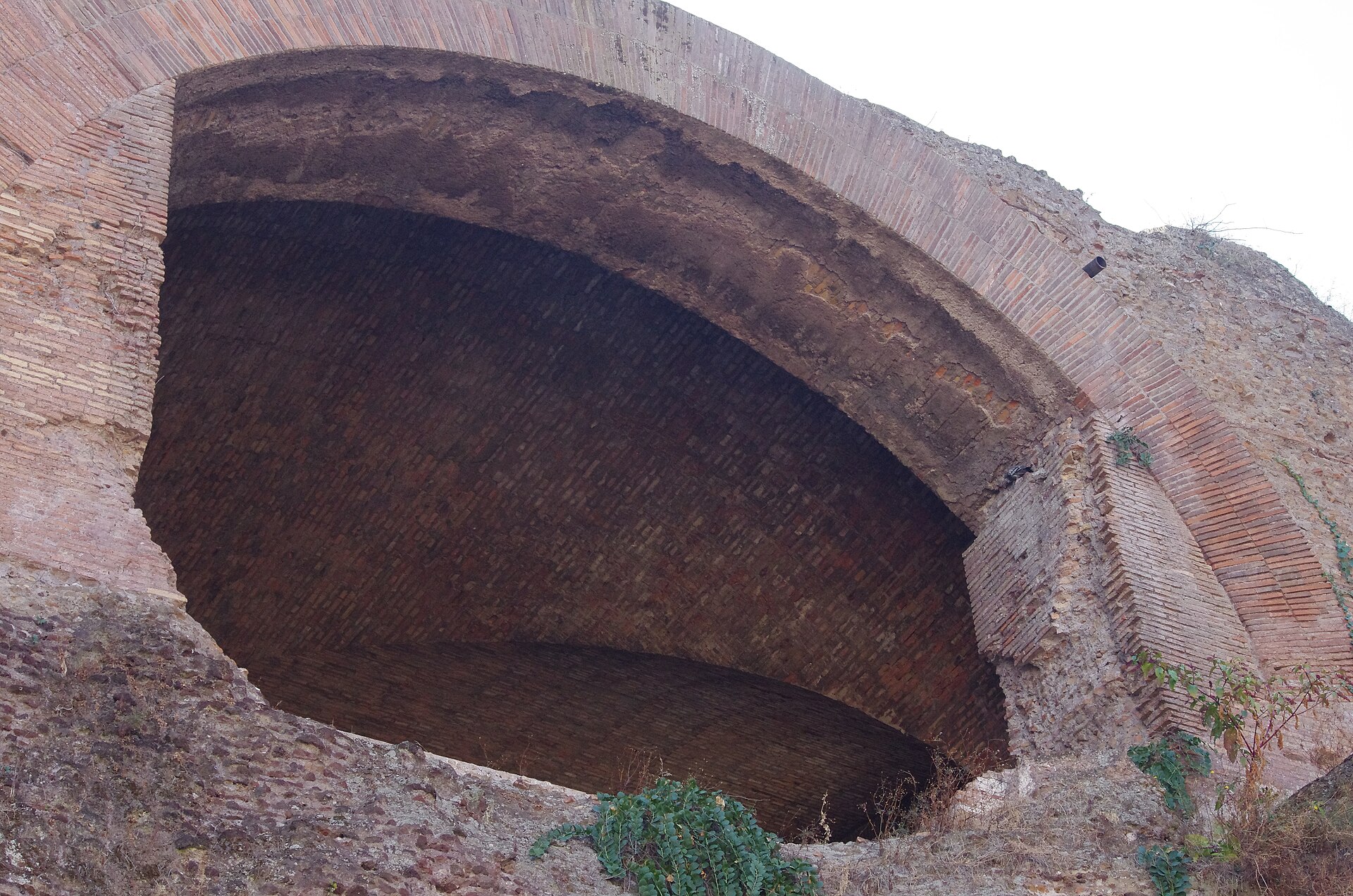
A brick vault in the ruins of the Baths of Caracalla. A vault is a roof in the shape of an arch.. Photo: 10 2023 - Terme (Baths of) Caracalla, Arte Romana, Viale Guido Baccelli, Rome, Roma, Lazio, 00154, Italy - Photo Paolo Villa - FO232097 - Architettura e mattoni - arco-volta, Paolo Villa, CC BY-SA 4.0, modified: reduced in size 3. The arch carries the weight
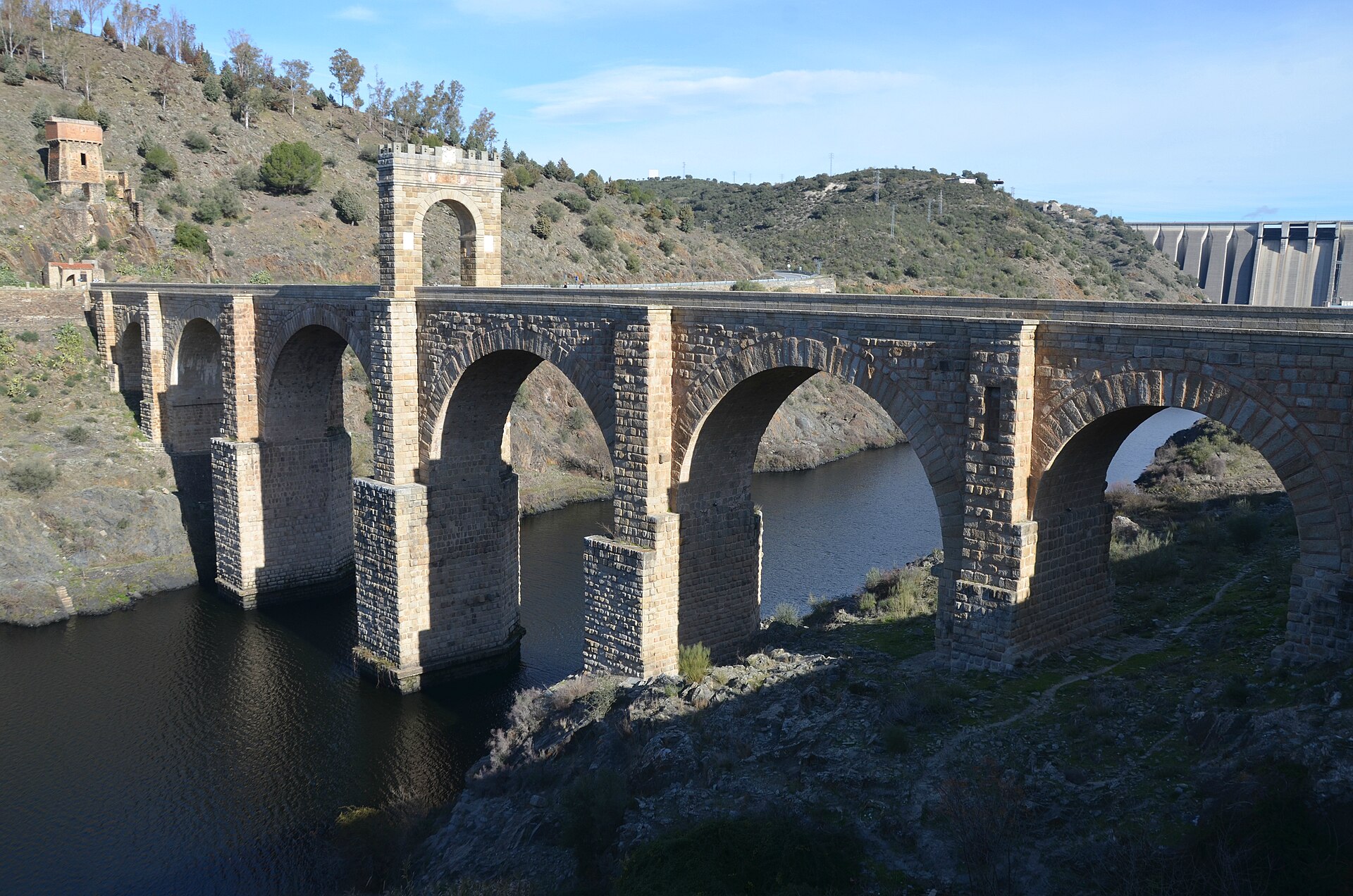
The arch helped the Romans to build tall bridges and aqueducts. In an arch the stones press against each other. The weight passes to the piers. A straight stone beam could break if it were long.
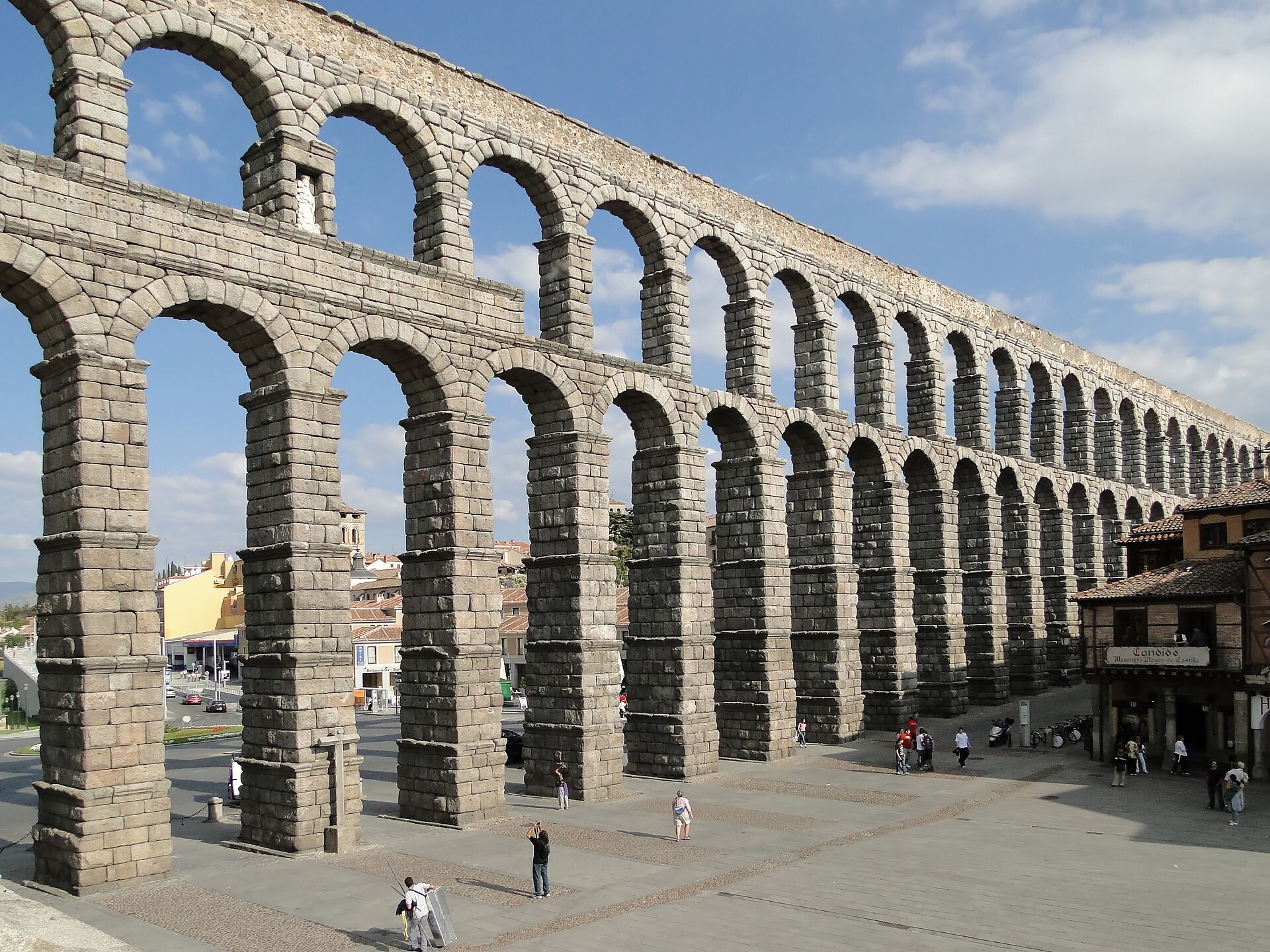
The aqueduct of Segovia in Spain. It carried water to the city of Segovia. The stone blocks are stacked without mortar, and the aqueduct still stands.. Photo: Aqueduct of Segovia 08, Bernard Gagnon, CC BY-SA 3.0, modified: reduced in size 4. The Colosseum: a big arena
The Colosseum is an oval amphitheatre in Rome. It was completed in 80, and it held an estimated 50,000–80,000 spectators. Numbered entrances and passages guided everyone to their own seat. Gladiator fights and animal shows took place there.
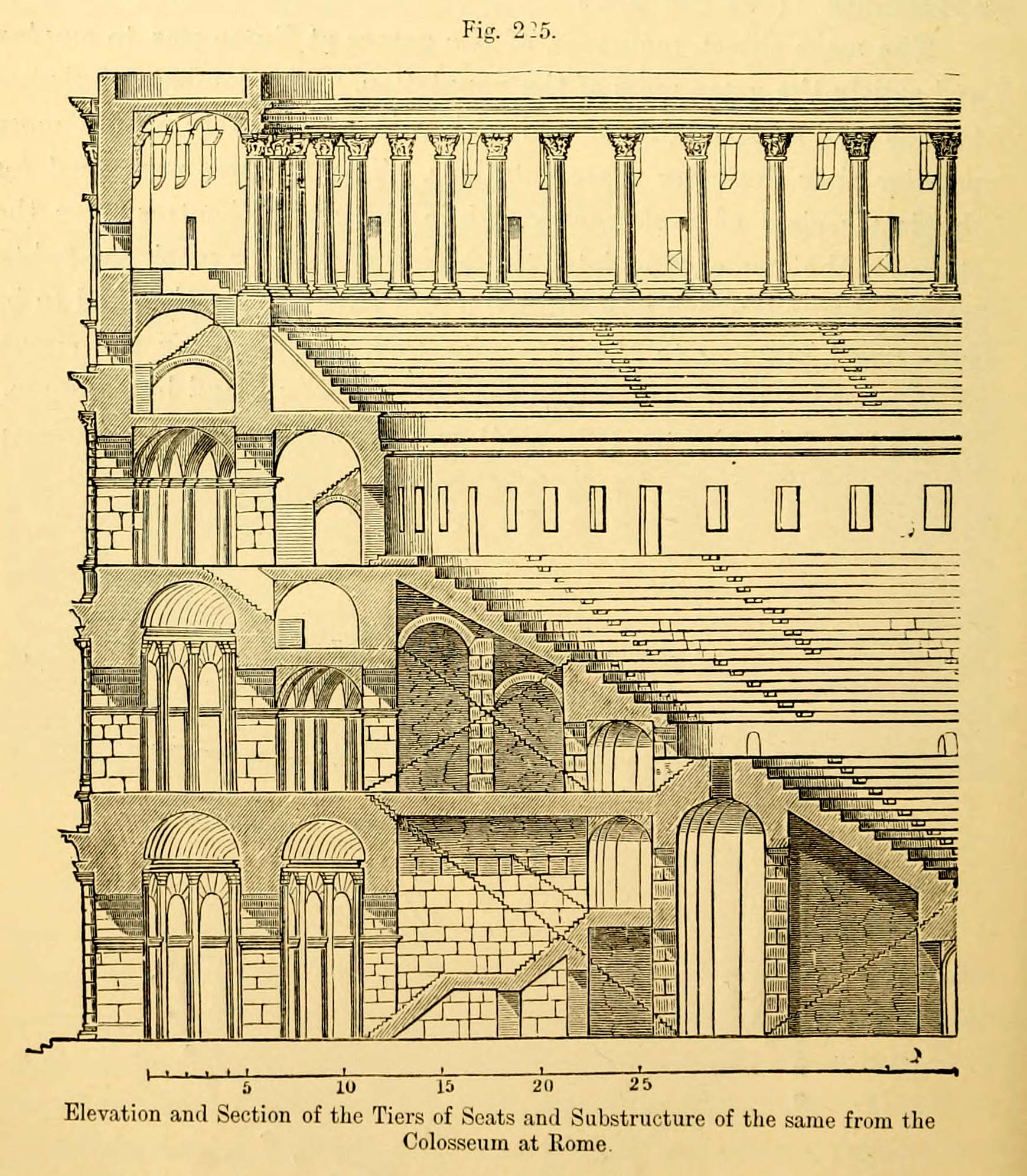
A cross-section drawing of the Colosseum. It shows the rows of seats, the arches and the vaults.. Photo: Fig 225 Cross section of Colosseum, Rome, A Rosengarten, Public domain, modified: reduced in size 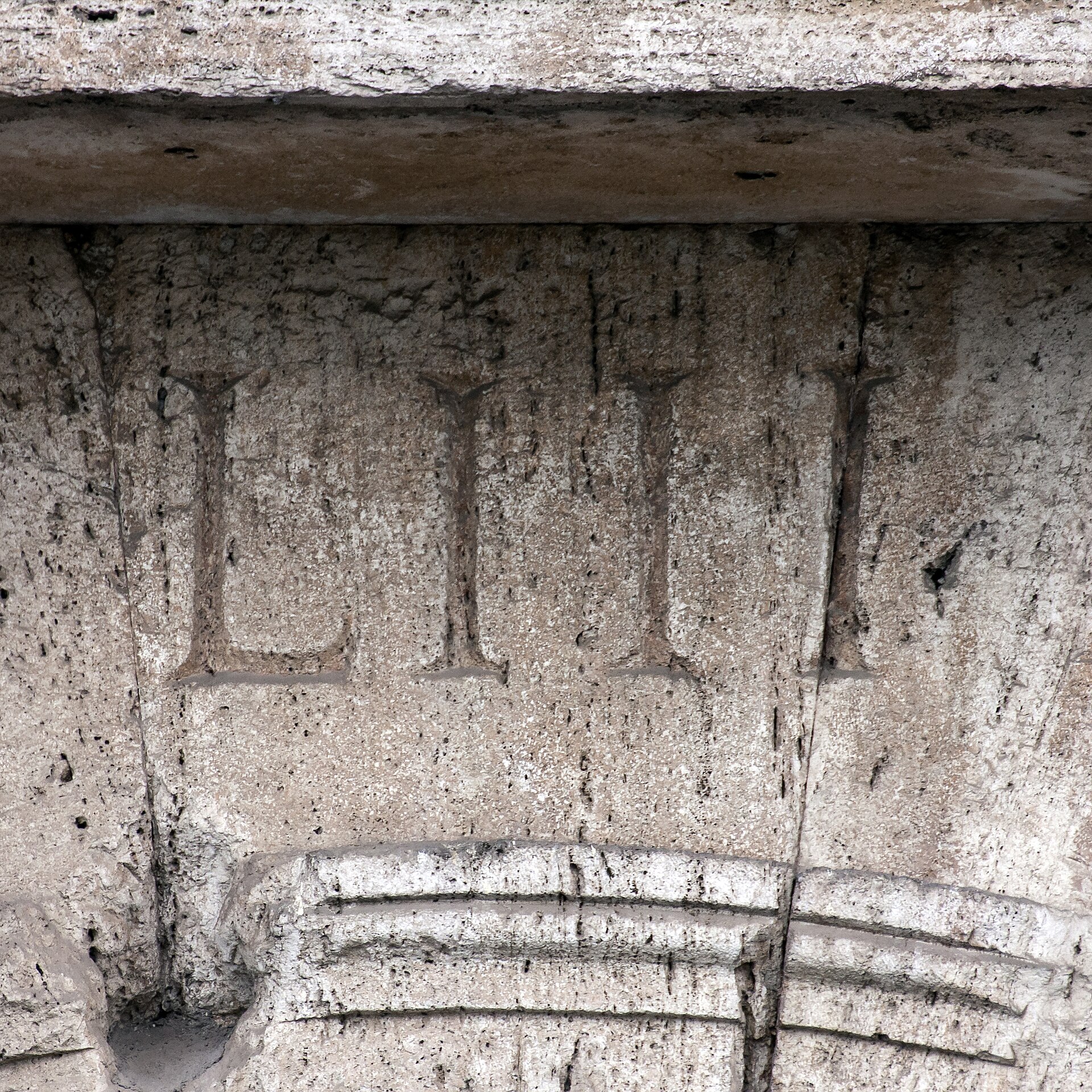
The Roman numeral LIII, or 53, above an entrance of the Colosseum.. Photo: Colosseum-Entrance LIII, David Castor, CC0, modified: reduced in size 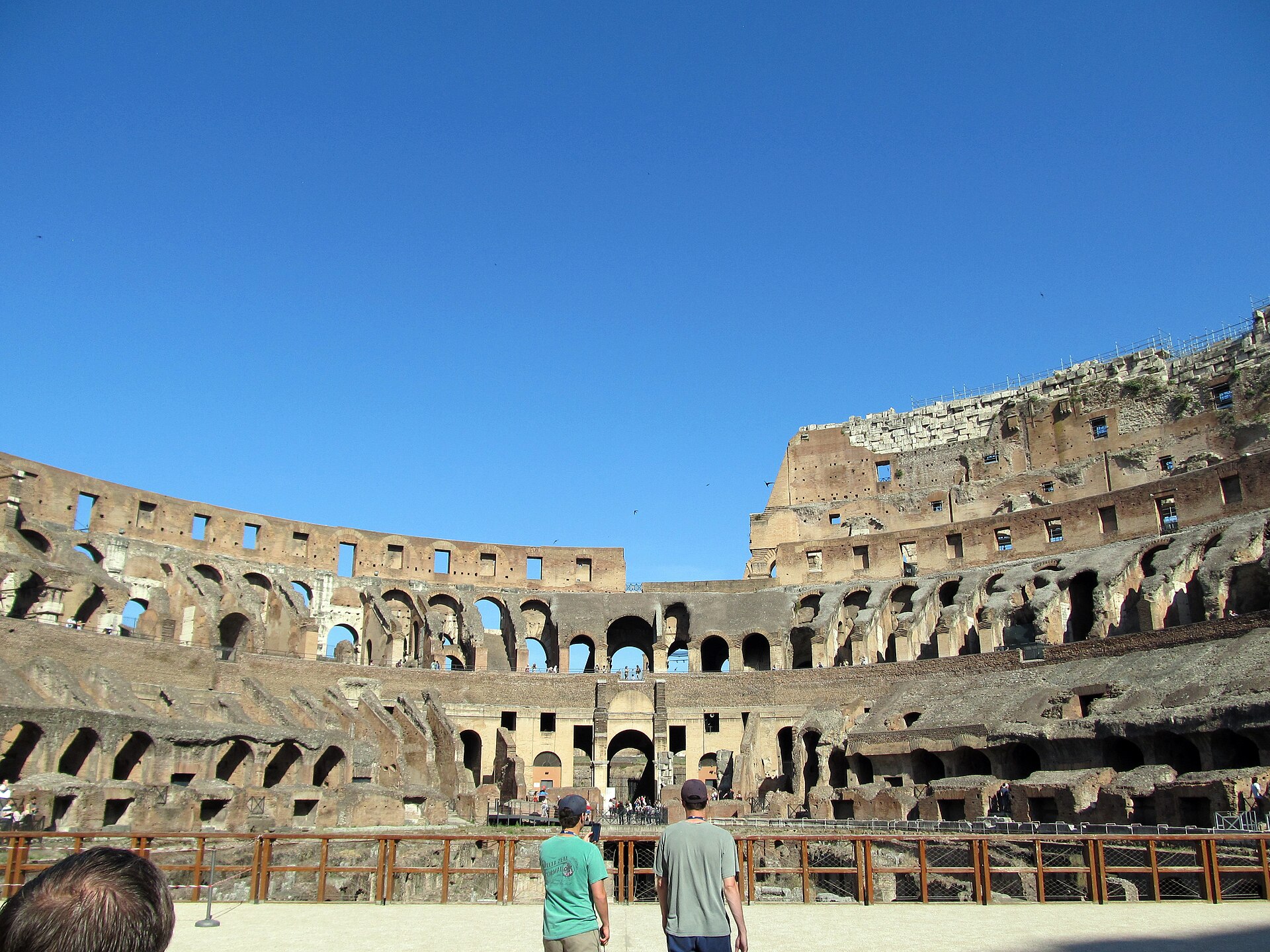
The inside of the Colosseum from arena level. The present floor is new, and under it are the underground passages of antiquity.. Photo: Colosseum Interior 1 (15005911295), daryl_mitchell from Saskatoon, Saskatchewan, Canada, CC BY-SA 2.0, modified: reduced in size 5. The dome of the Pantheon
The dome of the Pantheon is made of concrete. It is about 43 metres wide. The dome has square recesses, and in the middle there is a round opening. The building still stands in Rome.
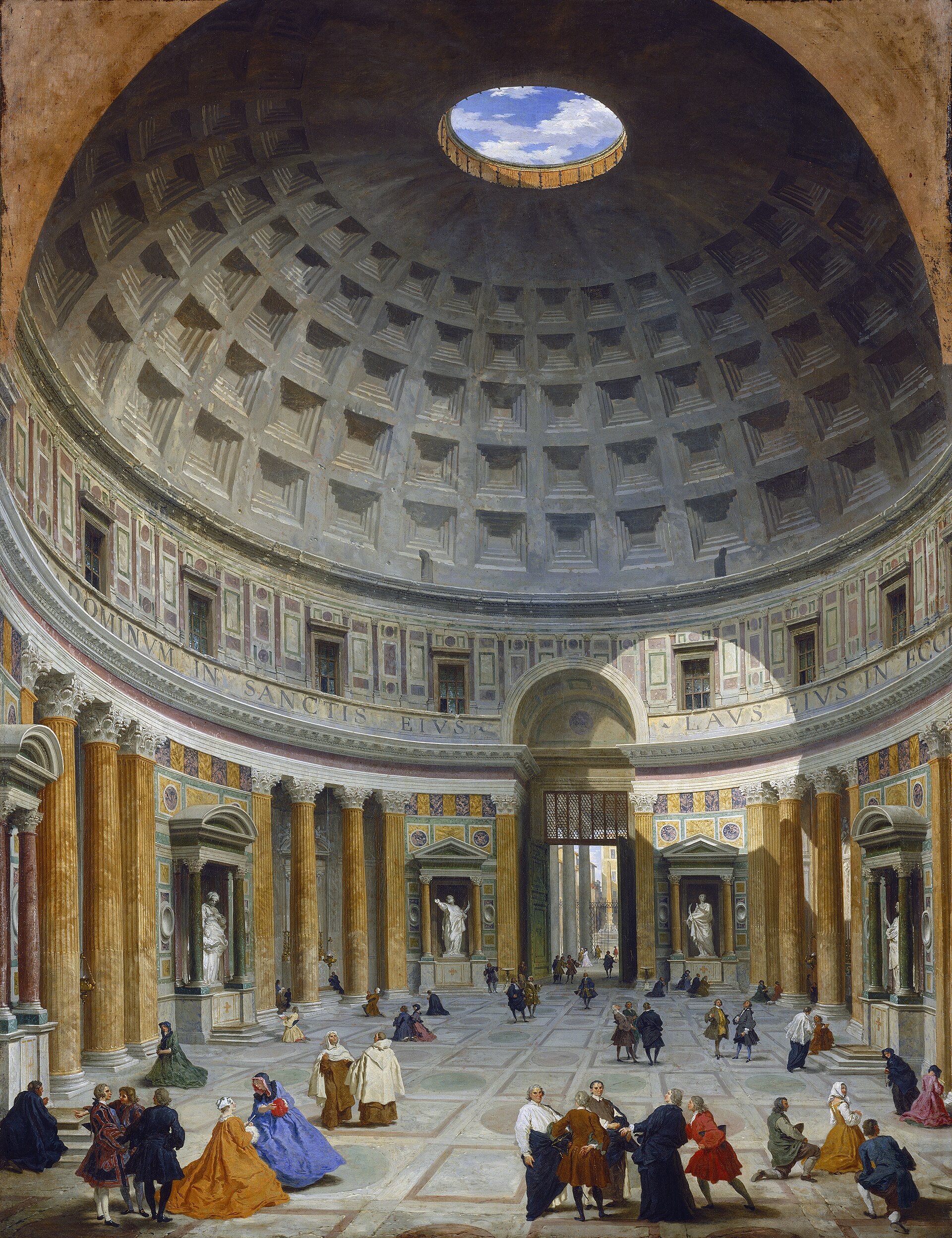
The inside of the Pantheon in a painting by Giovanni Paolo Panini from about 1734. The dome has square recesses and a round opening in the middle.. Photo: Interior of the Pantheon, Rome, Giovanni Paolo Panini, CC0, modified: reduced in size 6. The city and the home
In the middle of the city was the forum, and in the baths people washed and met each other. The sewer Cloaca Maxima carried waste water to the river Tiber. The rich lived in domus houses with an atrium in the middle. Ordinary people lived in insula apartment blocks.
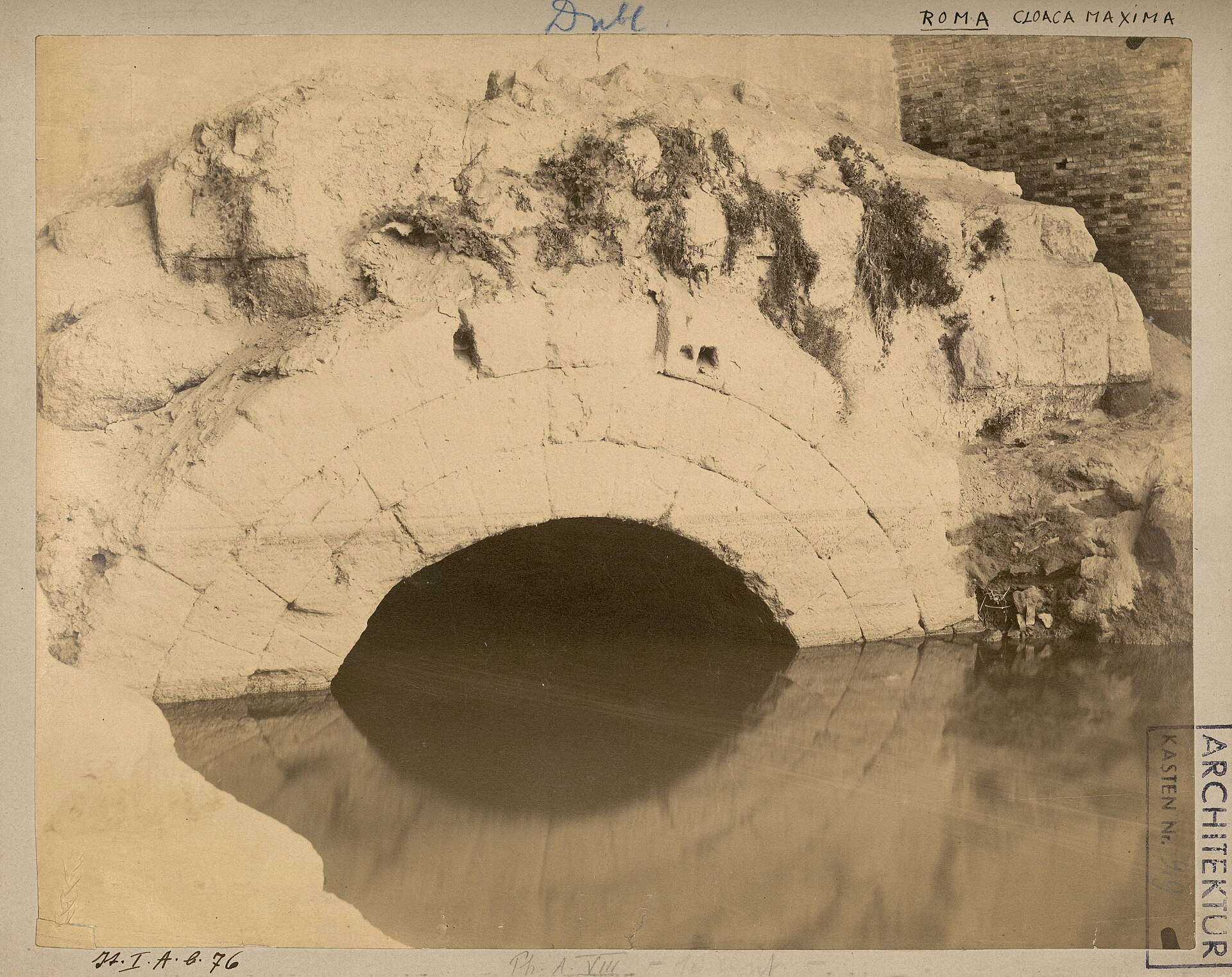
The mouth of the Cloaca Maxima in an old photograph. The sewer empties into the river Tiber. Part of it is still in use.. Photo: Rome Cloaca Maxima - (It.I.A.b.76), Unknown photographer, Public domain, modified: reduced in size 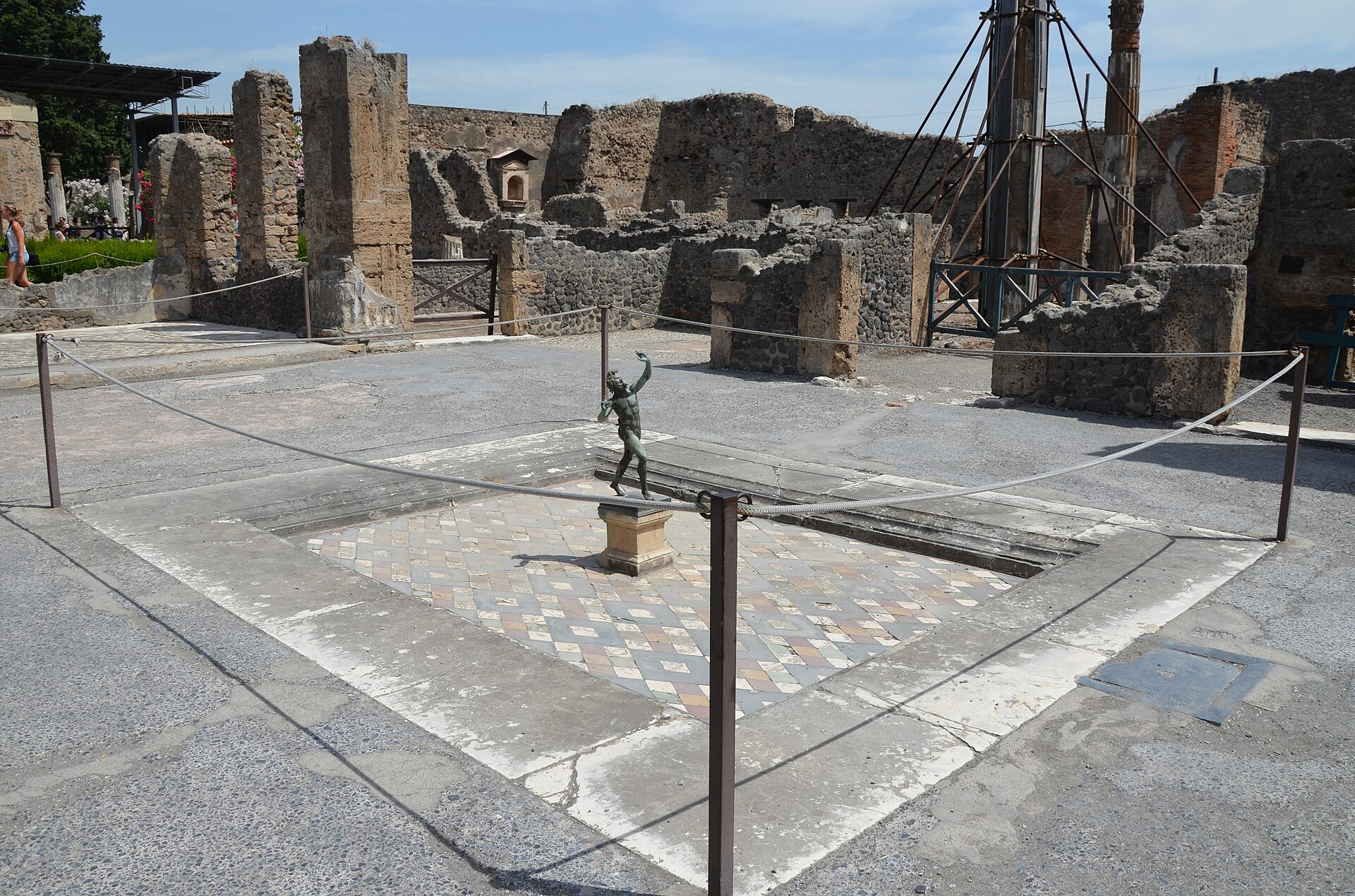
The atrium in the House of the Faun in Pompeii. In the middle is a pool into which rainwater ran. Pompeii was buried under ash in 79, and that is why its houses have survived.. Photo: House of the Faun, the large atrium with cubicula on three sides and a tablinum at the rear, Pompeii (14857299229), Carole Raddato from FRANKFURT, Germany, CC BY-SA 2.0, modified: reduced in size 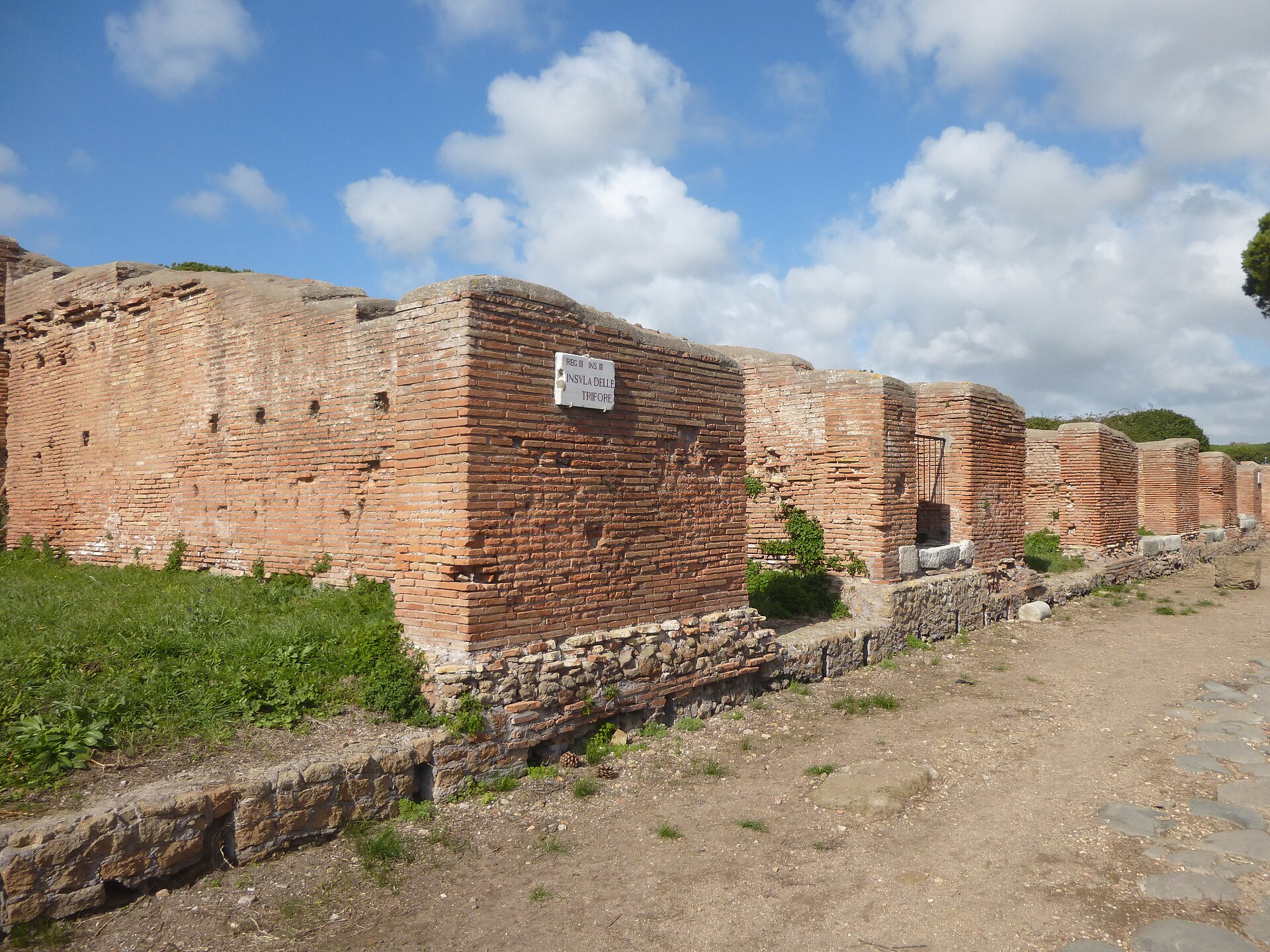
The brick wall of an insula apartment block in Ostia Antica, the port city of Rome. On the ground floor there were often shops.. Photo: Ostia Antica - R3 I03,1 Insula delle Trifore P1110182, Lalupa, CC BY-SA 4.0, modified: reduced in size 7. Think in pairs
Why does an arch carry better than a straight stone beam?
What have we inherited from the Romans: arches, concrete, sewers, roads?
What near you reminds you of Roman building?
What do the houses of Pompeii tell us about the everyday life of the Romans?


Summary
The Romans were skilled builders. They built paved roads, bridges and aqueducts, and they used bricks and concrete. The arch helped to build long bridges, aqueducts and arenas such as the Colosseum. The dome of the Pantheon is concrete, and it has a round opening. The cities had a forum, baths and a sewer. The rich lived in domus houses and ordinary people in insula apartment blocks. Many buildings still stand, and arches, concrete and sewers are used today too.
Frequently asked questions
Did the Romans invent the arch?
No. Arches were used even before the Romans, for example in ancient Mesopotamia. The Romans used the arch everywhere and with it built large bridges, aqueducts and arenas.
Why does the dome of the Pantheon still hold?
In the upper part of the dome lighter stones were used than in the lower part. The round opening in the middle makes the dome lighter. The building has also been in use all the time, so it has been looked after.
What have we inherited from Roman builders?
For example arches, concrete, aqueducts and sewers. Many present-day roads in Europe also follow old Roman routes.