Rounding to tens and hundreds: grades 3–4 (ages 9–10)
Rounding to tens and hundreds on a number line and estimating sums and differences. Teaching, slides and exercises for grades 3–4.
Rounding means replacing a number with the nearest round number. A rounded number is easier to say, remember and calculate with. It can also help you check whether the answer to a calculation makes sense.
The article is made for grades 3–4. Each step is ready to show the class as a slide. At the end, the pupil can round a number to the nearest ten and the nearest hundred. The pupil can also estimate a sum and a difference by rounding.
Key concepts
- rounding
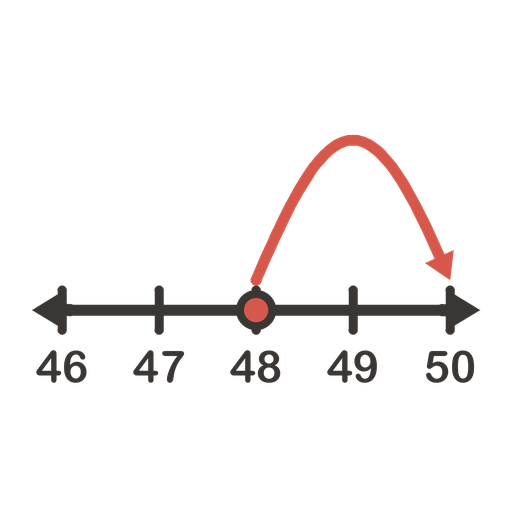 Changing a number to the nearest round number. For example 48 is about 50.
- estimate
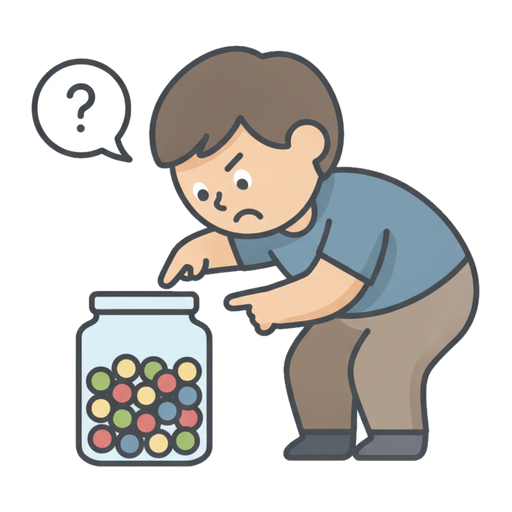 A sensible guess at roughly the right answer before working it out exactly.
- about
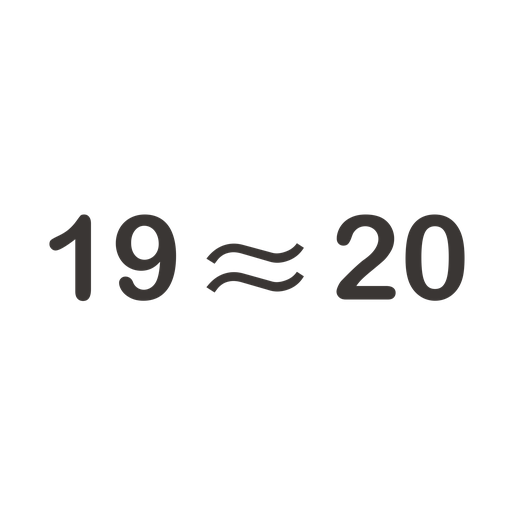 About means that a number is not exact but close to it. For example, 19 is about 20.
- number line
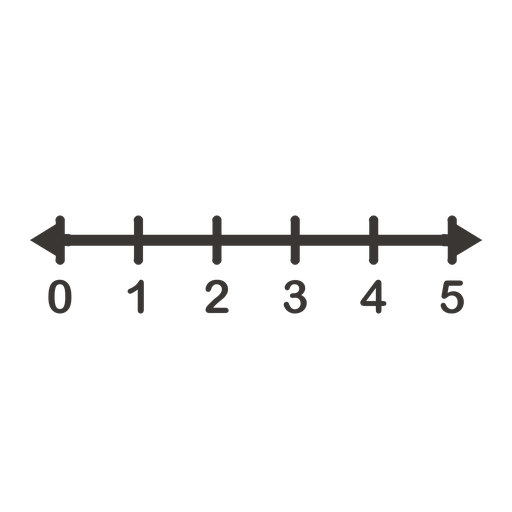 A straight line with numbers marked in order at equal spaces.
- tens
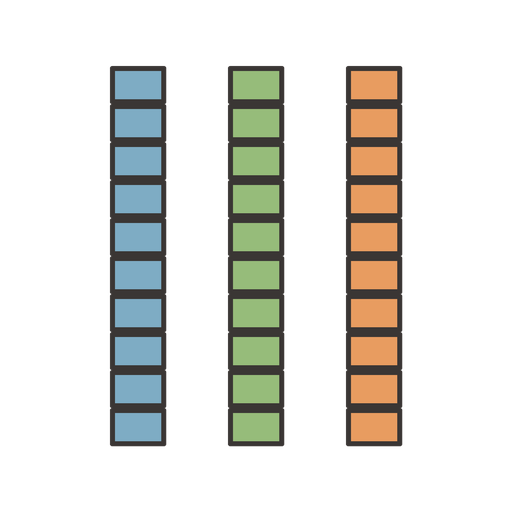 The second digit from the right tells how many tens a number has.
- hundred
 Ten tens, or 100.
- sum
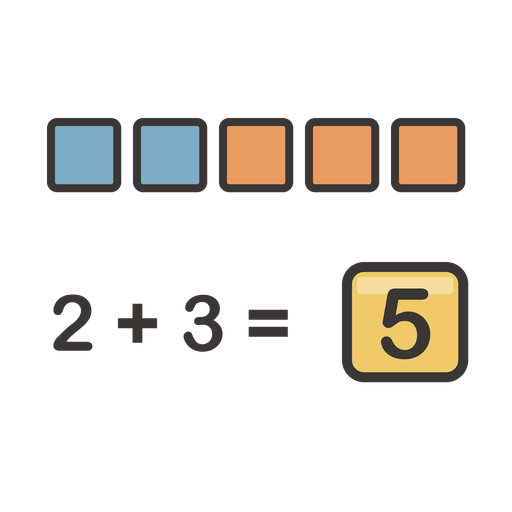 The answer to an addition. The sum of 3 and 2 is 5.
- difference
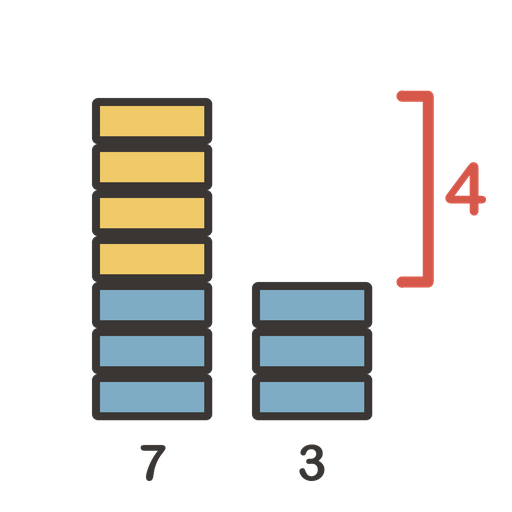 The answer to a subtraction. The difference between 5 and 2 is 3.
Related exercises
There is no exercise for this topic yet
Teacher or creator: make the first exercise with Puro Editor and choose Rounding and Estimation as its topic. It will appear here as soon as it is published.
1. The beech is about 40 metres tall
In the forest, the height of a beech was measured: 37 metres. You can tell a friend it is about 40 metres, and that is rounding.
A rounded number is easy to say and remember. The sign ≈ means about.
2. Round to the nearest ten
The fox ran 32 metres and the hare 38 metres. Check which ten the number is closer to.
The number 32 is closer to 30. The number 38 is closer to 40.
32 ≈ 30: round down 38 ≈ 40: round up 3. Halfway, we round up
The swimmer swam 35 metres.
The number 35 is in the middle of 30 and 40.
We agree: halfway, we round up.
So 35 ≈ 40.4. Rounding to hundreds
When rounding to hundreds, look at the tens digit.
Digit 0–4: the hundreds stay the same, digit 5–9: the hundreds go up by one.There were 468 spectators at the stadium. The tens digit is 6, so 468 ≈ 500.
5. Estimating a sum
At the junior tournament there were 28 spectators on Friday and 19 on Saturday. Round to tens and calculate in your head.
28 + 19 ≈ 30 + 20 = 50. There were about 50 spectators.
6. Common mistake: the answer does not make sense
The Bears scored 48 and the Wolves 21 points: by how many points did the Bears win?
Estimate: 50 − 20 = 30
The pupil got 69 as the answer.
Exact answer: 48 − 21 = 277. Discuss in class
1. The beech is 43 metres tall. Which ten does it round to? How do you know?
2. Round 65 to tens and 650 to hundreds. What do you notice?
3. Estimate 39 + 22 by rounding. Is the exact answer close to the estimate?
4. When is the exact number better than the rounded one? Think of two examples.
Summary
Rounding replaces a number with the nearest round number. When rounding to tens you look at the ones, and when rounding to hundreds you look at the tens. Digit 0–4 rounds down and digit 5–9 rounds up. With rounded numbers you can estimate a sum and a difference. The estimate shows whether the exact answer makes sense.
Frequently asked questions
Why is five rounded up?
It is an agreement. Halfway, the number is not closer to either ten. When everyone rounds up, everyone gets the same answer. The number 35 ≈ 40 and the number 45 ≈ 50.
What do we need rounding for?
With a rounded number you can estimate quickly. The estimate shows whether the answer to a calculation makes sense. For example, 28 + 19 ≈ 30 + 20 = 50 shows that the answer cannot be 470.
Do we always round to tens?
No. The task says what to round to: tens, hundreds or something else. The height of a beech suits tens and the number of spectators at a stadium suits hundreds.