
Sculpture: famous sculptures and how a sculpture is made
What is a sculpture and how is it made? Slides and questions on carving, modelling, casting and relief, with David, The Thinker and the Venus of Willendorf.
Sculpture is art you can walk around and look at from every side. This article presents famous sculptures from the Stone Age to the early 1900s and three ways to make a sculpture: carving, modelling and casting. It suits the whole primary school: things are explained simply first, and the “Explore more” notes give older pupils something extra. Every step can be shown to the class as a slide.
At the end, pupils can say what a sculpture and a relief are, recognise carving, modelling and casting, and can try modelling themselves.
Key concepts
- artist
 A person whose job is to make paintings, sculptures or other art.
- stone
 A hard, heavy natural material found in the ground.
- wood
 A material that comes from trees and is used to make furniture and houses.
- clay
 Soft earth that you can shape and bake into dishes.
- metal
 A hard, shiny material, such as iron, copper or aluminium.
- hammer
 A tool for banging nails into wood.
- Stone Age
 The Stone Age is the longest period in human history, when tools were mostly made of stone, bone and wood. It began more than two million years ago, and for most of it people lived by hunting, fishing and gathering. People moved to the northernmost parts of Europe only after the Ice Age.
- soap
 Something slippery that you use to wash your hands and body clean.
1. What makes a sculpture a sculpture?
Can you look at a sculpture from behind? What about a painting?
What materials can a sculpture be made of?
How does an artist turn hard stone into the shape of a person?
Where have you seen a sculpture, and what did it show?2. A sculpture is three-dimensional
A sculpture is a three-dimensional work of art. You can walk around it and look at it from every side. Sculptures are made of stone, wood, clay or metal, for example. People already made sculptures in the Stone Age.
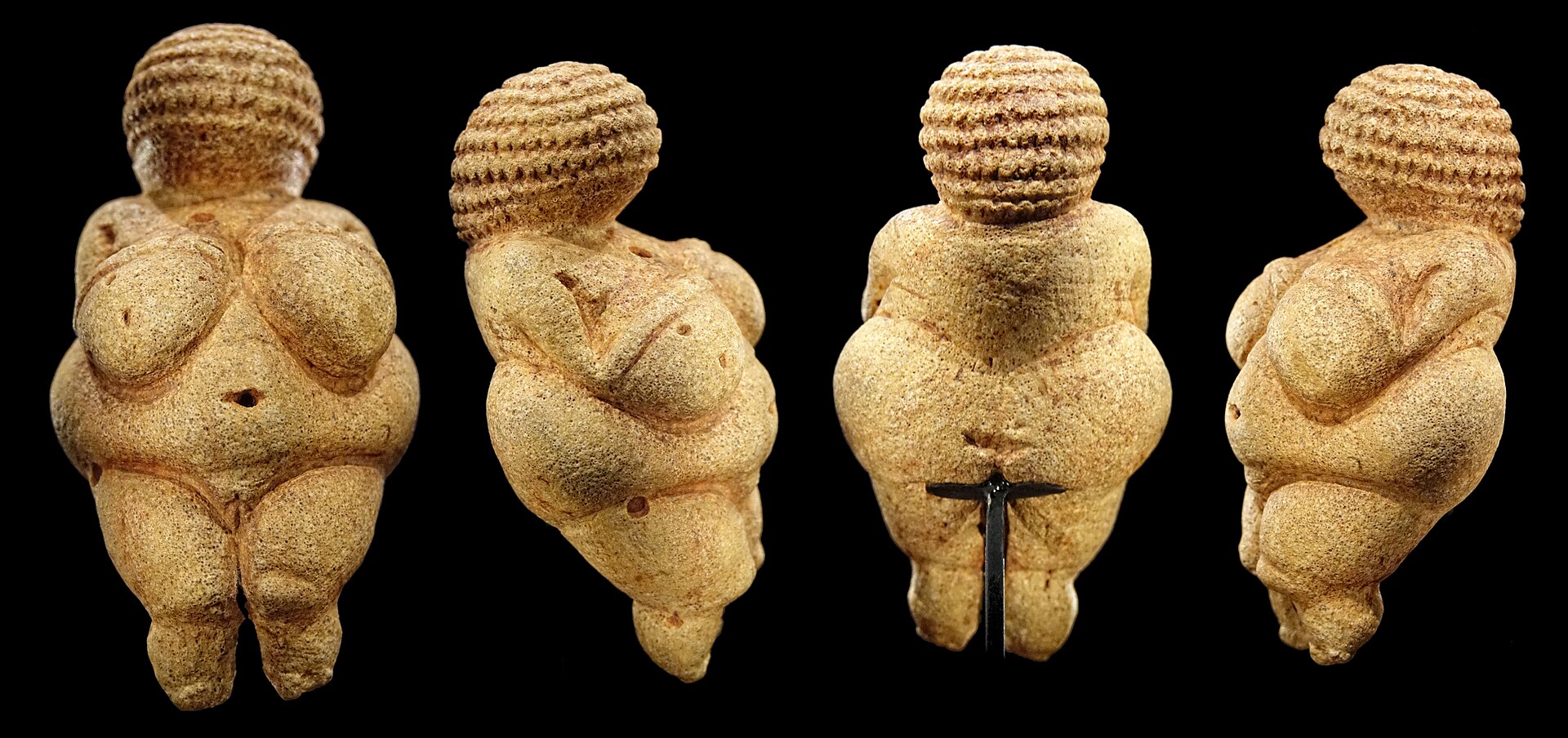
The Venus of Willendorf from four sides. This limestone figure, about 11 cm tall, is about 30,000 years old. Archaeologists found it in Austria in 1908. Today it is in the Natural History Museum in Vienna.. Photo: Venus of Willendorf - All sides, Bjørn Christian Tørrissen, CC BY-SA 4.0, modified: reduced in size 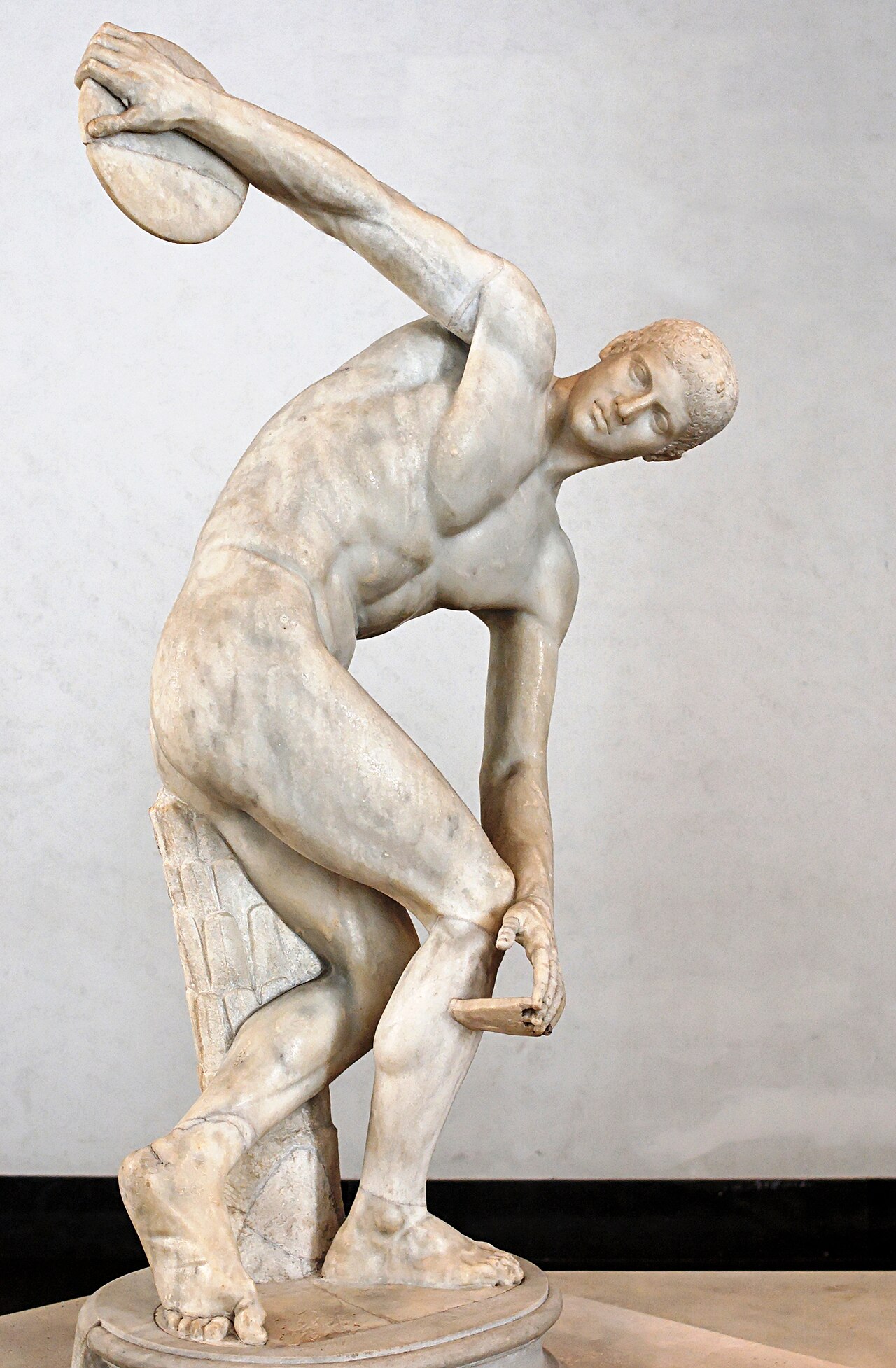
The Discus Thrower (Discobolus). A Roman marble copy of a lost bronze sculpture by the Greek sculptor Myron. National Roman Museum, Rome.. Photo: Discobolus Lancelotti Massimo, Marie-Lan Nguyen, Public domain, modified: reduced in size 3. Carving: taking stone away
The sculptor uses a chisel and a hammer to knock away all the stone that does not belong to the sculpture. What is cut off cannot be put back, so the work is planned carefully. Wood is carved in the same way. Michelangelo carved David from marble in 1501–1504.
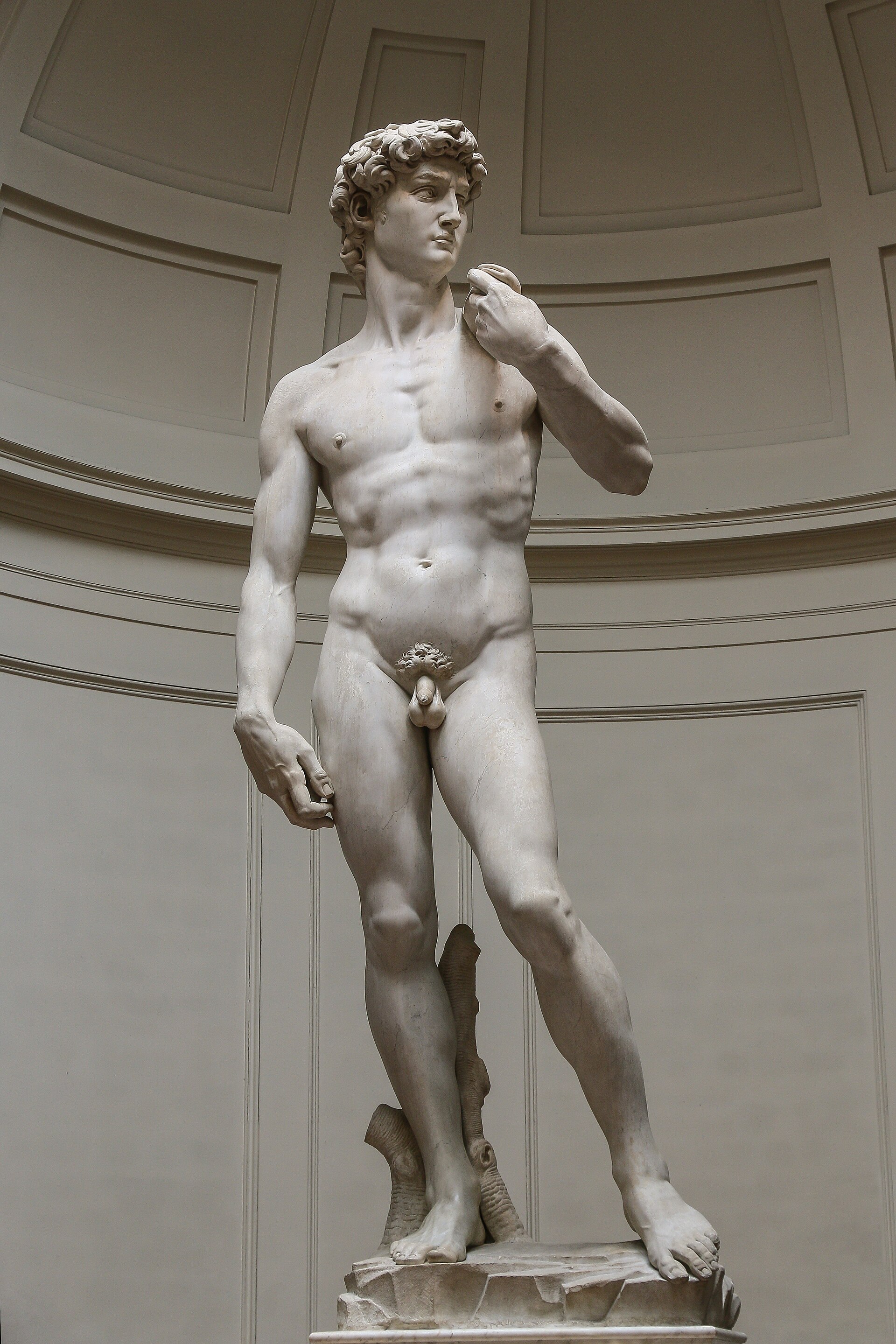
Michelangelo: David (1501–1504). The marble sculpture is more than four metres tall. It shows the shepherd boy from the Bible story who defeated the giant Goliath. Galleria dell'Accademia, Florence.. Photo: 'David' by Michelangelo Fir JBU004, Jörg Bittner Unna, CC BY 3.0, modified: reduced in size 4. Modelling and casting in bronze
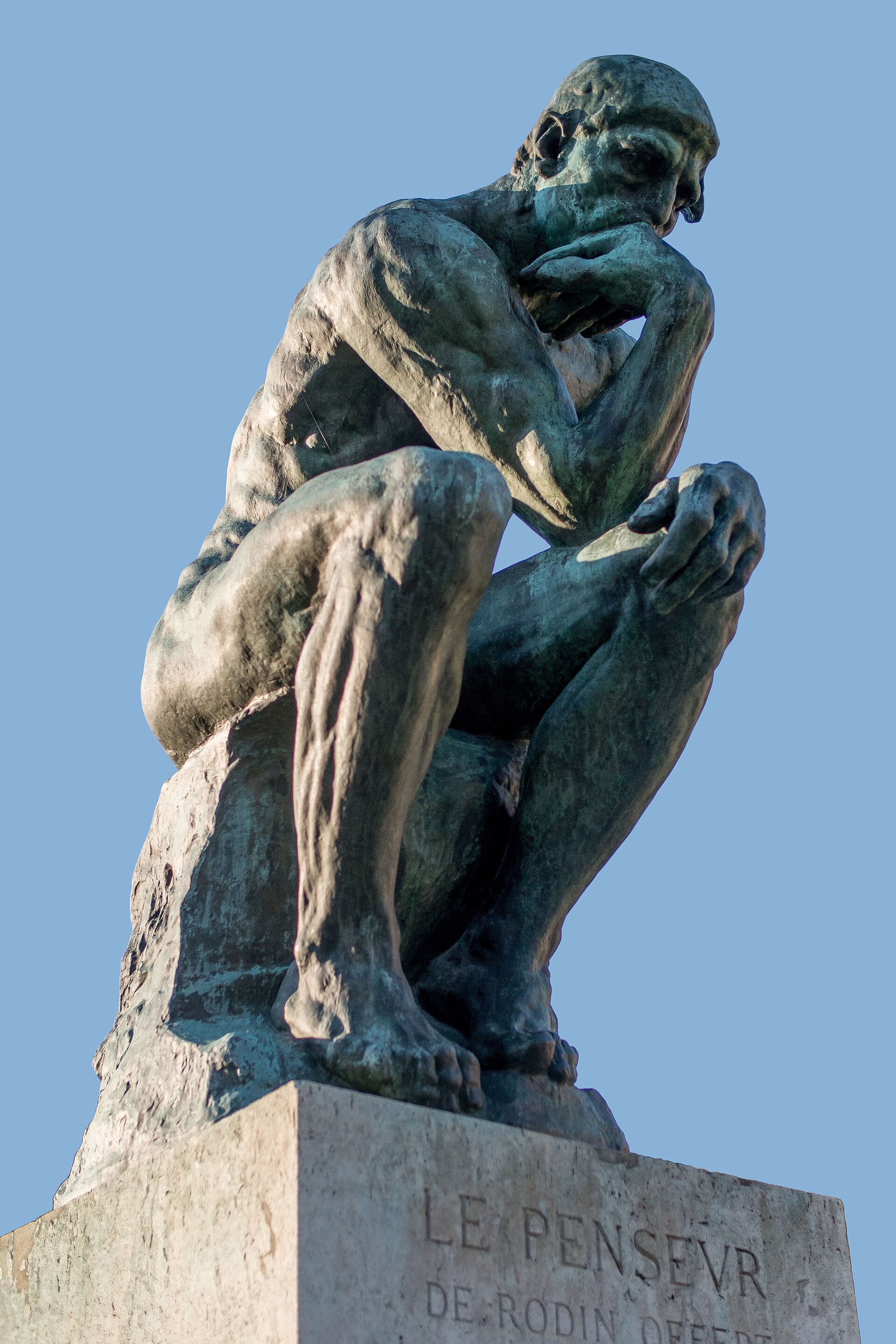
In modelling, a sculpture is made by adding: clay or wax is piled up and pressed into shape. A long-lasting sculpture is cast in metal, often bronze. A mould is made from the model, and hot liquid metal is poured into the mould. Many sculptures can be cast from the same model.
Auguste Rodin: The Thinker. Rodin designed the figure in the early 1880s, and the large version was first cast in bronze in 1904. This cast stands in the garden of the Musée Rodin in Paris. The base says Le Penseur, French for The Thinker.. Photo: The Thinker in the Jardin du Musée Rodin, Paris March 2014, Thibsweb, Public domain, modified: reduced in size 5. A relief rises from the surface
A relief is a picture that rises out of the surface of a wall, a door or a panel. You look at it from the front. Lorenzo Ghiberti made bronze doors for the Baptistery in Florence with ten gilded reliefs. The work took from 1425 to 1452.
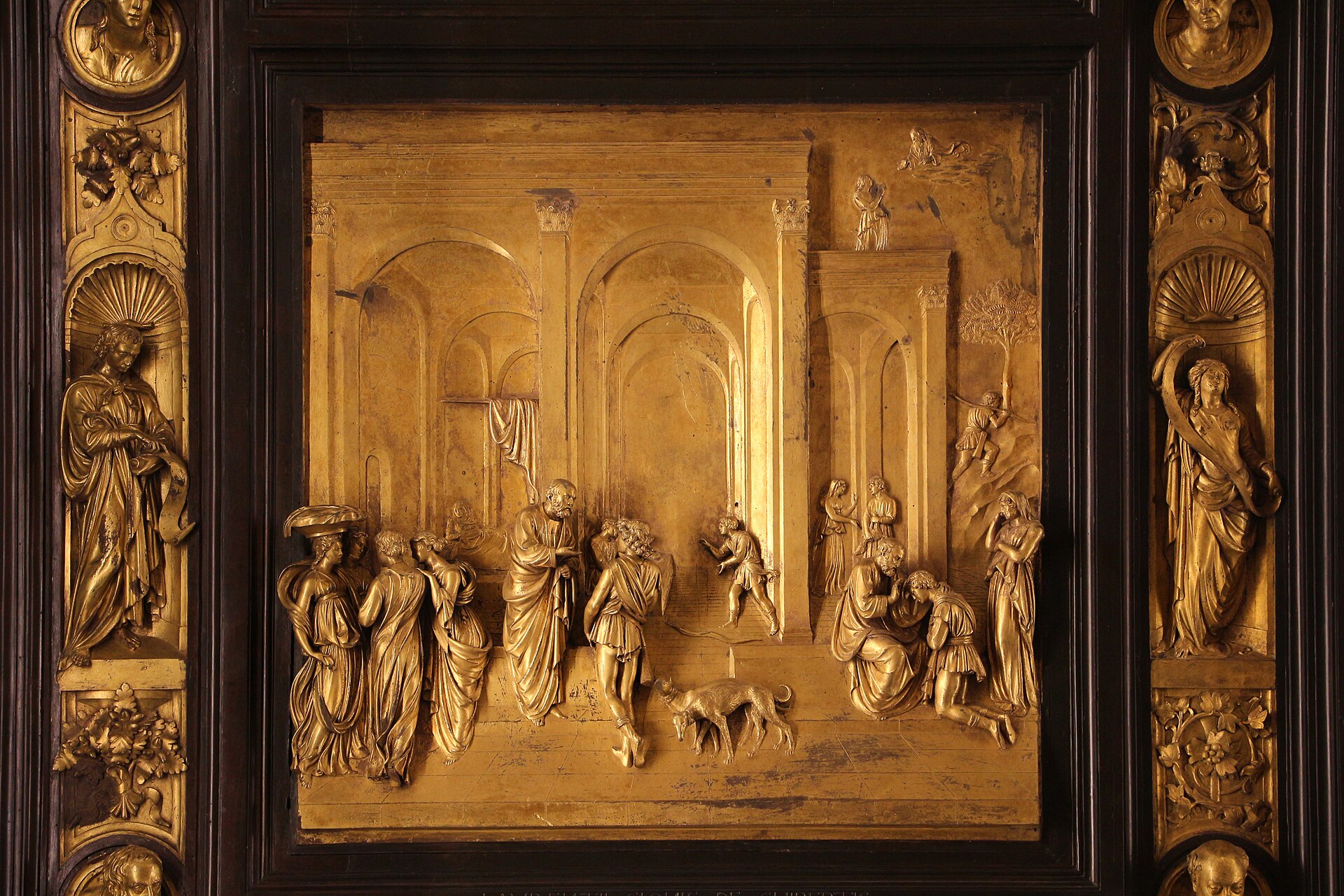
Lorenzo Ghiberti: Isaac, Esau and Jacob, one of the ten reliefs of the Gates of Paradise (1425–1452). Gilded bronze, Florence.. Photo: Lorenzo Ghiberti, Porta del Paradiso, 1425–52, 04 Isacco, Esaù e Giacobbe, Sailko, CC BY 3.0, modified: reduced in size 6. Sculptures in the city
In cities, sculptures stand in squares, parks and on bridges. The Charles Bridge in Prague has 30 stone sculptures, and most of them were made more than 300 years ago. Rain, frost and dirty air wear away the stone, so the bridge now has copies. Many of the originals are in a museum.
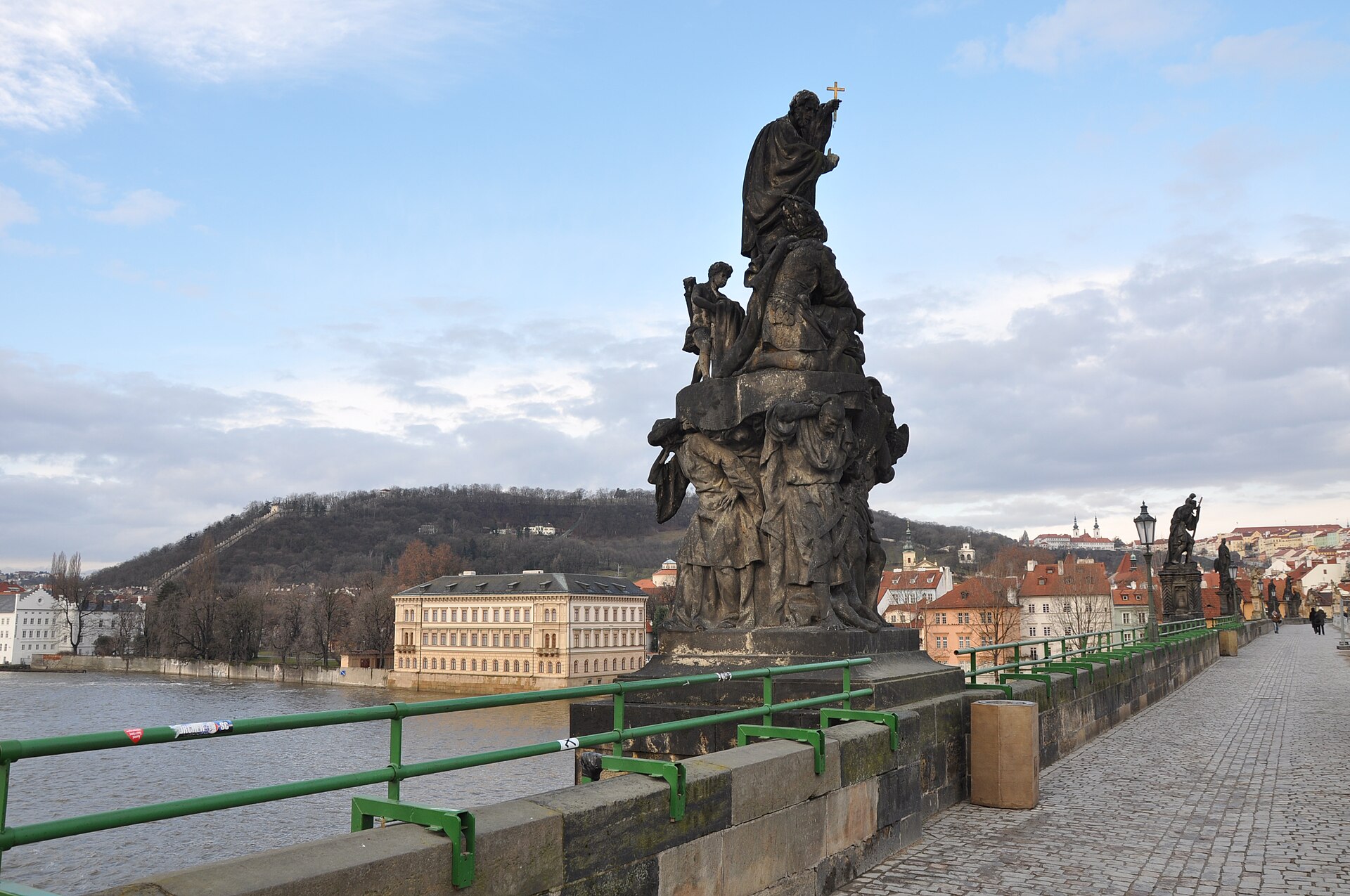
A group of sculptures on the Charles Bridge in Prague. The sculptures on the bridge are now copies, and many of the originals are kept in a museum.. Photo: Statues on Charles Bridge (4501615521), Jorge Láscar, CC BY 2.0, modified: reduced in size 7. Try it yourself and think about it
Model a small animal from clay or salt dough: does it look good from every side?
Carve a shape into a bar of soap with a spoon or a lolly stick: what happens if you take away too much?
Why is there a tree stump next to David's leg?
Why can there be many copies of the same bronze sculpture?


Summary
A sculpture is a three-dimensional work of art that you can look at from every side. A relief rises from a surface, and you look at it from the front. There are three ways to make a sculpture: carving away stone or wood, modelling clay or wax, or casting metal. Michelangelo's David is carved from marble, and Rodin's The Thinker is cast in bronze. The oldest sculptures are tens of thousands of years old. Sculptures that stand outdoors are often copies, because the weather wears away the stone.
Frequently asked questions
What is the difference between a statue and a sculpture?
A statue is a sculpture that shows a person or an animal. Sculpture is the wider word. A sculpture can also show an object, or it can be just a shape that does not show anything in particular.
Can a sculpture made of wax be a finished work of art?
Yes. Edgar Degas modelled the Little Dancer Aged Fourteen in wax. He dressed her in a real fabric skirt and a ribbon in her hair and showed her at an exhibition in 1881. The bronze casts were made only after Degas died.
Were ancient sculptures white?
Not always. Many sculptures of the ancient Greeks and Romans were originally painted in bright colours. The paint has worn off over the centuries. Researchers have found traces of paint on many sculptures.
Related content
Try exercises
Have you taught this topic? Create an exercise on it for your class.