
States of matter: teaching, slides and exercises
Solid, liquid and gas: the particle model, changes of state, the melting and boiling points of water, and why ice floats. With pictures and experiments.
Matter is either a solid, a liquid or a gas. These three are called states of matter. This article explains how the particle model describes the states of matter and what happens when a substance warms up or cools down. The example is water: ice, liquid water and water vapour. Every step is ready to show to the class as a slide.
At the end, pupils name the states of matter and the changes between them. They know the melting and boiling points of water and can explain why ice floats.
Key concepts
- state of matter
 The state of matter tells whether a substance is solid, liquid or gas. Water, for example, can be ice, liquid water or water vapour.
- solid
 A substance with its own shape, like ice or stone.
- liquid
 A substance that flows and takes the shape of its container, like water or milk.
- gas
 A substance that spreads in every direction and fills the whole space, like air.
- melting
 A solid turns into a liquid when it warms up, like ice into water.
- evaporation
 A liquid turns into a gas, like a puddle drying in the sun.
- condensation
 A gas turns into a liquid as it cools, like drops on the outside of a cold glass.
- density
 Density tells how much mass there is in a given volume. A solid object floats in water if its density is lower than that of water.
Related exercises
There is no exercise for this topic yet
Teacher or creator: make the first exercise with Puro Editor and choose States of Matter as its topic. It will appear here as soon as it is published.
1. What state is water in?
Ice hockey is played on ice: what state is the water in then?
Why does a stream flow but ice does not?
What happens to an ice cube in a warm room?
What do you see above a pot when the water boils?2. Solid, liquid and gas
State of matter tells us whether a substance is a solid, a liquid or a gas. A solid has its own shape, like ice. A liquid flows and takes the shape of its container. A gas fills the whole space, like the air inside a hot-air balloon.
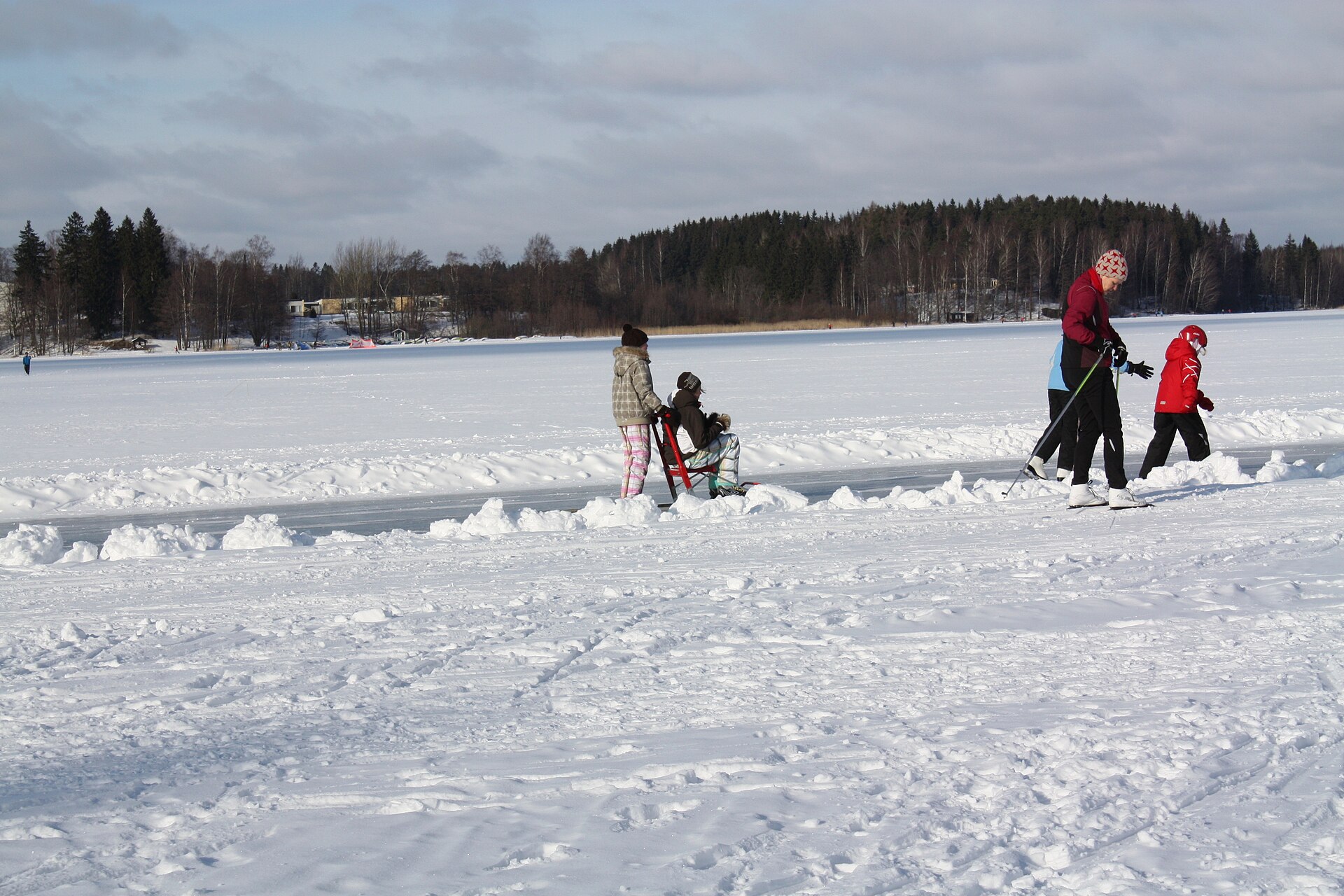
Solid: the ice on a lake carries skaters and a kicksled. Photo: Tuusulanjärvi - Potkukelkka IM4081 C, Anneli Salo, CC BY-SA 3.0, modified: reduced in size 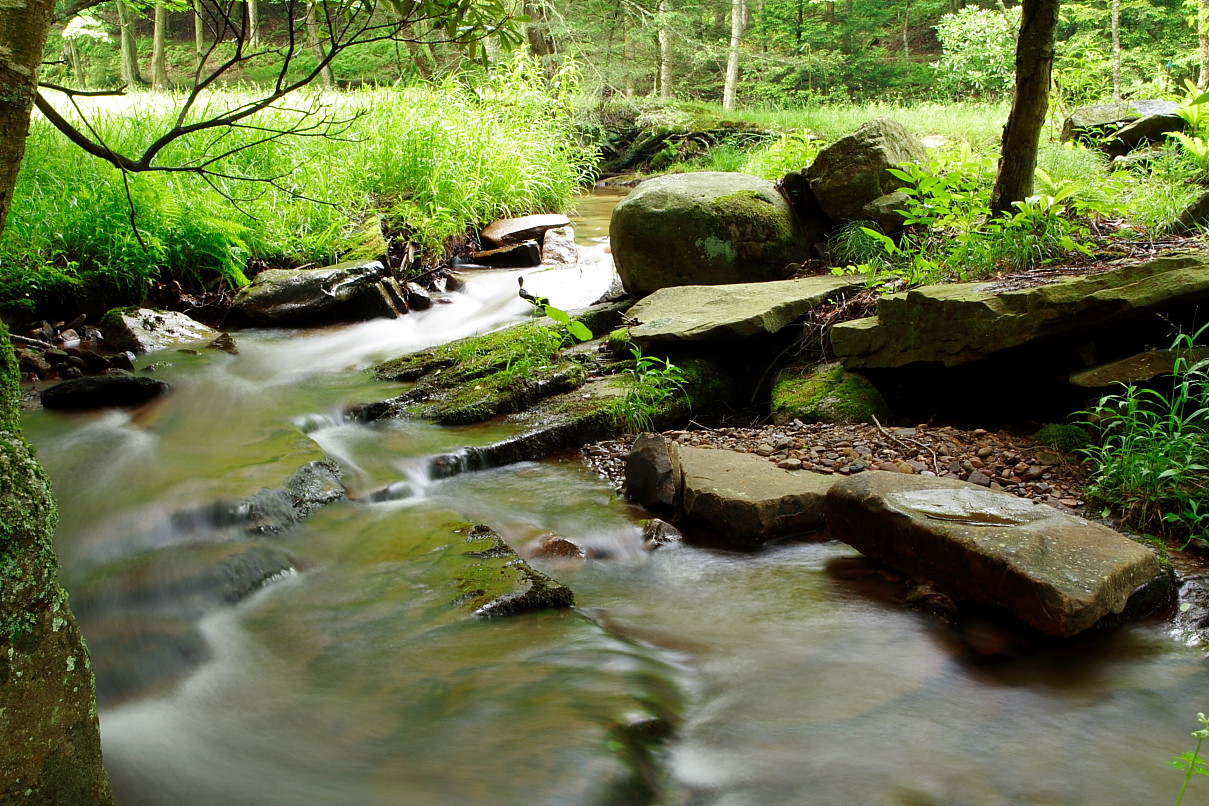
Liquid: a stream flows and takes the shape of its bed. Photo: Stream-Flowing-Water ForestWander, ForestWander, CC BY-SA 3.0 us, modified: reduced in size 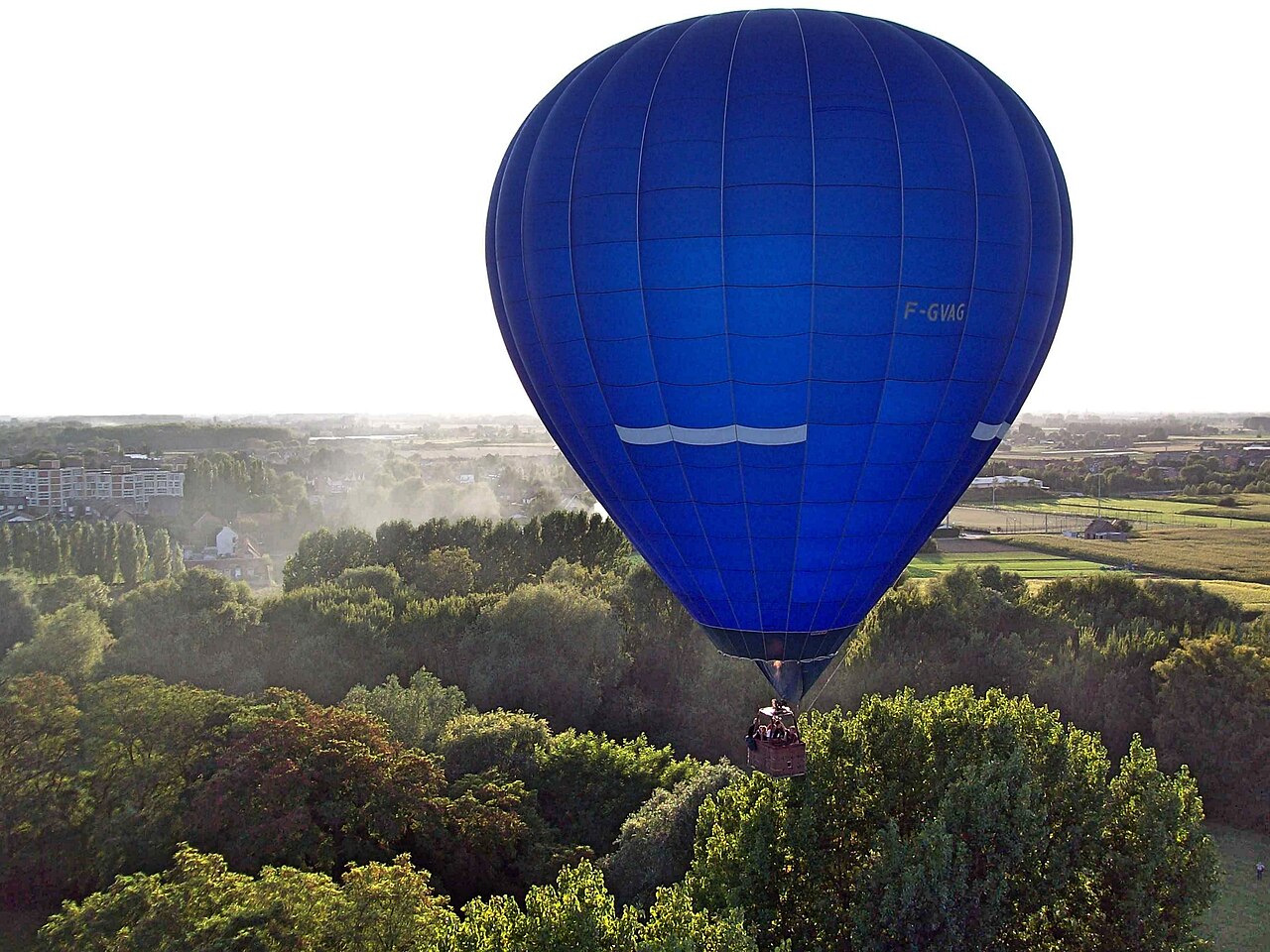
Gas: the air inside a hot-air balloon fills the whole balloon. Photo: Hot air balloon F-GVAG over Lompret (2), Pierre André Leclercq, CC BY-SA 4.0, modified: reduced in size 3. The particle model
Matter is made of tiny particles, which are atoms or molecules. When it is warm, particles move faster than when it is cold. The pointers show how they move in each state of matter.
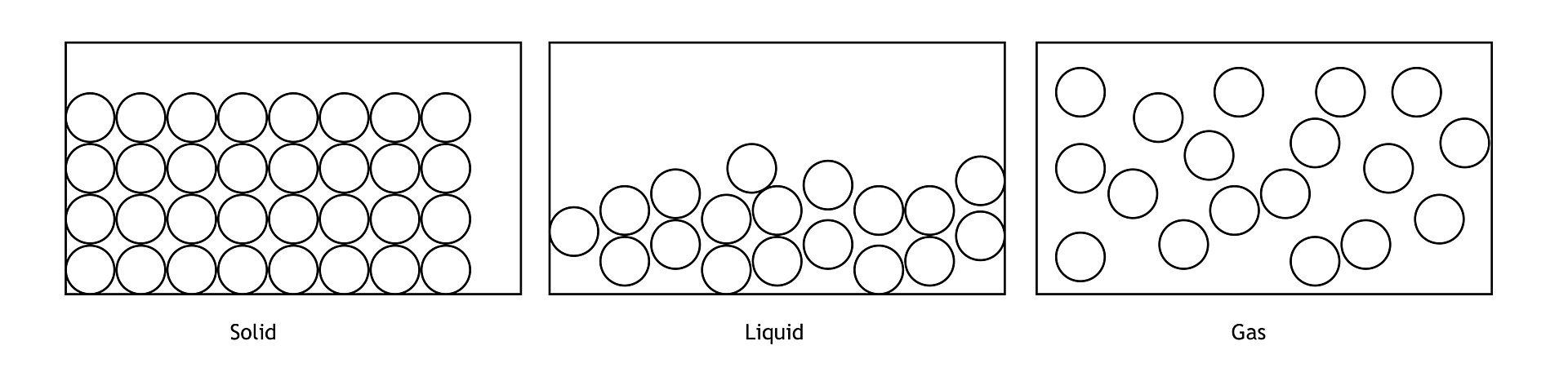
The particle model: solid, liquid and gas. Photo: Solids liquids and gases - particle model, Brightyellowjeans, CC BY-SA 4.0, modified: reduced in size 4. Changes of state
When the temperature changes, the state of matter of a substance can change. The arrows in the diagram each have their own name. Vaporisation is evaporation from the surface of a liquid or boiling throughout the liquid.
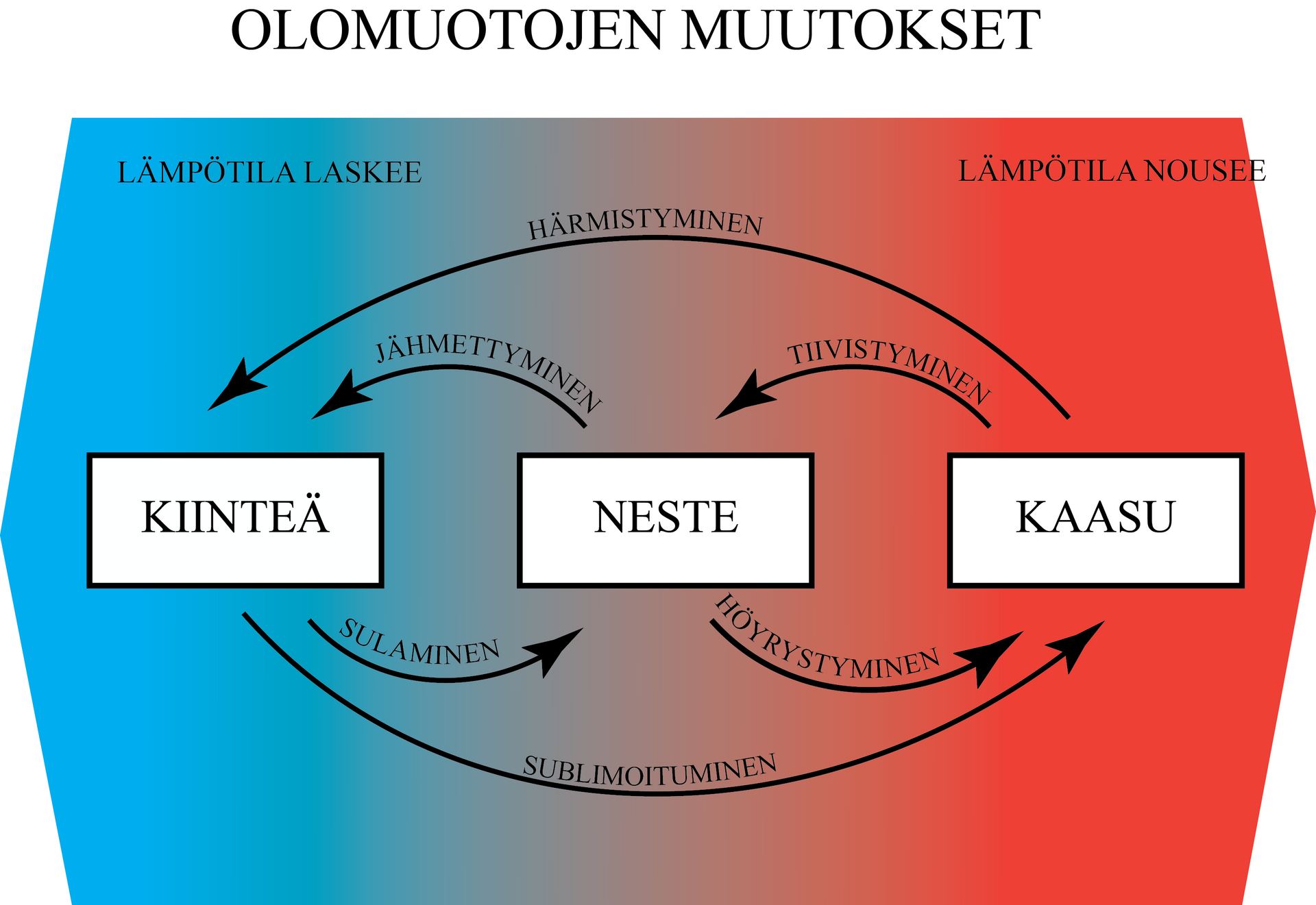
The changes of state and their names. Photo: AINEEN OLOMUODON MUUTOKSET, Opetustuubi, CC BY-SA 4.0, modified: reduced in size 5. Water in the kitchen and in nature
Water appears in all three states in everyday life. At normal atmospheric pressure, ice melts and water freezes at 0 °C. Water boils at 100 °C.
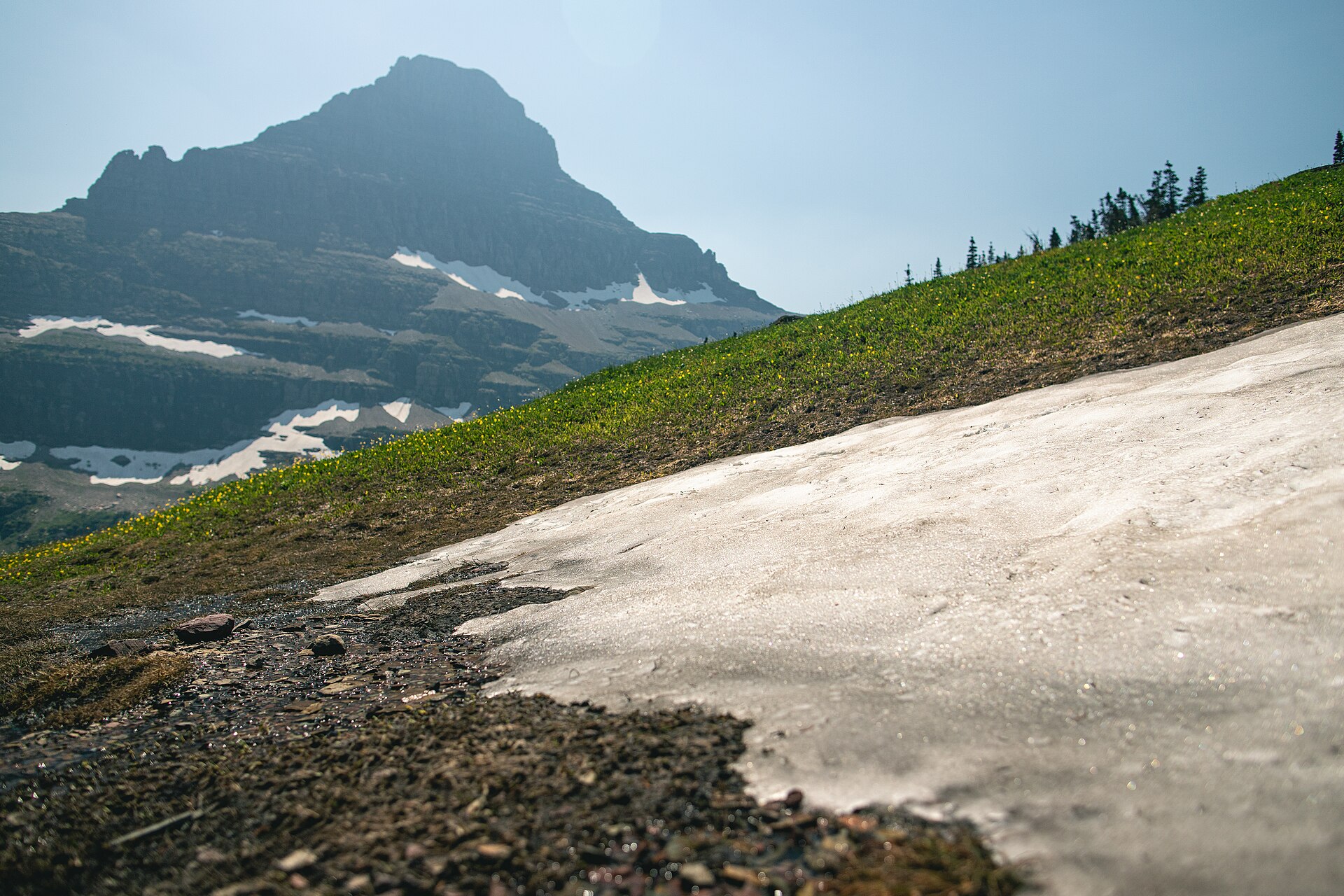
Photo: A Melting Snow Patch (51362607940), GlacierNPS, Public domain, modified: reduced in size 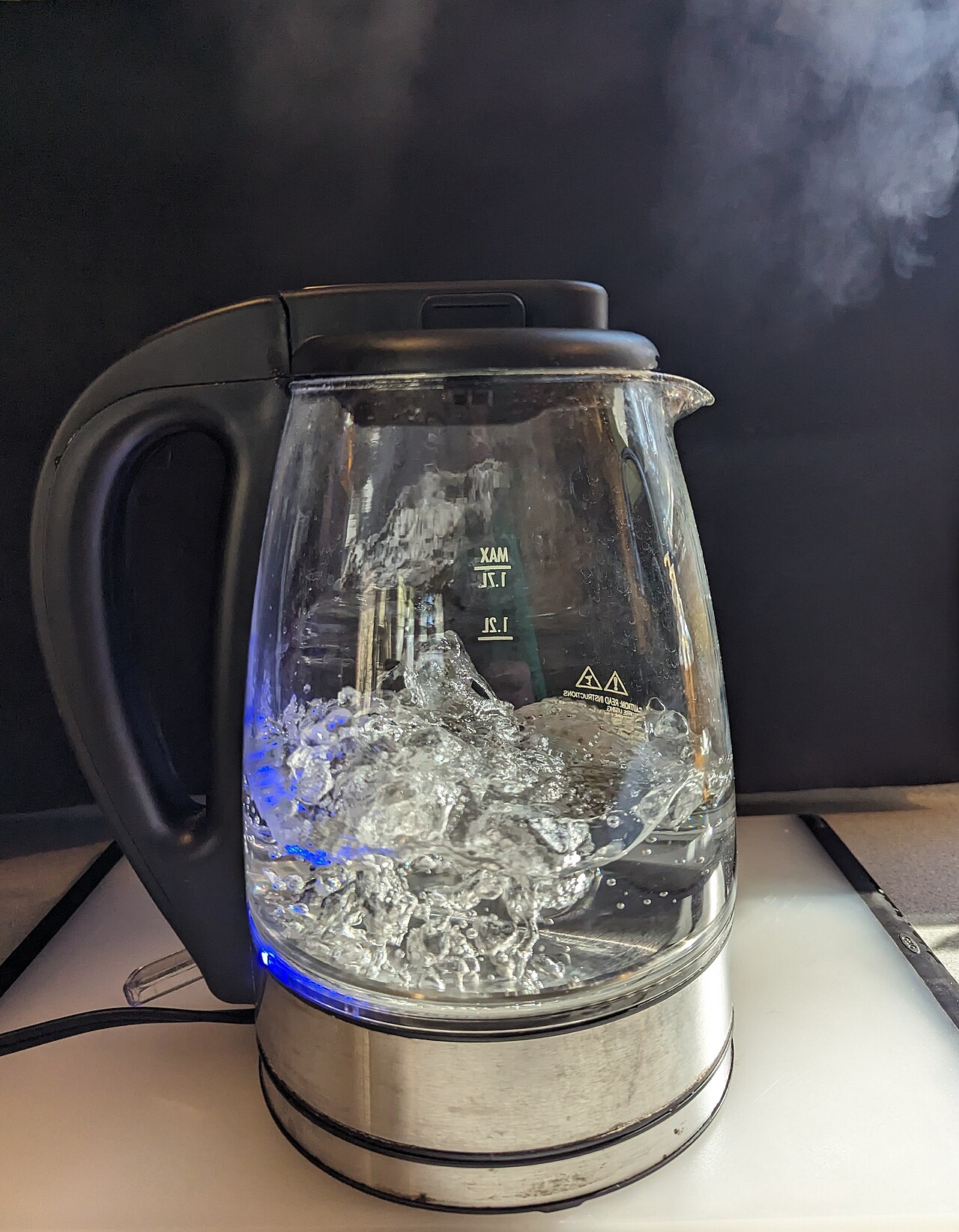
Photo: Boilingkettle, Plorpy2, CC BY-SA 4.0, modified: reduced in size 
Photo: Morning fog over lake in Warmian-Masurian Voivodeship, summer 2024, 02, Kgbo, CC BY-SA 4.0, modified: reduced in size 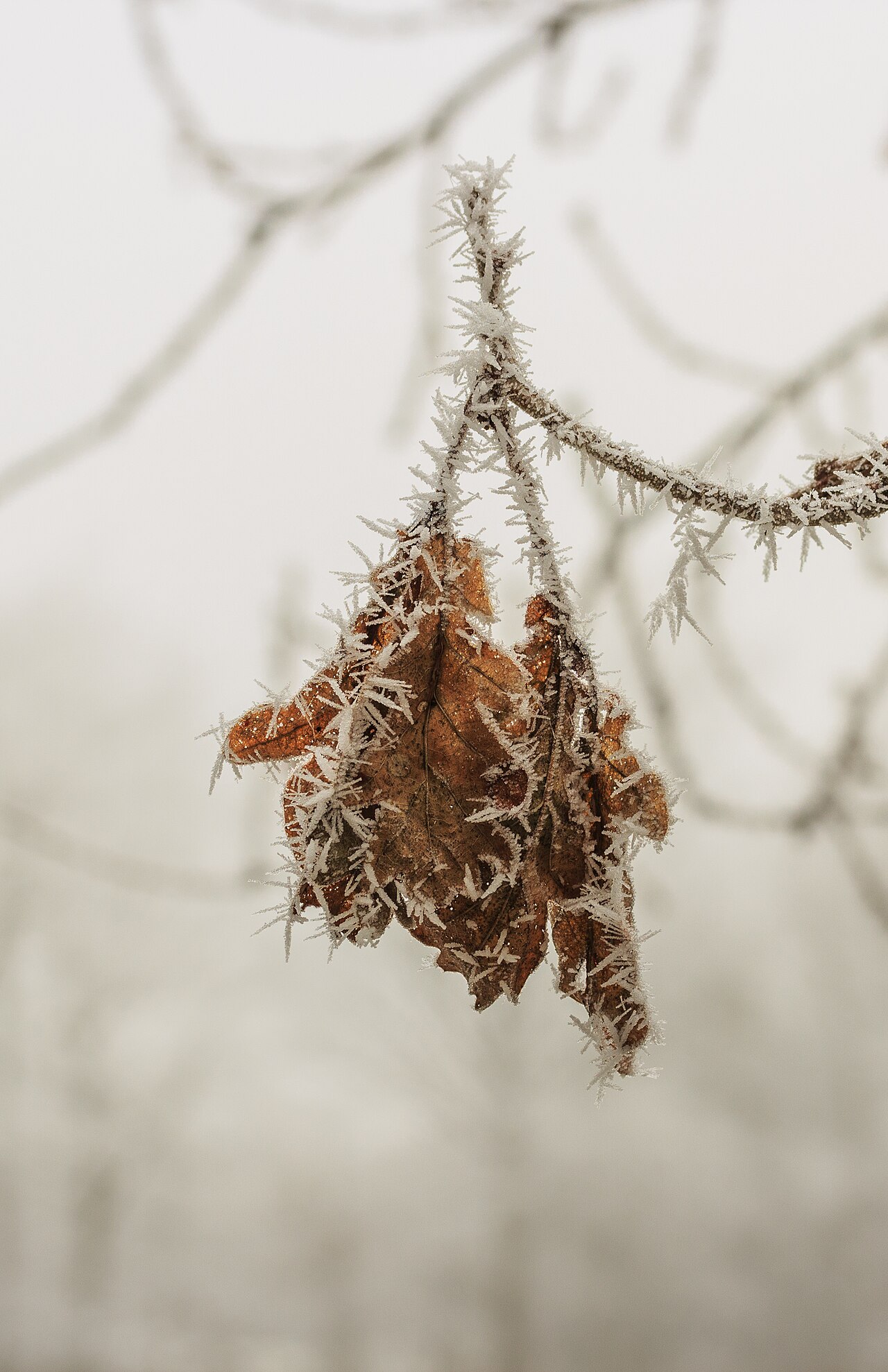
Photo: Met rijp bedekt eikenblad (Quercus) 02, Dominicus Johannes Bergsma, CC BY-SA 4.0, modified: reduced in size - 0 °C Melting: snow and ice melt into water. Water freezes at the same temperature.
- 100 °C Vaporisation: boiling water turns into water vapour. Water also evaporates at lower temperatures.
- Cooling Condensation: water vapour in the air turns into droplets, forming mist, for example.
- Freezing weather Deposition: water vapour turns straight into ice crystals, forming frost, also called hoarfrost.
6. Why does ice float?
When water freezes, it expands by about 9 %. That is why the density of ice is lower than that of liquid water. Ice floats, and most of it is below the water. That is why a deep lake freezes from the top and not all the way to the bottom.
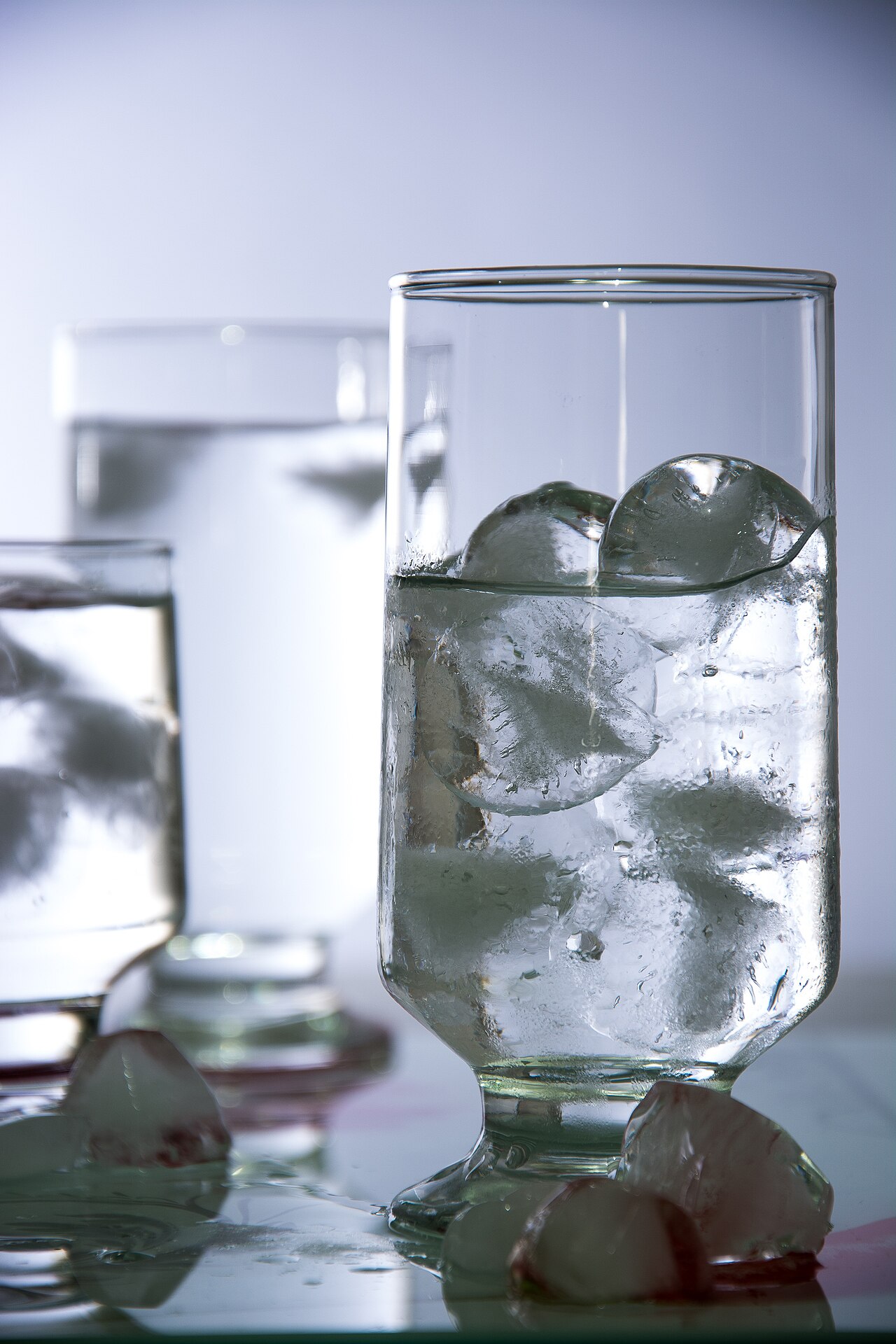
Ice cubes float in water. The droplets on the surface of the glass are condensed water vapour.. Photo: Ice cubes on water, Cleiton Andrade Andrade from Alfenas, Brasil, CC0, modified: reduced in size 7. Try it and think about it
Try it: which melts faster, an ice cube put in a warm place or one in a cool place?
Try it: what forms on the outside of a glass filled with cold water and ice cubes?
Think: why does washing hung outside in freezing weather dry?
Think: what happens to the particles when ice melts?


Summary
Matter is a solid, a liquid or a gas. In the particle model, the particles of a solid vibrate in place, in a liquid they slide past each other, and in a gas they move freely. The changes of state are melting, freezing, vaporisation and condensation, as well as deposition and sublimation. At normal atmospheric pressure, water melts at 0 °C and boils at 100 °C. Ice floats because its density is lower than that of water.
Frequently asked questions
Is water vapour visible?
No. Water vapour is a gas that you cannot see. What you see above a pot and in mist is tiny water droplets that have condensed as they cooled. Water thrown on the stones of a sauna stove turns into invisible water vapour.
Does water always boil at 100 degrees?
Only at normal atmospheric pressure. High in the mountains the air pressure is lower, and water boils below 100 degrees. In a pressure cooker the pressure is higher, and water boils above 100 degrees.
Are there more than three states of matter?
Yes. The fourth state of matter is plasma, in which matter consists of electrically charged particles. Plasma is found in lightning and in the Sun, for example. Schools usually teach the three most common states of matter.