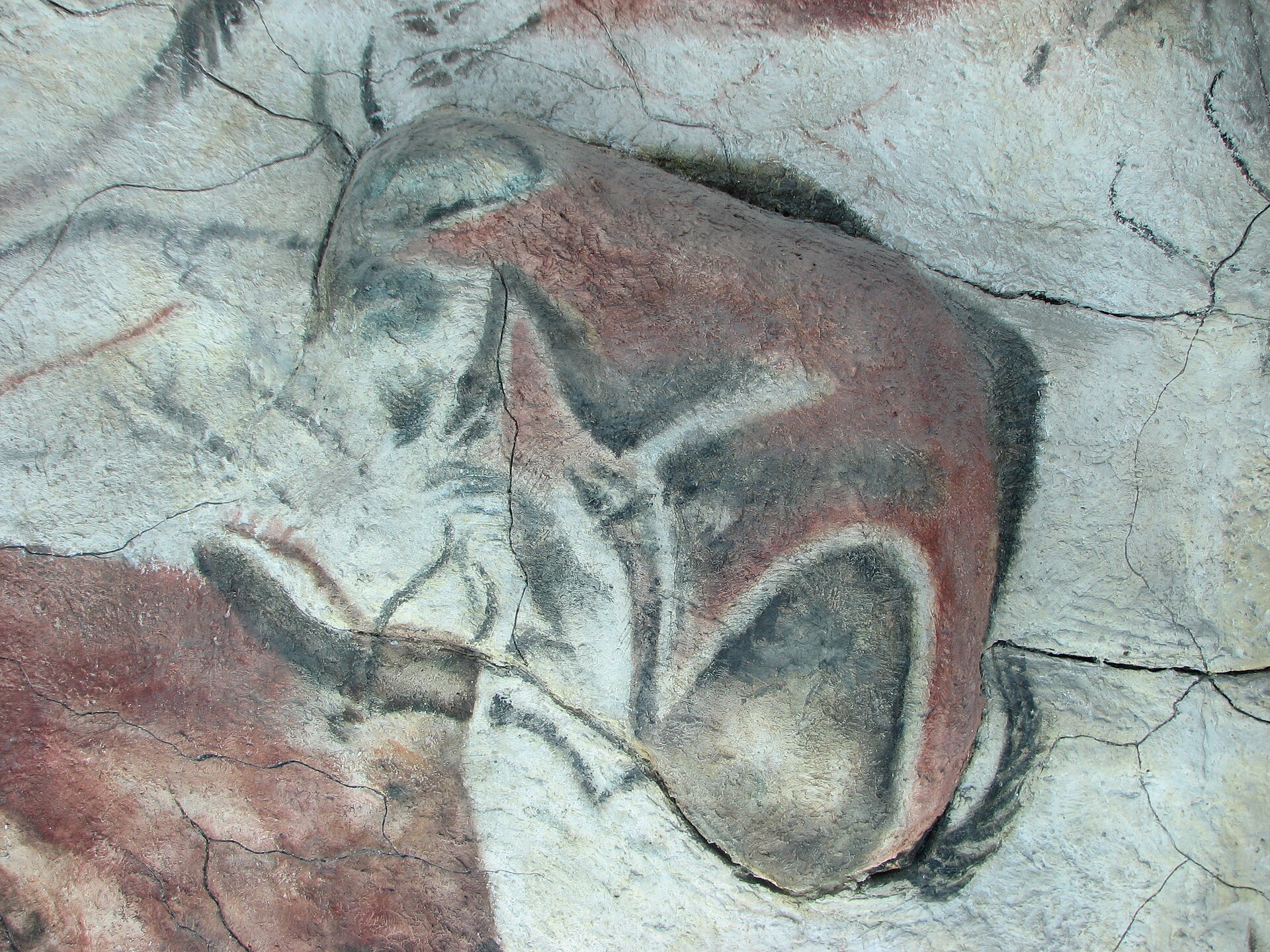

The Stone Age: teaching, slides and questions
What is prehistory? Hunters, tools, fire, cave paintings, the beginning of farming and the Stone Age in Finland, with pictures, for grades 4–6.
The Stone Age is the longest period in the history of humankind, and we know about it thanks to the finds of archaeologists. The article suits history lessons in grades 4–6, and every step can be shown to the class as a slide.
At the end, the pupil can tell what prehistory is, how people lived in the Stone Age and what changed when farming began. They also know how we know about the Stone Age.
Key concepts
- prehistory
 Prehistory is the time before written sources, so what we know about it comes mainly from archaeological finds. It ended at different times in different parts of the world. In Finland prehistory ended only in the Middle Ages, much later than in Egypt, for example.
- Stone Age
 The Stone Age is the longest period in human history, when tools were mostly made of stone, bone and wood. It began more than two million years ago, and for most of it people lived by hunting, fishing and gathering. People moved to Finland after the Ice Age, about 11,000 years ago.
- archaeologist
 A scientist who digs up old objects and remains to find out about the past. An archaeologist digs carefully with a trowel and a brush and records exactly where each find was. We know almost everything about the Stone Age thanks to archaeologists, because there was no writing yet.
- hunter-gatherer
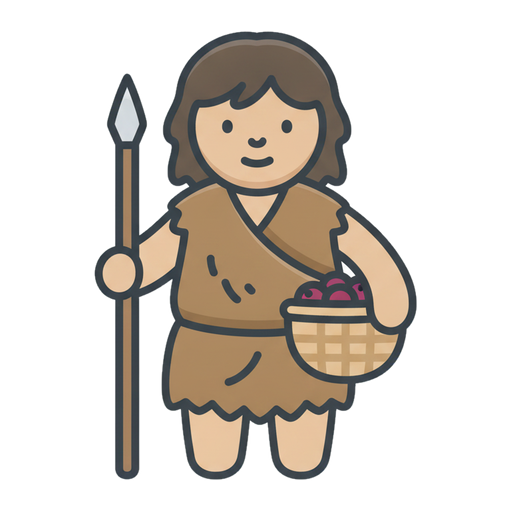 A person who got food by hunting, fishing and gathering plants. Hunter-gatherers moved from place to place with the seasons and the food. Finland's first people came here after the Ice Age, about 11,000 years ago.
- cave painting
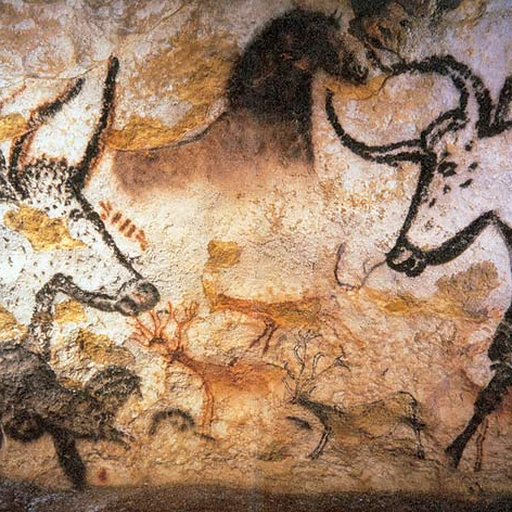 A picture that Stone Age people painted on a cave wall, often of an animal such as a horse, a bison or a deer. The paints were made from minerals in the earth and charcoal. The cave paintings of Lascaux in France are about 17,000 years old.
- farming
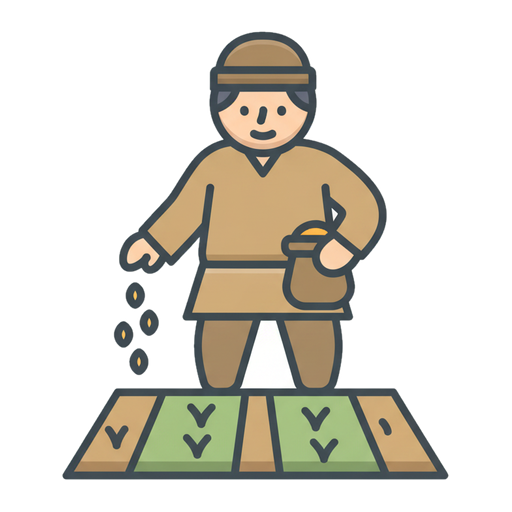 Growing food in fields and keeping farm animals. Farming began in the Middle East more than 11,000 years ago and slowly reached Finland at the end of the Stone Age. When people began to farm, they settled down in one place.
- comb ware
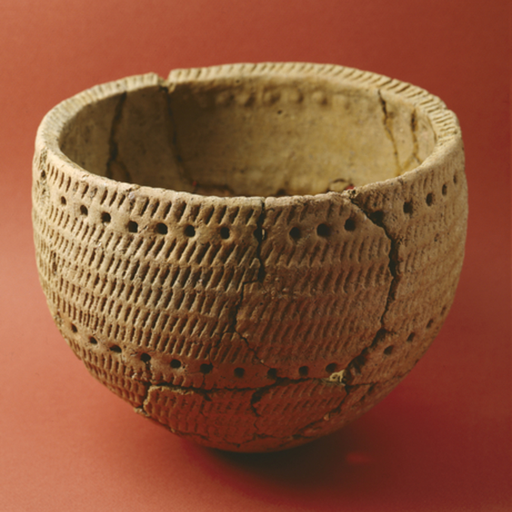 A Stone Age clay pot decorated with patterns pressed in with a comb-like tool. Comb ware was made in Finland in the Stone Age, about 6,000 years ago. Pieces of these pots help archaeologists date where people lived.
- rock painting
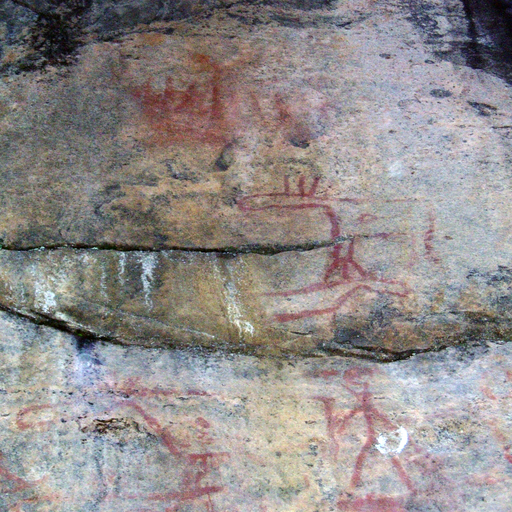 A Stone Age picture painted with red ochre on a rock face. The pictures show elks, human figures, boats and handprints. More than a hundred are known in Finland, mostly on lakeside cliffs, such as Astuvansalmi in Ristiina, Mikkeli.
Related exercises
There is no exercise for this topic yet
Teacher or creator: make the first exercise with Puro Editor and choose Prehistory and the Stone Age as its topic. It will appear here as soon as it is published.
1. What do you know about the Stone Age?
How do we know about people who could not write?
What tools did Stone Age people work with?
Where did they get their food?
Why did they paint animals on the walls of caves?2. Prehistory and the Stone Age
Prehistory is the time before writing. We know about it from what archaeologists have found in the ground. The Stone Age is the longest part of prehistory, when tools were made of stone, bone and wood. The years are approximate numbers.
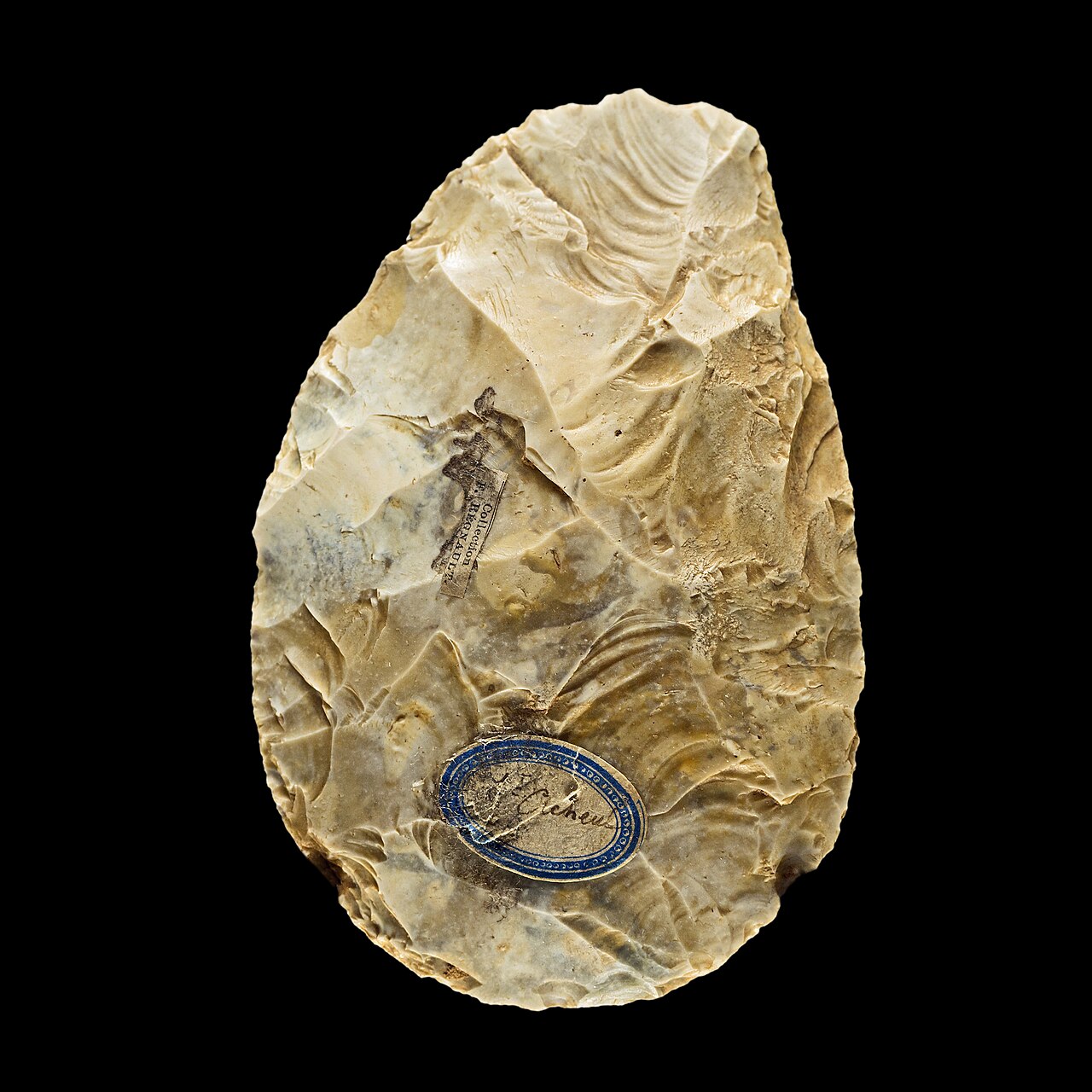
A hand axe, a tool shaped from flint, from France. Photo: Biface de St Acheul MHNT, Didier Descouens, CC BY-SA 4.0, modified: reduced in size 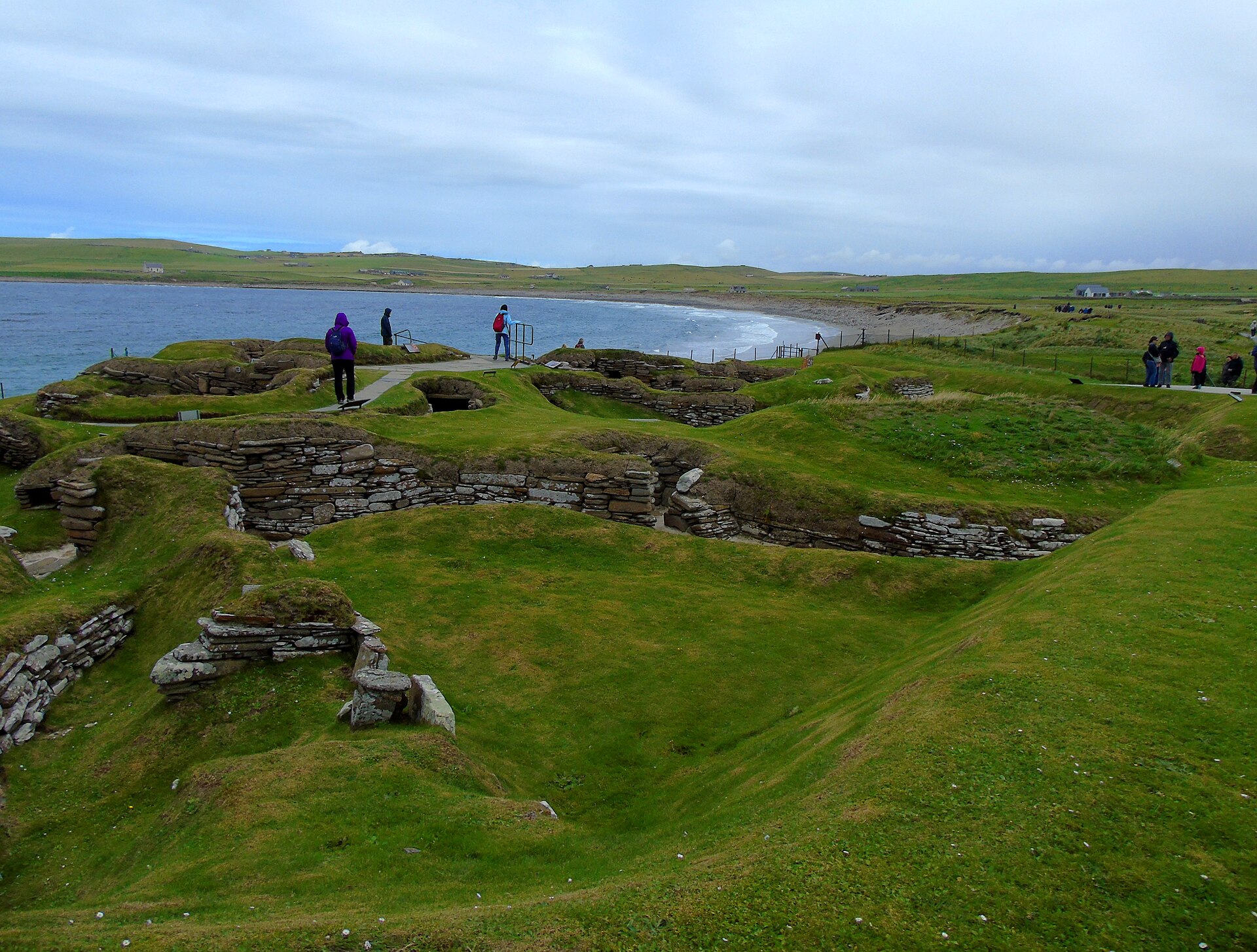
Skara Brae in Scotland, the ruins of a Stone Age village. Photo: Skara Brae (village) - geograph.org.uk - 7270663, Carroll Pierce, CC BY-SA 2.0, modified: reduced in size - over 2 million years ago People begin to make tools from stone
- about 300 000 years ago The modern human species, Homo sapiens, appears in Africa
- over 11 000 years ago Farming begins in the Middle East
- about 11 000 years ago The first people come to Finland after the Ice Age
- about 5000 years ago Writing is invented in the Middle East. In Scotland people still live in a Stone Age village.
3. Hunters and gatherers
The Stone Age hunter-gatherers fished, hunted and gathered berries and nuts. They followed their food from place to place. Tools were made of flint, bone and wood, and later also of polished stone. Fire gave warmth and light, and food could be cooked.
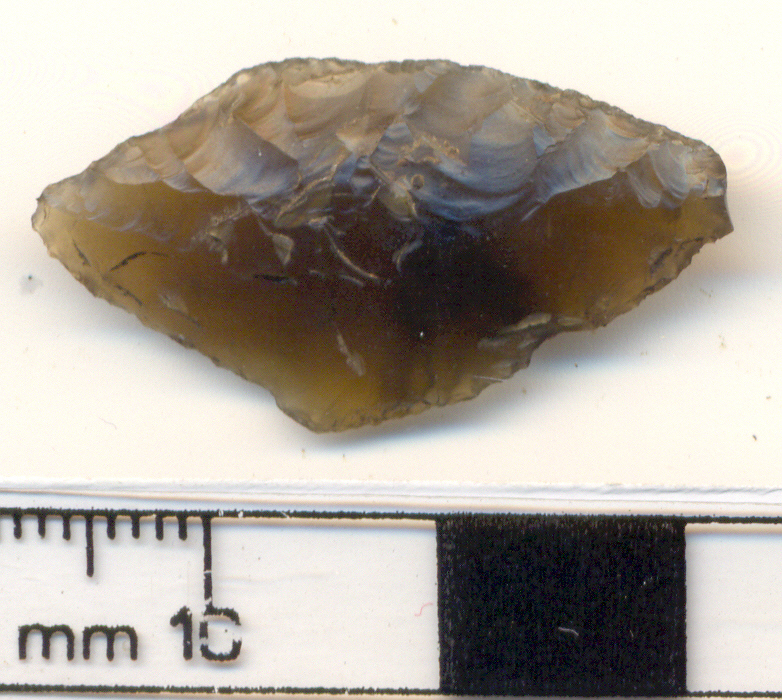
An arrowhead made of flint, from England. Photo: Neolithic leaf shaped flint arrowhead, side 1. (FindID 72735), Derby Museums Trust, Rachel Atherton, CC BY-SA 2.0, modified: reduced in size 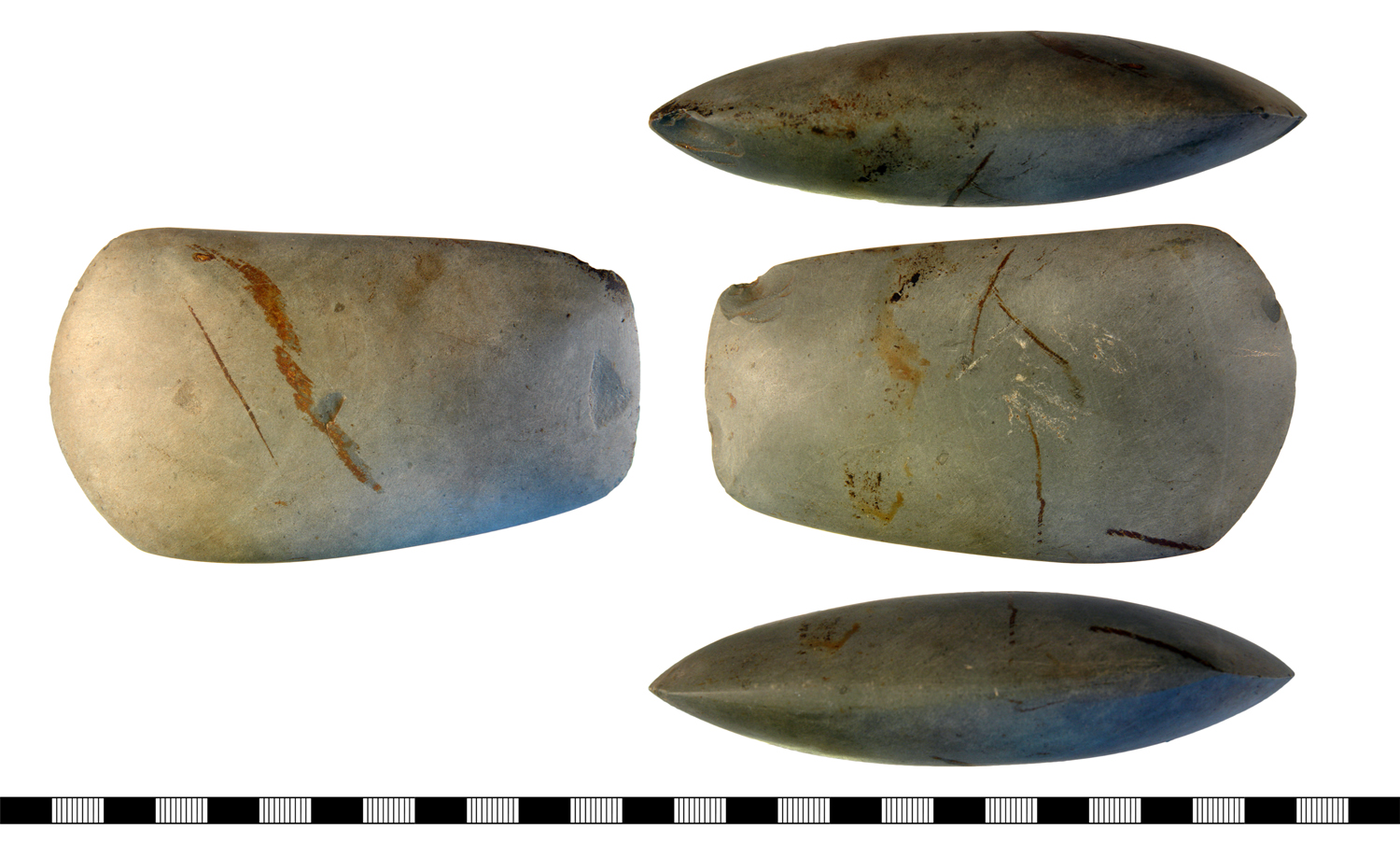
A polished stone axe from England. Photo: Neolithic Polished Stone Axe. (FindID 240696), North Lincolnshire Museum, Lisa Staves, CC BY-SA 2.0, modified: reduced in size 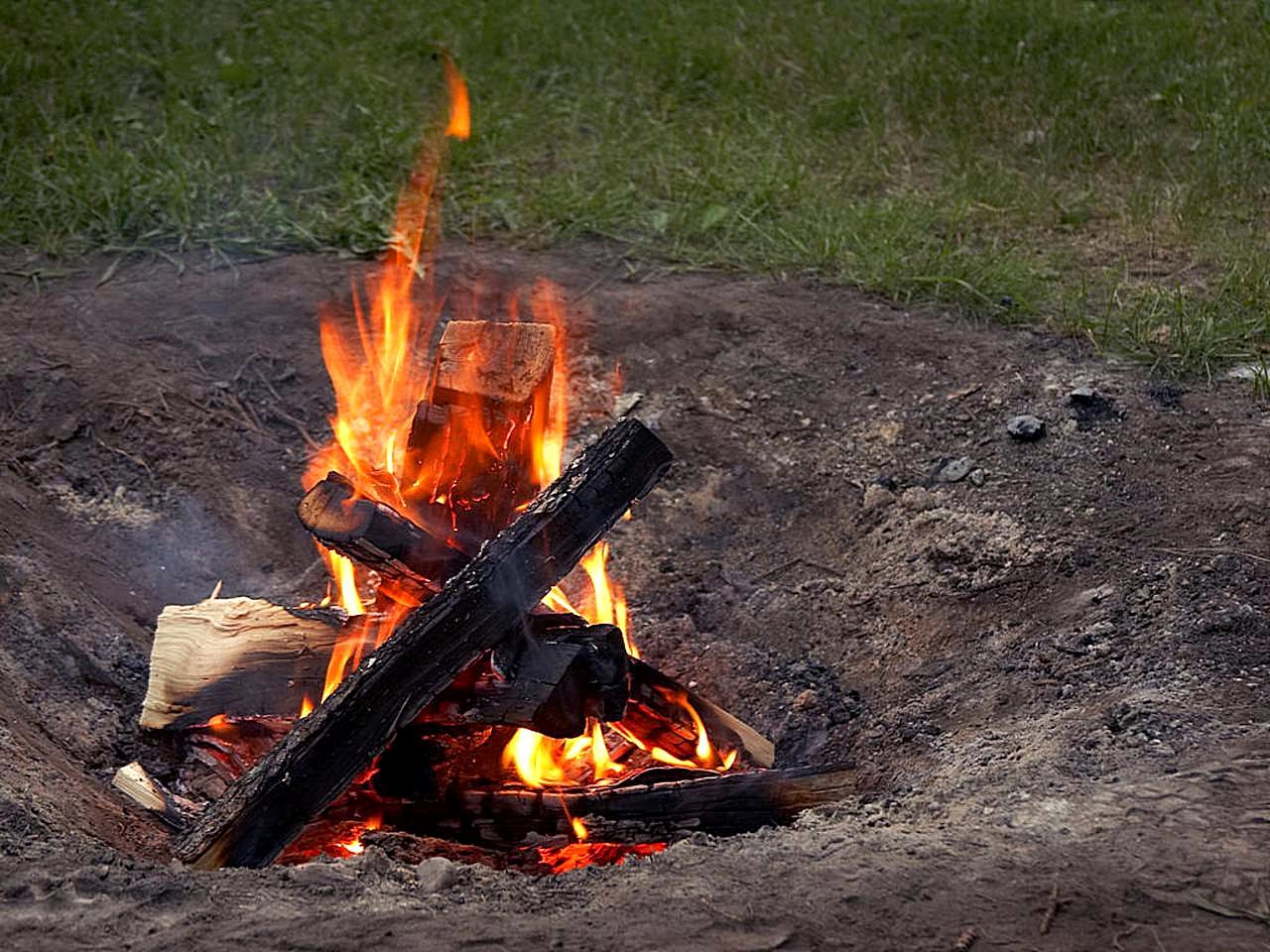
A campfire. The photo is modern.. Photo: Campfires burning wood pits, Jon Sullivan, Public domain, modified: reduced in size 4. Cave paintings
Stone Age people painted animals on the walls of caves. Such a picture is a cave painting. The paintings in the Chauvet cave in France are over 30 000 years old, and those in the Lascaux cave about 17 000. Why the pictures were made is not known for certain.
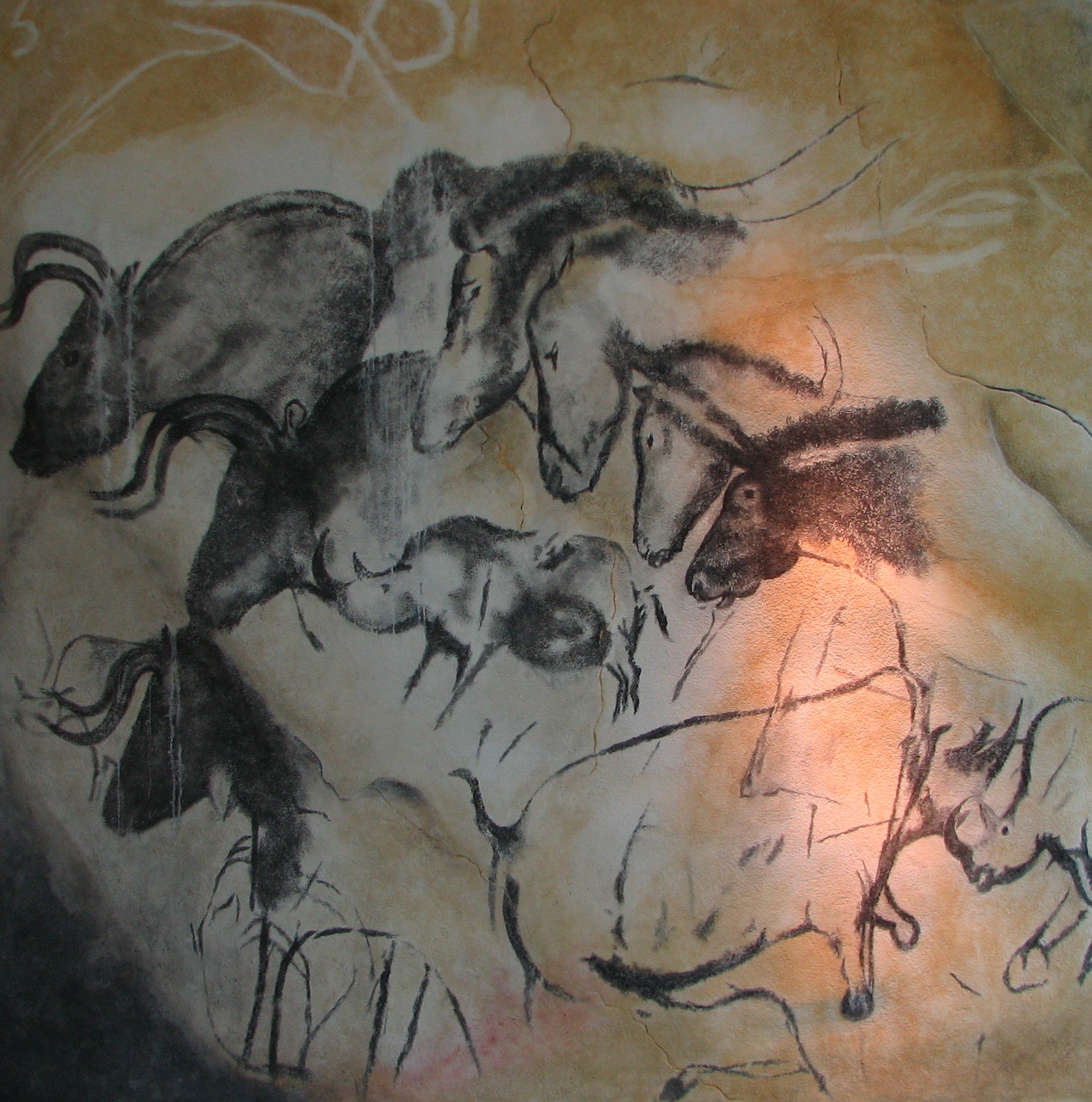
A replica of the paintings in the Chauvet cave, in a museum. The originals are over 30 000 years old.. Photo: Paintings from the Chauvet cave (museum replica), HTO, Public domain, modified: reduced in size 5. Farming changes life
Over 11 000 years ago in the Middle East, people began to grow grain and keep farm animals. Farming tied people to their fields, and permanent settlements and villages appeared. Food could be stored in clay pots. Farming spread gradually to Europe.
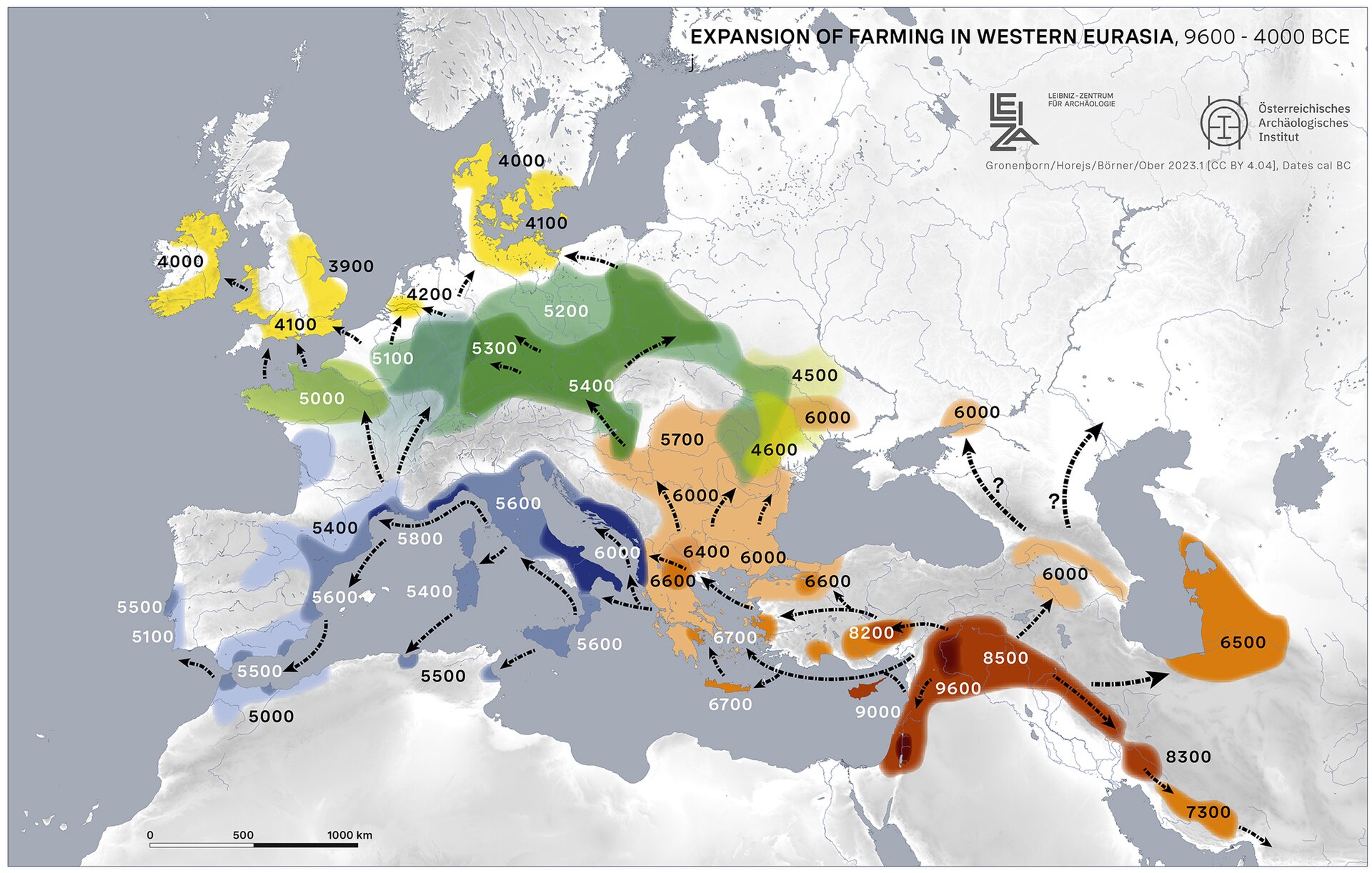
The spread of farming from the Middle East to Europe. The dates are estimates and mean years before the common era (BCE).. Photo: Expansion of farming in western Eurasia, 9600 - 4000 cal BC, D. Gronenborn, B. Horejs, M. Börner, M. Ober (LEIZA/ÖAI), CC BY-SA 4.0, modified: reduced in size 6. The Stone Age in Finland
People came to Finland after the Ice Age about 11 000 years ago. The Suomusjärvi culture is named after Suomusjärvi. About 6 000 years ago people made comb ware and painted rock paintings. Farming came to Finland at the end of the Stone Age.
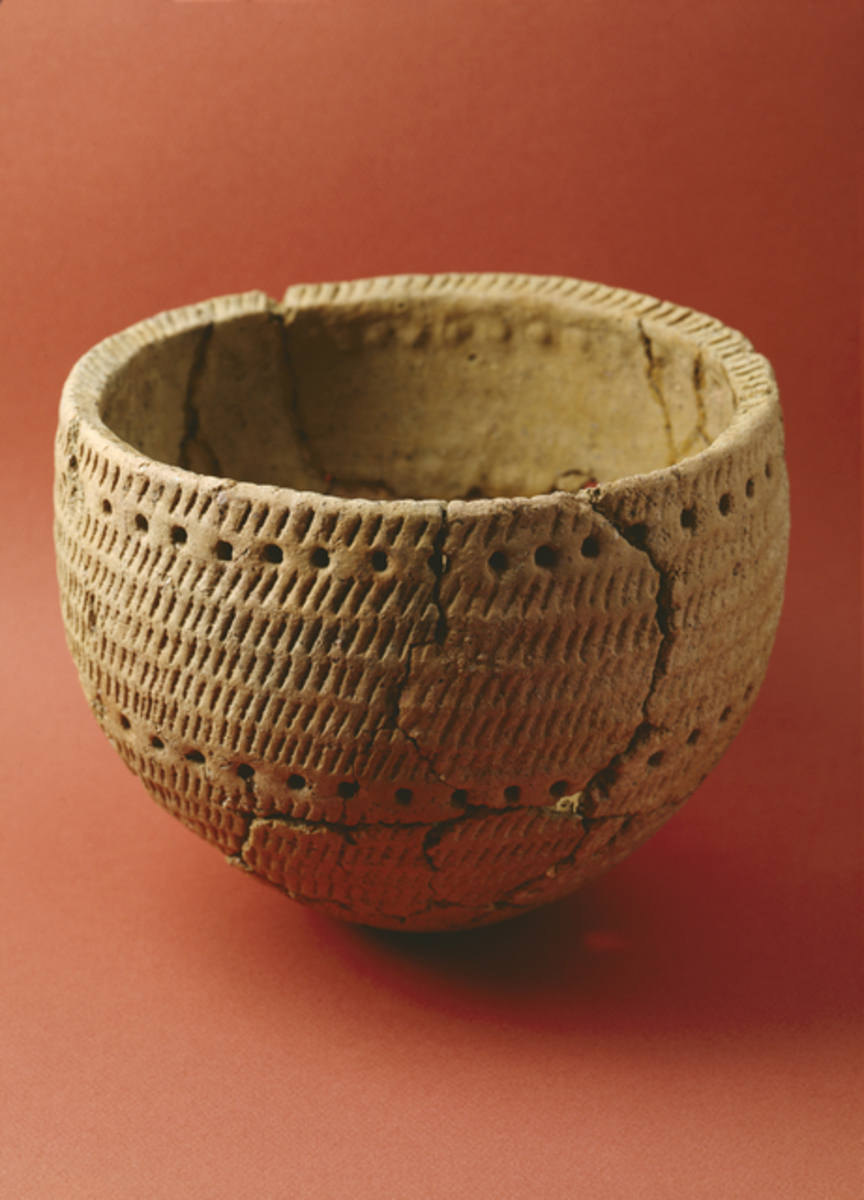
Comb ware from Taipalsaari. The patterns were pressed with a comb-like tool.. Photo: Comb ceramic pottery from Taipalsaari, Finland, Museovirasto (The National Board of Antiquities of Finland), CC BY 4.0, modified: reduced in size 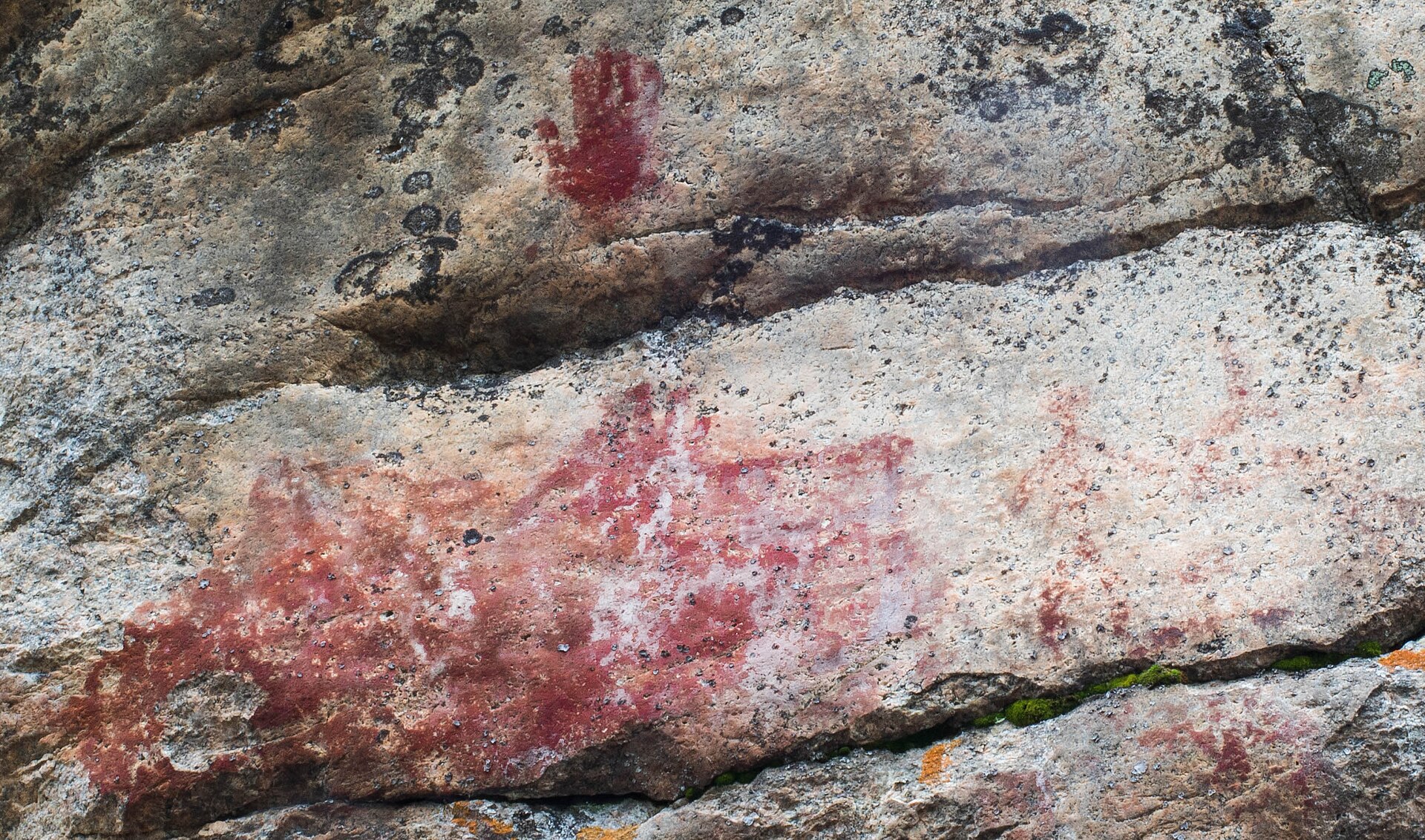
A rock painting at Astuvansalmi in Ristiina, Mikkeli. Photo: Astuvansalmi rock paintings detail 1, Xanara, CC BY-SA 4.0, modified: reduced in size 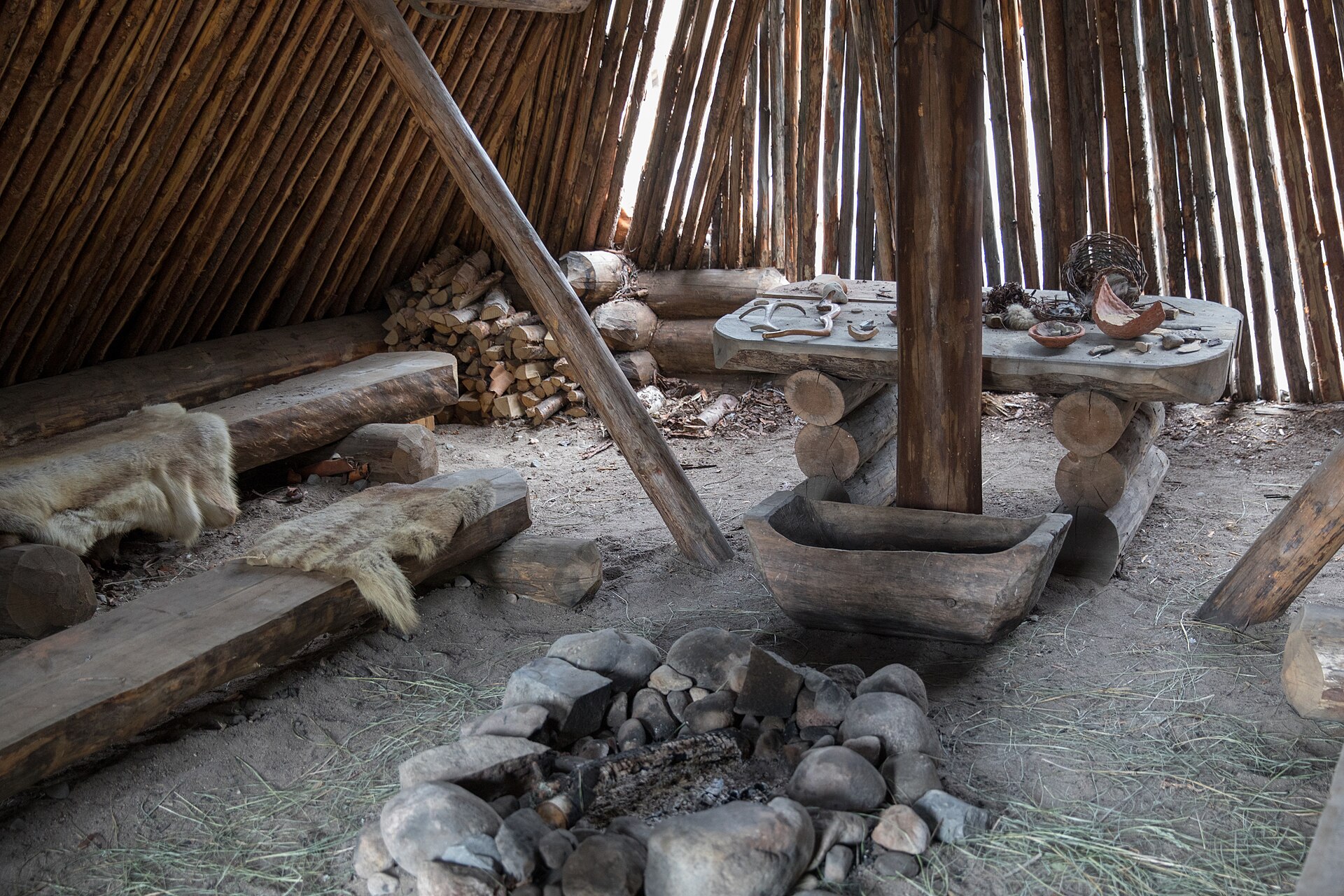
A replica of a Stone Age dwelling at the Kierikki Stone Age Centre in Oulu. Photo: Kierikki Stone Age Centre Oulu Finland 01, Ninaras, CC BY 4.0, modified: reduced in size 7. Think in pairs
Why do archaeologists need finds and excavations?
How did farming change people's lives?
What do cave paintings tell us about Stone Age people?
What would you do first in the Stone Age: make fire, find food or find shelter?


Summary
Prehistory is the time before writing. The Stone Age is its longest part, and we know about it from the finds of archaeologists. Stone Age people hunted, fished and gathered their food, made tools from stone and used fire. They painted animals on the walls of caves. Over 11 000 years ago farming began, and people settled in permanent places. People came to Finland about 11 000 years ago.
Frequently asked questions
What does prehistory mean?
Prehistory is the time before writing. There are no written sources from it, so it is studied through archaeological finds. Prehistory ended at different times in different parts of the world.
Did Stone Age people live in caves?
Sometimes, but most of the time they did not. Many lived in huts and tents, which were built, for example, on a shore. Caves were also used as shelter.
What did the Stone Age end with?
The Stone Age ended when people learned to make tools from metal. First came the Bronze Age and then the Iron Age. The timing varied from region to region: bronze came to Finland about 1500 BCE.