
The four seasons: spring, summer, autumn and winter
Spring, summer, autumn and winter in order: what happens in nature, which months belong to each season and why the seasons come back. For ages 7–8.
In many parts of the world, including most of Europe, there are four seasons: spring, summer, autumn and winter. They always come in the same order. In every season something happens in nature that pupils can see for themselves. The article is made for science lessons about nature and the environment for children aged 7–8. Each step is ready to show to the class as a slide.
At the end the pupil names the seasons in order. They tell what happens in nature in the different seasons. They also know which months belong to which season.
Key concepts
- spring
 The season when the snow melts and plants start to grow.
- summer
 The warmest season, when the days are long and bright.
- autumn
 The season when leaves turn yellow and fall from the trees.
- winter
 The cold season, when it snows and the water freezes.
- changing seasons
 Changing seasons means that spring, summer, autumn and winter follow each other. This happens because the Earth's axis is tilted as the Earth orbits the Sun.
- year
 The time it takes the Earth to go once around the sun, about 365 days.
- migratory bird
 A migratory bird flies to warmer places in autumn and comes back in spring to nest. The swallow is one example.
- hibernation
 During hibernation, an animal rests through the winter in its den and lives on the fat stored in its body. Bears, for example, sleep through the winter this way.
Related exercises
1. What season is it now?
Look out of the window together.
What season is it now?
How can you tell?
Look at the trees, the ground and the sky.2. Four seasons
A year has four seasons: spring, summer, autumn and winter.
They always come in the same order. After winter, spring comes again.
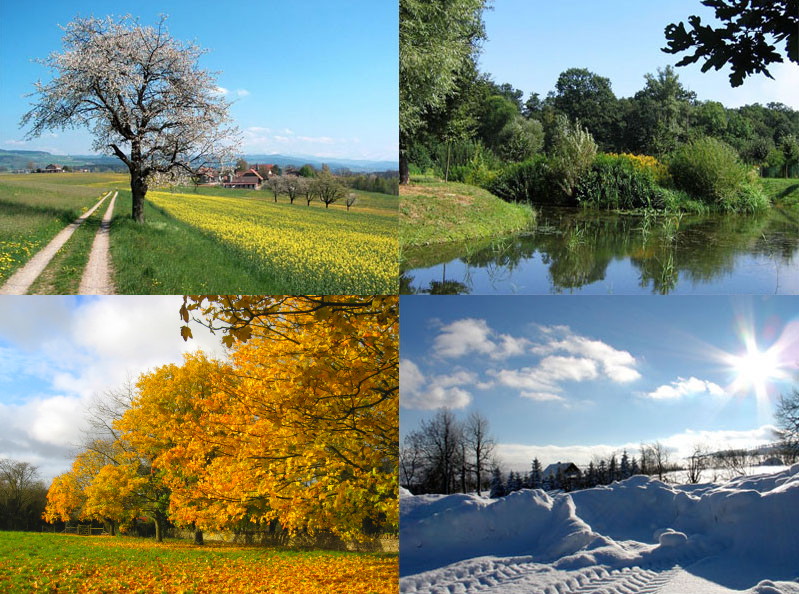
Spring, summer, autumn and winter. Photo: Four seasons, Predavatel (kooste neljästä Wikimedia Commonsin kuvasta), CC BY-SA 3.0, modified: resized 3. What happens in nature?
In spring it gets warmer and migratory birds come back. In summer plants flower and berries ripen. In autumn leaves turn yellow and fall. In winter ponds and lakes can freeze over, and the hedgehog sleeps through the cold in hibernation.
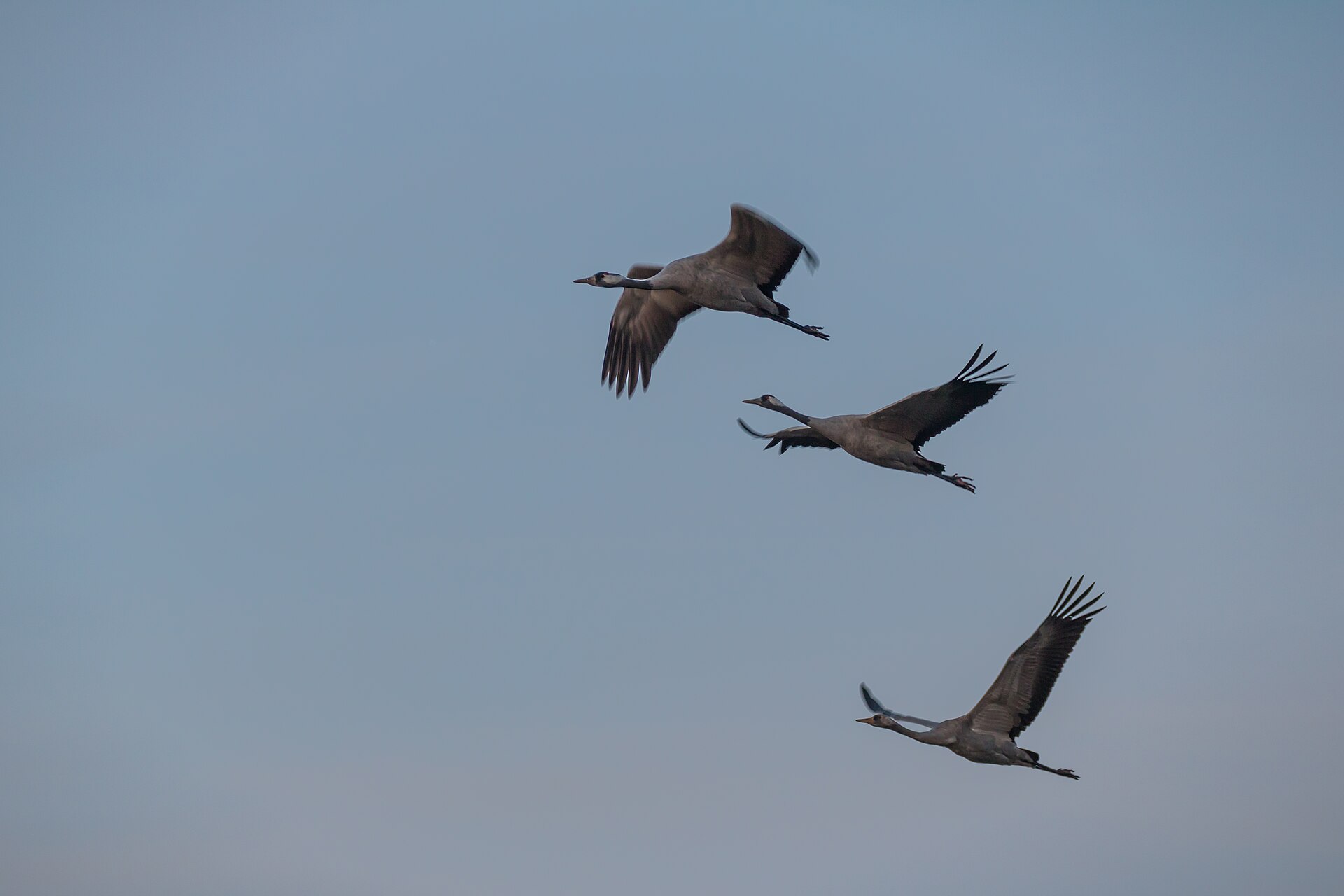
In spring many migratory birds come back. In the picture: cranes in flight.. Photo: Common crane - Pulken (26752453792), Susanne Nilsson, CC BY-SA 2.0, modified: resized 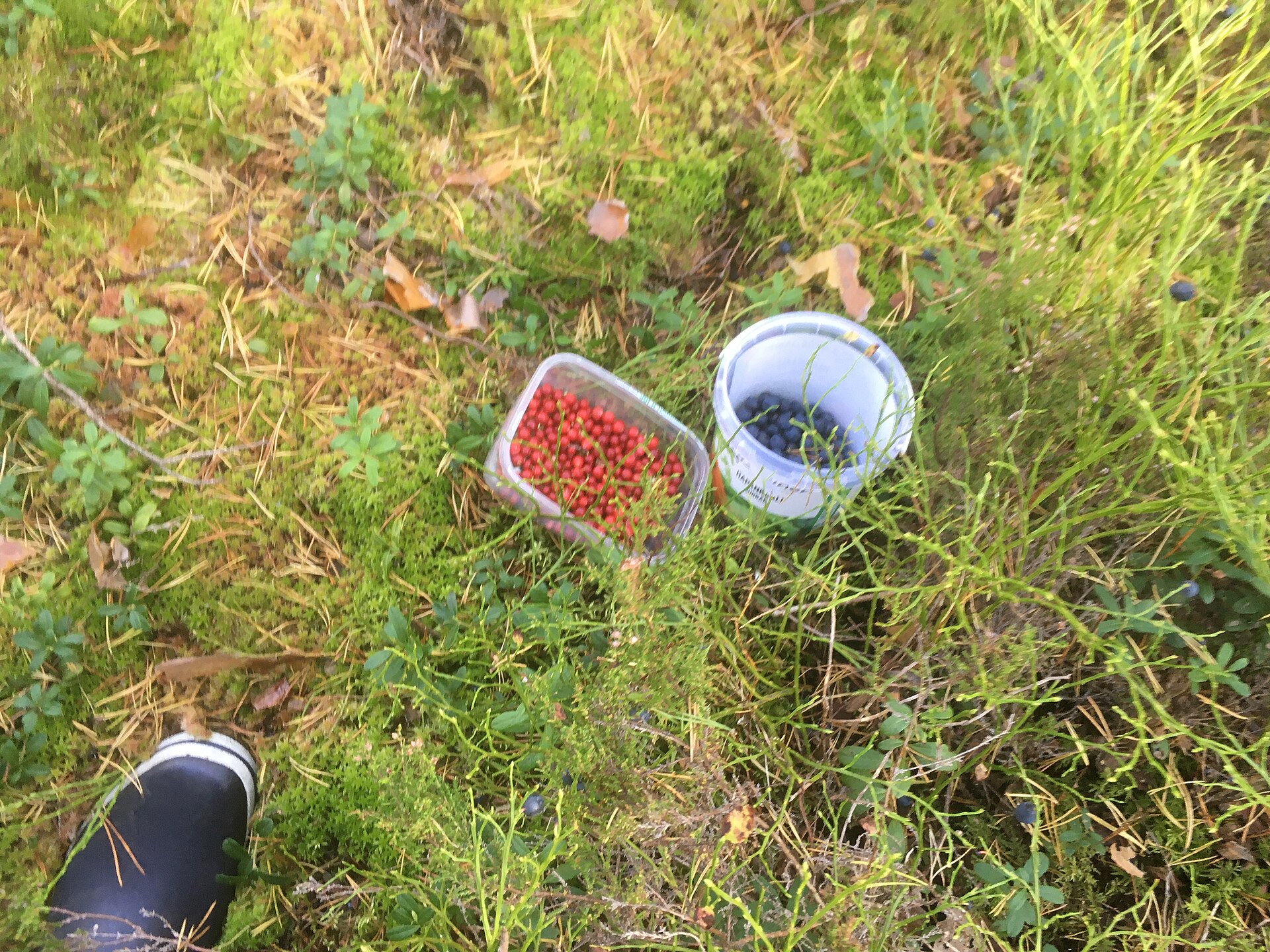
In late summer berries ripen in the woods, for example bilberries and lingonberries. Photo: Bilberries and lingonberries, Ypsilon from Finland, CC0, modified: resized 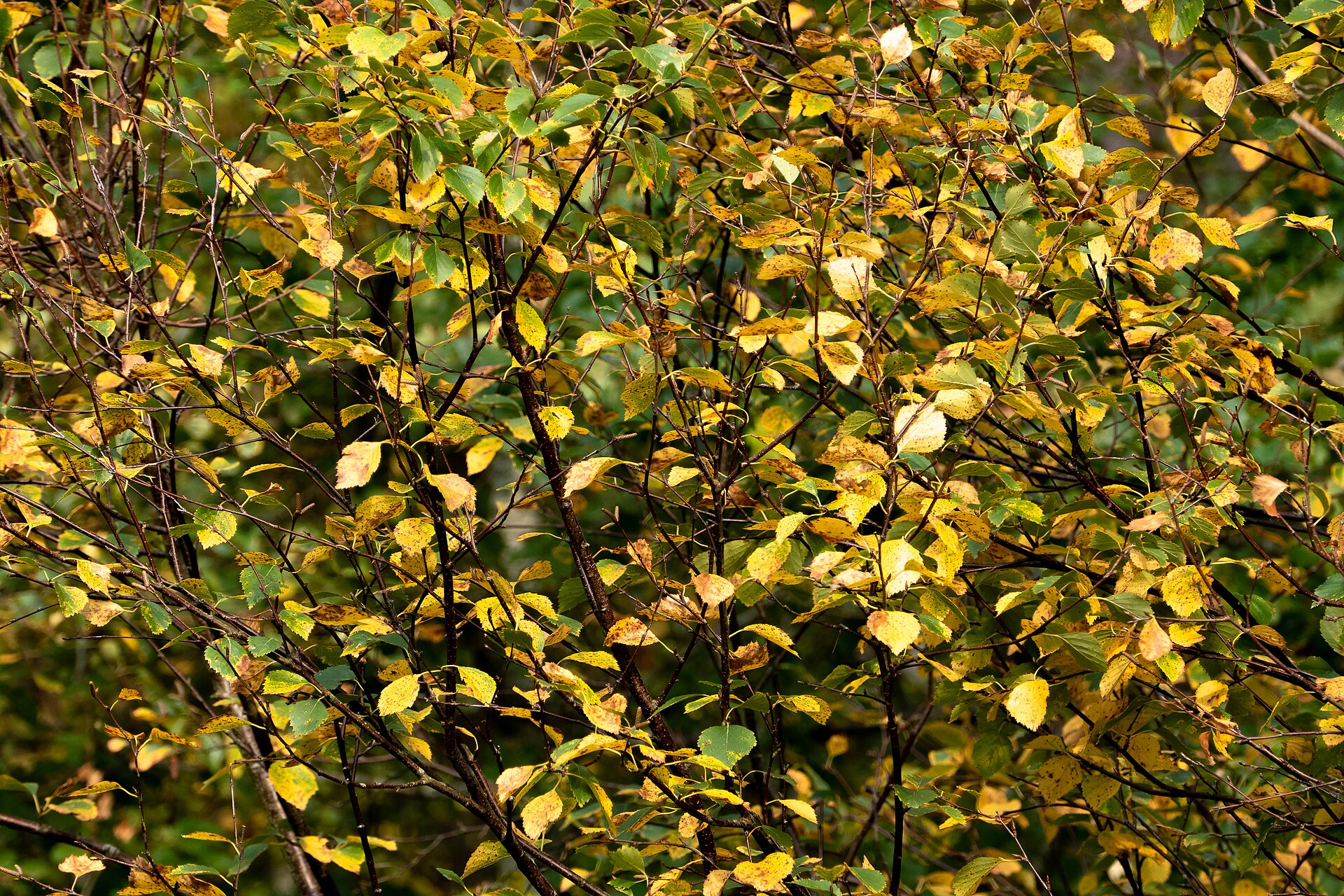
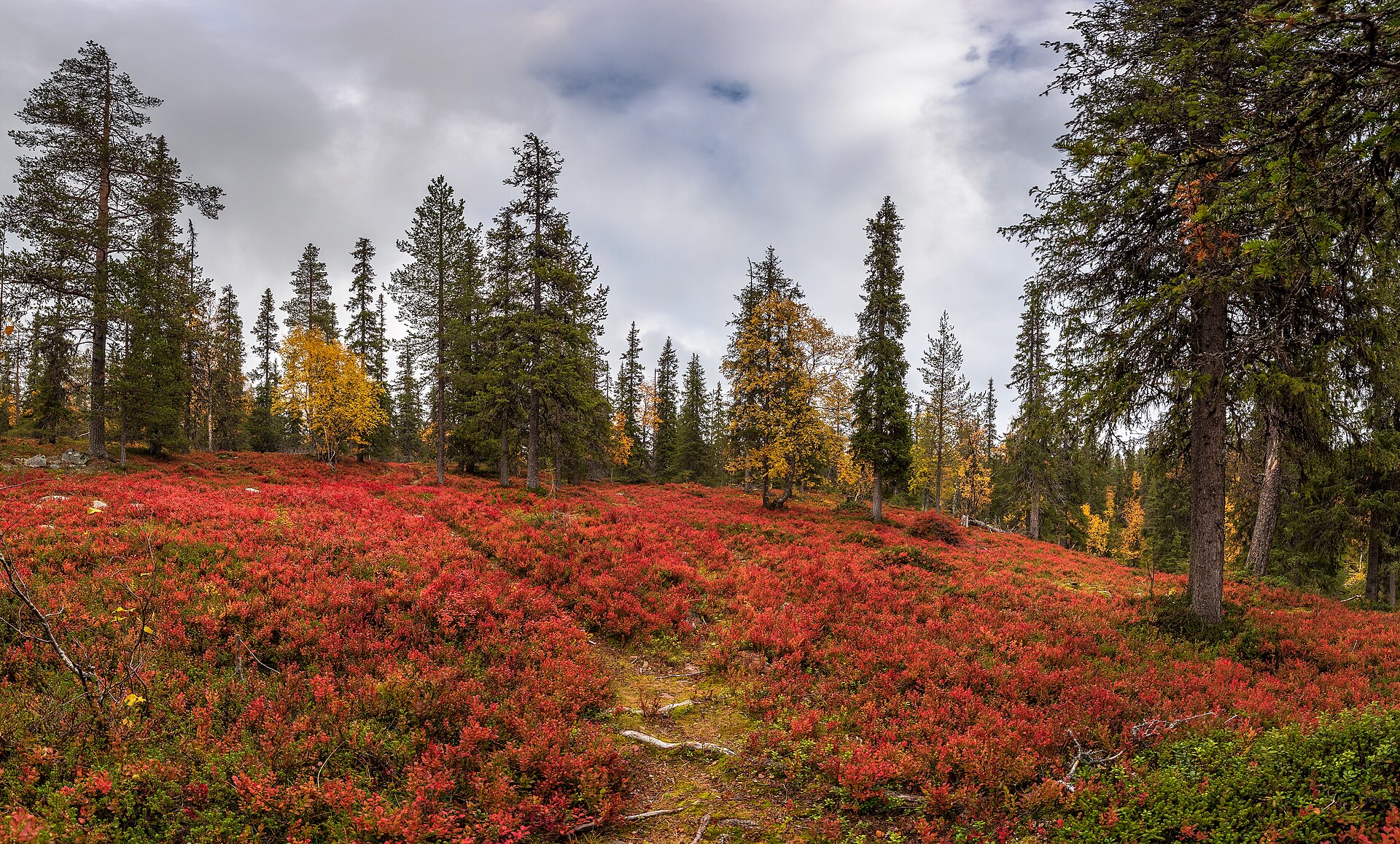
In autumn birch leaves turn yellow. Photo: Birch leaves in autumn in Tuntorp, W.carter, CC BY-SA 4.0, modified: resized 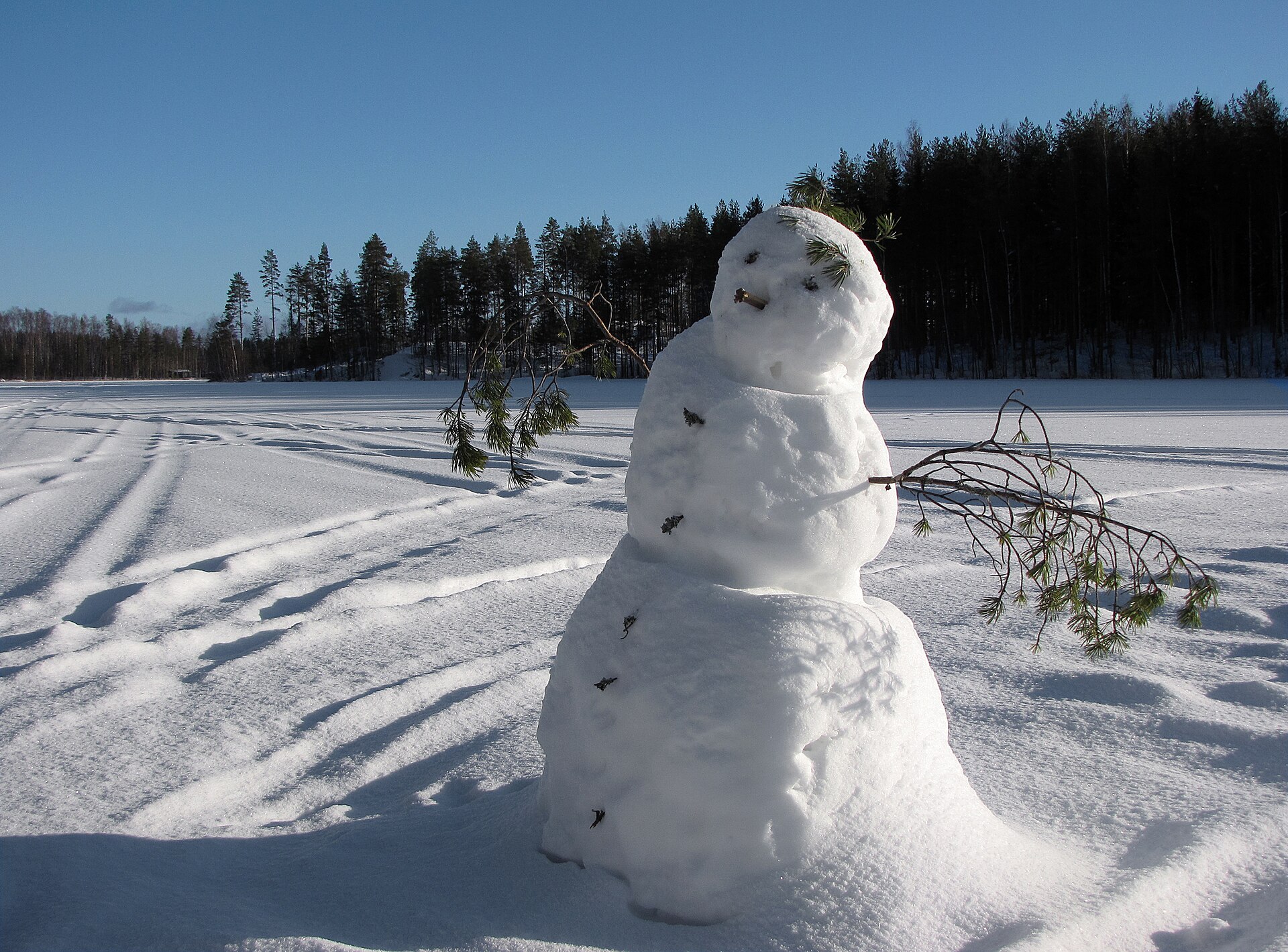
In cold winters a lake can freeze over. Photo: Snowman on frozen lake, Petritap, CC BY-SA 3.0, modified: resized 4. The months belong to the seasons
Usually each season gets three months. This is an agreement. In nature the season changes slowly.
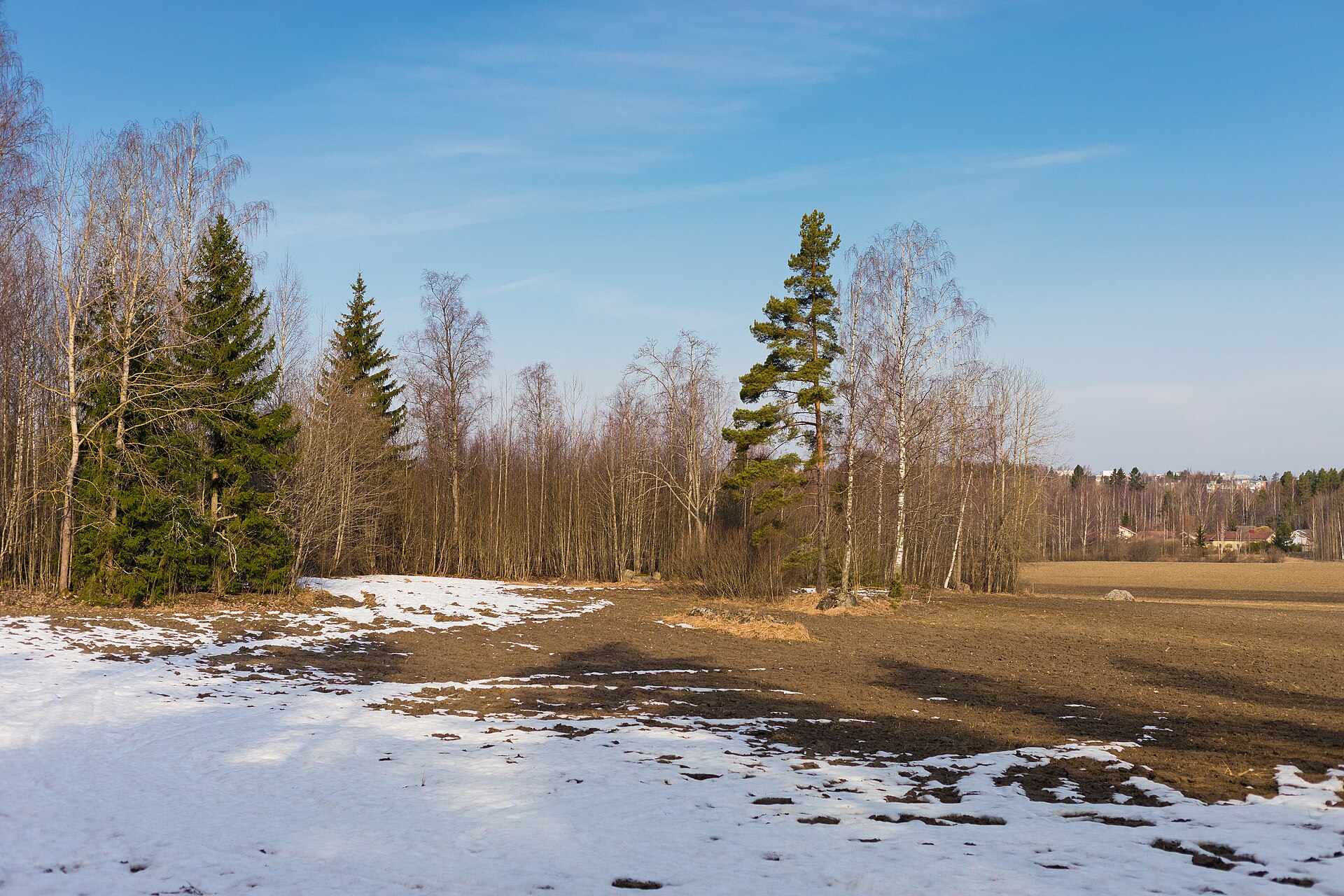
Photo: A field landscape at Storpetas in Päiväkumpu, Vantaa, Finland, 2021 April, Ximonic (Simo Räsänen), CC BY 3.0, modified: resized 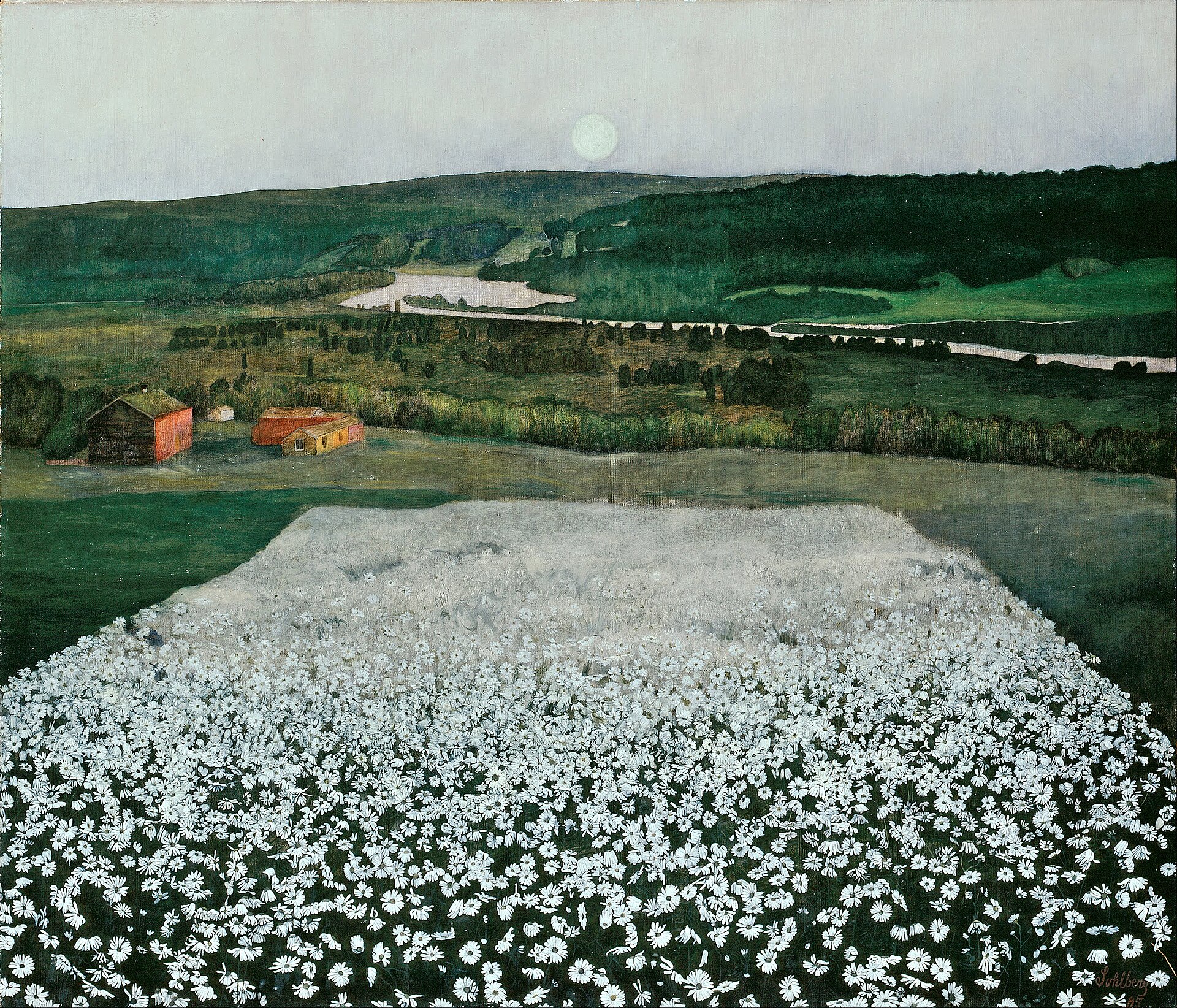
Photo: Norwegian: Blomstereng nordpå Flower Meadow in the Northlabel QS:Len,"Flower Meadow in the North", Harald Sohlberg, Public domain, modified: resized Photo: Foliage in autumn colors at Kellostapuli in Kolari, Lapland, Finland, 2021 September, Ximonic (Simo Räsänen), CC BY-SA 4.0, modified: resized 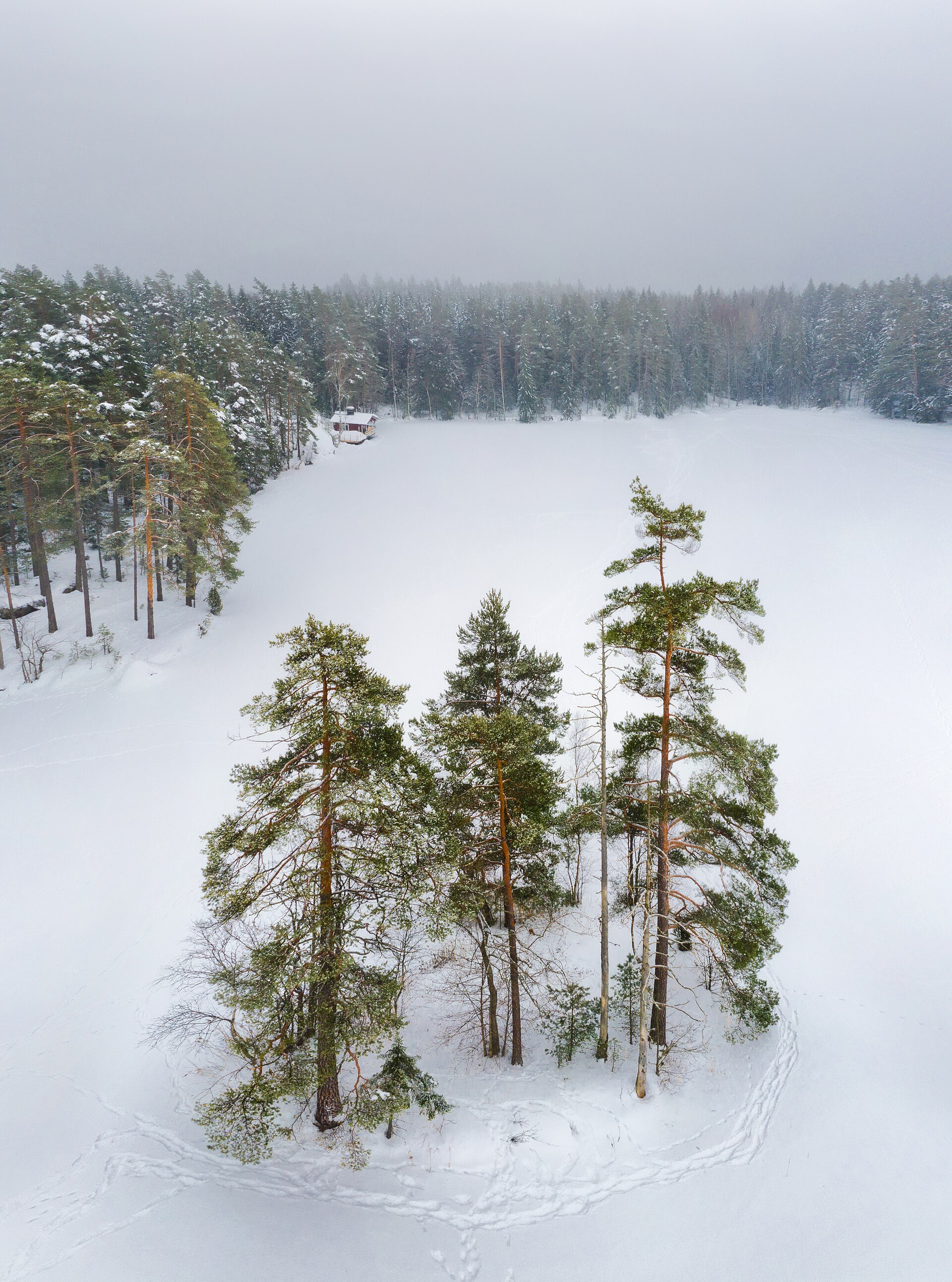
Photo: A small island on Saarijärvi, northern Espoo, Finland, 2021 February, Ximonic (Simo Räsänen), CC BY-SA 3.0, modified: resized - Spring March, April, May
- Summer June, July, August
- Autumn September, October, November
- Winter December, January, February
5. Light and warmth
In summer the days are long and warm. In winter the days are short and often cold.
In London the Sun is in the sky for about 16.5 hours in June. In December it is up for only about 8 hours.
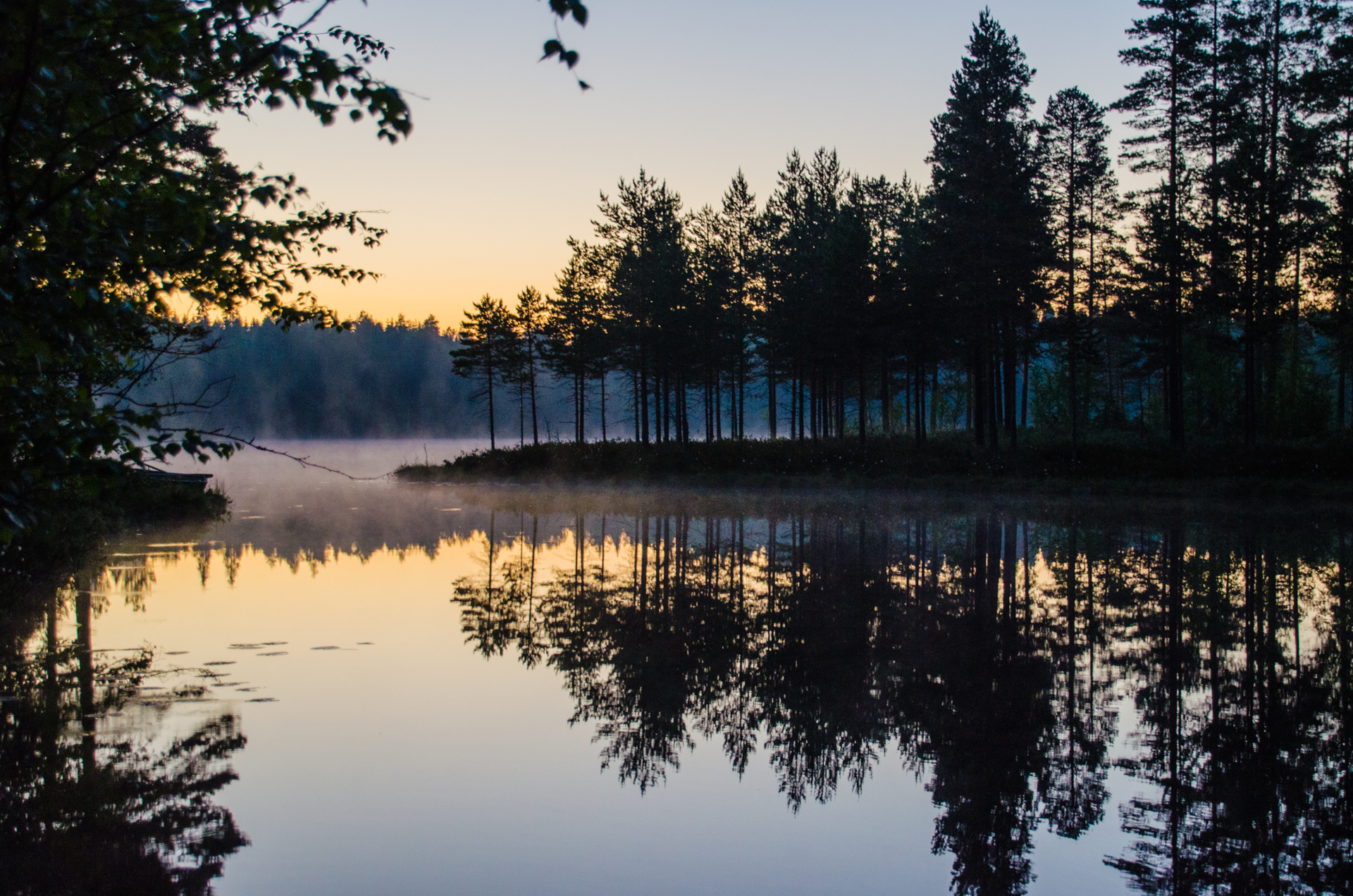
Far in the north the sky stays light on a summer night. Photo: Midsummer Night at Lake Korkeajärvi - panoramio, Tomi Mäkitalo, CC BY-SA 3.0, modified: resized 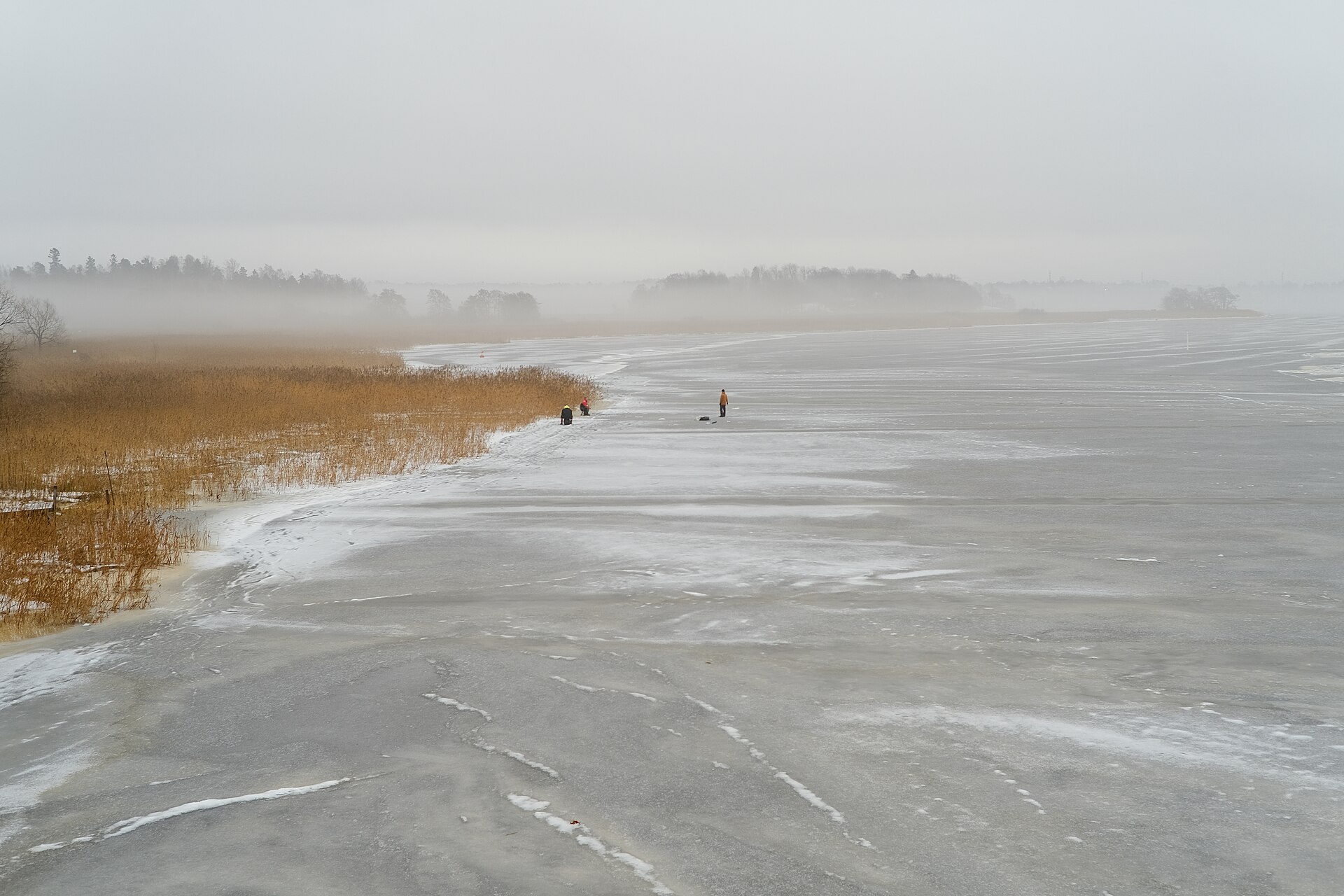
A December day is short and often grey. The picture shows a frozen bay in Helsinki.. Photo: Winter at Vanhankaupunginselkä in Helsinki, Finland, 2021 December - 01, Safa Hovinen, CC BY 2.0, modified: resized 6. Why do the seasons keep coming back?
The changing seasons come from the movement of the Earth. The Earth goes round the Sun, and one trip takes a year.
During the trip our part of the world gets sometimes more and sometimes less sunlight. That is why the seasons come back every year.
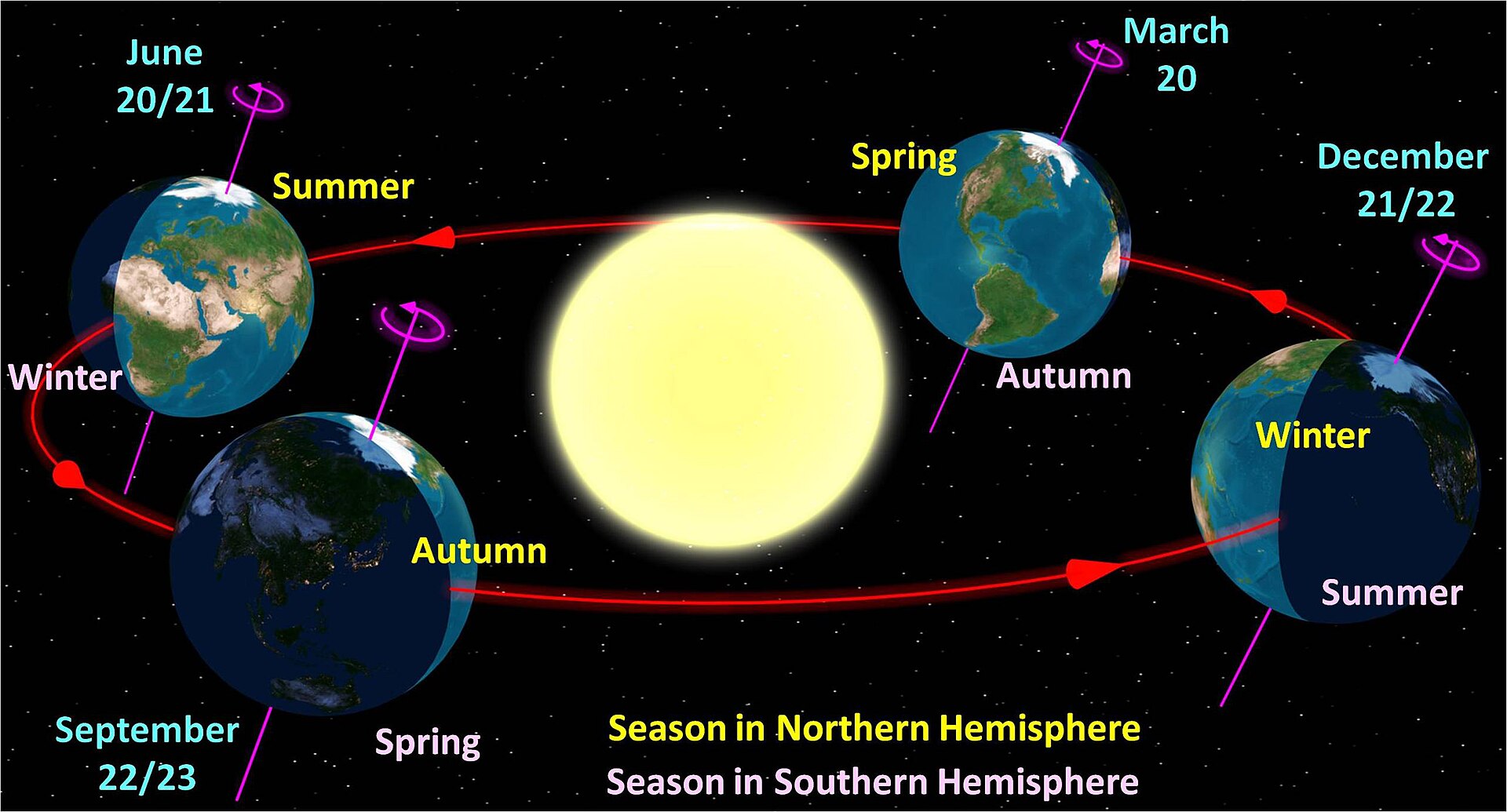
The Earth goes round the Sun. One trip takes a year.. Photo: North season, Tauʻolunga, CC0, modified: resized 7. Talk about it in class
Which season comes after winter?
What do you do outside in winter and what in summer?
What do migratory birds do in autumn?
Which season is your birthday in?


Summary
A year has four seasons: spring, summer, autumn and winter. They always come in the same order. In spring it gets warmer and in summer plants flower. In autumn leaves fall and in winter lakes can freeze. In summer the days are long and in winter they are short. Usually each season gets three months.
Frequently asked questions
Which months belong to which season?
The usual division in the northern hemisphere is: spring March–May, summer June–August, autumn September–November and winter December–February. Meteorologists use the same division in weather statistics. The division is an agreement, not a border in nature.
Do the seasons happen because the Earth is sometimes closer to the Sun?
No. The Earth's axis is tilted. That is why our part of the world gets more sunlight in summer and less in winter. In the southern hemisphere it is the other way round. In fact, the Earth is closest to the Sun in early January.
Why does winter last longer further north or high in the mountains?
The season in nature can also be defined by temperature. Then winter starts when the daily average temperature stays below 0 degrees. Further north, or higher up in the mountains, this happens earlier, and spring comes later.