
The Inca: Machu Picchu, roads and knotted cords
The Inca Empire, Machu Picchu, terraces, roads and quipu (knotted cords) in pictures and maps. Slides and questions for grades 4–6.
The Inca civilization flourished in the Andes in the 1400s and 1500s. The roads, terraces and stone walls of the Inca can still be seen today. The Inca and the Maya were not the same people: the Maya lived in Central America, the Inca in the Andes of South America. The article suits history in grades 4–6, and every step can be shown to the class as a slide.
By the end, pupils can show on the map where the Inca lived and tell how they farmed in the mountains and sent messages. They know what a quipu is and why Machu Picchu cannot be called a lost city. They know the words ruler, capital, potato, maize, bridge and quipu.
Key concepts
- civilization
- A civilization is a society with cities, organized government, people specialized in different jobs and usually writing. The first civilizations arose more than 5,000 years ago in Mesopotamia and Egypt. The word does not mean that other cultures are worse.
- ruler
 A ruler is a person with the highest power in a state, such as a king, emperor or sultan. Power has often been inherited in a family, but it could also be gained by election or by force. In many present-day monarchies the ruler's power is limited by a constitution.
- capital
 A country's most important city, where the government works. Finland's capital is Helsinki.
- map
 A picture of the land seen from above. A map shows where places are.
- potato
 A potato is a tuber that grows underground and is an important food. It was brought to Europe from South America.
- corn
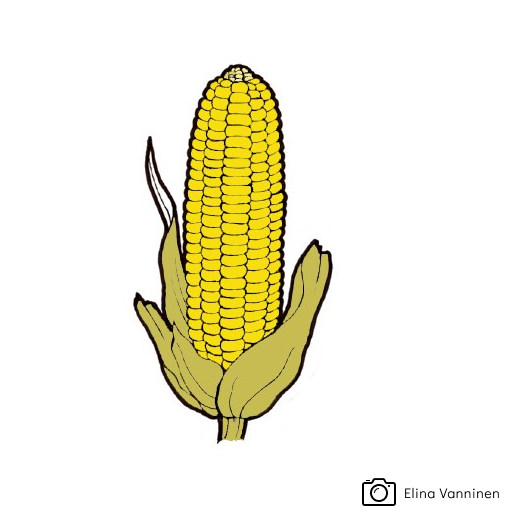 A tall plant with yellow kernels on its cobs.
- bridge
 Something built so you can cross over a river or a road.
- quipu
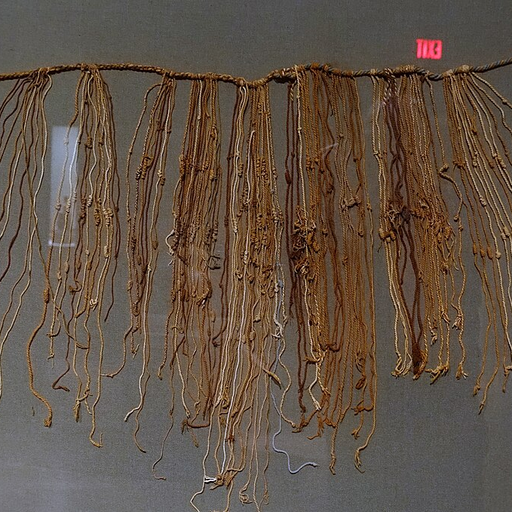 Quipu is a way of keeping records used in the Andes, in which information was tied as knots in strings. The Incas used it to keep track of things such as taxes and population. Researchers still do not know for sure whether the cords also recorded language.
1. What do you know about the Inca?
Where did the Inca live?
How can you farm in the mountains?
How did messages travel without phones?
What is Machu Picchu?2. Where and when did the Inca live?
The Inca lived in the Andes mountains in South America. Their empire grew from the capital, Cusco, from the middle of the 1400s. It was the largest state in the Americas before the Europeans arrived. The ruler was called the Sapa Inca. The empire was called Tawantinsuyu, “land of four parts”.
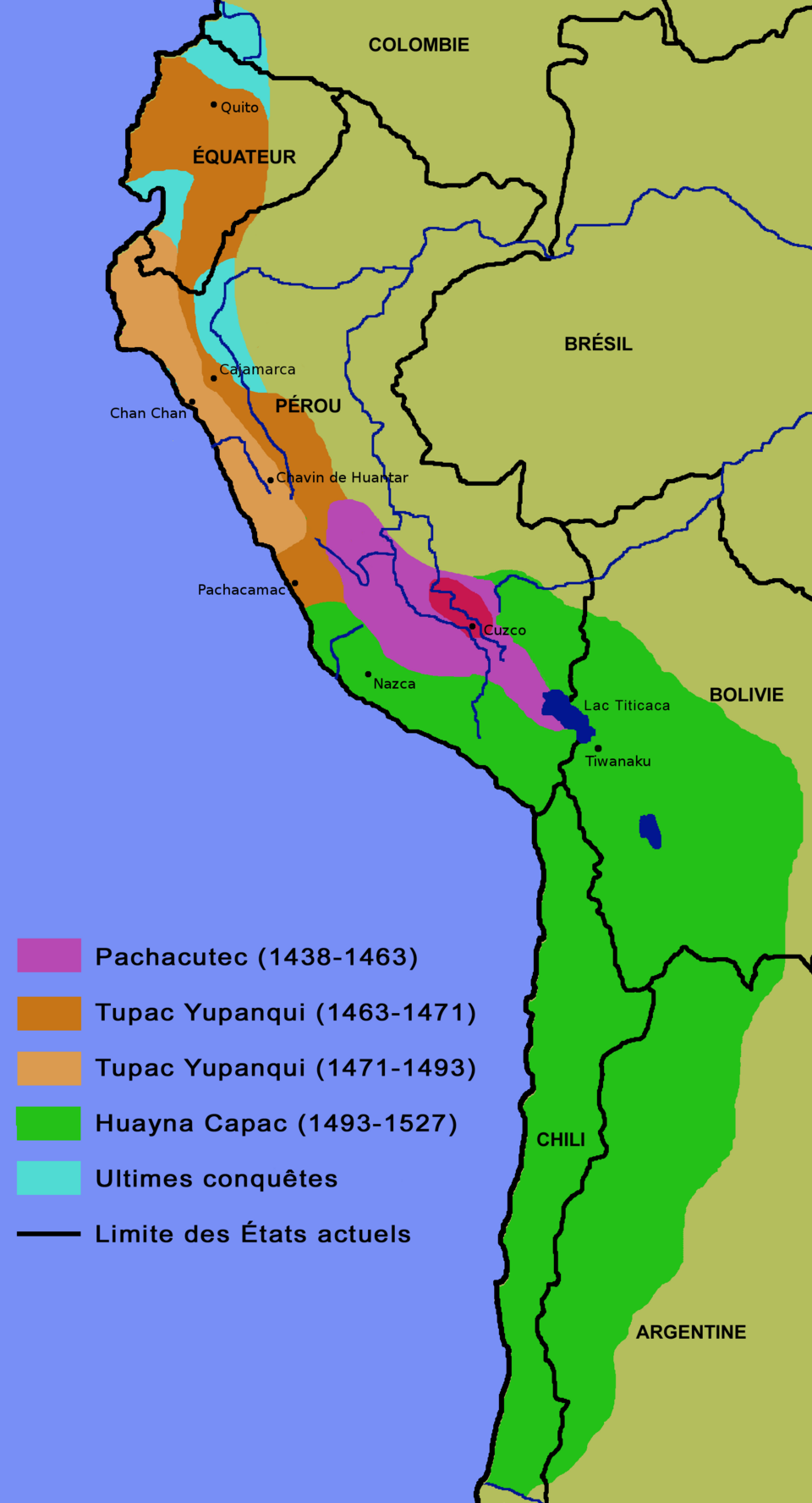
The growth of the Inca Empire, about 1438–1527. The names on the map are in French: Cuzco is Cusco, Lac Titicaca is Lake Titicaca and Chili is Chile.. Photo: Inca-expansion fr, Zenyu (ranskankielinen käännös: Sting), Public domain, modified: reduced in size 3. Fields like steps on the mountainside
On a steep slope it is hard to farm, so the Inca built terraces held up by stone walls. Maize and potatoes grew on them. Llamas carried loads and gave wool. Wool also came from alpacas.
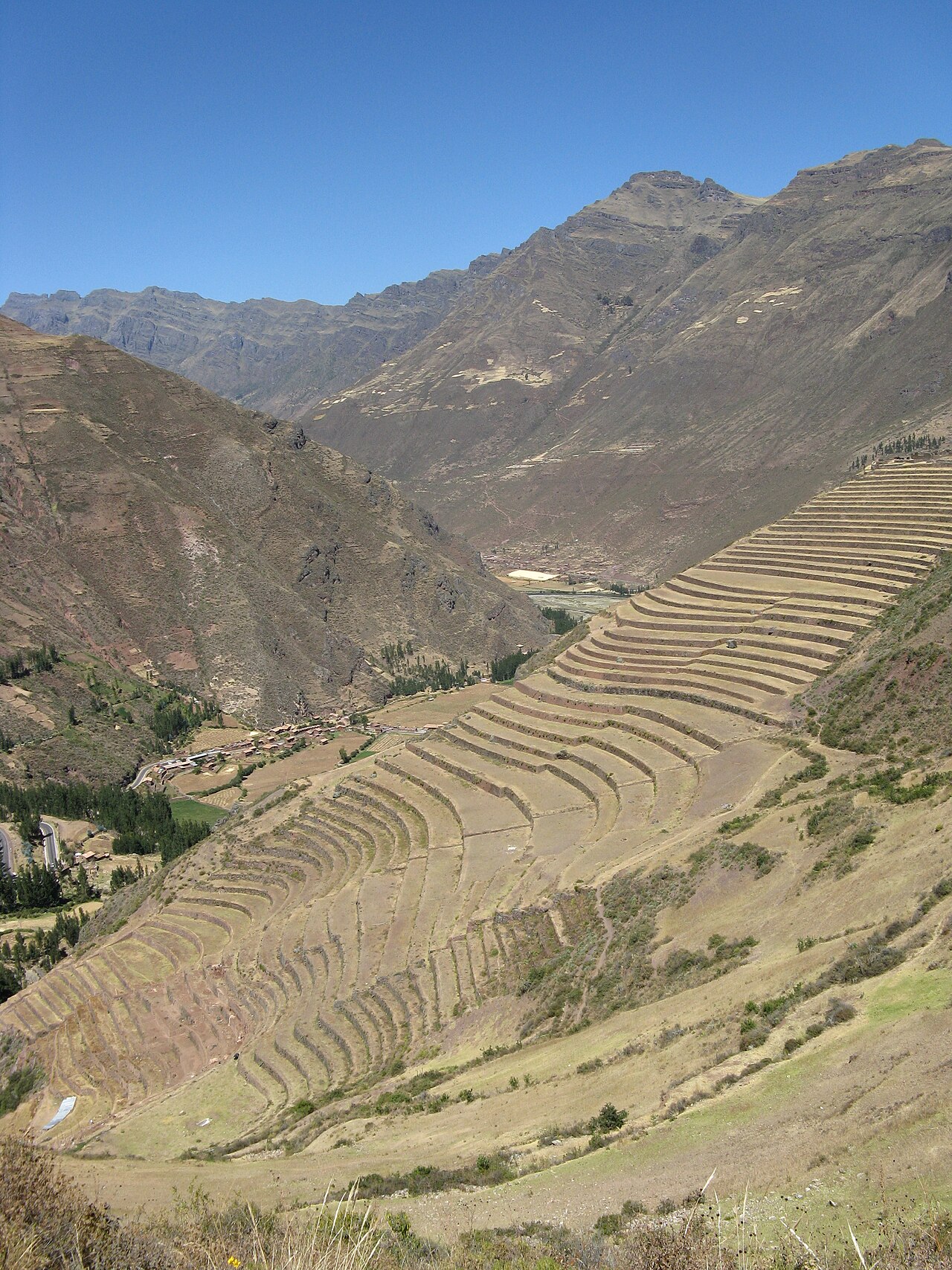
Terraces built by the Inca near Pisac in the Andes in Peru. The stone walls hold the soil in place on the slope.. Photo: Terrace farming in the Ande mountains Pisac Peru, James Santangelo, CC0, modified: reduced in size 4. Roads, runners and quipu
The Inca road network, the Qhapaq Ñan, was more than 30,000 kilometres long. People travelled the roads on foot or with llamas. Messages passed from runner to runner: each ran part of the way and handed the message to the next. Rope bridges of woven grass were built over gorges. The Inca kept records with the quipu: knots tied in cords.
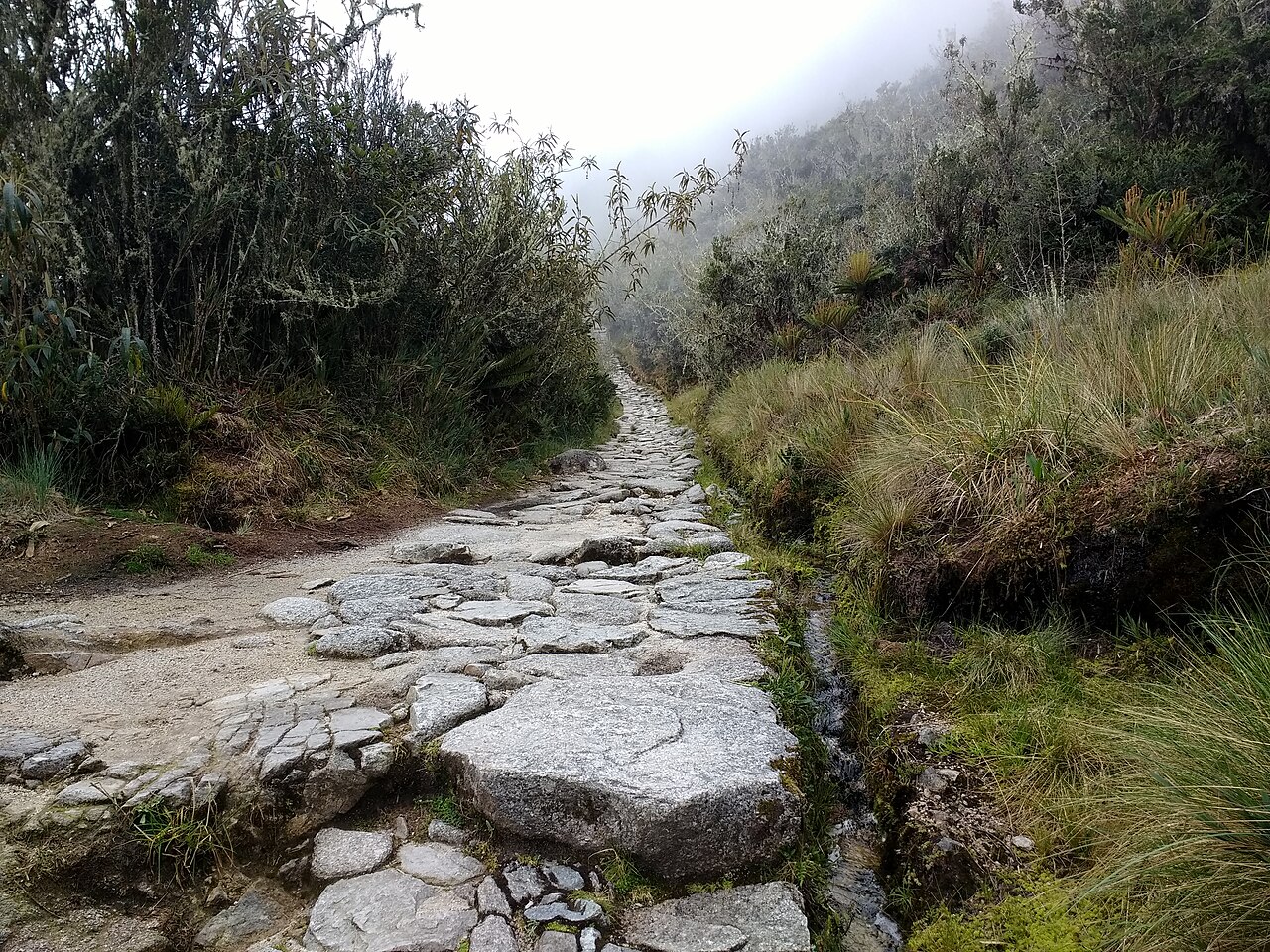
A paved section of the Inca Trail leading to Machu Picchu. The path is a road built by the Inca.. Photo: Part of the Inca Trail, Mx._Granger, CC0, modified: reduced in size 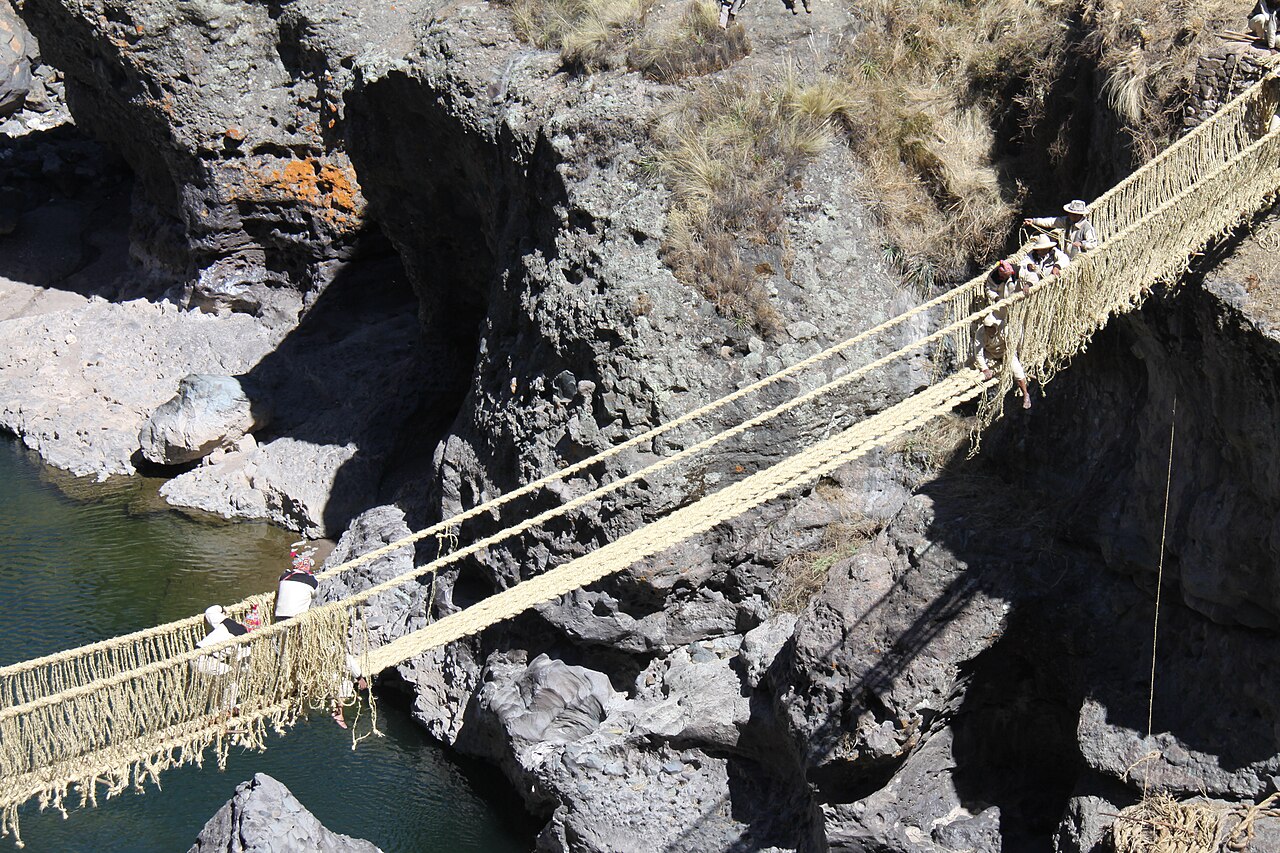
The Q'eswachaka rope bridge in the Andes in Peru. It is woven from grass, and people from the villages nearby rebuild it every year.. Photo: Puente Qeswachaka, Ricardo Chirinos Portocarrero, CC0, modified: reduced in size 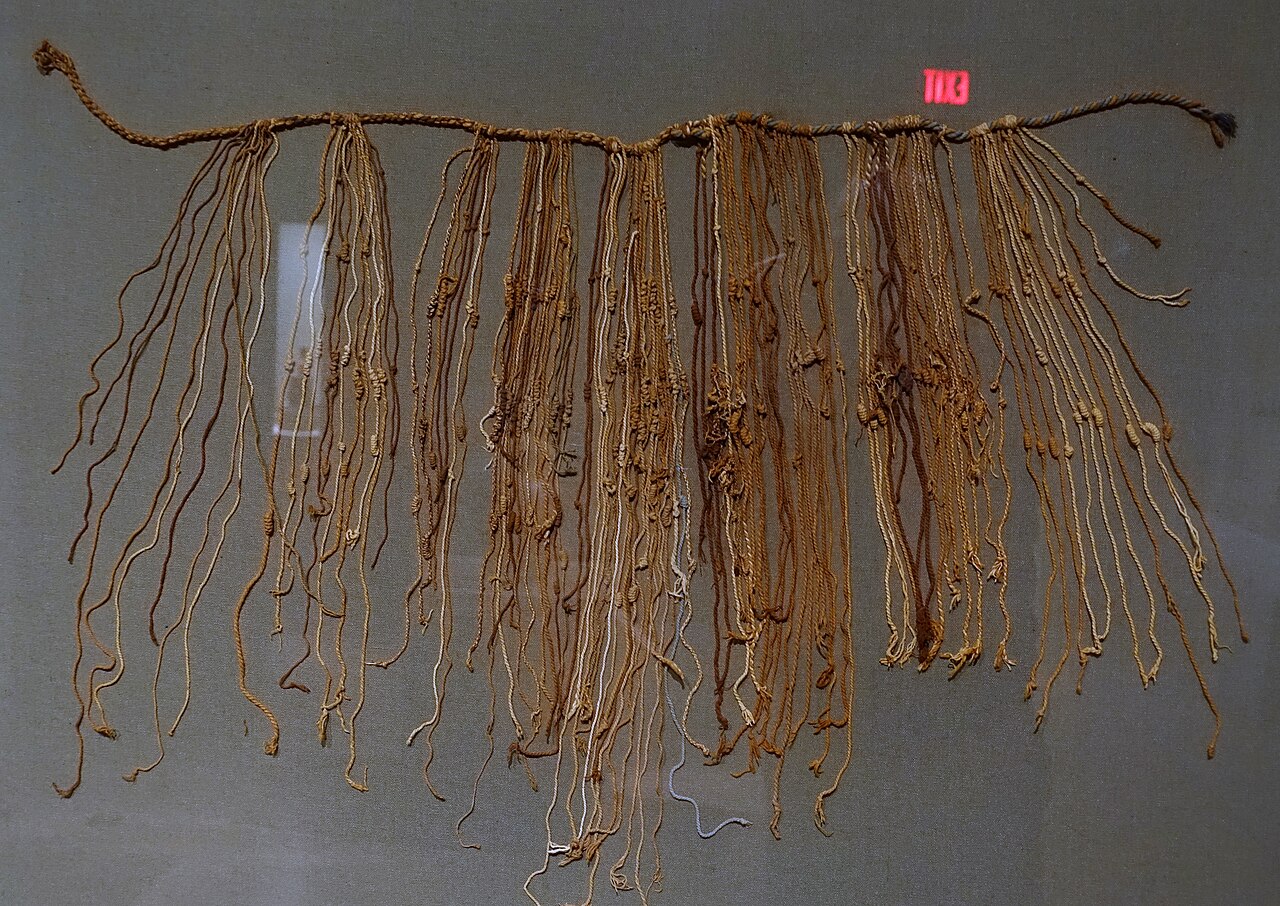
A quipu in an art museum in Dallas in the United States. Many thin cords with knots hang from the long main cord. The museum dates it to 1476–1534. Researchers still do not know for certain whether language was also recorded in the cords.. Photo: Fragmentary quipu (khipu), a main cord with top, subsidiary, & tertiary cords, Inca, Peru, Late Horizon, 1476-1534 AD, cotton, plant & camelid fiber, indigo & red dye - Dallas Museum of Art - DSC04704, Daderot, Public domain, modified: reduced in size 5. Machu Picchu on the mountain ridge
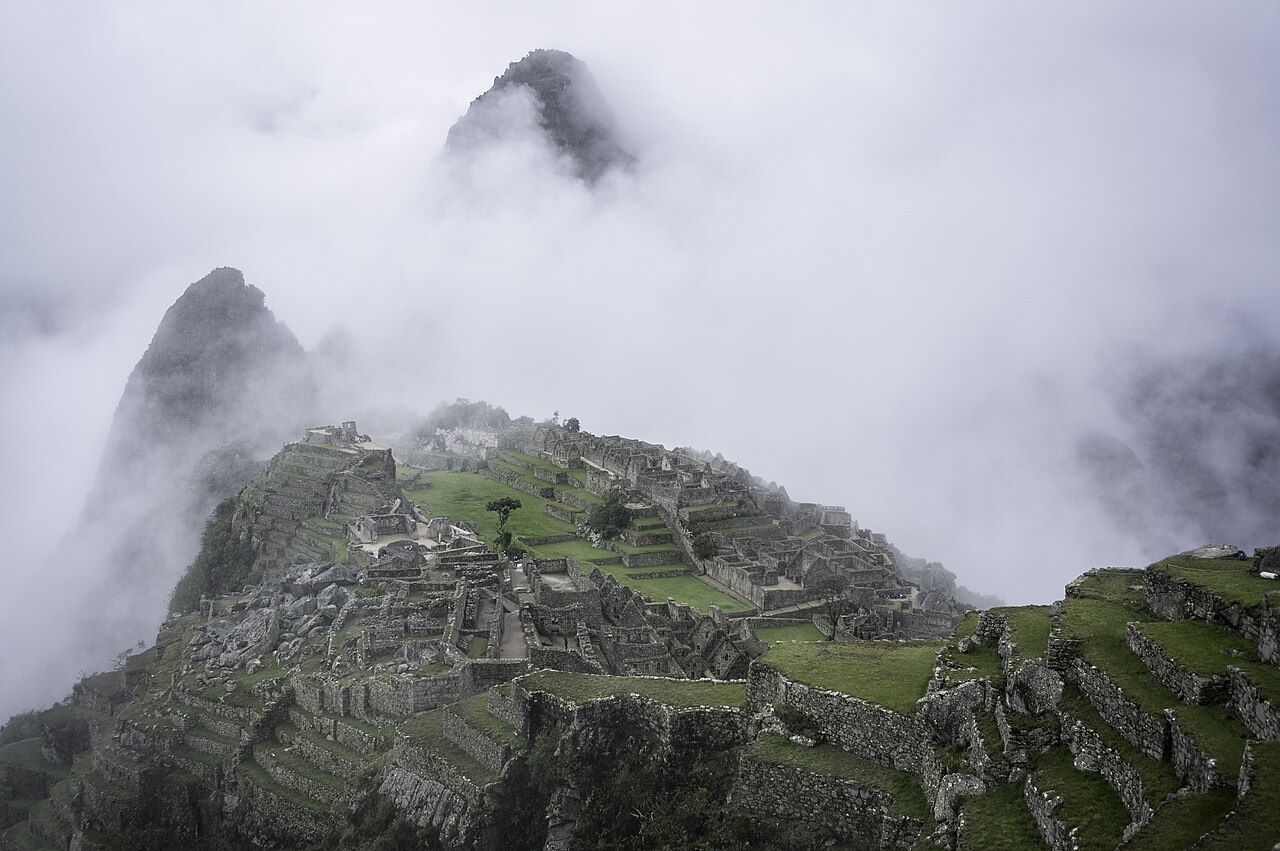
Machu Picchu was built around the year 1450, probably as an estate for the ruler. The stones in the walls are cut so exactly that they fit together without mortar. The place was not lost, because local people knew it. The American Hiram Bingham made it known to the world in 1911.
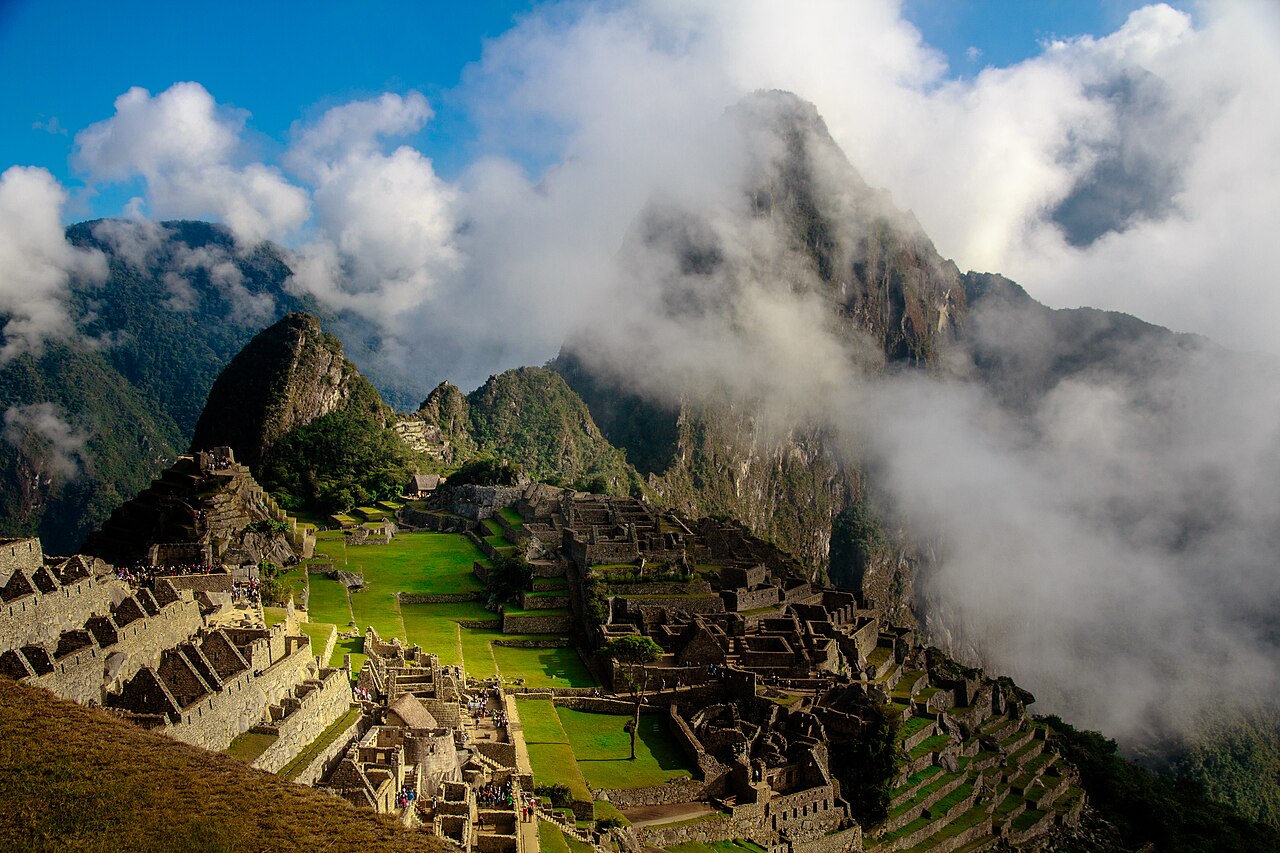
Machu Picchu in the Andes in Peru. The site is a UNESCO World Heritage Site. Behind the city rises the steep mountain Huayna Picchu.. Photo: Machu Picchu Through Clouds (Unsplash), Scott Umstattd, CC0, modified: reduced in size 6. The end of the empire and the Inca legacy
The Spanish arrived in 1532. Disease and civil war had already weakened the empire.
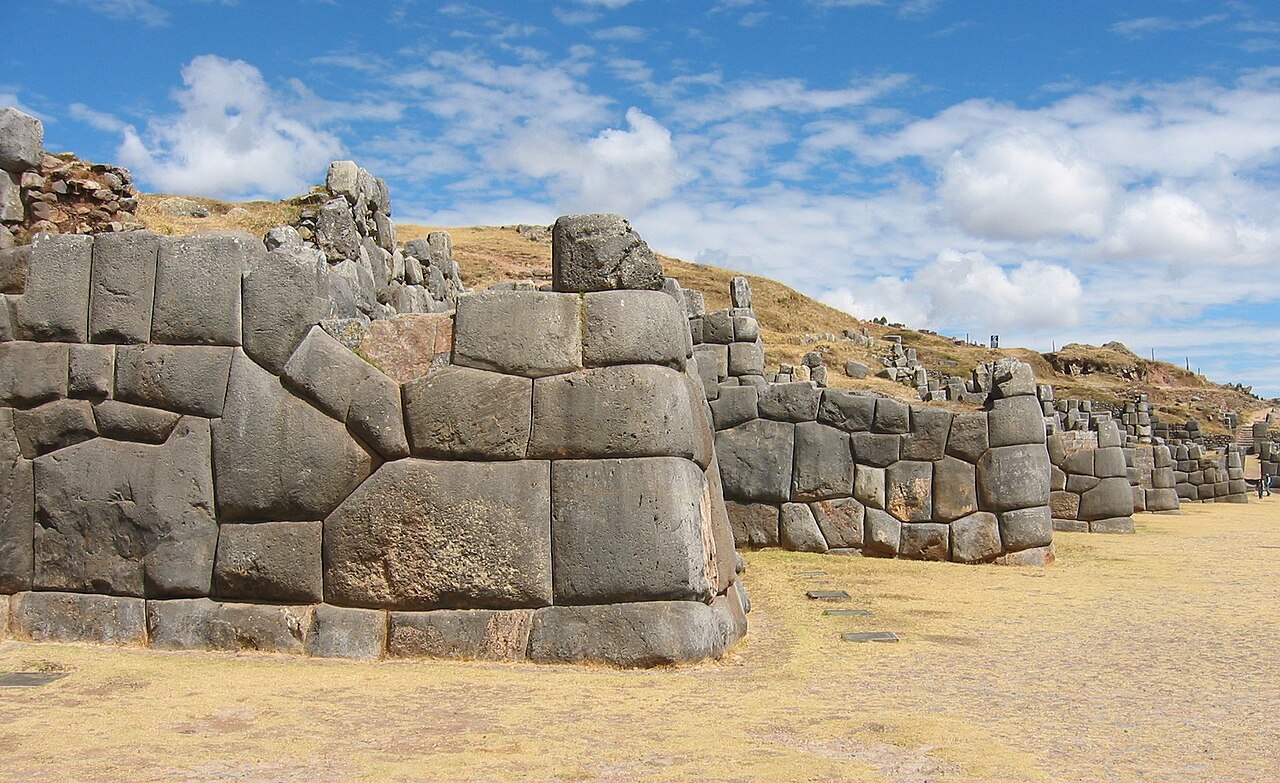
The walls of Sacsayhuamán above the city of Cusco. The huge stones fit together without mortar.. Photo: Walls at Sacsayhuaman, Bcasterline (englanninkielinen Wikipedia), Public domain, modified: reduced in size 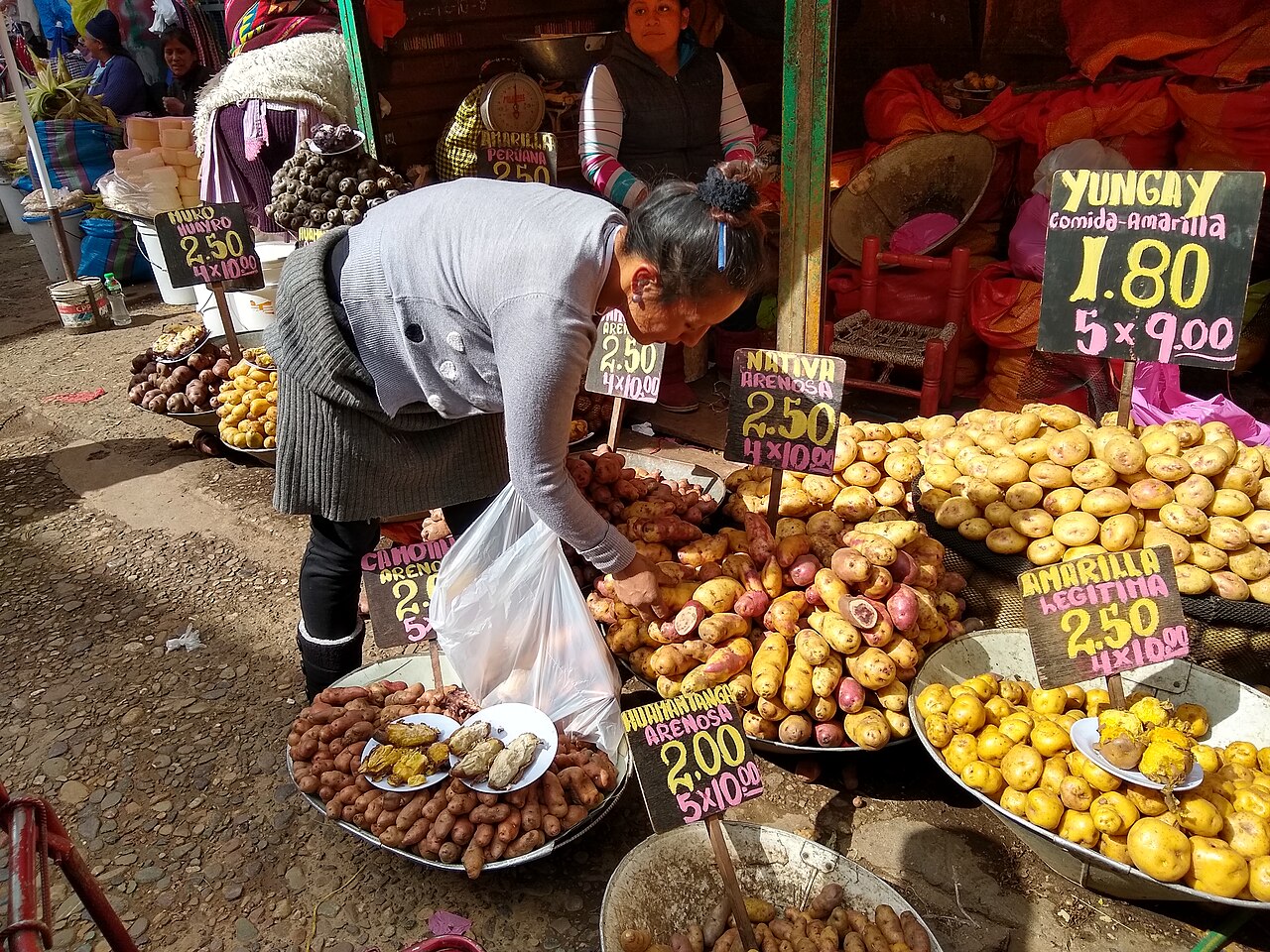
Potatoes at a market in Huancayo in the Andes in Peru. The potato comes from the Andes, and thousands of varieties still exist there. The price signs are in Spanish.. Photo: Mercado Modelo de Huancayo Peru- Solanum tuberosum varieties V, Thayne Tuason, CC BY 4.0, modified: reduced in size - about 1438 Cusco begins to expand the empire
- about 1450 Machu Picchu is built
- 1532–1533 The Spanish conquer the empire
- 1911 Machu Picchu becomes known worldwide
- Today The legacy lives on: Quechua and the potato
7. Discuss in pairs
Why did the Inca build terraces in the mountains?
Why did the empire need roads and runners?
Why can Machu Picchu not be called a lost city?
What does a quipu tell us, and what is still not known about it?


Summary
The Inca lived in the Andes, and their empire grew from Cusco from the middle of the 1400s. Terraces were built on the slopes, where potatoes and maize were grown. Roads, runners and rope bridges joined the empire together. The quipu helped to keep records. Machu Picchu was built around the year 1450. The Spanish conquered the empire in 1532–1533, but the descendants of the Inca still live in the Andes and speak Quechua.
Frequently asked questions
What did the Inca eat?
Important foods were potatoes, maize and quinoa. Meat came from llamas and guinea pigs. Potatoes were frozen by the night frost and dried in the sun, so they kept for a long time. Some of the Inca's terraces are still farmed today.
Is the language of the Inca still spoken?
Yes. The common administrative language of the empire was Quechua. Today Quechua is spoken by millions of people in Peru, Bolivia, Ecuador and elsewhere in the Andes.
Why have many Inca walls survived earthquakes?
Many Inca walls have survived earthquakes for hundreds of years. According to researchers, the tightly fitted stones and the slightly inward-leaning walls help.
Related content
- Video: We're the Thinkers Song | Groovy Greeks | Horrible Histories
- Video: The Pyramids of Egypt and the Giza Plateau: Ancient Egyptian History for Kids - FreeSchool
- Video: The History of Civilization for Kids: How Civilization Began - FreeSchool
- Video: Exploring Maya Civilization for Kids: Ancient Mayan Culture Documentary for Children - FreeSchool
Try exercises
Have you taught this topic? Create an exercise on it for your class.