
The Stone Age in Europe: from hunters to farmers
Prehistory, ice age hunters, cave paintings, farming, Ötzi and stone circles in pictures. Slides and questions for grades 4–6.
The Stone Age is the longest period in human history. The article follows the people of Europe from the hunters of the ice age to the first farmers. It suits history in grades 4–6, and every step can be shown to the class as a slide.
At the end, the pupil can tell how we know about the Stone Age, how hunter-gatherers lived and what changed when farming came to Central Europe. The pupil knows the words prehistory, archaeologist, ice age, cave painting and farming.
Key concepts
- prehistory
 Prehistory is the time before written sources, so what we know about it comes mainly from archaeological finds. It ended at different times in different parts of the world. In the Nordic countries prehistory ended only at the start of the Middle Ages, much later than in Egypt, for example.
- Stone Age
 The Stone Age is the longest period in human history, when tools were mostly made of stone, bone and wood. It began more than two million years ago, and for most of it people lived by hunting, fishing and gathering. People moved to the northernmost parts of Europe only after the Ice Age.
- archaeologist
 A scientist who digs up old objects and remains to find out about the past. An archaeologist digs carefully with a trowel and a brush and records exactly where each find was. We know almost everything about the Stone Age thanks to archaeologists, because there was no writing yet.
- hunter-gatherer
 A person who got food by hunting, fishing and gathering plants. Hunter-gatherers moved from place to place with the seasons and the food.
- ice age
 A long cold period when thick ice covered much of Europe. During the last Ice Age, the ice over northern Europe was up to three kilometres thick in places, and it melted about 10,000 years ago. The ice shaped the landscape, leaving eskers and glacial erratics, for example.
- cave painting
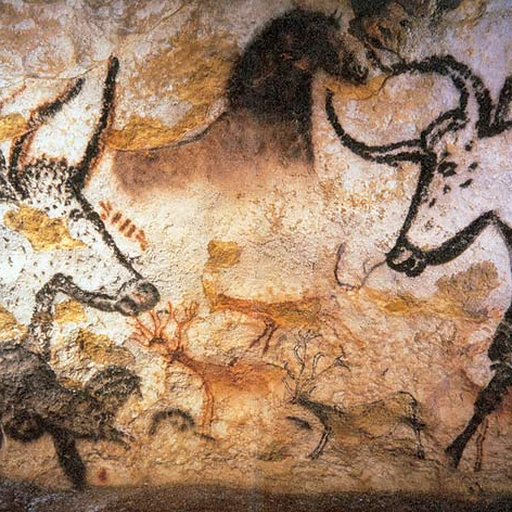 A picture that Stone Age people painted on a cave wall, often of an animal such as a horse, a bison or a deer. The paints were made from minerals in the earth and charcoal. The cave paintings of Lascaux in France are about 17,000 years old.
- farming
 Growing food in fields and keeping farm animals. Farming began in the Middle East more than 11,000 years ago and slowly spread from there to Europe. When people began to farm, they settled down in one place.
- Stonehenge
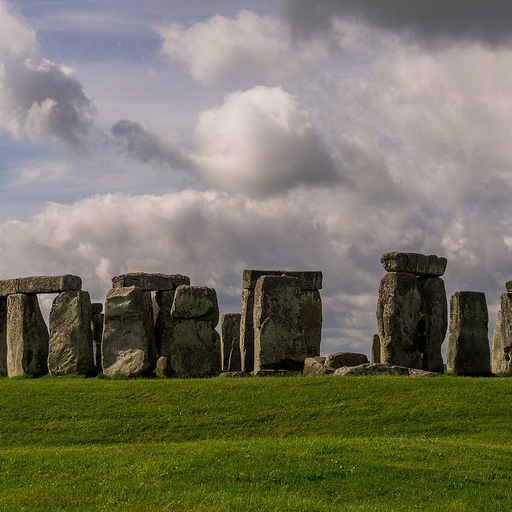 Stonehenge is a prehistoric stone circle in southern England, built in stages from about 3000 to 2000 BCE. Its main axis points towards the midsummer sunrise and the midwinter sunset. We do not know for sure what its builders intended.
1. What do you know about the Stone Age?
How do we know about people who could not write?
What did people in the ice age eat, and what did they hunt with?
Why did they draw animals on cave walls?
What changed when people began to grow crops in fields?2. Prehistory: the time before writing
Prehistory is the time before writing. Archaeologists study it through finds. The Stone Age is the longest part of prehistory. The dates are estimates.
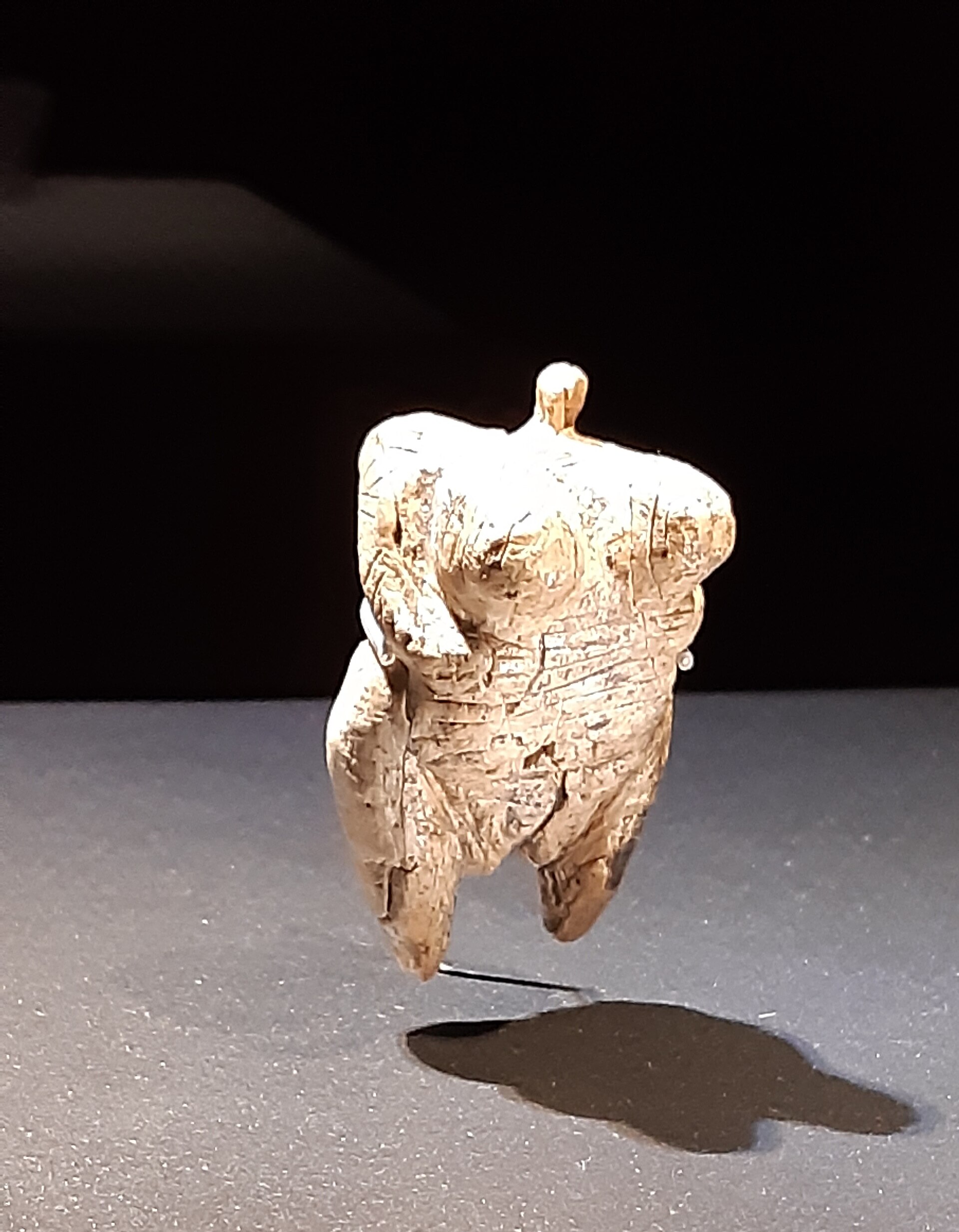
The carved figure from Hohle Fels in southern Germany. It was made from a mammoth tusk about 40,000 years ago. The figure is only a few centimetres tall.. Photo: Venus of Hohle Fels URMU, Catatine, CC BY-SA 4.0, modified: reduced in size 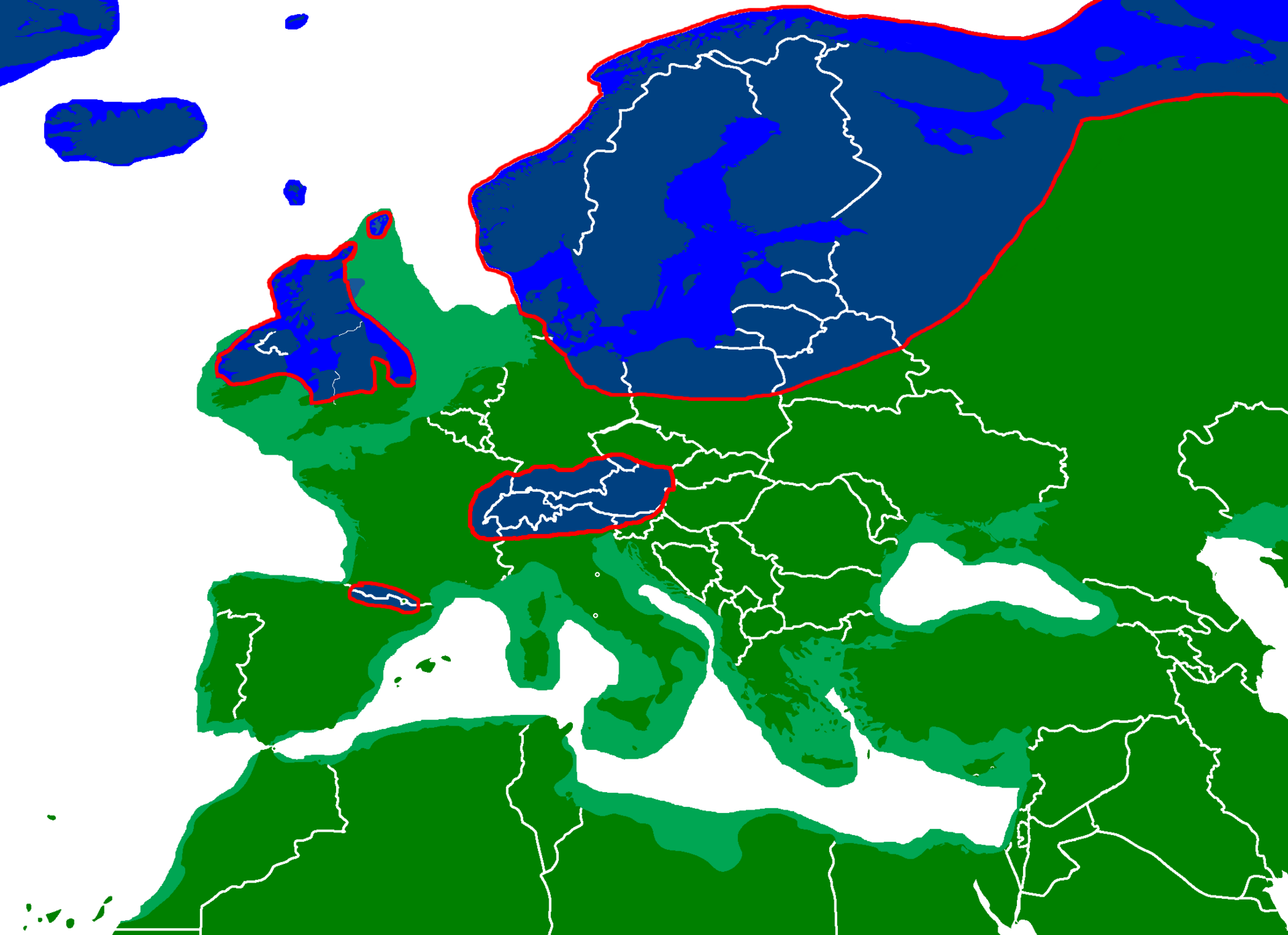
The ice in Europe when the ice age was at its coldest, about 20,000 years ago. Dark blue is ice. Light green is coast that was dry land then, because the sea level was lower.. Photo: Weichsel ice age europe, Merikanto, CC BY-SA 3.0, modified: reduced in size 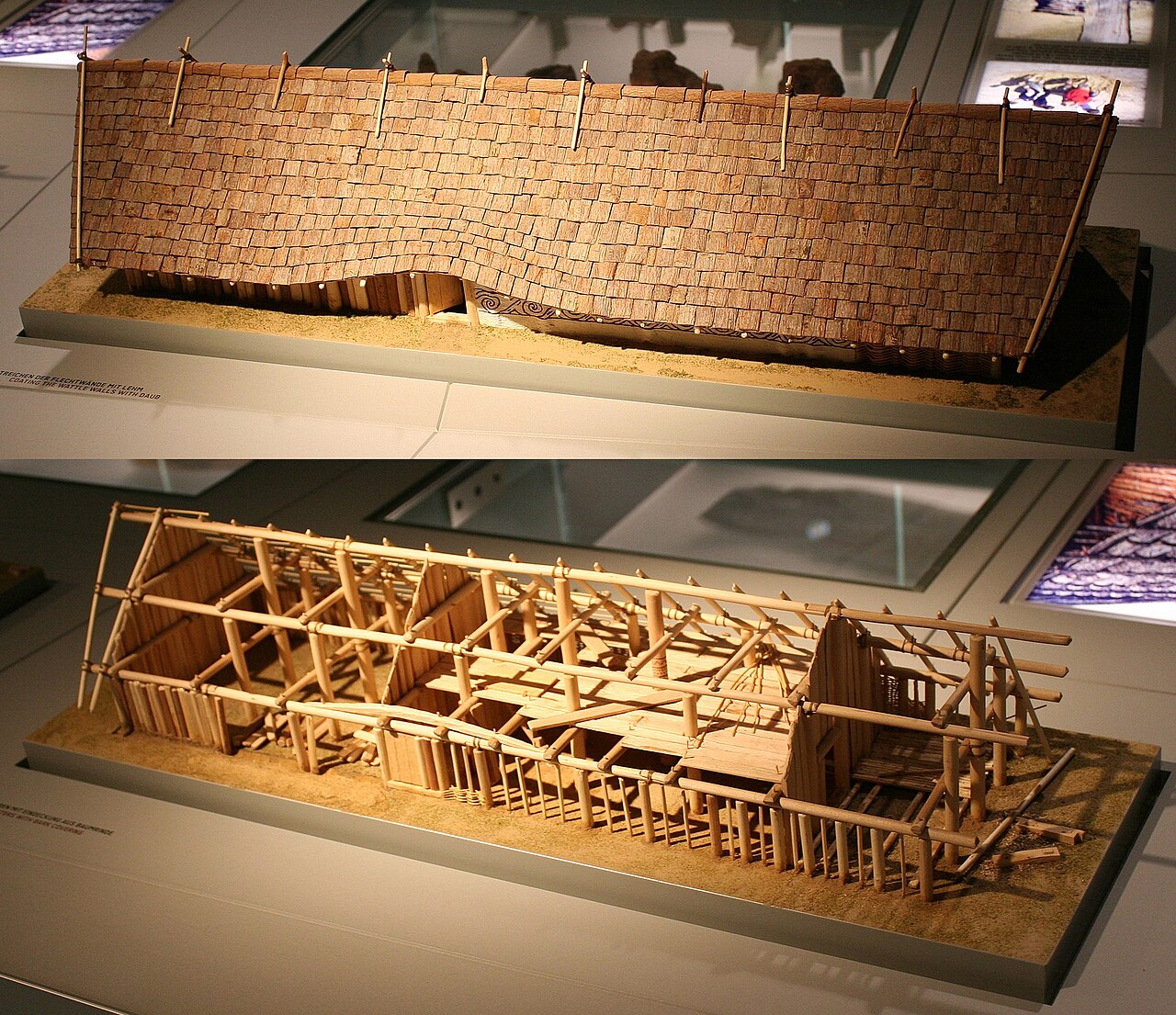
A model of a longhouse in a museum: at the top the finished house, at the bottom the wooden frame. The walls were made of branches and clay. The first farmers of Central Europe built houses like this.. Photo: LBK house 1, Einsamer Schütze, CC BY-SA 4.0, modified: reduced in size - over 2 million years ago The first stone tools in Africa
- c. 45,000 years ago Modern humans live in Europe
- c. 20,000 years ago The ice reaches its greatest extent
- c. 11,700 years ago The ice age ends
- c. 7,500 years ago Farmers arrive in Central Europe
- c. 5,300 years ago Ötzi lives in the Alps
3. Ice age hunter-gatherers
People in the ice age were hunter-gatherers. They hunted mammoths, horses and reindeer and gathered berries, nuts and roots. Tools were made of flint, bone and antler. They followed their food from place to place.
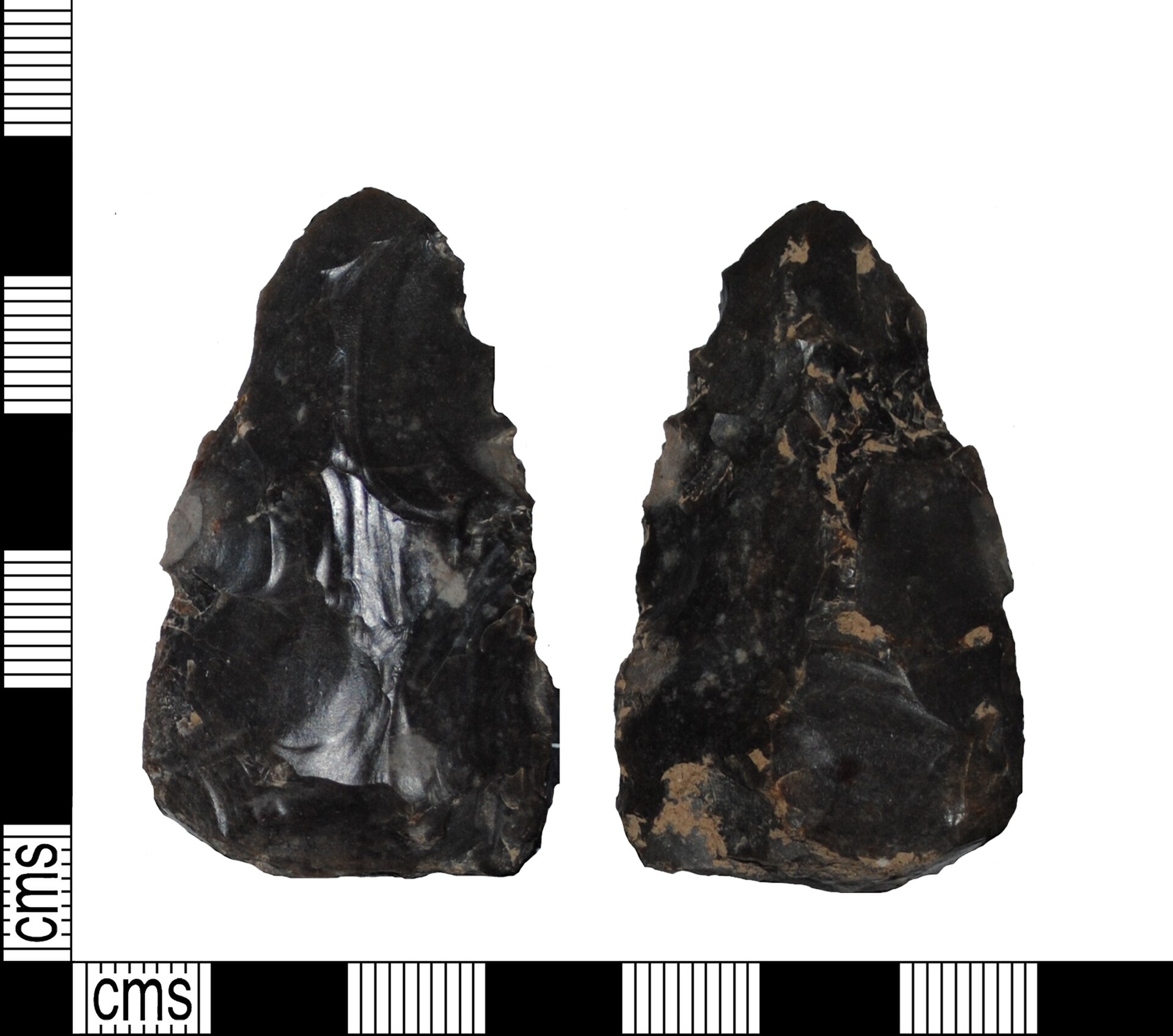
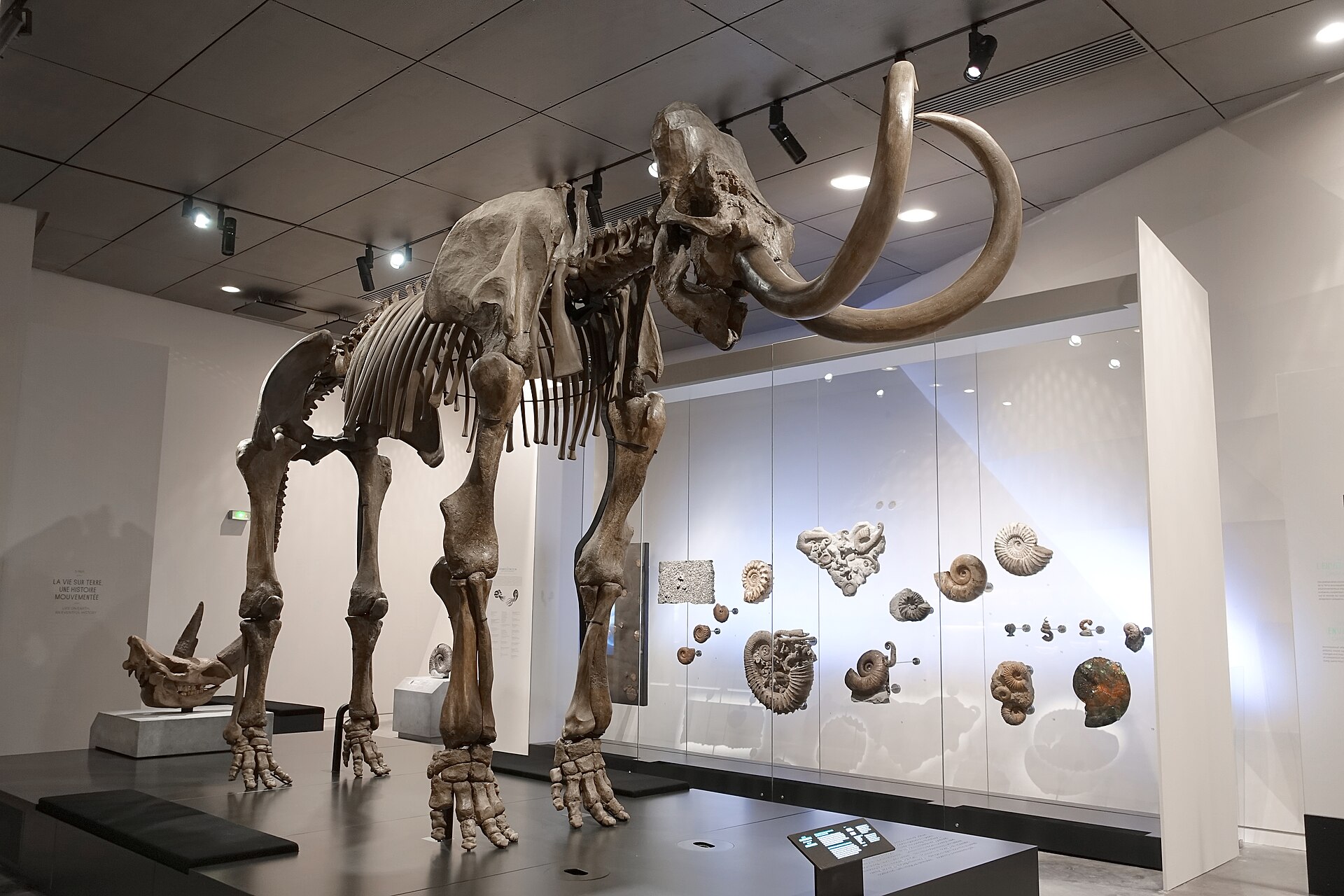
A hand axe shaped from flint by striking. This one was found in England. Hand axes like this were made hundreds of thousands of years ago.. Photo: A Lower Palaeolithic 500,000 to 40,000 BC Acheulian hand axe possibly sub-cordate, knapped from dark grey flint., The Portable Antiquities Scheme, Stuart Noon, 2011-12-05 13:52:06, CC BY-SA 4.0, modified: reduced in size A mammoth skeleton in a museum in Lyon, France. The mammoth was a relative of the elephant, with long tusks and thick fur. It was hunted in the ice age.. Photo: Mammouth de Choulans - Musée des Confluences - Lyon le 20 12 2014 - 1, El pitareio, CC BY-SA 4.0, modified: reduced in size 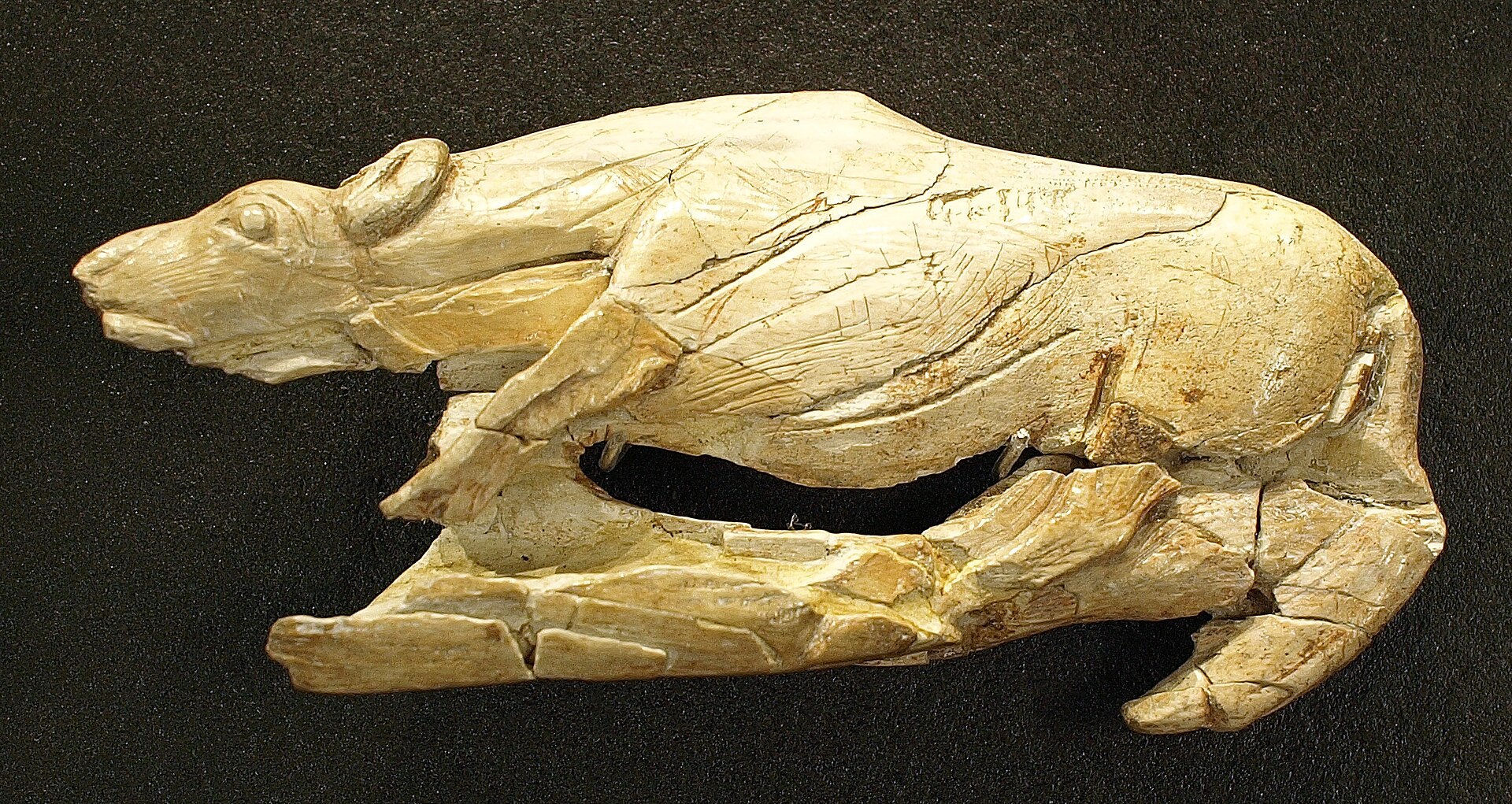
Part of a spear-thrower with a carved animal. A spear-thrower is a lever that makes a spear fly further. The find comes from the rock shelter of La Madeleine in France, from the end of the ice age. Length 10.7 cm.. Photo: Speerschleuder LaMadeleine, Klaus D. Peter, Wiehl, Germany, CC BY 3.0 de, modified: reduced in size 4. Cave paintings: pictures from the ice age
People in the ice age drew and painted animals on cave walls. Such a picture is a cave painting. The pictures in Chauvet Cave in France are over 30,000 years old, and those in Lascaux Cave about 17,000. Nobody knows for certain why the pictures were made.
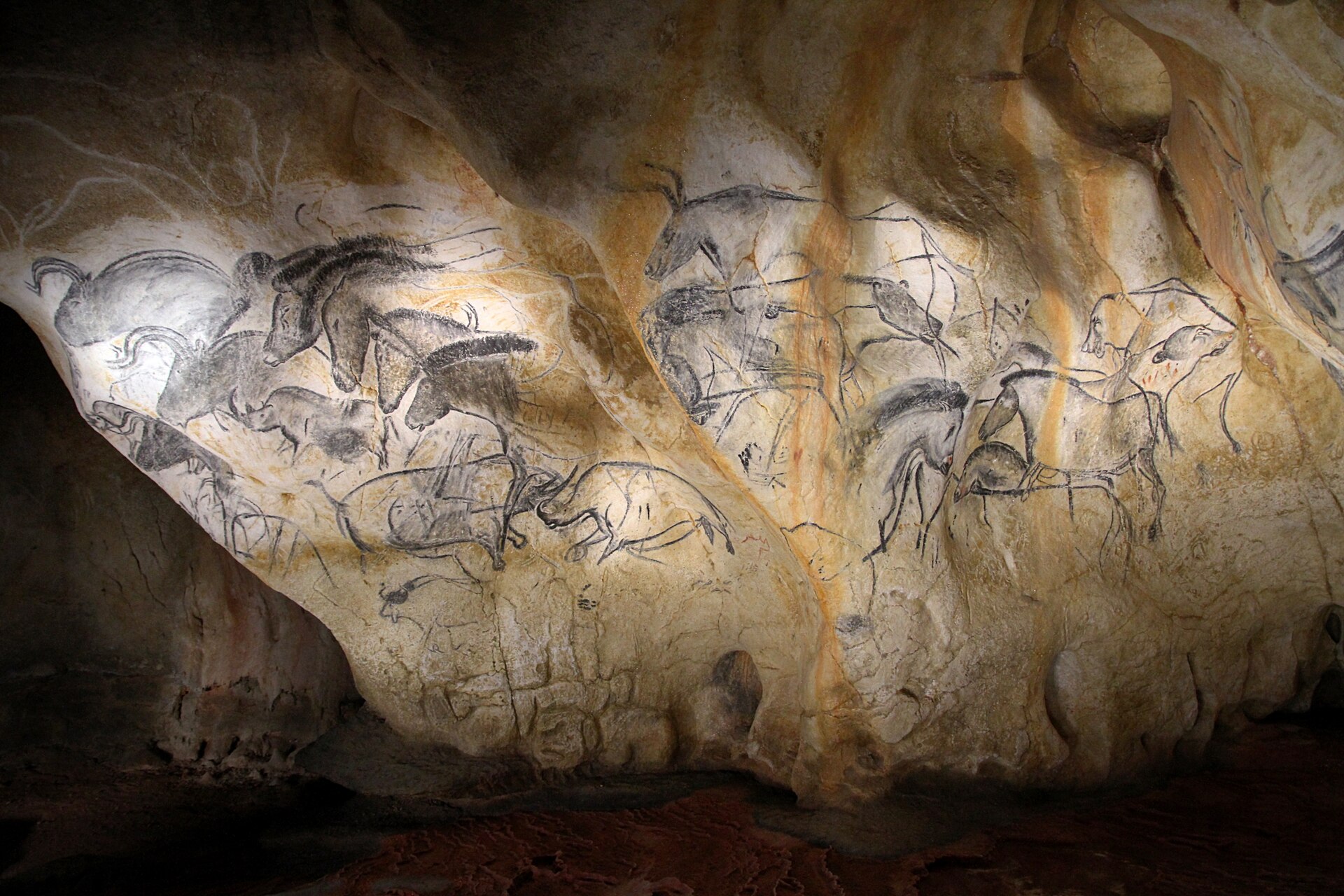
Horse paintings in a replica of Chauvet Cave in France. The original cave is closed to the public, so a replica was made. The original pictures are over 30,000 years old, from the ice age.. Photo: 29 PanneauDesChevaux(VueGénérale), Claude Valette, CC BY-SA 4.0, modified: reduced in size 5. Farming comes to Europe
In the Middle East, people began to grow cereals and keep farm animals about 11,000 years ago. Farmers moved to new areas and brought farming with them. It reached Central Europe about 7,500 years ago. The farmers lived in wooden longhouses.
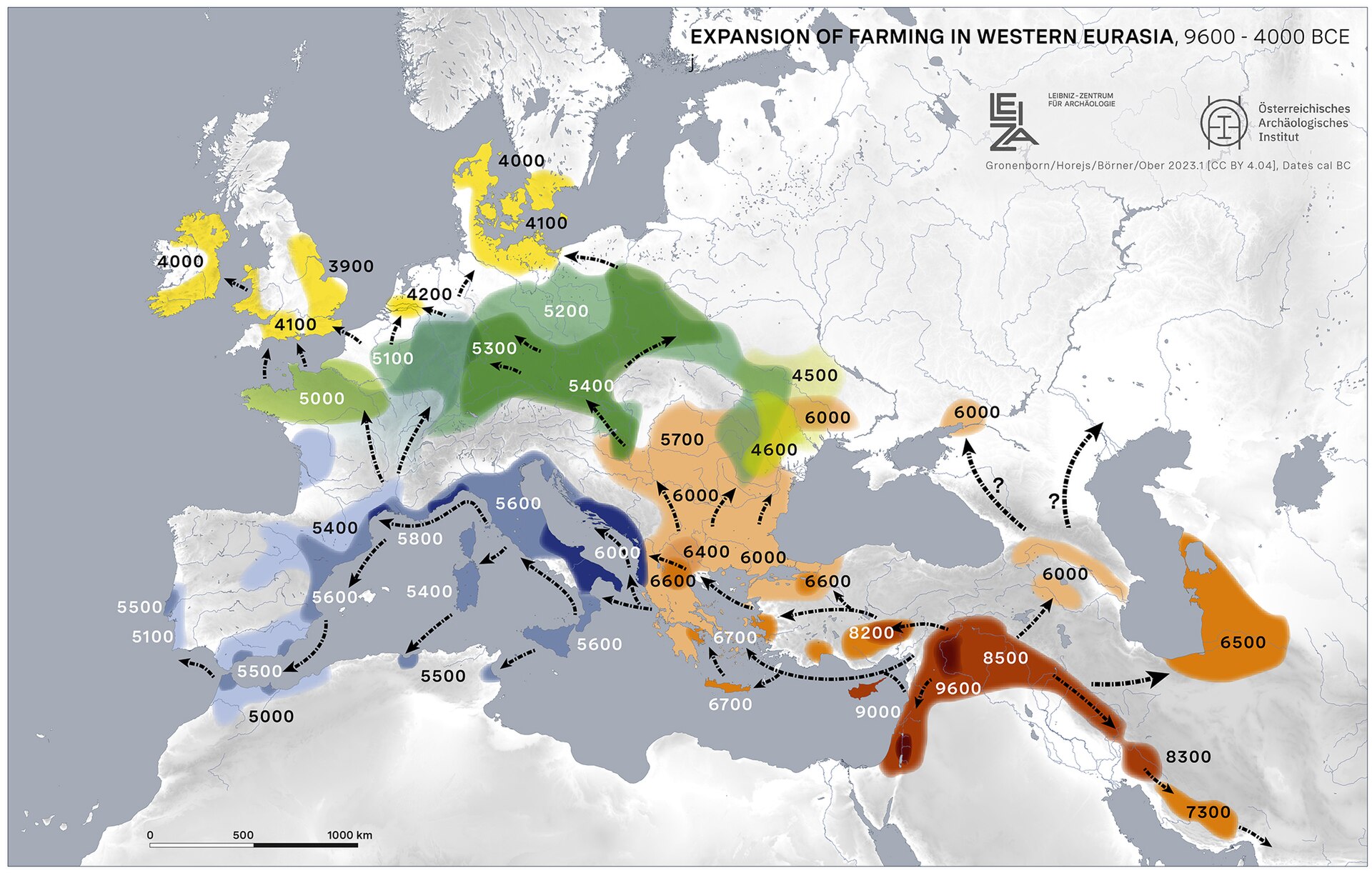
The spread of farming from the Middle East to Europe. The colours and arrows show where farming spread. The numbers are years BCE. The text on the map is in English.. Photo: Expansion of farming in western Eurasia, 9600 - 4000 cal BC, D. Gronenborn, B. Horejs. M. Börner, M. Ober (LEIZA/ÖAI), CC BY-SA 4.0, modified: reduced in size 6. Ötzi, pile dwellings and large stones
Ötzi lived in the Alps about 5,300 years ago. He had a copper axe. Pile dwellings were built on the shores of Alpine lakes. Large stones were raised upright at Carnac and Stonehenge.
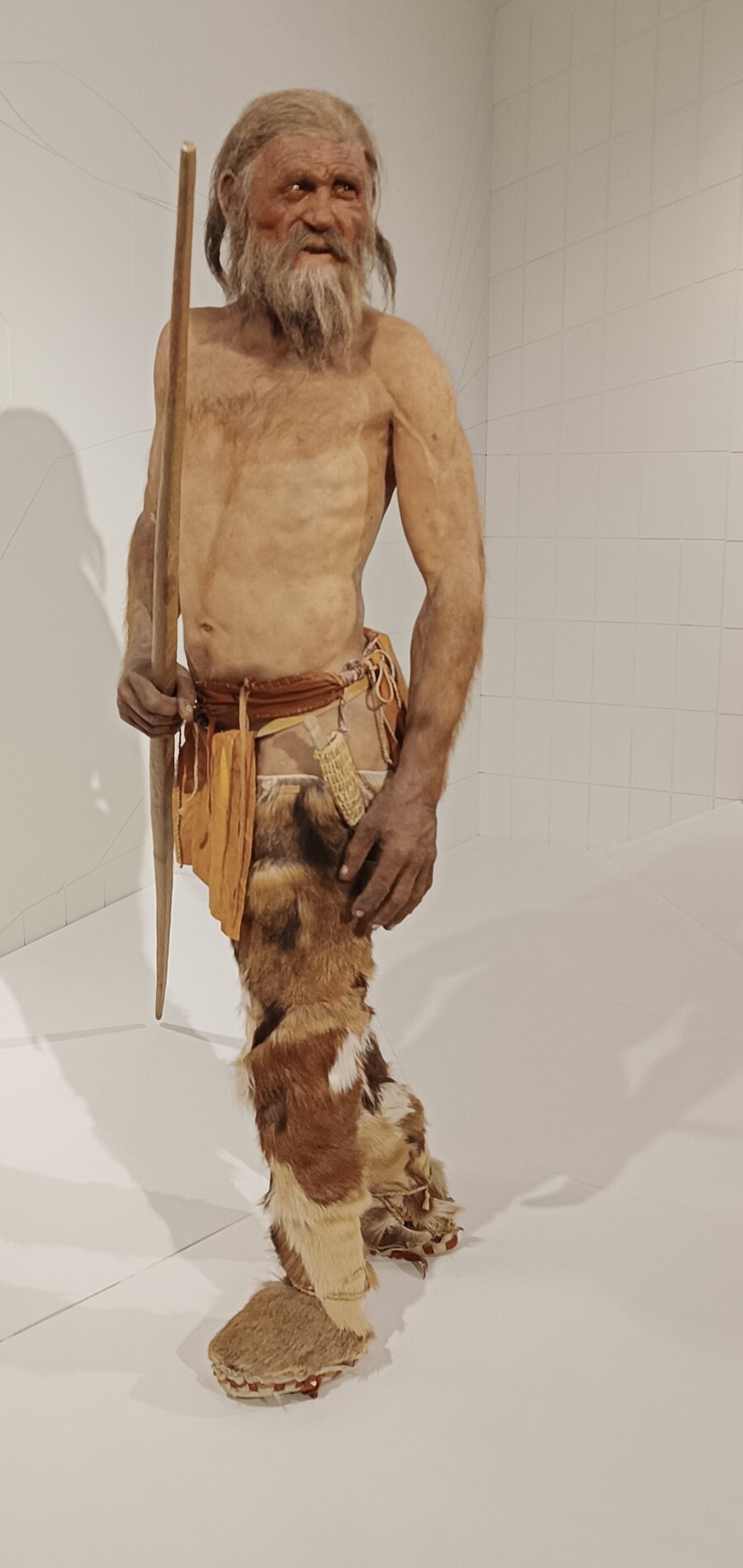
A museum reconstruction of Ötzi. Hikers found his body in the ice in the Alps in 1991. With him were a copper axe, a bow, arrows and a flint knife. The face is an estimate made by researchers.. Photo: Ricostruzione di Ötzi, Mannivu, CC BY-SA 4.0, modified: cropped and reduced in size 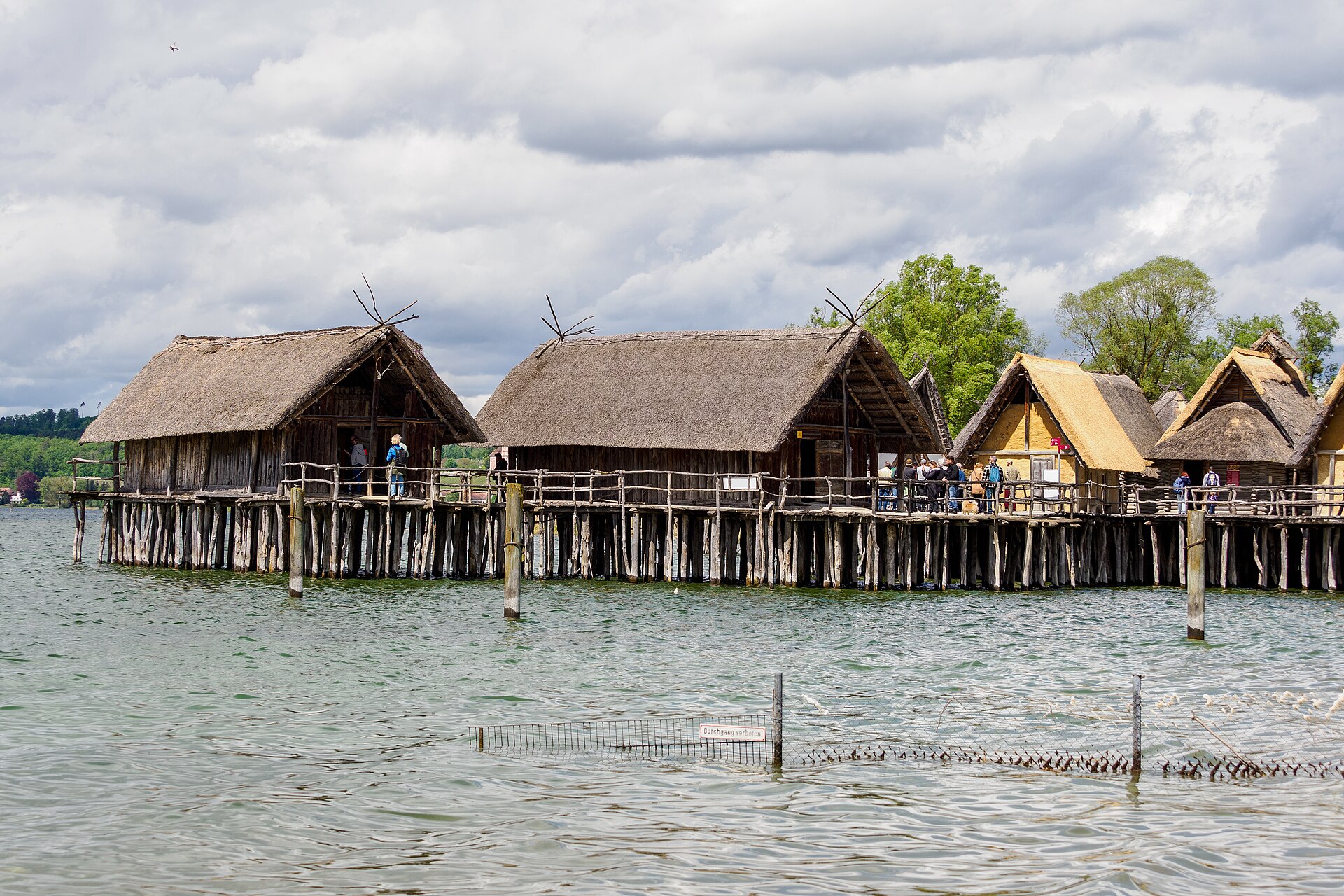
Rebuilt pile dwellings in the museum at Unteruhldingen on Lake Constance in Germany. In the Alpine region there are over a hundred pile-dwelling sites in six countries that are UNESCO World Heritage Sites.. Photo: Bodensee-Pfahlbauten in Unteruhldingen (2024), JoachimKohler-HB, CC BY-SA 4.0, modified: reduced in size 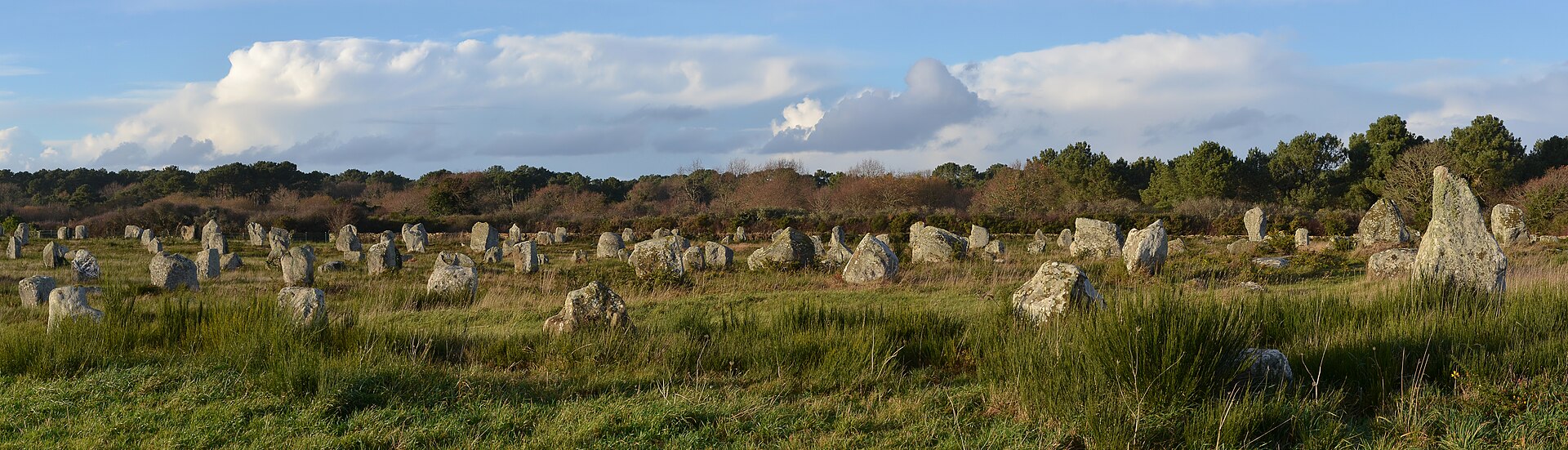
The Ménec stone rows at Carnac in Brittany, France. There are thousands of standing stones in the area. They were set up more than 5,000 years ago.. Photo: Carnac 56 Alignement du Ménec 2013, JLPC, CC BY-SA 3.0, modified: reduced in size 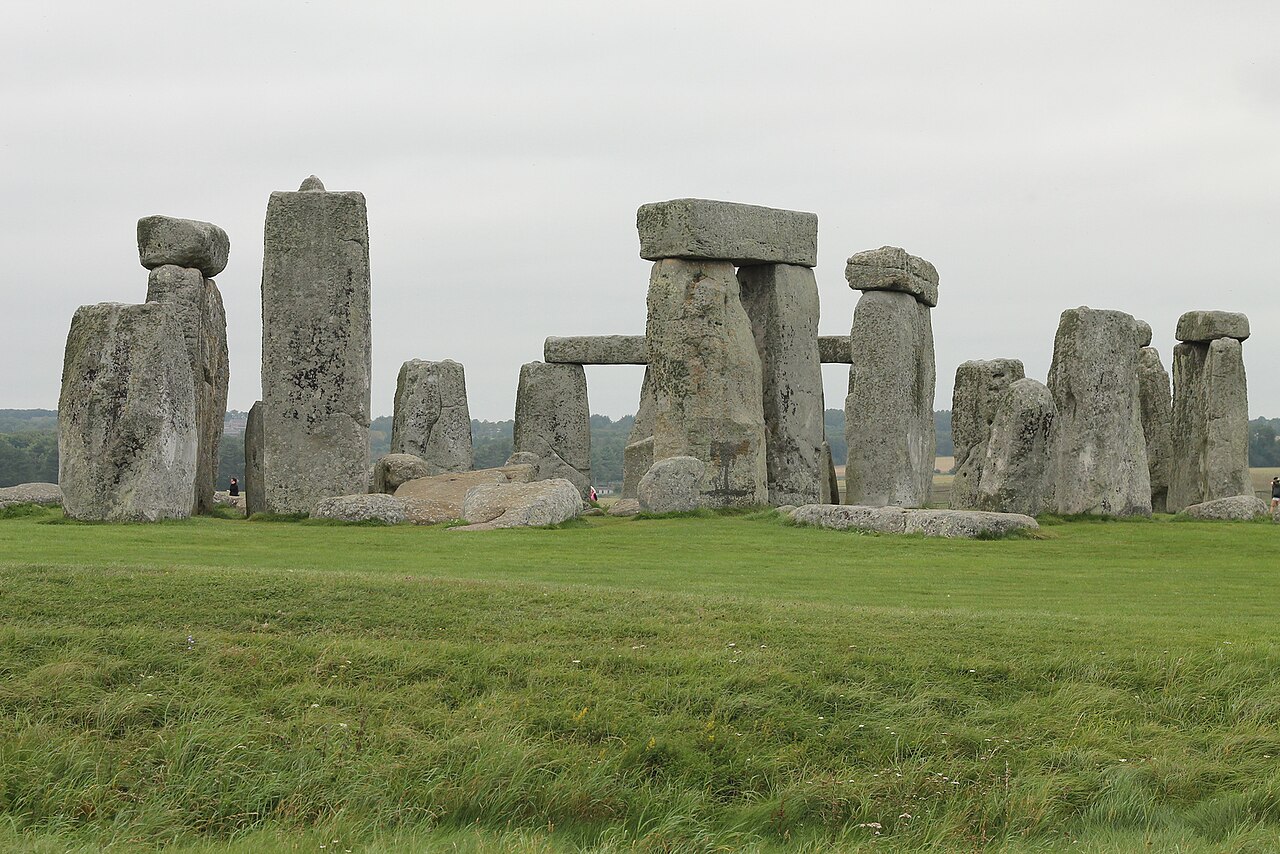
Stonehenge in England. The stone circle was built in stages, and the large stones were raised about 4,500 years ago.. Photo: Stonehenge, Wiltshire, England, RedNovember82, CC BY-SA 3.0, modified: reduced in size 7. Discuss in pairs
Why do archaeologists need finds and excavations?
What do cave paintings tell us about people in the ice age?
How did getting food change when farming began?
What do Ötzi's belongings tell us about his life?


Summary
Prehistory is the time before writing, and archaeologists study it through finds. Ice age hunter-gatherers made flint tools and hunted mammoths. They drew animals on cave walls. The ice age ended about 11,700 years ago. Farmers brought farming to Central Europe about 7,500 years ago and built longhouses. Ötzi, the pile dwellings and Stonehenge tell us about a later time.
Frequently asked questions
How do we know about the Stone Age when people did not write then?
Archaeologists dig in the ground and find tools, bones, living sites and cave paintings. The age of organic objects can be measured with carbon-14 dating. That is why we know a lot even though there are no written sources.
What is an ice age?
An ice age is a cold period when great glaciers cover large areas. When the last ice age was at its coldest, ice covered Northern Europe and the Alps. It ended about 11,700 years ago.
Did Stone Age people live in caves?
Sometimes, but mostly they lived in tents and huts. Caves and rock shelters were also used. Farmers lived in wooden houses in villages.
Related content
Try exercises
Have you taught this topic? Create an exercise on it for your class.