Times tables: teaching, slides and exercises for grades 3–4 (ages 9–10)
Times tables 1–10 as jumps, the commutative property, doubling and tricks for the five and nine times tables. Slides and exercises for grades 3–4.
Times tables are multiplication facts worth knowing by heart. Learning them by heart is easier once pupils understand how a table is built. In this article the table is built as jumps on the number line. After that, pupils learn tricks for getting hard products from easy ones.
The article is made for grades 3–4. Every step is ready to show to the class as a slide. By the end, pupils can use the commutative property, doubling and the tricks for the five and nine times tables. They can also check a product with division.
Key concepts
- times table
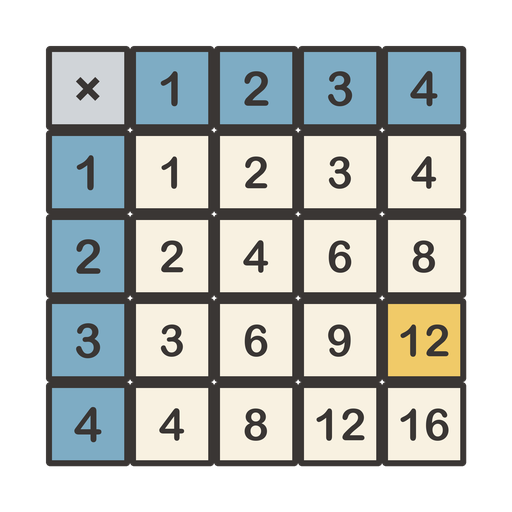 A list of multiplications, for example the five times table: 5, 10, 15, 20.
- multiplication
 Adding the same number many times, for example 3 × 4 = 12.
- product
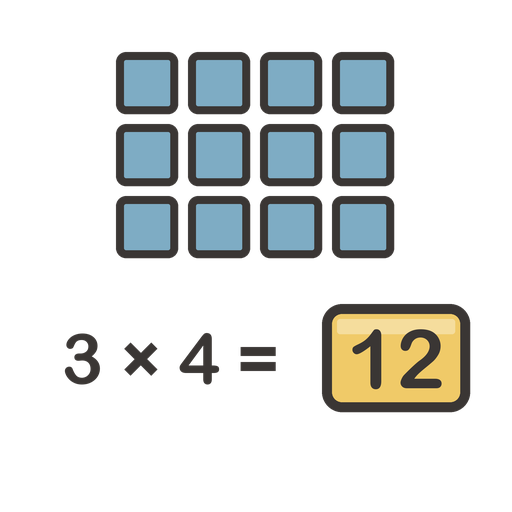 The answer to a multiplication. The product of 3 and 4 is 12.
- commutativity
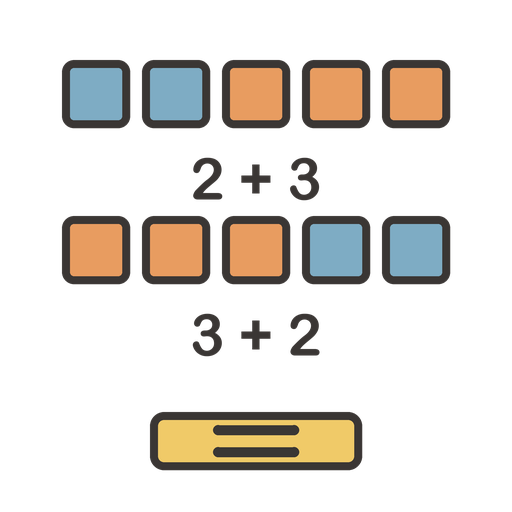 Commutativity means that in addition and multiplication you can swap the order of the numbers without changing the result. For example, 2 + 3 is the same as 3 + 2.
- division
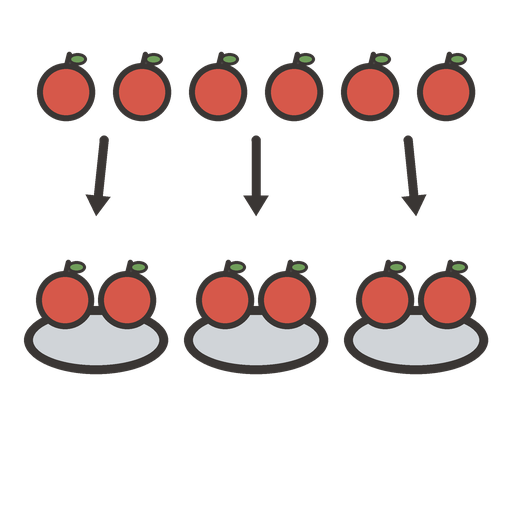 Sharing into equal parts, for example 12 ÷ 3 = 4.
- number line
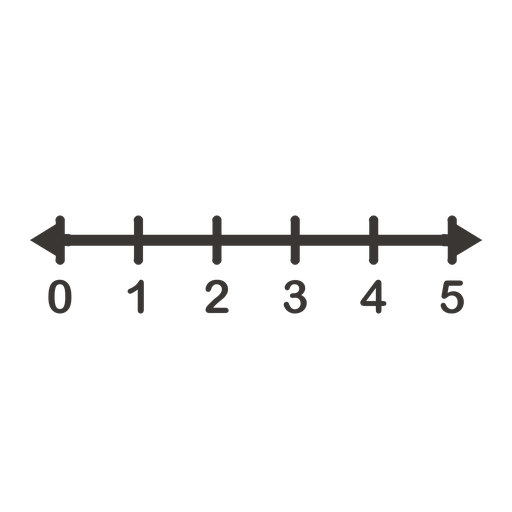 A straight line with numbers marked in order at equal spaces.
Related exercises
There is no exercise for this topic yet
Teacher or creator: make the first exercise with Puro Editor and choose Multiplication Tables as its topic. It will appear here as soon as it is published.
1. A times table is built from jumps
In the six times table, every jump is 6. The jumps land on 6, 12, 18 and 24.
Four jumps take you to 24, so 4 · 6 = 24. One more jump: 24 + 6 = 30.
2. Times table and product
A times table is a list of multiplications by the same number: 1 · 6, 2 · 6, 3 · 6 and so on up to 10 · 6. The answer to a multiplication is called the product.
The table also shows division: 4 · 6 = 24, so 24 : 6 = 4.
3. Commutative property: order does not change the product
Three jumps of four and four jumps of three end on the same number.
This is the commutative property. If you know 3 · 7, you also know 7 · 3.
3 · 4 = 12 4 · 3 = 12 4. Double: 2, 4 and 8
The four times table is the two times table doubled.
2 · 6 = 12
4 · 6 = 12 + 12 = 24
8 · 6 = 24 + 24 = 485. The nine and five times tables
Nine times table: take the ten times table product and subtract the number once. 9 · 5 = 50 − 5 = 45.
The five times table is half of the ten times table. 10 · 7 = 70, so 5 · 7 = 35.
6. Common mistake: a product remembered wrong
Six times eight is easy to get wrong.
Start from a product you know: 5 · 8 = 40
Add one more eight: 40 + 8 = 48
So 6 · 8 = 487. Talk about it as a class
1. A spider has 8 legs. How many legs do 7 spiders have?
2. 28 children come to football practice. How many teams of 4 can they make?
3. How can you get 9 · 7 from the ten times table?
4. Which products are in both the two and the five times tables?
Summary
A times table is a list of multiplications by the same number. On the number line it shows as jumps of equal length. The commutative property tells us that 3 · 7 and 7 · 3 are equal. The four and eight times tables come from doubling. The nine times table is the ten times table minus the number once. A product remembered wrong can be fixed from a known product and checked with division.
Frequently asked questions
In what order should times tables be learned?
Start with the easiest tables: first 1, 2, 5 and 10. Then 4 and 8 by doubling, after that 3, 6 and 9. The 7 times table comes last; by then its products are familiar from the other tables.
How can you remember the nine times table?
Work out the ten times table product and subtract the number once. For example, 9 · 7 = 70 − 7 = 63.
How do times tables help with division?
Division is multiplication the other way round. If you know that 7 · 8 = 56, you also know that 56 : 8 = 7.