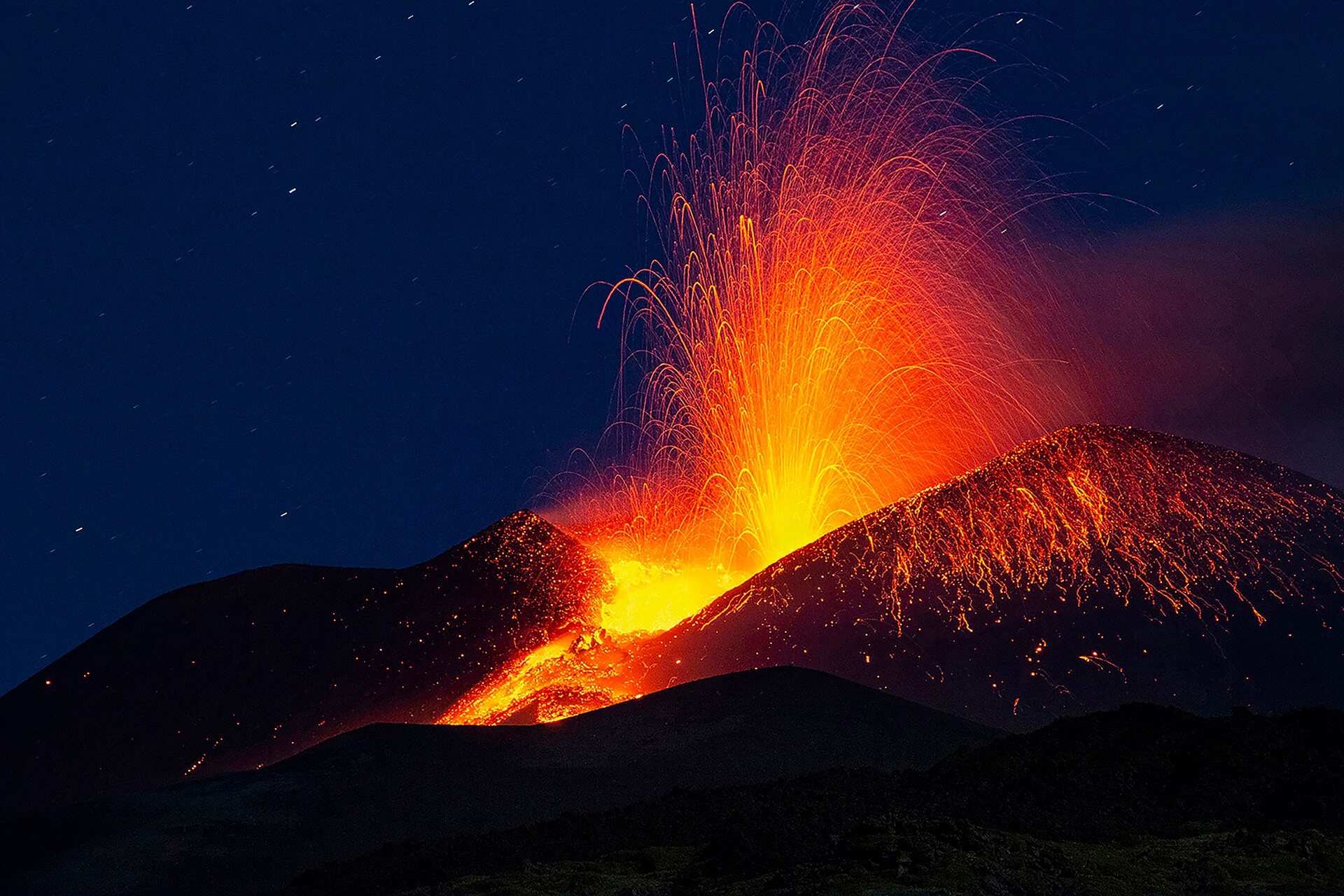

Volcanoes and earthquakes: magma, lava and tectonic plates
Volcanoes and earthquakes for grades 5–6: the Earth's layers, tectonic plates, the parts of a volcano and Europe's volcanoes. Slides, pictures and questions.
Volcanoes and earthquakes show us that it is hot inside the Earth and that its surface moves. The Earth's crust is broken into large tectonic plates that move slowly. At the edges of the plates, rock can melt into magma and erupt from a volcano as lava. When the plates jolt, the ground shakes. Every step is ready to show to the class as a slide.
At the end, pupils can explain why volcanoes and earthquakes happen in certain areas. They can name the parts of a volcano and say how people prepare for an earthquake.
Key concepts
- volcano
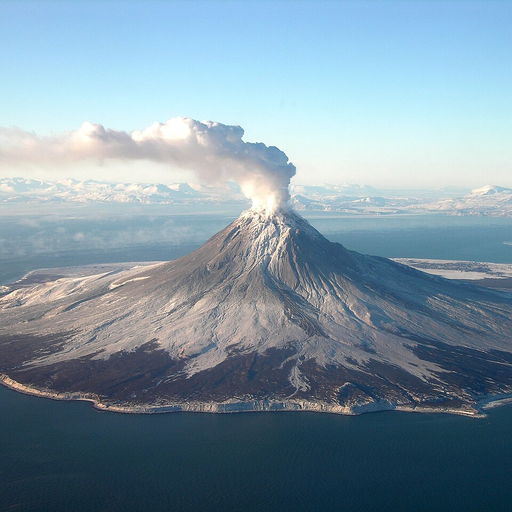 A mountain from which hot melted rock, called lava, can burst out.
- mountain
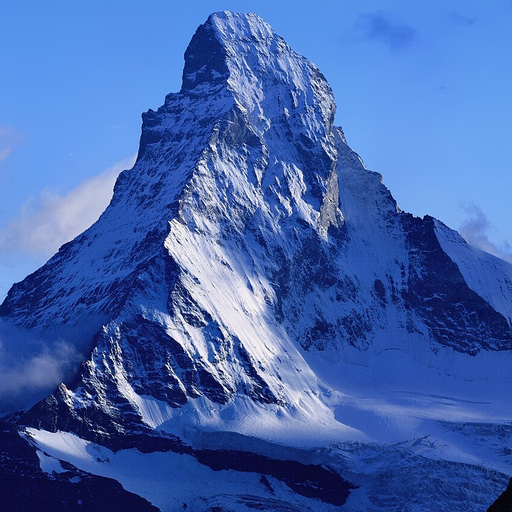 A high, steep rise of land. The world's highest mountain is Mount Everest.
- gas
 A substance that spreads in every direction and fills the whole space, like air.
1. What is happening under the ground?
What comes out of a volcano when it erupts?
Where does hot, melted rock come from?
Why can the ground suddenly start to shake?
Would you live near a volcano, and why?2. The Earth's layers: crust, mantle and core
The Earth has three main layers. On the surface is the thin crust, which we live on. Below it is the thick mantle, whose hot rock moves very slowly. In the middle is the core, which is mostly iron and the hottest part of the Earth.
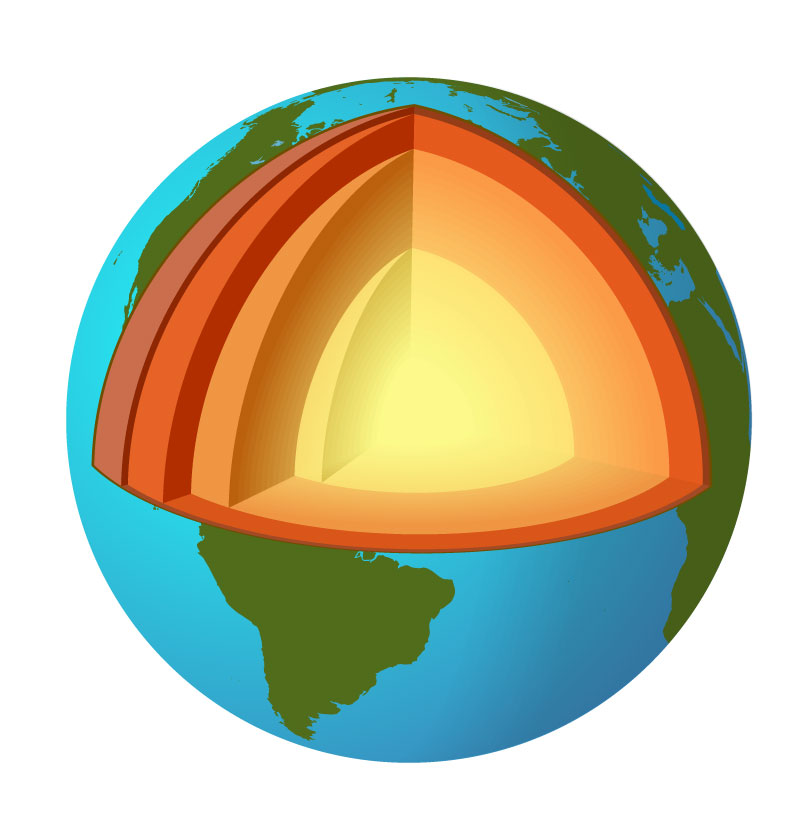
The Earth's layers in a cutaway drawing. From the surface to the centre of the Earth it is about 6 400 kilometres.. Photo: Jordens inre, Mats Halldin, CC BY-SA 3.0, modified: reduced in size 3. Tectonic plates move
The Earth's crust is broken into large pieces called tectonic plates. The plates move a few centimetres a year, about as fast as your fingernails grow. Most volcanoes and earthquakes are found at the edges of the plates. There are so many around the Pacific Ocean that the area is called the Ring of Fire.
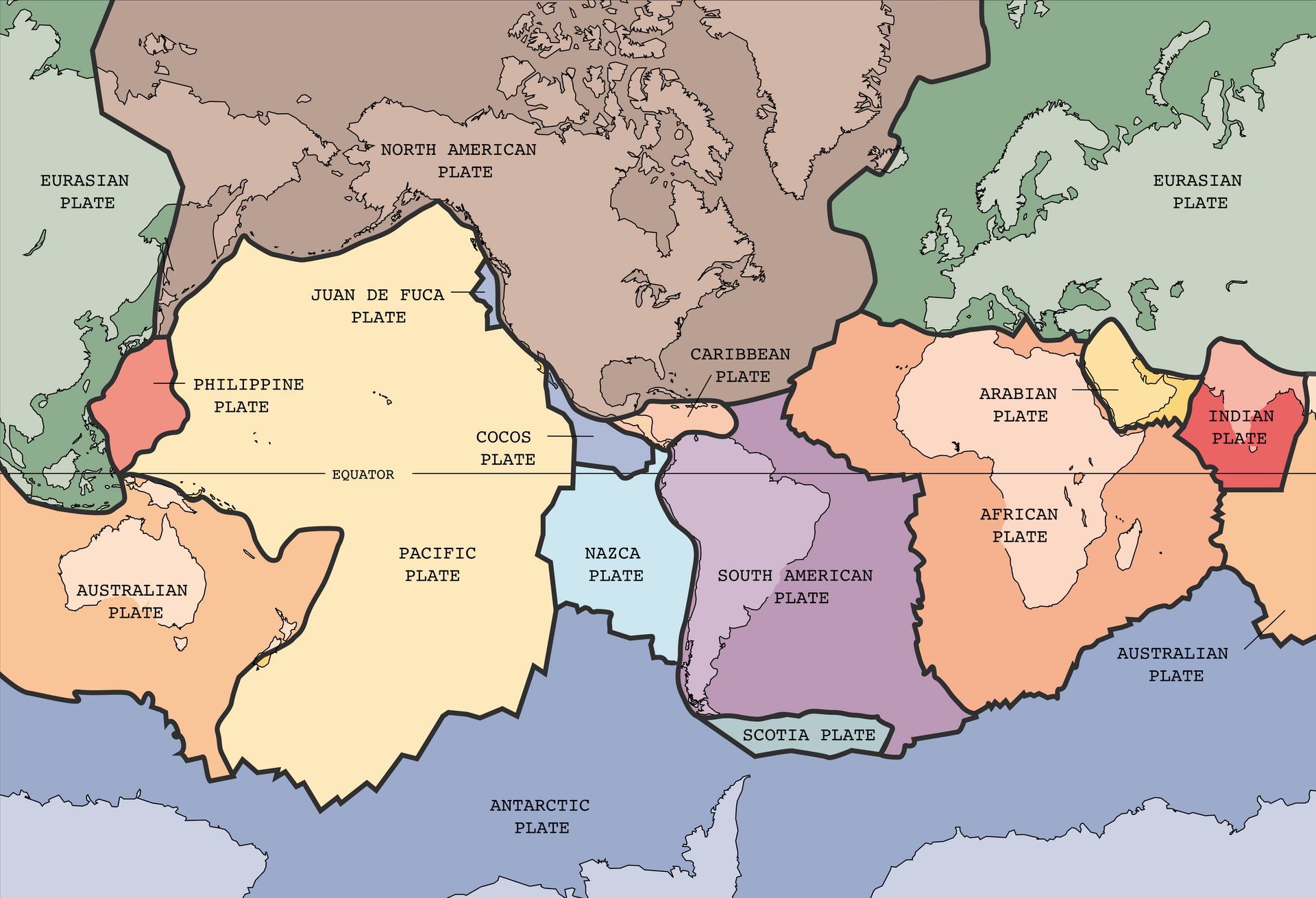
Tectonic plates on a world map. The thick lines are the edges of the plates. The plate names on the map are in English.. Photo: Tectonic plates, USGS, Public domain, modified: reduced in size 4. The parts of a volcano
Deep under the ground is a magma chamber full of melted rock called magma. The magma rises up the vent and comes out of the crater. Magma that has reached the surface is called lava. During an eruption, ash and gases also shoot into the air.
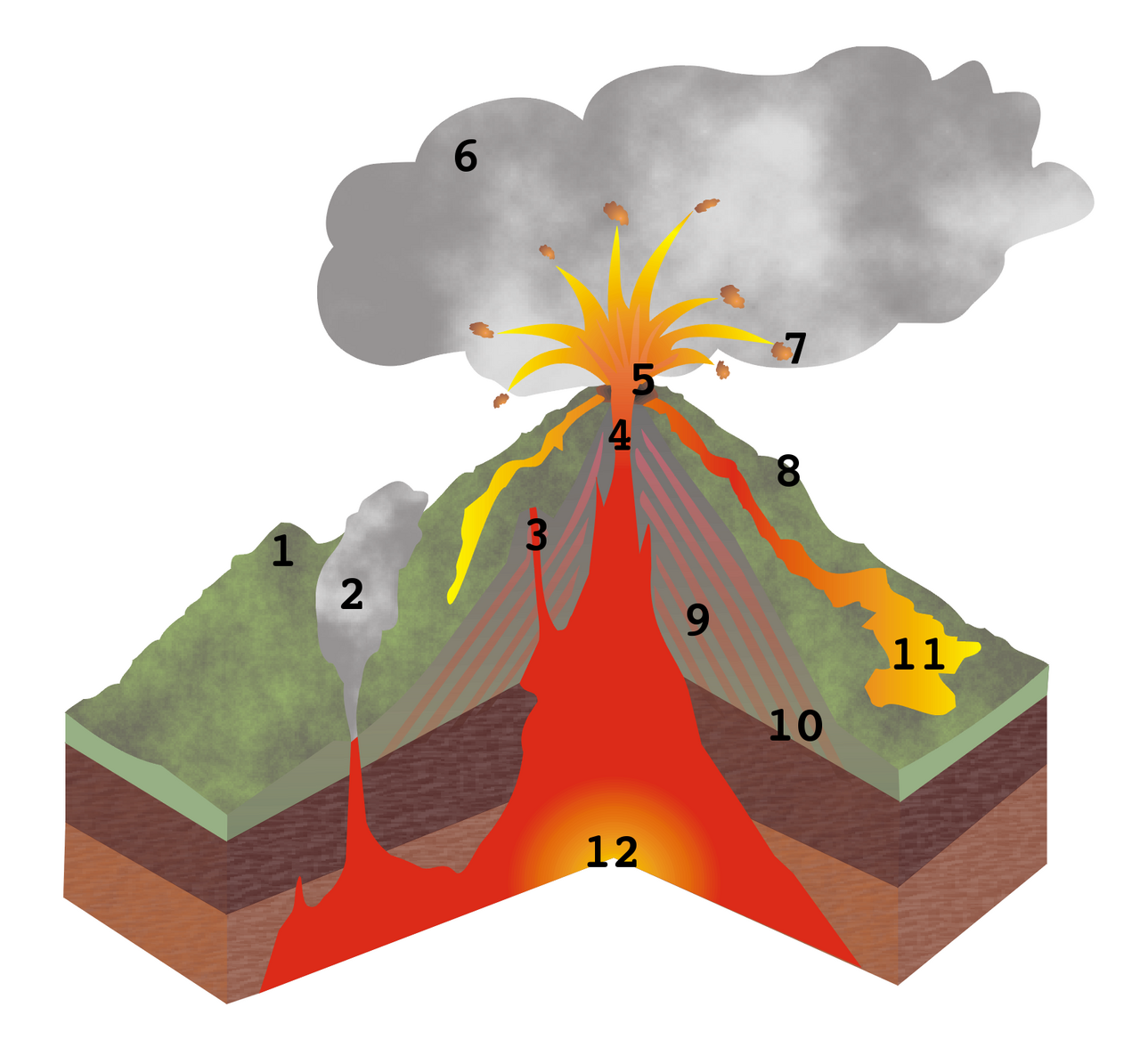
A cross-section of a volcano. The numbers belong to the original diagram; the pins give the names of the parts.. Photo: Spaccato vulcano i18, Luigi Chiesa, modified by Zimbres, Public domain, modified: reduced in size 5. Volcanoes in Europe
Europe's best-known volcanoes are in Italy and Iceland. Etna and Stromboli erupt often, and Iceland has an eruption every few years on average. In the year 79, Vesuvius buried the town of Pompeii under ash. The volcanoes of the Eifel in Germany have been quiet for thousands of years, and their craters are now filled with lakes.
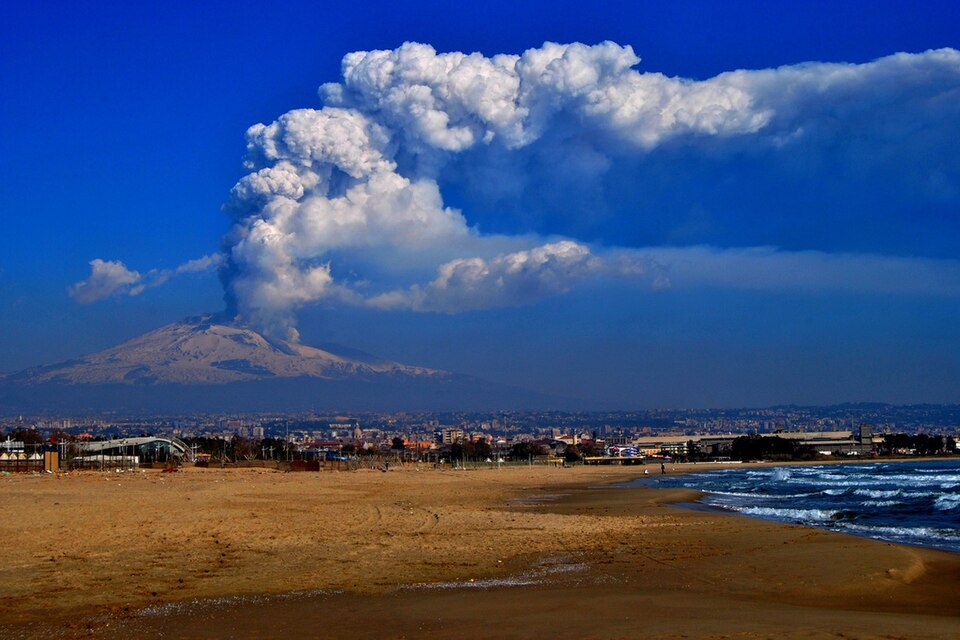
Etna erupting in March 2012. In front is the city of Catania in Sicily, Italy.. Photo: March 4, 2012 Etna Eruption with the city of Catania in the foreground, andrea, CC BY-SA 2.0, modified: reduced in size 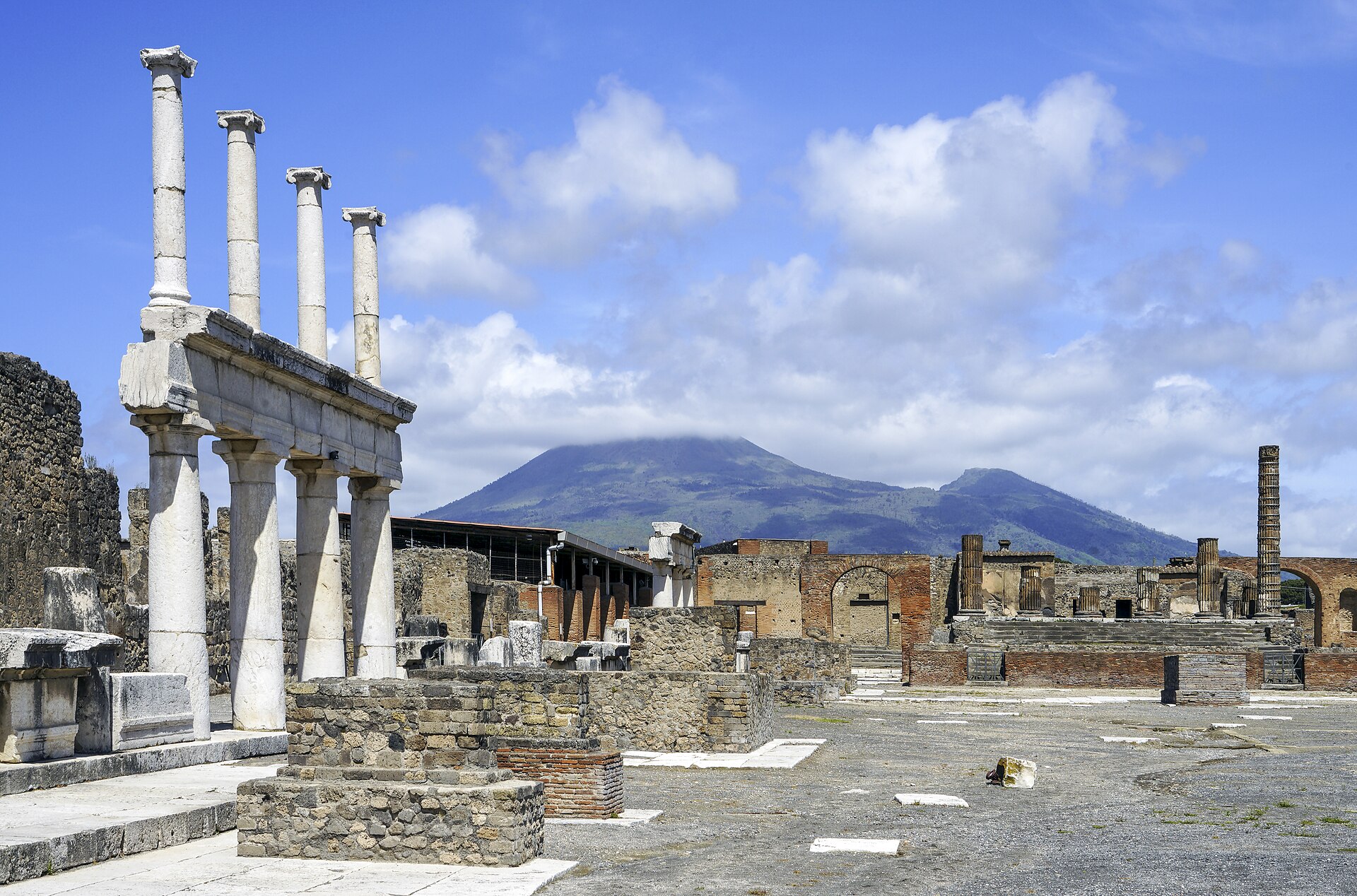
The ruins of Pompeii with Vesuvius behind. In the year 79 ash covered the town, and excavations have brought it to light again.. Photo: Forum (Pompeii) and the Vesuvio, Commonists, CC BY-SA 4.0, modified: reduced in size 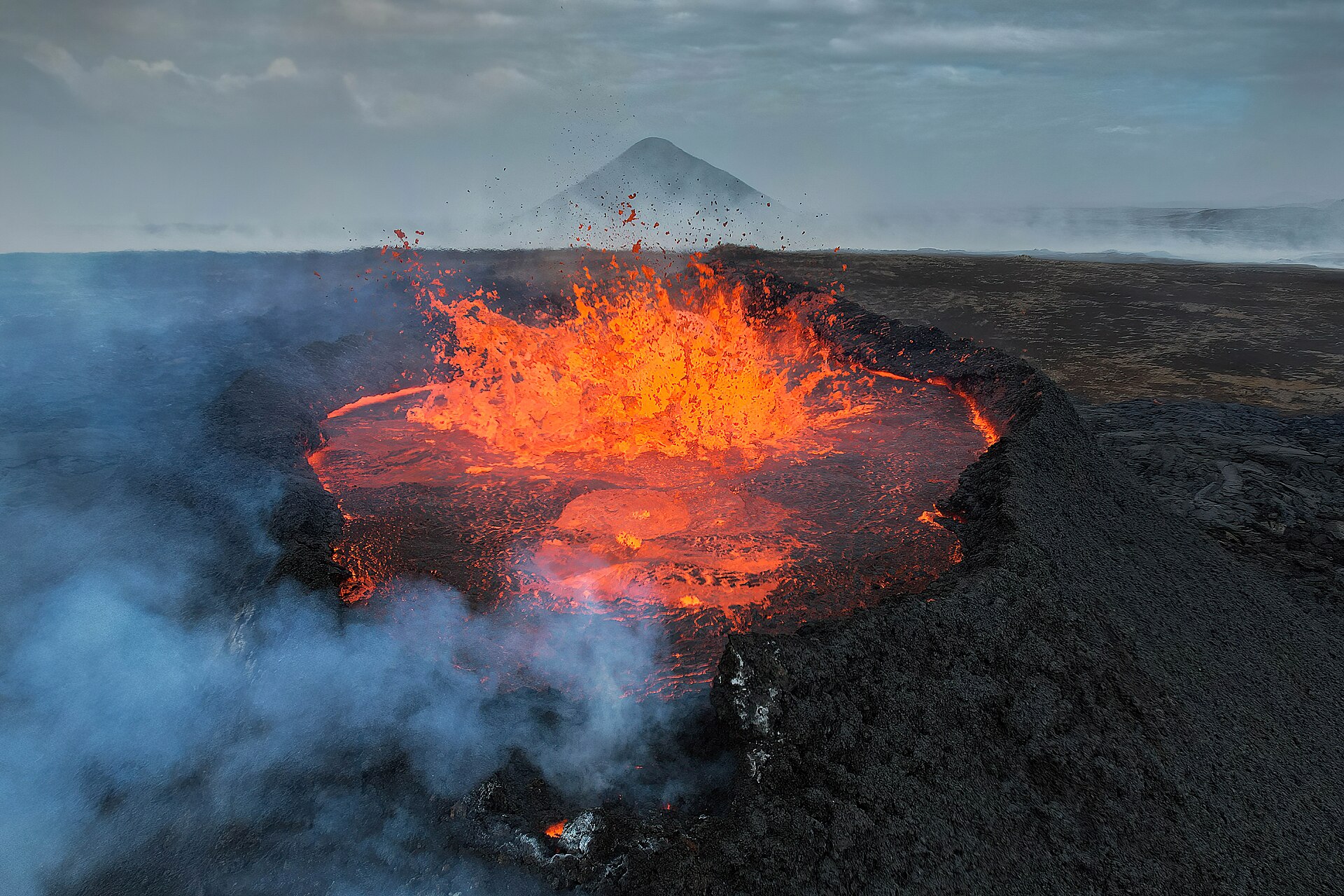
Lava erupting from a crater in Iceland in summer 2023. The eruption site is on the Reykjanes peninsula next to the mountain Litli-Hrútur.. Photo: 001 Volcano eruption of Litli-Hrútur in Iceland in 2023 Photo by Giles Laurent, Giles Laurent, CC BY-SA 4.0, modified: reduced in size 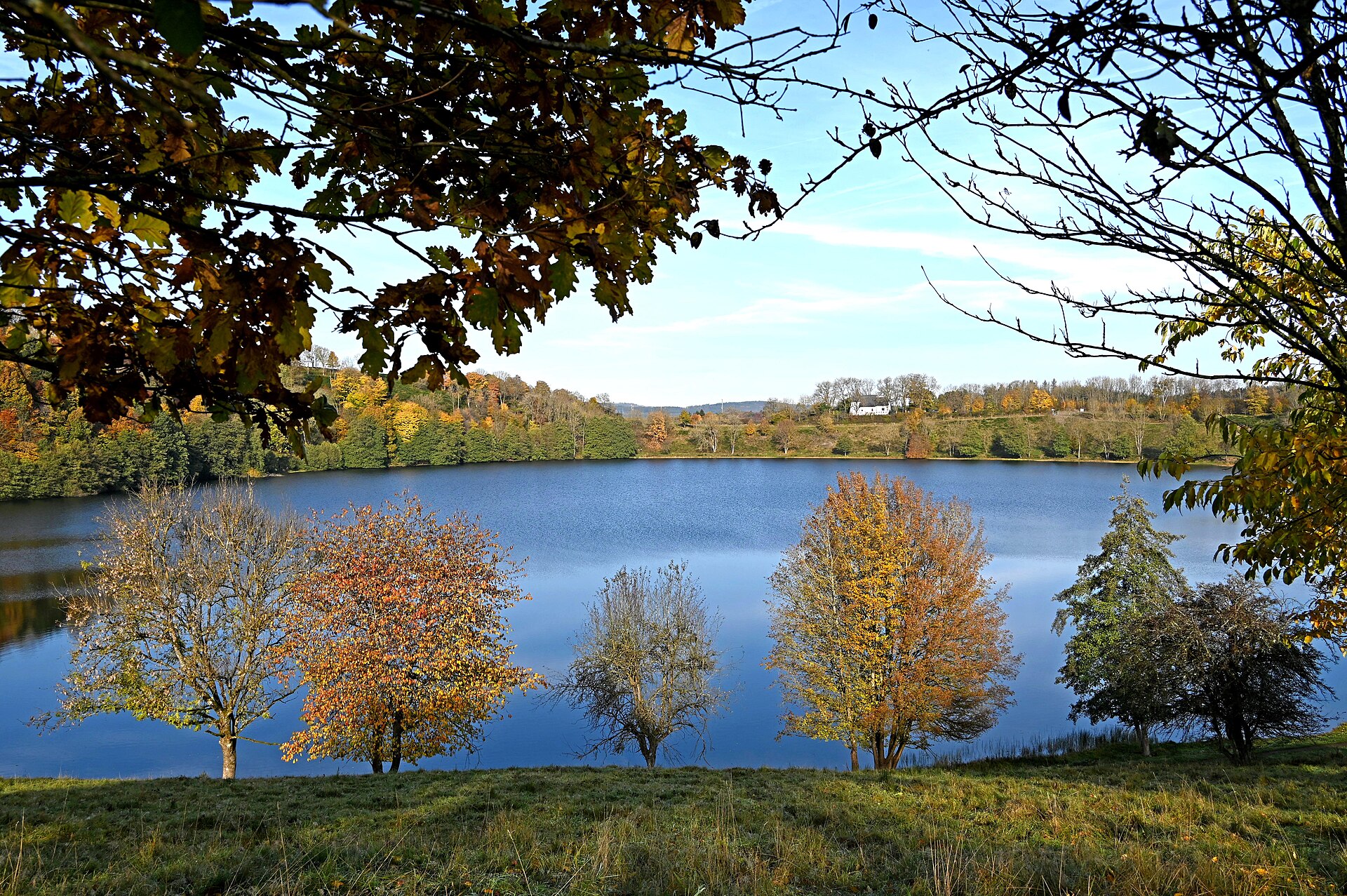
Weinfelder Maar in the Eifel, Germany. The lake lies in the crater of an old volcano. The photo was taken in autumn.. Photo: Weinfelder Maar 01, Thomas Hummel, CC BY-SA 4.0, modified: reduced in size 6. When the ground shakes
The edges of plates can get stuck together. When the strain becomes too great, the plates jolt and an earthquake happens. A seismograph measures the shaking and records it as a line. In earthquake areas, houses are built so that they can withstand the shaking.
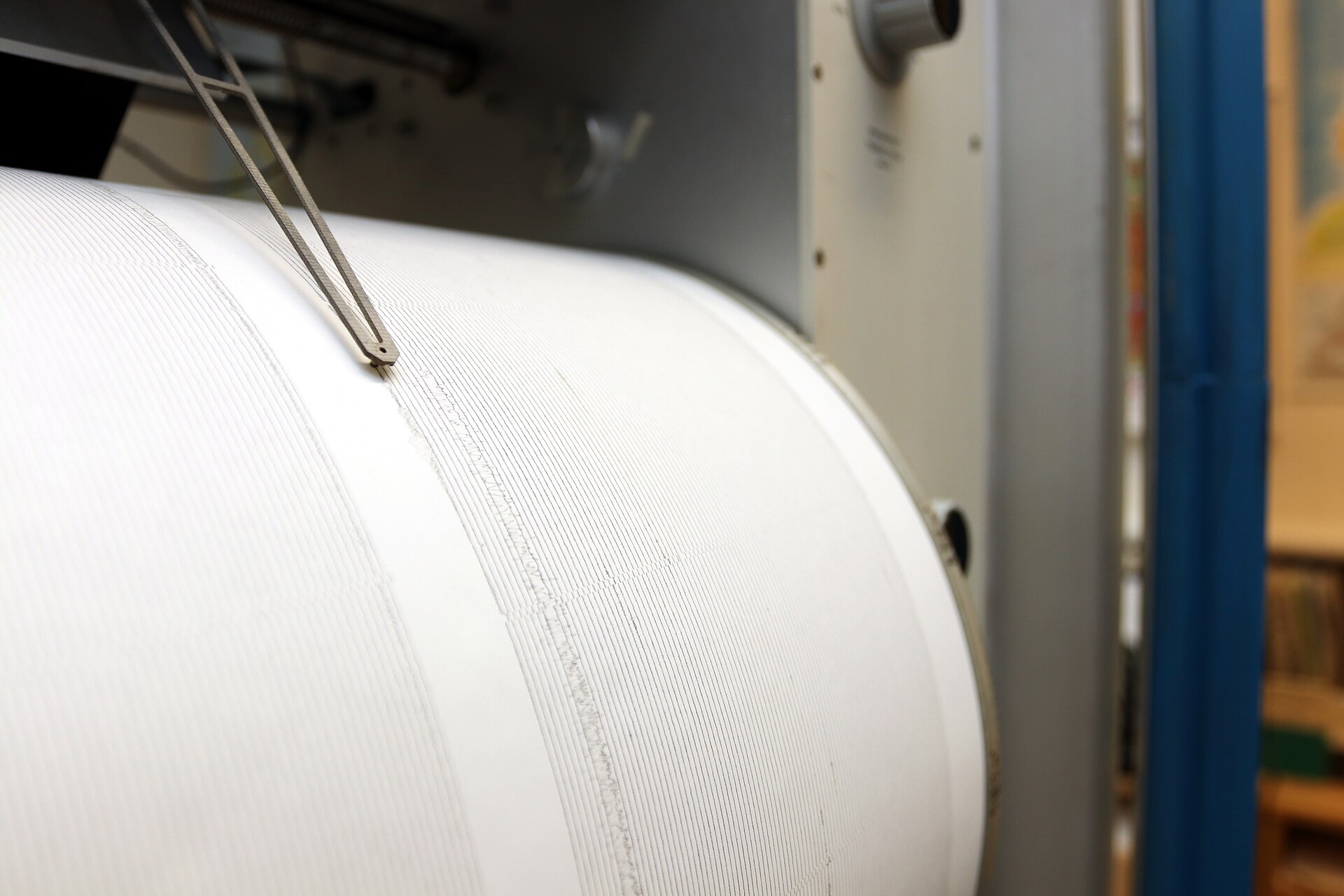
An old seismograph at the Institute of Geophysics of the Czech Academy of Sciences. The pen draws a line on the paper that swings when the ground shakes.. Photo: Seismogram on historical seismometer at Institute of Geophysis of the Czech Academy of Science (12), Petr Brož (Czech Academy of Science), CC BY-SA 4.0, modified: reduced in size 7. Why do people live near volcanoes?
Volcanic ash makes the soil fertile, so grapes and oranges grow on the slopes of Etna.
In Iceland, hot water from under the ground heats most houses.
Discuss using the map: Why are there volcanoes in Iceland and Italy?
Discuss: What do you do if the ground starts to shake in the classroom?


Summary
The Earth has three main layers: the crust, the mantle and the core. The crust is broken into tectonic plates that move a few centimetres a year. Most volcanoes and earthquakes are at the edges of the plates. In a volcano, magma rises from the magma chamber to the crater and erupts as lava and ash. In an earthquake the plates jolt, and a seismograph measures the shaking. People live near volcanoes because of the fertile soil and the heat from inside the Earth.
Frequently asked questions
Can a quiet volcano erupt again?
Yes. A volcano can be quiet for hundreds of years and then erupt again. Vesuvius last erupted in 1944, and scientists watch it all the time.
What is a tsunami?
A tsunami is a huge wave that an earthquake under the sea can cause. The wave travels fast across the sea and can become very high at the coast. That is why many coasts have a warning system.
Can earthquakes be predicted?
Not exactly. Scientists know which areas have earthquakes, but not when the next one will come. That is why strong houses are built in earthquake areas and people practise what to do.
Related content
Try exercises
Have you taught this topic? Create an exercise on it for your class.