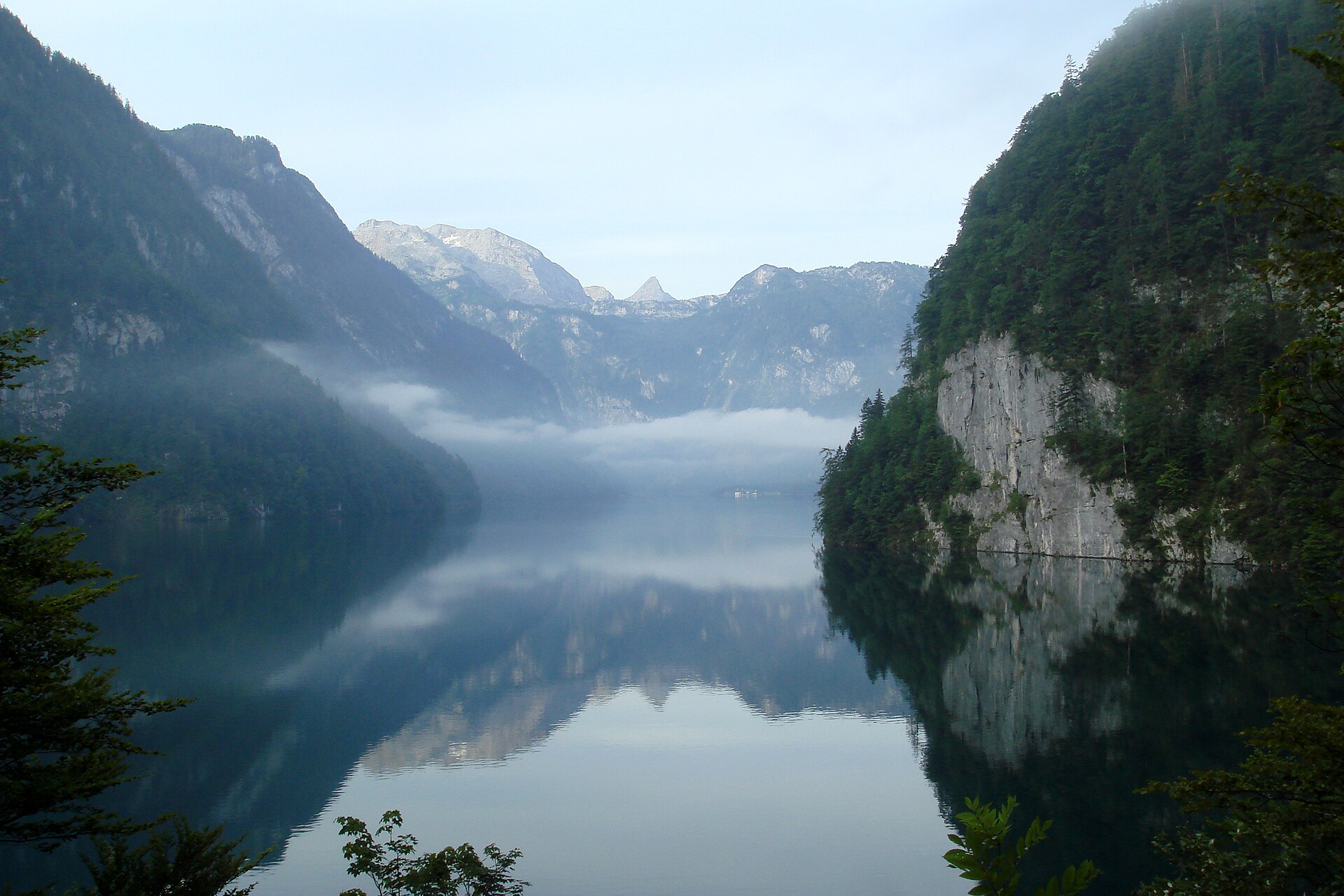

The water cycle: evaporation, condensation and rain
The water cycle for grades 3–4: evaporation, condensation, rain and groundwater. Slides, exercises, pictures, a diagram and a jar experiment.
The water cycle means that the same water travels round and round between the sea, the air and the land. The Sun makes water evaporate, in the air it condenses into clouds, and rain brings it back to the ground. On its way, water changes state: sometimes it is a liquid, sometimes water vapour and sometimes ice or snow. Every stage is ready to show the class as a slide.
By the end, pupils can name the stages of the water cycle and describe them in their own words. The class also makes a small water cycle in a glass jar.
Key concepts
- water cycle
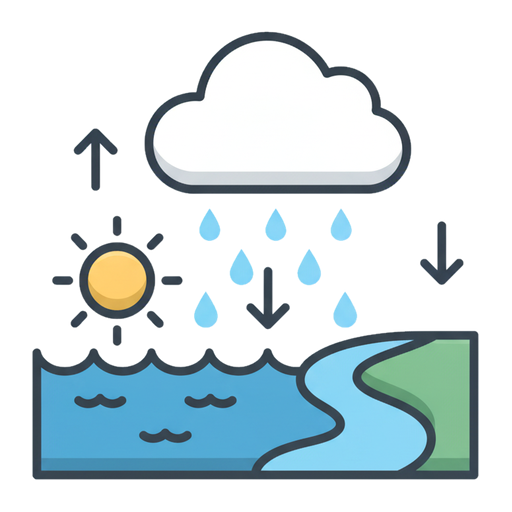 Water evaporates, forms clouds, falls as rain and flows back to the sea.
- evaporation
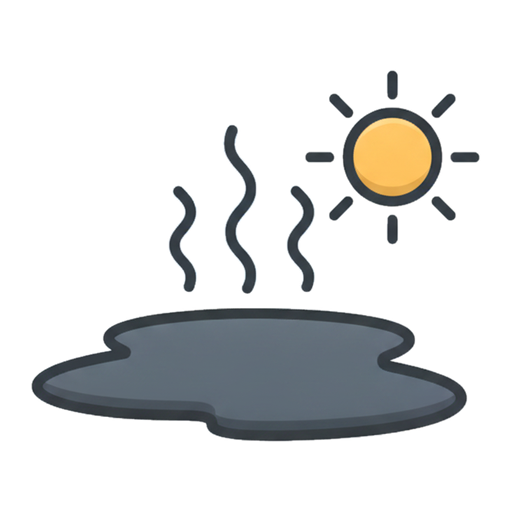 A liquid turns into a gas, like a puddle drying in the sun.
- condensation
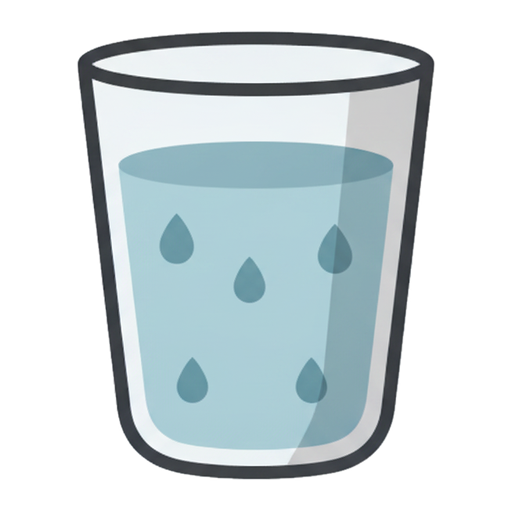 A gas turns into a liquid as it cools, like drops on the outside of a cold glass.
- steam
 Water that has turned into a gas. It rises from boiling water.
- cloud
 A white or grey heap of tiny water drops floating in the sky.
- rain
 Drops of water that fall from the clouds to the ground.
- snow
 Soft white flakes that fall from the sky when it is cold.
- groundwater
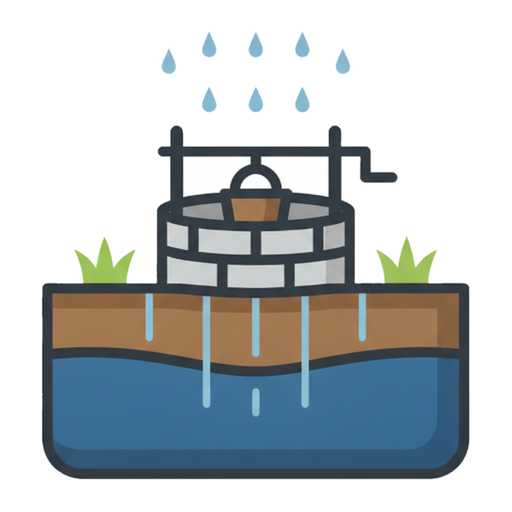 Groundwater is water under the ground, in the soil and in cracks in the rock. Rainwater soaks into the ground and is cleaned on the way, and it can be used as drinking water.
Related exercises
1. Where does the puddle go?
Where does the puddle go when the sun shines?
Where do clouds come from?
Where does rainwater go once it has fallen to the ground?2. Water is everywhere
Most of the Earth's water is in the sea. There is also water in lakes, rivers, glaciers and underground. In the air, water is present as invisible water vapour. Water does not stay in one place but is always on the move.
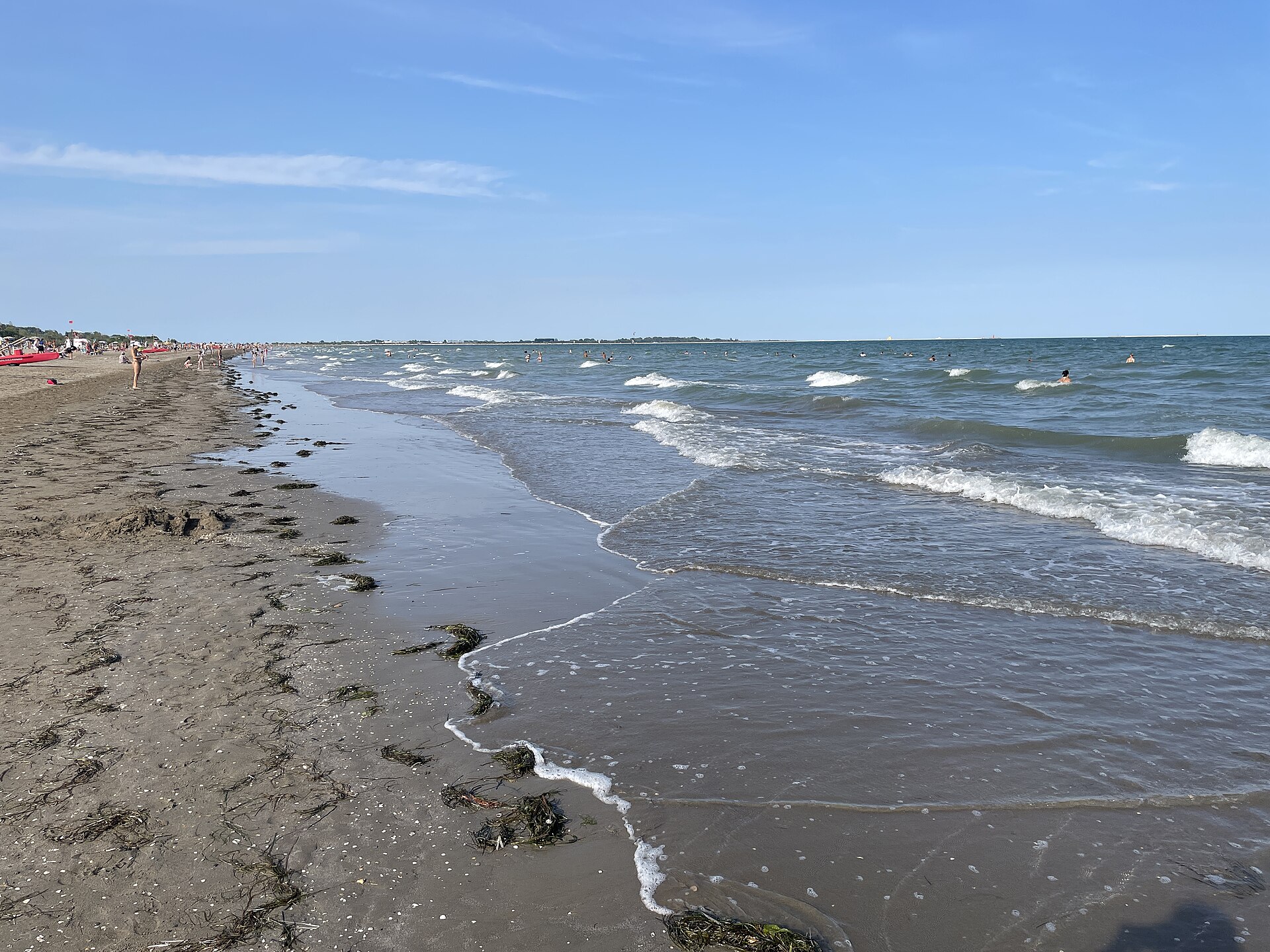
Sea: most of the Earth's water is in the sea, and it is salty. The photo is of the Adriatic Sea at the Lido di Venezia.. Photo: Adriatic waves on the beach of the Lido, Venice (IMG 5748), Tomasz Chralowicz, CC BY-SA 4.0, modified: reduced in size 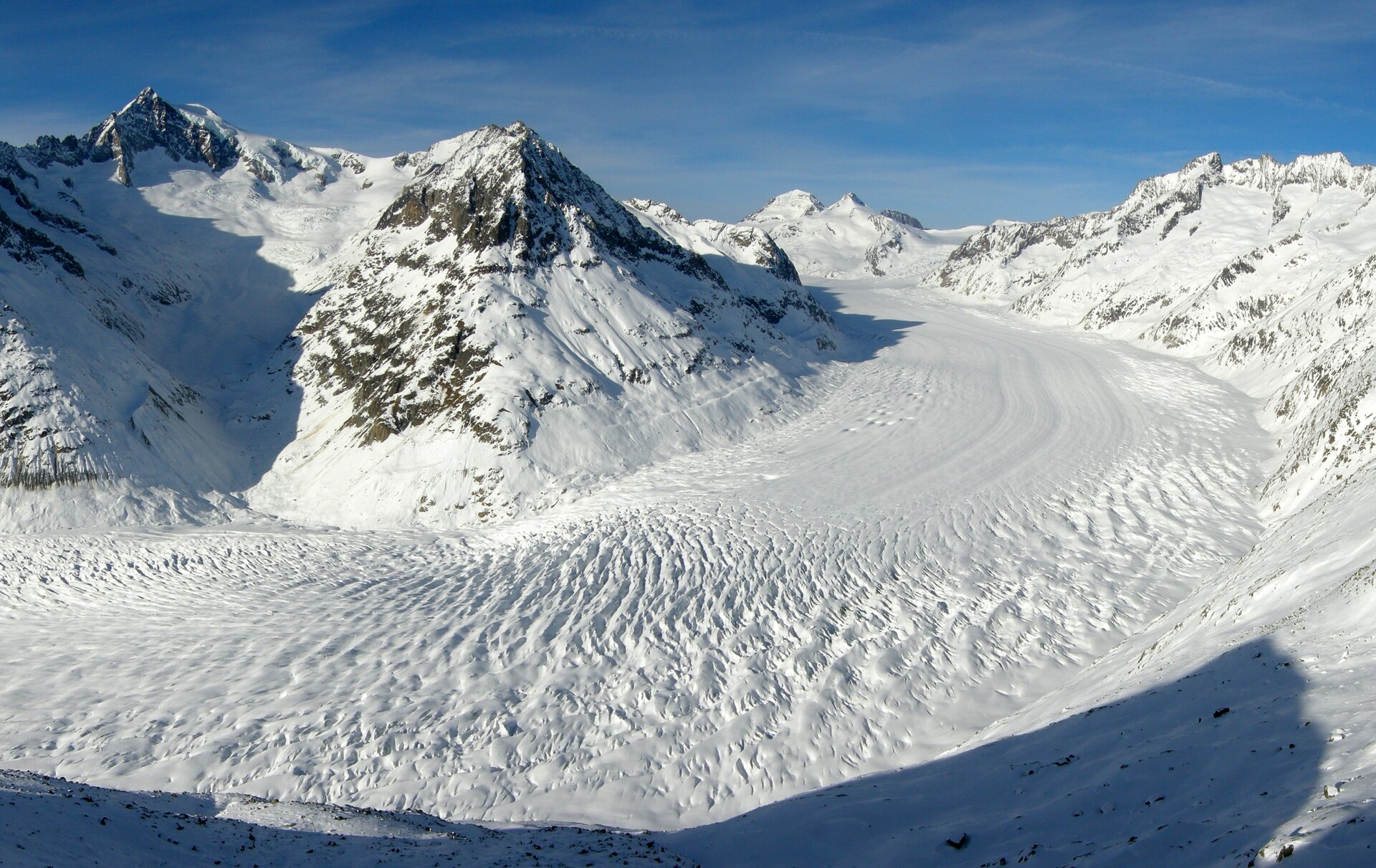
Glacier: fresh water is locked up in ice. The photo is of the Aletsch Glacier in the Swiss Alps.. Photo: Aletschgletscher-Eggishorn, Tobias Alt, Tobi 87, CC BY-SA 4.0, modified: reduced in size 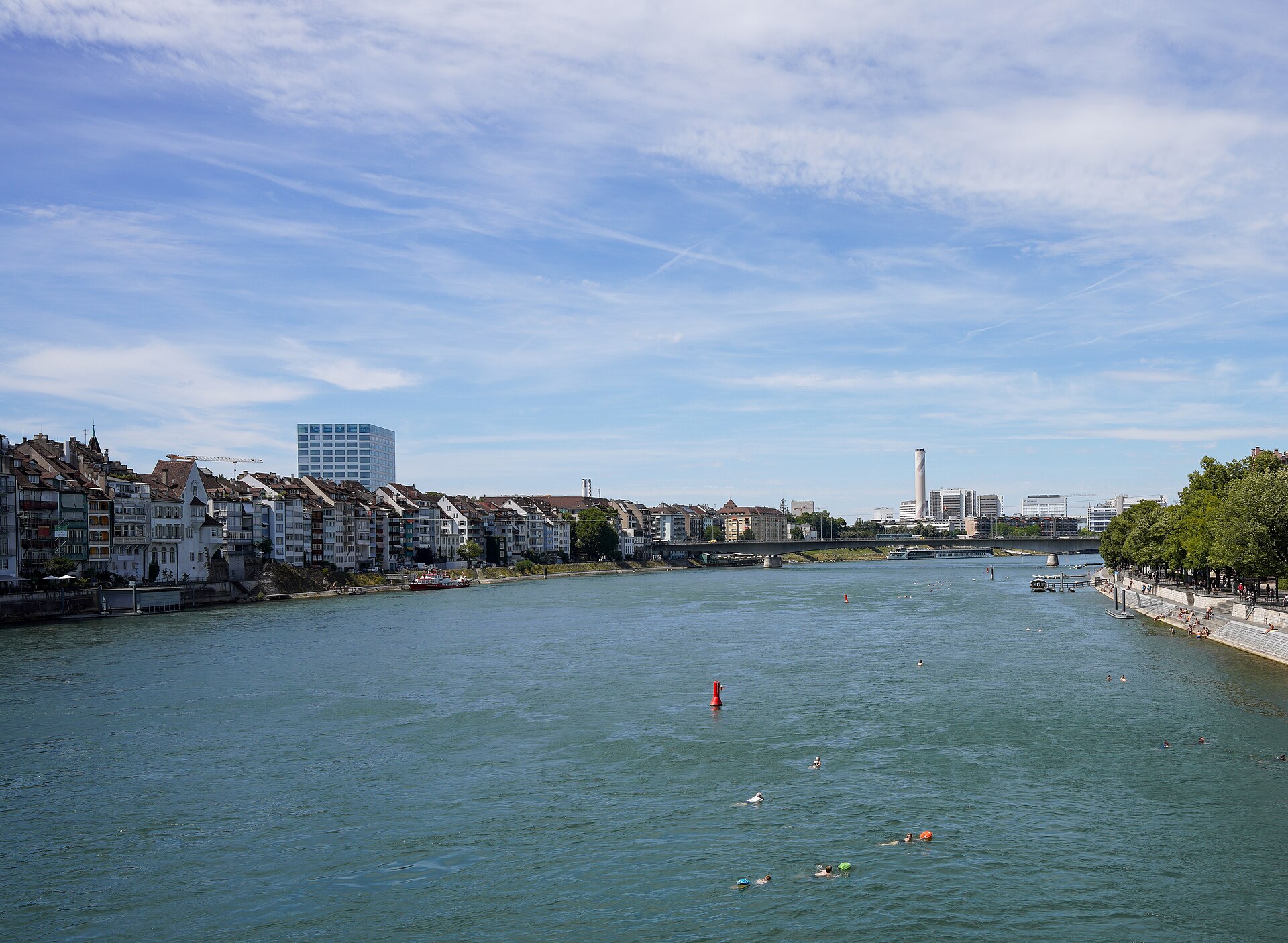
River: the Rhine flows through the city of Basel in Switzerland. The river carries on towards the North Sea.. Photo: Der Rhein in Basel 2, WikiEuropian, CC BY-SA 4.0, modified: reduced in size 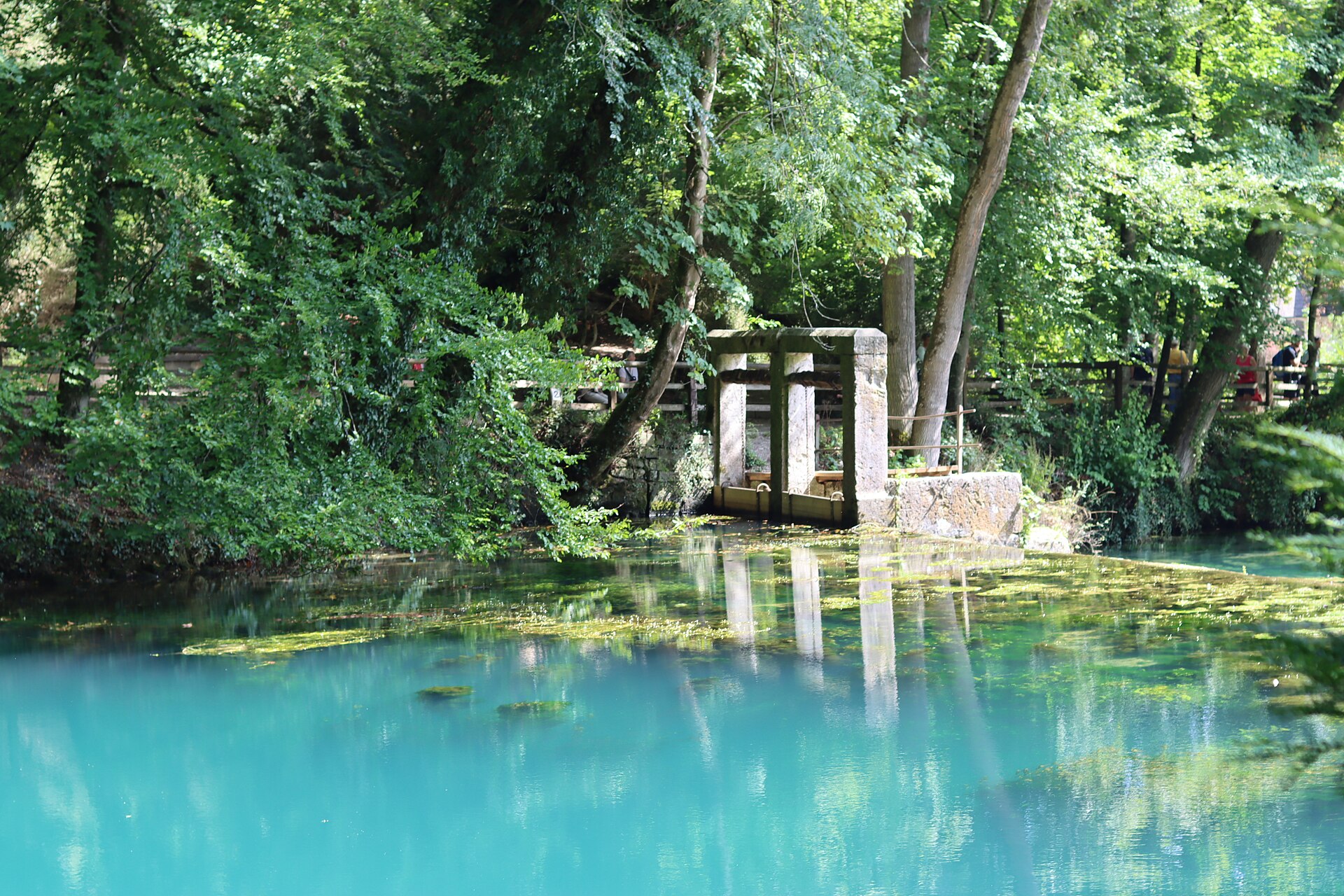
Groundwater: the Blautopf is a spring in Baden-Württemberg in Germany. Water that has flowed underground comes up to the surface here.. Photo: View of the Blautopf (spring), PpP-v-v-i, CC BY-SA 4.0, modified: reduced in size 3. The Sun makes water evaporate
The Sun warms the water of the seas, lakes and ground. Warm water gives off water vapour, which rises into the air. This is called evaporation. Water vapour is a gas that you cannot see. That is why wet washing dries: its water evaporates into the air.
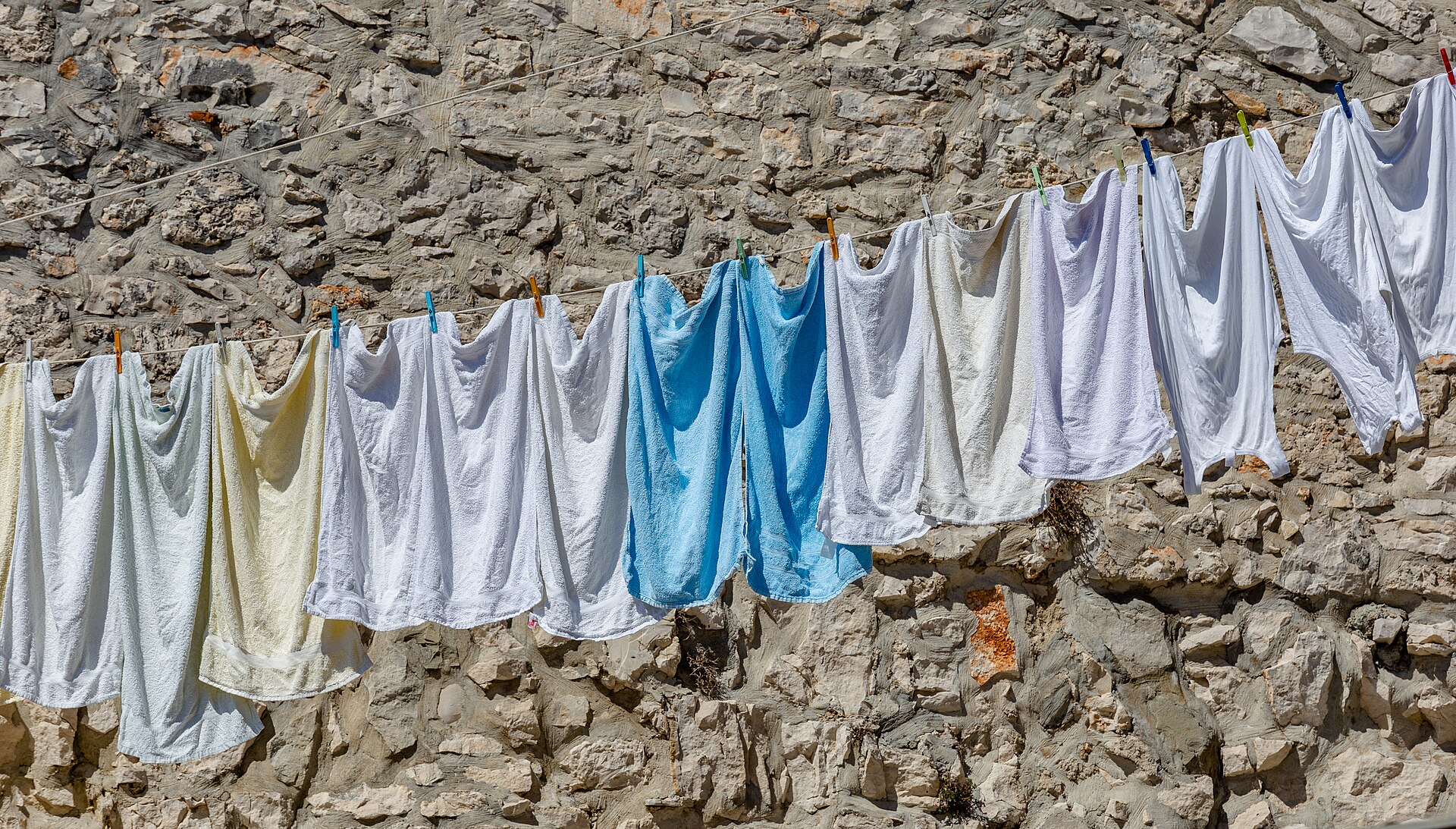
The towels dry in the sun as their water evaporates into the air. The photo was taken in Umag in Croatia.. Photo: Drying laundry, Umag, Istria, Croatia, Michal Klajban, CC BY-SA 4.0, modified: reduced in size 4. Water vapour condenses into clouds
Water vapour rises and cools down. As it cools, it turns into tiny water droplets. This is called condensation. High up, the droplets form clouds. Close to the ground, fog forms, and at night dew.
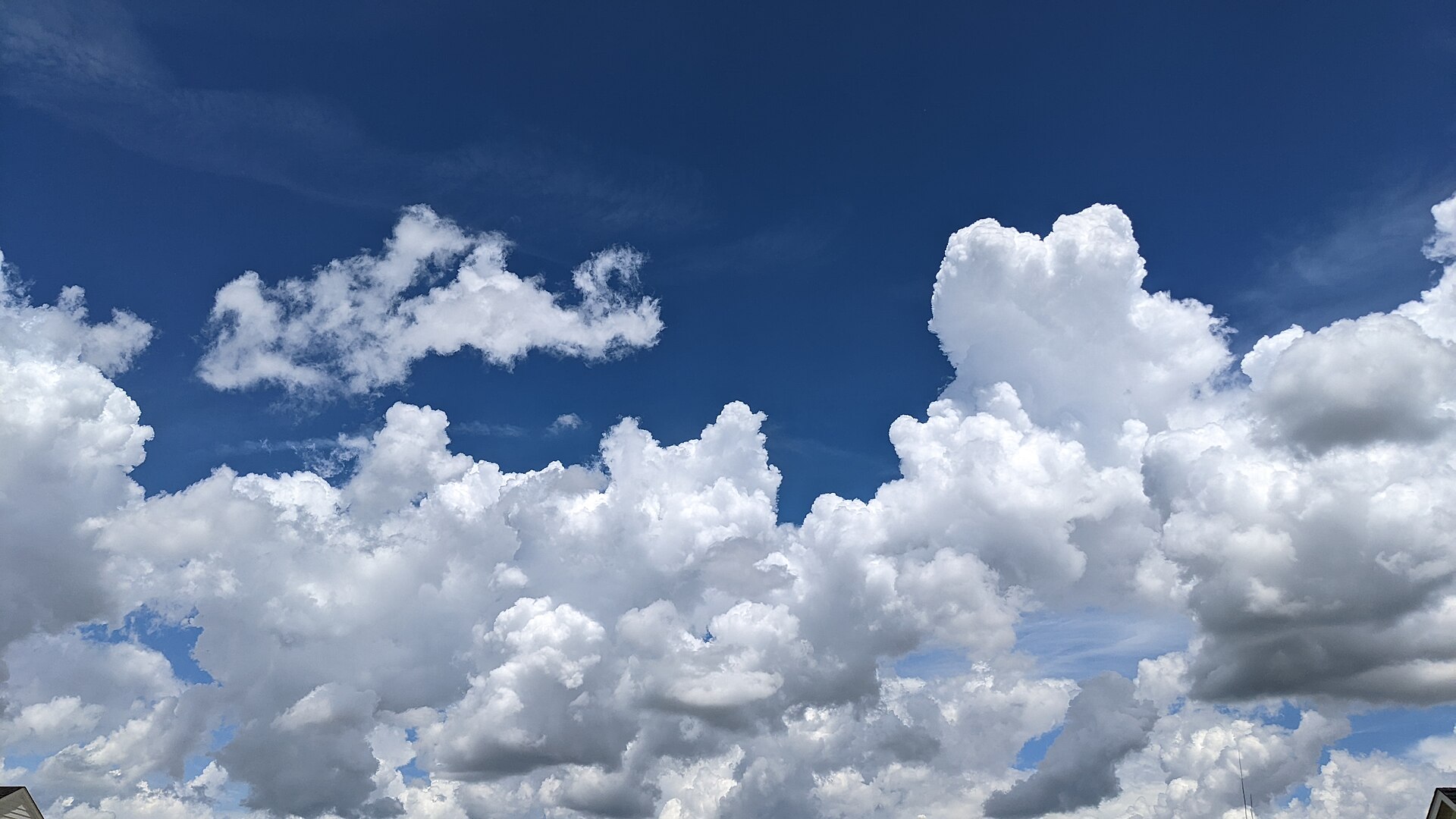
Cloud: in the sky, water vapour has condensed into tiny droplets.. Photo: White Cumulus Clouds against Blue Sky (2), Lance Vanlewen, CC BY-SA 4.0, modified: reduced in size 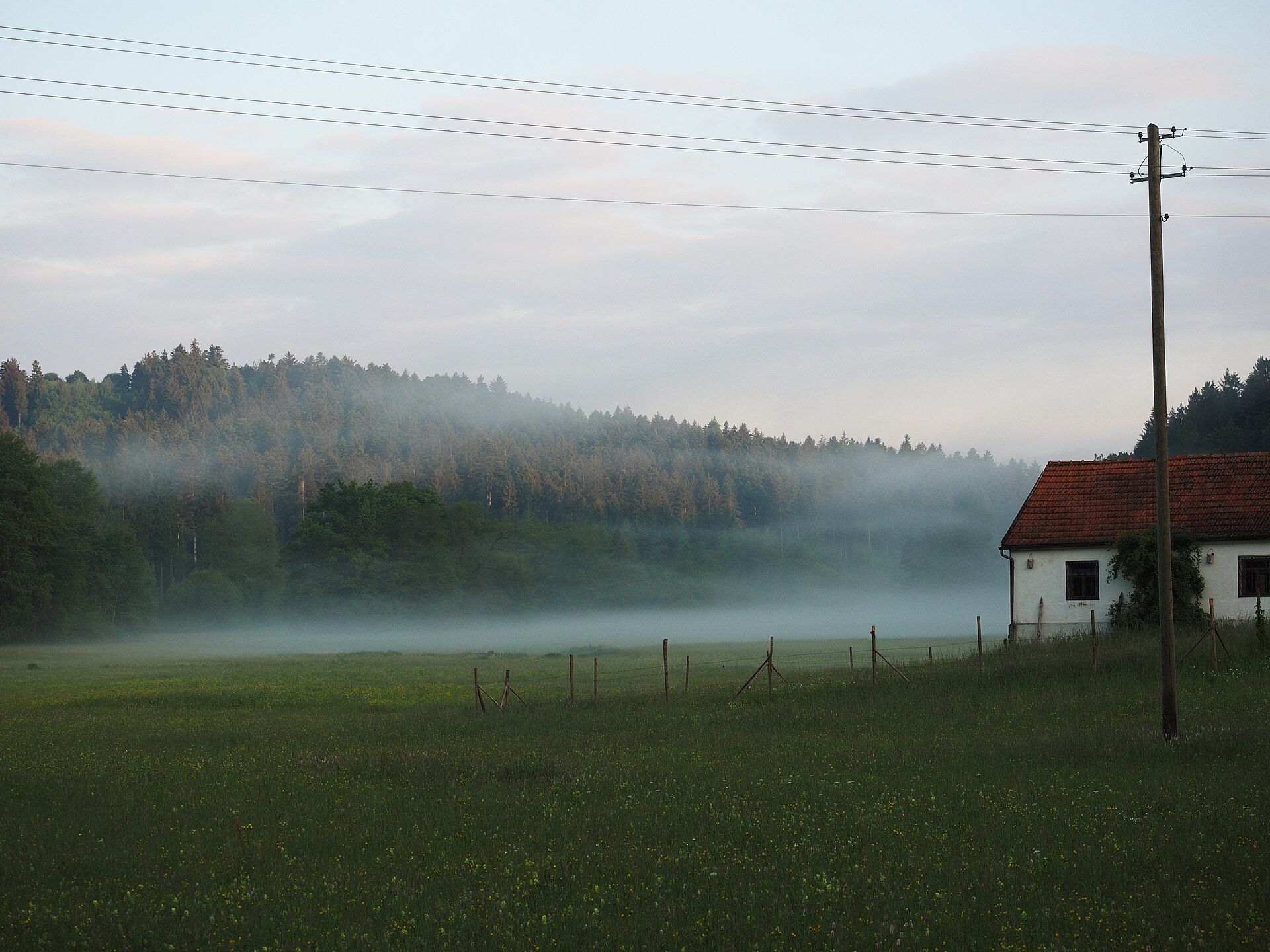
Fog: a cloud that forms right next to the ground. The photo is of a summer morning in the Leintal in Germany.. Photo: 2015-Bodennebel-Leintal, Kreuzschnabel, CC BY-SA 3.0, modified: reduced in size 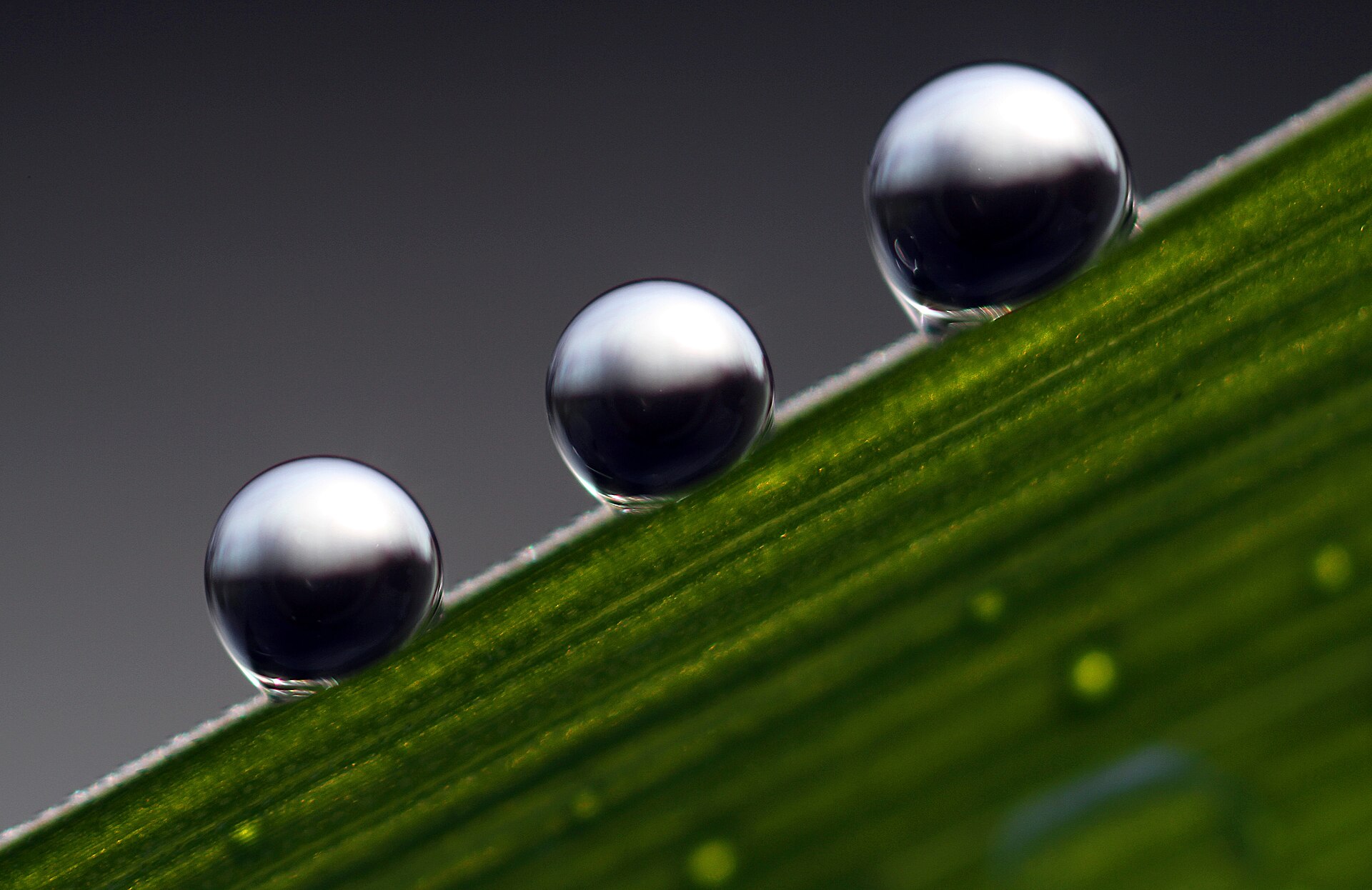
Dew: the blade of grass has cooled down during the night, and water vapour from the air has condensed into drops on its surface.. Photo: Dew drops on blade of grass in the morning, Massimo brizzi, CC BY-SA 4.0, modified: reduced in size 5. Rain, snow and hail
When the droplets or ice crystals grow heavy, they fall. This is called rain.
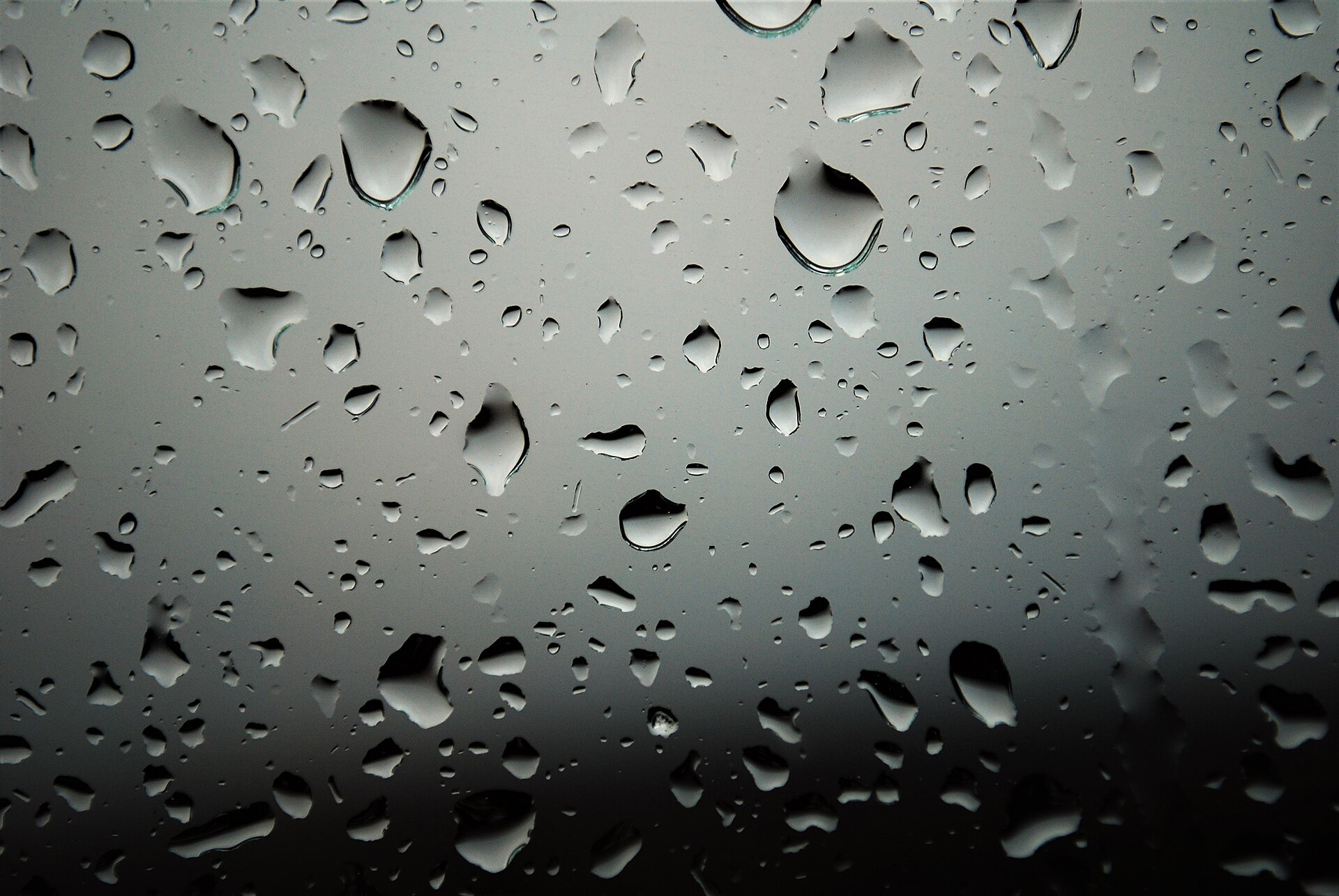
Rain: drops on a window pane. The drops that fall from clouds are so big that they cannot stay floating in the air.. Photo: Raindrops on the glass, BogTar201213, CC BY-SA 4.0, modified: reduced in size 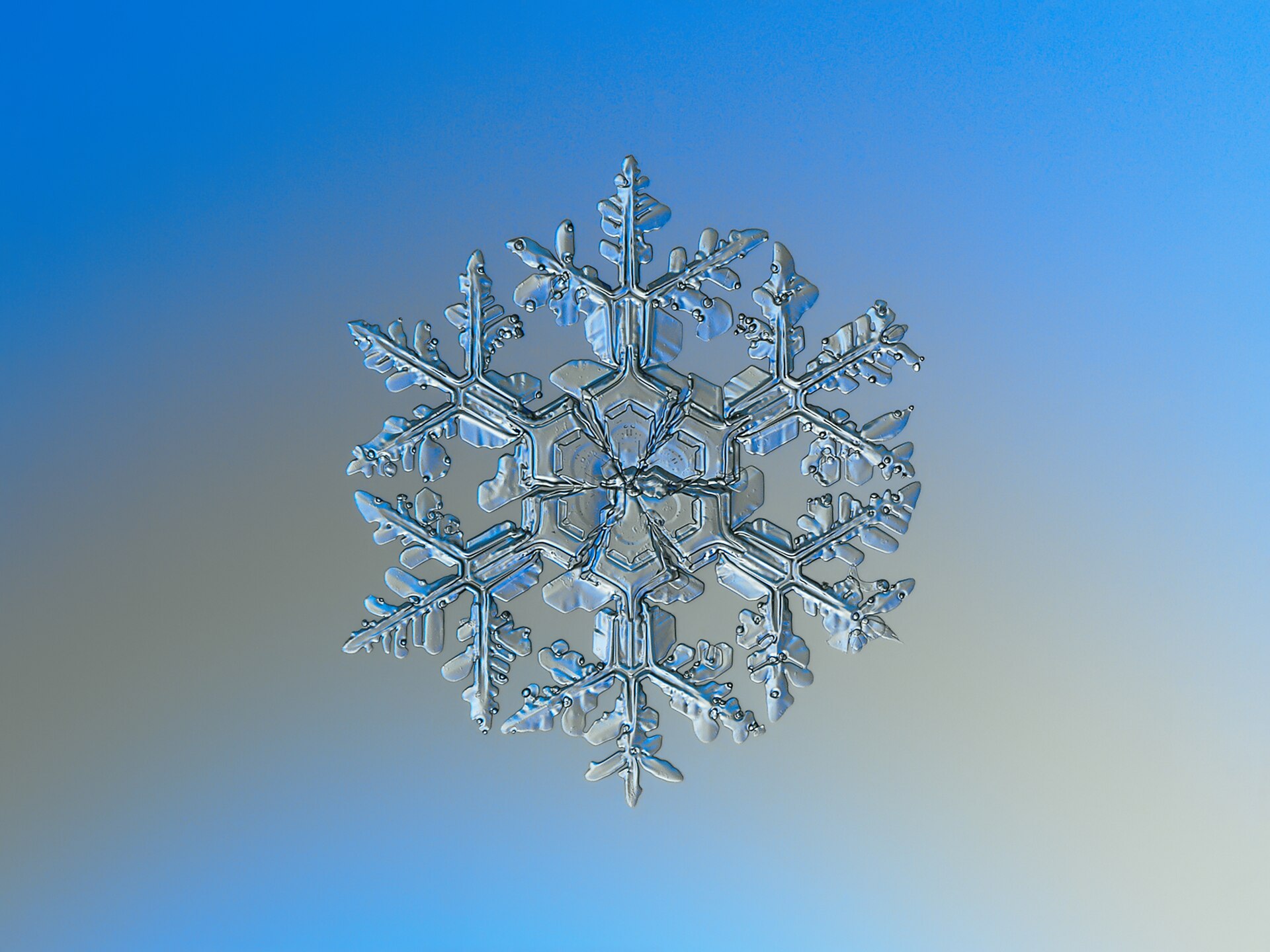
Snow: a magnified snowflake. The crystal is only 4–5 millimetres wide. The photo was taken in Moscow in December.. Photo: Snowflake macro photography 1, Alexey Kljatov, CC BY-SA 4.0, modified: reduced in size 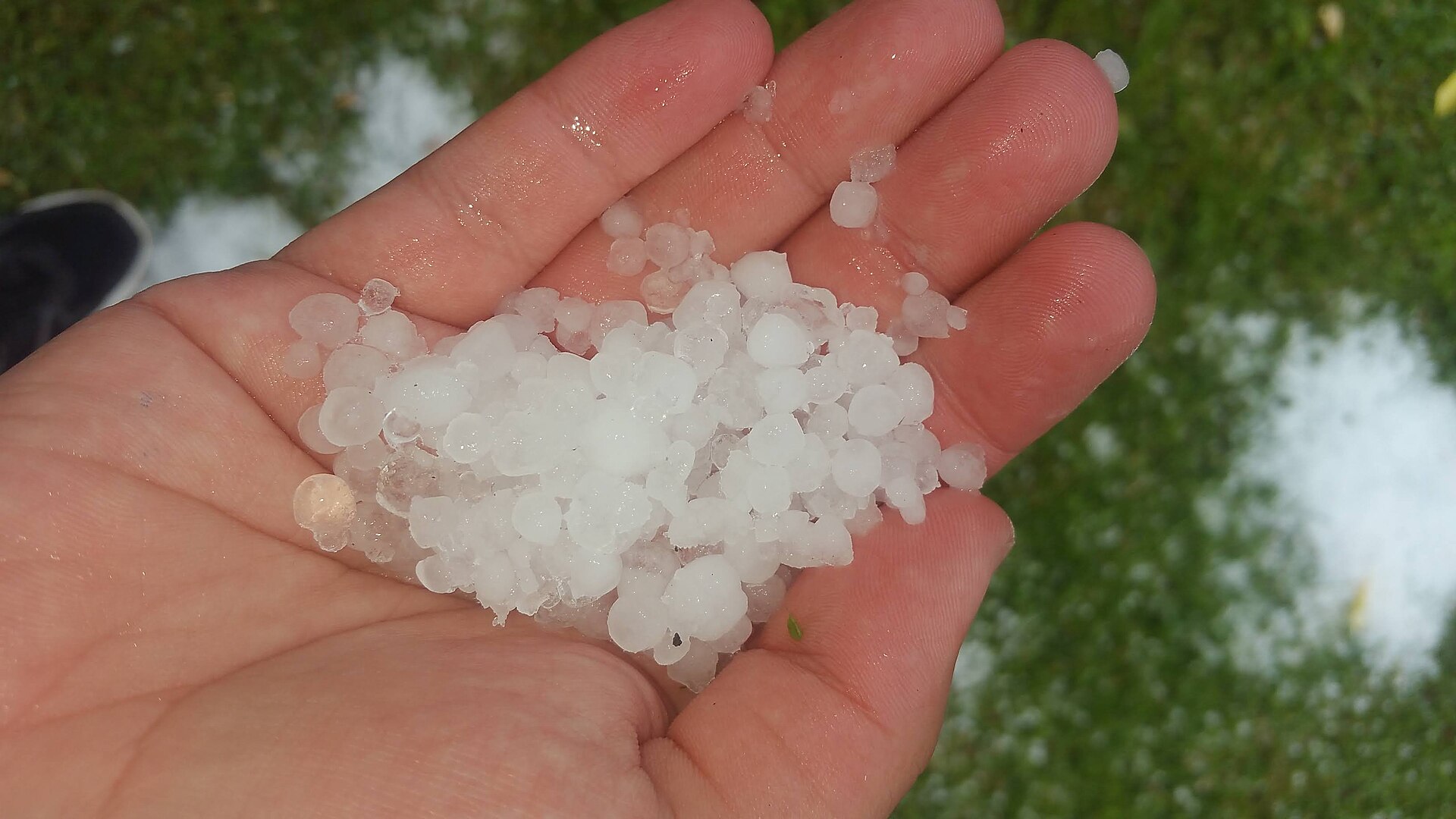
Hail: small balls of ice in the palm of a hand. Hailstones form in thunderclouds.. Photo: Kroupy, Karel Štípek, CC0, modified: reduced in size - Rain Water droplets fall from a cloud
- Snow Ice crystals grow into snowflakes
- Hail Small balls of ice form in a thundercloud
6. The water cycle
The water cycle carries on as rainwater runs into streams and rivers. Rivers carry the water to the sea. Some of the water soaks into the ground and becomes groundwater. Then the cycle starts again.
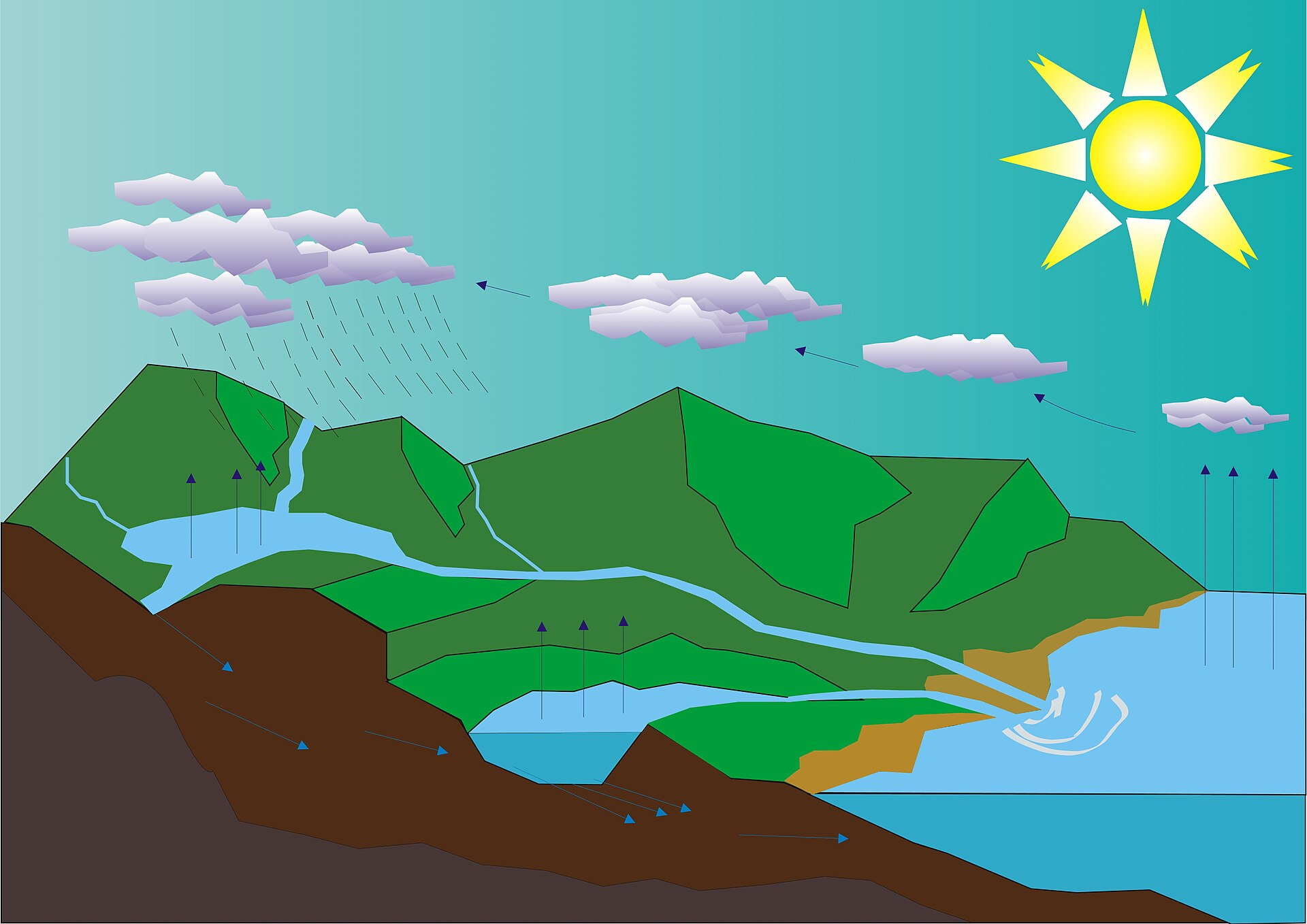
The water cycle as a simplified diagram. Photo: The water cycle, blank with no text, cropped correctly, Ingwik, CC BY-SA 3.0, modified: reduced in size 7. Try it in a jar
Experiment: A glass jar contains warm water. The teacher covers it with a plate with ice cubes on top. Where does the water evaporate and where does it condense?
Discuss: Why is there dew on the grass in the morning but not at midday?
Discuss: At which point in the cycle is water a gas, and at which is it ice?


Summary
In the water cycle, water moves between the sea, the air and the land. The Sun warms the water, and it evaporates into water vapour. High up, the water vapour cools down and condenses into clouds. Water, snow or hail falls from the clouds. The rainwater runs into rivers and the sea, or soaks into the ground and becomes groundwater. Then the cycle starts again.
Frequently asked questions
Why isn’t rainwater salty, even though water evaporates from the sea?
When seawater evaporates, the salt stays behind in the sea. Only water vapour rises into the air. That is why clouds and rainwater are fresh water.
Why don’t clouds fall to the ground?
The droplets in a cloud are very small and light, and rising air keeps them up. When the droplets join together and grow heavy, they fall as rain.
Where does tap water come from?
It comes from lakes, rivers or groundwater. The waterworks cleans the water before it reaches the tap. In many countries, some of the drinking water comes from groundwater that has formed from rainwater.
Related content
Try exercises
Have you taught this topic? Create an exercise on it for your class.