
Weather: teaching, slides and questions
How weather is made: the Sun, wind, clouds and air pressure. Weather instruments, the weather forecast and thunderstorm safety, with pictures and questions for grades 3–6.
Weather is what the air is like outside right now: sunny, cloudy, windy or rainy. The article explains how weather is made: the Sun, wind and the water cycle form clouds and rain. We also look at cloud types, air pressure, weather instruments and thunderstorm safety. Every step is ready to show to the class as a slide.
At the end, the pupil knows what weather and climate mean, can name the most common clouds and can read a weather forecast. They know the thunderstorm safety rules and can estimate how far away lightning struck.
Key concepts
- climate
 The usual weather of a place over many years. Finland has four seasons.
- cloud
 A white or grey heap of tiny water drops floating in the sky.
- wind
 Moving air that shakes the trees and pushes the clouds along.
- water cycle
 Water evaporates, forms clouds, falls as rain and flows back to the sea.
- air pressure
 The weight of the air pressing on the ground. High air pressure often brings fine weather.
- temperature
 It tells how warm or cold it is. It is measured in degrees with a thermometer.
- weather forecast
 A prediction of what the weather will be like in the coming days.
- thunderstorm
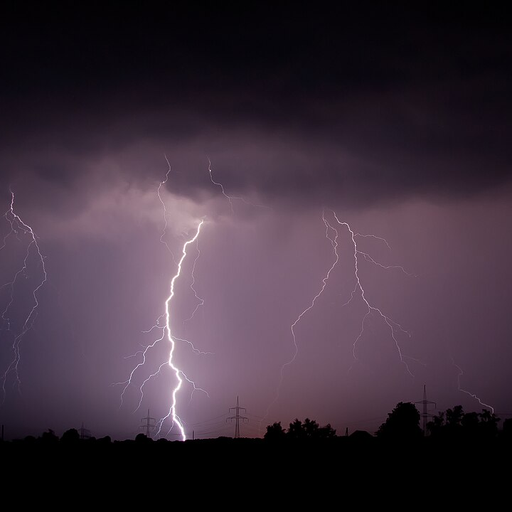 A storm with lightning and thunder. Lightning is electricity in the sky.
Related exercises
1. Weather or climate?
What is the weather like outside right now?
What is the weather usually like here in summer and what is it like in winter?
What is the difference between weather and climate?2. The Sun sets the weather in motion
The Sun warms the air and the water. Warm air rises and cooler air flows in to replace it: this is wind. When water evaporates, water vapor rises into the air, and up high condensation takes place. Rain or snow falls from the clouds: this is the water cycle.
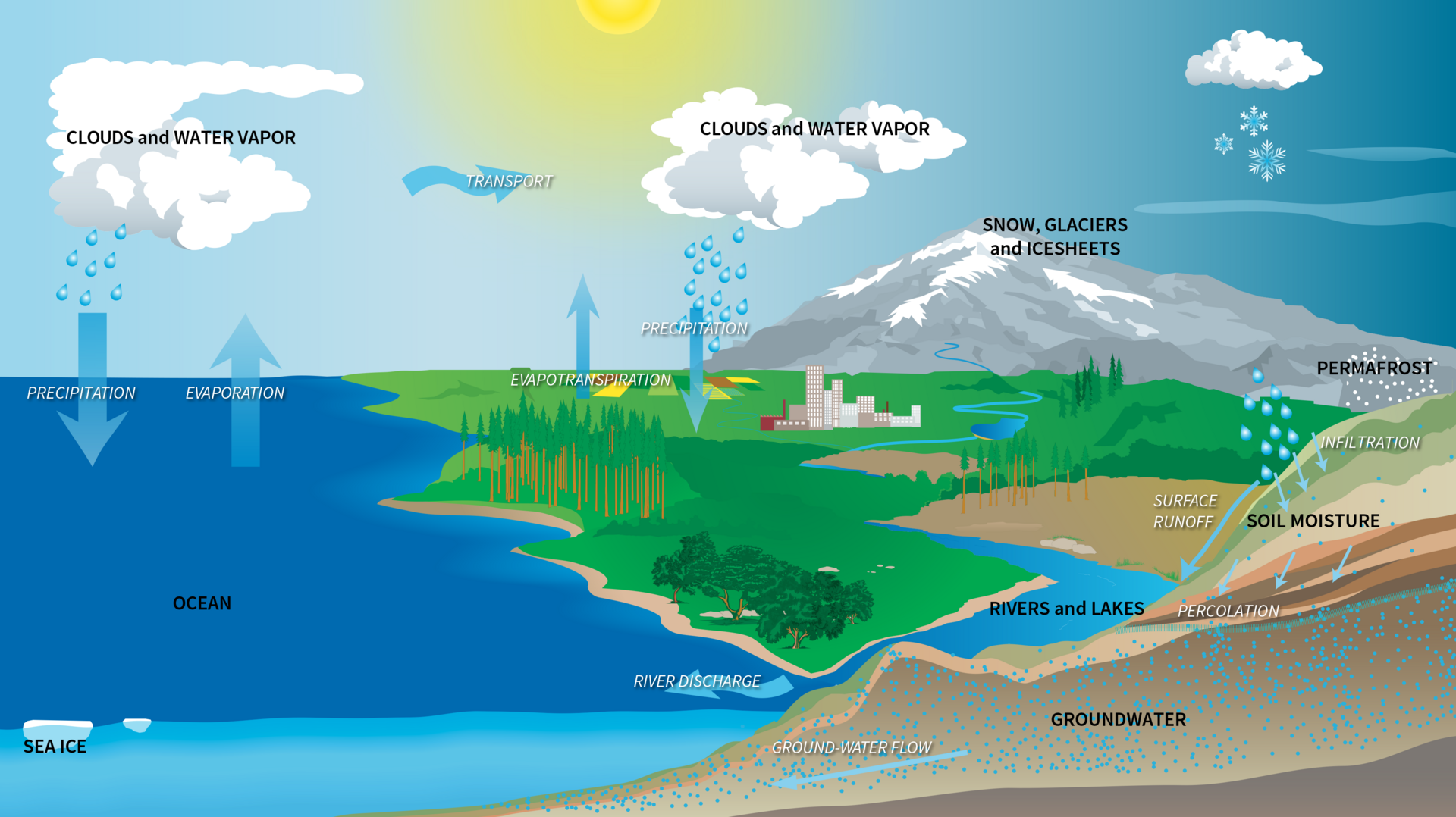
The water cycle in a NASA diagram. The labels in the picture are in English: evaporation, precipitation, clouds and water vapor, transport.. Photo: The Water Cycle (SVS30580), NASA's Scientific Visualization Studio - Marit Jentoft-Nilsen, Global Science and Technology, Inc./Deborah McLean, Public domain, modified: reduced in size 3. Four cloud types
Cumulus is white and heaped up. Stratus is a flat gray blanket. Cirrus is thin and high up. Cumulonimbus is dark and tall, and thunderstorms form from it.
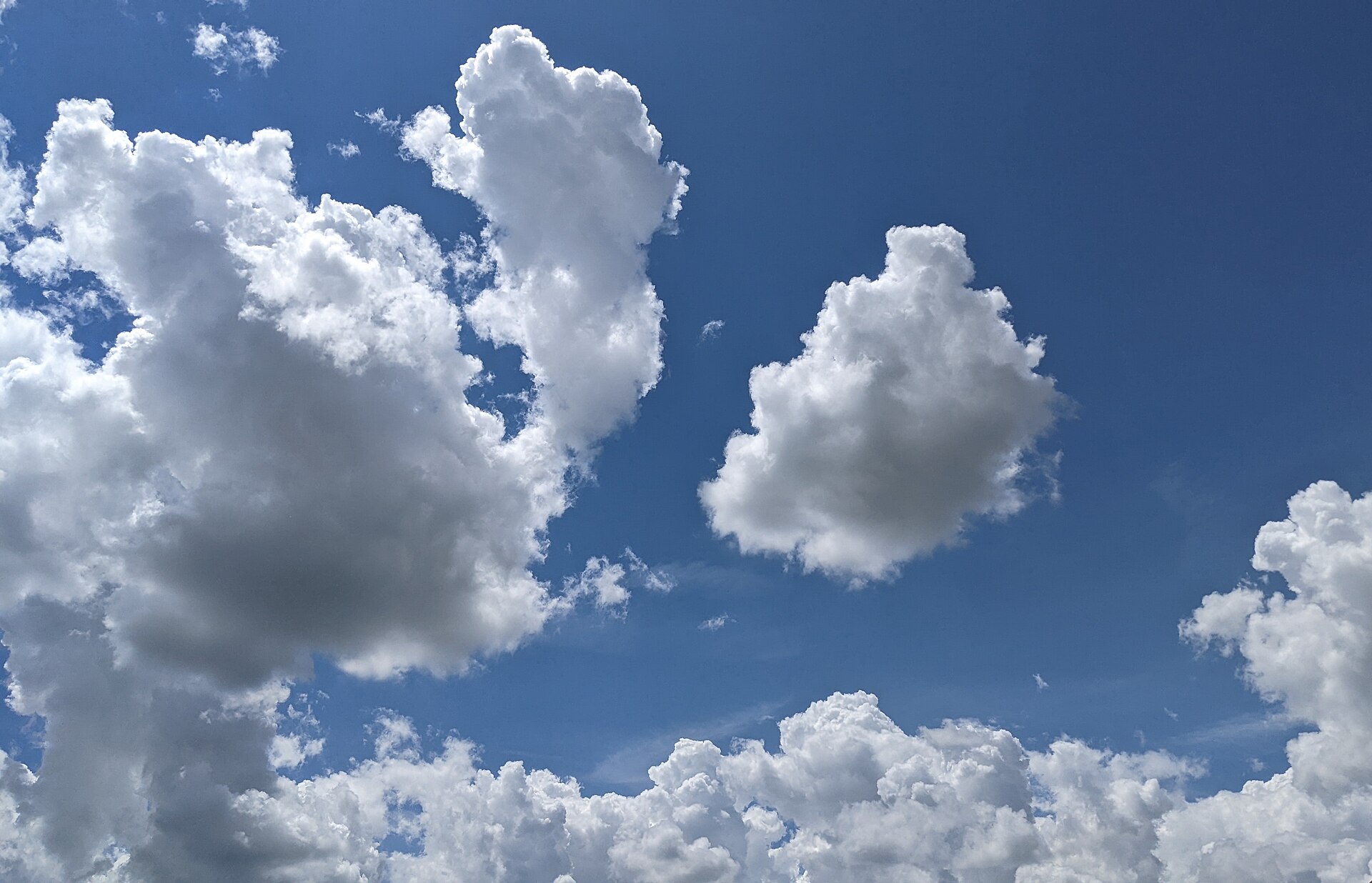
Cumulus clouds: white and soft-looking. They often go with dry weather.. Photo: White Cumulus Clouds against Blue Sky (4), Lance Vanlewen, CC BY-SA 4.0, modified: reduced in size 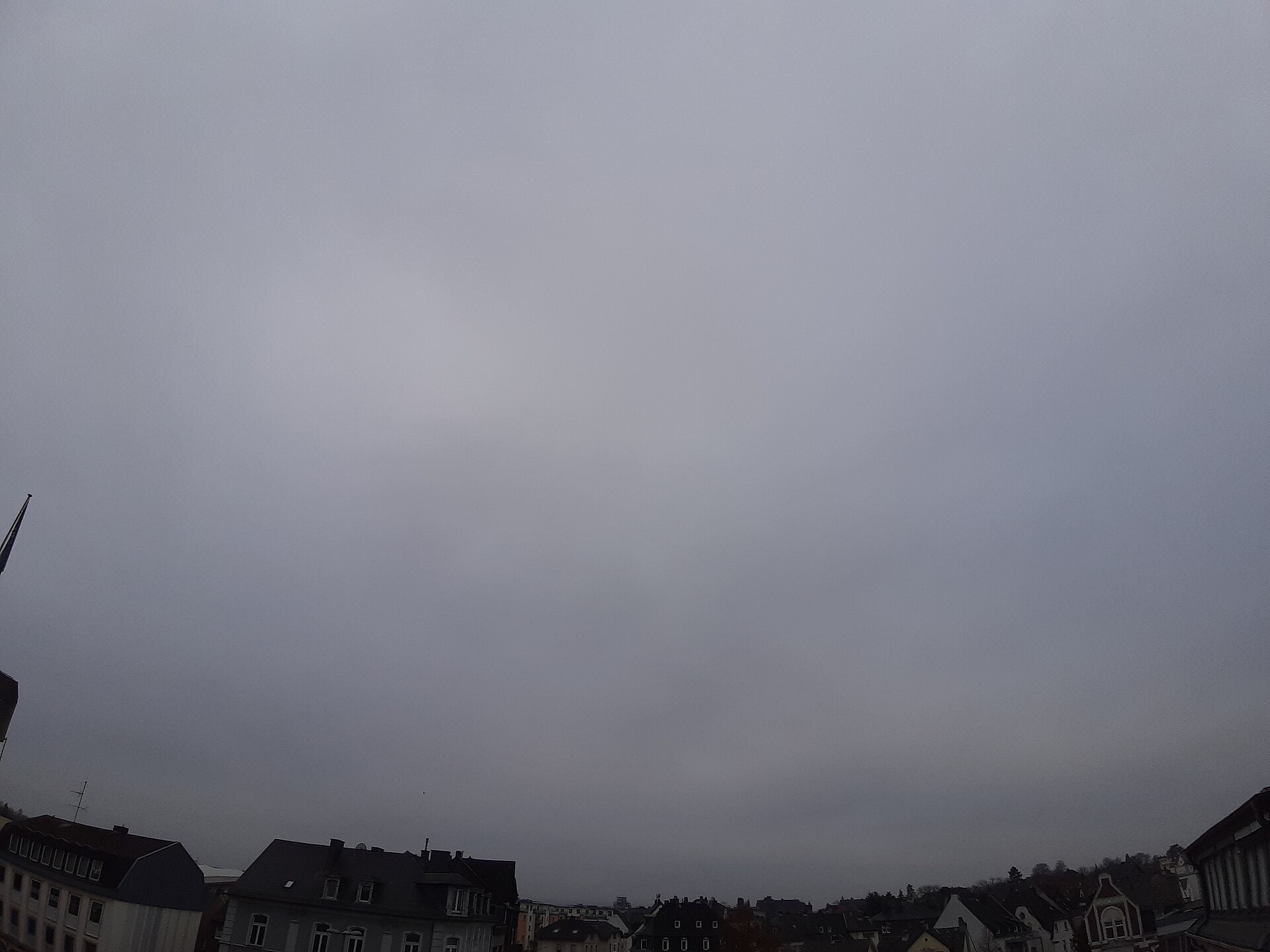
Stratus: a flat gray blanket over a town in Limburg on a November afternoon.. Photo: Stratus nebulosus über Limburg, 26.11.2020 II, GerritR, CC BY-SA 4.0, modified: reduced in size 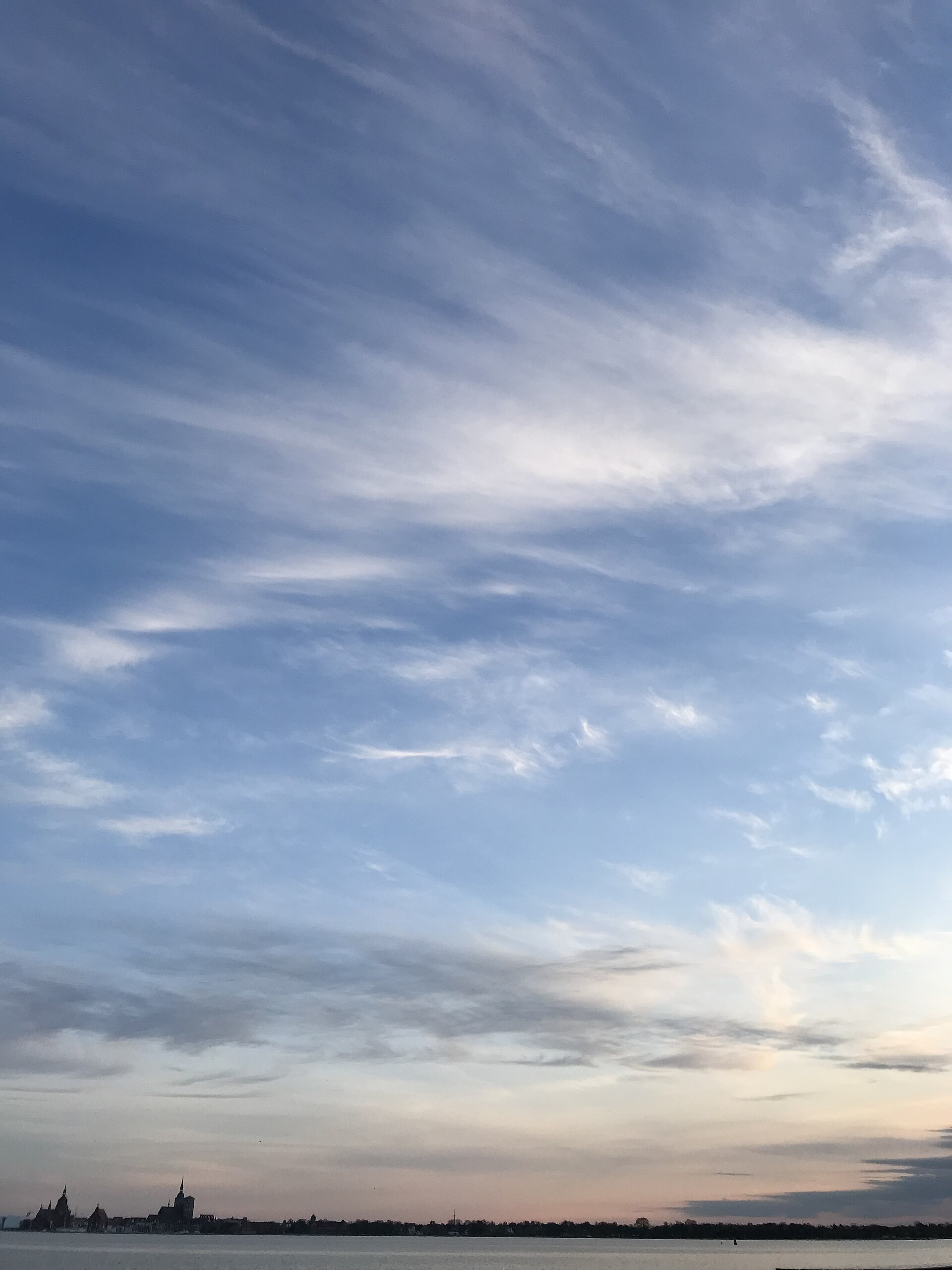
Cirrus: thin threads high above the town of Stralsund in northern Germany.. Photo: Cirrus clouds over Stralsund, Joko Helterhoff, CC BY-SA 4.0, modified: reduced in size A cumulonimbus approaches the Baltic Sea coast on the island of Öland in Sweden.. Photo: Cloud cumulonimbus at baltic sea(1), Arnold Paul, CC BY-SA 2.5, modified: reduced in size 4. Air pressure and the weather map
Air has weight, and air pressure measures it. The unit is the hectopascal (hPa). In high pressure the weather is often clear, and in low pressure there are clouds, rain and wind. Air flows from high pressure to low pressure, and we feel it as wind.
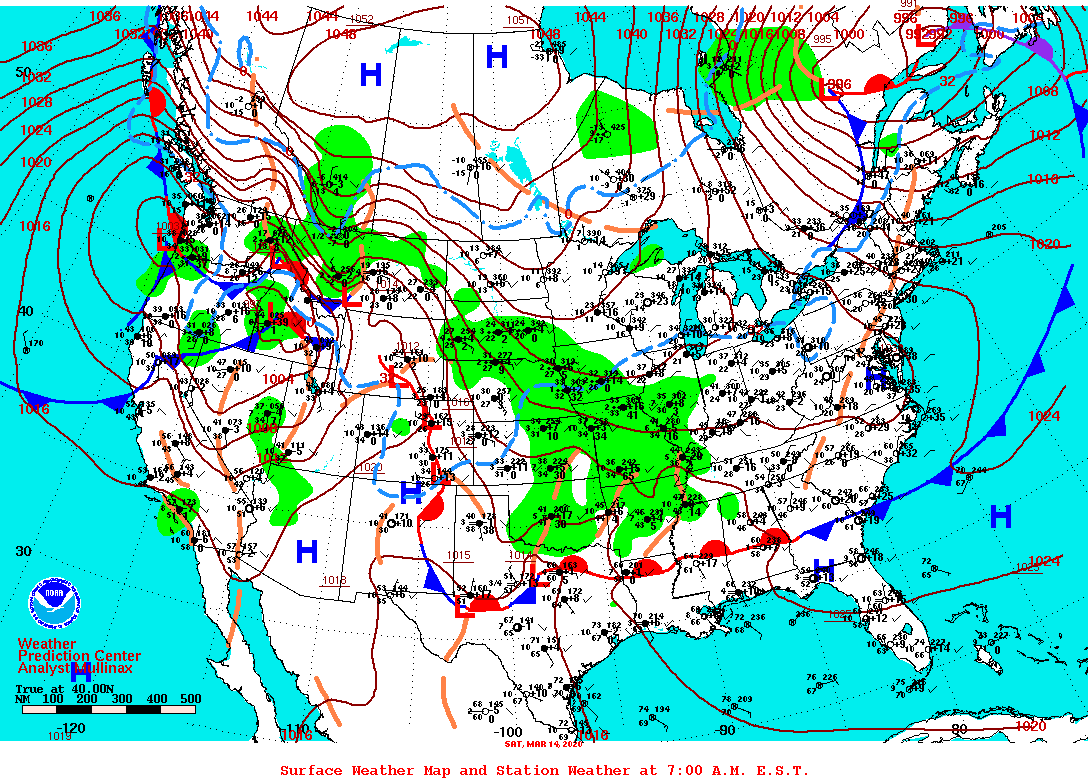
Weather map of the United States on 14.3.2020 (NOAA). The labels in the picture are in English. H and L are the centers of high and low pressure.. Photo: 2020-03-14 Surface Weather Map NOAA, National Centers for Environmental Prediction, Public domain, modified: reduced in size 5. Weather is measured and forecast
At a weather station, the temperature is measured with a thermometer, the amount of rain with a rain gauge in millimeters, the wind speed with an anemometer and the air pressure with a barometer. Satellites photograph clouds from space. A computer calculates the weather forecast from the measurements. It includes a symbol, the temperature, the wind and the chance of rain.
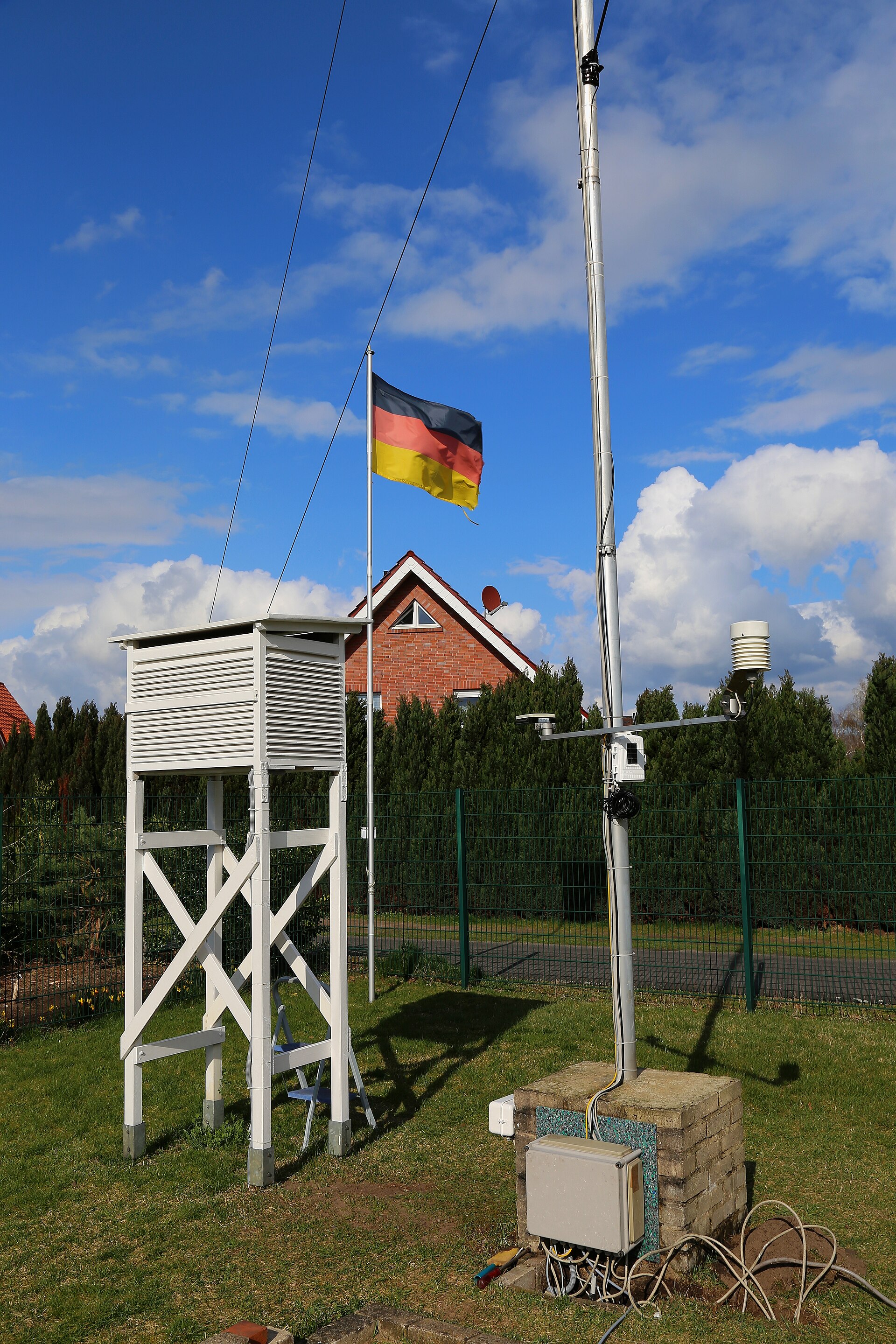
A hobbyist's weather station in Mettingen in North Rhine-Westphalia, Germany. On the left the weather shelter, on the right the mast with sensors.. Photo: Wetterstation Mettingen Schlickelde 04, J.-H. Janßen, CC BY-SA 3.0, modified: reduced in size 6. Thunderstorms and safety
Light travels much faster than sound, so you see the lightning before you hear the thunder. Count the seconds between them: 3 seconds is about 1 kilometer, but that is only an estimate. When you hear thunder, go inside a building and do not stay in the open, under a tree or in water. Hail can also fall from a thunderstorm cloud.
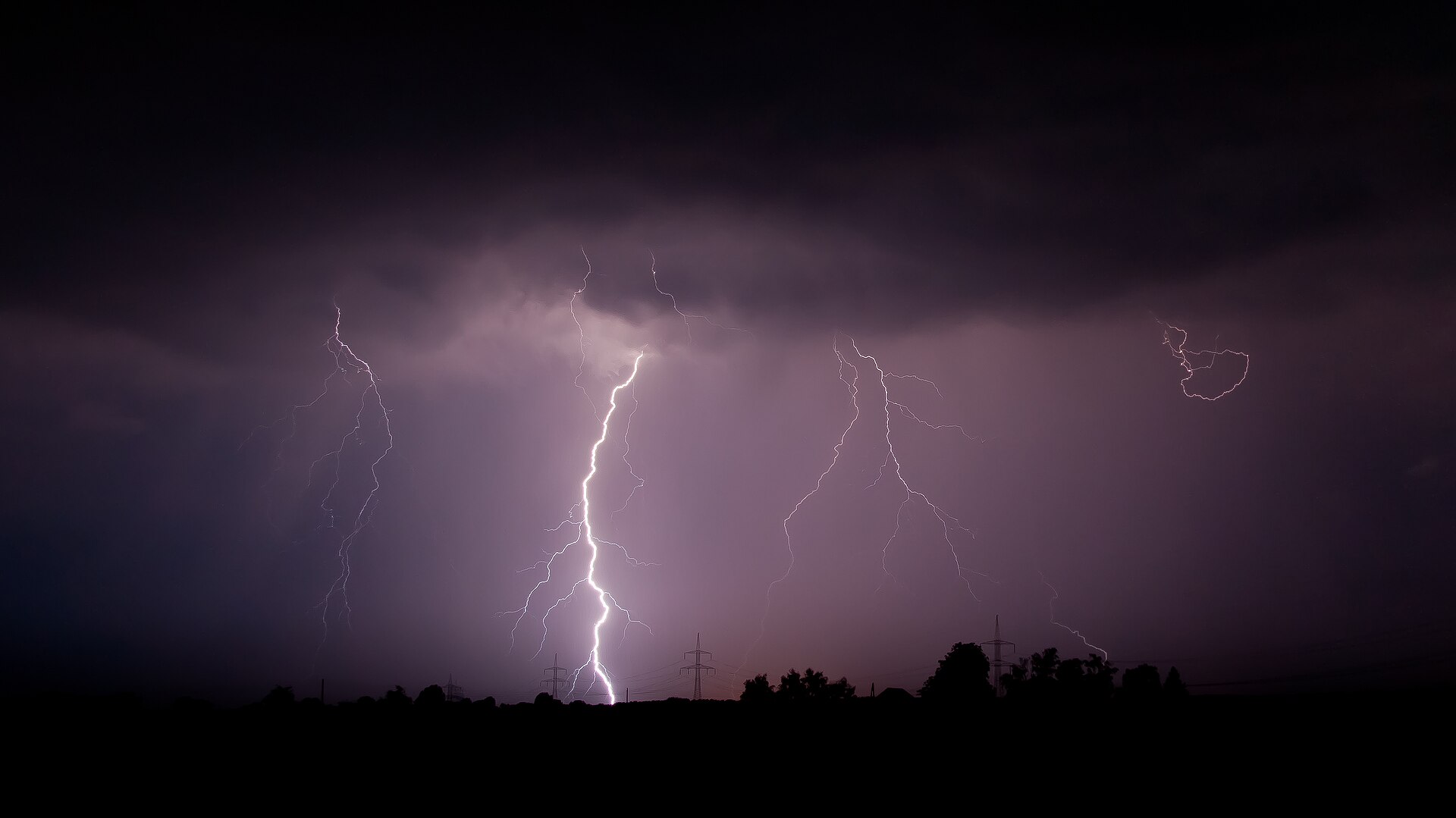
A thunderstorm near Pritzerbe in Germany. The brightest lightning bolt strikes the ground.. Photo: Lightning Pritzerbe 01 (MK), Mathias Krumbholz, CC BY-SA 3.0, modified: reduced in size 7. Investigate the weather yourselves
Keep a weather diary for a week: every day at the same time, write down the temperature, clouds, wind and rain.
Find today's weather forecast and compare it with the weather you see outside: was the forecast right?
There are 6 seconds from the lightning to the thunder: how far away did the lightning strike?
Make a rain gauge from a plastic bottle and measure how many millimeters of water collect in it.


Summary
Weather is the state of the atmosphere at a certain place and moment, and climate is the average of the weather over a long time. The Sun warms the air and the water, and that causes wind and the water cycle. The cloud types are cumulus, stratus, cirrus and cumulonimbus. In high pressure the weather is often clear, and in low pressure it is cloudy, rainy and windy. Weather is measured by weather stations and satellites, and the forecast is calculated from the measurements. In a thunderstorm you go inside, and three seconds from the lightning to the thunder is about one kilometer.
Frequently asked questions
What is a cloud made of?
A cloud is made of tiny water droplets or ice crystals floating in the air. Water vapor itself is invisible. A cloud forms when water vapor cools and turns into droplets.
Why is the weather forecast not always right?
The atmosphere changes in complicated ways, and the computer calculates the forecast from the measurements as an estimate. A short forecast, for example for tomorrow, is more reliable than a forecast for next week.
How do I know the thunderstorm is passing?
As the thunderstorm moves away, more and more seconds pass between the lightning and the thunder. Wait inside until about 30 minutes have passed since the last thunder.